Yes, you can often get braces if you grind your teeth at night, provided your dentist or orthodontist checks your teeth, gums, jaw symptoms, and existing damage first. Braces straighten teeth; they are not a proven cure for nighttime grinding, so your treatment plan also needs to address tooth protection and any related pain.
TL;DR
Braces for teeth grinding at night require an individual assessment, not an automatic rejection of orthodontic treatment.
Braces move teeth; a night guard protects teeth. Neither guarantees that sleep grinding will stop.
Never force an old night guard over braces or use clear aligners as a substitute for prescribed protection.
Affordable Dentist Near Me offers braces and family dental care for patients in its Texas service cities.
Can you get braces if you grind your teeth at night?
Nighttime grinding does not automatically rule out braces. The decision depends on the condition of your mouth and whether your clinician can manage the risks during tooth movement. Grinding without visible damage is a different situation from grinding with a cracked tooth, persistent jaw pain, or a worn dental restoration.
Check tooth health. Your dentist looks for decay, cracks, wear, and problems with existing fillings or crowns.
Check gum support. Healthy gums and supporting bone matter when teeth are being moved.
Review symptoms. Explain morning jaw soreness, headaches, tooth sensitivity, and anything a sleeping partner has heard.
Plan protection. Your orthodontist decides whether a protective appliance is appropriate and how its fit will be reviewed as teeth move.
A worn tooth does not, by itself, prove that you currently grind during sleep. Your clinician needs your history and an examination to interpret the signs.
Why this matters
The practical distinction in 2026 is between moving teeth and protecting teeth. Braces apply controlled forces to change tooth position. Grinding adds repeated contact and pressure that can damage teeth or dental work.
You do not need to choose between ignoring grinding and abandoning a straighter smile. You need a coordinated plan, with clear instructions about what to wear at night and when to report a problem.
Treat promises that braces will permanently stop grinding as a warning sign. A better bite is an orthodontic goal; ending sleep grinding is not a guaranteed result.
Braces, clear aligners, and night guards: different jobs
Braces, clear aligners, and night guards are not interchangeable. Each has a different purpose, and the right combination depends on your examination rather than appearance alone.
Option
Best for
Main benefit
Main limitation for someone who grinds
Fixed braces
Patients whose tooth movement plan calls for fixed appliances
Move teeth without relying on removable trays
Brackets and wires need monitoring, and a standard guard might not fit safely
Clear aligners
Suitable patients who can follow the prescribed wear schedule
Move teeth with removable trays
Grinding can wear or damage trays; aligners are not automatically protective guards
Clinician-prescribed night guard
Patients who need a barrier against grinding-related tooth contact
Helps protect tooth surfaces
Does not necessarily stop grinding and needs a fit compatible with treatment
Choose orthodontic treatment for your tooth movement needs, not because one appliance is advertised as a grinding cure. Ask your clinician to explain the advantages and limitations of the proposed option for your mouth.
Fixed braces: protection needs room for tooth movement
Fixed braces remain attached while your teeth move. If a guard is prescribed, its design must account for the brackets and the planned movement rather than gripping the teeth like an old, tightly fitted appliance.
The benefit is that orthodontic treatment does not depend on remembering to put trays back in. The limitation is that cleaning around brackets takes care, and you still need a separate decision about grinding protection.
Clear aligners: removable does not mean protective
Clear aligners are designed to move teeth. Although they sit between the upper and lower teeth, that does not make every aligner suitable for managing grinding forces.
Tell your clinician if a tray develops holes, splits, sharp edges, or an unexpected change in fit. Do not switch trays early, add another appliance, or change your wear schedule without instructions.
Night guards: protection is not a cure
A night guard creates a barrier between tooth surfaces. Its main purpose is protection, not a promise to stop the muscle activity behind nighttime grinding.
During braces treatment, appliance fit needs particular attention. A guard that worked before treatment is not automatically safe after brackets are fitted or teeth begin moving.
Can I wear a night guard over braces?
Wear a night guard over braces only if your treating clinician approves the appliance and its fit. Do not force a tight guard onto brackets, reshape it yourself, or assume that a sports mouthguard provides the same protection.
Bring your current guard to the consultation, even if it seems comfortable. Your clinician needs to see how it fits and decide whether it should be replaced, adjusted professionally, or left out of the treatment plan.
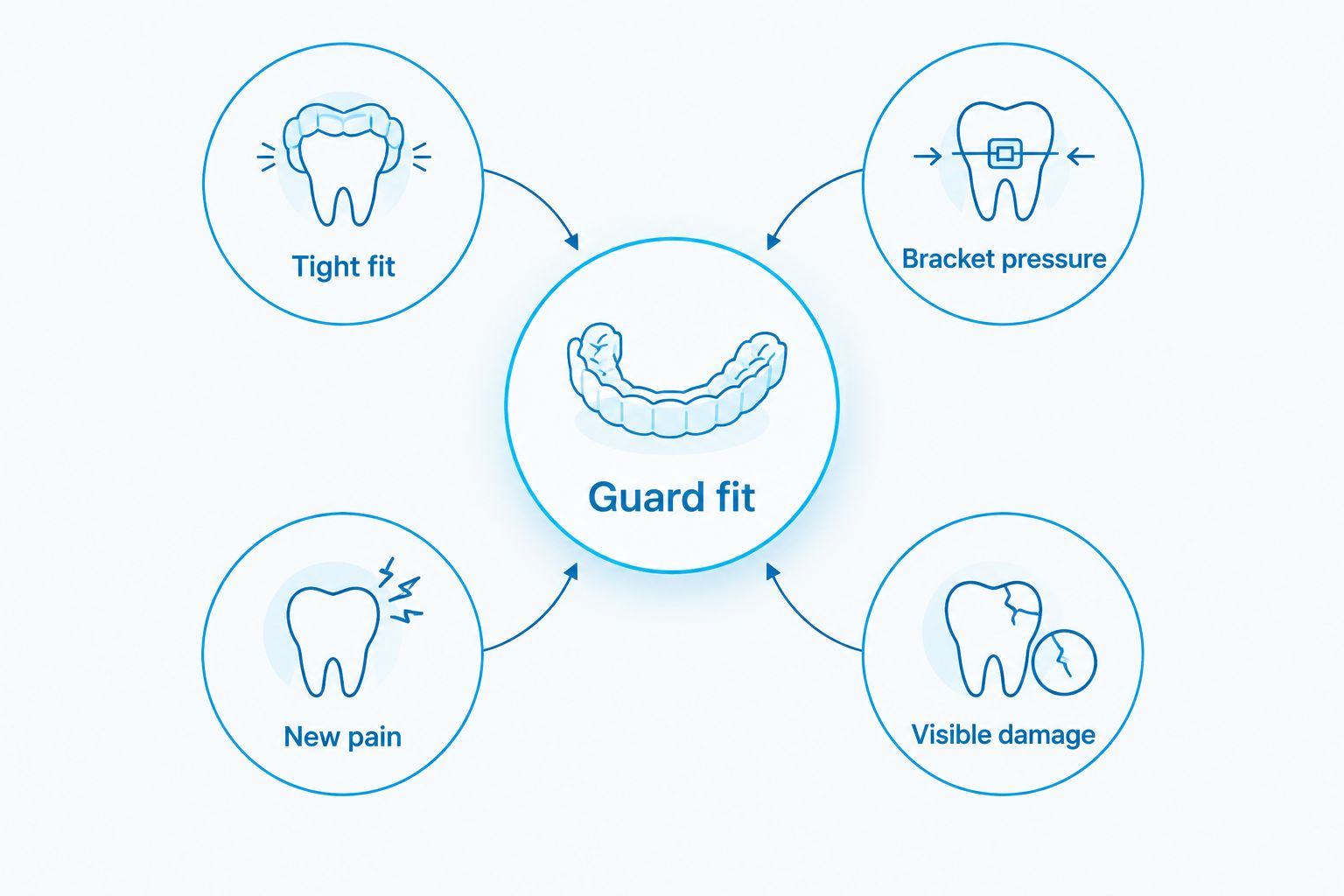
Use these fit checks as reasons to contact the office:
Tight fit: The appliance becomes difficult to seat or remove.
Bracket pressure: It catches on brackets or presses against wires.
New pain: Wearing it causes new tooth pain or jaw discomfort.
Visible damage: It develops cracks, holes, or rough edges.
The safe rule for your 2026 treatment plan is simple: do not force an appliance that no longer fits. Ask for instructions rather than trying to make it work overnight.
A changing fit is a reason to ask for advice, not to force the guard into place.
Why treatment plans vary when you grind your teeth
The label for nighttime grinding is sleep bruxism, but the label alone does not determine your braces plan. Your clinician needs to understand what is happening in your mouth and whether other health concerns need attention.
Existing tooth damage: Cracks, significant wear, or damaged restorations need assessment before and during orthodontic treatment.
Gum health: Active gum disease needs management because orthodontic movement depends on healthy supporting tissues.
Jaw symptoms: Persistent pain, locking, or difficulty opening requires evaluation rather than an assumption that braces will fix it.
Planned tooth movement: The way your teeth need to move affects appliance selection and the suitability of a guard.
Sleep and medication history: Snoring, breathing pauses, daytime sleepiness, and medication changes are relevant details to disclose.
Grinding does not diagnose sleep apnea. However, breathing pauses or marked daytime sleepiness deserve medical assessment; a dental appliance should not replace that evaluation.
Do not stop a prescribed medicine because you suspect it contributes to clenching or grinding. Speak with the prescriber and tell your dental team about the concern.
What should I tell the dentist before starting braces?
Bring more than the statement that you grind. Describe what you notice, when it happens, and whether the symptoms are changing. A sleeping partner's observations can help, but you do not need a recording to raise the issue.
For a 2026 consultation, prepare a short list covering:
Morning jaw soreness, headaches, or tooth sensitivity.
Teeth that have chipped, cracked, or changed shape.
Current guards, retainers, or other removable dental appliances.
Medicines, sleep concerns, and relevant medical conditions.
Any previous orthodontic treatment or jaw treatment.
Ask who will review grinding symptoms while your teeth are moving. Also ask whom to contact if an appliance breaks outside your usual adjustment visit.
Affordable Dentist Near Me is a fit for Texas families seeking braces and general dental care. The practice serves Fort Worth, Dallas, Houston, Waco, Grand Prairie, and Crowley; suitability for a particular braces or protective-appliance plan still requires an examination.
Discuss braces and nighttime grinding
Ask about tooth health, grinding symptoms, and the right next step before choosing treatment.
Braces do not reliably stop nighttime grinding. They can correct tooth alignment and certain bite problems, but sleep grinding has several possible contributors and is not explained by crooked teeth alone.
The useful question is whether you need orthodontic correction and, separately, how to protect your teeth. If grinding continues after treatment, your dentist can reassess tooth wear, symptoms, and protective-appliance needs.
Do not treat a quieter night or less morning soreness as proof that grinding has ended. Continue the follow-up your clinician recommends.
Are clear aligners better than braces if I grind?
Clear aligners are not automatically better than braces for people who grind. Your tooth movement needs, ability to follow the wear schedule, and pattern of appliance wear all matter.
A removable tray offers convenience, but repeated grinding can damage it. Fixed braces avoid tray-wear compliance problems, but they introduce brackets and wires that affect cleaning and guard fit. Neither option wins for every patient.
What should I do during braces treatment?
Good daily care protects teeth that are already managing both orthodontic movement and grinding forces. Follow your own treatment instructions rather than adding appliances or changing wear schedules based on general advice.
The American Dental Association recommends brushing for 2 minutes per session, twice daily, with fluoride toothpaste. Clean between your teeth daily as well; ask your dental team to demonstrate a method that works around your brackets or attachments.
Keep these habits in your 2026 care plan:
Report damage: Tell the office about a loose bracket, damaged tray, or broken guard.
Track changes: Note new sensitivity, worsening morning pain, or difficulty chewing.
Follow appliance instructions: Wear only the devices your treating clinician has approved together.
Keep reviews: Bring removable appliances when asked so their condition and fit can be checked.
During the day, noticing and releasing clenching can help you avoid prolonged tooth contact while awake. That habit does not guarantee control of grinding during sleep.
When should I get dental help rather than wait?
A brief period of tenderness after an orthodontic adjustment is different from a tooth that hurts sharply when you bite. Do not label every new symptom as normal braces soreness.
Contact your dentist promptly for a broken tooth, persistent or worsening pain, a loose tooth, or a damaged appliance. Jaw locking or difficulty opening also needs assessment.
Facial swelling with fever needs urgent attention. Difficulty breathing or swallowing requires emergency medical care, not a routine orthodontic appointment.
If your usual provider is unavailable, explain that you have braces and describe the symptom clearly when seeking care. Bring any broken removable appliance with you rather than attempting a repair at home.
FAQ
Can I get braces if I grind every night?
You can often get braces despite nightly grinding, but an examination must establish whether your teeth and gums are ready. Existing damage, jaw symptoms, and protection needs affect the plan.
Will straightening my teeth cure nighttime grinding?
Straightening teeth is not a proven cure for nighttime grinding. Orthodontic treatment and grinding management address different needs, even when both belong in your care plan.
Can I keep using my old night guard after getting braces?
Use your old night guard only if your orthodontist approves its fit with your braces. Never force it over brackets or continue wearing it when it becomes tight or painful.
Are clear aligners strong enough to act as a night guard?
Clear aligners are tooth-moving appliances, not automatically suitable night guards. Report wear, cracks, or holes and ask your clinician what protection is appropriate.
Should I stop wearing my orthodontic elastics if my jaw feels sore?
Ask your orthodontist before changing prescribed elastic wear because of soreness. New, severe, or worsening pain needs assessment rather than a self-directed treatment change.
Can children who grind their teeth get braces?
Children who grind need an individual dental and orthodontic assessment before braces. Their tooth development, symptoms, and any damage determine whether treatment or protection is needed.
Do I still need a retainer if I grind after braces?
Grinding does not remove the need for your prescribed retainer. Ask how to maintain tooth position and manage grinding together; do not replace the retainer with a guard on your own.
One last thing
Your retainer and your grinding protection need a shared plan after braces come off. A retainer holds tooth position; it is not automatically designed to withstand grinding, and a separate guard is not automatically a substitute for retention.
Before finishing treatment in 2026, ask exactly what to wear at night and what to do if it wears through or stops fitting. Contact Affordable Dentist Near Me for more information about its dental services and the next step for your concerns.