Yes, you can sometimes get a cavity filled without a numbing shot when the decay is shallow and your dentist expects little discomfort. Deeper decay, existing sensitivity, or work near the tooth’s nerve makes local numbing more appropriate; skipping the shot does not guarantee a painless filling. For your 2026 appointment, ask your dentist to assess the tooth first and agree on a stop signal before treatment begins.
TL;DR
A cavity filling without numbing shot is sometimes appropriate for shallow decay, but tooth depth and sensitivity determine suitability.
Local anesthesia controls tooth pain; sedation addresses anxiety and does not necessarily replace a numbing shot.
Affordable Dentist Near Me provides general dental care for families in its Texas service cities.
Agree on a stop signal, and ask for numbing if treatment becomes uncomfortable.
Can you get a cavity filled without a numbing shot?
Yes, but the decision depends on the tooth—not just your willingness to tolerate discomfort. The outer enamel does not contain nerves. The layer beneath it, called dentin, can transmit sensations toward the nerve inside your tooth, so removing decay becomes more sensitive as treatment reaches deeper areas.
A dentist considers the examination, symptoms, and any necessary X-rays before recommending whether to use local anesthesia. A small-looking spot does not prove that a cavity is shallow, and a tooth that feels fine at home can still need numbing during treatment.
If you are arranging general dental care in Texas, Affordable Dentist Near Me serves families in Fort Worth, Dallas, Houston, Waco, Grand Prairie, and Crowley. Ask about your concern before treatment rather than waiting until the dentist starts working.
Approach
Best for
Main advantage
Main limitation
Filling without a numbing shot
Selected shallow cavities after a dentist’s assessment
Avoids an injection and anesthesia-related numbness
Tooth sensitivity can interrupt treatment
Filling with local anesthesia
Cavities where treatment is expected to hurt
Blocks pain in the treated area
Requires an injection and causes temporary numbness
Surface numbing gel
Reducing discomfort at an injection site
Numbs the surface of the gum
Does not reliably numb the tooth for decay removal
Sedation with appropriate pain control
Selected patients with significant dental anxiety
Helps manage fear and distress
Requires a separate safety assessment and does not necessarily replace local anesthesia
Why this matters
Fear of injections can make a filling feel harder to face than the cavity itself. But avoiding the appointment leaves the underlying problem unassessed. Your useful choice is not simply shot versus no shot; it is a treatment plan that addresses both tooth pain and needle fear.
For a filling appointment in 2026, tell the office which part worries you: the needle, the numb feeling afterward, the drill, or a previous painful experience. Each concern calls for a different conversation. Avoiding an injection is not a good outcome if you spend the procedure in pain.
Filling without a shot: when it fits
A filling without injected anesthesia is sometimes reasonable when the dentist expects the work to stay shallow and you are comfortable trying it. The dentist still needs to assess the tooth and explain what sensations to expect. Pressure, vibration, and water feel different from sharp tooth pain.
The benefit is straightforward: you avoid the injection and the temporary numbness it causes. The drawback is uncertainty about how the tooth will feel once decay removal begins. Even a carefully chosen attempt can need a change of plan.
Best for: a dentist-confirmed shallow cavity in a patient who understands the limits and can communicate discomfort. Do not treat a painless previous filling as proof that the next filling will feel the same. Different teeth and different cavity depths produce different experiences.
Filling with local anesthesia: when comfort comes first
Local anesthesia is appropriate when the dentist expects decay removal or other treatment to cause pain. You remain awake, and you can still notice pressure or vibration even when the area is numb. Sharp pain means you should signal the dentist rather than assume you must endure it.
The main advantage is pain control while the tooth is treated. The trade-off is the injection itself and temporary numbness, which can affect your lip, cheek, or tongue depending on the area treated. Follow the dentist’s instructions about eating and avoiding accidental bites while numb.
Best for: deeper cavities, sensitive teeth, or treatment that your dentist expects to be uncomfortable. If your main concern is the needle, ask how the injection can be made more comfortable instead of ruling out numbing altogether.
Why comfort during a filling varies
No single cavity size or pain-tolerance label settles whether you need a shot. Your dentist weighs several factors together:
Decay depth: Work closer to the nerve is more likely to cause sensitivity than work limited to the outer tooth structure.
Existing symptoms: Cold sensitivity, pain with biting, or spontaneous aching can change the assessment and treatment plan.
Work required: Removing an old filling or treating decay beneath it can involve more tooth structure than the visible spot suggests.
Tooth condition: Cracks, exposed root surfaces, and an irritated nerve can affect how the tooth responds.
Your comfort: Anxiety, previous experiences, and your ability to remain still matter when deciding how to proceed safely.
A tooth without symptoms still needs an examination. Conversely, significant pain does not establish that a routine filling is the right treatment. Your dentist must identify the cause before choosing the procedure or its pain-control plan.
How to discuss a no-shot filling before treatment
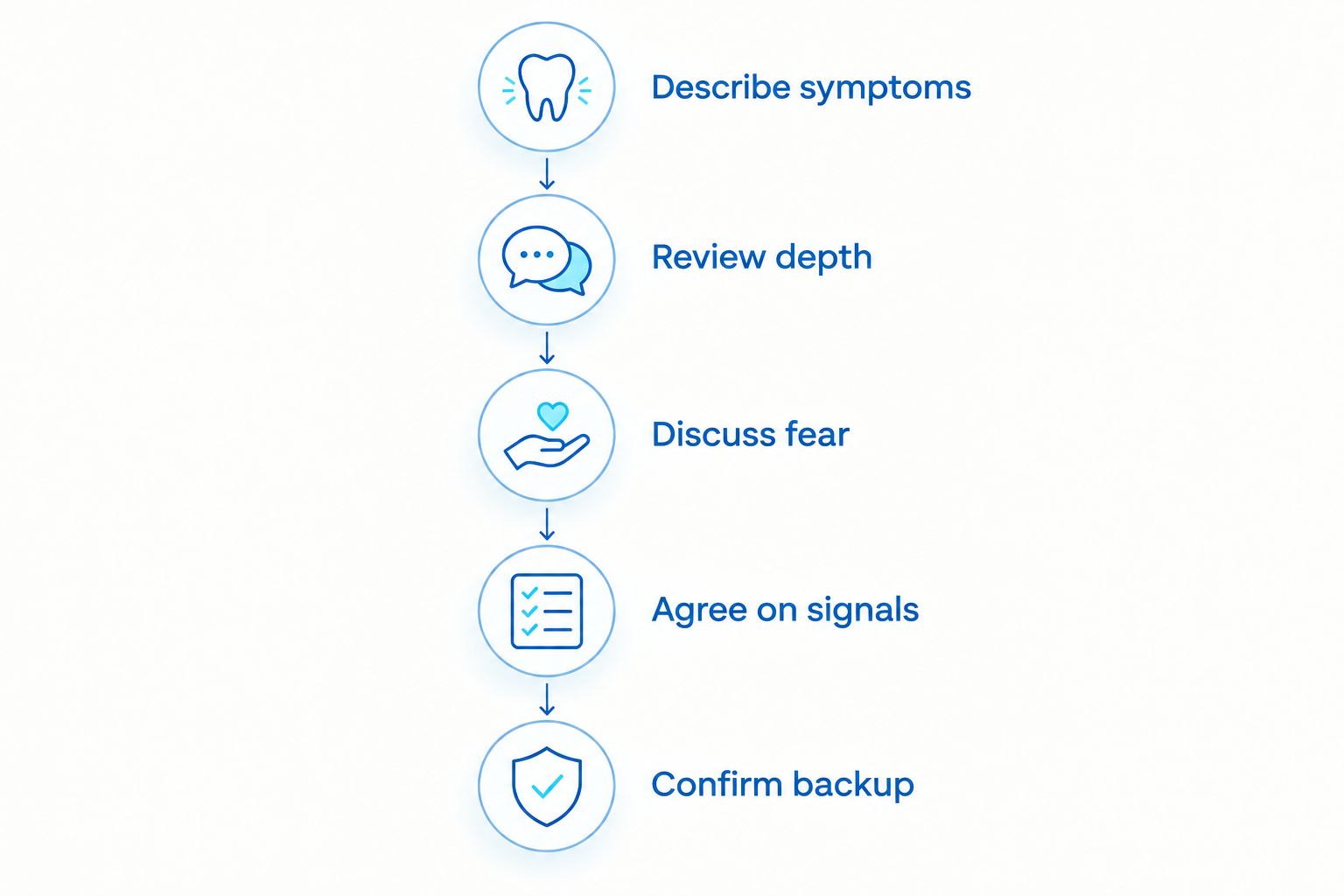
Use your 2026 dental visit to make the plan explicit before instruments enter your mouth. You do not need to prove that you have a high pain tolerance. You need to understand the recommendation and know how to pause treatment.
Describe symptoms. Explain whether the tooth reacts to cold, sweets, chewing, or nothing at all. Mention pain that starts without an obvious trigger.
Review depth. Ask what the examination and any necessary X-rays suggest about the cavity. Ask why the dentist recommends numbing or considers a no-shot attempt reasonable.
Discuss fear. Say whether you fear needles, numbness, loss of control, or pain. Mention any previous reaction to a dental anesthetic and describe what happened.
Agree on signals. Choose a clear hand signal that means stop. Confirm that you can request a pause or reconsider anesthesia during treatment.
Confirm backup. Ask what happens if the tooth becomes sensitive. Do not assume you must finish without anesthesia because that was the original plan.
The dentist can recommend against beginning without numbing when the expected discomfort or treatment requirements make that approach unsuitable. Consent to try without a shot is not a commitment to continue through pain. A clear backup plan protects your comfort and helps the dentist work safely.
Agree on a stop signal and a backup plan before treatment starts.
Can numbing gel replace a shot for a cavity?
Numbing gel on the gum does not reliably replace an injection for a tooth filling. Surface gel works on the tissue where it is applied; it does not provide the same deep pain control as injected local anesthesia.
Its useful role is reducing discomfort where the injection enters. Ask whether surface numbing is appropriate and how your dentist checks that the tooth is ready before starting. The goal is adequate pain control, not simply avoiding the sight of a needle.
Do not apply household remedies or extra numbing products to prepare for an appointment without professional guidance. Bring your concerns to the dental team so they can assess them alongside your health history and planned treatment.
Can sedation help if you are afraid of needles?
Sedation can help selected patients manage anxiety, but relaxation and tooth numbness are different things. A relaxed patient can still need local anesthesia for a filling. Ask which part of the proposed plan addresses fear and which part blocks pain.
Sedation also has limitations. Your health, medications, the type of sedation, and the procedure affect suitability and aftercare instructions. Do not take someone else’s anxiety medicine, add a sedative, or use alcohol before dental treatment.
If you are exploring anxiety support for a 2026 appointment, ask about assessment requirements before the treatment day. Do not assume a particular sedation method is offered or appropriate simply because you are nervous. Needle fear deserves attention, but it does not make every alternative suitable.
What should you do if a filling hurts without numbing?
Signal the dentist to stop if you feel sharp pain or discomfort you do not want to continue through. Keep your head still and use the agreed hand signal rather than pulling away while instruments are in your mouth. The dentist can pause, reassess, and discuss pain control.
You do not need to wait until pain becomes severe. Explain whether you felt pressure, a brief cold sensation, or a sharp sting; those descriptions help the dentist understand the problem. A pause is useful information, not a failed appointment.
If you choose local anesthesia after treatment starts, allow the dentist to assess its effect before work resumes. There is no prize for completing a filling without a shot. Comfortable, appropriate treatment is the objective.
Does a painless cavity still need treatment?
A cavity can exist without causing pain. Waiting for sensitivity is not a reliable way to decide when to seek care, because symptoms alone do not show how much tooth structure is affected.
Not every early area of mineral loss needs drilling. Some early changes without a formed hole can be managed with preventive care, while a cavity with a hole generally requires restorative treatment. Your dentist distinguishes these conditions through an examination and any indicated imaging.
Do not use the possibility of a no-shot filling as a reason to postpone assessment. If pain has already appeared, read about whether a toothache can go away without treatment and arrange dental care rather than judging the problem by whether the pain temporarily stops.
When a routine filling discussion is not enough
Severe or persistent pain, swelling, fever, or a bad taste with drainage needs prompt dental assessment. Those symptoms can indicate a problem beyond a small cavity. Ask for an evaluation rather than booking with the assumption that you only need a simple filling without anesthesia.
Trouble breathing or swallowing, or rapidly spreading swelling, requires emergency medical care. Do not delay that care while looking for a needle-free dental option.
For routine general dental care in 2026, Affordable Dentist Near Me is an option for families in its Texas service cities. The practice’s service range does not establish whether a particular tooth can be filled without anesthesia; that decision requires an individual dental assessment.
FAQ
Can I ask my dentist to fill a cavity without a shot?
Yes, you can ask your dentist about a filling without a shot. The dentist needs to assess cavity depth, symptoms, and expected discomfort before recommending whether to try it.
Will a small cavity hurt if I skip numbing?
A small cavity can still hurt without numbing because its visible size does not establish its depth or sensitivity. Ask your dentist what the examination shows and agree on a stop signal.
Can I change my mind about numbing during a filling?
Yes, you can ask to stop and discuss numbing during a filling. Signal the dentist, keep your head still, and let the dentist reassess before treatment continues.
Is numbing gel enough for a cavity filling?
Numbing gel on the gum is not a reliable substitute for injected anesthesia during a cavity filling. It numbs surface tissue and is often used to reduce injection-site discomfort.
Does laughing gas mean I will not need a numbing shot?
Laughing gas does not mean you can skip a numbing shot. It helps with anxiety, while local anesthesia provides pain control in the tooth being treated.
Can my child get a filling without an injection?
A child can sometimes receive a filling without an injection when the dentist considers it appropriate. Cavity depth, comfort, cooperation, and the planned treatment guide the decision; do not pressure a child to tolerate pain.
Should I avoid numbing if I had a bad reaction before?
Tell your dentist exactly what happened before deciding to avoid numbing. A previous reaction needs assessment because anxiety, fainting, medication effects, and allergy require different precautions.
One last thing
A tooth that does not hurt is not the same as a tooth that will not hurt during treatment. Ask about depth and expected sensations, not simply whether the cavity is small. That question gives you a more useful basis for deciding about anesthesia.
When contacting Affordable Dentist Near Me, mention needle anxiety before your appointment and ask to discuss pain control with the dentist. You can request a no-shot approach without making it the condition that determines whether you receive care.