Young children's pediatric dental care is preventive and restorative care designed to protect baby teeth, support healthy development and establish comfortable dental habits. This 2026 guide explains when to schedule visits, how to clean young teeth and which symptoms require prompt attention.
TL;DR
Young children should see a dentist by age 1 or within 6 months of the first tooth.
Daily fluoride toothpaste and routine checkups anchor pediatric dental care for children in 2026.
AAPD guidance uses a rice-sized smear before age 3 and a pea-sized amount from ages 3 to 6.
Facial swelling, uncontrolled bleeding or a knocked-out permanent tooth requires prompt professional care.
Why pediatric dental care matters for young children
Baby teeth help children chew, speak and maintain space for permanent teeth. Decay can cause pain and infection before a child can clearly explain what feels wrong, so pediatric dental care for children must rely on scheduled prevention rather than complaints alone.
A practical 2026 plan combines home brushing with professional exams. The preventive dental cleaning plans for families guide explains how routine visits fit into broader family care without waiting for pain or visible damage.
Young children also need appointments shaped around short attention spans, changing teeth and possible anxiety. Parents control most of the routine: when brushing happens, what goes into a bedtime bottle, whether the child attends checkups and how the visit is described beforehand.
Build a complete pediatric dental care routine
Schedule the first dental visit early
The American Academy of Pediatric Dentistry recommends a dental visit when the first tooth appears and no later than the first birthday. The American Dental Association also supports a first visit within 6 months of the first tooth erupting and by age 1 at the latest.
This early appointment is primarily preventive. The dentist can examine tooth development, identify early decay and show you how to clean a small child's mouth without turning brushing into a nightly struggle.
Schedule the first visit by age 1
Book earlier if a tooth looks damaged or discolored
Share bottle, pacifier and thumb-sucking habits with the dentist
Bring insurance information and current health details
Ask how frequently your child should return based on individual cavity risk
Brush and floss for the child's age
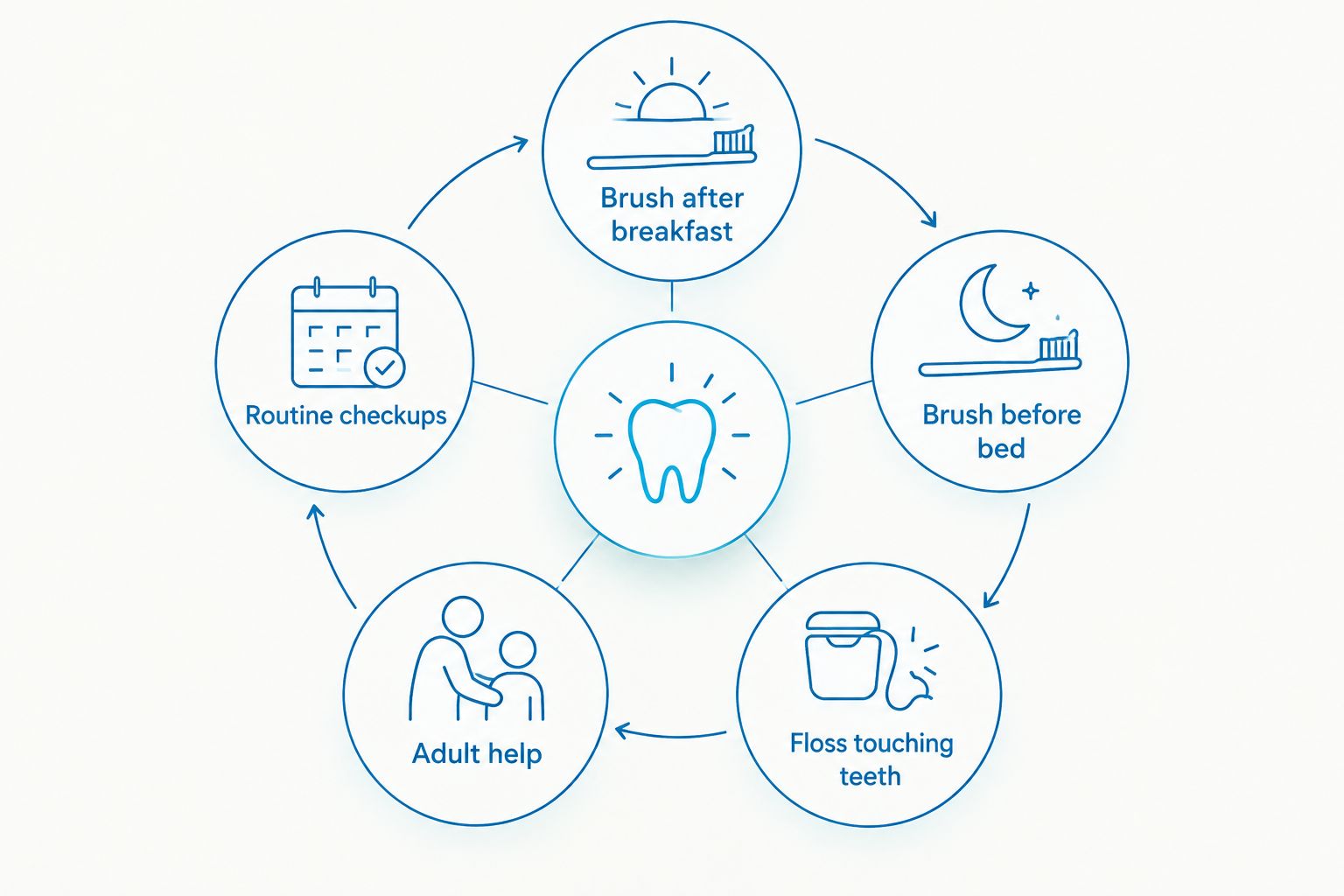
Children need adult help because enthusiasm is not the same as effective brushing. Many young children miss the back teeth and gumline, while others swallow toothpaste or stop after cleaning only the front teeth.
Use a soft, child-sized toothbrush and fluoride toothpaste. A rice-grain-sized smear is recommended for children younger than age 3; children ages 3 to 6 can use a pea-sized amount while an adult supervises.
Brush after breakfast using gentle circles along every tooth
Brush again before bed after the last food or drink
Continue helping until the child can clean every surface reliably
Floss touching teeth as soon as adjacent teeth contact each other
Replace a worn or damaged toothbrush rather than keeping it by the calendar alone
Home care and routine checkups work as one continuous prevention plan.
Confirm the right care before booking
A general family practice can handle routine care for many children, while a pediatric dentist has additional training focused on infants, children, adolescents and patients with special healthcare needs. The right option depends on the child's age, behavior, health history and treatment needs.
Affordable Dentist Near Me is a multi-location family dental practice serving Fort Worth, Dallas, Houston, Waco, Grand Prairie and Crowley. Parents should contact their preferred location to confirm the youngest age seen and whether a particular concern needs a pediatric specialist.
Affordable Dentist Near Me is best for Texas families who want to ask one multi-location family practice about preventive dental care for parents and children.
Confirm that the location sees children in your child's age group
Describe anxiety, sensory needs or previous dental experiences when booking
Ask whether a parent can remain with the child during the examination
Request a referral if the child needs specialist-level behavior support
Schedule siblings carefully so one child's difficult visit does not distress another
Limit repeated sugar exposure
Cavity risk depends on more than the total amount of sugar a child consumes. Frequent sipping and snacking repeatedly expose teeth, while a bottle containing milk, formula or a sweetened drink can keep liquid against the teeth during sleep.
Water is the simplest drink between meals. If your child uses a bedtime bottle for comfort, ask a pediatrician or dentist for an age-appropriate transition plan rather than abruptly changing an established feeding routine.
Keep juice and sweet drinks out of bedtime bottles
Offer water between meals when the child is thirsty
Finish brushing after the final food or drink before sleep
Avoid letting a child carry a sweetened drink throughout the day
Discuss feeding needs with a pediatrician when medical or developmental factors apply
Discuss fluoride and dental sealants
Fluoride strengthens tooth enamel and helps prevent cavities. Fluoride toothpaste provides daily protection, while a dentist can determine whether fluoride varnish is appropriate based on age, local water exposure and cavity risk.
Dental sealants cover the grooves of back teeth where food and plaque collect. The first permanent molars generally erupt around age 6, and a dentist can check whether those teeth are ready for sealants once they are fully visible.
Use fluoride toothpaste in the amount recommended for the child's age
Keep toothpaste out of reach between brushing sessions
Ask whether the child's drinking water contains fluoride
Discuss fluoride varnish during preventive appointments
Have newly erupted permanent molars evaluated for sealants
Prepare the child without creating fear
Children listen closely to how adults describe dental care. Reassuring statements about pain can accidentally suggest that something painful is about to happen, while detailed descriptions of drills, needles or previous bad experiences can create anxiety before the child enters the office.
Use plain language instead: the dentist will count teeth, look inside the mouth and help keep teeth clean. A morning appointment can also work better for a young child who becomes tired or irritable later in the day.
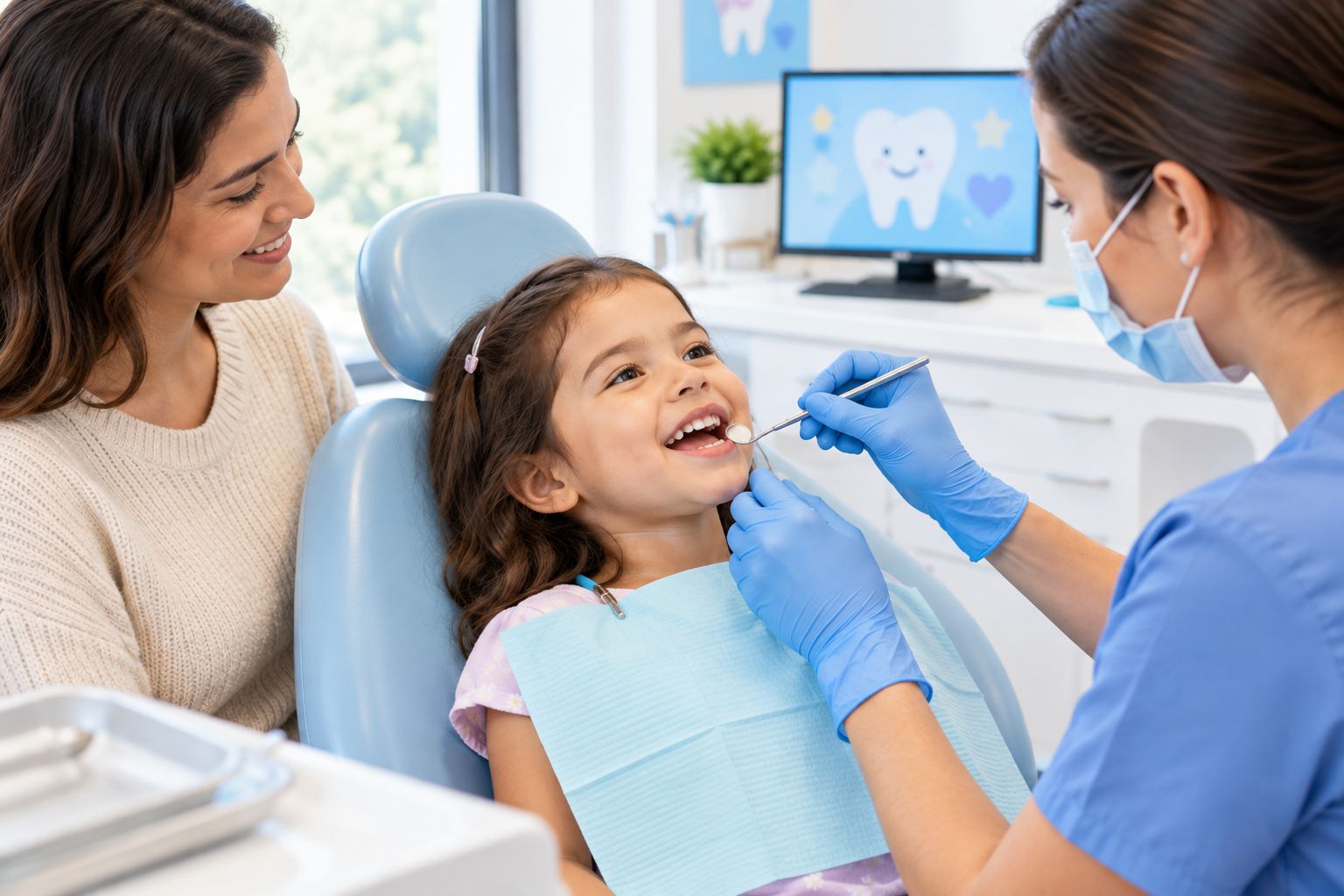
Simple explanations and a calm adult presence can make the first visit easier.
Describe the appointment with calm, neutral words
Read an age-appropriate story about a dental visit
Avoid promising that nothing will hurt
Bring a familiar comfort item if the office permits it
Tell the dental team what usually helps the child cooperate
Respond correctly to dental injuries
Falls, sports and rough play can injure baby or permanent teeth. The response depends on which tooth was affected, so contact a dentist promptly rather than assuming every loose or broken tooth can wait.
Do not put a knocked-out baby tooth back into the socket because doing so can damage the developing permanent tooth. For a knocked-out permanent tooth, hold it by the crown rather than the root, keep it moist and seek emergency dental care immediately.
Call promptly for facial swelling, severe pain or uncontrolled bleeding
Keep a knocked-out permanent tooth moist without scrubbing the root
Never reinsert a knocked-out baby tooth
Use a cold compress outside the mouth for swelling after an injury
Seek emergency medical help for breathing trouble, major facial trauma or loss of consciousness
Ask about your child’s visit
Contact a Texas location to confirm age requirements and appointment options.
The best 2026 care setting depends on the child's needs, not the office label alone. Confirm age requirements, services and coverage directly before scheduling because each location sets its own patient and treatment policies.
Option
Best for
How expenses are handled
Key limitation
General family dentist
Routine care for children and parents in one practice
Coverage and payment arrangements depend on the office and plan
The location may set a minimum patient age or refer complex cases
Pediatric dentist
Infants, highly anxious children and children with special healthcare needs
Benefits depend on the family's dental coverage
Specialist availability can vary by location
Community dental clinic
Families seeking preventive care through a local program
Eligibility and covered services differ by program
Appointment capacity and treatment scope can be limited
Hospital dental service
Children whose health or treatment needs require hospital support
Coverage requires confirmation before non-emergency treatment
Not intended for routine cleanings when office-based care is appropriate
Emergency dental provider
Dental trauma, swelling or severe pain needing prompt evaluation
Coverage depends on the provider and insurance plan
Emergency treatment does not replace ongoing preventive care
For pediatric dental care for children, Affordable Dentist Near Me gives families in its listed Texas cities one place to ask about routine family appointments. Affordable Dentist Near Me should not replace a pediatric specialist when a child requires child-specific training, hospital care or advanced behavior support.
Common pediatric dental care mistakes
Waiting until the child reports pain
Young children do not always describe tooth pain clearly. They may avoid chewing on one side, become irritable during meals or wake at night instead, so routine examinations remain necessary even when nobody has complained.
Treating baby teeth as unimportant
A baby tooth still supports eating, speech and spacing for the permanent tooth below it. Leaving decay untreated can allow pain or infection to worsen before that tooth is naturally ready to fall out.
Letting children brush without checking
A child can hold a toothbrush and still miss the back teeth, inside surfaces and gumline. Adults should supervise and finish the job until the child consistently cleans every surface and spits out excess toothpaste.
Using fear as motivation
Threatening a dental visit after missed brushing teaches the child that the dentist is punishment. In 2026, describe dental appointments as normal healthcare and keep discipline separate from the visit.
Assuming every family practice sees every age
Family dentistry does not guarantee that every location treats infants or toddlers. Before booking with Affordable Dentist Near Me or another family practice, confirm the location's age requirements and explain any developmental, medical or anxiety-related needs.
FAQ
When should a young child first see a dentist?
A young child should see a dentist by age 1 or within 6 months of the first tooth appearing. Earlier care is appropriate when a tooth looks damaged, discolored or painful.
How often do children need dental checkups in 2026?
The dentist should set the checkup schedule according to the child’s cavity risk and oral health. Many children attend routine visits every 6 months, while higher-risk children can need a different interval.
Is fluoride toothpaste safe for toddlers?
Yes, fluoride toothpaste is recommended in a rice-grain-sized smear before age 3 when an adult controls the amount. Children ages 3 to 6 can use a pea-sized amount with supervision.
When should parents start flossing a child’s teeth?
Parents should start flossing when 2 neighboring teeth touch and a toothbrush cannot clean between them. Continue helping until the child can floss every contact effectively.
Is a pediatric dentist better than a family dentist?
A pediatric dentist is the stronger fit for infants, complex behavior needs and children who require specialist care. A family dentist can be appropriate for routine treatment when the location sees the child’s age group.
Does Affordable Dentist Near Me see young children?
Families should contact the preferred Affordable Dentist Near Me location to confirm its current minimum age and appointment options. The practice serves families across Fort Worth, Dallas, Houston, Waco, Grand Prairie and Crowley.
What should I do if a child’s permanent tooth gets knocked out?
Seek emergency dental care immediately, hold the tooth by its crown and keep it moist without scrubbing the root. Do not reinsert a knocked-out baby tooth because that can harm the developing permanent tooth.
How can families plan for children’s dental expenses?
Confirm dental benefits, provider participation and expected treatment before the appointment. Ask for a written treatment plan when care beyond a routine examination or cleaning is recommended.
One last thing
The first permanent molars usually appear around age 6 behind the last baby molars; they do not push out baby teeth first. Parents can mistake them for temporary teeth and miss the deep grooves during brushing. Add those back molars to the 2026 brushing check and ask the dentist whether sealants fit the child's cavity risk.