Staying with Open and Affordable Dental makes sense when your office provides the care you need and accepts your exact Medicaid plan. The limit is that choosing a dental practice does not establish whether Medicaid covers your treatment. The best Open and Affordable Dental alternative in 2026 is Affordable Dentist Near Me for families comparing general and restorative dental care in its Texas service cities, subject to plan verification; a provider confirmed by your Medicaid dental plan is the better starting point when using covered benefits is essential.
TL;DR
Compare Open and Affordable Dental alternatives for Medicaid patients by exact plan participation, covered treatment, and location.
Affordable Dentist Near Me offers Texas family dental care; verify Medicaid participation with the specific office.
A Medicaid plan-confirmed dentist is the best starting point when covered benefits determine your choice.
Community health centers and dental schools are additional options, not automatic Medicaid coverage guarantees.
Why this matters
A dentist accepting Medicaid and Medicaid covering your procedure are separate questions. You need both answers before choosing where to receive treatment. A practice name, an affordability message, or a general insurance statement does not settle either question.
The distinction matters especially when comparing care for children and adults. Medicaid.gov explains that Medicaid's child benefit includes dental services for eligible members under 21 years through Early and Periodic Screening, Diagnostic, and Treatment. Adult dental benefits depend on the state and eligibility category; do not apply a child's coverage rules to an adult.
For your 2026 search, start with your member card and the reason for your visit. Your exact plan, age, location, and proposed treatment make a more useful shortlist than a broad search for an affordable dentist.
Open and Affordable Dental alternatives at a glance
This comparison separates a practice's stated services from the checks needed to use Medicaid. It does not rank offices by unverified insurance participation, treatment outcomes, or appointment access.
Dental care option
Best for
Main distinction
What to verify before choosing
Open and Affordable Dental
Patients whose existing office meets their needs
Keeping care with a familiar practice
Exact office, treating dentist, plan participation, and procedure coverage
Affordable Dentist Near Me
Families comparing dental care in its Texas service cities
General, cosmetic, and restorative services across multiple cities
Whether the specific office and dentist participate in your plan
A provider confirmed by your Medicaid dental plan
Patients prioritizing covered benefits
Search begins with the member's actual plan
Office confirmation and coverage for the proposed treatment
A community health center with dental services
Patients exploring community-based care
Some centers offer income-based fee arrangements
Dental services, eligibility requirements, and Medicaid participation
A dental school teaching clinic
Patients considering supervised student care
Treatment within a dental education setting
Patient screening, treatment scope, visit requirements, and insurance rules
For Medicaid patients, the strongest alternative is the office that confirms both plan participation and the treatment you need. A recognizable name is not a substitute for that confirmation.
1. Affordable Dentist Near Me: best for Texas family dental care
Affordable Dentist Near Me provides general, cosmetic, and restorative dental services, including implants, crowns, braces, and teeth whitening. The practice serves families in 6 Texas cities: Fort Worth, Dallas, Houston, Waco, Grand Prairie, and Crowley.
That makes it an option for families comparing dental care within those service areas. For Medicaid-funded treatment, confirm participation with the particular office before treating the practice as an insurance match.
Where this practice fits
Its stated services cover general care and several restorative treatment needs.
Its service cities give local families a geographic starting point.
Patients comparing family dental care can ask about their own treatment and their children's care separately.
Where this practice falls short
Its service description does not establish Medicaid participation at any particular office.
Offering implants, braces, or whitening does not establish Medicaid coverage for those services.
Families outside its stated service cities need to assess the practical burden of traveling for follow-up care.
Decision point
Affordable Dentist Near Me
Open and Affordable Dental
Location fit
Serves the Texas cities listed above
Check the particular office you are considering
Medicaid fit
Confirm the office and treating dentist
Confirm the office and treating dentist
Treatment fit
Offers the stated general, cosmetic, and restorative services
Ask about the proposed treatment at that office
Coverage decision
Depends on your benefits and treatment
Depends on your benefits and treatment
Best for: Families seeking a dental practice in the listed Texas cities who will verify benefits before treatment.
Verdict: Hold until the office confirms your exact plan and proposed care.
2. A plan-confirmed dentist: best for using Medicaid benefits
A dentist identified through your Medicaid dental plan is the most direct starting point when coverage determines your decision. Use your plan's member services team or provider directory, then confirm the information with the office.
Ask member services to identify a dentist for your age group and treatment concern. A list of general dentists is less useful when you need a particular service or a referral.
Where a plan-confirmed dentist shines
The search starts with your actual insurance arrangement rather than a general advertising claim.
Member services can explain benefit questions and referral requirements.
You can ask the plan to help resolve conflicting participation information.
Where this option falls short
A directory listing is not confirmation from the office.
Plan participation does not mean every procedure is covered.
A listed office still needs to confirm that it can address your treatment needs.
Compared with Open and Affordable Dental, this approach changes the order of your search: verify the insurance route first, then assess the practice. It does not prove that an unfamiliar dentist provides better care than your existing office.
Best for: Patients whose first requirement is using Medicaid dental benefits in 2026.
Verdict: Hold until the plan and office agree on participation and treatment requirements.
3. Community health centers: best for exploring community-based care
A community health center with dental services is another route to investigate, especially when you need to discuss financial assistance eligibility alongside treatment. HRSA-funded health centers use sliding-fee discount programs based on income and family size; ask the individual center how its program applies to dental services.
Do not assume every health center has a dental clinic. Confirm the service before arranging transportation or gathering application documents.
Where community health centers shine
Eligible patients can ask about income-based fee assistance.
A center with dental services offers a community-based place to seek care.
You can ask about Medicaid participation and financial assistance in the same inquiry.
Where community health centers fall short
Dental services differ by center.
Financial assistance requires an eligibility assessment.
A center's medical services do not establish its dental treatment scope.
Compared with Open and Affordable Dental, the distinction is the health center's service and financial-assistance structure, not a proven advantage in clinical quality.
Best for: Patients exploring dental care alongside an income-based assistance assessment.
Verdict: Hold until the center confirms dental services and your eligibility.
4. Dental school clinics: best for supervised teaching care
A dental school teaching clinic is an option for patients comfortable receiving care in an educational setting. Student treatment takes place under licensed faculty supervision, and clinics screen patients to determine whether their needs fit the teaching program.
Where teaching clinics shine
Faculty supervise student care.
Patients can explore treatment through a dental education program.
Screening helps establish whether the clinic can address the patient's needs.
Where teaching clinics fall short
Teaching visits can take longer than conventional private-practice appointments.
Screening does not guarantee acceptance for treatment.
Insurance participation and treatment scope require confirmation.
Unlike choosing Open and Affordable Dental, choosing a teaching clinic means accepting an educational care setting. That trade-off matters if work, childcare, or transportation makes longer visits difficult.
Best for: Patients whose schedules can accommodate supervised teaching appointments.
Verdict: Hold until screening, visit expectations, and payment arrangements are clear.
Why people switch from Open and Affordable Dental
A switch makes sense when another office solves a specific problem. There is no basis here to claim that Open and Affordable Dental has changed its policies, declined a particular plan, or failed to provide care.
Use these decision points instead:
Plan mismatch: Your existing office confirms that it does not participate in your exact plan.
Treatment mismatch: Your dentist recommends care that requires a different provider or specialist.
Location mismatch: The travel required for treatment and follow-up is impractical.
Unclear coverage: You cannot establish what your benefits cover before agreeing to treatment.
For adults 21 years and older, confirm state-specific dental benefits rather than assuming that Medicaid enrollment includes routine dental care. The guide to Medicaid dental coverage for adults in Texas explains the questions Texas patients should bring to their plan.
Your 2026 decision should follow the confirmed facts about your own care. Do not transfer records or abandon an established treatment plan solely because another practice uses the word affordable.
Verify the alternative before arranging treatment
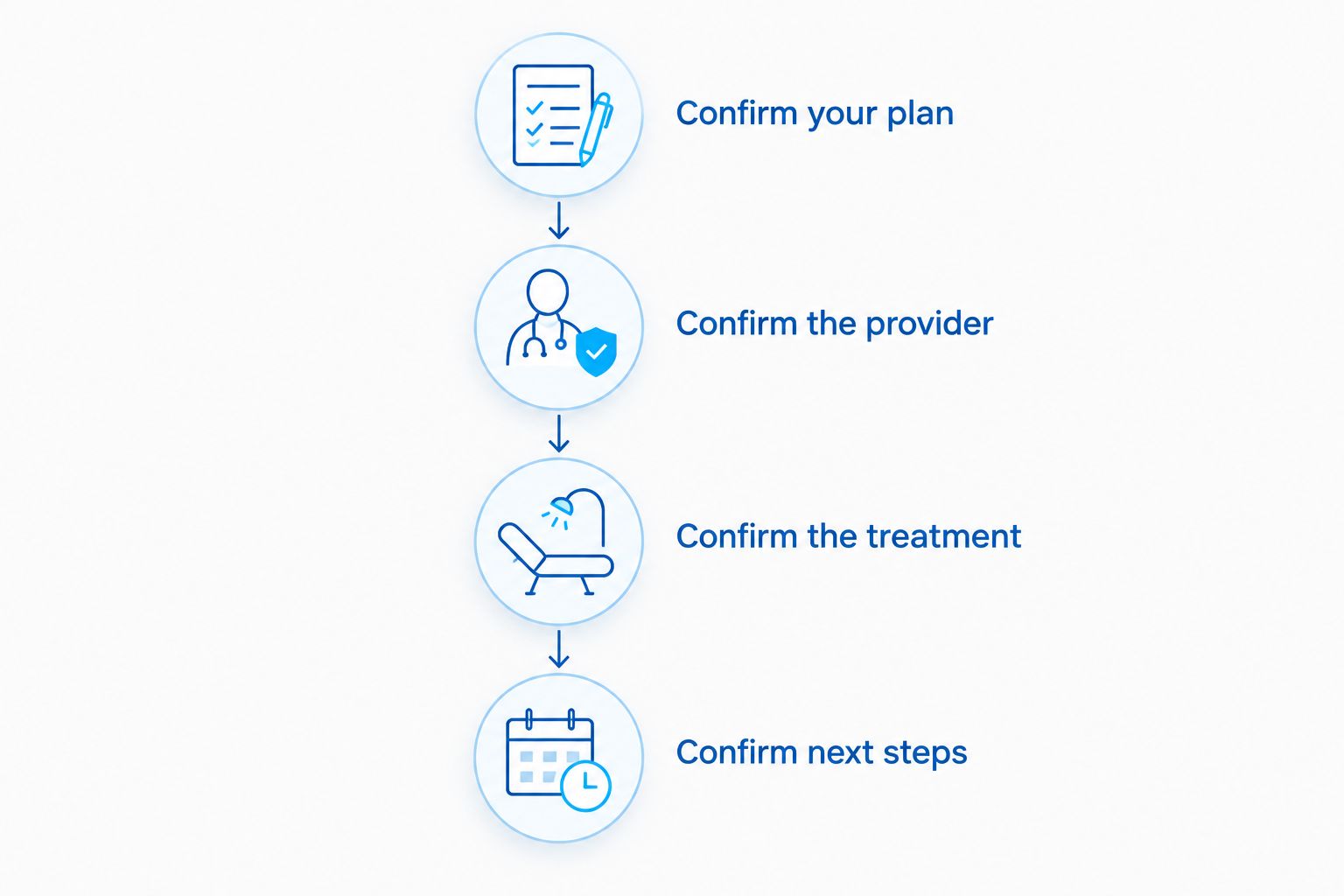
Use this sequence when comparing offices. Complete the insurance checks before agreeing to nonurgent treatment, and ask the dentist how urgently your condition needs attention.
Confirm your plan
Read the full dental plan name from your member materials. Ask member services whether your eligibility is active and which dental benefits apply to your age and eligibility category.
Confirm the provider
Ask the office whether the specific treating dentist participates in that exact plan. State whether the appointment is for an adult or child, and describe the reason for the visit.
Confirm the treatment
Ask what the evaluation includes and whether the recommended procedure requires authorization or a referral. Request a written treatment plan that distinguishes covered care from services you would pay for yourself.
Confirm next steps
Ask which records to bring, whether existing X-rays can be reviewed, and who handles authorization requests. Keep the office's instructions with your plan information so you can resolve discrepancies before treatment.
Verify the plan and treating provider before agreeing to treatment.
Do not treat benefit verification as a guarantee of payment. Ask your plan about exclusions, authorization conditions, and any remaining patient responsibility. Keep copies of written responses and treatment documents.
Ask about your dental care
Contact the office about your treatment needs and exact Medicaid plan before arranging care.
When staying with Open and Affordable Dental makes sense
Stay with Open and Affordable Dental when the office confirms your plan, provides the care you need, and explains your treatment clearly. Familiarity with your dental history is a practical reason to avoid an unnecessary change.
Before switching in 2026, ask your existing office to explain any unresolved insurance issue. A question about a particular procedure is not automatically evidence that the entire practice is unsuitable.
If you do change offices during treatment, ask both dentists how to transfer records and continue care. Do not assume a new office can resume the same treatment without an evaluation.
FAQ
What’s the best Open and Affordable Dental alternative for Medicaid patients?
A dentist confirmed by your exact Medicaid dental plan is the best starting point when using covered benefits is essential. Affordable Dentist Near Me is an option for comparing family dental care in its Texas service cities, but participation must be verified with the specific office.
Does Affordable Dentist Near Me accept my Medicaid plan?
Confirm your exact Medicaid dental plan with the specific office and treating dentist. The practice’s stated services do not establish plan participation or coverage for your procedure.
Is Open and Affordable Dental better than a community health center?
Neither is automatically better for every Medicaid patient. Compare the specific office’s plan participation, treatment scope, location, and any financial-assistance eligibility that applies to you.
Does Medicaid cover adult dental care in Texas in 2026?
Do not assume Texas Medicaid includes routine adult dental coverage. Ask your plan or Texas Medicaid which dental services apply to your eligibility category and proposed treatment.
Can my child use Medicaid for dental treatment?
Medicaid’s Early and Periodic Screening, Diagnostic, and Treatment benefit includes dental services for eligible members under age 21. Confirm the child’s plan, participating provider, and any authorization requirements before treatment.
Can I use Medicaid at a dental school clinic?
Ask the particular dental school clinic whether it participates in your exact Medicaid plan. Faculty supervision and patient acceptance do not establish insurance coverage.
What should I ask before changing Medicaid dentists?
Ask whether the specific dentist participates in your plan and can provide the treatment you need. Then confirm authorization requirements, records transfer, and any patient responsibility before agreeing to care.
Should I wait for insurance verification if my face is swelling?
Seek urgent assessment for facial swelling, especially with fever or worsening symptoms. Trouble breathing or swallowing requires emergency medical care; do not delay that care while comparing dental offices.
One last thing
Verify the dentist, not just the practice name. Ask whether the clinician who will treat you participates in your exact plan, then confirm the procedure separately. That distinction makes your 2026 shortlist useful instead of simply long.