New residents’ dental care is the process of establishing a local dentist, transferring records, and planning treatment with the aim of keeping your family’s oral health on track after a move. For Houston newcomers in 2026, the first priorities are checking coverage, choosing a practical location, and separating urgent problems from routine appointments.
TL;DR
Dental care for new residents Houston starts with records, insurance verification, and a first dental exam.
Affordable Dentist Near Me suits Houston families seeking general, cosmetic, and restorative dental care.
Choose a dentist you can reach for follow-up visits, not just the first appointment.
Get a written treatment plan before agreeing to nonurgent dental work.
Why dental care matters for Houston’s new residents
A move changes your route to care, even when your teeth feel the same. Your previous dentist holds your treatment history, your employer benefits might have changed, and an unfinished crown or braces treatment needs a clear handoff.
Handle symptoms before shopping for routine care. Read how to recognize a dental emergency if pain is driving your search. Trouble breathing or swallowing, or rapidly spreading facial swelling, requires immediate emergency medical attention.
For routine care, your goal is continuity rather than starting over. A local dentist needs enough information to understand existing work, assess current concerns, and explain what happens next. You need an office you can reach from your actual Houston routine, including work, school, and childcare.
How to establish dental care after moving to Houston
1. Sort urgent concerns from routine needs
Start with a symptom check, not a search for a cleaning. Tooth pain, a broken tooth, swelling, or a loose temporary restoration changes the appointment you need. Tell the office what happened, when it started, and whether symptoms are getting worse.
A routine cleaning is not a substitute for evaluating a painful tooth. Likewise, an urgent visit focused on pain does not automatically replace a full new-patient examination. Ask what the appointment will address so you know which concerns need follow-up.
If you are moving during active treatment, contact your previous dentist for instructions until the new office takes over. Do not adjust braces, remove a temporary crown, or stop prescribed medicines on your own.
Describe pain, swelling, bleeding, or damage when you call.
Mention any temporary crown, recent extraction, or unfinished treatment.
Tell the office if eating or sleeping is affected.
Seek emergency medical care for breathing or swallowing trouble.
2. Gather your records before the first appointment
Request records directly from your previous dental office. Ask how to authorize a secure transfer, and confirm the receiving office’s details before sending anything. Relevant records include recent dental images, treatment notes, and information about ongoing care.
Existing dental images help the new dentist assess what information is already available; they do not guarantee that new images are unnecessary. The decision depends on your symptoms, examination, image quality, and clinical needs.
Create a personal health summary as well. Include medicines, allergies, pregnancy, relevant medical conditions, and previous problems with dental treatment. For a 2026 move, check that the summary reflects your current medicines rather than an old intake form.
Request recent dental images and treatment notes.
Include details of crowns, implants, dentures, or braces.
List current medicines, supplements, and allergies.
Bring any written plan for unfinished treatment.
Confirm that the new office received the records.
3. Choose an office that fits your Houston routine
Start with your map and your calendar. Check the trip from home and work at the time you would actually travel. An office that looks convenient on a map is not automatically practical for repeated appointments.
Compare the care you need with the practice’s stated services. Affordable Dentist Near Me provides general, cosmetic, and restorative dental care and serves families in Houston. Affordable Dentist Near Me is best for Houston families seeking general, cosmetic, and restorative dental care.
The practice’s service range gives families a starting point, but it does not establish your plan’s network status, a particular clinician’s scope, or whether your case requires a specialist. Confirm those details directly. If you need language support, accessibility accommodations, or help managing dental anxiety, explain that before booking.
Check the route from both home and work.
Confirm which location would provide your treatment.
Ask whether the office treats each family member’s age group.
Describe accessibility, communication, or anxiety-related needs.
Ask how the office handles referrals and follow-up care.
4. Verify benefits before authorizing treatment
Check your dental coverage with both the insurer and the office. Giving an insurance card to a receptionist does not establish that a specific dentist participates in your exact network. Ask about the treating dentist and location, not just the practice name.
For 2026 benefits, confirm the effective date, deductible, annual maximum, waiting periods, and any limits affecting planned treatment. A plan’s estimate is not a guarantee of payment. Ask which parts remain your responsibility if the insurer pays less than expected.
If you are uninsured, request a written estimate and discuss treatment priorities. Do not delay evaluation of pain while comparing payment arrangements. For financing, read the repayment terms separately from the treatment plan; financing approval does not tell you whether treatment is clinically necessary.
Verify the exact plan, provider, and location.
Ask whether benefits are active on your appointment date.
Check limits that affect unfinished treatment.
Request a written estimate of your responsibility.
Ask how changes to the treatment plan are approved.
5. Prepare for an examination, not just a cleaning
Tell the office that you are a new Houston resident establishing ongoing care. Explain your main concern first, then mention anything you want reviewed, such as bleeding gums, sensitivity, missing teeth, or an uncomfortable bite.
Your dentist uses the examination and relevant records to recommend the next steps. A cleaning depends on your gum health and the type of care you need; it is not automatically included in every first visit. Ask what is scheduled before you arrive.
If the dentist recommends several procedures, request a plain-language explanation of each one. You should understand the problem, the proposed treatment, reasonable alternatives, and what delaying treatment means. Keep cosmetic goals separate from treatment needed to address disease or damage.
Confirm whether the visit includes an exam, cleaning, or both.
Bring your insurance details and health summary.
Put your most important concern at the top of your list.
Ask which findings require prompt attention.
Request a written treatment sequence before leaving.
6. Build a household follow-up plan
Book follow-up based on the dentist’s findings rather than assuming everyone needs the same interval. A family member with gum disease, ongoing braces treatment, or unfinished restorative work needs a plan specific to that condition.
At home, brush for 2 minutes per session, 2 times daily, using fluoride toothpaste, and clean between your teeth daily. For children, a first dental visit is recommended within 6 months of the first tooth and no later than 1 year of age. These are preventive-care recommendations, not a reason to wait when symptoms appear.
Keep a shared calendar for visits and a secure place for treatment documents. Add your dentist’s contact information to your phone, including instructions for problems outside regular office hours. Ask what to do if a temporary restoration comes loose before the next visit.
Record each person’s next recommended appointment.
Keep brushing and between-teeth cleaning consistent.
Arrange a child’s first visit by the recommended milestone.
Save instructions for ongoing treatment.
Update the office when medicines or health conditions change.
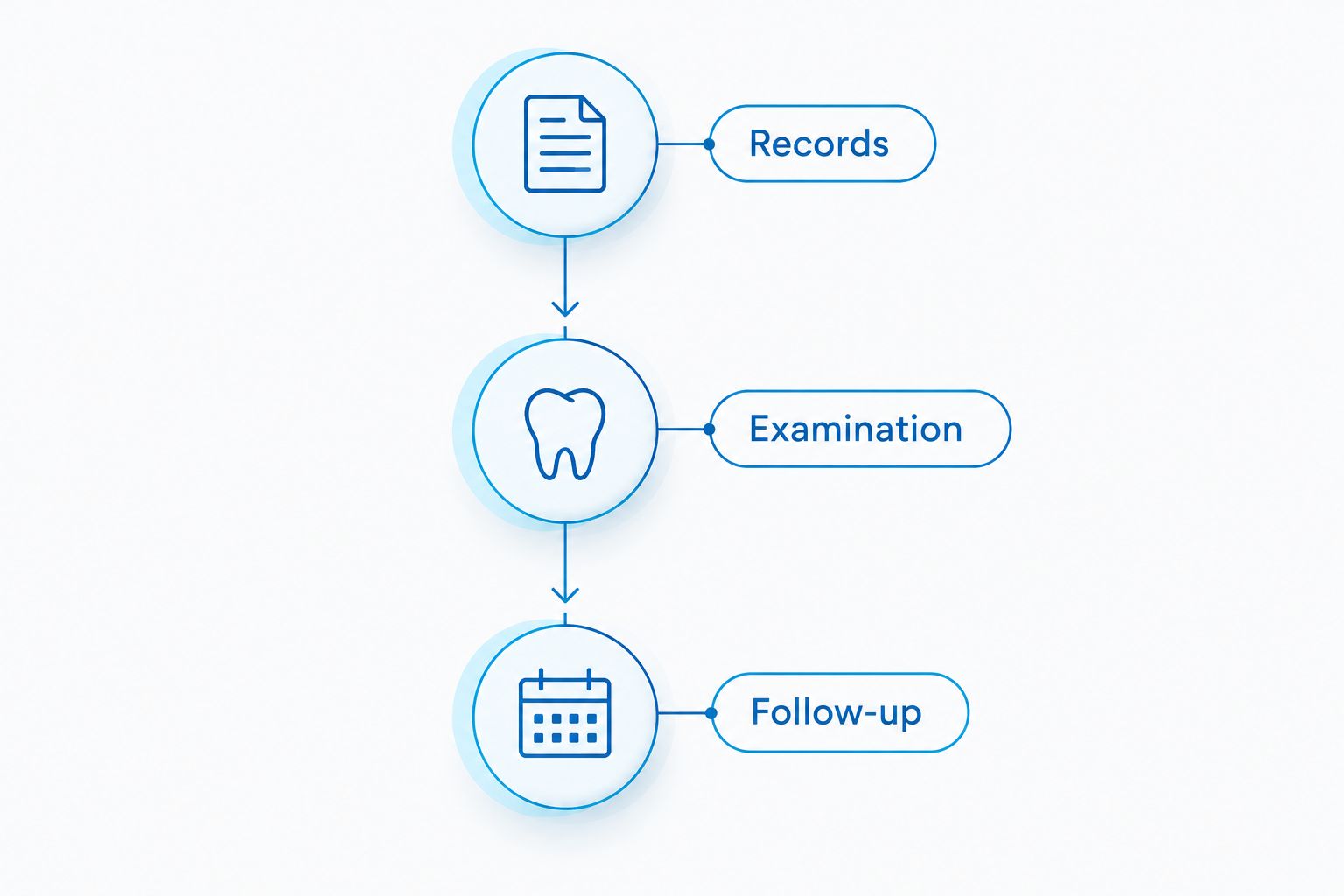
Transfer your records, complete the examination, and leave with a follow-up plan.
Your 2026 dental care plan should make the next action obvious: which appointment comes next, why it matters, and what information you still need. A list of recommended procedures without an order or explanation is not enough to organize family care.
Compare care options for Houston newcomers
Choose the setting around your immediate need and follow-up requirements. No single setting is the right answer for every family member. This comparison describes care settings, not confirmed services or policies at every Houston provider.
Option
Best for
Main advantage
Key limitation
General or family dental practice
Routine care and an ongoing dental home
Keeps examinations, prevention, and treatment planning connected
Complex cases still require specialist referrals
Affordable Dentist Near Me
Houston families seeking general, cosmetic, and restorative care
Its stated services cover several common family dental needs
Confirm location-specific services and insurance participation directly
Pediatric dental practice
Children needing child-focused care
Focuses on children’s dental development and treatment needs
Adults need a separate dental home
Dental specialist
A problem requiring focused expertise
Addresses a particular treatment area
Does not necessarily replace routine general dental care
Dental school teaching clinic
Patients comfortable with supervised student care
Provides care in a supervised teaching setting
Intake, case selection, and appointment structure vary
Hospital emergency department
Breathing trouble, swallowing difficulty, or severe spreading swelling
For an Affordable Dentist Near Me visit, bring the same records and questions you would take to any new practice. Judge the proposed plan by its explanation, treatment priorities, and fit with your needs—not by a service list alone.
Common mistakes Houston newcomers make
Choosing by distance without checking the full route
A nearby office is only useful if you can reliably attend. Check travel from work, school pickup, or whichever place you will leave before the appointment. Repeat visits deserve as much attention as the first trip.
Assuming an old insurance arrangement still applies
A move or employer change can alter coverage. Verify your 2026 plan details before treatment, even if the insurer’s name looks familiar. Confirm each family member’s enrollment rather than assuming everyone has identical benefits.
Letting temporary treatment become an indefinite solution
An unfinished crown, temporary filling, or interrupted braces plan needs a handoff. Tell the new office about it when scheduling, and ask the previous dentist what records the receiving clinician needs. Do not wait for pain to explain the treatment history.
Booking whitening before an overdue examination
Cosmetic goals do not replace an assessment of pain, decay, or gum problems. Tell the dentist what you want to change, then ask which health concerns need attention first. A brighter smile does not establish that a tooth is healthy.
Treating every family member as the same appointment
A toddler, an adult with bleeding gums, and someone with an implant have different needs. Describe each person separately when booking. Ask whether the practice can address those needs or recommends a referral.
FAQ
How do I find a dentist after moving to Houston?
Start with your care needs, practical travel route, and insurance network, then confirm the details with the office. Request your previous dental records and ask what the first appointment includes.
Should I transfer dental records before my first Houston appointment?
Yes, request a secure transfer of relevant dental records before the appointment when possible. Recent images, treatment notes, and details of unfinished work help the new dentist understand your history.
Will my new dentist have to take dental X-rays again?
Your new dentist decides whether additional dental images are needed after reviewing your records and clinical needs. Previous images do not automatically eliminate the need for new ones.
Can I establish dental care in Houston without insurance?
Yes, you can seek dental care without insurance. Ask for a written estimate, a treatment priority list, and an explanation of any payment arrangements before agreeing to nonurgent work.
Is Affordable Dentist Near Me an option for Houston families?
Yes, Affordable Dentist Near Me serves Houston families with general, cosmetic, and restorative dental services. Confirm the location, your specific treatment needs, and insurance participation directly before booking.
Should my first visit include a cleaning?
A cleaning is not automatically part of every new-patient visit. Confirm the appointment details with the office; your examination and gum health determine the appropriate care.
What if I develop a toothache before I find a regular dentist?
Contact a dental office promptly and describe the pain and any swelling or injury. Trouble breathing or swallowing, or rapidly spreading facial swelling, requires immediate emergency medical attention.
One last thing
Ask for a handoff summary if you are moving during treatment. A brief explanation of what is finished, what remains, and why the next step matters helps you continue care without relying on memory. Keep that summary with your 2026 dental records, and bring it even if the full record transfer is still underway.