To find a dentist near you that accepts Medicaid in 2026, start with your dental plan’s provider directory, then call the office to confirm your exact plan, the patient’s age, and whether the dentist is accepting new Medicaid patients. Accepting Medicaid does not mean every service is covered, so verify the planned visit with both the office and your plan before booking.
TL;DR
Searching dentist that takes medicaid near me? Start with your Medicaid dental plan’s directory, then verify by phone.
Medicaid dental coverage depends on your state, eligibility group, age, and requested treatment.
Confirm the individual dentist, office address, new-patient status, and benefit requirements before booking.
CMS identifies dental services as a required Medicaid benefit for eligible children under age 21.
How do you find a dentist near you that accepts Medicaid?
Follow these steps rather than relying on a map listing or an office’s general insurance statement. A practice can accept Medicaid while a particular dentist, location, or service does not match your coverage.
For families considering Affordable Dentist Near Me, confirm Medicaid participation directly with the specific office. Its general, family, and cosmetic dental services do not establish that it accepts your Medicaid dental plan.
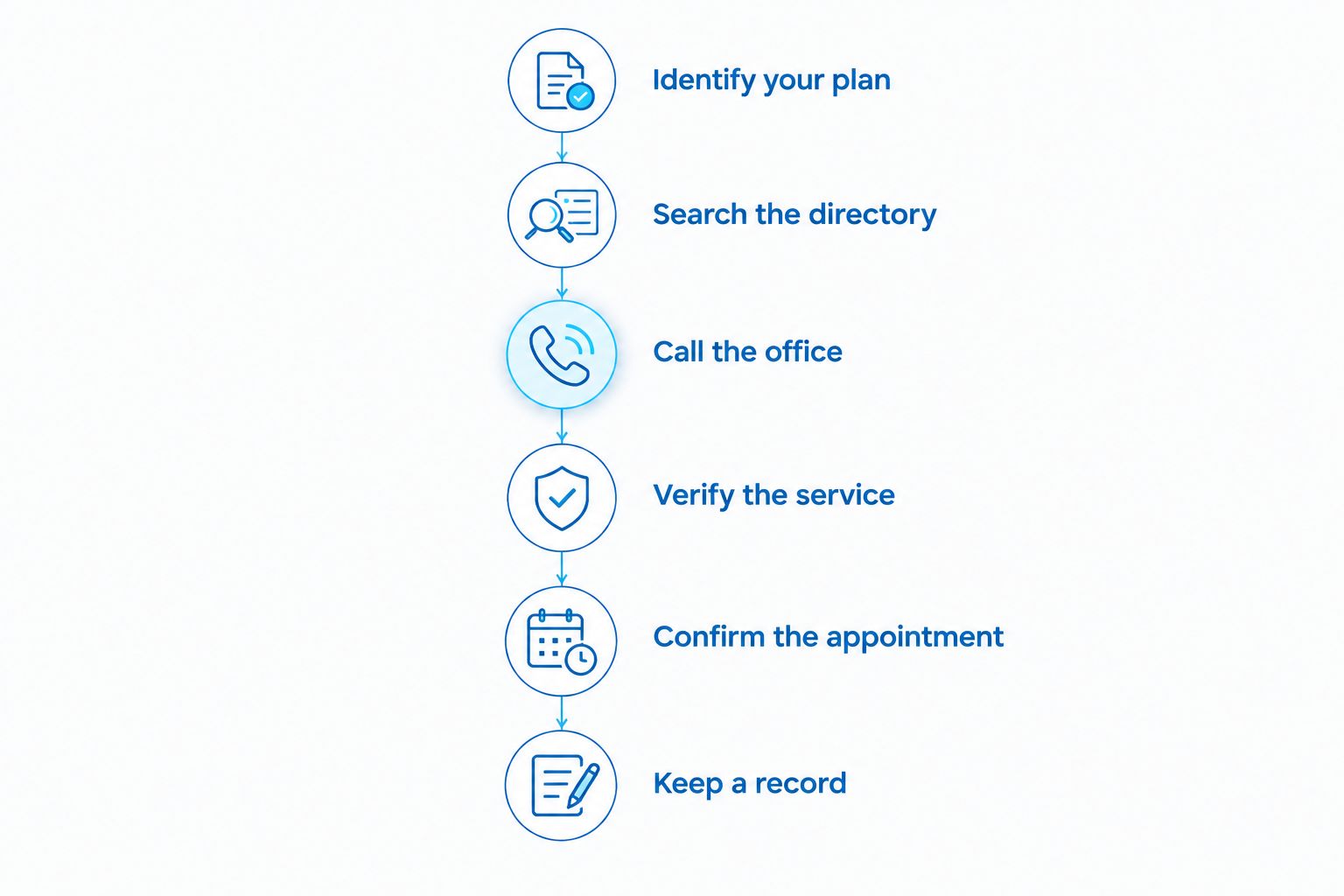
1. Identify your plan
Find the dental plan name and member-services number on your coverage documents or member portal. If you only have a medical Medicaid card, call the number on it and ask who administers your dental benefits.
Have the patient’s name, date of birth, and member identification ready. Ask whether dental care uses a separate provider network; searching a medical directory alone does not establish dental participation.
2. Search the directory
Use your dental plan’s official provider directory and enter your ZIP code. Filter for the patient’s age and the type of care needed, such as general dentistry or pediatric dentistry.
Write down the dentist’s name and exact office address, not just the practice name. For a 2026 appointment, confirm current participation instead of relying on an old search result, review, or saved insurance list.
3. Call the office
Ask whether the individual dentist at that address participates in your exact Medicaid dental plan. Then ask whether the office is accepting new patients under that plan and treats patients in your age group.
Use the plan’s full name. The question “Do you take Medicaid?” leaves too much unresolved, especially when a practice has several locations or dentists.
4. Verify the service
Describe the reason for the appointment: a checkup, tooth pain, a broken tooth, or a referral. Ask the plan whether the examination and proposed treatment fall within your benefits.
An office’s participation does not guarantee payment for every procedure. Ask about referrals, prior approval, treatment limits, and any charges you would be responsible for before agreeing to care.
5. Confirm the appointment
Confirm the address, treating dentist, appointment purpose, and documents to bring. Tell the office about language assistance, disability accommodations, or other access needs when you schedule.
If you need transportation assistance, ask member services whether your Medicaid program offers transportation for that appointment and how to arrange it. Do not assume the dental office handles that request.
6. Keep a record
Record who confirmed the coverage and when. Save any reference number, written benefit explanation, referral, or approval notice you receive.
Bring your current membership information and the documents the office requests. Before treatment starts, ask the office to explain anything that differs from the visit you verified.
Verify the plan, dentist, location, and service before you book.
Why this matters
A directory match is a starting point, not a coverage guarantee. You need separate answers about the provider’s participation, your eligibility, and the service you need.
That distinction matters when you are arranging time away from work, childcare, or transportation. Completing the checks before traveling helps you avoid arriving at an office that cannot provide the visit under your plan.
For your 2026 search, use current plan information. A recommendation from a friend can identify a nearby office, but it cannot confirm that your coverage matches theirs.
Where should you start your Medicaid dentist search?
Each search route answers a different question. Start with your plan for network information, then use the office to confirm the practical details of your visit.
Search route
Best for
Main advantage
Limitation
Dental plan directory
Finding participating dentists
Searches your plan’s listed network
Does not replace office confirmation
Plan member services
Coverage questions or difficulty finding care
Can explain benefits and help with a provider search
Does not replace a dental examination
Dental office
Confirming the dentist, address, and appointment
Answers location-specific scheduling questions
Cannot change your plan’s benefit rules
General web search
Finding nearby practices
Helps identify offices to investigate
A search result does not prove Medicaid participation
Best starting point: your Medicaid dental plan’s directory or member-services team. Use a general search to supplement that process, not to decide whether treatment is covered.
If a listed office says it does not participate, report the mismatch to member services. Ask for another participating provider and assistance confirming the information before you travel.
Finding a Medicaid dentist for children and young adults
Medicaid’s dental rules for children differ from adult benefit rules. The Centers for Medicare & Medicaid Services, or CMS, identifies dental services as part of the Early and Periodic Screening, Diagnostic, and Treatment benefit for eligible Medicaid members under 21 years of age.
That federal benefit includes dental care needed to relieve pain and infection, restore teeth, and maintain dental health. It does not mean every requested procedure automatically receives approval; the plan still applies its coverage and medical-necessity requirements.
For a child’s appointment, confirm that the dentist treats the child’s age group. Tell the office about dental anxiety, communication needs, or a disability so you can discuss appropriate arrangements before arriving.
A patient who is 20 years old should ask the plan about under-21 dental benefits rather than assuming ordinary adult benefit rules apply. If the patient is approaching their 21st birthday, ask how eligibility and treatment approvals apply to appointments after that birthday.
Finding a Medicaid dentist for adults
Adult Medicaid dental benefits depend on the state and eligibility group. CMS distinguishes the required dental benefit for eligible children from adult dental coverage, which states determine within their Medicaid programs.
Do not assume an adult has the same coverage as a child in the same household. Confirm benefits for the specific person, including any rules tied to pregnancy, disability, or another eligibility category.
Texas residents planning care in 2026 should ask their plan which adult dental services apply to their enrollment. A general statement that an office “takes Medicaid” does not answer whether that adult’s examination, cleaning, or treatment is covered.
If your plan does not cover the requested service, ask the dentist to separate covered care from other proposed treatment. Request a written explanation before deciding how to proceed.
Why Medicaid dentist eligibility and coverage vary
These factors explain why two people can call the same dental office and receive different answers:
State program: Adult dental benefits are not identical across state Medicaid programs.
Patient age: Federal Medicaid dental requirements for eligible members under age 21 differ from adult benefit rules.
Exact plan: Your dental network depends on the coverage you are enrolled in.
Dentist and location: Confirm the treating provider and address rather than relying only on the practice name.
Requested service: An examination, a filling, and orthodontic treatment require separate benefit checks.
Approval requirements: Some services require prior approval, supporting records, or a referral under the applicable plan.
These checks apply even when you have visited the practice before. Tell the office if your plan, eligibility, or treatment needs have changed since the previous appointment.
What should you say when calling a Medicaid dental office?
Give the receptionist the plan name, patient age, office location, and reason for the visit. Then work through the questions below; they are a suggested call checklist, not a statement from any particular practice.
Do you participate in my exact Medicaid dental plan at this address?
Which participating dentist would see me or my child?
Are you accepting new patients with this plan?
Do you treat patients in this age group?
What should my plan confirm before this visit?
Does the requested service need a referral or prior approval?
What documents should I bring?
If you have pain or swelling, describe those symptoms when you call rather than asking only for a routine cleaning. The office needs that information to advise you about the appropriate appointment.
If the receptionist cannot confirm coverage, ask who handles insurance verification. Separately, call member services; a scheduled appointment alone is not proof that the plan covers the treatment.
What if no nearby dentist accepts your Medicaid plan?
Ask member services for help locating a participating provider who treats your age group and the problem you have. Explain which offices you contacted and what each office told you.
If the directory produces repeated dead ends, ask about the plan’s process for addressing access problems. Request instructions before scheduling outside the network, including whether any authorization is required.
Community health centers and dental schools are additional places to investigate, but neither type of facility automatically accepts every Medicaid plan. Confirm participation and appointment requirements directly rather than treating them as guaranteed alternatives.
For urgent symptoms, tell both the plan and the dental office that you need prompt assessment. Trouble breathing or swallowing, or rapidly spreading facial swelling, requires emergency medical attention—not a continued directory search.
Is a Medicaid dentist the same as an affordable dentist?
No. “Affordable” describes a practice’s positioning; Medicaid participation is a separate insurance arrangement. A practice’s name, general services, or emphasis on affordability does not establish network status.
Affordable Dentist Near Me is a local dental-care option for families in its six listed Texas service cities; confirm Medicaid participation before booking. Those cities are Fort Worth, Dallas, Houston, Waco, Grand Prairie, and Crowley.
Affordable Dentist Near Me provides general, cosmetic, and restorative dental services. The relevant limitation for this search is that those services do not establish coverage under your particular Medicaid plan or at a particular office.
How do you check Medicaid dental coverage before treatment?
Check coverage with both the dental office and your plan before treatment begins. For your 2026 appointment, ask the office to identify the proposed services so the plan can explain the applicable benefits.
Keep these distinctions clear:
Eligibility: Your Medicaid enrollment is active for the date of care.
Participation: The treating dentist participates in your network at that location.
Benefits: Your plan includes the proposed service under its rules.
Authorization: Any required approval has been obtained.
Ask whether the treatment plan contains services outside your benefits. Do not assume approval for an examination also approves all treatment recommended afterward.
FAQ
How do I find a dentist that takes Medicaid near me?
Search your Medicaid dental plan’s provider directory, then call the listed office to confirm your exact plan, age group, and new-patient status. Ask your plan to verify the intended service before treatment.
Does every dentist who accepts Medicaid take my plan?
No. Confirm the exact Medicaid dental plan, individual dentist, and office address. A general statement that a practice accepts Medicaid is not enough to establish your network match.
Does Medicaid cover dental care for adults?
Adult Medicaid dental benefits depend on the state and eligibility group. Ask your plan which services apply to your enrollment rather than assuming adult benefits match children’s coverage.
Does Medicaid cover dental care for children under 21?
Eligible Medicaid members under age 21 receive dental benefits through the federal Early and Periodic Screening, Diagnostic, and Treatment benefit. Ask the plan about the requested treatment, participating providers, and any approval requirements.
Can I book a Medicaid dental appointment without a referral?
Ask your plan whether the specific visit requires a referral or prior approval. Confirm the answer before booking, especially when the appointment involves a specialist.
What should I do if the Medicaid dentist directory is wrong?
Report the incorrect listing to your dental plan’s member-services team and request help finding another participating dentist. Keep a record of the offices you contacted and the answers you received.
Does Affordable Dentist Near Me accept my Medicaid dental plan?
Confirm directly with the specific Affordable Dentist Near Me office and your plan. The practice’s service list and locations do not establish participation in your exact Medicaid dental network.
One last thing
Ask about the dentist, not just the building. Before you travel, match the treating dentist’s name, office address, and exact dental plan. That final check connects a nearby search result to the appointment you actually need.