Are Dental Implants Covered by Insurance? A Clear Guide to Coverage, Costs, and Payment Options
Dental implants are a reliable way to restore a smile and improve oral health. This guide explains how insurance may — or may not — help pay for implants, what the typical costs look like, and practical financing options that make treatment more affordable. Insurance policies vary a lot, and many people get surprised by out-of-pocket costs. Read on to learn the types of coverage to watch for, how to verify benefits, and steps you can take to keep your treatment within budget.
What Are Dental Implants and Why Do They Matter?
Dental implants are titanium posts that act like artificial tooth roots to support crowns, bridges, or dentures. They restore chewing, speech, and the natural look of your smile. Unlike removable dentures, implants fuse with the jawbone and provide a long-lasting, stable solution that protects bone health and facial structure.
How Do Dental Implants Restore Your Smile and Function?
An implant post is placed into the jaw, where bone grows around it (called osseointegration). Once healed, the post holds an abutment and a custom crown. The result is improved chewing, clearer speech, and a natural appearance — many patients say they feel more confident after treatment.
What Benefits Do Dental Implants Offer Compared to Other Options?
Compared with bridges or dentures, implants often feel and function more like natural teeth. They don’t rely on neighboring teeth for support, they reduce the risk of bone loss, and they remove the need for adhesives. Implants also tend to be easier to care for and more comfortable for everyday use.
Implants are used in several common restorative options: single-tooth replacement with a crown, implant-supported bridges for multiple adjacent missing teeth, and implant-retained dentures for full-arch replacement. Each choice has different clinical steps and maintenance needs, but all share the advantage of preserving jawbone and delivering stable chewing function.
Does Dental Insurance Cover Dental Implants? Understanding Your Benefits
Coverage for dental implants varies by plan. Some policies include implant benefits, while others exclude them entirely. It’s important to verify your specific plan details before starting treatment so you know what to expect financially.
Which Types of Dental Insurance Plans Include Implant Coverage?
Preferred Provider Organization (PPO) plans are more likely than HMOs to offer partial coverage for implants, but even PPO benefits differ. Some plans will pay a percentage of the procedure, others may only cover certain parts (like the crown), and many exclude implants altogether. Always check your plan’s coverage language.
What Are Common Limitations and Exclusions in Implant Coverage?
Common limits include waiting periods, annual maximums, prior-authorization requirements, and rules that only cover implants when they’re considered “medically necessary.” Many plans cap yearly benefits, which can leave you with significant out-of-pocket costs for implant work.
Typical insurer behavior you may encounter includes splitting the overall treatment into separate claims (surgery vs. prosthetic), applying separate deductibles, or reducing coverage if a competing, lower-cost option (like a bridge) is available. Because of these nuances, expect to review several lines of policy text and to request explanations from your carrier when coverage is unclear.
Which Insurance Providers Are Accepted for Dental Implants in Grand Prairie?
Knowing which carriers a dental office accepts helps speed up scheduling and insurance checks.
What Major Insurance Plans Does Affordable Dentist Near Me – Grand Prairie Accept?
Affordable Dentist Near Me – Grand Prairie accepts a range of major plans that may help with implant-related costs, including commonly used providers like Delta Dental, Cigna, and Aetna. Coverage details still depend on your individual policy, so please contact our office to confirm what your plan will pay.
Even when a carrier is accepted, specific implant coverage can vary by employer group or policy year. Our office routinely verifies benefits and provides a written estimate showing what the insurer is likely to pay and what you will owe. Bringing recent insurance cards and any plan summaries to your consult speeds this process.
How Can You Verify Your Dental Implant Coverage with Your Provider?
Start by calling your insurance company and asking for a benefits breakdown for dental implants. Have your policy number handy and ask about waiting periods, annual maximums, prior authorization, and any exclusions. You can also ask our office to verify benefits on your behalf — we’ll walk through the details with you so there are no surprises.
When you contact your insurer, ask for the information in writing or request an email confirmation. Key items to request include the percentage covered for surgical and restorative codes, applicable deductibles, whether an in-network discount applies, and whether pre-authorization is required for the procedure codes your dentist plans to submit.
How Much Do Dental Implants Cost with Insurance in Grand Prairie?
Implant costs depend on the implant type, any preparatory work (like bone grafts), and the provider’s fees. Location and materials also play a role, so prices can vary.
What Factors Influence the Cost of Dental Implants?
Cost drivers include the implant system, whether bone grafting or extractions are needed, the complexity of the case, and the dentist’s experience. Typically, an implant with a crown ranges from about $3,000 to $5,000 per tooth — this is an average, not a quote.
The total fee for an implant treatment commonly includes several components: the initial exam and imaging (such as X-rays or CBCT), surgical placement of the implant, any preparatory procedures (extractions or bone grafts), the abutment that connects the implant to the restoration, the lab fee for a custom crown or bridge, and follow-up visits. Each of these line items may be billed separately and may be subject to different coverage rules under your plan.
Because implants are an investment, it helps to plan ahead — cost often plays a major role when patients choose their treatment path.
Advances in treatment and technology can raise care costs. Implant dentistry is evolving quickly, and while newer techniques improve outcomes, patients often weigh financial factors heavily when choosing a treatment plan.
Cost-utility analysis of an implant treatment in dentistry, 2021
What Is the Average Out-of-Pocket Expense After Insurance?
Even with insurance, many people still pay several hundred to a few thousand dollars per implant. Typical out-of-pocket ranges are roughly $1,000 to $3,000 per implant, depending on your plan’s coverage and the total procedure cost. Talk with our team about payment options so you can plan effectively.
To reduce surprise costs, request a pre-treatment estimate and compare it to your benefits summary. If a claim is denied or partially paid, ask your office to help file an appeal with documented clinical notes and X-rays. In many cases an appeal, additional documentation, or a corrected coding submission can improve reimbursement.
Insurance can help, but out-of-pocket costs remain common — delays and complex claims can also add to the burden.
Health Insurance Claims & Out-of-Pocket Healthcare Costs
Claims processing can be slower than guidelines suggest, and patients often pay out-of-pocket while care is arranged. Efficient front-line processes and trained staff improve the patient experience and reduce unexpected expenses.
Improving hospital-based processes for effective implementation of Government funded health insurance schemes: evidence from early implementation of PM-JAY in …, A Saxena, 2022
What Are the Best Dental Insurance Plans for Implant Coverage?
Picking the right plan can make a noticeable difference in how much you pay for implants.
Which Plans Offer the Most Comprehensive Implant Benefits?
The best plans for implants explicitly list implant coverage and offer higher reimbursement percentages with fewer restrictions. When comparing plans, look for clear implant benefits, higher annual limits, and short or no waiting periods.
When evaluating options during open enrollment, compare the annual maximum, whether implants are listed under major restorative benefits, and whether pre-authorization is a requirement. If you are considering a plan change and expect major dental work, prioritize plans that reduce waiting periods and provide higher lifetime or annual maxima for restorative care.
How Do PPO and Medicare Advantage Plans Differ in Implant Coverage?
PPOs tend to give more provider choice and better implant coverage than HMOs. Medicare Advantage plans sometimes include dental benefits, but implant coverage is usually limited and often applies only when medically necessary. Original Medicare does not cover dental implants.
How Can You Maximize Your Dental Implant Insurance Benefits?
Getting the most from your plan takes a bit of planning and communication.
What Steps Should Patients Take to Optimize Coverage?
Review your policy closely, ask your insurer for a written benefits summary, and bring that information to your dental consult. Ask your dentist to submit a pre-treatment estimate or pre-authorization — this clarifies what the insurer will pay and what you’ll owe.
Practical steps to maximize benefits:
Request a written pre-treatment estimate from your dentist and compare line-item charges to your benefit summary.
Schedule work to make full use of annual maximums (for example, begin treatment early in the year or split phases across two calendar years if that lowers out-of-pocket cost).
Confirm whether separate deductibles apply to surgical versus restorative services and time procedures to satisfy deductibles efficiently.
When eligible, coordinate benefits between two plans (for example, a spouse’s plan) to reduce your share, and always verify coordination rules with both carriers.
How Does Pre-Authorization and Claim Process Work for Implants?
Pre-authorization means your dentist sends the treatment plan to the insurer before work begins. The insurer reviews medical necessity and coverage limits and returns an approval or denial with a cost breakdown. Pre-authorization helps avoid surprises and speeds up claim processing.
If pre-authorization is required, ask your dental team to include clear clinical notes, relevant imaging, and a proposed sequence of care. Keep copies of all communications, note claim numbers, and follow up promptly if the insurer requests clarification. A proactive approach often reduces delays.
What Affordable Financing and Payment Options Are Available for Dental Implants?
If cost is a concern, there are several ways to spread payments so you can get the care you need without undue stress.
What In-House Payment Plans Does Affordable Dentist Near Me Offer?
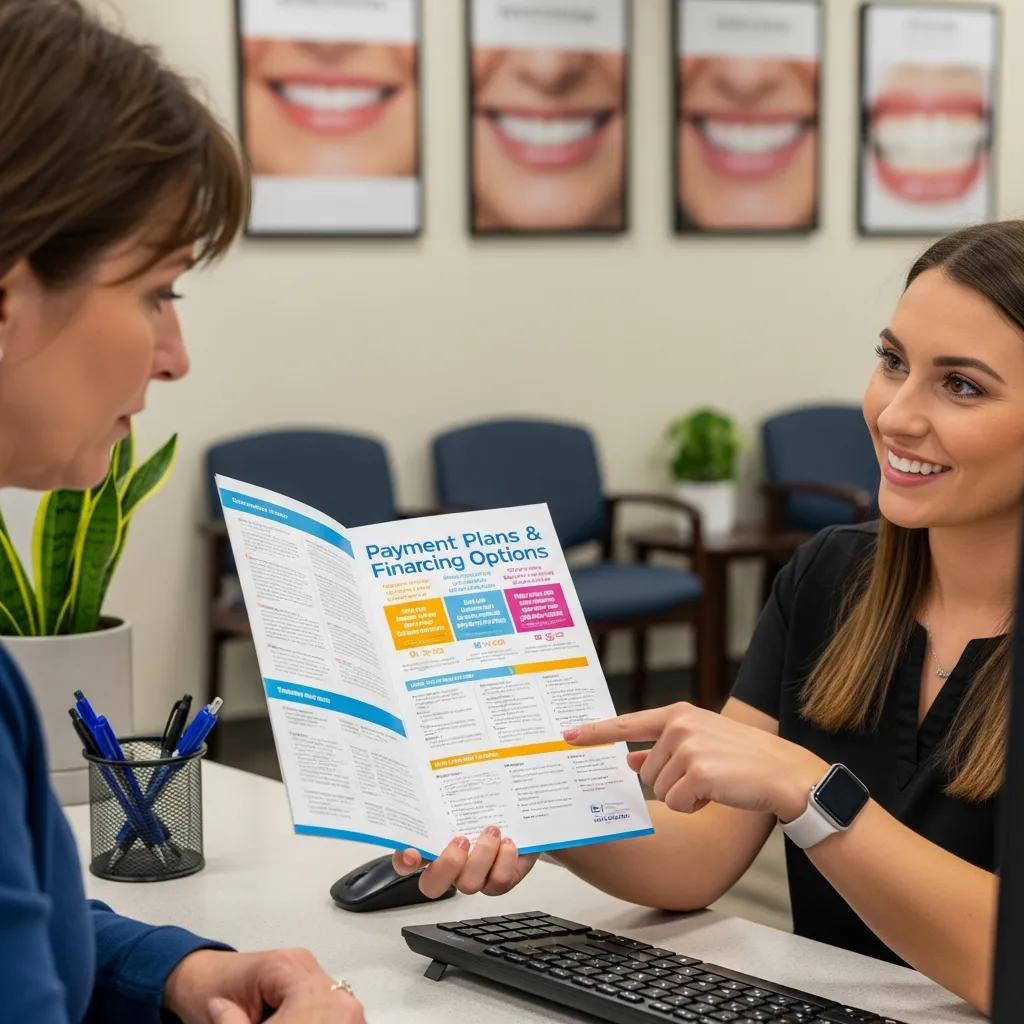
Affordable Dentist Near Me – Grand Prairie offers in-house payment plans that let you break your balance into manageable monthly payments. We’ll work with you to find a plan that fits your budget while keeping care on track.
Are Third-Party Financing and Dental Discount Plans Viable Alternatives?
Yes — services like CareCredit provide third-party financing with monthly payment options. Dental discount plans can also reduce costs for certain procedures. Compare terms and interest rates, and ask our team which options fit your situation best.
Other ways to reduce the immediate financial burden include using pre-tax accounts when available. Flexible Spending Accounts (FSAs) and Health Savings Accounts (HSAs) often allow qualified dental expenses to be paid with tax-advantaged funds. For multi-tooth or full-arch cases, ask your provider about bundled pricing or multi-stage discounts that can lower the overall cost compared with single-tooth pricing charged repeatedly.
How Can You Schedule a Free Dental Implant Consultation in Grand Prairie?
Booking a consultation is the best way to get personalized cost estimates and a clear treatment plan.
What Does the Free Consult Include and How Does It Help?
Our free implant consultation includes an exam, a discussion of options, and a straightforward cost estimate. We’ll answer your questions and outline next steps so you can decide with confidence.
During the consult we review your medical and dental history, take any needed images, discuss treatment timing and alternatives, and provide a written estimate that separates surgical and restorative fees. This clarity makes it easier to compare financing offers and insurance estimates.
How to Book Your Appointment at Affordable Dentist Near Me – Grand Prairie?
To book an appointment, call our office at +1-817-200-7086 or use online scheduling on our website. We’ll help you find a time that works and verify your benefits before your visit.
Frequently Asked Questions
What is the typical recovery time after getting dental implants?
Recovery varies, but most patients need about 3 to 6 months for the implant to fully integrate with the jawbone through osseointegration. Short-term swelling and discomfort are normal and manageable with pain relief. Follow-up visits ensure proper healing before the final crown is placed.
At home, typical aftercare includes a soft-food diet for several days, gentle oral hygiene around the surgical site, and avoiding heavy lifting or strenuous exercise for a short period. Your dentist will provide a schedule for follow-up checks and any stitches removal if needed.
Are there any risks or complications associated with dental implants?
As with any surgery, risks include infection, nerve irritation, sinus issues for upper implants, and implant failure if bone is insufficient. These complications are uncommon when treatment is performed by an experienced clinician. Discuss your health history and concerns with your dentist to reduce risk.
Risk can be minimized by thorough planning, good oral hygiene, quitting smoking before and after surgery, and attending scheduled follow-up visits. If you have medical conditions that affect healing, your dentist may coordinate care with your physician to optimize outcomes.
How long do dental implants typically last?
With good oral hygiene and regular dental visits, implants often last 10 to 15 years or longer. Longevity depends on care, dental health, and habits like smoking; following your dentist’s guidance helps implants last longer.
Daily care for implants is similar to natural teeth: brush twice daily, floss or use interdental brushes, and keep regular professional cleanings. Your dentist or hygienist can recommend specific tools and techniques for implant maintenance.
Can dental implants be placed immediately after tooth extraction?
Some patients qualify for immediate implant placement, which shortens overall treatment time and helps preserve bone. Whether it’s an option depends on the condition of the socket, bone, and soft tissue. A clinical exam determines suitability.
Immediate placement is more likely when there is no active infection and adequate bone support. Your dentist will evaluate stability at the time of extraction and discuss whether immediate placement or a delayed approach offers the best long-term result.
What should I expect during the dental implant procedure?
The process usually starts with an exam and imaging to plan placement. The implant post is surgically placed under local anesthesia, then a healing period follows while the bone fuses to the post. After healing, an abutment and custom crown are attached. The timeline can span several months depending on individual needs.
Depending on your comfort and clinical needs, sedation options may be offered (oral sedatives or IV sedation), and local anesthesia is standard for pain control. Your dentist will review all options and risks before the procedure so you can make an informed choice.
Are dental implants suitable for everyone?
Many people are good candidates, but implants aren’t right for everyone. Age, overall health, and jawbone quality matter. Conditions like uncontrolled diabetes or heavy smoking can increase risks. A thorough evaluation will determine whether implants are appropriate for you.
Even when bone volume is limited, modern techniques such as bone grafting or sinus augmentation often make implants a viable option. Your dentist will discuss all realistic options so you can weigh benefits and trade-offs.
Conclusion
Knowing how insurance, costs, and financing work helps you make a confident decision about dental implants. Review your policy, talk with your insurer, and bring your questions to our team — we’ll help you understand benefits, estimate costs, and arrange payment options. Ready to get started? Schedule your free consultation today and let us help restore your smile.