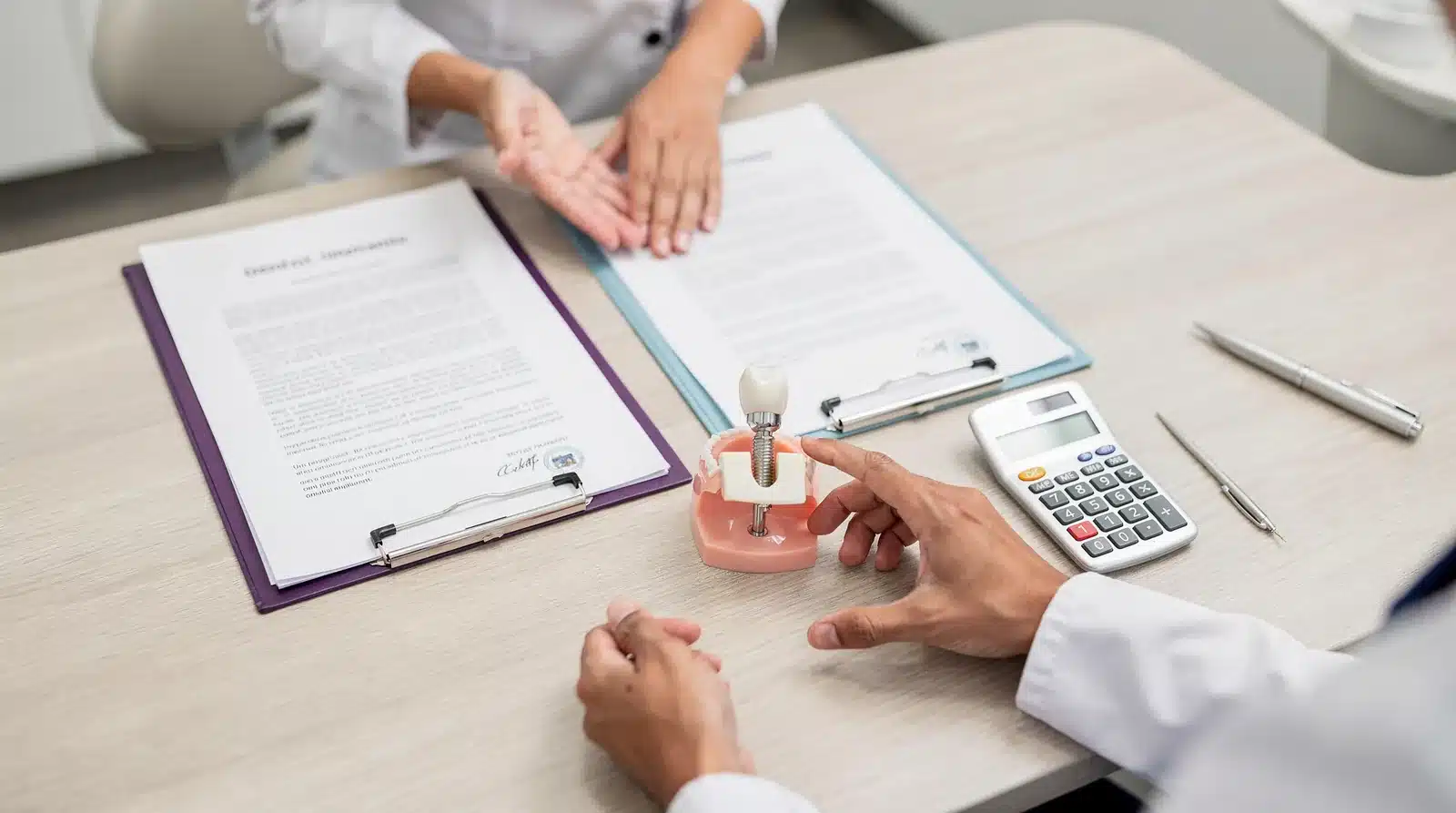
Dental implant payment plans through CareCredit offer special financing options that help patients manage costs with monthly payments. Affordable Dentist Near Me accepts this dental credit card, allowing adults to proceed with single-tooth or mini dental implants without paying the full procedure cost upfront.
Key Takeaways
Dental implant payment plans spread treatment costs over monthly installments instead of requiring one upfront payment.
In-house payment plans are arranged directly with the dental practice, often bypassing formal credit checks.
Third-party lenders like CareCredit provide special financing options that include promotional 0% APR periods for qualified applicants.
Monthly payment amounts depend on total treatment cost, interest rate terms, repayment period length, and insurance coordination.
What Are Dental Implant Payment Plans?
Dental implant payment plans are financing arrangements that spread treatment costs over monthly installments instead of one upfront payment. These plans remove the financial barrier that causes many patients to delay or avoid tooth replacement procedures.
Most patients who qualify for implant treatment also qualify for a payment plan that fits a real household budget. Understanding how financing works before a consultation reduces anxiety about the process. The goal is straightforward: make the true cost of implants predictable and manageable.
Payment plans typically come through two channels:
In-house financing offered directly by the dental practice
Third-party lenders or healthcare credit cards, such as CareCredit, which provides special financing options for dental care with monthly payments
How Do Payment Plans Make Implants More Affordable?
A payment plan converts a large single expense into smaller monthly amounts. This structure lets patients begin treatment sooner rather than postponing care while saving for the full fee.
What Determines Whether a Patient Qualifies?
Qualification depends on credit approval through the lender or practice. Patients who qualify for the dental treatment itself generally find a financing option that matches their budget.
How Do In-House and Third-Party Plans Compare?
In-house payment plans and third-party financing serve the same goal but operate under different rules. The key distinction lies in who holds the financial agreement and what terms apply. In-house plans are arranged directly with the dental practice, often bypassing formal credit checks and offering flexible terms the practice controls. Third-party options involve a lender like CareCredit, which provides special financing that can include promotional 0% APR periods for qualified applicants.
What does an in-house payment plan typically include?
An in-house plan is a direct agreement between the patient and the dental office. The practice sets the payment schedule, and many offices offer monthly payment options alongside free consultations to establish the treatment scope before any financial commitment. These arrangements often skip the credit inquiry that third-party lenders require, making them accessible to patients with varied credit histories.
How do third-party lenders structure dental implant financing?
Third-party lenders extend a line of credit specifically for healthcare expenses. CareCredit, for example, helps patients pay for dental care through special financing options that let them make monthly payments. Promotional periods with 0% APR reward those who qualify and pay off the balance within the agreed window. Patients should compare the total cost of financing, including any interest or fees, between in-house and third-party options before committing.
Specialized dental offices add another layer of savings. Practices built around one clear focus, such as dentures and dental implants, keep fees lower through efficient processes and daily repetition of the same procedures. Lower treatment costs reduce the amount needing financing in the first place, regardless of which payment path a patient chooses.
Are Payment Plans Available for Dental Implants?
Payment plans for dental implants are widely available through multiple channels. Dental offices, healthcare credit cards, and personal loans all offer structured ways to manage the cost of tooth replacement.
Patients who qualify for implant treatment typically also qualify for some form of payment plan. Optima Implants notes that most patients who meet treatment criteria can secure financing that fits a real household budget. Understanding how these options work before a consultation removes much of the anxiety around cost.
What types of dental implant financing exist?
Three primary financing channels serve implant patients:
In-office payment plans structured directly through the dental practice, often with terms matched to treatment milestones
Healthcare credit cards like CareCredit, which offer special financing options for dental procedures including implants, check-ups, and restorative work
Third-party dental lenders that provide installment loans specifically designed for procedures with extended treatment timelines
How do patients learn about payment options before committing?
Many dental practices offer free consultations where patients explore financing options without obligation. These consultations let prospective patients review payment structures, lender partnerships, and monthly payment estimates before scheduling treatment.
Specialized dental lenders work alongside practices to match financing terms with treatment timelines. Affordable Dentist Near Me offers reliable dental services and flexible payment options. This lender-practice partnership creates a pathway where are payment plans available for dental implants becomes a question answered with concrete monthly figures rather than uncertainty.
What Factors Affect Your Monthly Payment Amount?
Monthly payment amounts for dental implants depend on four primary variables: total treatment cost, interest rate terms, repayment period length, and insurance coordination. Each factor shifts the monthly obligation in measurable ways.
Are payment plans available for dental implants? Yes, and the monthly amount reflects how these factors combine for each patient’s case.
How Does the Number of Implants Change the Payment?
The total treatment cost varies by the number of implants and the type of restoration. A single-tooth implant replaces one missing tooth without touching healthy neighbors, which keeps the financed amount lower than a multi-implant case. More implants or a full-arch restoration increases the principal balance, which directly raises the monthly payment.
What Role Do Interest Rates and Promotional Terms Play?
Interest rates and promotional APR periods significantly impact monthly payments. A 0% APR offer reduces costs when the balance is paid within the promotional term. Fixed interest rates spread over longer periods create predictable payments but add total interest expense.
Factor
Effect on Monthly Payment
Total treatment cost
Higher principal raises payment
0% promotional APR
Lowers payment if paid in term
Fixed interest rate
Predictable but adds interest
Repayment period
Longer term lowers payment
Insurance coordination
Reduces financed amount
How Long Are Typical Repayment Periods?
Repayment periods typically range from 6 to 60 months. A shorter term means higher monthly payments but less total interest. A longer term spreads the cost across more months, which lowers the monthly budget impact.
Can Dental Insurance Reduce the Financed Amount?
Combining dental insurance benefits with financing lowers the amount that needs to be financed. When insurance covers a portion of the procedure, the remaining balance is smaller, which reduces the monthly payment. Patients should verify coverage details before finalizing a financing plan.
How to Choose the Right Plan for Your Budget?
Selecting a dental implant payment plan starts with a written treatment estimate. A detailed quote from the provider eliminates guesswork and anchors every financing comparison in real numbers. Without that document, patients risk committing to monthly payments that exceed what the actual procedure requires.
The next step involves comparing the total cost of financing across available options. Lenders often attach origination fees, late payment penalties, or prepayment penalties that inflate the advertised monthly figure. A plan with a lower interest rate but steep origination charges can cost more over the full term than a slightly higher-rate alternative with no added fees.
What questions should patients ask about implant financing?
Direct questions about interest rates, credit check requirements, and missed-payment consequences protect patients from surprises. A provider or lender should explain exactly what happens if a payment is late and whether the rate is fixed or variable. Skipping this conversation leaves borrowers exposed to terms they never saw coming.
Can HSA or FSA funds reduce implant costs?
Health Savings Accounts and Flexible Spending Accounts let patients pay for implant treatment with pre-tax dollars. Using these accounts lowers out-of-pocket expenses by the patient’s effective tax rate on every dollar spent. The strategy works best when the treatment plan is finalized early in the plan year, allowing full fund allocation before the deadline.
FAQ
What payment plan options does Affordable Dentist Near Me accept for dental implants?
Affordable Dentist Near Me accepts CareCredit, a dental credit card that offers special financing options with monthly payments.
How do in-house payment plans differ from third-party financing?
In-house plans are arranged directly with the dental practice, often bypassing formal credit checks. Third-party lenders like CareCredit provide special financing with promotional 0% APR periods for qualified applicants.
Conclusion
Payment plans turn the cost of dental implants into a predictable monthly figure, removing the financial guesswork from your treatment decision. Your next step is straightforward: schedule a consultation to receive a written treatment estimate, then compare financing options based on total cost, not just the monthly payment. With the right plan, your new smile fits both your mouth and your budget.