Dental Implants vs. Other Solutions: How to Choose the Best Tooth Replacement Option for Your Needs
Choosing the right tooth replacement option is a practical decision that balances function, appearance, cost, and long-term oral health. This guide explains how dental implants work, how they compare to conventional alternatives like dentures and bridges, and which factors determine the best choice for your situation. Many people in the 40–60s age range face bone loss, restorative trade-offs, and differing priorities—this article helps you weigh chewing efficiency, aesthetics, maintenance, and jawbone preservation to make an informed choice. You will learn what implants are, the main alternatives available, amortized cost comparisons, candidacy criteria including bone grafting, and practical next steps for scheduling an evaluation. The sections that follow cover implant components and osseointegration, common alternatives, cost and longevity comparisons with a detailed EAV-style table, comfort and aesthetic trade-offs, jawbone health implications with a second comparison table, candidacy checklists with a third EAV table, practice-specific options, real patient outcome themes, and how to schedule a free consultation to get personalized recommendations.
What Are Dental Implants and How Do They Work?
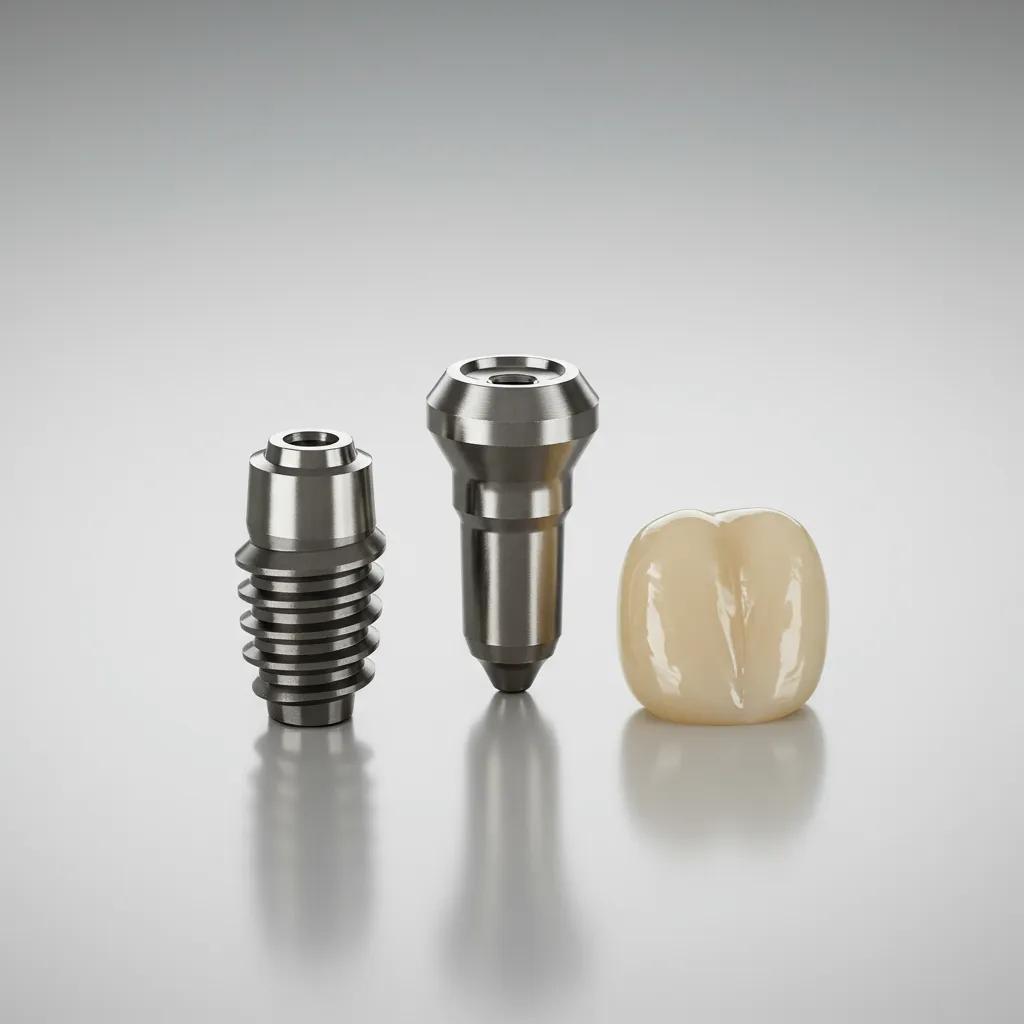
Dental implants are engineered tooth replacements that restore missing teeth by anchoring a prosthetic crown, bridge, or denture to a biocompatible implant fixture placed in the jawbone. The implant functions as an artificial root, transferring chewing forces into the bone to stimulate and preserve bone tissue; this biological bonding process is called osseointegration and is central to implant stability. Implants replicate the meronomy of a natural tooth by combining a titanium implant post (fixture), an abutment that connects the post to the visible restoration, and a crown or prosthetic denture base that restores function and appearance. These components—titanium implant post, abutment, and dental crown—work together to provide a fixed, long-term tooth replacement that resists movement and supports chewing efficiency. Understanding the parts and the biological mechanism prepares you to compare implants with dentures and bridges in later sections.
What are the main components of dental implants?
A dental implant system typically includes three core parts: the implant fixture (the titanium post placed in bone), the abutment (the connector), and the prosthetic crown or denture base that forms the visible tooth. The titanium implant post serves as the root analog and is selected for biocompatibility and strength, while the abutment provides a secure interface that may be screw-retained or cement-retained depending on restorative needs. The dental crown or prosthetic denture teeth are customized for shade, shape, and occlusion so the prosthesis matches adjacent teeth and bite dynamics. Recognizing these parts—implant fixture, abutment, and crown—helps patients ask targeted questions about materials, restoration type, and long-term maintenance at their consult.
How does osseointegration ensure implant stability?
Osseointegration is the biological process where bone cells grow onto and integrate with the implant surface, creating a rigid connection that resists micromovement and supports normal chewing loads. This process typically unfolds over several weeks to a few months depending on bone quality, site, and patient factors; early healing forms a soft bony interface that mineralizes into a stable bond. Factors that support osseointegration include adequate bone density, controlled surgical technique, and good oral hygiene, while smoking, uncontrolled systemic conditions, or active infections can hinder the process. Because osseointegration is essential for long-term success, clinicians evaluate bone volume and health during diagnostics to predict healing and plan any adjunctive procedures.
What are the key benefits of choosing dental implants?
Dental implants provide durable chewing function, improved speech, and an aesthetic result that closely mimics natural teeth while preserving facial structure by stimulating the jawbone. Implants reduce reliance on adhesives and eliminate the movement and sore spots commonly associated with removable dentures, which improves comfort and dietary freedom for many patients. Success rates for modern implant systems are consistently high in current research, and implants often last decades with proper care, making them a long-term value proposition for patients prioritizing durability. These benefits—function, aesthetics, comfort, and bone preservation—set the stage for comparing implants to dentures and bridges in cost, longevity, and patient experience.
What Are the Common Alternatives to Dental Implants?
Several conventional tooth-replacement options exist when implants are not suitable or when patients prioritize lower initial cost or shorter treatment timelines. The main alternatives include full and partial removable dentures, fixed dental bridges that rely on adjacent teeth for support, and transitional or temporary solutions such as flipper teeth. Each option has distinct trade-offs in cost, maintenance, functional performance, and effects on surrounding teeth and bone, so understanding these alternatives helps match patient goals to the appropriate restorative pathway. The subsections below break down denture types and their pros and cons, compare bridges to implants in function and appearance, and describe temporary options like flippers and when they are typically used.
What types of dentures are available and what are their pros and cons?
Dentures come in several forms: full removable dentures replace all teeth in an arch, partial removable dentures replace some teeth and clasp to remaining teeth, and implant-supported dentures anchor to dental implants for improved stability. Full dentures are more affordable initially but may shift, require adhesives, and accelerate bone resorption because they do not transfer chewing forces into the jawbone. Implant-supported dentures act as a hybrid: they combine implant anchorage with a prosthetic base to improve stability and reduce movement while still offering a removable or fixed prosthesis option. When choosing among denture types, patients weigh cost, comfort, maintenance, and long-term oral health—immediate affordability versus ongoing replacement and relining needs.
Common denture benefits include restored appearance and relatively low upfront cost.
Common denture drawbacks include movement, adhesive dependence, and greater long-term bone resorption risk.
Implant-supported dentures offer improved function and less bone loss compared with conventional removable dentures.
These distinctions make it clear why some patients prioritize implant-supported solutions despite higher initial expense; deciding between them depends on clinical suitability and personal priorities.
How do dental bridges compare to implants in function and appearance?
Fixed dental bridges replace one or more adjacent missing teeth by anchoring a prosthetic tooth to prepared neighboring teeth, which provides immediate fixed restoration without implant surgery. Bridges restore appearance and chewing function when the supporting teeth are healthy, but they require removal of enamel and tooth structure on adjacent teeth to create reliable crowns, which can compromise those teeth long-term. Compared to implants, bridges generally have a shorter expected lifespan and may require replacement more frequently; implants replace the root and preserve bone while avoiding alteration of adjacent healthy teeth. For patients with strong adjacent teeth who prefer a non-surgical route or when bone volume is insufficient for implants, bridges remain a valid conventional option.
What other tooth replacement options exist, such as flipper teeth?
Flipper teeth are temporary acrylic removable prostheses intended as short-term cosmetic solutions while definitive treatment is planned or healing occurs after extractions. Flippers are low-cost, lightweight, and quick to fabricate, offering an aesthetic stopgap for social situations or immediate post-extraction appearance. However, they provide limited chewing function, are prone to fracture, and can accelerate bone changes if used long-term because they do not transmit functional loads into bone. Flippers and similar transitional prostheses play a useful role in staged treatment plans but are rarely recommended as permanent replacements when long-term function and bone preservation matter.
How Do Dental Implants Compare to Dentures and Bridges in Cost and Longevity?
Comparing initial purchase price to lifetime cost changes the value calculus: implants typically carry higher upfront costs but lower long-term replacement and maintenance expenses, while dentures and bridges often cost less initially but may require relines, repairs, or replacements that add up over time. To evaluate cost effectively, consider amortized estimates over 5–15 years that include professional maintenance, repairs, and potential prosthesis replacement. Below is a comparison table that lays out typical initial cost ranges, expected lifespan, and common recurring expenses for implants, dentures, and bridges to help patients model long-term value. After reviewing the table, consider scheduling a free consult to receive a localized, personalized cost estimate tailored to your clinical needs and financing options.
This table outlines typical initial and long-term cost considerations by option and clarifies why higher upfront investment in implants can deliver lower cost-per-year over a decade-plus horizon.
Restoration Type
Typical Initial Cost Range
Expected Lifespan (Years)
Common Ongoing Costs
Single-tooth implant (post + crown)
Mid-to-high initial range
15–25+ years with care
Periodic crown replacement, hygiene visits
Full or partial removable denture
Lower initial range
5–8 years (relines/replacements)
Relines, adhesive, repairs, replacement dentures
Fixed dental bridge (3-unit typical)
Moderate initial range
7–15 years
Replacement crowns, potential endodontic/periodontal care
This EAV-style comparison highlights that implants often last longer and require fewer full replacements, which can offset higher upfront costs. For a precise figure that reflects your needs—number of missing teeth, bone grafting needs, and desired prosthesis type—book a consult to obtain a personalized cost breakdown.
Cost-Benefit Evaluation of Dental Implants vs. Alternatives
The growing evidence of the efficacy and effectiveness of dental implants calls for economic evaluations to determine the economic efficiency of this technology for different indications. Such studies must be integrated with the clinical evaluations in order to produce the relevant data. In most cases, dental implants will produce a better outcome than the best alternative technology, but this improvement will only come at greater cost. Cost–benefit evaluations of dental implants must therefore address the difficult task of assessing the value of the improvement in oral health.
Cost–Benefit Evaluation of Dental Implants, 1990
Initial price variability stems from factors such as the number of missing teeth, materials used (zirconia vs porcelain for crowns, acrylic vs acrylic-on-metal for dentures), lab fees, and adjunctive procedures like bone grafting. Over a 10–15-year horizon, implants often require fewer full replacements than dentures and may involve only occasional crown maintenance, while dentures typically need relines and replacement prostheses that accumulate costs. The amortized cost comparison favors implants for patients planning long-term function and fewer maintenance disruptions; however, patient budget constraints or medical candidacy can make dentures or bridges the practical initial choice. To move from general ranges to a tailored estimate, consider a free consultation for individualized planning and cost scenarios.
How long do dental implants last compared to dentures and bridges?
Dental implants, when integrated successfully and maintained with good oral hygiene, commonly function for decades; modern studies report high success rates with many implants surviving beyond 15–20 years. Bridges and dentures generally have shorter service lives: bridges may require replacement or repair every 7–15 years depending on wear and adjacent tooth health, while removable dentures often need relining and replacement within 5–8 years due to bone and soft tissue changes. Patient behaviors—tobacco use, oral hygiene, and regular professional care—strongly influence longevity for all options. Choosing the right restoration includes balancing desired lifespan with maintenance commitment and clinical suitability.
What are the maintenance and replacement needs for each option?
Maintenance regimes vary: implants require daily oral hygiene similar to natural teeth—brushing, interproximal cleaning, and routine dental exams—with occasional professional polishing and monitoring of the implant-abutment interface. Bridges require meticulous cleaning under pontics and monitoring of abutment teeth for decay or periodontal issues; professional evaluations can identify early problems before bridge failure. Removable dentures need daily cleaning, storage in cleansing solution, periodic relines to accommodate tissue changes, and possible adhesive use for fit. Understanding these differences informs realistic expectations: implants tend to lower daily maintenance complexity while dentures demand more ongoing management and periodic adjustments.
Implant maintenance focuses on daily hygiene and periodic professional checks.
Bridge care requires targeted cleaning under and around the pontic area.
Denture upkeep includes nightly cleaning and periodic relines or repairs.
These maintenance commitments should influence the choice based on lifestyle preferences and willingness to engage in routine care.
How Do Comfort, Functionality, and Aesthetics Differ Between Implants and Other Solutions?
The user experience—how a restoration feels, performs while eating, and looks—often determines patient satisfaction. Implants typically feel and function more like natural teeth because they are rigidly anchored into bone, offering superior biting force distribution and reduced soft-tissue irritation. Removable dentures can restore appearance and basic function but often compromise on chewing efficiency and can affect speech until a patient adapts. Bridges provide a fixed solution with immediate comfort for some patients but at the expense of altering adjacent teeth. The following subsections examine why implants are generally more comfortable and functional, how dentures and bridges influence speech and diet, and which options deliver the most natural smile aesthetics.
Why are dental implants considered more comfortable and functional?
Because implants are anchored into the jawbone, they eliminate the micro-movement common with removable prostheses and distribute occlusal forces through bone much like natural tooth roots. This anchorage reduces sore spots, minimizes the need for adhesives, and allows many patients to comfortably eat a broader variety of foods, including tougher or crunchier items. Sensory feedback while biting is improved relative to removable dentures because implant-supported restorations transmit force in a predictable manner, helping preserve chewing patterns and jaw muscle coordination. Patients who prioritize high chewing efficiency and minimal prosthesis-related discomfort often find implants deliver the closest experience to natural teeth.
How do dentures and bridges affect speech and eating?
Removable dentures change oral contours and can temporarily alter tongue placement, which may cause speech changes such as lisps or altered consonant production until the patient adapts. Eating with dentures often requires dietary adjustments during the adaptation period—sticky or very hard foods can dislodge prostheses or cause discomfort. Bridges typically interfere less with speech because they are fixed; however, they can alter bite dynamics and require an adaptation period as the occlusion is rebalanced. Understanding these functional differences helps set expectations: removable prostheses demand an adjustment period and occasional dietary accommodations, while fixed options offer more immediate stability.
Which option offers the most natural appearance and smile aesthetics?
Aesthetics depend on customization: implants allow crown and gum architecture to be shaped to match adjacent teeth and preserve facial support by maintaining bone volume, often producing the most natural long-term appearance. Bridges can be highly aesthetic initially but may lead to compromised adjacent teeth and potential gum reshaping over time. Dentures can create an attractive smile when well-designed, but ongoing bone resorption can change facial proportions and require adjustments to maintain a natural look. For patients focused primarily on long-term facial aesthetics and natural tooth mimicry, implants frequently provide superior outcomes when clinical conditions permit.
What Impact Do Dental Implants and Alternatives Have on Jawbone Health?
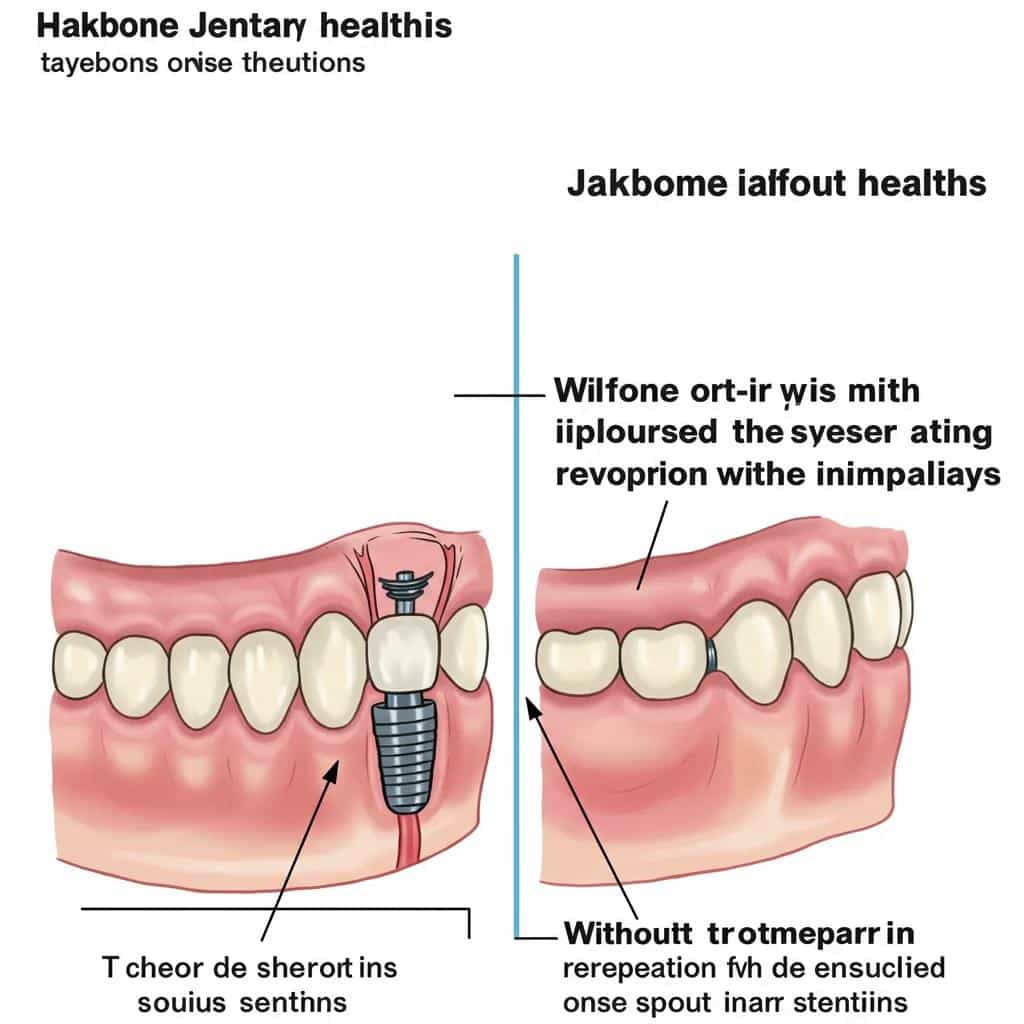
Tooth roots stimulate the jawbone during chewing, maintaining bone density and facial structure; when a tooth is lost, the absence of தொடர்ச்சியான load often triggers progressive bone resorption. Dental implants uniquely preserve bone by transferring occlusal load into the bone, supporting remodeling and maintaining ridge height, which helps preserve facial contours. Conversely, removable dentures lack root replacement and typically fail to prevent resorption, sometimes accelerating changes that affect fit and appearance. Below is a comparison table that uses a clear EAV-style layout to show how implants, dentures, and bridges influence bone density, grafting needs, and long-term oral health outcomes.
The following table clarifies how each option affects jawbone density, need for bone grafting, and expected long-term impact on oral structure.
Restoration Type
Effect on Jawbone Density
Bone Grafting Implications
Dental implant (single or multiple)
Stimulates and helps preserve bone through load transfer
May require grafting if bone volume is insufficient; grafting can enable implant placement
Removable denture
Does not stimulate bone; can accelerate resorption over time
Often no grafting needed for denture placement, but future bone loss can complicate care
Fixed bridge
Limited stimulation localized to abutment sites; underlying edentulous ridge may resorb
Bridges do not restore root stimulation; grafting not typically part of bridge therapy
This EAV-style comparison shows why implants are the preferred biologic solution for bone preservation, and why grafting is sometimes needed to make implants possible for patients with prior bone loss.
How do dental implants help preserve jawbone density?
Implants transmit chewing forces to the jawbone, which stimulates bone remodeling and maintenance through physiologic load-bearing—this functional stimulus counteracts the disuse atrophy that follows tooth loss. Bone cells respond to mechanical signals generated by mastication, and the implant serves as a durable anchor to provide those signals over time, helping to maintain ridge height and density. Preserving bone not only supports oral health but also maintains facial contours that contribute to a more youthful appearance. Because bone preservation is a key long-term benefit, it often weighs heavily in favor of implants when clinical candidacy is confirmed.
What bone loss risks are associated with dentures and bridges?
Removable dentures typically rest on soft tissues and underlying bone that gradually resorbs when not stimulated by a root or implant, causing changes in denture fit, chewing efficiency, and facial structure. Bridges leave the edentulous ridge unsupported, so resorption can continue beneath pontics, and adjacent teeth may be stressed by altered force patterns. Over time, these changes can necessitate reline procedures, replacement of dentures, or retreatment of abutment teeth. Understanding the progressive nature of bone loss with non-implant solutions helps patients weigh immediate cost savings against potential future functional and aesthetic consequences.
Can bone grafting improve candidacy for dental implants?
Bone grafting is a common adjunctive procedure that rebuilds deficient ridge volume to create a stable foundation for implants; graft materials and techniques range from local augmentation to sinus lifts depending on the site. Grafting increases implant options for patients who otherwise lack sufficient bone, but it adds steps: additional surgeries, healing time, and potential costs. For many patients, grafting transforms a non-candidate into a candidate by restoring bone height or width, enabling predictable implant placement. Discussing grafting candidacy during diagnostics clarifies treatment timeline and helps patients plan financially and logistically.
Who Is a Good Candidate for Dental Implants vs. Other Tooth Replacement Options?
Determining candidacy involves evaluating local oral conditions and systemic health, plus lifestyle factors and patient goals. Broadly, successful implant candidates have adequate bone volume or the willingness to pursue grafting, healthy periodontal tissues or treated gum disease, and a commitment to oral hygiene and regular dental care. Some patients—because of medical factors, smoking status, or financial and timeline constraints—may be better served by dentures or bridges. The subsections below present a clinical checklist for implant candidacy, how lifestyle and age influence decisions, and scenarios where dentures or bridges are preferred.
What oral health and bone density requirements affect implant candidacy?
Clinicians assess bone density and volume through clinical exam and imaging, often recommending CBCT or radiographs to quantify ridge anatomy and proximity to critical structures. Adequate bone width and height are necessary to accommodate an implant fixture and ensure primary stability; insufficient bone may require grafting to safely place implants. Periodontal health matters because active gum disease increases the risk of implant complications; treating periodontal disease prior to implant placement is a standard step to improve outcomes. These diagnostic steps—imaging, periodontal assessment, and medical history review—determine candidacy and inform whether grafting or alternative restorations are more appropriate.
How do lifestyle and age influence the choice between implants, dentures, and bridges?
Lifestyle factors such as smoking or poor oral hygiene negatively influence healing and osseointegration, reducing implant success rates; cessation of tobacco use and improvement in oral care increase candidacy. Age alone is not an exclusionary factor—many older adults are excellent implant candidates provided systemic conditions are managed and bone quality is sufficient—but older patients may have higher likelihood of needing grafting. Personal priorities—desire for fixed long-term restoration, tolerance for surgery, and financial planning—also shape decisions: some patients prefer a non-surgical, faster path with bridges or dentures, while others choose implants for long-term function and maintenance savings.
When are dentures or bridges recommended over implants?
Dentures or bridges are often recommended when medical contraindications increase surgical risk, when bone volume is insufficient and the patient declines grafting, when immediate cost constraints exist, or when a shorter treatment timeline is preferred. For patients with widespread systemic conditions that impair healing, or for those who prioritize avoiding surgery, a well-planned bridge or denture can restore appearance and function effectively. Additionally, transitional prostheses play a role in staged treatment plans where implants will be placed at a later date; these alternatives provide practical, often lower-cost options while preserving patient comfort and social function.
Requirement
Clinical Threshold
Implication
Bone volume
Adequate width/height or graftable
Enables implant placement or requires grafting
Periodontal health
No active severe periodontal disease
Active disease must be treated first
Systemic factors
Controlled systemic conditions
Uncontrolled disease may delay/suspend therapy
Lifestyle
Non-smoking preferred for best outcomes
Smoking cessation recommended to improve success
Why Choose Dentist in Denton for Your Dental Implant and Tooth Replacement Needs?
Dentist in Denton – Dentures & Dental Implants is a local dental office providing dental implants and dentures, and the practice emphasizes education-based care in a friendly, spa-like environment to help patients make confident decisions. New patients can take advantage of a $79 free dental consultation that serves as an accessible first step to evaluate candidacy, discuss imaging and options, and begin treatment planning without a high initial cost barrier. The clinic accepts most PPO dental insurance plans and offers flexible financing options to help patients manage treatment costs, and staff are trained to guide patients through choices between implants, implant-supported dentures, bridges, and removable prostheses. If you are deciding between a short-term solution and a long-term restoration, the practice positions this consult as an educational, decision-focused visit to review clinical findings and financial pathways.
What makes Dentist in Denton’s $79 free consultation valuable for new patients?
The $79 free dental consultation for new patients is structured to provide an initial evaluation that includes a clinical exam, discussion of your dental history, and an explanation of treatment options tailored to your oral condition. During this visit clinicians can recommend diagnostic imaging if needed, outline potential treatment steps such as grafting or implant stages, and provide a preliminary range for costs and financing considerations. The consult is intended to be education-first—focused on informing patients about pros and cons of implants versus alternatives rather than pressuring immediate commitments—so you leave with clear, practical next steps. Bringing prior dental records and a list of medications will make the consult more efficient and help the team offer precise guidance.
How does the practice’s education-based care help patients make informed decisions?
Dentist in Denton emphasizes shared decision-making where clinicians use diagrams, visual aids, and plain-language explanations to clarify how implants, bridges, and dentures function and what outcomes to expect. Education-based care includes walking patients through component anatomy—titanium implant post, abutment, and crown—and the biologic rationale like osseointegration and bone preservation to align expectations with likely results. By explaining timelines, maintenance needs, and trade-offs transparently, the practice helps patients prioritize what matters most—cost, longevity, function, or aesthetics—so treatment plans reflect personal goals. This approach reduces uncertainty and supports informed consent for recommended procedures.
What flexible financing and insurance options are available for dental implants and alternatives?
The practice accepts most PPO dental insurance plans, which can help offset portions of restorative care depending on individual plan coverage, and offers flexible financing options to spread the cost of implant treatments over time. Financial counselors at the office can outline payment plans, typical insurance interactions, and estimated out-of-pocket amounts based on the proposed treatment pathway. Because financial arrangements vary by patient needs and coverage, the practice recommends discussing specifics during the consult so you receive a clear, personalized financing roadmap. Transparent financing conversations are designed to make long-term restorative care more accessible and manageable.
What Do Patients Say About Choosing Dental Implants vs. Other Solutions?
While individual experiences vary, common themes emerge among patients who consider or complete implant therapy: improved chewing confidence, reduced maintenance burden compared with removable prostheses, and enhanced satisfaction with long-term aesthetics and facial support. Patients who choose dentures or bridges often cite lower initial cost and speed of treatment as decisive factors, but some report ongoing adjustments, relines, or concerns about function over time. Reading testimonial themes can clarify realistic recovery expectations, adaptation timelines, and what daily life looks like with each option. Below are anonymized thematic summary points that reflect typical patient-reported outcomes and questions to raise during a consult.
How have patients benefited from switching to dental implants?
Many patients report tangible improvements after implant treatment, including being able to eat a wider variety of foods without fear of slippage, feeling more confident in social situations, and experiencing fewer maintenance hassles compared with removable options. Implant patients often highlight the psychological benefit of a stable restoration that feels integrated into daily life and requires routine hygiene like natural teeth rather than complex nightly care. Because implants can preserve bone and facial structure, patients may also notice improved facial fullness over the years compared with those using removable dentures. These commonly reported benefits illustrate why implants are often recommended for patients seeking durable, low-maintenance solutions.
What experiences do patients share about dentures and bridges?
Patients who use dentures often describe an adaptation period involving speech and eating adjustments, followed by acceptance of routine maintenance tasks like nightly cleaning and periodic relines. Some denture wearers appreciate the immediate cosmetic improvement and lower initial cost, but others express frustration when fit changes require frequent adjustments. Bridge patients typically appreciate the fixed feel and quick turnaround compared with implants but sometimes later face replacement of bridge units or treatment of abutment teeth if complications arise. Understanding these real-world trade-offs helps prospective patients set expectations and prepare questions for their consult.
How do testimonials help new patients decide the best tooth replacement option?
Testimonials provide social proof and contextualize clinical facts by showing how treatments play out in daily life, but they should be read critically—prioritize details about function, maintenance, and timelines rather than promotional language. When reviewing patient stories, focus on outcomes that match your priorities: candid comments about eating, speaking, and long-term satisfaction are most informative. Use testimonial themes to compile targeted questions for your consult—ask about maintenance routines, likelihood of needing grafting, expected timelines, and financing examples—to make the decision process evidence-based and personally relevant.
How Can You Schedule a Free Consultation to Explore Your Best Tooth Replacement Option?
Scheduling an educational evaluation is the practical next step when you want a tailored recommendation informed by imaging, clinical exam, and financial planning. Dentist in Denton offers a $79 free dental consultation for new patients to review your oral health, discuss tooth-replacement options, and outline recommended diagnostics such as radiographs or CBCT imaging if indicated. Preparing for the appointment with relevant records, a list of medications, and questions about lifestyle goals will maximize the consult’s usefulness. Below are step-by-step instructions on what to expect, how to prepare, and typical next steps after the consultation so you can move from information to a concrete treatment plan.
What should you expect during the free dental implant consultation?
During the $79 free dental consultation you can expect a clinical exam focusing on the sites of missing teeth, a discussion of your dental and medical history, and a review of treatment goals and aesthetic preferences. The clinician will explain whether diagnostic imaging is recommended to assess bone volume and anatomy and will outline likely treatment options—single-tooth implants, implant-supported dentures, fixed bridges, or removable dentures—based on clinical findings. The visit concludes with a discussion about potential next steps, which may include scheduling imaging, a more detailed treatment planning visit, and an initial financing conversation. The consult is designed to be educational and collaborative, so patients leave with clear, actionable options.
How to prepare for your appointment at Dentist in Denton?
Preparing for the consult helps the team provide a focused assessment and personalized guidance; bring any recent dental records or radiographs, a list of current medications, and your insurance information if you wish to explore coverage. Prepare a short list of priorities and practical concerns—cost limits, timeline preferences, or cosmetic goals—to ensure the clinician addresses what matters most to you during the visit. Arrive a few minutes early to complete new-patient forms if needed, and plan for potential diagnostic imaging that may extend the visit time. Being prepared makes the consult more efficient and improves the accuracy of the preliminary plan.
Bring recent dental records and radiographs if available.
Bring a list of medications and relevant medical history.
Bring your insurance card and questions about financing options.
Preparing these items streamlines the consultation and helps the clinician produce a more accurate personalized plan.
What are the next steps after the consultation for treatment planning?
Typical next steps after the consult include obtaining diagnostic imaging if required, reviewing a detailed treatment plan with timelines and staged procedures, discussing financing arrangements, and scheduling the first operative appointment such as extractions or grafting if necessary. If imaging confirms sufficient bone, the team may schedule implant placement; if grafting is needed, the plan will include healing intervals and follow-up visits to monitor integration. The practice will also outline expected follow-up and maintenance visits to protect long-term outcomes. Because each pathway is individualized, the consult serves to convert general knowledge into a clear plan tailored to your oral health and life goals.
What factors should I consider when choosing between dental implants and dentures?
When deciding between dental implants and dentures, consider factors such as cost, longevity, comfort, and maintenance. Dental implants typically have a higher upfront cost but offer a longer lifespan and lower maintenance needs compared to dentures, which may require frequent adjustments and replacements. Additionally, think about your lifestyle and preferences; implants provide a more natural feel and function, while dentures may be more suitable for those seeking a non-surgical option. Consulting with a dental professional can help clarify which option aligns best with your needs.
Are there any age restrictions for getting dental implants?
There are no strict age restrictions for dental implants; however, candidates should have sufficient bone density and overall health to support the procedure. Older adults can be excellent candidates if they manage any underlying health conditions. Age alone does not disqualify someone from receiving implants, but factors such as bone quality and healing capacity are crucial. A thorough evaluation by a dental professional will determine if implants are a viable option for you, regardless of age.
What is the recovery process like after dental implant surgery?
The recovery process after dental implant surgery typically involves a healing period of several weeks to months, during which osseointegration occurs. Patients may experience mild discomfort, swelling, or bruising, which can be managed with prescribed pain relief. It’s essential to follow post-operative care instructions, including maintaining oral hygiene and attending follow-up appointments. Most patients can return to normal activities within a few days, but full integration of the implant into the jawbone may take longer. Your dentist will provide a personalized recovery timeline based on your specific case.
How do I maintain dental implants compared to dentures?
Maintaining dental implants is similar to caring for natural teeth, requiring daily brushing, flossing, and regular dental check-ups. Unlike dentures, which need to be removed for cleaning and may require adhesives, implants remain fixed in place, making them easier to care for. Dentures require daily cleaning, soaking, and periodic relining or replacement due to changes in the mouth. Understanding these maintenance differences can help you choose the option that best fits your lifestyle and commitment to oral hygiene.
Can dental implants fail, and what are the signs of failure?
Yes, dental implants can fail, although this is relatively rare. Signs of implant failure may include persistent pain, swelling, or infection around the implant site, as well as mobility of the implant itself. Factors contributing to failure include inadequate bone density, poor oral hygiene, smoking, and underlying health conditions. Regular dental check-ups are crucial for monitoring the health of your implants and addressing any issues early. If you experience any concerning symptoms, consult your dentist promptly for evaluation and potential intervention.
What are the long-term benefits of choosing dental implants over other options?
Dental implants offer several long-term benefits compared to other tooth replacement options. They provide superior stability and function, closely mimicking natural teeth, which enhances chewing efficiency and comfort. Implants also help preserve jawbone density by stimulating bone growth, preventing the bone loss often associated with missing teeth. Additionally, they require less maintenance over time compared to dentures or bridges, which may need frequent adjustments or replacements. Overall, implants can significantly improve quality of life and long-term oral health.
Conclusion
Choosing the right tooth replacement option can significantly enhance your quality of life by restoring function, aesthetics, and oral health. Dental implants stand out for their durability, comfort, and ability to preserve jawbone density, making them a long-term investment in your well-being. Understanding the various options available empowers you to make informed decisions tailored to your unique needs. Schedule your free consultation today to explore the best solutions for your dental health.