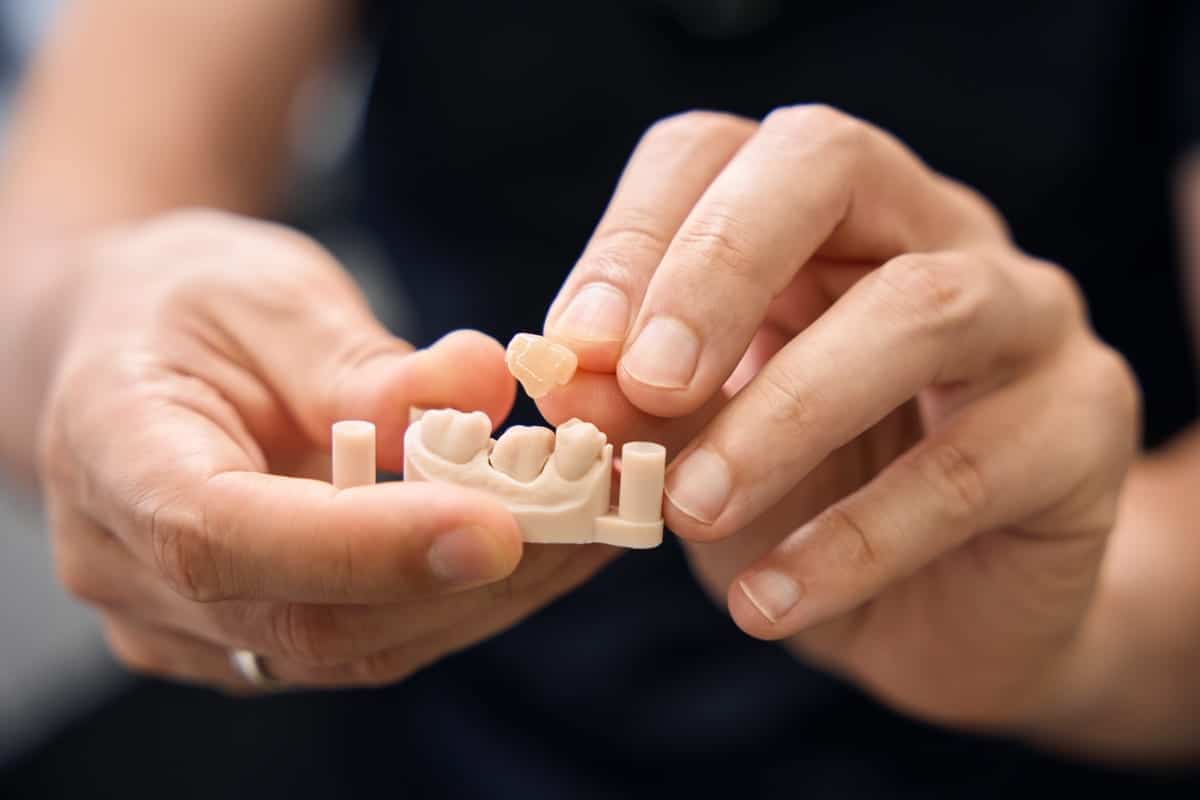
If your dentist recently told you that you need a dental crown, you might have questions. That recommendation can feel surprising — especially if your tooth doesn’t hurt. Understanding why your dentist recommended a crown and the clinical reasons explained here in Longview can help you feel confident about moving forward. A crown is not a random suggestion. It is a carefully considered clinical decision based on what your dentist sees in your tooth’s structure and long-term health.
What Is a Dental Crown and Why Does It Matter?
A dental crown is a custom-fitted cap that covers your entire visible tooth. It restores the tooth’s shape, strength, and appearance. Crowns protect damaged teeth from further breakdown and help you chew normally. Without a crown when one is needed, a weakened tooth can crack, fracture, or fail completely.
Crowns are made from porcelain, ceramic, or metal alloys. Each material has specific advantages depending on the tooth’s location and function. Your dental team in Longview will recommend the best material based on your bite and aesthetic goals. The goal is always long-term tooth preservation.
Crowns are one of the most common restorative procedures in dentistry. They are not cosmetic extras — they are structural solutions. When your dentist recommends one, it is because the tooth cannot protect itself anymore. A crown becomes the tooth’s outer armor.
Clinical Reason 1: A Cracked or Fractured Tooth
A cracked tooth is one of the most urgent reasons a dentist recommends a crown. Cracks can be invisible to the naked eye but visible under magnification or dental lighting. You might feel a sharp pain when biting down and then relief when you release pressure. That cycle is a classic sign of a cracked tooth syndrome.
Cracks spread over time with chewing pressure. A small crack today can become a full fracture tomorrow. Once a crack extends into the root, the tooth may not be savable. A crown placed early keeps the crack from spreading by holding the tooth together.
- Cracks often occur in teeth that have been heavily restored before
- Grinding and clenching accelerate crack formation
- Cold sensitivity that lingers may signal crack involvement in the pulp
- Prompt crown placement can prevent a root canal or extraction
Your dental team will assess the crack’s depth before recommending a crown. If the crack has reached the pulp, a root canal may be needed first. After the root canal, a crown protects the treated tooth. This combination is one of the most common treatment sequences in restorative dentistry.
Clinical Reason 2: A Large or Failing Filling
Old or oversized fillings weaken the surrounding tooth structure over time. When a filling covers more than half of the tooth’s surface, the remaining walls become thin. Thin walls flex under biting pressure. Eventually, those walls crack or break away entirely.
Failing fillings can also develop gaps between the filling and the tooth. Bacteria enter those gaps and cause decay underneath. That recurrent decay can silently grow for months before it becomes visible or painful. A crown solves this by encasing the entire tooth in a protective shell.
Dentists use specific measurements to determine when a filling is too large to remain safe. They look at the ratio of filling material to remaining tooth structure. When that ratio tips past a safe threshold, a crown becomes the appropriate next step. This is a preventive decision, not a reactive one.
- Fillings over 10–15 years old are commonly evaluated for crown replacement
- Silver amalgam fillings can expand and contract, causing cracks over time
- A crown placed over a compromised filling restores full biting strength
- Early crown placement costs less than treating a broken tooth later
Clinical Reason 3: Tooth Protection After a Root Canal
Root canal treatment removes infected or inflamed tissue from inside the tooth. This saves the tooth from extraction. However, the treated tooth becomes significantly more brittle after the procedure. The internal structure is hollowed out, which reduces the tooth’s natural resilience.
Back teeth — molars and premolars — absorb enormous chewing forces every day. A root-canal-treated molar without a crown is highly vulnerable to fracture. Studies in endodontics consistently show that root-canal-treated posterior teeth last much longer when crowned promptly. Your dentist recommends a crown post-root-canal to protect that investment.
Front teeth after root canal treatment may not always need crowns if the tooth structure is mostly intact. However, your dentist will evaluate this on a case-by-case basis. Factors like remaining tooth walls, bite forces, and aesthetic needs all play a role. The recommendation is always individualized to your specific anatomy.
Clinical Reason 4: A Broken or Missing Cusp
A cusp is one of the pointed or rounded peaks on the chewing surface of your tooth. Cusps can break off due to decay, an old filling, or trauma. When a cusp breaks, the remaining tooth becomes uneven and structurally compromised. Sharp edges can also cut the tongue or cheek.
A broken cusp often exposes the dentin layer beneath the enamel. Dentin is more sensitive and more vulnerable to decay than enamel. Without a crown to cover that exposed area, decay spreads quickly. Pain with temperature changes or sweet foods often signals exposed dentin.
Cusp fractures are common in teeth with large fillings or those weakened by decay. Sometimes patients break a cusp biting into something hard and unexpected. Other times the cusp breaks spontaneously during normal chewing. Either way, a crown restores the full shape and protective function of the tooth.
How Crowns Connect to Other Dental Treatments in Longview
Crowns are often part of a broader treatment plan. If you are missing teeth, crowns serve as anchors for bridges or as the visible portion of implants. Patients exploring Dental Implants With Flexible Payment Plans For Patients will find that implant-supported crowns are a durable and natural-looking option. The crown that tops the implant functions exactly like a natural tooth crown.
For patients curious about faster implant solutions, learning about Dental Implants In One Day What To Expect And Benefits can clarify how crowns integrate into that process. Understanding your full treatment picture helps you make informed decisions. Our dental team in Longview walks you through every step so nothing comes as a surprise.
What to Expect During Your Crown Appointment
Getting a crown typically takes two appointments. During the first visit, your dentist prepares the tooth by reshaping it slightly. This creates space for the crown to fit without altering your bite. An impression or digital scan captures the exact shape of your prepared tooth.
A temporary crown protects your tooth between appointments. The permanent crown is fabricated in a dental lab to match your tooth’s color, size, and shape. At the second appointment, your dentist checks the fit, bite, and appearance before permanently cementing the crown in place. Most patients adjust quickly and find the crown feels completely natural.
- Local anesthesia ensures comfort during tooth preparation
- Temporary crowns are placed the same day as preparation
- Permanent crowns are usually ready within one to two weeks
- Proper care allows crowns to last ten to fifteen years or longer
Conclusion: Trust the Clinical Recommendation
When your dentist recommends a crown, there is a clear clinical reason behind it. Whether it’s a cracked tooth, a failing filling, post-root-canal protection, or a broken cusp — a crown is a restorative solution grounded in science. Understanding why your dentist recommended a crown and the clinical reasons explained here in Longview empowers you to say yes with confidence. Your dental team at Affordable Dentist Near Me of Longview is here to answer every question and guide you through the process with care. Book Now to schedule your appointment with our team.
Frequently Asked Questions
Is a crown always necessary after a root canal?
Not always, but it is strongly recommended for back teeth. Molars and premolars take on heavy chewing forces daily. A root-canal-treated tooth becomes more brittle, so a crown protects it from fracturing. Your dentist will evaluate your specific tooth before making a final recommendation.
How do I know if my filling is too large to be safe?
Your dentist measures the ratio of filling to remaining tooth structure during your exam. If the filling covers more than half the tooth’s chewing surface, the remaining walls may be too thin. X-rays and visual inspection help identify this risk. Your dentist will discuss findings and options with you directly.
Can a cracked tooth heal on its own without a crown?
Unfortunately, teeth cannot heal cracks the way bones heal fractures. Cracks only worsen over time with continued chewing pressure. A crown stabilizes the tooth and prevents the crack from deepening. Early treatment gives the tooth its best chance of long-term survival.
How long does a dental crown last?
With proper care, most crowns last between ten and fifteen years. Some last significantly longer. Good oral hygiene, avoiding hard foods, and regular dental checkups all extend crown longevity. Your dental team will monitor the crown at every visit.
Does getting a crown hurt?
The procedure is performed with local anesthesia, so you should not feel pain during tooth preparation. Some sensitivity is normal for a few days after the appointment. Over-the-counter pain relievers typically manage any post-procedure discomfort. If sensitivity persists or worsens, contact your dental team promptly.