Best Practices for Dental Implant Care in Mansfield TX: How to Maintain and Protect Your Implants
Dental implant care refers to the set of daily habits, clinical follow-ups, and lifestyle choices that preserve osseointegration and protect the implant-supported prosthesis from infection or mechanical failure. Proper implant care works by minimizing plaque accumulation at the implant–abutment interface and supporting surrounding soft tissue health, which together reduce the risk of peri-implantitis and bone loss. Readers will learn practical daily cleaning techniques, step-by-step post-operative timelines, diet and lifestyle adjustments, and the professional maintenance schedule that supports long-term dental implant success in Mansfield TX. Many patients worry about how to clean dental implants, when to seek help for swelling or pain, and which habits shorten implant lifespan; this guide provides evidence-informed answers and actionable steps. The article maps essential topics: implant fundamentals and local support, daily cleaning routines and tool comparisons, detailed post-op care, diet and lifestyle influences, long-term maintenance strategies, common complications and prevention, and how to schedule a local consult. Throughout this guide you will find targeted guidance for dental implant care, including recommendations for cleaning tools, red-flag warning signs, and coordination with local implant services.
What Is Dental Implant Care and Why Is It Important for Mansfield Patients?
Dental implant care is the ongoing combination of home hygiene, professional maintenance, and behavior modification that protects the implant fixture, abutment, and crown from infection and mechanical wear. The mechanism is straightforward: maintaining low bacterial biofilm levels prevents inflammation of peri-implant tissues, preserves osseointegration, and sustains the functional support that an implant provides. The specific benefit is longer implant lifespan, fewer costly complications, and preserved oral health and comfort for patients in Mansfield TX. Understanding these core ideas leads naturally to a closer look at implant anatomy, the osseointegration process, and how daily care interacts with those biological processes.
What Are Dental Implants and How Do They Work?
A dental implant is a medical device and dental prosthesis that acts as an artificial root—typically an implant fixture inserted into the jawbone—onto which an abutment and prosthetic crown or denture are attached. Osseointegration is the biological process by which bone cells bond to the implant surface, creating stable fixation; this process is essential for the implant to bear chewing forces and function like a natural tooth. Implant systems are commonly made of materials such as titanium or zirconia, chosen for their biocompatibility and favorable integration profiles, and the integrity of that integration depends on both surgical technique and subsequent maintenance. Knowing implant components and how they interact with bone and soft tissue helps patients appreciate why targeted cleaning techniques and regular check-ups are necessary for long-term success.
Why Proper Implant Care Ensures Longevity and Oral Health
Proper implant care reduces plaque-driven inflammation that can progress to peri-implant mucositis and peri-implantitis, conditions that compromise bone support and can lead to implant failure. The reason is that bacterial biofilm interacts with host tissues to trigger immune responses and bone resorption; preventing biofilm accumulation through effective hygiene interrupts this cascade. In practical terms, patients who follow consistent cleaning routines and attend professional maintenance visits demonstrate higher long-term success rates and fewer restorative complications. Awareness of these mechanisms motivates the daily routines and professional schedules that will be described next.
How Our Mansfield Dental Clinic Supports Implant Patients
Dentist In Mansfield- Dentures and Dental Implants provides local support for patients seeking implant evaluation, restorative planning, and follow-up maintenance in Mansfield TX. The practice offers a $79 FREE DENTAL CONSULTATION for new patients and convenient 24-hour online scheduling to make it easier to start a personalized implant care plan. (dental.dentistinmansfield-denturesdentalimplants.com) Clinical support typically includes initial evaluation of implant conditions, education about daily hygiene and risk management, and coordination of professional cleanings and prosthetic adjustments when needed. For patients considering a Dental Implant or needing follow-up care after placement, these services create a clear pathway from evaluation to ongoing maintenance and immediate help when concerns arise.
How Should You Clean Dental Implants Daily for Optimal Hygiene?
Daily dental implant cleaning is a focused routine of brushing, interdental cleaning, and adjunctive rinses that keeps bacterial biofilm under control and protects peri-implant tissue health. The mechanism is removal of plaque from implant crowns, abutments, and the peri-implant sulcus so inflammatory triggers are minimized and osseointegration remains intact. The specific benefit is reduced risk of peri-implant disease and improved longevity for Dental Implants in Mansfield Texas. With that foundation, the next subsections detail brushing technique, recommended tools, safe products, and common mistakes to avoid.
What Are the Best Brushing Techniques for Dental Implants?
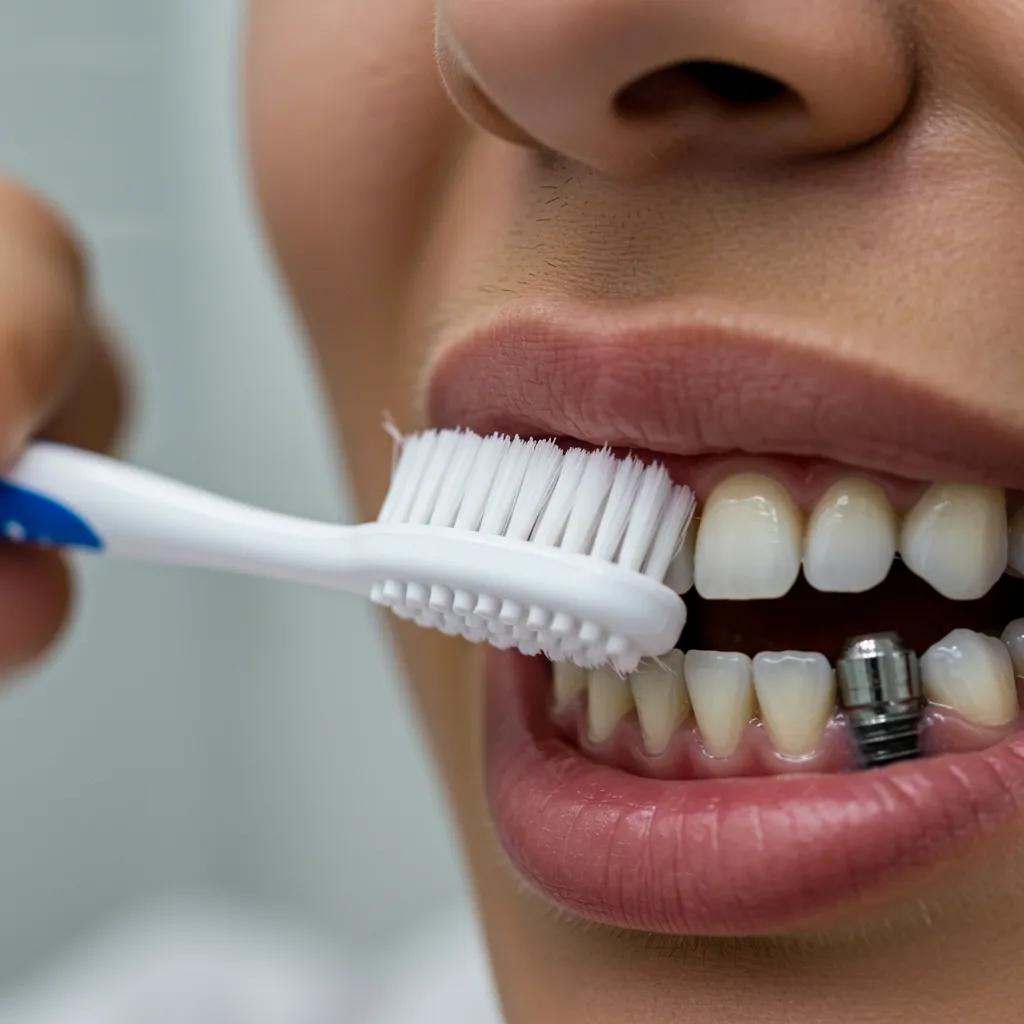
Use a soft-bristle brush or a soft-headed electric brush and maintain gentle, controlled strokes to dislodge plaque without abrading soft tissue or implant components. Brushing twice daily—morning and night—and after meals when feasible removes the daily accumulation of biofilm; aim for two minutes per session, focusing on the crown margins and the area where the prosthesis meets the gumline. The reason gentle technique matters is that aggressive scrubbing can damage soft tissue or polish away protective surface layers on prosthetic materials, while insufficient contact leaves plaque in crevices. Start each session by angling the brush toward the gingival margin to sweep away plaque, then use light circular motions around the abutment and crown to ensure consistent coverage. Mastering this technique reduces mechanical stress and prepares you for interdental cleaning, which targets spaces a brush cannot reach.
Which Oral Hygiene Tools Are Recommended for Implants?
Selecting the right tools—soft-bristle manual or electric toothbrush, interdental brushes, implant-specific floss, and water flossers—depends on prosthesis type and patient dexterity. Interdental brushes with a nylon-coated wire are excellent for cleaning around implant crowns and implant-retained dentures because they adapt to embrasure spaces and remove plaque effectively; water flossers provide a useful adjunct by flushing biofilm from the peri-implant sulcus and are especially helpful for patients with limited manual dexterity. Implant-specific flosses or super flosses help clean under fixed prostheses and around tight abutment margins where conventional floss may not be practical. The comparative attributes of these tools are summarized in the table below to help patients choose the best combination for their daily routine.
Introductory comparison of common implant cleaning tools and when to use them.
Tool
Primary Attribute
Best Use Case
Soft-bristle toothbrush
Gentle surface cleaning
Daily brushing of crown and adjacent gums
Interdental brush (nylon-coated)
Mechanical plaque removal between teeth
Cleaning embrasures and around abutments
Water flosser
Pulsed irrigation of sulcus
Adjunct for peri-implant sulcus and patients with prostheses
Implant-specific floss/super floss
Threaded cleaning under prosthesis
Accessing beneath bridges and fixed dentures
What Toothpaste and Mouthwash Are Safe for Dental Implants?
Choose non-abrasive toothpaste formulations with fluoride and avoid highly abrasive whitening pastes that can roughen prosthetic surfaces and attract more plaque. Alcohol-free mouthwashes are preferred because alcohol can dry peri-implant tissues and disrupt mucosal healing; antimicrobial rinses with chlorhexidine are sometimes prescribed short-term after surgery but should not be used long-term without professional guidance. The rationale is that product abrasivity and strong solvents affect prosthetic materials and soft tissue resilience, so selecting gentle, evidence-informed products preserves both aesthetics and clinical health. When in doubt about a specific brand or ingredient, consult your Mansfield implant clinician to match products to your prosthesis type and peri-implant health status. Proper product selection sets the stage for effective daily mechanical cleaning and prevention of complications.
What Common Cleaning Mistakes Should You Avoid?
Avoid abrasive toothbrushes, harsh whitening pastes, and sharp metal picks that can scratch prosthetic surfaces or traumatize peri-implant tissues. Skipping interdental cleaning and relying solely on brushing leaves biofilm in spaces around abutments, accelerating inflammation; similarly, overenthusiastic scrubbing can cause soft-tissue recession and expose implant components. The corrective action is to use recommended tools in a gentle, methodical routine—soft-bristle brush plus interdental cleaning and periodic water-flosser use—to balance mechanical plaque removal with tissue preservation. Recognizing and correcting these mistakes early prevents progression to peri-implant disease and maintains long-term implant function. These daily habits naturally lead into immediate post-operative care considerations after implant placement.
What Are the Essential Post-Operative Care Steps After Dental Implant Surgery?
Post-operative implant care is the sequence of actions in the first hours, days, and weeks after placement that control bleeding, swelling, pain, and infection risk while supporting osseointegration. The mechanism is limiting physical disruption and bacterial invasion during the vulnerable healing phase to allow stable bone integration with the implant fixture. The benefit is fewer early failures, less postoperative morbidity, and a predictable path to prosthetic restoration. The following H3 sections present pain and swelling management, diet progression, activity limits, and clear red flags for contacting your Mansfield dental team.
How Should You Manage Pain and Swelling After Implant Placement?
Initial pain and swelling are expected; manage them with rest, cold-compress application in the first 24–48 hours, and appropriate over-the-counter analgesics as recommended by your clinician. Apply ice packs intermittently—20 minutes on, 20 minutes off—to reduce swelling during the first day, and switch to warm compresses after 48–72 hours if swelling persists to encourage circulation and resolution. Watch for escalation signs such as increasing pain, spreading redness, fever, or purulent discharge, which indicate infection and require prompt evaluation. Avoid strenuous activity and positional changes that increase blood pressure at the surgical site, and follow any medication or antibiotic instructions provided at surgery. If severe pain or swelling worsens rather than improves after 48–72 hours, contacting your Mansfield dentist promptly is essential to prevent complications.
Introductory table comparing common post-op care elements, timelines, and warning signs.
Post-Op Element
Typical Timeline
Key Guidance
Bleeding control
First 24 hours
Use gauze pressure; avoid spitting or rinsing forcefully
Swelling management
0–72 hours
Ice first 48 hours, warm compresses after 48–72 hours
Pain control
0–7 days
OTC analgesics as directed; seek care if severe/uncontrolled
Infection signs
Any time
Fever, spreading redness, pus — contact clinician immediately
What Is the Recommended Diet During the Healing Period?
Begin with clear liquids and cold nutrient-dense drinks for the first 24 hours, then progress to soft, non-chewy foods for the first week to 10 days to reduce mechanical stress on the implant site. Recommended early items include smoothies, yogurt, mashed vegetables, soft scrambled eggs, and well-pureed soups; avoid hot beverages immediately after surgery because heat can increase bleeding. Reintroduce firmer foods gradually as comfort allows and as your clinician confirms healing progress; avoid hard, crunchy, or very sticky foods until the implant site is fully integrated and prosthetic work is complete. Proper nutrition supports tissue repair and osseointegration, and combining adequate protein, vitamins, and hydration shortens recovery and improves outcomes. Following a progressive diet plan protects the surgical site while supporting systemic healing.
Which Activities Should Be Limited to Promote Healing?
Limit heavy lifting, intense cardio, and activities that raise systemic blood pressure for at least 48–72 hours after implant placement to minimize bleeding and swelling at the surgical site. Avoid smoking and alcohol during early healing because both interfere with blood flow, immune response, and bone repair; cessation during this period significantly improves osseointegration outcomes. Also avoid oral behaviors such as vigorous rinsing, spitting, or using a straw immediately after surgery to prevent negative pressure that may dislodge clots and delay healing. As you resume activity, increase intensity gradually and follow your clinician’s timeline for return to full exercise. These activity restrictions directly reduce mechanical and biological stresses on the newly placed implant, improving the chance of stable integration.
When Should You Contact Your Mansfield Dentist for Post-Op Concerns?
Contact your Mansfield dental team promptly if you experience persistent severe pain not controlled with recommended analgesics, uncontrolled bleeding beyond several hours, fever, spreading swelling, or visible pus at the surgical site. Use the practice’s 24-hour online scheduling to request a follow-up evaluation or urgent appointment when non-emergency symptoms worsen, and prioritize immediate contact if the prosthesis becomes unstable or mobile. Many post-operative issues respond well to early intervention—antibiotics, drainage, or local management—so prompt access can prevent escalation and preserve the implant. If symptoms are mild and improving, continue prescribed home care and report changes at your scheduled follow-up; if worsening, seek immediate clinical assessment.
What Diet and Lifestyle Habits Support Long-Term Dental Implant Health?
Long-term implant health depends on diets that minimize mechanical stress on prostheses and lifestyles that reduce infection risk and support bone health. Mechanistically, habits that lower chronic inflammation and reduce mechanical overload protect peri-implant bone and soft tissues, improving implant longevity. Benefits include lower rates of peri-implantitis, reduced prosthetic complications, and better functional outcomes for patients with Dental Implants in Mansfield Texas. The following H3s cover foods to avoid, the impact of smoking and alcohol, and protection against grinding.
Which Foods Should You Avoid to Protect Your Implants?
Avoid hard items like ice, hard candies, and nuts that can fracture crowns or transmit excessive force to implant fixtures, and steer clear of very sticky candies that may dislodge temporary prostheses or pull at attachments. Chewing on non-food objects and using teeth to open packages also risks chipping restorations or loosening abutments; choose safer alternatives to avoid mechanical failure. Opt for balanced meals that emphasize whole foods prepared to avoid extreme hardness or stickiness, and consult your clinician about temporary dietary limits for specific prosthetic designs. These practical food choices prevent acute damage and support long-term prosthetic stability.
Introductory list of risky foods and safer alternatives.
Hard candies and ice: These can fracture crowns or damage prosthetic material.
Very sticky sweets: Taffy and similar items may dislodge attachments or temporary restorations.
Uncut hard nuts or tough meats: These increase chewing force that may overload implants.
Choosing softer preparations and cutting foods into bite-sized pieces reduces mechanical stress and supports implant longevity.
How Do Smoking and Alcohol Affect Dental Implant Success?
Smoking reduces blood flow to oral tissues, impairs immune response, and increases the risk of peri-implant disease and implant failure, making cessation a high-impact intervention for implant longevity. Alcohol, particularly in excessive amounts, can impair wound healing and modulate immune function during the critical osseointegration period, increasing infection risk. The mechanism is that both smoking and heavy alcohol intake alter local tissue oxygenation and systemic healing capacity, which compromises bone remodeling around the implant. Patients who stop smoking and limit alcohol during healing and long-term maintenance experience better clinical outcomes and lower rates of complications. For patients who struggle with cessation, professional counseling and structured support improve the chances of quitting and protecting implant investments.
How Can You Prevent Damage from Teeth Grinding or Clenching?
Parafunctional habits like bruxism apply repetitive overload that can loosen prosthetic screws, fracture crowns, and transmit damaging forces to the implant–bone interface. Using a custom nightguard or occlusal splint reduces peak forces and distributes load more evenly across the dentition and prostheses, protecting implant components. Clinical interventions—such as occlusal adjustment or monitoring—help when grinding persists despite initial appliance therapy, and periodic assessment ensures the nightguard remains effective as prosthetic work changes. Early evaluation and protective intervention for bruxism patients are essential to prevent mechanical complications and preserve implant longevity. Addressing grinding connects to regular check-ups where clinicians monitor wear patterns and adjust protective strategies over time.
Introductory table comparing lifestyle risk factors and mitigation strategies.
Habit
Risk Level to Implants
Recommended Mitigation
Smoking
High
Strongly advise cessation, provide resources
Excessive alcohol
Moderate
Limit intake, avoid during healing
Bruxism (grinding)
High
Nightguard, occlusal adjustments, monitoring
Poor nutrition
Moderate
Emphasize protein, vitamins, hydration
How Can You Maintain Dental Implants for Long-Term Success in Mansfield?
Long-term maintenance for dental implants combines consistent home hygiene, targeted professional cleanings, and timely management of prosthetic wear or tissue changes. The mechanism is early detection and removal of hard deposits, control of soft-tissue inflammation, and proactive management of restorative components to forestall peri-implant disease and mechanical failure. The benefit is extended implant lifespan, preserved chewing function, and reduced need for complex re-treatment. The next H3s describe why check-ups matter, warning signs to monitor, recommended cleaning intervals, and best practices to maximize implant lifespan.
Why Are Regular Dental Check-Ups Crucial for Implant Longevity?
Regular dental check-ups allow clinicians to detect early signs of biological or mechanical problems—such as increasing pocket depths, mucosal inflammation, screw loosening, or prosthetic wear—that are often asymptomatic initially. Professional cleanings remove calculus and biofilm that home care cannot dislodge, and clinicians can use specialized instruments and protocols to clean around implant surfaces without damaging prosthetic components. Recommended recall intervals vary with risk: low-risk patients may be seen every 6–12 months, while higher-risk individuals attend every 3–4 months for more intensive maintenance. These visits also provide an opportunity for radiographic monitoring when indicated and timely prosthetic adjustments, which together support long-term stability and function.
What Signs Indicate Potential Implant Complications?
Key signs that warrant attention include persistent redness or swelling around the implant, bleeding on provocation, increasing pocket depth, persistent pain, and mobility of the prosthesis or abutment. The severity assessment hinges on symptom persistence and progression: transient mild soreness may resolve, but ongoing inflammation, pus, or a loose restoration indicates a need for prompt clinical evaluation. Monitoring bite changes or sudden discomfort during chewing also helps detect mechanical failure early. Recognizing these signs and acting quickly minimizes bone loss and prosthetic complications, converting a potentially serious issue into a manageable one.
Introductory list of common warning signs and appropriate responses.
Mobility of the crown or denture: Contact your dental team promptly for assessment.
Persistent bleeding or pus: Schedule an urgent evaluation to rule out infection.
Ongoing pain or bite changes: Request an appointment for prosthetic and tissue assessment.
Early recognition and timely professional intervention preserve implant outcomes and reduce the need for complex repairs.
How Often Should You Schedule Professional Implant Cleanings?
Professional implant cleaning frequency should be personalized based on risk factors such as history of peri-implantitis, smoking, diabetes, or poor oral hygiene; common guidance ranges from every 3 months for high-risk patients to every 6–12 months for low-risk individuals. The rationale is that higher-risk mouths accumulate pathogenic biofilm and calculus more rapidly, necessitating shorter recall intervals for prevention and early intervention. During maintenance visits, clinicians use non-abrasive instrumentation and targeted antiseptic protocols to remove deposits and monitor soft-tissue health, supporting the integrity of Dental Implants in Mansfield Texas. Establishing a recall plan with your clinician ensures that professional maintenance aligns with your individual risk profile and prosthetic needs.
What Are the Best Practices to Maximize Implant Lifespan?
Maximizing implant lifespan requires an integrated approach: disciplined daily hygiene, risk-reducing lifestyle changes (stop smoking, limit alcohol), protective measures for bruxism (nightguards), and scheduled professional maintenance tailored to risk. Additionally, promptly addressing minor prosthetic issues—screw loosening, worn occlusal surfaces, or tissue inflammation—prevents them from evolving into implant-threatening conditions. Communication with your clinician about any changes in comfort, function, or aesthetics allows for timely adjustments and preserves the investment represented by a Dental Implant. Combining these practices yields the strongest defense against both biological and mechanical threats to long-term success.
What Are Common Dental Implant Complications and How Can You Prevent Them?
Common implant complications include peri-implant mucositis, peri-implantitis, prosthetic loosening or fracture, and surgical site infection; prevention focuses on hygiene, lifestyle modification, and routine professional monitoring. The mechanism of many complications is plaque-induced inflammation that progresses to bone loss or prosthetic failure when left unaddressed. The benefit of prevention is avoiding complex surgical revision, preserving bone, and maintaining functional restorations. The following H3s define peri-implantitis, connect proper care to failure reduction, and indicate when to seek immediate help.
What Is Peri-Implantitis and How Does It Develop?
Peri-implantitis is an inflammatory condition of the soft tissue and supporting bone around an implant characterized by bleeding on probing, increased pocket depths, and radiographic bone loss. It develops when bacterial biofilm accumulates and triggers a chronic inflammatory response that erodes peri-implant bone, often exacerbated by risk factors such as poor hygiene, smoking, systemic disease, or residual cement around restorations. Early peri-implant mucositis—reversible soft-tissue inflammation—can progress to peri-implantitis if not managed, so early detection and intervention are critical. Understanding the microbial and host-response basis of peri-implantitis clarifies why daily cleaning and professional maintenance are central to prevention.
Peri-Implantitis: Prevention, Diagnosis, and Treatment Strategies
Peri-implant inflammations represent serious diseases after dental implant treatment, which affect both the surrounding hard and soft tissue. Due to prevalence rates up to 56%, peri-implantitis can lead to the loss of the implant without multilateral prevention and therapy concepts. Specific continuous check-ups with evaluation and elimination of risk factors (e.g. smoking, systemic diseases and periodontitis) are effective precautions. In addition to aspects of osseointegration, type and structure of the implant surface are of importance. For the treatment of peri-implant disease various conservative and surgical approaches are available. Mucositis and moderate forms of peri-implantitis can obviously be treated effectively using conservative methods. These include the utilization of different manual ablations, laser-supported systems as well as photodynamic therapy, which may be extended by local or systemic antibiotics. It is possible to regain osseointegration. In cases with advanced peri-implantitis surgical therapies are more effective than conservative approaches. Depending on the configuration of the defects, resective surgery can be carried out for elimination of peri-implant lesions, whereas regenerative therapies may be applicable for defect filling. The cumulative interceptive supportive therapy (CIST) protocol serves as guidance for the treatment of the peri-implantitis. The aim of this review is to provide an overview about current data and to give advices regarding diagnosis, prevention and treatment of peri-implant disease for practitioners.
Definition, etiology, prevention and treatment of peri-implantitis–a review, O Jung, 2014
How Can Proper Care Reduce the Risk of Implant Failure?
Proper care reduces failure risk by minimizing plaque accumulation, controlling inflammation, and enabling prompt correction of prosthetic issues that generate microgaps or stress concentrations. Home routines—brushing, interdental cleaning, and adjunctive water-flosser use—work in tandem with professional debridement and antiseptic protocols to maintain a healthy peri-implant environment. Lifestyle changes such as smoking cessation and management of systemic conditions (as advised by medical professionals) further decrease failure probabilities by improving host healing capacity. The combined effect of these measures is a lower rate of bone loss, fewer prosthetic complications, and a higher long-term success rate for implants.
Introductory list of prevention strategies for implant complications.
Regular professional maintenance: Attend risk-based recall appointments for professional cleaning.
Lifestyle modifications: Stop smoking and limit alcohol, use nightguards for bruxism when indicated.
Implementing these strategies reduces the likelihood of peri-implant disease and mechanical failures.
When Should You Seek Immediate Help for Implant Issues?
Seek immediate clinical attention for acute symptoms including fever, sudden severe swelling, uncontrolled bleeding, sudden mobility of the implant prosthesis, or rapid-onset pain suggesting infection or mechanical failure. These signs indicate either a spreading infection or a structural problem that can progress rapidly and jeopardize the implant if not treated promptly. Use the practice’s 24-hour online scheduling feature to request urgent assessment and be prepared to describe onset, severity, and any systemic signs such as fever. Early triage and intervention convert potentially emergent situations into manageable problems and protect long-term implant prognosis.
How Can You Schedule a Free Dental Implant Consultation in Mansfield TX?
Scheduling a free implant consultation in Mansfield TX is a straightforward process that begins with deciding to seek a professional evaluation and ending with a personalized plan for Dental Implants or maintenance. The mechanism for scheduling is designed to lower barriers to care: the practice offers a $79 FREE DENTAL CONSULTATION for new patients and supports patients with convenient 24-hour online scheduling to select an appointment time. (dental.dentistinmansfield-denturesdentalimplants.com) The benefit for prospective patients is a no-surprise, low-cost entry point to evaluation and education about implant options and care. The following H3s explain what to expect during the consult, how to use online scheduling, and reasons to choose Dentist In Mansfield- Dentures and Dental Implants.
What to Expect During Your Free Implant Care Consultation?
During the $79 FREE DENTAL CONSULTATION you can expect an initial evaluation of your oral health, a targeted discussion of implant options—such as single dental implant or implant-retained denture—and a basic review of imaging, if available, to assess bone support and treatment feasibility. The clinician will explain the steps involved in implant placement and aftercare, discuss risks and benefits, and outline a preliminary timeline for restorative work and maintenance. The visit prioritizes patient education about dental implant care, including daily cleaning techniques and post-operative expectations, so you leave with a clear understanding of next steps. Finally, scheduling of follow-up diagnostics or treatment visits can be arranged at the same appointment using convenient booking methods.
How to Use 24-Hour Online Scheduling for Your Appointment?
The practice’s 24-hour online scheduling system allows prospective patients to view available appointment times and book the $79 FREE DENTAL CONSULTATION at their convenience without requiring phone calls during office hours. To schedule, gather basic information—preferred dates, a succinct medical history summary, and any prior imaging details—and follow the on-screen prompts to select a time that suits your schedule. If you prefer, the system also supports booking follow-up visits and post-operative checks, making continuity of care simple and transparent. Using online scheduling reduces friction to care and helps ensure you get timely evaluation and a personalized implant care plan.
Why Choose Dentist In Mansfield for Your Implant Care Needs?
Dentist In Mansfield- Dentures and Dental Implants emphasizes conservative treatment and prevention, offering a patient-centered approach that focuses on preserving existing structures and preventing complications. The practice environment is described as relaxing and spa-like, creating a comfortable setting for consultations and follow-ups, and Dr. Elvis Le is identified as a point of clinical responsibility for implant and denture care within the practice. (dental.dentistinmansfield-denturesdentalimplants.com) Combined with the $79 FREE DENTAL CONSULTATION and 24-hour online scheduling, these attributes make the practice an accessible local option for patients exploring Dental Implants in Mansfield Texas. If you are considering implants or need help maintaining existing prostheses, scheduling the free consultation is a pragmatic next step to receive a personalized, professionally guided plan.
Accessible consultation: The $79 FREE DENTAL CONSULTATION lowers the barrier to evaluation.
Convenient booking: 24-hour online scheduling makes arranging appointments straightforward.