Bone Grafting vs Dental Implants: Which Is Better for Affordable Dental Care?
When it comes to restoring missing teeth, patients often face the dilemma of choosing between bone grafting and dental implants. Understanding the differences between these two procedures is crucial for making an informed decision. This article will explore the intricacies of bone grafting and dental implants, focusing on their procedures, costs, and recovery expectations. By the end, readers will have a clearer understanding of which option may be more suitable for their dental needs, especially in terms of affordability and effectiveness.
What Is the Dental Bone Graft Procedure and Why Is It Needed?
Bone grafting is a surgical procedure that involves the transplantation of bone tissue to restore or augment the jawbone. This procedure is often necessary when the jawbone is too thin or soft to support dental implants. Bone grafting prepares the jaw for implants by providing a stable foundation, ensuring that the implants can be securely placed. The primary benefit of this procedure is that it enhances the chances of successful implant placement, leading to better long-term outcomes for patients.
How Does Bone Grafting Prepare the Jaw for Dental Implants?
Bone grafting prepares the jaw for dental implants by increasing the volume and density of the bone. This is essential because dental implants require a certain amount of bone to anchor securely. Techniques such as autografts, where bone is taken from another part of the patient’s body, or allografts, which use donor bone, are commonly employed. The expected outcome is a stronger jawbone that can support the implant, ultimately leading to improved oral function and aesthetics.
Studies have extensively evaluated how different bone grafts contribute to the overall success of dental implants.
Bone Graft Evaluation for Dental Implant Success Rates
In this review, we provide a comparative evaluation of different bone grafts for dental implants success. We performed a literature review to analyze dental implant success and survival rates after the use of various grafts for bone augmentation. A total of 41 studies were selected and analyzed based on parameters including study design, number of implants placed, total number of participants, type of graft used, site from which graft was obtained, time elapsed between bone augmentation and implant placement, implant survival, and success rates.
Comparative bone graft evaluation for dental implant success: an evidence-based review, 2021
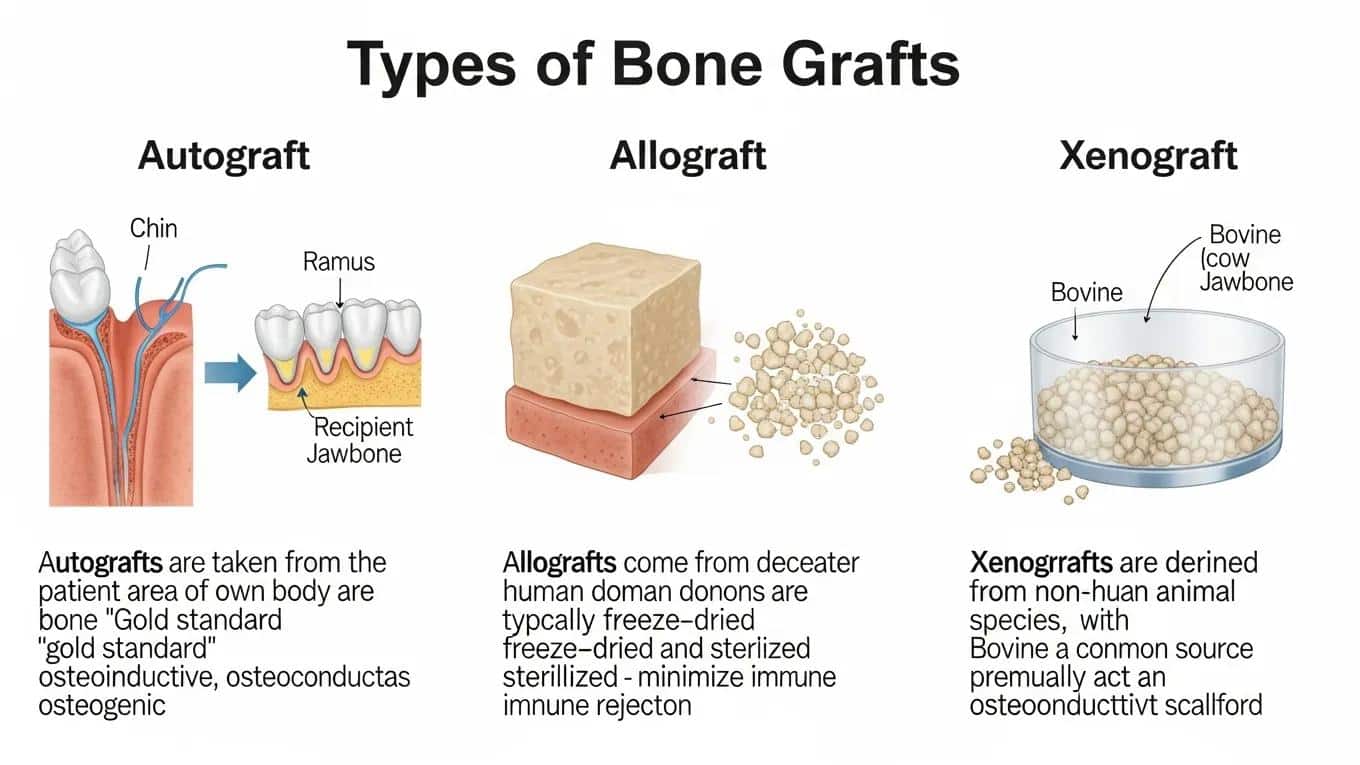
What Types of Bone Grafts Are Used in Dentistry?
In dentistry, several types of bone grafts are utilized, including:
Autografts: Bone harvested from the patient’s own body, providing the best compatibility and healing potential.
Allografts: Bone sourced from a donor, which is processed and sterilized to ensure safety.
Xenografts: Bone derived from animals, typically bovine, used when human bone is not available.
Each type has its indications and success rates, with autografts generally offering the highest success due to their biological compatibility.
Further research delves into the unique characteristics and comparative effectiveness of these and other bone graft materials.
Comparing Autogenous and Other Dental Bone Graft Materials
Autogenous odontogenic materials have unique characteristics compared with other bone-repair materials, such as the conventional autogenous, allogeneic, xenogeneic, and alloplastic bone substitutes. To encourage further research into odontogenic bone grafts, we compared the composition, osteogenesis, and development of autogenous odontogenic materials with those of other bone grafts. In conclusion, odontogenic bone grafts should be classified as a novel bone substitute.
Comparison of autogenous tooth materials and other bone grafts, 2021
What Are the Different Types of Dental Implants Available?
Dental implants come in various types, primarily categorized by their material and design. The most common materials used are titanium and zirconia, each offering unique benefits. Titanium implants are widely favored for their strength and biocompatibility, while zirconia implants are preferred for their aesthetic appeal, particularly in visible areas.
How Do Implant Materials Affect Success Rates?
The material of dental implants significantly impacts their success rates. Titanium implants have a long history of successful integration with bone, boasting success rates of over 95%. In contrast, zirconia implants, while aesthetically pleasing, may have slightly lower success rates due to their different properties. Patients should consider their specific needs and consult with their dentist to determine the best material for their situation.
What Techniques Are Used for Dental Implant Placement?
Dental implant placement techniques vary, but the most common methods include:
Two-stage surgery: Involves placing the implant and allowing time for healing before attaching the crown.
Immediate placement: The implant is placed at the same time as tooth extraction, which can reduce treatment time.
Guided implant surgery: Utilizes 3D imaging to plan the precise placement of the implant, enhancing accuracy.
These techniques can influence recovery time and overall success, making it essential for patients to discuss options with their dental provider.
How Do Costs Compare Between Bone Grafting and Dental Implants?
When considering dental procedures, cost is a significant factor. Bone grafting typically ranges from $300 to $3,000, depending on the type of graft and complexity of the procedure. In contrast, dental implants can cost between $1,500 and $6,000 per implant, including the crown.
For some patients, exploring alternatives like short implants can offer a more affordable path, potentially reducing the need for extensive bone grafting.
Short Implants: An Affordable Alternative to Bone Grafting
The use of short implants might be considered an alternative treatment, since it usually requires fewer surgical phases and tends to be a more affordable option.
Short implants versus bone grafting and standard-length implants placement: a systematic review, JMM Caramês, 2018
What Is the Cost of Bone Grafting and What Payment Options Are Available?
The cost of bone grafting varies widely based on the type of graft used and the complexity of the case. Patients can explore various payment options, including financing plans and insurance coverage, to make the procedure more affordable. Many dental practices offer flexible payment plans to help patients manage costs effectively.
How Affordable Are Dental Implants with Insurance and Payment Plans?
Dental implants can be more affordable with insurance coverage, which may cover a portion of the costs. Additionally, many dental practices provide payment plans that allow patients to spread the cost over time. This makes dental implants a viable option for those seeking long-term solutions for missing teeth without straining their finances.
What Should Patients Expect During Recovery from Bone Grafting and Dental Implants?
Recovery from both bone grafting and dental implants involves some common experiences, including swelling, discomfort, and dietary restrictions. Understanding what to expect can help patients prepare for a smoother recovery process.
What Is the Typical Dental Implant Recovery Time?
The typical recovery time for dental implants ranges from 1 to 2 weeks for initial healing, but complete integration with the bone can take several months. Factors such as the patient’s overall health and adherence to aftercare instructions can influence recovery duration.
What Are the Risks and Aftercare Tips for Bone Grafting?
Bone grafting carries some risks, including infection, graft failure, and complications related to anesthesia. Aftercare tips include following the dentist’s instructions, maintaining oral hygiene, and attending follow-up appointments to monitor healing. Patients should be aware of signs of complications, such as excessive swelling or pain, and contact their dentist if these occur.
For those seeking affordable dental care, Affordable Dentist Near Me offers various locations to serve your needs.
To schedule an appointment and learn more about your options, you can schedule an appointment online.