Bone grafting rebuilds lost jawbone structure, while dental implants replace missing tooth roots. Single-tooth dental implants win for replacing one missing tooth long-term. Bone grafts require at least three months to heal before implant placement.
Key Takeaways
– A bone graft creates a solid foundation for an implant when bone volume is insufficient.
– Not every implant requires a bone graft; the decision hinges on jawbone volume and density.
What is the difference between bone grafting and dental implants?
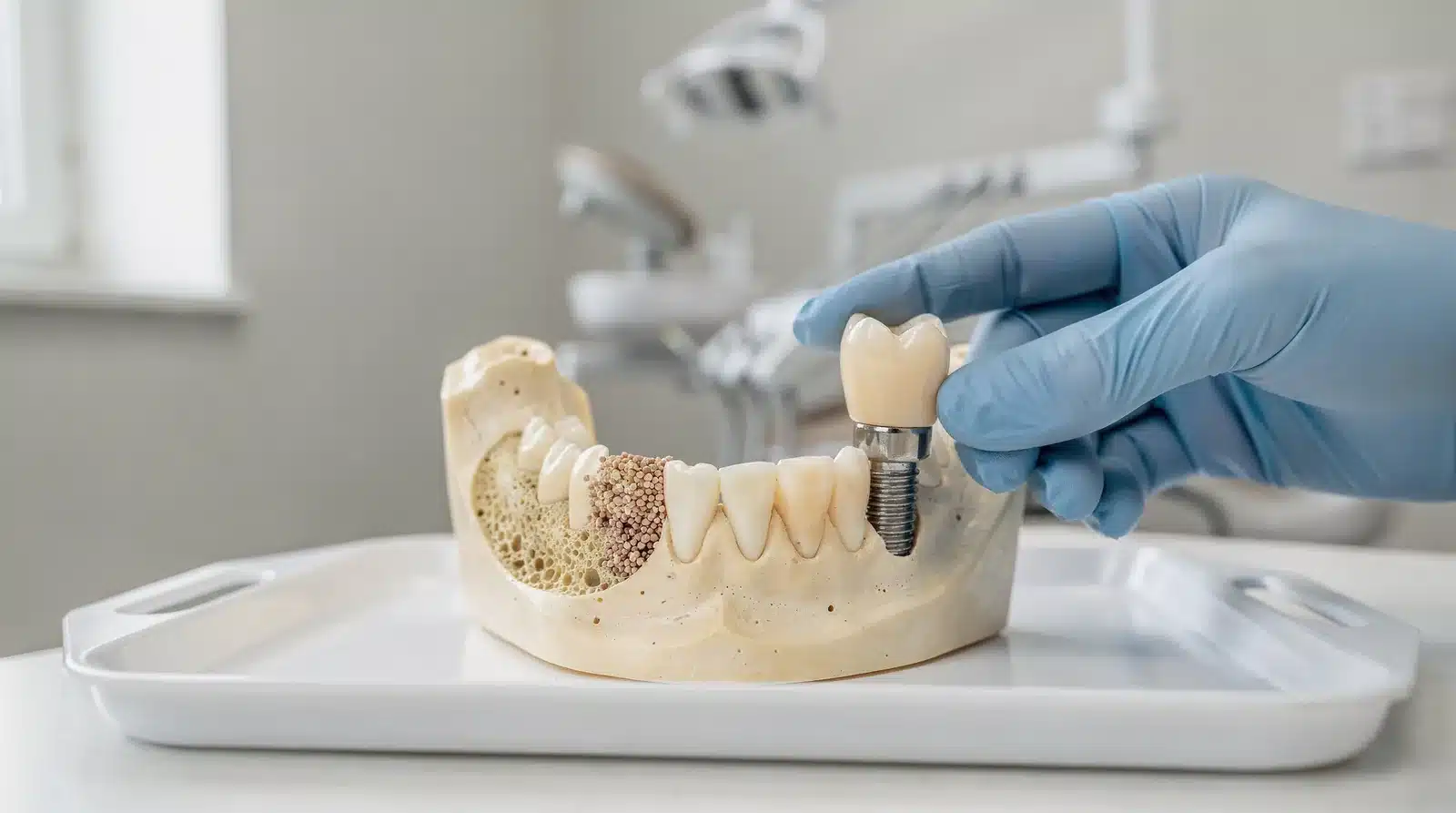
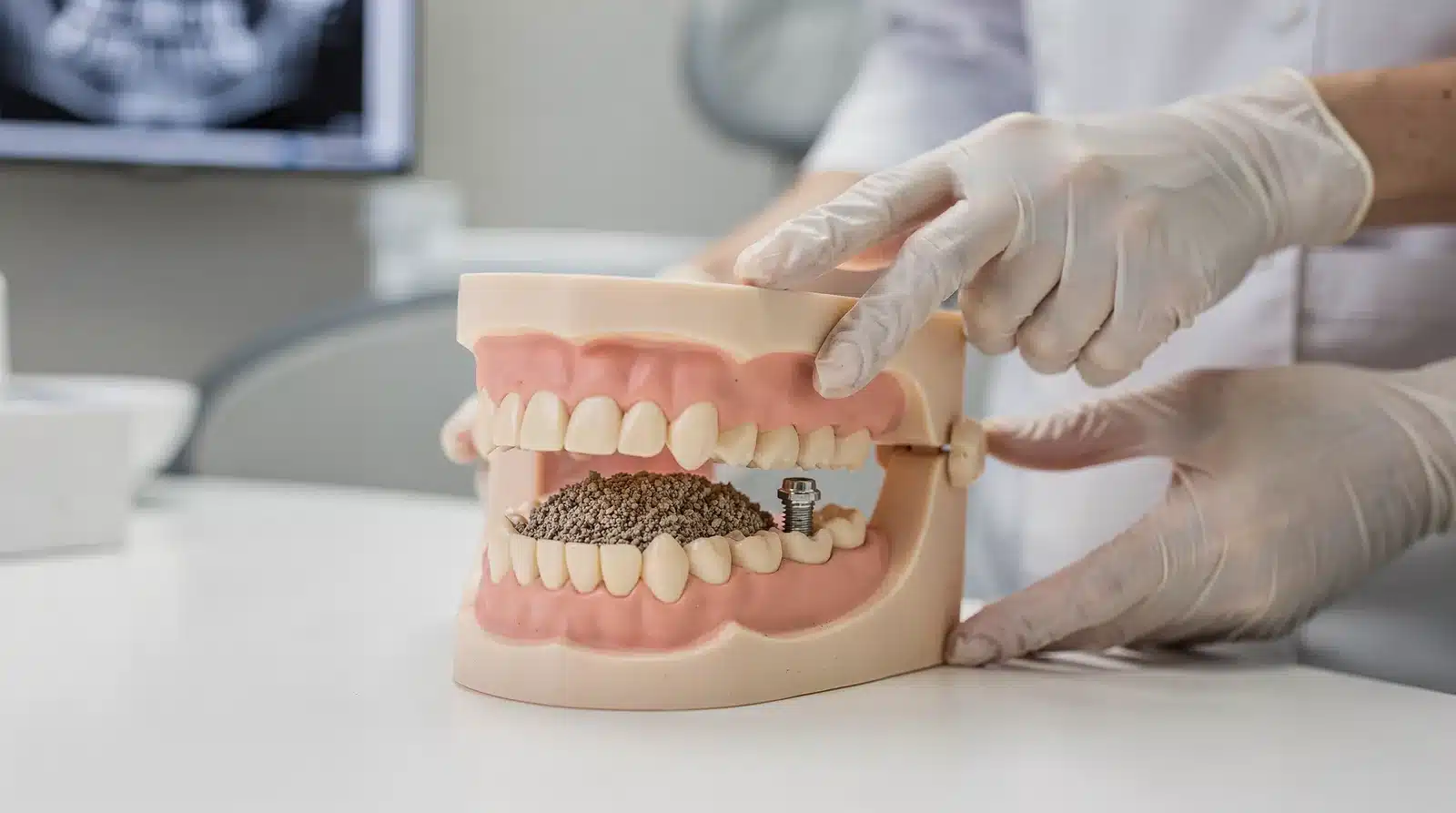
Bone grafting and dental implants are complementary stages rather than competing alternatives. Grafting builds the foundation, and the implant is the replacement tooth root placed into that foundation.
A dental implant is a durable, natural-looking replacement for a missing tooth root. The team at Affordable Dentist Near Me places implants to help patients regain confidence in their smile. Bone grafting is the process of adding bone material to the jaw to create a secure base. This step is often needed before an implant can be placed successfully.
The central question many patients ask is whether a bone graft is always needed for dental implants. The answer is that not every implant requires one. Bone loss after tooth removal, long-term denture use, infection, or trauma can leave the jaw too thin or short to hold an implant securely. Without enough bone, an implant can fail or lead to poor aesthetic outcomes.
How do clinicians decide when grafting is necessary?
The decision hinges on jawbone volume and density at the implant site. A clinician evaluates whether existing bone can stabilize the implant for long-term function. When bone is missing or weak, a bone graft implant approach becomes the safest route.
What happens if a patient skips a needed bone graft?
Placing an implant into insufficient bone risks instability and eventual failure. The implant may lack the support needed to withstand chewing forces. Correcting a failed implant often requires more extensive treatment than performing the graft initially.
Why would I need a bone graft before an implant?
A bone graft becomes necessary when the jaw lacks sufficient structure to anchor a dental implant. Bone loss after tooth removal, long-term denture wear, infection, or trauma leaves the jaw too thin or short for secure implant placement.
Without adequate bone volume, an implant cannot achieve the stability required for long-term function. A bone grafting procedure adds bone material to the jaw, creating enough structure to support a future implant. The central distinction in bone grafting vs dental implants is straightforward: grafting rebuilds the foundation, while the implant replaces the missing tooth. In many cases implants can be placed without extra bone work. When bone is missing or weak, however, a bone graft implant becomes the safest route for lasting stability.
How does bone loss affect implant candidacy?
Bone resorption begins soon after a tooth is lost. The jawbone shrinks because it no longer receives stimulation from chewing forces. Over months or years, this shrinkage can make the ridge too narrow or too short. An implant placed in deficient bone risks failure or poor aesthetic results. Grafting restores the dimensions needed for proper implant positioning.
What does the graft actually do?
The graft material serves as a scaffold. It encourages the body’s own bone cells to grow into the area over several months. Once the graft heals and integrates, the site has the density and height required to receive a dental implant. A dental team can assess jawbone health in one visit, evaluating whether grafting is needed before proceeding with implant treatment.
How long does bone graft healing take before implant placement?
Bone graft healing requires at least three months before a dental implant can be placed. The initial recovery period lasts about a week, but the grafted material needs far more time to integrate with the jawbone. Rushing into implant placement before the graft matures risks implant failure and loss of the graft itself.
The healing timeline varies significantly based on graft size. A small graft heals in roughly three months. A large bone graft extends the waiting period to nine or even twelve months. Initial recovery takes about a week, while the graft itself needs at least three months to heal. Large grafts may take nine to 12 months before the jaw is ready for an implant.
What side effects occur during bone graft recovery?
Normal side effects include tenderness, swelling, and bruising around the surgical site. These symptoms typically resolve within one to two weeks. Over-the-counter pain relievers manage most discomfort during this period. A provider may also prescribe antibiotics to reduce infection risk.
Is it normal to see bone fragments after a graft?
Small bone fragments often dislodge from the surgical site during the first few days. These particles resemble grains of sand or salt and are usually a normal part of healing. Patients should report any concerns to their provider, but minor fragment loss does not typically signal graft failure.
The distinction between bone grafting vs dental implants matters here. A graft rebuilds lost jawbone volume. An implant replaces the tooth root. Without adequate healing time, the graft cannot provide the stable foundation an implant demands. Delaying implant placement until the graft fully matures protects the long-term outcome.
What happens during the bone graft and implant process?
A bone graft adds donor bone material to a jaw site that lacks sufficient volume. The procedure builds a stable foundation before or during dental implant placement. Without enough bone, an implant lacks the support it needs for long-term stability and function, making grafting the safest route in many cases.
The process unfolds in distinct stages. First, the oral surgeon places grafting material into the deficient area of the jaw. This material serves as a scaffold for the body’s natural bone growth. Initial recovery from the graft procedure takes about a week. The graft itself requires at least three months to heal fully. Large grafts may need nine to 12 months before the site is ready.
How is the implant placed after the graft heals?
Once the graft integrates with the existing bone, the implant post is surgically inserted. The post fuses with the new bone over several months. This creates a secure anchor for the final restoration. The goal is a lasting foundation that functions like a natural tooth root.
What role does oral hygiene play during the process?
Bacteria in plaque produce acids that lead to cavities and gum disease. Maintaining rigorous oral hygiene before and after each surgical phase reduces infection risk. A clean mouth supports faster healing and protects the investment in the graft and implant.
The entire treatment path, from extractions to final restorations, can be coordinated in one office. Affordable Dentist Near Me provides extractions, dentures, and implants under one roof. This continuity simplifies scheduling and follow-up care for patients navigating multiple procedures.
Can I get an implant without a bone graft?
A dental implant can often be placed without a bone graft. The deciding factor is whether the jawbone has enough healthy volume and density to support the implant securely. When the bone is strong and intact, the procedure moves forward without extra grafting steps.
Skipping a graft saves time and reduces overall treatment cost. Patients avoid the three to twelve months of healing that a bone graft requires, according to Cleveland Clinic’s 2024 guidance on dental bone graft recovery. The trade-off is that insufficient bone height or width puts long-term implant stability at risk. A weak foundation leads to implant failure, a loss that no patient wants to face after investing in tooth replacement.
How does a dentist decide if grafting is necessary?
The evaluation starts with imaging, typically a 3D cone beam scan. This scan measures bone height, width, and density at the implant site. A dentist compares those measurements against the minimum bone volume the implant requires. If the numbers fall short, grafting becomes the recommended path.
What happens when bone is too thin or soft?
A bone graft adds volume to a deficient jaw before or during implant placement. When bone is missing or weak, a bone graft implant may be the safest route for long-term stability and function. The graft material serves as a scaffold. Over several months, the patient’s own bone cells grow into and replace it, creating a solid base for the implant.
Affordable Dentist Near Me provides free consultations to assess jawbone readiness. Every treatment plan is quoted in writing after the exam, so patients know exactly what to expect before any procedure begins.
FAQ
Do I need a bone graft before a dental implant?
Not every implant requires a bone graft. When bone is missing or weak, a bone graft creates a solid foundation for the implant.
How long does a bone graft take to heal before implant placement?
Bone grafts typically require at least three to twelve months to heal before implant placement, depending on graft size. This healing period ensures the jaw has enough structure to support the future implant securely.
Conclusion
The decision between bone grafting and dental implants comes down to the condition of your jawbone. A graft rebuilds the foundation when bone volume is insufficient, while the implant replaces the tooth root once that foundation is solid. Skipping the graft saves time only when imaging confirms adequate bone density. For most patients, allowing the graft to heal fully protects the long-term success of the implant. Your next step is a consultation and 3D scan to determine which path your jaw requires.