Yes—you can visit a dentist without an appointment on Saturday if that office accepts walk-ins, but Saturday opening hours do not guarantee that a dentist will see you. For a Saturday visit in 2026, confirm the location’s walk-in policy before traveling, and understand that an initial examination does not guarantee completed treatment that day.
TL;DR
For a walk in dentist appointment saturday, confirm walk-in acceptance—not just Saturday opening hours.
A same-day dental examination does not guarantee completed treatment; ask what the visit includes.
Trouble breathing or swallowing with dental swelling requires emergency medical help, not a waiting-room visit.
Affordable Dentist Near Me provides family dental care; confirm Saturday arrangements with the specific location.
Can you walk into a dentist without an appointment on Saturday?
Yes, when the specific dental office accepts unscheduled patients. A practice that opens on Saturday can still require appointments for every visit. Likewise, an office that accepts urgent walk-ins does not necessarily accept walk-ins for cleanings or cosmetic treatment.
Separate these questions before you leave home:
Is this location open this Saturday?
Does it accept patients without appointments?
Can it evaluate the problem you have?
Does it accept new patients for that visit?
Ask about the exact location, not just the practice name. If you submit an appointment request online, check whether you have received an actual confirmation; the guide to a confirmed Saturday dental visit explains that distinction.
There is also a difference between being checked in and being treated. An office can assess your symptoms, examine your mouth, and explain the next step without completing a filling, crown, extraction, or other procedure during that visit.
Compare your Saturday care options
Choose the route that matches your symptoms. The main advantage and limitation of each option are different.
Option
Best for
Main advantage
Main limitation
Confirmed Saturday appointment
Routine care or a dental problem that needs evaluation
You have an agreed arrival time
The appointment still does not guarantee every procedure that day
Office-confirmed walk-in visit
An unscheduled dental problem when the practice accepts walk-ins
You can seek an assessment without a previously booked visit
Arrival does not guarantee immediate examination or treatment
Emergency department
Trouble breathing, trouble swallowing, serious facial injury, or other medical danger signs
Emergency medical assessment
It is not a substitute for routine dental treatment
For routine dental care, get a confirmed appointment. For an urgent tooth problem, ask the office directly about an urgent examination. Use emergency medical care when symptoms threaten breathing, swallowing, or your immediate safety.
Why this matters
Searching for a Saturday dentist is not the same as finding an office that accepts unscheduled patients. If you mistake opening hours for permission to walk in, you risk traveling to a location that cannot provide the visit you need.
The distinction also affects your expectations. Relief from pain, a diagnosis, and a finished repair are different outcomes. Ask which outcome the office can assess before you organize transportation, childcare, or time away from work.
For your 2026 search, verify the actual Saturday date and location directly. A search result, directory listing, or appointment-request screen is not a personal confirmation that a dentist has accepted your visit.
How do you arrange a Saturday visit without an appointment?
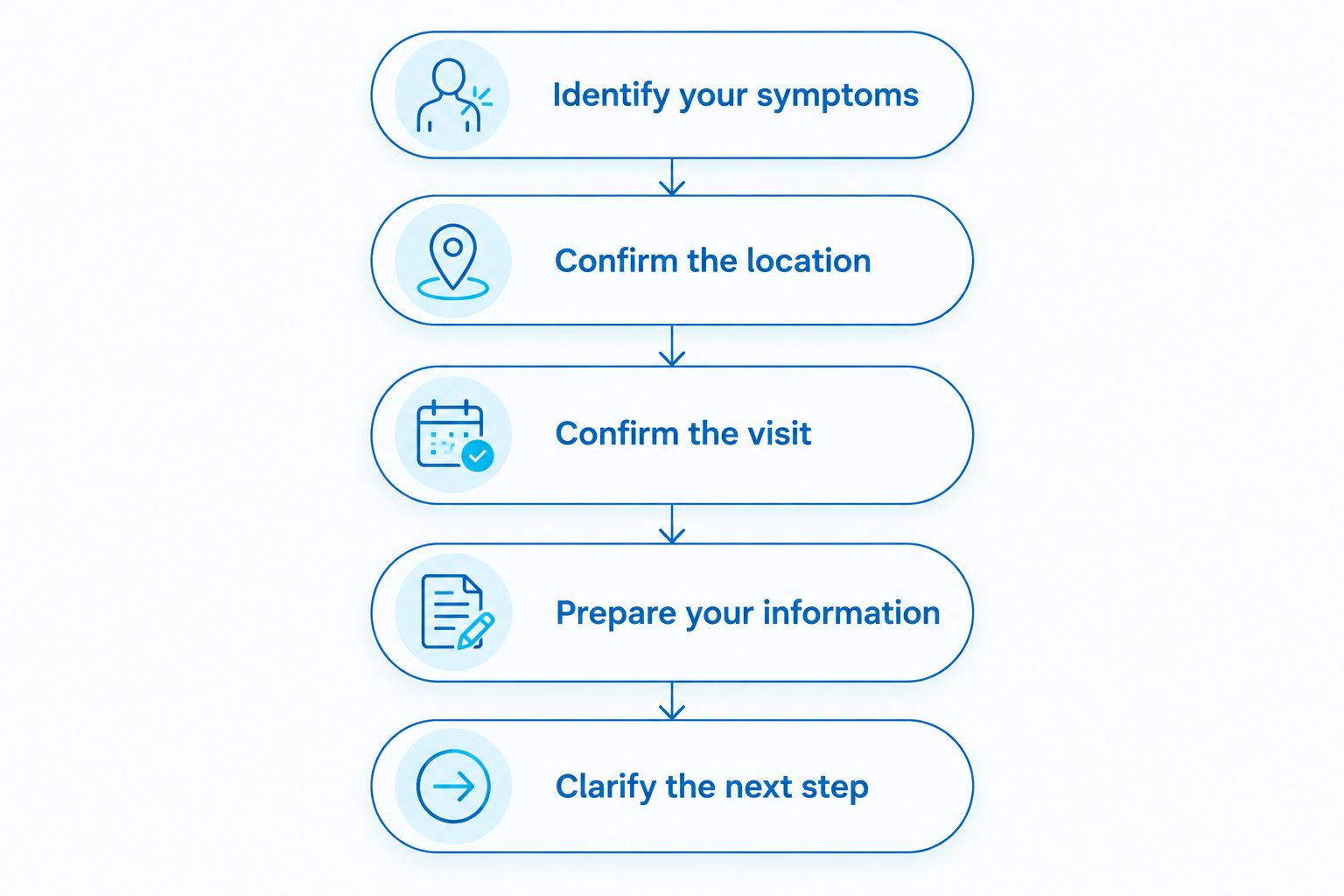
Use this sequence before traveling. If you have breathing or swallowing difficulty, skip the scheduling process and seek emergency medical help.
Identify your symptoms
Tell the office what is happening in plain language: tooth pain, swelling, a broken tooth, bleeding, or a lost filling. Explain when the problem started and whether it is getting worse.
Mention fever, facial swelling, recent injury, and difficulty opening your mouth. Those details help the dental team assess urgency; saying only that you need a checkup does not describe an active dental problem.
Confirm the location
Ask whether the specific office accepts walk-ins on the Saturday you intend to visit. Confirm whether that policy applies to new patients and to your reason for seeking care.
Do not assume that one location’s answer applies to another location in the same practice. Ask the receiving office directly, especially if you are traveling between cities.
Confirm the visit
Find out whether the office is offering a scheduled urgent examination, accepting you as a walk-in, or asking you to wait for further confirmation. These are different arrangements.
Ask when to arrive and what to do if your symptoms worsen before then. If the office has not accepted your visit, continue contacting dental offices rather than treating an unanswered request as a booking.
Prepare your information
Bring a list of your medicines, allergies, and relevant health conditions, along with insurance information if you have it. Include medicines bought without a prescription and any recent dental treatment.
Tell the dental team about pregnancy, blood-thinning medicines, and medical conditions that affect treatment. Do not stop prescribed medicine on your own to prepare for a dental visit. Ask the treating clinician for instructions.
Clarify the next step
Before treatment starts, ask what the dentist recommends, what requires another visit, and what you will be asked to authorize. Request a written treatment estimate and an explanation of insurance handling when applicable.
For Saturday care in 2026, the useful confirmation is specific: the location, your arrival arrangement, and the purpose of the visit. A general statement that a practice offers dental care is not enough.
Confirm what the office has accepted before treating an appointment request as a booked visit.
What happens during a Saturday walk-in dental visit?
A dental visit starts with information about your symptoms and health history. The dentist examines the problem and decides whether imaging or other assessment is needed before recommending treatment.
Describe the pain clearly. Explain whether it occurs when biting, follows hot or cold food, wakes you from sleep, or comes with swelling. These details do not diagnose the problem by themselves, but they help the dentist understand what to investigate.
An urgent examination can lead to treatment, instructions for managing symptoms, a follow-up appointment, or referral. The appropriate outcome depends on what the dentist finds—not simply on your request for a particular procedure.
If you are seeking help for pain, read about same-day dental visits for a toothache. Ask whether the office is confirming an examination or a particular treatment; do not treat those as interchangeable promises.
Before you leave, make sure you understand the recommended next step. Ask what symptoms require urgent reassessment, how to follow any medicine instructions, and how to arrange further dental care.
Why Saturday walk-in arrangements vary
Saturday care depends on the individual office and the care you need. Confirm these factors for your 2026 visit rather than relying on a general walk-in label:
Location-specific rules: A practice’s locations can have different appointment arrangements. Ask the office you intend to visit.
Reason for the visit: A routine cleaning and an urgent examination require different planning. Describe your actual symptoms.
Clinical urgency: Breathing difficulty, swallowing difficulty, significant swelling, and injury change the appropriate care route.
Treatment requirements: An examination determines what treatment is appropriate. Some care requires preparation, further assessment, or another visit.
Your health history: Medicines, allergies, and medical conditions affect treatment decisions. Share this information before a procedure.
Appointment confirmation: An online request, a confirmed appointment, and permission to walk in are different. Find out which arrangement you have.
None of these factors means you should ignore tooth pain. They mean you should seek the right assessment without assuming that every office operates the same way.
What dental symptoms should not wait for a Saturday walk-in?
Trouble breathing or swallowing is a reason to seek emergency medical help immediately. Call 911 if you are in immediate danger, especially when swelling affects your mouth, throat, or neck.
Serious facial injury and heavy bleeding that does not stop also require urgent assessment. Do not spend time comparing routine appointment arrangements when your symptoms indicate a medical emergency.
Facial swelling, fever with dental symptoms, or rapidly worsening pain warrants urgent professional advice. Contact a dentist promptly and describe the symptoms fully; if you cannot obtain dental help and your condition is worsening, seek urgent medical assessment.
A knocked-out permanent tooth also requires immediate dental attention. Handle it by the crown—the part normally visible in your mouth—not the root, keep it moist, and obtain urgent dental advice. Do not reinsert a knocked-out baby tooth.
For less severe symptoms while arranging care, follow the label on any over-the-counter pain medicine and check that it is safe for you. Do not place aspirin directly on a tooth or gum, and do not take leftover antibiotics as a substitute for an examination.
Can I get a dental cleaning as a Saturday walk-in?
A Saturday walk-in cleaning depends on whether the office accepts unscheduled routine visits. Opening on Saturday does not establish that policy, so request a confirmed cleaning appointment when that is your goal.
Tell the office whether you are an existing patient and whether you have pain or bleeding gums. A dentist can recommend an examination or a different type of care rather than the routine cleaning you initially requested.
Can a dentist fix my tooth during the same Saturday visit?
A dentist can determine whether treatment during the visit is appropriate after examining your tooth. A broken tooth or toothache does not identify the treatment by itself, and acceptance for an urgent examination is not a promise of a completed repair.
Ask what the recommended treatment involves and whether further visits are needed. If the dentist recommends temporary care first, make sure you understand the follow-up plan before leaving.
Do I need dental insurance to ask for a Saturday visit?
You can ask a dental office about a Saturday visit without dental insurance. Confirm how the office handles patients paying directly and request an explanation of the proposed treatment before authorizing it.
If you have insurance, ask about the specific location and dentist rather than assuming that all offices in a practice have the same participation. Insurance details do not replace the clinical assessment needed for pain, swelling, or injury.
Where does Affordable Dentist Near Me fit?
Affordable Dentist Near Me is a local option for families seeking general, cosmetic, and restorative dental care. The practice serves Fort Worth, Dallas, Houston, Waco, Grand Prairie, and Crowley.
For a Saturday visit in 2026, contact the specific Affordable Dentist Near Me location to confirm its appointment arrangements. Describe your symptoms and ask whether the office accepts unscheduled patients for that reason; do not assume Saturday walk-in access from the practice’s range of dental services.
The fit is local family dental care. The boundary is equally important: Affordable Dentist Near Me’s service description does not establish Saturday hours, walk-in acceptance, or same-day treatment for any particular location.
FAQ
Can I just turn up at a dentist on Saturday?
You can attend without an appointment only when that office accepts walk-ins. Confirm the specific location’s policy before traveling, because Saturday opening hours do not guarantee an unscheduled examination.
What should I ask when searching for a walk in dentist appointment saturday?
Ask whether the office accepts unscheduled patients this Saturday and whether it can evaluate your symptoms. Then clarify your arrival arrangement and whether the visit is an examination or a confirmed procedure.
Is a Saturday appointment request the same as a confirmed booking?
No, an appointment request is not the same as a confirmed booking. Wait for the office to confirm your location, date, and arrival time before treating the request as an accepted visit.
Will a walk-in dentist remove a painful tooth immediately?
An immediate extraction is not guaranteed by walk-in acceptance. The dentist must examine the tooth and review your health history before recommending extraction or another treatment.
Should I go to the emergency room for a swollen tooth?
Seek emergency medical help immediately if dental swelling causes trouble breathing or swallowing. For other swelling, contact a dentist promptly, and seek urgent medical assessment if symptoms worsen and dental help is unavailable.
Can Affordable Dentist Near Me confirm a Saturday visit in 2026?
Contact the specific Affordable Dentist Near Me location to ask about a Saturday visit in 2026. Confirm its appointment requirements and describe your symptoms rather than assuming that every location accepts walk-ins.
What should I bring to a Saturday dental visit?
Bring your medicine list, allergy information, relevant medical history, and insurance information if you have it. Tell the dental team about recent dental work, pregnancy, and prescribed medicines before treatment.
One last thing
Ask what happens after the examination. Getting through the door is useful, but understanding the treatment plan is what helps you finish care safely.
Before leaving, identify the next action: treatment, follow-up, referral, or monitoring with clear instructions. Keep those instructions and know who to contact if the problem changes before your next visit.