Yes—a licensed walk-in dentist can prescribe antibiotics for a tooth infection when an examination shows they are needed; in 2026, the decision depends on your symptoms, the infection’s spread, and your health history. Antibiotics do not remove infected tissue inside a tooth, so you can still need drainage, a root canal, or tooth removal even after the swelling improves.
TL;DR
A walk-in dentist can prescribe antibiotics for a tooth infection, but tooth pain alone does not establish a need.
Dental treatment addresses the infection’s source; antibiotics are an addition when clinically indicated, not a replacement.
Trouble breathing or swallowing with dental swelling requires emergency medical care, not a routine walk-in visit.
Affordable Dentist Near Me provides general dental care for families across its listed Texas communities.
Can a walk-in dentist prescribe antibiotics for a tooth infection?
Yes, but an antibiotic prescription is a treatment decision—not an automatic result of a walk-in visit. A dentist examines your tooth, checks nearby swelling, and considers whether the problem is confined to the tooth or spreading beyond it. An X-ray can help identify the source and guide treatment.
The American Dental Association’s guideline on antibiotics for dental pain and swelling prioritizes dental treatment for most tooth-related pain and localized swelling in adults with normally functioning immune systems. It supports antibiotics for certain infections involving fever or other signs of illness. Whether prompt dental treatment is available also affects the recommendation.
If you need help choosing where to seek care, review these walk-in and same-day emergency dentist options. Contact the office to explain your symptoms and ask about assessment; a walk-in label does not guarantee immediate treatment or a prescription.
Treatment
Best for
What it addresses
Main limitation
Antibiotics
Selected infections with spreading symptoms or other clinical indications
Bacteria beyond the tooth when a dentist determines medication is appropriate
Do not remove the infection’s source inside the tooth
Drainage
An accessible collection of pus
Releases trapped infected fluid
The affected tooth can still need additional treatment
Root canal treatment
An infected tooth that can be saved
Removes infected tissue from inside the tooth
Requires assessment of whether the tooth is restorable
Tooth removal
An infected tooth that cannot reasonably be saved
Removes the affected tooth
Leaves a gap and raises a separate tooth-replacement decision
These treatments are not always competing choices. A dentist can combine drainage or tooth treatment with antibiotics when the infection warrants both.
Why this matters
Pain relief and infection treatment are different goals. A prescription can help a qualifying infection, but it cannot repair deep decay, seal a damaged tooth, or remove dead tissue trapped inside it. Feeling better does not prove the tooth is fixed.
For your 2026 visit, ask what will treat the source—not just what will reduce symptoms. That question helps you understand whether the next step is treatment during the visit, a return appointment, or referral for care the office does not provide.
Unnecessary antibiotics also carry real disadvantages: allergic reactions, diarrhea, and antibiotic resistance. Avoiding an unnecessary prescription is sound care, not a sign that the dentist is dismissing your pain.
When are antibiotics appropriate for a tooth infection?
Antibiotics are appropriate when the dentist finds a clinical reason to use them. Fever, feeling generally unwell, or swelling that spreads beyond the immediate tooth area changes the assessment. A weakened immune system also requires an individualized approach rather than applying recommendations for otherwise healthy adults without adjustment.
A temperature of 100.4°F, equivalent to 38°C, is a commonly used fever threshold. Tell the dentist your actual reading and any fever-reducing medicine you took. Do not use the absence of a fever to rule out a serious infection, particularly when swelling is worsening.
Antibiotics can also be part of an interim plan for certain diagnosed infections when definitive dental treatment cannot happen promptly. That does not make medication a substitute for follow-up. Ask exactly what treatment remains necessary and what symptoms mean you should seek help sooner.
Tooth pain without spreading symptoms
Tooth pain alone does not establish that antibiotics will help. An inflamed nerve, a cracked tooth, or decay can cause significant pain without an infection that requires an antibiotic prescription.
The useful next move is a dental examination. Ask the dentist to explain the diagnosis, the recommended treatment, and an appropriate pain-control plan based on your medical history.
Localized swelling or a dental abscess
A localized abscess needs urgent dental assessment, even if you feel otherwise well. The dentist considers drainage, treatment of the tooth, and whether antibiotics are indicated under the circumstances.
Do not squeeze a swollen gum or try to open an abscess yourself. A draining spot can reduce pressure without resolving the infected tooth underneath it.
Spreading swelling or feeling ill
Swelling that spreads into the face or neck, fever, or feeling significantly unwell needs prompt professional attention. Tell the office about these symptoms before arriving so staff can direct you to the appropriate level of care.
Difficulty breathing or swallowing is an emergency. Call 911 or seek an emergency department immediately; do not wait for a dental office to open.
Why antibiotic prescribing varies
Two people with a toothache can need different treatment. In 2026, the prescribing decision still follows the diagnosis and the person’s health—not the intensity of pain alone.
Infection spread: Swelling confined to one area differs from swelling extending into the face or neck.
General symptoms: Fever and feeling ill affect the urgency and treatment decision.
Immune health: Cancer treatment, immune-suppressing medicines, and other immune problems require individual assessment.
Treatment access: Whether the dentist can address the tooth promptly affects the interim plan.
Medication safety: Allergies, pregnancy, breastfeeding, medical conditions, and other medicines influence antibiotic selection.
Previous treatment: Recent antibiotics, prior dental procedures, and worsening symptoms help the dentist assess what has changed.
Describe any medication allergy precisely. A past rash, breathing difficulty, or stomach upset is useful information, but those reactions are not interchangeable. Let the clinician determine what the history means for your prescription.
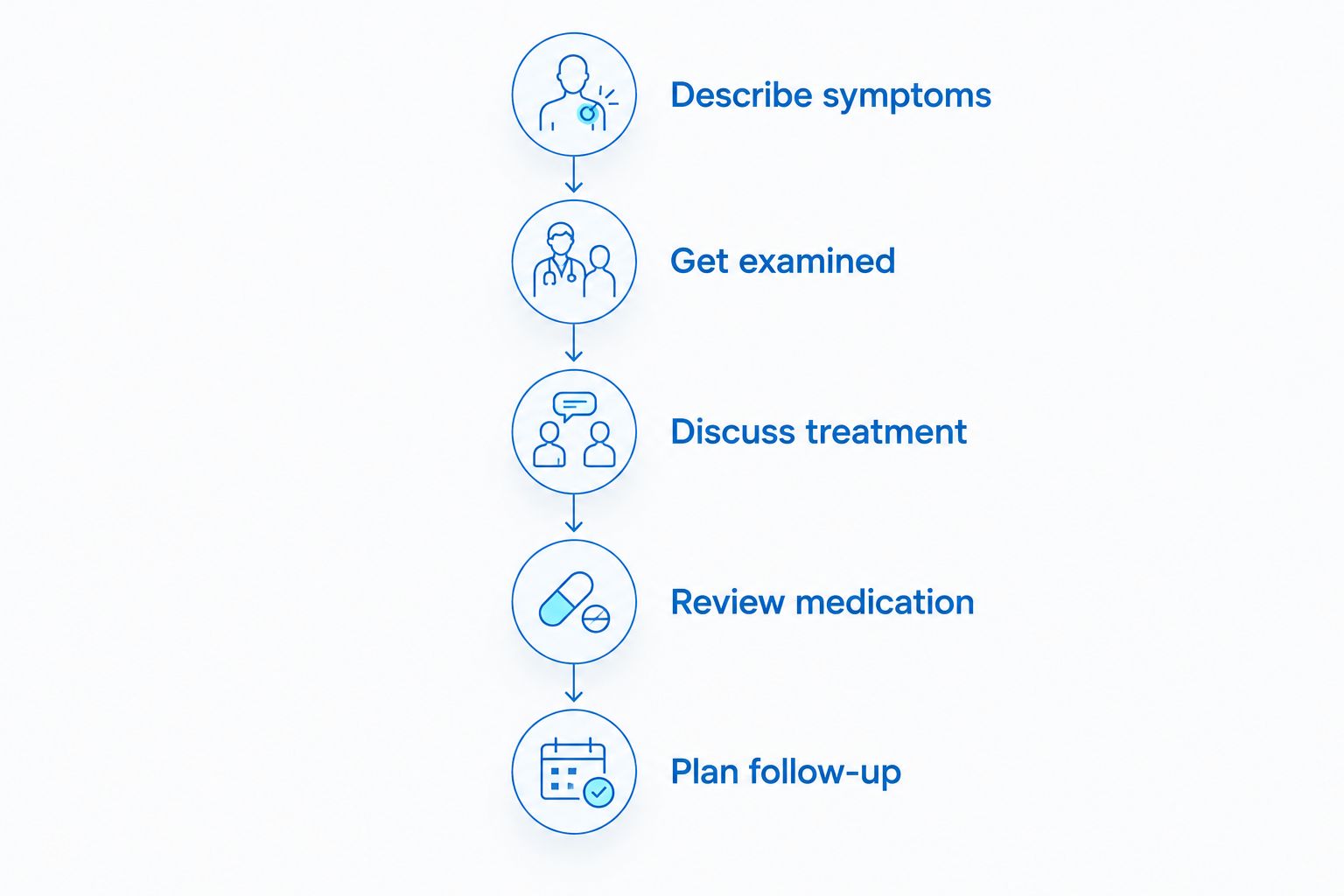
What happens during a walk-in visit?
A walk-in infection assessment follows the same basic clinical priorities as a scheduled dental visit: identify the problem, check for dangerous spread, and choose treatment. The office’s staffing and services determine which procedures it can provide during that encounter.
1. Describe your symptoms
Tell the dentist where the pain started, whether swelling is increasing, and whether you have fever or trouble opening your mouth. Mention difficulty swallowing or breathing immediately rather than leaving it until the end of the history.
Bring a medication list and explain recent antibiotic use. Include over-the-counter medicines, supplements, allergies, and any major medical conditions.
2. Get examined
The dentist checks the tooth, gums, and surrounding tissues. An X-ray is often useful, but the decision depends on the examination and the information needed to plan care.
Expect questions about biting pain, sensitivity, drainage, and previous work on the tooth. These details help distinguish an infected tooth from other causes of discomfort.
3. Discuss source treatment
Ask whether the tooth can be saved and what procedure addresses the infection. A root canal and tooth removal solve different problems and have different consequences; neither decision should rest on pain alone.
This guide to root canal treatment versus extraction explains the treatment-versus-removal decision. Your dentist still needs to assess the specific tooth before recommending either approach.
4. Review medication safety
If antibiotics are prescribed, ask how to take them, what side effects require a call, and what to do if you miss a dose. Confirm that the prescriber knows about pregnancy, breastfeeding, allergies, and medicines from other clinicians.
Do not request a particular antibiotic simply because it helped a previous toothache. The diagnosis and safety considerations can differ this time.
5. Leave with a follow-up plan
Before leaving, know what treatment remains, when reassessment is needed, and whom to contact if symptoms worsen. Written instructions are especially useful when pain makes it difficult to remember the conversation.
The visit should end with a treatment plan, not just a prescription.
What should you expect after starting antibiotics?
Do not judge treatment only by whether the pain improves. Watch swelling, fever, your ability to swallow, and how you feel overall. Worsening symptoms require contact with the treating clinician, even before a planned check-in.
For the adult dental infections covered by its guideline, the American Dental Association recommends reassessment within 3 days. The guideline also advises clinicians to instruct patients to stop antibiotics 24 hours after symptoms resolve. These are clinician-directed instructions, not permission to change an unrelated prescription yourself.
For your 2026 treatment, follow the prescribing dentist’s directions and clarify anything that conflicts with the label. Do not share antibiotics, use leftovers, or extend treatment because you still have tooth discomfort; persistent pain needs reassessment of the tooth.
Get emergency help for trouble breathing, swelling of the lips or tongue, or another suspected severe allergic reaction. Contact a clinician about significant or persistent diarrhea during or after antibiotic use.
Can I wait until the antibiotics work before treating the tooth?
Do not postpone recommended dental treatment just because you have started antibiotics. Some treatment plans require coordination, but the dentist should explain the reason and the next step.
An infected tooth can remain a source of recurring infection after symptoms settle. Ask whether drainage, a root canal, or removal is needed now and what would make a delay unsafe.
What if I have no insurance or worry about the bill?
Tell the office about your financial concerns before agreeing to a treatment plan. Ask for a written explanation separating the examination, imaging, infection treatment, and any later restorative work. A prescription does not replace those services.
Affordable Dentist Near Me provides general, cosmetic, and restorative dental care for families in Fort Worth, Dallas, Houston, Waco, Grand Prairie, and Crowley. It is a relevant general dental care option for families in those communities; contact the office for information about your symptoms and the care you need.
The benefit of a dental visit is identifying and addressing the source. The limitation is that a walk-in visit does not guarantee a particular procedure, immediate treatment, or antibiotics. Ask Affordable Dentist Near Me about the examination and treatment plan rather than assuming what the visit includes.
Ask about your dental symptoms
Explain your pain and swelling, and ask what assessment and follow-up your tooth needs.
Can a walk-in dentist prescribe antibiotics without examining me?
A walk-in visit does not guarantee a prescription; the dentist needs an appropriate clinical assessment before deciding whether antibiotics are needed. Explain your symptoms and ask the office how the assessment will take place.
Will antibiotics cure my tooth infection completely?
Antibiotics do not remove infected tissue inside a tooth. You can still need drainage, a root canal, or tooth removal to address the source, even when pain and swelling improve.
Do I need antibiotics for a toothache with no swelling?
A toothache without swelling does not automatically require antibiotics. A dentist needs to identify the cause and recommend treatment and pain relief appropriate to your health history.
How soon should a dentist check me after prescribing antibiotics?
The American Dental Association recommends reassessment within 3 days for the adult dental infections covered by its antibiotic guideline. Worsening swelling, fever, or other concerning symptoms require earlier contact rather than waiting for that check-in.
Should I go to the emergency room for a swollen face from a tooth infection?
Go to an emergency department immediately if dental swelling causes trouble breathing or swallowing, or extends toward the eye with vision changes. Facial swelling without those symptoms still needs prompt assessment, and rapidly worsening swelling warrants emergency evaluation.
Can I use leftover antibiotics until I see a dentist?
Do not use leftover antibiotics or someone else’s prescription for a suspected tooth infection. The medicine can be inappropriate, cause harm, and delay treatment of the affected tooth.
Can Affordable Dentist Near Me help me understand my dental treatment options?
Affordable Dentist Near Me provides general, cosmetic, and restorative dental services in its listed Texas communities. Contact the office to discuss your symptoms and ask about an examination; a prescription or particular procedure depends on the clinical assessment.
One last thing
A tooth infection can hurt less after it starts draining because the pressure has eased. Less pain is not the same as a resolved infection. Keep the dental assessment even if a bad taste appears and the throbbing settles.
For a suspected tooth infection in 2026, the most useful question is: what will remove the source, and when will that happen? That keeps the focus on treatment rather than obtaining antibiotics alone.