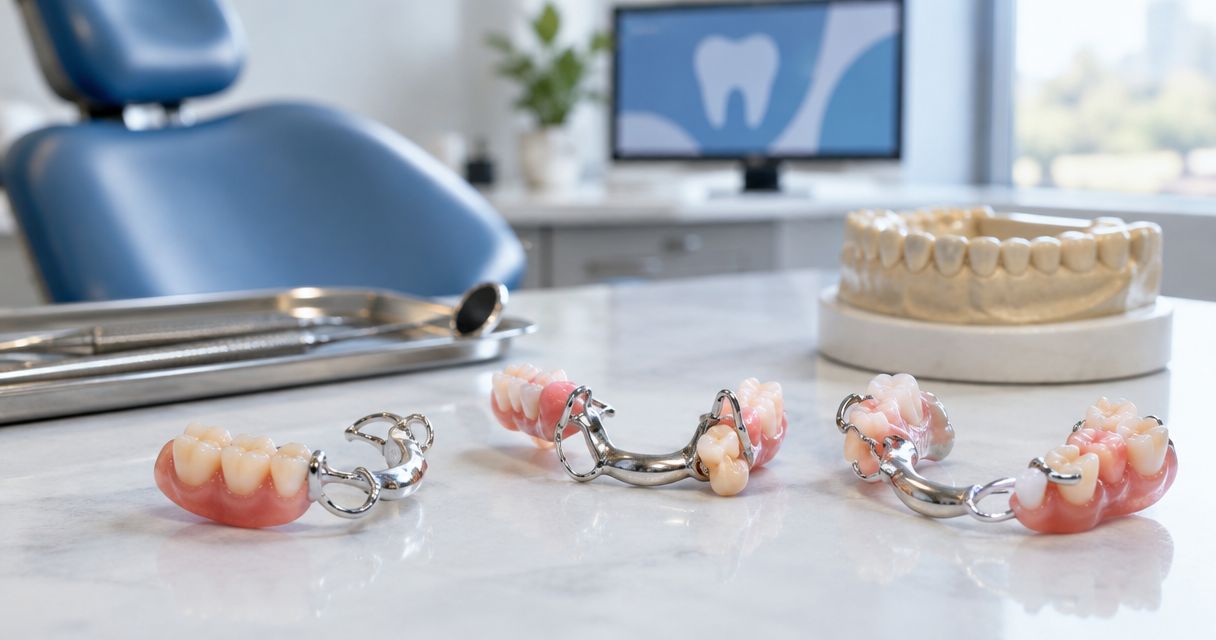
Best overall to discuss: a cast-metal partial for long-term support. Best for temporary replacement: an acrylic partial. Best for less-visible clasps: a flexible partial. Your partial removable denture cost in 2026 depends on the design, treatment your mouth needs, and follow-up care—not the material name alone.
TL;DR
Partial removable denture cost requires an individual treatment plan; material alone does not establish a reliable cost ranking.
Cast-metal partials deserve consideration for long-term support when remaining teeth can support the design.
Acrylic partials suit temporary replacement; flexible partials deserve discussion when visible clasps are a concern.
Affordable Dentist Near Me serves Texas families comparing restorative dental care, including tooth-replacement decisions.
Why this matters
A removable partial denture replaces missing teeth while some natural teeth remain. You take the appliance out for cleaning, and its design determines how it rests on your gums and connects with your remaining teeth.
A cost comparison is useful only when the treatment plans solve the same problem. An appliance intended for healing after extractions is not the same purchase as a long-term partial designed around stable teeth.
Affordable Dentist Near Me provides general, cosmetic, and restorative dental care for families in Fort Worth, Dallas, Houston, Waco, Grand Prairie, and Crowley. For partial removable denture decisions, start with an examination and a written explanation of the proposed design.
What makes the best removable partial denture?
Use these criteria before comparing treatment plans in 2026. A familiar material name does not tell you whether a partial suits your mouth.
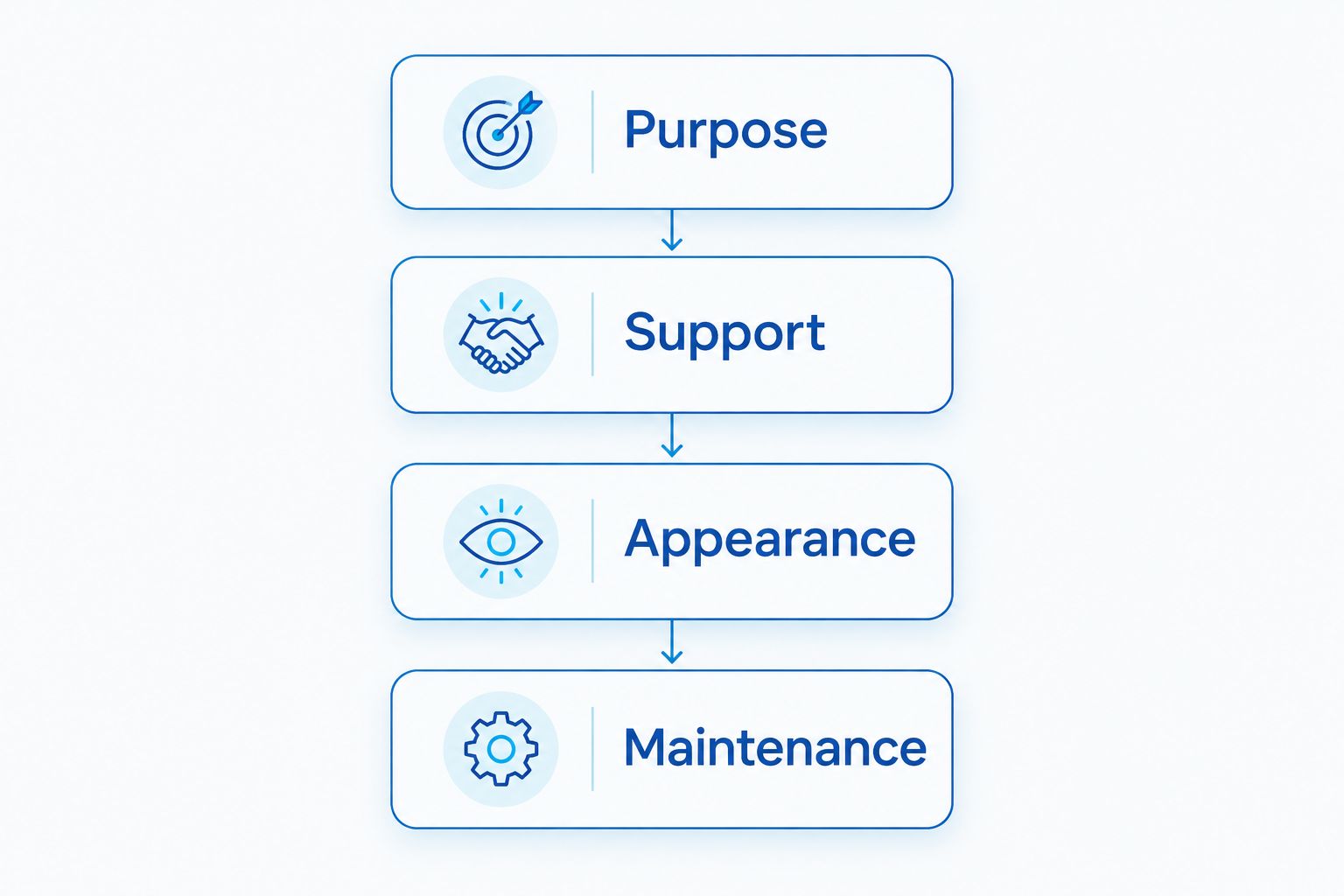
Purpose: Is the appliance temporary during healing or intended for ongoing use?
Support: Which remaining teeth and gum areas will carry the appliance?
Appearance: Where will clasps sit when you smile or speak?
Maintenance: Can the proposed design be repaired, adjusted, or modified?
Treatment scope: Does the plan include necessary dental work and follow-up visits?
Daily handling: Can you insert, remove, and clean the appliance comfortably?
The right choice must also protect the teeth you still have. A partial that looks acceptable but is difficult to clean around creates a problem your treatment plan needs to address.
Partial denture options at a glance
This ranking is a decision order, not a universal lowest-to-highest cost list. Individual treatment plans establish the actual comparison; a material label cannot do that reliably.
Rank and option
Best for
Standout feature
Key limitation
1. Cast-metal partial
Long-term support
Rigid framework with rests on supporting teeth
Clasps can show, depending on placement
2. Acrylic partial
Temporary tooth replacement
Design can often accommodate changes during treatment
Can feel bulky and is vulnerable to fracture
3. Flexible partial
Less-visible clasps
Gum-colored flexible material around supporting teeth
Repairs and additions can be more difficult
Do not treat the positions as a prescription. An acrylic partial can be the appropriate first step during healing, even when a cast-metal design is the long-term goal.
1. Cast-metal partial: best for long-term support
A cast-metal partial uses a rigid metal framework to hold replacement teeth and connect the appliance across your mouth. Small rests on selected natural teeth help support the design; clasps help retain it.
A cast-metal partial deserves first consideration when you want ongoing tooth replacement and your remaining teeth can support it. The dentist must assess those teeth before recommending the framework.
Cast-metal partial pros:
A rigid framework helps distribute chewing forces through the planned supports.
Metal allows some framework sections to be thinner than comparable acrylic sections.
The design can replace missing teeth in different areas of the same arch.
Cast-metal partial cons:
Metal clasps can be visible, particularly near the front of your smile.
Supporting teeth need careful cleaning around rests and clasps.
Future tooth loss can complicate changes to the existing framework.
Best for: Patients seeking a long-term removable option with suitable supporting teeth.
Ask the dentist to show you where the clasps and rests will sit. That explanation connects the proposed design to what you will see, feel, and clean every day.
Verdict: Hold until the examination confirms that your remaining teeth can support a cast-metal partial.
2. Acrylic partial: best for temporary replacement
An acrylic partial uses a plastic base to hold replacement teeth. Some designs include wire clasps that help keep the appliance in place.
An acrylic partial is particularly relevant when your mouth is changing during treatment. For example, healing after an extraction can change the shape of the gums and affect how an appliance fits.
Acrylic partial pros:
Acrylic can often be repaired or modified when the design permits.
Replacement teeth can sometimes be added if another natural tooth is lost.
The appliance can serve as a temporary step before a different long-term restoration.
Acrylic partial cons:
The base can feel bulky against your tongue or palate.
Acrylic can fracture if the appliance is dropped or placed under unsuitable forces.
A temporary design does not automatically provide the support of a planned long-term framework.
Best for: Patients who need temporary tooth replacement while healing or completing other dental treatment.
For a 2026 treatment plan, ask whether the acrylic partial is transitional or definitive. If it is transitional, the written plan should explain what happens after healing and whether a different appliance is expected.
Verdict: Hold until you understand whether the acrylic partial is the final restoration or a temporary stage.
3. Flexible partial: best for less-visible clasps
A flexible partial uses a flexible, gum-colored base material, often with clasps made from that material. This can reduce the appearance of metal around supporting teeth.
A flexible partial is an appearance-focused option, not an automatic upgrade. Its suitability depends on the missing teeth, supporting structures, and the specific material and design.
Flexible partial pros:
Gum-colored clasps can be less noticeable than metal clasps.
The flexible material offers a different feel from a rigid acrylic base.
Designs without metal clasps address a specific cosmetic concern.
Flexible partial cons:
Adding teeth or repairing the appliance can be more difficult than with conventional acrylic.
Some designs are difficult to reline when the shape of the gums changes.
Flexibility does not replace the need for adequate support and a suitable bite.
Best for: Patients prioritizing less-visible clasps whose examination supports a flexible design.
Ask which repairs the proposed material allows. A good-looking appliance still needs a practical plan for maintenance and changes in your mouth.
Verdict: Hold until the dentist explains the support, cleaning requirements, and repair limits of the flexible partial.
How the options are ranked
The ranking prioritizes intended use, support, appearance, and maintainability. Cast-metal partials lead the discussion for long-term support; acrylic partials occupy the temporary-treatment slot; flexible partials address visible-clasp concerns.
There is no universal cost order here because the scope of treatment changes between patients. Compare equivalent written plans instead of assuming acrylic, metal, and flexible labels establish your final expense.
What changes your partial removable denture cost?
Your 2026 treatment plan should separate the appliance from other work. Otherwise, a comparison between two offices can conceal differences in what each plan includes.
Treatment scope
A partial for 1 arch replaces teeth in either the upper or lower jaw. Treatment for 2 arches involves both jaws; confirm which your written plan covers before comparing it with another proposal.
The number and position of missing teeth also influence design. A gap between natural teeth creates different support requirements from missing back teeth with no natural tooth behind them.
Remaining teeth
Decay, gum disease, or damaged supporting teeth can change the treatment sequence. Necessary care should be explained before impressions or scans for the final appliance.
Ask which teeth will support the partial and whether their condition affects the recommendation. Do not confuse preparation of supporting teeth with the manufacture of the partial itself.
Healing changes
Gums change shape after extractions, which can alter the fit of a removable appliance. Ask how the plan handles adjustments during healing and when the dentist will reassess the fit.
An adjustment changes a specific area of the appliance. A reline changes the surface that rests against the gums; these are different procedures and should not be treated as interchangeable terms.
Follow-up care
A written plan should explain the fitting visits, the adjustment process, and how future concerns are handled. Ask what is included rather than assuming every later visit belongs to the original treatment.
Compare treatment plans before choosing payment terms
Keep the clinical choice separate from the payment decision. First establish which partial fits your needs; then compare how you would pay for that treatment.
If you are considering an installment arrangement, the HSA rules for dental payment plans matter because tax treatment depends on the underlying expense and payment timing, not simply the existence of a monthly bill. Confirm the arrangement with your account administrator or tax adviser before using HSA funds.
For your 2026 comparison, keep these questions together:
Does each treatment plan cover the same arch and intended use?
Is preliminary dental treatment listed separately?
What follow-up care does each plan include?
Does the payment agreement change the total you must repay?
What happens if the recommended treatment changes after the examination?
A manageable monthly payment does not establish that the appliance is clinically suitable. Read the treatment plan and payment agreement as separate documents, then check that both describe the same care.
Bring these questions to your appointment
Affordable Dentist Near Me serves families considering restorative dental care. Bring your priorities in plain language: chewing, appearance, daily handling, or replacing teeth while another treatment is underway.
A focused appointment should leave you able to explain the recommendation without repeating unfamiliar dental terms. Ask the dentist to walk through the following sequence.
Purpose: Is this partial temporary or intended for ongoing use?
Support: Which teeth and gum areas will carry it?
Appearance: Will any clasps show when I smile?
Maintenance: Can this design be repaired, relined, or changed?
The answers should connect to your actual mouth, not just a sample appliance. Ask to see where the proposed design rests and which areas you must clean carefully.
Choose the design before comparing payment arrangements.
Keep the partial and supporting teeth clean
A removable partial does not replace daily care for your natural teeth. Brush natural teeth 2 times daily with fluoride toothpaste, clean between them, and follow the dentist's instructions for cleaning the appliance.
Remove and rinse the partial as directed, and use cleaning products suitable for its material. Hot water can distort a denture; abrasive products can damage its surface.
Ask when to remove the appliance overnight and how to store it. Instructions can differ immediately after extractions, so follow the directions provided for your stage of treatment.
Do not bend clasps, file sore areas, or use household glue on a broken partial. Contact the dental office if the appliance cracks, moves unexpectedly, or causes persistent soreness.
Which removable partial denture should you choose?
Start with a cast-metal discussion for long-term support, an acrylic discussion for temporary replacement, and a flexible discussion when visible clasps are your main concern. Choose only after the examination connects that option to your remaining teeth and bite.
Affordable Dentist Near Me is a fit for Texas families seeking general and restorative dental care while considering tooth replacement. Contact the office for more information about an individual assessment; this comparison does not establish that every material suits every patient.
For partial removable denture cost in 2026, your next move is a written treatment plan. It should identify the design, intended use, necessary preliminary care, and follow-up arrangements before you commit.
FAQ
What’s the best removable partial denture for long-term use?
A cast-metal partial deserves consideration for long-term support when your remaining teeth can support the design. An examination must confirm the condition of those teeth, your gums, and your bite.
Which removable partial denture has the lowest cost?
An individual written treatment plan is needed to establish which suitable option has the lowest cost for you. Material names alone do not account for preliminary treatment, appliance design, or follow-up care.
Is a flexible partial better than a metal partial?
A flexible partial is not automatically better than a metal partial. Flexible clasps can be less visible, while a cast-metal framework provides rigid support; repair options and suitability also differ.
Can I get a partial denture for just my upper teeth?
Yes, a partial denture can replace missing teeth in the upper arch alone. The dentist must assess your remaining upper teeth and how the appliance will meet your lower teeth.
Does dental insurance cover removable partial dentures?
Coverage for removable partial dentures depends on your dental policy. Ask about eligibility, waiting periods, replacement restrictions, and a pretreatment estimate before proceeding.
Will I need a new partial if another tooth is removed?
Whether an existing partial can accept another replacement tooth depends on its material and design. Ask about this before choosing an appliance, particularly if another natural tooth has an uncertain outlook.
Can I adjust a partial denture at home if it hurts?
Do not file the appliance or bend its clasps at home. Contact the dental office for an assessment, especially if soreness persists or the partial no longer seats properly.
One last thing
Ask what happens if a supporting tooth is lost. That question reveals an important difference between designs: some allow a straightforward modification, while others require a more substantial change or replacement.
A partial denture is part of a longer treatment plan, not an isolated appliance. Understanding its limits before treatment gives you a clearer decision than choosing by material name alone.