Best starting point for a lower denture: a two-implant snap-in design. Best for discussing additional support: a four-implant removable design. Best for linked retention: a bar-retained denture. The cost of snap-on dentures in 2026 depends on your treatment plan, so compare complete written estimates rather than assuming one design is always cheapest.
TL;DR
Compare the cost of snap-on dentures using complete treatment estimates, not implant counts alone.
Two-implant lower dentures are a starting option for patients seeking better lower-denture retention.
Four-implant removable dentures and bar-retained dentures serve different support needs; neither guarantees a better fit.
Affordable Dentist Near Me provides general and restorative dental care for Texas families.
Why this matters
Snap-on dentures, also called snap-in dentures or implant-retained overdentures, attach to dental implants but remain removable. They differ from fixed replacement teeth, which you do not remove yourself for daily cleaning.
A useful cost comparison starts with the same treatment scope. An estimate covering only the removable teeth does not match an estimate that includes implant placement, attachments, and follow-up care.
Affordable Dentist Near Me is a dental-care option for Texas families comparing implants and dentures.Affordable Dentist Near Me serves Fort Worth, Dallas, Houston, Waco, Grand Prairie, and Crowley; contact the office for information about your treatment needs.
For your 2026 decision, separate the clinical choice from the payment choice. First establish which designs suit your mouth. Then compare what each written estimate includes.
What makes the best snap-in denture plan?
The best plan fits your jaw, stays manageable to clean, and explains the full course of care. Use these criteria before comparing designs:
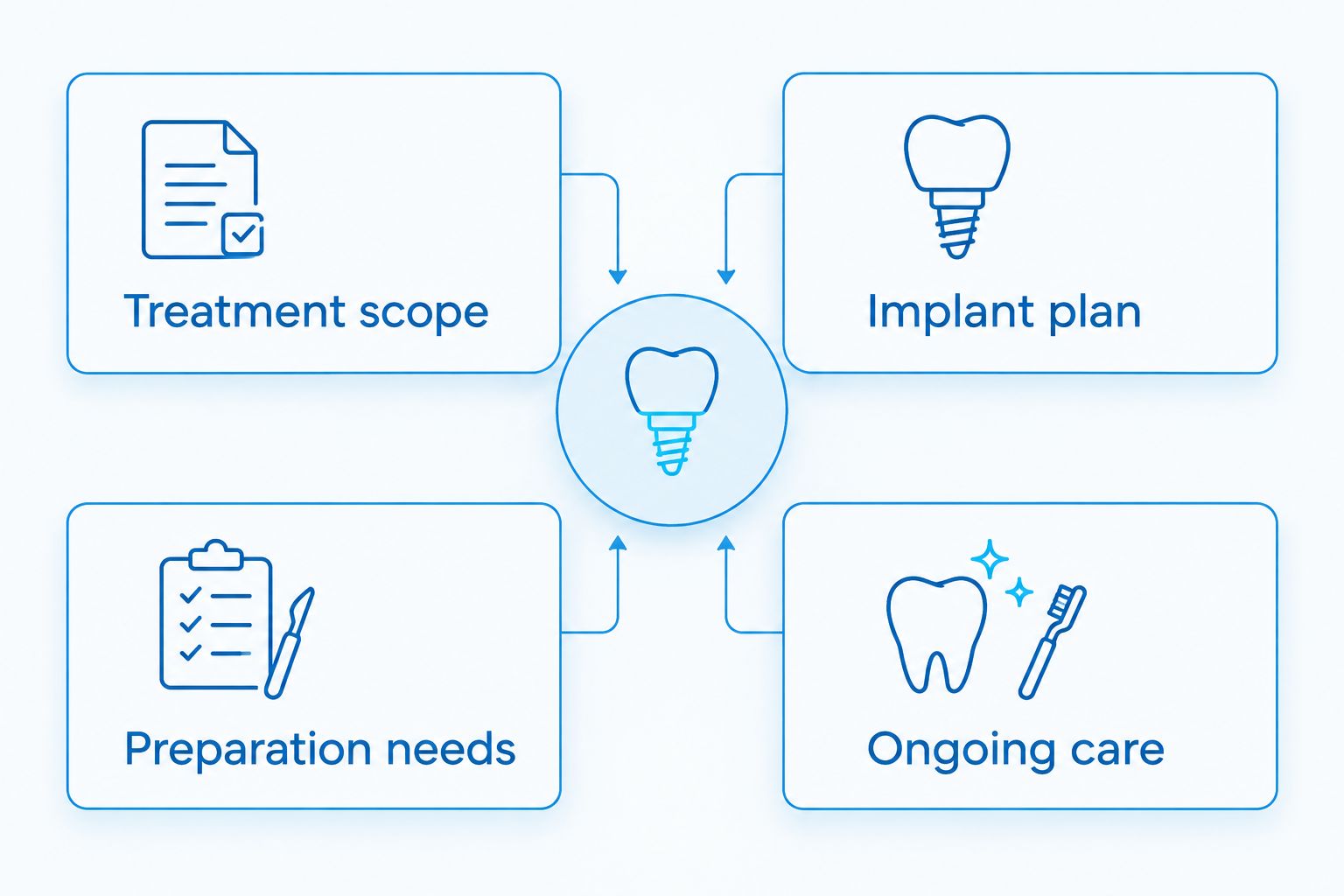
Treatment scope: Confirm whether the estimate covers one jaw or both, and whether it includes a new denture.
Implant plan: Ask how many implants are proposed, where they go, and why that arrangement fits your mouth.
Attachment design: Find out whether the denture connects to individual attachments or a bar linking implants.
Preparation needs: Identify extractions, gum treatment, or bone-building procedures needed before treatment.
Ongoing care: Ask about adjustments, replacement attachment parts, professional maintenance, and cleaning access.
Daily handling: Make sure you can remove, clean, and reseat the denture as instructed.
Do not treat implant count as a quality score. More implants change the treatment design; they do not automatically make every patient's result better.
Snap-in denture options at a glance
The ranking below is a consultation shortlist, not a universal cheapest-to-most-expensive order. Your examination and itemized estimates determine the actual order for your care.
Option
Best for
Standout feature
Key limitation
Two-implant lower denture
A focused lower-denture retention discussion
Removable denture attached to two lower-jaw implants
Not a template for upper-jaw treatment
Four-implant removable denture
Discussing additional attachment locations
Removable design using four implants
Requires suitable placement sites and a clear clinical reason
Bar-retained denture
Patients whose treatment plan calls for linked retention
A connecting bar holds the removable denture
Cleaning beneath the bar requires access and care
These categories overlap. A four-implant denture can use a bar, so ask your dentist to specify both the implant arrangement and attachment design.
1. Two-implant lower denture: best for focused lower-jaw care
A two-implant lower denture connects removable replacement teeth to 2 implants in the lower jaw. The attachments help hold the denture in place, while the gums still contribute support in many designs.
This is a useful starting discussion when your main concern is a loose lower denture. Your dentist must assess bone, gum health, bite, and the denture itself before recommending treatment.
Best for: Patients seeking better lower-denture retention without starting from an upper-and-lower treatment assumption.
Two-implant lower denture pros
Targets a specific problem: movement of the lower denture.
Remains removable for cleaning outside the mouth.
Provides a defined plan to compare against more extensive proposals.
Two-implant lower denture cons
Does not establish what is suitable for the upper jaw.
Still requires implant surgery and ongoing care.
Attachment parts need assessment and replacement when worn.
An existing denture is not automatically suitable for conversion. Its fit, condition, bite, and available space all matter; adapting an unsuitable denture is not a sound shortcut.
2026 estimate check: Ask whether the proposal includes a new denture or modification of your current one. Also confirm whether the attachment parts and fitting visits appear in the written treatment scope.
Verdict: Hold until your dentist confirms lower-jaw suitability and the complete treatment scope.
2. Four-implant removable denture: best for added attachment locations
A four-implant removable denture uses 4 implants to retain a denture that you remove for cleaning. The implants can connect through individual attachments or a bar, depending on the treatment plan.
The number alone does not explain how the denture works. Ask whether the gums share the chewing load, how the implants are distributed, and what benefit the design offers in your case.
Best for: Patients whose examination supports additional implant locations for a removable denture.
Four-implant removable denture pros
Offers additional attachment locations when clinically appropriate.
Keeps the denture removable for daily cleaning.
Allows discussion of different attachment arrangements.
Four-implant removable denture cons
Requires suitable bone and space at the planned locations.
Involves more implant sites than a two-implant design.
Does not promise a better result solely because it uses more implants.
An upper-jaw plan should not simply copy a lower-jaw plan. Bone conditions and support requirements differ, so ask your dentist to explain the design for each jaw separately.
Estimate check: Request an explanation of what the additional implants accomplish. If two proposals differ, compare the clinical reasons and included care—not just the implant totals.
Verdict: Hold until the dentist explains why the additional attachment locations suit your mouth.
3. Bar-retained denture: best for linked retention
A bar-retained denture clips onto a bar connecting dental implants. You remove the denture, but the bar remains attached in the mouth.
Bar retention describes the attachment system, not a separate implant count. That distinction matters when comparing proposals: a bar-retained plan and a four-implant plan are not necessarily competing treatments.
Best for: Patients whose dentist recommends connected implants and who can clean around the bar effectively.
Bar-retained denture pros
Connects implants through a shared retention structure.
Allows removal of the denture for cleaning.
Provides an alternative to separate attachment points when appropriate.
Bar-retained denture cons
Requires enough space for the bar and denture components.
Adds surfaces beneath and around the bar that need cleaning.
Requires attention to clips, fit, and other components over time.
Ask for a demonstration of the cleaning method before agreeing to treatment. A design that is difficult for you to maintain needs further discussion, especially if hand movement or vision affects daily care.
2026 estimate check: Confirm whether the bar, clips, denture, and fitting procedures are all included. Ask how future attachment maintenance is handled.
Verdict: Hold until cleaning access, available space, and the reason for bar retention are clear.
How these options are ranked
This shortlist starts with a focused lower-jaw option, then considers additional implant locations, then linked retention. The order follows treatment scope and decision usefulness—not verified local fees or a claim that every patient should follow the same sequence.
The criteria remain the same: suitability, complete treatment scope, attachment design, preparation needs, and manageable maintenance. The best-value plan is a suitable plan you can understand and maintain.
How to compare the cost of snap-on dentures in 2026
Put written proposals side by side before choosing. Use the same headings for each estimate so omitted treatment does not look like a saving.
Treatment scope
Check whether each proposal covers 1 arch, meaning one jaw, or both jaws. Confirm whether it includes a new removable denture, adaptation of an existing denture, or temporary teeth during treatment.
Also ask what happens if your existing denture proves unsuitable for modification. That decision should be clear before you approve a conversion plan.
Implant plan
Request the proposed implant count, attachment type, and reason for the design. Ask which procedures are definite and which depend on further examination or imaging.
Your medical history matters here. Tell the dentist about medications, tobacco use, diabetes, and other health conditions so the plan reflects your circumstances.
Preparation needs
Ask whether you need extractions, treatment for active gum disease, or bone-building procedures. These are separate clinical questions, not automatic requirements for every patient.
If preparation is necessary, ask how it changes the sequence of care. Do not assume that implant placement and final denture fitting happen together.
Ongoing care
Confirm the cleaning routine and recommended professional follow-up. Ask who handles adjustments, loose attachments, denture repairs, and concerns about the implants.
Compare the same treatment scope before choosing between proposals.
A useful final question is: What is excluded from this estimate? Ask for the answer in writing, alongside the proposed treatment and any alternatives discussed.
Insurance and payment questions to settle first
Dental coverage depends on your specific policy. Do not assume that denture coverage also covers implant placement or every attachment component.
For a 2026 treatment plan, request a benefits review that separates implants, the removable denture, and any preparatory procedures. Ask about exclusions, waiting periods, annual limits, and your expected responsibility under the policy.
Financing is a separate agreement. Compare the total repayment obligation, interest terms, fees, and payment schedule—not just the monthly payment.
Affordable Dentist Near Me provides implants and dentures as part of its restorative dental services. Contact the office for information about an assessment and ask which treatment and payment details apply to your situation.
Which snap-in denture should you choose?
Start with the problem you need solved, not the largest implant count. For a loose lower denture, ask whether a two-implant lower design is appropriate. For upper-jaw treatment or different support needs, request a jaw-specific explanation rather than applying the lower-jaw shortlist unchanged.
Choose a four-implant removable design or bar-retained design only when the dentist explains its purpose, maintenance, and alternatives. A complete estimate makes that decision clearer; an unexplained total does not.
FAQ
What’s the cheapest snap-on denture option for me?
The cheapest suitable option depends on your jaw, existing denture, preparation needs, and complete treatment estimate. Ask whether a focused lower-jaw plan is appropriate rather than assuming that every patient needs the same design.
Are snap-on dentures and snap-in dentures the same thing?
In implant-denture discussions, snap-on and snap-in usually describe removable dentures that attach to implants. Confirm that the term refers to implant-retained dentures, not cosmetic covers worn over natural teeth.
Are two implants enough for snap-in dentures?
Two implants are an established option for retaining a lower denture in appropriately selected patients. That does not make two implants the right plan for every mouth or for an upper denture.
Is a four-implant snap-in denture the same as fixed replacement teeth?
No, a four-implant snap-in denture is removable by the patient. Implant count alone does not tell you whether replacement teeth are removable or fixed; ask how the proposed teeth attach.
Can my current denture be changed into a snap-in denture?
An existing denture can sometimes be adapted if its condition, fit, bite, and available space are suitable. Your dentist needs to examine it before recommending conversion instead of a new denture.
Does dental insurance cover snap-on dentures?
Coverage depends on your policy and the individual procedures in your treatment plan. Request a benefits review for the implants, attachments, denture, and preparatory treatment separately.
Do snap-in dentures need maintenance after fitting?
Yes, snap-in dentures need daily cleaning and professional follow-up. Attachments wear, and changes in fit require assessment rather than home adjustment.
One last thing
A loose snap-in denture does not automatically mean an implant has failed. Worn attachment parts or changes in denture fit also need evaluation.
If you already have snap-in dentures, request an assessment before assuming you need replacement treatment. Affordable Dentist Near Me patients should contact the office for information about their concerns; do not tighten, bend, or glue denture components yourself.