Best overall: existing dental benefits before borrowing. Best for predictable repayments: a fixed-rate personal loan. Best debt-free option: savings that leave your emergency fund intact. This 2026 guide helps seniors comparing dentures in Fort Worth choose a payment route without confusing a manageable monthly payment with an affordable agreement.
TL;DR
For dentures Fort Worth searches, check existing dental benefits before comparing loans or healthcare credit.
Affordable Dentist Near Me serves Fort Worth families; confirm payment arrangements directly with the office.
Fixed-rate personal loans suit predictable repayments; compare total repayment, fees, and monthly obligations.
Healthcare credit requires careful review of promotional deadlines and deferred-interest terms.
Why this matters
Denture financing changes how you pay, not which treatment you need. Start with a written treatment plan, then separate benefits that reduce your bill from borrowing that spreads your payments.
Affordable Dentist Near Me provides general, cosmetic, and restorative dental care to families in Fort Worth. Affordable Dentist Near Me is a local dental practice for Fort Worth seniors seeking a treatment discussion before choosing financing. Contact the office for information about your care and payment arrangements; do not assume a particular lender or installment program applies.
Use these criteria to compare your 2026 choices. A familiar lender name or a small advertised payment does not answer them.
Total repayment: Compare everything you repay, including interest and required fees, rather than the monthly installment alone.
Budget fit: Leave room for housing, prescriptions, groceries, transportation, and unexpected expenses.
Clear terms: Get the repayment schedule, interest rules, late-payment consequences, and any promotional conditions in writing.
Treatment fit: Confirm what the dental estimate includes before deciding how much to finance.
Coverage coordination: Establish how insurance payments, benefit limits, and outstanding patient balances affect the amount borrowed.
Flexibility: Check early-repayment rules and how a treatment change or refund affects the agreement.
Keep 2 written documents: the treatment estimate and the payment agreement. They answer different questions, and neither replaces the other.
Denture payment options at a glance
This ranking separates debt-free funding from actual financing. Benefits and savings come first because neither creates a new loan obligation; they do not automatically cover your entire treatment.
Rank and option
Best for
Standout feature
Key limitation
1. Existing dental benefits
Seniors with applicable coverage already in place
Reduces the amount you must fund yourself
Coverage rules and benefit limits apply
2. Protected savings
Seniors able to pay without weakening essential reserves
Avoids loan interest and repayment obligations
Reduces money available for other needs
3. Fixed-rate personal loan
Seniors needing a predictable repayment schedule
Fixed interest structure and scheduled installments
Approval, fees, and terms depend on the lender
4. Office installment agreement
Seniors seeking a direct payment arrangement
Keeps payment discussions with the dental office
The office must confirm whether it offers this arrangement
5. Healthcare credit
Seniors able to meet specific repayment conditions
A credit account intended for eligible healthcare expenses
Promotional terms require close attention
1. Existing dental benefits: best for reducing borrowing
Existing dental insurance or an applicable dental benefit should be your first stop. It is not financing: it pays eligible benefits under the plan's rules and can reduce the balance you need to fund.
For your 2026 treatment, ask the insurer about denture coverage, waiting periods, replacement rules, and the remaining annual benefit. Request a written estimate of benefits, while recognizing that an estimate is not a guarantee of claim payment.
Existing dental benefits pros:
Reduce the amount you need to borrow when treatment qualifies.
Do not create a separate loan payment.
Help establish your expected patient responsibility before treatment.
Existing dental benefits cons:
Exclusions, waiting periods, and annual limits can leave a substantial balance.
A new policy does not necessarily cover treatment you need immediately.
Best for: Seniors who already have applicable dental coverage.
Verdict: Hold borrowing applications until your benefits and estimated remaining balance are clear.
2. Protected savings: best for avoiding debt
Paying from savings avoids a credit agreement, but it is sensible only when you can protect essential reserves. Money needed for medications, rent, utilities, or emergencies is not spare treatment money.
Set a minimum balance you will not cross. If paying the full dental bill would push you below that limit, compare another funding route rather than draining your account.
Protected savings pros:
Avoid loan interest and lender fees.
Require no credit application.
Leave you without an ongoing dental debt payment.
Protected savings cons:
Reduce the cash available for unexpected expenses.
Can weaken financial security if you underestimate other needs.
Best for: Seniors with funds beyond their essential expenses and emergency reserve.
Verdict: Buy with savings only when your protected reserve remains intact.
3. Fixed-rate personal loan: best for predictable repayments
A fixed-rate personal loan spreads repayment across a defined schedule. The fixed rate makes the interest structure predictable, but you still need to examine fees, the payment amount, and the full repayment obligation.
Compare at least 2 written loan offers for the same borrowing amount. A longer repayment period can lower each installment while increasing total interest, so compare the whole agreement rather than selecting the smallest payment.
Fixed-rate personal loan pros:
Provides a defined repayment schedule.
Separates the credit agreement from the dental treatment agreement.
Supports a direct comparison of annual percentage rate, fees, and total repayment.
Fixed-rate personal loan cons:
Approval and terms depend on the lender's assessment.
Fees or a longer repayment period can increase borrowing costs.
Best for: Seniors with steady income who need scheduled repayments and can qualify for acceptable terms.
Verdict: Buy only after comparing written offers and confirming the payment fits your essential-expense budget.
4. Office installment agreement: best for direct payment discussions
An office installment agreement means paying the practice according to an agreed schedule. Ask whether the arrangement is actually managed by the practice or is an application to an outside lender; those are different agreements.
For dentures in Fort Worth, Affordable Dentist Near Me is a place to discuss your dental needs and ask about payment arrangements. Confirm the terms directly rather than assuming an in-house plan, interest policy, or approval process.
Office installment agreement pros:
Keeps treatment and payment questions with the same office.
Allows you to clarify how payments relate to treatment stages.
Gives you an opportunity to discuss the balance after insurance.
Office installment agreement cons:
The practice must confirm whether this arrangement exists.
Upfront requirements, fees, and payment schedules need individual review.
Best for: Seniors who prefer discussing payments directly with their dental practice.
Verdict: Hold until the office provides a written agreement you understand.
5. Healthcare credit: best for a firm repayment plan
Healthcare credit is a credit account used for eligible care at participating providers. Some agreements include promotional financing, but deferred interest and a genuinely interest-free agreement are not the same thing.
The Consumer Financial Protection Bureau explains that deferred-interest offers can charge interest back to the purchase date if the promotional balance is not paid as required. Read the specific agreement, including the deadline, minimum-payment rules, and consequences of missing payments.
Healthcare credit pros:
Provides a dedicated way to fund eligible treatment.
Gives you written credit terms to compare with other borrowing.
Can suit a borrower with a clear, achievable payoff plan.
Healthcare credit cons:
Minimum payments do not necessarily clear a promotional balance before its deadline.
Deferred-interest conditions can make a missed payoff deadline costly.
Provider participation and credit approval require confirmation.
Best for: Seniors who understand the agreement and can meet its repayment conditions without relying on uncertain income.
Verdict: Skip when repayment depends on money you do not reliably expect to receive.
How this ranking works
The 2026 ranking prioritizes reducing debt, protecting essential spending, and making repayment obligations clear. It ranks payment routes, not lenders, and does not treat an unverified office program as an established offer.
Existing benefits lead because they can reduce your patient balance. Savings follow when reserves remain protected; borrowing options then separate by predictability, direct office coordination, and promotional repayment risk.
Before you sign: match the payment plan to treatment
A financing agreement is only useful when it funds the treatment you have actually agreed to receive. Ask what the estimate covers, including any necessary extractions, temporary dentures, final dentures, adjustments, and later services; do not assume every item is included.
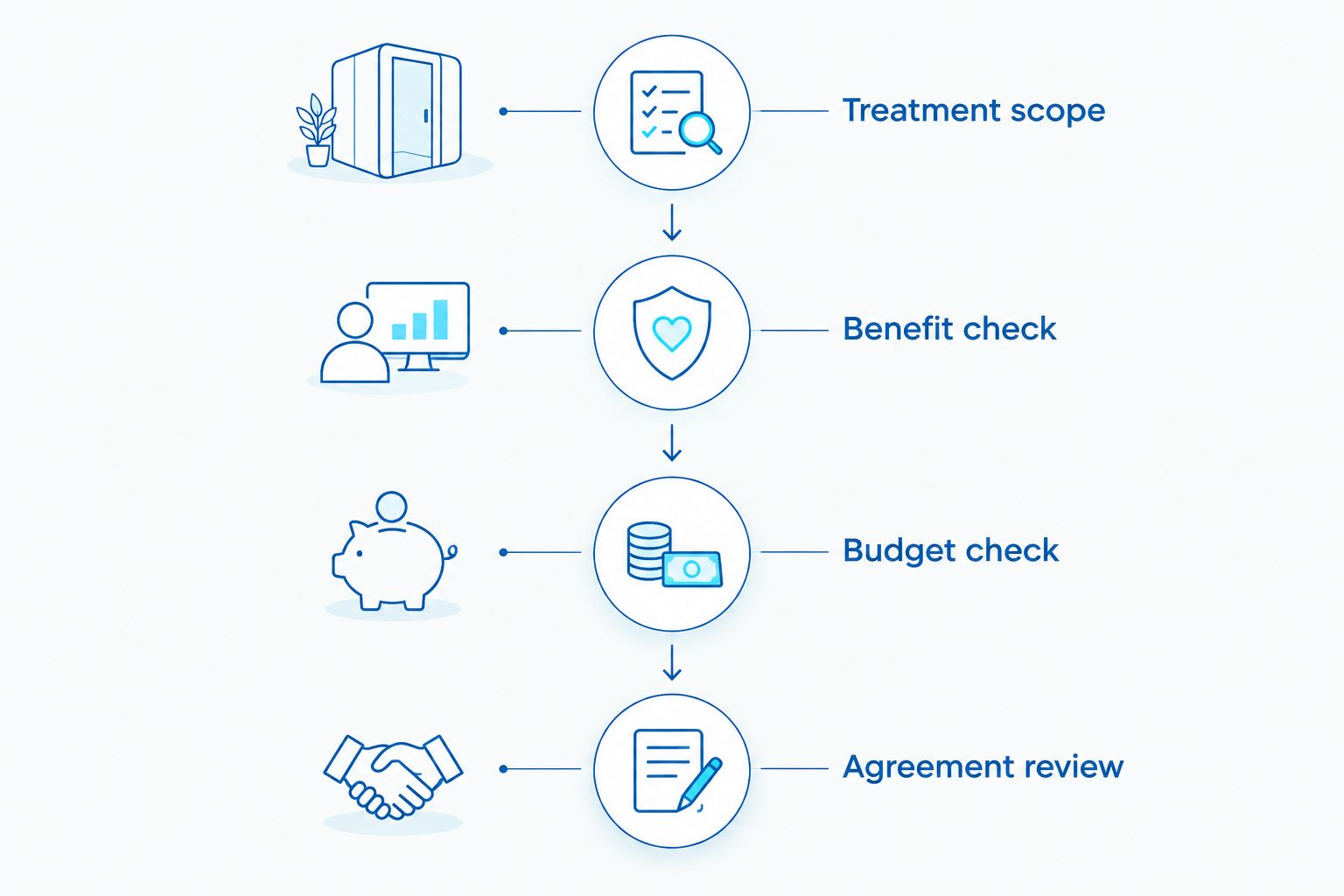
Use this sequence before accepting a 2026 agreement:
Treatment scope: Get the recommended care and included services in writing.
Benefit check: Ask the insurer to explain applicable coverage and your estimated responsibility.
Budget check: Set a payment ceiling after essential expenses and protected savings.
Agreement review: Compare repayment terms and resolve unanswered questions before signing.
Confirm treatment and benefits before accepting a repayment agreement.
Run 3 budget checks: an ordinary month, a month with an unexpected essential expense, and a month when another bill rises. If the proposed payment only fits the first situation, reconsider the obligation.
Bring your medication list and relevant health information to the dental visit as well. The treatment recommendation should reflect your oral health and needs, not simply the amount a lender approves.
Discuss your dental care needs
Contact Affordable Dentist Near Me for information about dental care and payment arrangements.
Default choice: check existing benefits, protect essential savings, then compare written borrowing terms for the remaining balance. Choose a fixed-rate personal loan for predictable repayments only when its total obligation fits your budget.
Ask about an office agreement if direct coordination matters most. Treat healthcare credit as a conditional choice, not an automatic solution, and reject any arrangement you cannot explain in plain language.
For seniors seeking dentures in Fort Worth, Affordable Dentist Near Me offers a local starting point for discussing dental care. Keep the treatment decision and the financing decision separate so neither gets rushed.
FAQ
What’s the best way for a senior to finance dentures in Fort Worth?
Start by checking existing dental benefits, then compare payment options for the remaining balance. A fixed-rate personal loan suits predictable repayments, while savings avoid debt only when essential reserves remain protected.
Does Original Medicare pay for dentures?
Original Medicare does not cover routine dentures. Check any separate dental policy or Medicare Advantage dental benefit directly because its coverage rules are different.
Can I get denture financing on retirement income?
Retirement income can be considered in a credit application, but it does not guarantee approval. The lender assesses the application under its own requirements, so confirm what income documentation it accepts.
Is healthcare credit better than a personal loan for dentures?
Neither option is automatically better. Compare total repayment, fees, interest rules, and the payment schedule; deferred-interest conditions deserve particular attention.
Does Affordable Dentist Near Me offer in-house denture financing?
Contact the office directly to confirm its payment arrangements. Ask whether any proposed agreement is managed by the practice or by an outside lender, and request the terms in writing.
Can I combine dental insurance with financing?
You can use financing for a remaining patient balance when the lender and practice permit the arrangement. Confirm the expected insurance payment and how later claim adjustments or refunds will be handled.
What should I ask before signing a denture payment agreement?
Ask about the total repayment, interest, fees, payment dates, and consequences of missed payments. Also confirm which dental services the estimate includes and what happens if treatment changes.
One last thing
A credit approval is not a treatment recommendation. The amount a lender approves does not establish which denture you need or what you can comfortably repay.
Before signing in 2026, explain the agreement back in your own words: what you owe, when payments end, and what happens if circumstances change. If an answer is unclear, get clarification before committing.