Best overall: existing dental insurance. Best for avoiding new debt: eligible HSA or FSA funds. Best budget route to investigate: community dental clinics. If you’re searching “dentist emergencies near me” in 2026, compare these payment routes before signing a financing agreement—but don’t delay urgent assessment while researching money options.
TL;DR
Searching dentist emergencies near me? Check existing dental insurance before borrowing for emergency dental care.
Use eligible HSA or FSA funds for qualifying dental treatment, keeping receipts for your records.
Compare written repayment terms, not just monthly payments, before accepting dental financing.
Affordable Dentist Near Me serves Texas families; contact the office to discuss your dental needs.
Why this matters
Tooth pain creates pressure to make a financial decision quickly. Separate the dental decision from the borrowing decision: ask what needs treatment now, then confirm how you’ll pay for that treatment.
Trouble breathing or swallowing, rapidly spreading facial swelling, or uncontrolled bleeding requires immediate emergency medical attention. Don’t wait for insurance verification or a credit decision when those symptoms occur.
Affordable Dentist Near Me provides general, cosmetic and restorative dental care for families in Fort Worth, Dallas, Houston, Waco, Grand Prairie and Crowley. Affordable Dentist Near Me is best suited to families seeking those dental services across these Texas communities. Contact the office directly about your symptoms and payment questions; a service description does not establish insurance participation or financing terms.
For a 2026 emergency visit, keep two questions separate: what does the dentist recommend, and what does your payment agreement require?
What makes the best emergency dental payment option?
The best payment route fits your treatment needs without creating repayment obligations you cannot meet. Use these criteria before choosing:
Existing eligibility: Favor benefits or account funds you already have over applications that require a new decision.
Treatment coverage: Verify the recommended procedure, not merely whether a plan includes dental care.
Total obligation: Review the full amount you’ll repay, including interest and fees when applicable.
Payment timing: Ask what is due before treatment and what is due afterward.
Clear terms: Get coverage estimates and repayment agreements in writing.
Clinical timing: Ask the dentist whether waiting for another payment route is medically appropriate.
In 2026, a small monthly payment still tells you little about the full agreement. The repayment schedule, interest terms and consequences of missed payments matter together.
Emergency dental payment options at a glance
Rank and option
Best for
Standout feature
Key limitation
1. Existing dental insurance
Patients with active benefits
Applies an existing benefit to eligible care
Exclusions and patient responsibility still apply
2. HSA or FSA funds
Patients with eligible account funds
Uses designated healthcare funds
Account and expense rules apply
3. Direct payment
Patients who can pay without borrowing
No new credit agreement
Requires money you can use now
4. Office payment arrangement
Patients needing payments spread out
Terms are discussed with the treating office
Not every office offers an arrangement
5. Medical credit or personal borrowing
Patients needing financing after reviewing benefits
Spreads repayment under a credit agreement
Approval, interest and fees require scrutiny
6. Community clinics or dental schools
Patients seeking income-based or teaching-clinic care
Offers another care pathway to investigate
Eligibility and urgent-care access vary
1. Existing dental insurance: best for active benefit holders
Existing dental insurance is the first route to check if your policy is active. Ask the insurer and dental office to verify the specific treatment, provider participation and remaining benefits before relying on an estimate.
An emergency exam and the procedure that follows are separate services. Coverage for an examination does not establish coverage for every treatment the dentist recommends.
Existing dental insurance pros:
Uses benefits you already hold.
Can contribute toward eligible treatment.
Provides a policy against which you can check the estimate.
Existing dental insurance cons:
Deductibles, exclusions and benefit limits affect your share.
An estimate is not a guarantee of claim payment.
Best for: Patients with active coverage that applies to the recommended care.
Ask whether authorization is required and what happens if the final claim differs from the estimate. Don’t assume a newly purchased policy will solve an immediate treatment need; check its effective date and waiting-period provisions.
Verdict: Use existing insurance first when the treatment qualifies.
2. HSA or FSA funds: best for avoiding new borrowing
Health savings accounts and health flexible spending arrangements can pay for qualifying dental expenses under applicable tax and account rules. Treatment of dental disease generally differs from purely cosmetic treatment for eligibility purposes; confirm the particular expense with your administrator.
These accounts are not insurance. They provide a way to use eligible healthcare funds, not a promise that a procedure is covered by a dental policy.
HSA or FSA funds pros:
Avoids taking out a new loan for the amount paid.
Uses funds designated for eligible healthcare expenses.
Can cover eligible patient responsibility after insurance.
HSA or FSA funds cons:
You need eligible funds and supporting records.
Account deadlines and reimbursement rules require attention.
Best for: Patients with account funds that qualify for the emergency treatment.
Keep itemized receipts and the insurance explanation of benefits. Don’t seek reimbursement for the same expense from multiple sources.
Verdict: Use eligible funds before borrowing, after checking the account rules.
3. Direct payment: best for patients who can avoid credit
Direct payment means paying the office without entering a new financing agreement. It is a practical option when you can cover the required payment without putting essential household spending at risk.
Request an itemized treatment plan first. Ask which services address the immediate problem and which follow-up services remain necessary afterward.
Direct payment pros:
Avoids a new borrowing agreement.
Removes loan approval from the payment decision.
Keeps the transaction separate from a lender.
Direct payment cons:
Requires funds you can use immediately.
Can leave too little money for other essential expenses.
Best for: Patients who can pay for necessary treatment while maintaining essential household funds.
Ask about accepted payment methods and when payment is required. Don’t assume paying directly changes the office’s charges or policies.
Verdict: Use direct payment when it doesn’t jeopardize essential expenses.
4. Office payment arrangements: best for discussing staged payments
An office payment arrangement divides payment according to terms agreed with the practice. Ask whether the arrangement is handled by the office itself or through an outside lender; those are different agreements.
A payment schedule and a treatment schedule are also different. Only the dentist can determine whether separating treatment into stages is appropriate for your condition.
Office payment arrangement pros:
Lets you discuss payment timing with the treating office.
Provides a written schedule when an agreement is offered.
Helps clarify what must be paid before each treatment stage.
Office payment arrangement cons:
An office is not required to offer one.
Deposits, fees or missed-payment consequences can apply.
Best for: Patients whose dental office offers written terms they can meet.
Ask who receives each payment, whether interest applies and what happens if your treatment plan changes. Affordable Dentist Near Me patients should confirm payment arrangements directly with the office rather than assuming a particular program exists.
Verdict: Consider an office arrangement only after receiving the complete written terms.
5. Medical credit or personal borrowing: best for a confirmed payment gap
Medical credit and other borrowing options can spread repayment, but they create a debt obligation. Compare them only after checking existing benefits and understanding the treatment plan.
Read promotional financing terms carefully. With deferred-interest financing, interest can be charged from the purchase date if the promotional balance is not paid according to the agreement.
Medical credit or personal borrowing pros:
Spreads repayment over a defined schedule.
Offers another route when existing benefits leave a gap.
Provides written terms you can compare before accepting.
Medical credit or personal borrowing cons:
Approval is not guaranteed.
Interest, fees and missed payments can increase the obligation.
A manageable minimum payment does not establish manageable total repayment.
Best for: Patients who understand the agreement and can meet its repayment requirements.
Check whether applying affects your credit and whether the dental office accepts the chosen payment method. Don’t sign a credit agreement while unclear about the treatment it will fund.
Verdict: Hold until you understand the full repayment obligation.
6. Community clinics or dental schools: best for exploring assistance
Community health centers, charitable dental programs and dental schools are care pathways rather than financing products. Some programs use income-based eligibility, while teaching clinics have their own patient screening and treatment processes.
Contact the program directly about your symptoms. A clinic that provides routine dental care does not necessarily provide the urgent procedure you need.
Community clinics or dental schools pros:
Provides another route for uninsured patients to investigate.
Connects eligible patients with assistance-based care.
Offers an alternative to immediately taking on debt.
Community clinics or dental schools cons:
Eligibility requirements differ among programs.
Screening and appointment timing must match your clinical needs.
Best for: Patients seeking assistance whose dental condition permits the program’s assessment process.
Ask about emergency assessment, required documents and whether treatment occurs at the same location. Don’t wait for a program response when symptoms require immediate attention.
Verdict: Investigate promptly, but don’t delay urgent assessment.
Before you agree: use this payment checklist
Prepare these 3 questions before calling: what needs treatment now, what benefits apply, and what payment is required? You don’t need to diagnose the tooth yourself. Describe your symptoms and let the dental team explain the next step.
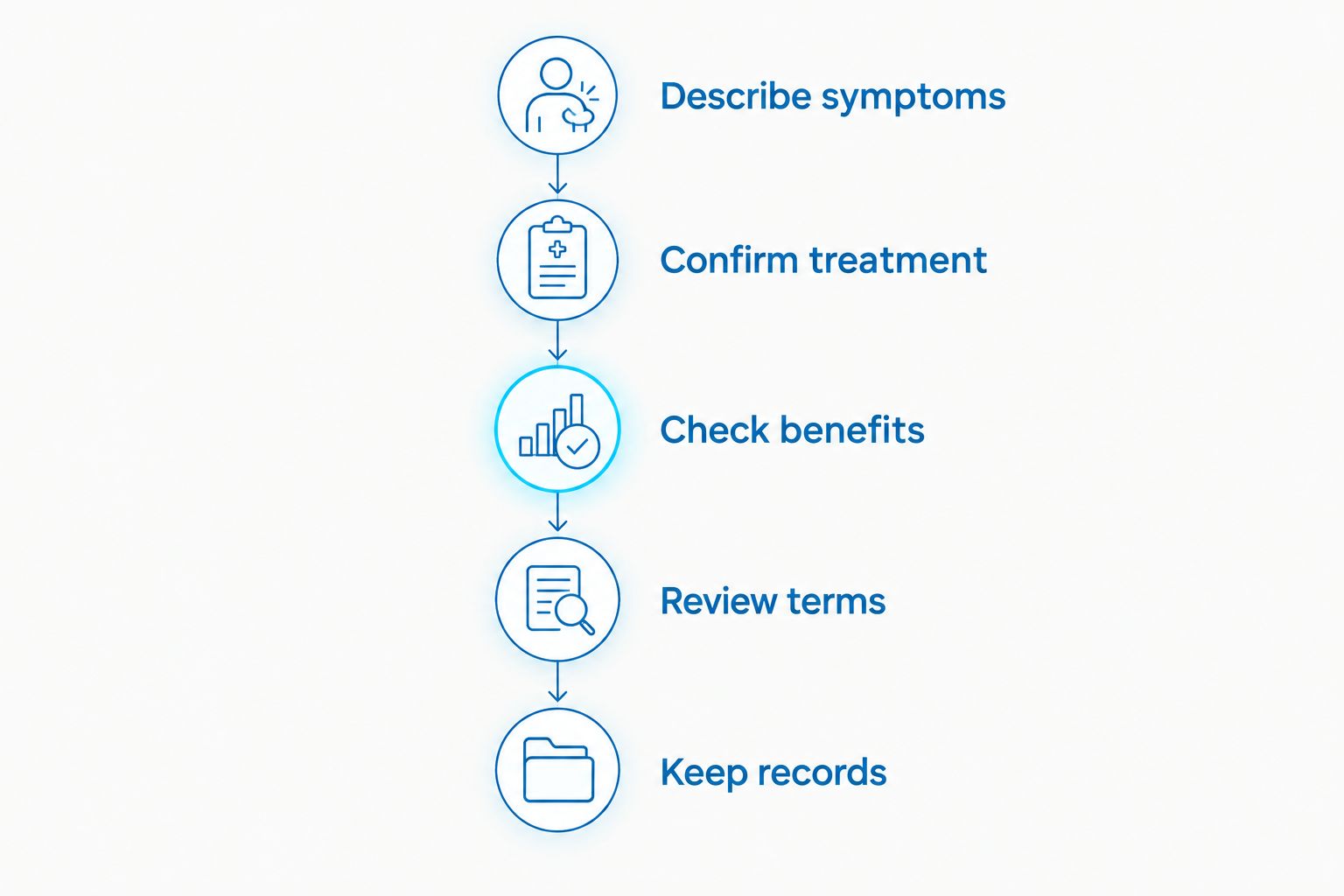
Work through this sequence:
Describe symptoms: Explain pain, swelling, bleeding, injury and any trouble swallowing or breathing.
Confirm treatment: Ask what the examination establishes and what the dentist recommends.
Check benefits: Provide insurance details and verify eligible account funds.
Review terms: Read the treatment estimate and any separate repayment agreement.
Keep records: Save receipts, benefit explanations and signed documents.
For a 2026 visit, request 2 separate documents when financing is involved: the itemized treatment estimate and the credit or payment agreement. One describes the dental work; the other describes your repayment obligations. Read both before signing.
How these payment options are ranked
This 2026 ranking prioritizes existing benefits, avoiding unnecessary borrowing, clear terms and treatment timing. It is a decision order, not a claim that one payment method works for every patient.
An insured patient and an uninsured patient should not follow identical financial steps. Start with what you already qualify for, then compare the remaining obligation against your household budget.
Which payment option should you choose?
Check existing dental insurance first, use eligible HSA or FSA funds next, and borrow only for a clearly understood remaining obligation. If you lack those resources, ask about written office arrangements and assistance-based care pathways.
Affordable Dentist Near Me provides general, cosmetic and restorative dental care; contact the office for more information about your dental needs. Ask your payment questions alongside your symptom questions, not instead of them.
Discuss your dental care needs
Contact the office to explain your symptoms and ask about treatment and payment requirements.
What’s the best way to pay when I search dentist emergencies near me?
Start with existing dental insurance and eligible HSA or FSA funds before considering new borrowing. Confirm the recommended treatment and your expected responsibility with the office.
Can I get emergency dental care without insurance?
You can seek dental care without insurance, but you must confirm the office’s payment requirements. Ask about direct payment, written payment arrangements and local assistance programs without assuming any option is offered.
Will dental insurance cover all of my emergency treatment?
Dental insurance does not automatically cover all emergency treatment. Your policy’s eligible services, deductible, exclusions and remaining benefits determine your share.
Can I use my HSA or FSA for an emergency tooth extraction?
A medically necessary tooth extraction is generally an eligible dental expense for HSA or health FSA purposes. Confirm your account rules and keep documentation of the expense and any insurance payment.
Is a dental payment plan the same as medical credit?
An office payment plan and medical credit are not necessarily the same agreement. Ask whether the office or an outside lender manages repayment, and read the interest, fee and missed-payment terms.
Should I buy new dental insurance for a toothache today?
Don’t assume a new dental policy will cover treatment for a toothache immediately. Check its effective date, waiting periods and exclusions before relying on it for an urgent visit.
When should I stop comparing payment options and get emergency help?
Seek immediate emergency medical attention for trouble breathing or swallowing, rapidly spreading facial swelling, or uncontrolled bleeding. Those symptoms take priority over insurance verification or financing applications.
One last thing
Approval to borrow is not approval of a treatment plan. Before signing in 2026, ask the dentist to explain what the recommended care addresses, what follow-up remains and what happens if you postpone it. Then review the payment agreement as a separate decision.