Best for early fixed teeth: immediate-load All-on-4 for eligible patients. Best when implants need protection before supporting teeth: delayed loading. Best when bone must be rebuilt first: staged grafting and implants. This 2026 guide ranks treatment pathways by when you receive fixed teeth—not by a promise of faster healing.
TL;DR
Immediate-load all-on-4 dental implants provide early fixed temporary teeth only when implant stability and your treatment plan allow.
Delayed loading separates implant placement from attaching the fixed teeth, allowing healing before chewing forces increase.
Staged bone grafting adds a healing phase when your jaw needs more support before implant placement.
Affordable Dentist Near Me serves Texas families comparing dental implants and other tooth-replacement care.
Why this matters
Getting teeth quickly and finishing recovery are different milestones. Temporary fixed teeth can improve appearance while the implants underneath still need time to join with the jawbone. Feeling comfortable does not mean you can return to unrestricted chewing.
Affordable Dentist Near Me provides general, cosmetic and restorative dental care, including implants, for families across its Texas locations. For your implant consultation, bring a practical question: when can you return to your routine, and when can you safely use the new teeth for regular meals?
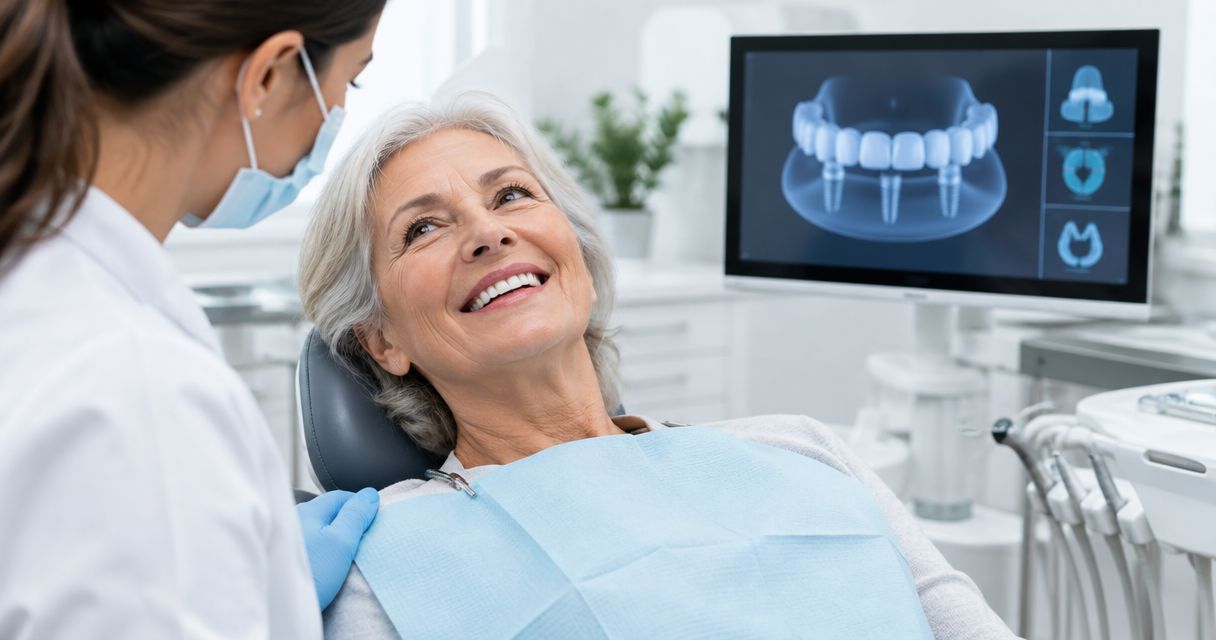
All-on-4 generally uses 4 implants per arch to support a full row of replacement teeth. Treating 2 arches means planning for both the upper and lower jaws; the dentist must assess each separately. The name describes the support arrangement, not a guaranteed recovery schedule.
What makes the best All-on-4 recovery plan?
For a 2026 treatment decision, compare these criteria before comparing appointment dates:
Implant stability: The implants must be secure enough for the proposed timing of the replacement teeth.
Bone support: Your examination and imaging determine whether the jaw can support the planned implants or needs additional treatment.
Surgical needs: Extractions, bone reshaping and grafting affect what recovery involves.
Temporary teeth: Ask whether the healing-stage teeth will be fixed, removable or fitted later.
Daily restrictions: Get clear instructions for food, cleaning, work, exercise and follow-up visits.
Health readiness: Discuss smoking, diabetes, medications and existing gum problems before choosing a schedule.
A useful plan explains both the expected sequence and what happens if an implant is not stable enough for immediate loading. Do not treat that backup plan as a minor detail. It determines what you will wear and eat during healing.
All-on-4 recovery pathways at a glance
This ranking follows the sequence to fixed teeth. It does not rank dentists, implant brands or individual patients, and it does not establish which pathway has the shortest total recovery for you.
Rank and pathway
Best for
Standout feature
Key limitation
1. Immediate loading
Eligible patients prioritizing early fixed temporary teeth
Attaches temporary fixed teeth at or shortly after implant surgery
Patients whose implants need healing before supporting fixed teeth
Separates implant placement from loading
Fixed teeth arrive later; an interim solution needs planning
3. Staged grafting
Patients who need bone rebuilt before implant placement
Addresses inadequate bone before the implant stage
Adds a separate treatment and healing phase
These pathways are not interchangeable packages. Your dentist chooses the sequence around your jaw, health and surgical findings—not simply your preferred deadline.
1. Immediate loading: best for early fixed temporary teeth
Immediate loading means attaching a temporary fixed set of teeth at or shortly after implant placement, when clinical conditions allow. You still have surgical recovery, dietary restrictions and follow-up care. The temporary teeth do not make the implants fully healed.
Best for: Patients whose examination, bone support and implant stability allow early fixed temporary teeth.
Immediate loading pros
Provides fixed temporary teeth early in the treatment sequence.
Can avoid a removable healing-stage denture when the plan permits.
Lets you discuss appearance and speech while preparing for the final restoration.
Immediate loading cons
Is not suitable when the implants cannot safely support early loading.
Requires food restrictions even when the teeth feel secure.
Does not eliminate the later work needed for the final teeth.
Recovery meaning: This pathway wins on early access to fixed temporary teeth, not on proven faster bone healing. Dental implants commonly need about 3–6 months to join with the jawbone, and additional treatment or individual healing can extend the schedule.
For your 2026 consultation, ask whether “same-day teeth” means temporary teeth, what happens if immediate loading is unsuitable, and when the dentist expects to reassess your bite. Request those answers before arranging leave from work.
Verdict: Hold until your dentist confirms immediate-loading eligibility; choose it for early fixed teeth, not unrestricted eating.
2. Delayed loading: best for protecting implants during healing
Delayed loading places the implants first and attaches the fixed replacement teeth after a healing interval. The dentist plans an interim tooth-replacement arrangement where appropriate. This approach separates the surgical stage from the point when the implants support the fixed teeth.
Best for: Patients whose implants should heal before taking on the forces from a fixed bridge.
Delayed loading pros
Gives the dentist a healing interval before attaching the fixed teeth.
Provides an alternative when immediate loading is unsuitable.
Keeps early appearance needs separate from the decision to load the implants.
Delayed loading cons
Leaves you waiting longer for the fixed restoration.
Requires a clear plan for any temporary removable teeth.
Does not remove the need for surgery, cleaning or follow-up care.
Recovery meaning: Delayed loading postpones fixed teeth, but it is not evidence that treatment has gone wrong. It is a planned sequence. A removable temporary appliance also needs professional instructions so it does not place unwanted pressure on healing areas.
Ask what you will wear during healing, whether it needs adjustments, and how the dentist will decide that the implants are ready. A calendar date alone cannot confirm readiness.
The All-on-4 recovery guide addresses the distinction between early recovery and the longer healing process.
Verdict: Hold on early fixed teeth when your dentist recommends healing before loading.
3. Staged grafting: best when bone needs rebuilding first
Staged grafting rebuilds bone before implant placement when the planned implant sites need additional support. After the graft heals sufficiently, the dentist reassesses the area and plans the implant stage. Not every person considering All-on-4 needs grafting, and not every graft must be a separate procedure.
Best for: Patients whose examination shows that bone must be rebuilt before the planned implants can be placed.
Staged grafting pros
Addresses inadequate bone before the implant stage.
Gives the dentist an opportunity to reassess the healed area.
Builds the treatment sequence around the support the implants need.
Staged grafting cons
Adds a separate procedure and recovery period when performed in stages.
Delays implant placement and the eventual fixed teeth.
Requires reassessment because healing determines the next step.
Recovery meaning: A staged graft adds a phase that the other pathways do not necessarily require. That makes the treatment sequence longer, but it does not establish how uncomfortable your recovery will be or exactly when it will finish.
Ask why grafting is recommended, whether another implant arrangement is clinically appropriate, and what findings must be present before treatment proceeds. Do not reject necessary bone preparation just to meet a date.
For 2026 planning, separate the graft-healing estimate from the implant-healing estimate. Combining them into a single vague promise makes it harder to arrange work, meals and transportation.
Verdict: Wait for the required bone preparation rather than choosing a faster schedule your jaw cannot support.
How the recovery ranking works
The ranking prioritizes early fixed teeth, then distinguishes whether implants heal before loading or whether bone treatment comes first. Implant stability, bone support, surgical needs and daily restrictions determine whether that ranking is relevant to your case.
There is no universal fastest-healing All-on-4 option. Immediate loading, delayed loading and staged grafting describe treatment sequences, not guaranteed recovery speeds.
Published patient guidance from Mayo Clinic describes dental implant treatment as a process that can take several months, including healing between stages. That general guidance supports allowing time for healing; it does not establish your personal treatment date.
Track recovery by milestones, not one finish date
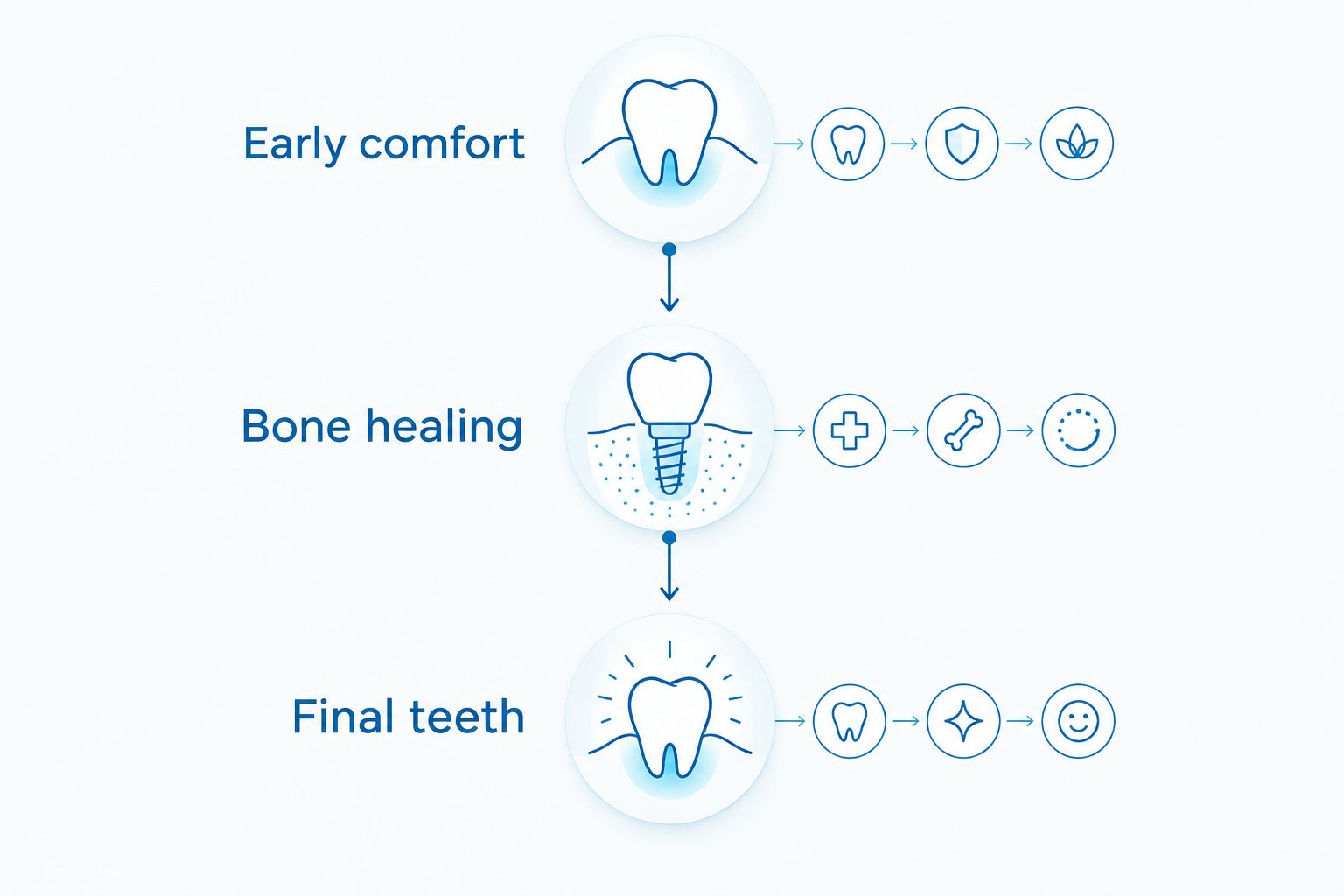
Ask your dentist to distinguish early comfort, bone healing and final teeth. Those milestones answer different questions: how you feel, whether the implants are ready for more force, and whether the long-term restoration is complete.
Feeling comfortable does not mean the implants are ready for unrestricted chewing.
Early comfort
Soreness, swelling and bruising can occur after implant surgery. Your experience depends partly on the procedures performed, so a person having extractions and bone treatment should not copy another patient's return-to-work schedule.
Follow your written instructions for medicines, mouth care and activity. Ask the office when to call about symptoms that worsen instead of improving.
Bone healing
The jawbone needs time to join with the implant surfaces. During this phase, protect the implants even if the gums look better and the temporary teeth feel firm.
Do not use comfort as permission to test hard or chewy foods. Your dentist should tell you when and how to change food texture.
Final teeth
Final teeth require assessment of healing, fit and the way your teeth meet. Receiving temporary teeth early does not mean every later appointment has been completed.
Before treatment, ask which visits involve surgery, which involve adjustments, and which involve the final restoration. That distinction gives you a more useful schedule than a single completion claim.
Questions to settle before scheduling surgery
Use this checklist when comparing all-on-4 dental implants in 2026:
Work: Describe lifting, public speaking, travel and other job demands rather than asking only when you can return.
Food: Request written examples of permitted textures and the conditions for progressing.
Transportation: Confirm escort and driving instructions if sedation is planned.
Health: Share your medication list and relevant medical history; do not stop prescribed medicine on your own.
Follow-up: Confirm who handles concerns and how to reach the treating team.
Affordable Dentist Near Me is best suited to Texas families seeking a local dental practice to discuss implants alongside general and restorative care. An individual examination—not an online ranking—determines your implant options.
Discuss your implant care needs
Ask about your examination, treatment stages and recovery instructions.
Choose the earliest fixed-teeth schedule that your dentist considers safe—not the earliest advertised finish date. Immediate loading fits eligible patients who prioritize early fixed temporary teeth. Delayed loading fits a plan that protects implants before they support the fixed restoration.
Staged grafting belongs in the discussion when bone needs rebuilding first. Ask Affordable Dentist Near Me about implant assessment and the care appropriate to your circumstances; do not assume every pathway is suitable or offered at every location.
FAQ
What’s the fastest way to get fixed teeth with all-on-4 dental implants?
Immediate loading provides early fixed temporary teeth when implant stability and your clinical assessment allow it. It does not mean the implants have finished healing or that you can eat without restrictions.
How long does it take for All-on-4 implants to heal?
Dental implants commonly need about 3–6 months to join with the jawbone, although individual treatment can take longer. Early comfort, bone healing and receiving final teeth are separate milestones.
Is delayed loading worse than same-day teeth?
Delayed loading is a different treatment sequence, not automatically a worse result. Your dentist can recommend it when the implants should heal before supporting fixed teeth.
Does everyone need a bone graft before All-on-4?
No, not everyone needs a bone graft before All-on-4. Your examination and imaging determine whether the planned implant positions have enough support and whether additional bone treatment is needed.
Can I eat normally as soon as I get temporary teeth?
No, fixed temporary teeth do not give you permission to eat normally immediately. Follow the treating dentist’s food instructions until the dentist clears you to progress.
When should I call the dentist during recovery?
Contact your treating dentist promptly for worsening pain or swelling, fever, pus, persistent bleeding or teeth that feel loose. Seek emergency medical care for trouble breathing or swallowing.
How do I plan time away from work for All-on-4?
Ask your dentist for advice based on your surgery, sedation and job duties. Explain whether your work involves lifting, driving or extensive speaking, and allow for follow-up appointments.
One last thing
Before agreeing to surgery, ask: “If the implants are not ready for fixed temporary teeth, what is the backup plan?” A clear answer tells you more about your recovery arrangements than a same-day headline. Get the food instructions and follow-up plan in writing, too.