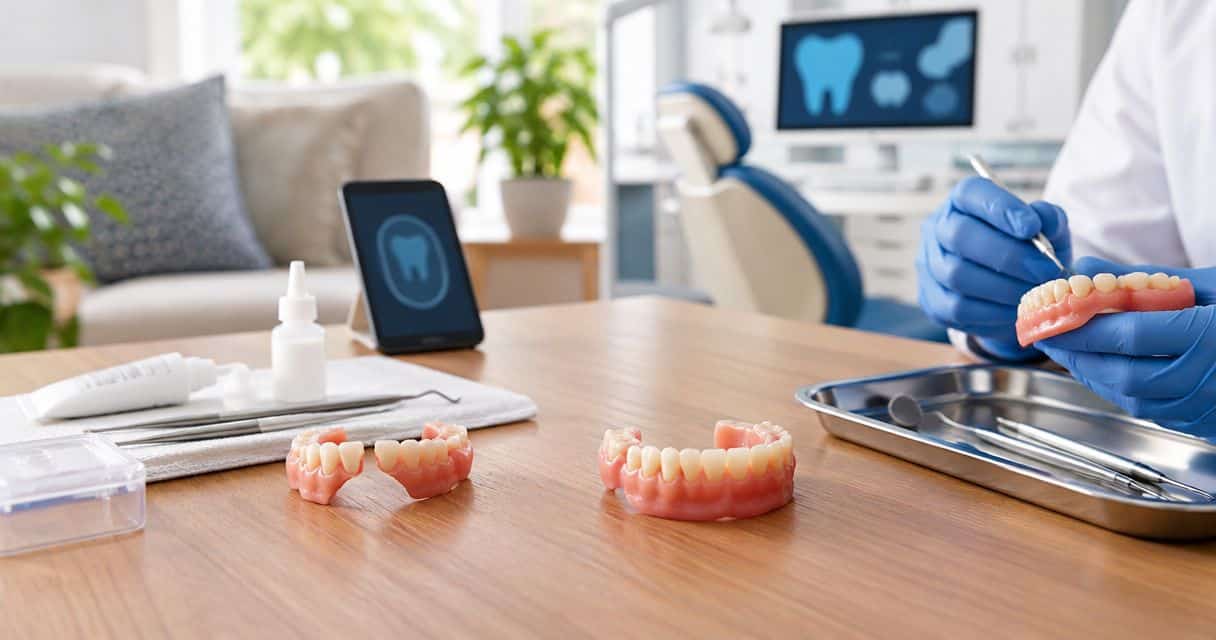
Best overall: dentist-led professional repair for a broken denture. Best for a loose but intact denture: professional relining. Best for repeated breakage or an unsuitable fit: replacement assessment. If you are searching for denture repair near me in 2026, Affordable Dentist Near Me is a local dental-care starting point for families in Fort Worth, Dallas, Houston, Waco, Grand Prairie and Crowley; ask the office whether it handles your specific repair.
TL;DR
For denture repair near me, choose professional assessment before attempting to reconnect broken pieces.
Professional relining addresses an intact denture’s loose fit; it does not replace structural repair.
DIY denture repair kits cannot check your bite, gum health, or the cause of breakage.
Denture adhesive supports an intact denture; it does not repair a crack or missing tooth.
Affordable Dentist Near Me serves Texas families seeking general and restorative dental care; confirm denture repair arrangements with the office.
Why this matters
A broken denture is not just a cosmetic problem. A displaced tooth, sharp edge, or poorly aligned repair can affect eating and irritate your mouth. Joining the pieces without checking the fit leaves the underlying problem unanswered.
Affordable Dentist Near Me is best for Texas families seeking local general and restorative dental care. For denture repair, the next move is to confirm the office’s repair arrangements and describe the damage before your visit. Do not assume that every dental practice repairs every denture type.
This 2026 guide compares 5 options by what they actually address. The right choice depends on whether your denture is broken, loose, repeatedly failing, or simply needs help staying in place.
What makes the best denture repair option?
Use these criteria before choosing a service or buying a repair product:
Damage assessment: The option should address the actual problem, whether that is a cracked base, detached tooth, damaged clasp, or loose fit.
Fit and bite: A usable repair must let the denture sit correctly and meet the opposing teeth properly.
Material suitability: Plastic bases, metal frameworks, and implant attachments require different handling.
Cause of failure: Repeated breakage deserves an explanation, not another patch without evaluation.
Clear treatment scope: Understand whether the proposed work repairs damage, improves fit, or replaces the denture.
Mouth health: Pain, sores, swelling, and changes in your gums need attention alongside the appliance.
Ask for 2 checks: the denture’s condition and its fit in your mouth. A denture that looks whole on a countertop can still function poorly when you wear it.
Denture repair options at a glance
Option
Best for
Standout feature
Key limitation
Dentist-led professional repair
A broken base, detached tooth, or damaged component
Combines damage assessment with a fit and bite check
Not every damaged denture is repairable
Professional relining
An intact denture that has become loose
Changes the surface that rests against your gums
Does not replace repair of a broken base
Replacement assessment
Repeated failures or a denture no longer suited to your mouth
Reconsiders the appliance rather than patching it again
Requires planning and adjustment to a new denture
Over-the-counter repair kit
Understanding the limits of a temporary product
Provides product-specific instructions and warnings
Cannot evaluate your mouth or correct the cause of failure
Denture adhesive
Temporary support for an intact denture
Helps retention when used as directed
Cannot reconnect broken parts or correct a damaged appliance
1. Professional repair: best for a broken denture
Dentist-led professional repair starts with identifying what broke and whether the remaining denture is suitable to keep. The dentist checks your mouth, fit, and bite; repair work can involve a dental laboratory depending on the appliance and the practice’s arrangements.
A detached tooth and a split denture base are different problems. Describe both the visible damage and what happened immediately before it broke.
Professional repair pros:
Evaluates damage before attempting to reconnect parts.
Includes a clinical check of fit and bite.
Allows assessment of sore areas and contributing fit problems.
Establishes whether repair is appropriate instead of assuming it is.
Professional repair cons:
Requires an examination and coordination of the repair.
Does not make every worn or badly damaged denture suitable for continued use.
Best for: A cracked base, detached denture tooth, broken clasp, or other structural damage requiring professional assessment.
Bring every piece you can safely collect. Tell the dentist if you already applied glue, used a repair kit, or tried to bend a clasp; that information affects the assessment.
Verdict: Buy professional repair only after a dentist confirms that the denture is repairable and suitable to keep.
2. Professional relining: best for a loose, intact denture
A reline changes the denture’s fitting surface so it better follows the tissues underneath. It addresses looseness when the appliance remains otherwise suitable; it does not turn a broken base into an intact one.
Your mouth changes over time, and an existing denture can stop fitting as it once did. A dentist determines whether relining, adjustment, repair, or replacement addresses the problem.
Professional relining pros:
Targets the surface that contacts your gums.
Preserves a suitable existing denture rather than automatically replacing it.
Allows the dentist to assess pressure areas and retention.
Professional relining cons:
Does not independently fix a fractured base or detached tooth.
Cannot correct every problem with tooth position, bite, or a worn appliance.
Best for: An intact denture that rocks, slips, or has lost its previous fit.
If your denture is both loose and cracked, report both problems. Repair and fit correction are separate treatment needs, even when they belong in the same plan.
Verdict: Buy professional relining when examination confirms that fit—not an unsuitable or broken appliance—is the main problem.
3. Replacement assessment: best for repeated failures
Replacement assessment asks whether keeping the current denture still makes sense. Repeated fractures, substantial wear, or a fit that cannot be corrected adequately are reasons to discuss a new appliance rather than another isolated repair.
Replacement is not the automatic answer to a dropped denture. The decision should follow an examination of the damage, your mouth, and how the denture functions.
Replacement assessment pros:
Addresses the suitability of the whole appliance.
Creates an opportunity to reconsider fit, tooth arrangement, and bite.
Avoids treating every repeated failure as an unrelated accident.
Replacement assessment cons:
Involves planning and fitting a new appliance.
Requires adaptation and follow-up adjustments rather than simply restoring the familiar denture.
Best for: A denture that repeatedly breaks or no longer meets your functional needs despite appropriate care.
For your 2026 treatment decision, ask the dentist to explain why another repair is or is not appropriate. A clear explanation is more useful than choosing replacement solely because the denture has broken before.
Verdict: Hold off on ordering a replacement until the dentist compares repairability with the condition of the entire denture.
4. Over-the-counter repair kits: best for reviewing DIY limits
An over-the-counter denture repair kit supplies materials and instructions for the uses stated on its label. It does not examine your gums, establish correct bite alignment, or explain why the denture broke.
A DIY kit is not equivalent to professional repair. Even when the pieces appear to line up, the finished denture still needs to fit and function correctly in your mouth.
Over-the-counter repair kit pros:
Provides instructions for the specific product rather than an improvised method.
States intended uses and warnings on the label.
Allows you to review limitations before deciding whether to use it.
Over-the-counter repair kit cons:
Cannot assess fit, bite, gum injury, or the underlying cause of breakage.
An incorrectly positioned repair can leave the appliance unsuitable to wear.
Does not establish that your denture material or damage matches the product’s intended use.
Best for: Reviewing the limits of a labeled temporary product—not replacing a dental assessment.
Do not substitute household glue, heat, sanding, or improvised wires. Contact a dentist before attempting repair, especially if the appliance has a metal framework or implant attachments.
Verdict: Skip DIY repair as your default; seek professional advice before altering the denture.
5. Denture adhesive: best for supporting an intact denture
Denture adhesive helps an intact denture stay in place when used according to the product directions. It is not a structural repair material and cannot replace a missing denture tooth or join a split base.
If you need progressively more adhesive to keep the denture stable, arrange a fit assessment. Adding adhesive does not explain why the fit has changed.
Denture adhesive pros:
Supports retention of an intact denture.
Has labeled application and cleaning instructions.
Does not require reconstructing broken components.
Denture adhesive cons:
Cannot repair cracks, detached teeth, or damaged clasps.
Does not replace assessment of looseness, pain, or persistent sores.
Best for: Additional retention of an intact denture when its use is appropriate and follows the label.
Do not apply adhesive to hold broken fragments together. Keep the damaged appliance out of your mouth and ask the dentist how to handle it until assessment.
Verdict: Buy adhesive only for its intended retention use; skip it as a denture repair method.
What to do before your repair visit
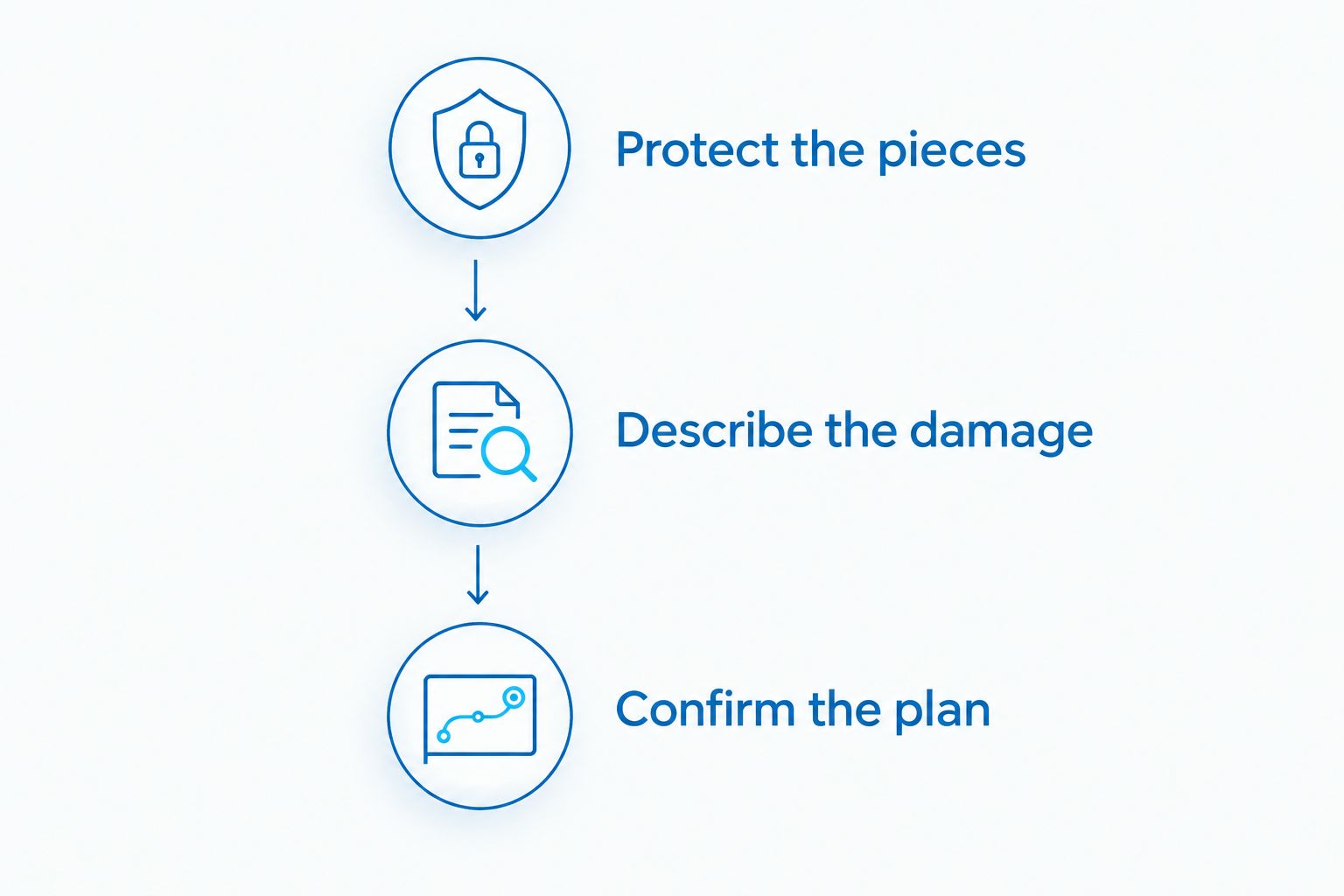
Protect the pieces
Stop wearing a denture with sharp edges, loose fragments, or damage that makes it unstable. Collect the pieces without forcing them together and keep them protected for the visit. Follow your existing denture-care instructions; avoid hot water, which can distort a denture.
Describe the damage
Tell the office whether the base cracked, a tooth came off, a clasp broke, or the denture became loose without breaking. Mention pain, sores, bleeding, implant attachments, and any attempted home repair. A clear description helps the office determine what assessment you need.
Confirm the plan
Ask these 3 questions: Does the office assess this denture type? Is laboratory work involved? How will fit be checked after repair? Confirm the arrangements before making plans around a repair timeline.
Protecting the denture comes before attempting any repair.
Affordable Dentist Near Me serves families across the listed Texas cities. When you contact the office about denture repair, explain the appliance type and damage rather than asking only whether the practice treats dentures.
Ask about your damaged denture
Describe the damage and confirm whether the office handles your denture type before arranging a visit.
This ranking prioritizes damage assessment, fit, material suitability, and mouth health—not unverified turnaround promises. Professional repair ranks first for structural damage because it allows both the appliance and your mouth to be evaluated.
Relining and replacement occupy separate use cases. DIY kits and adhesive rank lower because neither provides a clinical assessment, and adhesive is not a repair at all.
For a 2026 insurance decision, confirm benefits for the actual proposed procedure. The guide to dental insurance plans for implants and dentures provides related reading; your insurer must confirm your individual benefits.
Which denture repair option should you choose?
Choose professional assessment first if your denture is broken. Choose a fit evaluation if it is intact but loose, and request a replacement discussion if failures keep recurring.
Do not choose a method solely because it sounds convenient. A repair must leave you with a denture that fits, functions, and does not injure your mouth. For your 2026 appointment, bring the appliance and explain what changed before it failed.
FAQ
What is the best option when I search for denture repair near me?
Dentist-led professional assessment is the best starting point for a broken denture. The dentist can determine whether repair, fit correction, or replacement addresses the problem.
Can I repair my dentures myself with superglue?
Do not use household superglue to repair dentures. It is not intended for denture repair, and reconnecting pieces incorrectly can leave the appliance unsuitable to wear.
Is a denture repair kit better than professional repair?
A denture repair kit does not replace professional repair and assessment. It cannot check your bite, examine sore gums, or determine why the denture broke.
Can denture adhesive fix a cracked denture?
Denture adhesive cannot fix a cracked denture. Its purpose is retention of an intact appliance, not reconnecting broken parts.
Do loose dentures need repair or relining?
Loose, intact dentures need a fit assessment, and relining is one possible treatment. A dentist must check whether the existing appliance remains suitable before recommending it.
Can a dentist repair dentures the same day?
Ask the treating office to confirm the timeline for your specific damage and denture type. Laboratory involvement and the treatment needed determine the arrangements; do not assume same-day completion.
Does Affordable Dentist Near Me handle my denture repair?
Contact Affordable Dentist Near Me to confirm arrangements for your specific denture and damage. The practice provides general and restorative dental care, but the repair method and timeline need confirmation with the office.
When is a broken denture an emergency?
Difficulty breathing or suspected inhalation of a denture fragment requires emergency medical attention. Significant mouth injury, persistent bleeding, or severe pain needs prompt professional evaluation; stop wearing the damaged appliance.
One last thing
Tell the dentist how the denture broke, not just where it broke. A drop onto a hard surface and a fracture during chewing provide different clues. Keep every recoverable piece, and disclose any attempted repair before the dentist examines it.