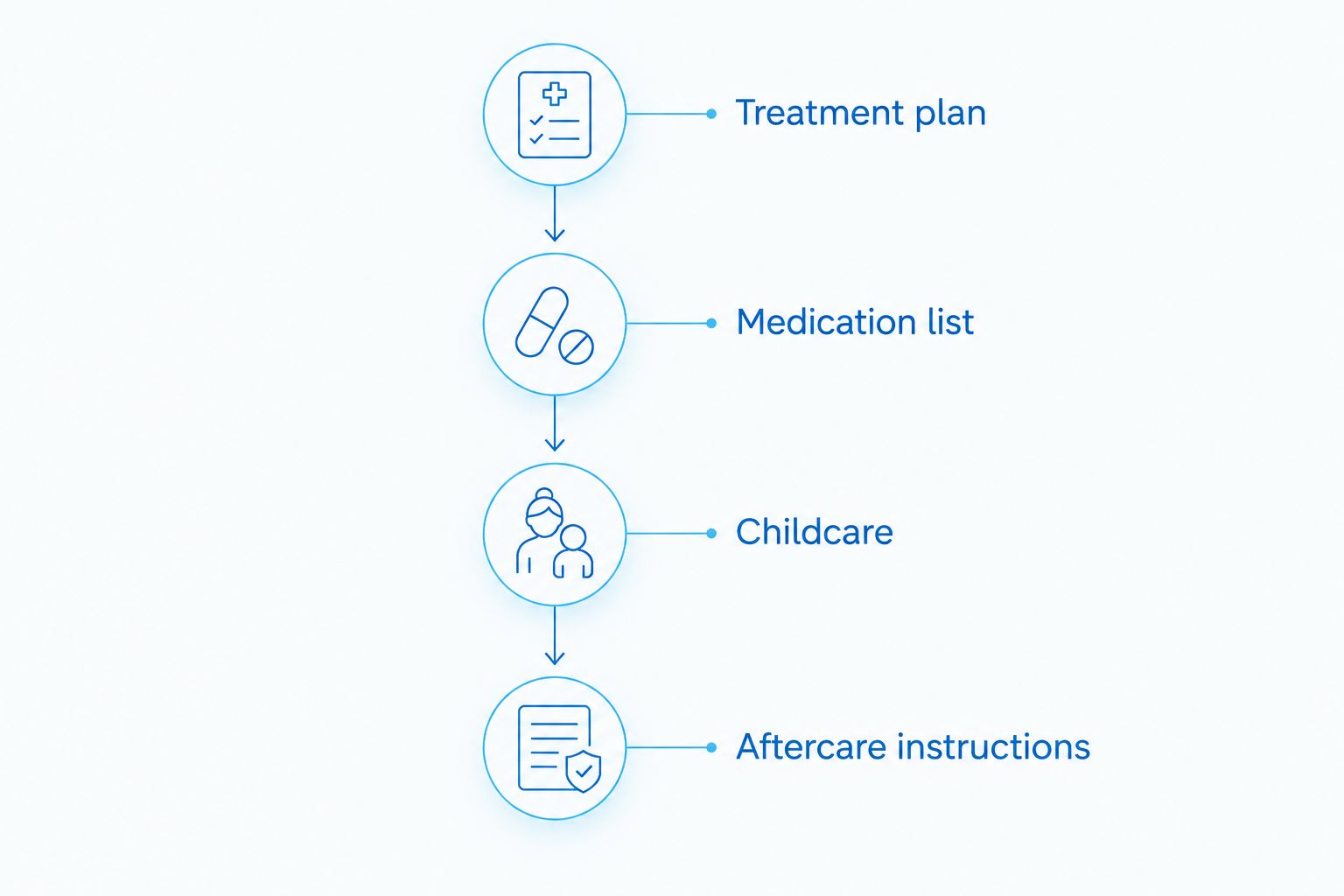
Breastfeeding mothers’ dental care is preventive and restorative treatment that protects your teeth and gums while accounting for nursing, medicines, and recovery after childbirth. This 2026 guide explains which treatments can proceed, what needs an individual medication check, and how to fit care around feeding and childcare.
TL;DR
Dental care for breastfeeding mothers usually does not require stopping nursing for cleanings, dental X-rays, or local numbing.
NIH LactMed provides drug-specific breastfeeding information; check the exact medicine rather than avoiding all dental treatment.
Treat tooth pain and infection promptly; postpone optional whitening until you discuss the limited breastfeeding evidence.
Arrange another adult for childcare after sedation, and get an individualized feeding and recovery plan.
Why dental care matters for breastfeeding mothers
Breastfeeding alone is not a reason to delay necessary dental treatment. A painful tooth, broken filling, or gum problem still needs assessment after delivery. Interrupted sleep, frequent snacks, and a baby’s changing schedule make it harder to keep brushing and dental visits consistent.
Pregnancy-related gum inflammation also deserves follow-up if bleeding continues after birth. The prenatal dental care guide explains the pregnancy side; postpartum care focuses on your current symptoms, recovery, and feeding situation.
Your baby’s age and health matter when choosing medicines. A premature or medically fragile infant needs a more cautious, individualized medication review than a healthy older infant. Tell the dentist about these details before treatment, not after a prescription is written.
For your 2026 care plan, separate three questions: Does the tooth need treatment? Which medicines are involved? Who will help with the baby during recovery? Answering them separately prevents a feeding concern from becoming a blanket reason to postpone care.
How to plan dental care while breastfeeding
Identify symptoms that need prompt attention
Start by writing down where the problem is, when it began, and whether it affects eating or sleep. You do not need an app or a special tracking system. A short phone note gives the dental team more useful information than a general description of discomfort.
Persistent toothache, pain when biting, a broken tooth, or ongoing gum bleeding warrants a dental assessment. Facial swelling, fever with dental pain, or worsening swelling needs urgent attention. Trouble breathing or swallowing is an emergency: call 911 or go to an emergency department.
Do not rely on pain medicine to tell you whether an infection has resolved. Relief changes how you feel; it does not establish that the underlying tooth problem is fixed.
Record the tooth or area that hurts.
Note swelling, fever, drainage, or an unpleasant taste.
Explain whether pain interrupts meals or sleep.
Report difficulty opening your mouth or swallowing.
Restore a simple daily cleaning routine
Use the toothbrush, fluoride toothpaste, and floss you already have. Brush for 2 minutes, 2 times a day, and clean between your teeth 1 time a day. A soft-bristled brush helps you clean gently without scrubbing sore gums.
Keep the routine attached to reliable events, such as your own bedtime, rather than waiting for the baby to follow a predictable schedule. If one session gets missed, restart at the next opportunity. Do not brush harder to compensate.
Breastfeeding does not pull calcium directly out of your teeth. Tooth decay develops when plaque bacteria repeatedly produce acids from sugars; frequent sugary snacks or drinks can increase that exposure. Choose water between meals and avoid sipping sweetened drinks throughout overnight feeds.
Keep brushing supplies where you will use them.
Use gentle pressure along the gumline.
Place floss beside your toothbrush as a reminder.
Keep water nearby during feeds.
Arrange an exam around feeding and childcare
Call a dental office yourself and explain your symptoms, breastfeeding status, and practical constraints. Ask what the proposed visit includes before arranging childcare. A cleaning, an examination, and a procedure involving sedation require different planning.
Affordable Dentist Near Me is best suited to families seeking general dental care in its listed Texas service areas. The practice serves Fort Worth, Dallas, Houston, Waco, Grand Prairie, and Crowley. Affordable Dentist Near Me provides general dental care, but breastfeeding medication decisions still require an individual review; a location or service listing does not establish that a particular sedation arrangement is suitable.
For a 2026 appointment, feeding or expressing milk shortly beforehand can improve comfort. It is a scheduling choice, not a requirement to make routine dental treatment safe. Ask whether you need another adult rather than assuming you can supervise your baby during treatment.
Describe symptoms when requesting the appointment.
Tell the office that you are breastfeeding.
Ask which procedures are planned.
Confirm childcare and transport needs beforehand.
Separate dental X-rays from medicines
Dental X-rays do not make breast milk radioactive. You do not need to pump and discard milk because of a routine dental X-ray. The dentist should recommend imaging according to your dental needs, not simply because a calendar interval has passed.
Local numbing is a different question from sedation. Lidocaine, a commonly used local anesthetic, is generally compatible with breastfeeding; NIH LactMed describes low milk levels and poor absorption by the infant. Routine dental use does not generally require interrupting nursing.
Ask for the name of the proposed anesthetic if you are concerned. Avoid treating every injection as the same exposure, and mention any chance that you are also pregnant. Pregnancy information helps the team plan care, but it does not automatically rule out needed dental imaging or treatment.
Ask why each X-ray is needed.
Request the name of the numbing medicine.
Distinguish local numbing from sedation.
Report allergies and previous anesthetic reactions.
Check each prescription and sedation plan
Bring a written list of prescriptions, nonprescription medicines, vitamins, and supplements. Include medicines prescribed after delivery. Your dentist and pharmacist need the complete list to identify duplicate ingredients, interactions, and breastfeeding considerations.
For 2026 medication decisions, use drug-specific information from NIH LactMed and advice from your treating clinicians. Ibuprofen and acetaminophen are commonly compatible with breastfeeding when appropriate for your own health. Kidney disease, stomach bleeding, liver disease, allergies, and other medicines can change the choice.
The FDA advises against codeine and tramadol during breastfeeding because of potentially serious effects in infants. Antibiotics also need a drug-specific check; breastfeeding does not make every antibiotic unsuitable.
After anesthesia or sedation, many patients can resume breastfeeding once awake, stable, and alert, but the exact drugs and the infant’s health determine the plan. Do not use a universal waiting period or automatic pump-and-discard rule. Arrange an unimpaired adult to care for the baby while you recover.
Share your complete medication list.
Report your baby’s age, prematurity, and medical conditions.
Confirm each medicine’s name and instructions.
Request written feeding and recovery guidance.
Seek urgent help for unusual infant sleepiness or breathing problems after medication exposure.
Prioritize necessary treatment over optional changes
Start with symptoms and diagnosis, not a wish list of procedures. A cavity, cracked tooth, or infection needs a treatment decision based on the examination. Breastfeeding alone does not mean you must wait until weaning for a filling, crown, root canal, or extraction.
Ask which problem needs attention first and what happens if treatment is delayed. A written treatment plan helps you distinguish necessary work from optional cosmetic changes without assuming every recommendation has equal urgency.
Affordable Dentist Near Me offers general, cosmetic, and restorative dental services. For breastfeeding patients, the useful first step is an assessment, not a promise that every procedure or medicine will suit every mother.
Optional whitening is different from treating disease. Breastfeeding-specific safety evidence for whitening is limited, so discuss postponing it rather than presenting it as essential postpartum care.
Address pain, infection, and broken teeth first.
Ask which findings require prompt treatment.
Request a written sequence for remaining care.
Discuss optional whitening separately from dental disease.
Plan coverage and recovery before treatment
Begin with your insurer’s benefits information and a written treatment estimate. Ask which services require authorization, whether the dentist participates in your plan, and what documentation is needed. Coverage must be verified for your own policy; postpartum status does not establish dental benefits by itself.
If you do not have insurance, ask about the examination and treatment-planning process before committing to a procedure. You can also compare community clinics and dental school clinics, checking eligibility and appointment arrangements directly. Do not assume that a particular program accepts every patient.
Build recovery around meals, hydration, feeding, transport, and childcare. For your 2026 plan, get procedure-specific instructions rather than relying on another parent’s recovery experience. An extraction and a cleaning do not create the same practical demands.
Verify benefits directly with the insurer.
Request an itemized written treatment plan.
Ask about authorization requirements before treatment.
Arrange help if medicines affect alertness.
Keep the office’s aftercare instructions accessible.
Resolve medication and childcare questions before the treatment day.
Compare dental care options while breastfeeding
Choose the setting that matches the problem, not just the easiest appointment to book. Routine care belongs in a dental setting; breathing or swallowing problems require emergency medical care. In 2026, confirm services and appointment arrangements directly before traveling.
Option
Best for
Main advantage
Key limitation
General dental practice
Best for exams, cleanings, fillings, and ongoing care
Keeps diagnosis, treatment planning, and follow-up connected
Sedation services and appointment arrangements vary
Urgent dental appointment
Best for toothache, a broken tooth, or localized swelling
Focuses on the immediate dental problem
The first visit does not always complete definitive treatment
Community or dental school clinic
Best for patients exploring additional care settings
Provides another route to dental assessment
Eligibility, scheduling, and services differ by clinic
Emergency department
Best for trouble breathing, trouble swallowing, or severe spreading swelling
Addresses potentially dangerous medical complications
Usually does not provide the final repair for the affected tooth
For Affordable Dentist Near Me, confirm the relevant office’s services and explain your breastfeeding needs before booking. The practice’s general dental services provide a starting point for assessment; they do not replace a medication review or emergency medical care.
Common mistakes breastfeeding mothers make
Waiting until weaning to treat a painful tooth
Breastfeeding alone does not require postponing necessary dental care. Ask for an examination and a feeding-compatible treatment plan instead of waiting for a future weaning date. Pain, infection, and difficulty eating deserve attention now.
Discarding milk after every dental visit
A cleaning, routine dental X-ray, or usual local lidocaine injection does not generally require discarding milk. Ask what you actually received before changing your feeding routine. Sedation and prescriptions need their own review, not a blanket rule.
Using leftover antibiotics or someone else’s medicine
A previous prescription does not establish the right treatment for a new toothache. Antibiotics do not repair decay or remove the source of every dental infection. Get a diagnosis and use only the medicine prescribed for your current situation.
Treating persistent gum bleeding as normal postpartum recovery
Gentle cleaning should continue, but persistent bleeding needs assessment. Do not assume childbirth explains every gum symptom. Tell the dentist about bleeding elsewhere, unusual bruising, or other health changes so the appropriate clinician can evaluate them.
Planning sedation without planning infant care
Permission to resume breastfeeding and readiness to care for a baby alone are separate decisions. Even when feeding can resume, impaired alertness makes carrying, bathing, or supervising an infant unsafe. Follow discharge instructions and arrange help before the procedure.
FAQ
Can I get my teeth cleaned while breastfeeding?
Yes, routine dental cleaning is compatible with breastfeeding. Tell the dental team that you are nursing and report any medicines or health changes since delivery.
Do I need to pump and dump after dental X-rays?
No, routine dental X-rays do not require pumping and discarding milk. Dental X-rays do not make breast milk radioactive.
Is dental numbing medicine safe while breastfeeding?
Lidocaine used for routine local dental anesthesia is generally compatible with breastfeeding. Ask which anesthetic is planned, especially if your baby was premature or has a medical condition.
Can I have a root canal or tooth extraction while nursing?
Yes, breastfeeding alone does not prevent a root canal or tooth extraction. The dentist should review the planned anesthetic, any sedation, and aftercare medicines individually.
Which pain medicines can I take after dental treatment while breastfeeding?
Ibuprofen and acetaminophen are commonly compatible with breastfeeding when suitable for your health. Confirm the choice with your dentist or pharmacist, avoid duplicate ingredients, and do not use codeine or tramadol while breastfeeding.
When can I breastfeed after dental sedation?
Many patients can resume breastfeeding once awake, stable, and alert, but the plan depends on the drugs used and the infant’s health. Get written instructions and arrange another adult to care for your baby during recovery.
Should I whiten my teeth while breastfeeding?
Optional whitening can be postponed because breastfeeding-specific safety evidence is limited. Discuss your goals with the dentist and prioritize pain, decay, and gum problems first.
Does breastfeeding take calcium out of my teeth?
No, breastfeeding does not draw calcium directly out of erupted teeth. Plaque, repeated sugar exposure, and missed cleaning contribute to dental decay; continuing routine care protects your teeth.
One last thing
The feeding decision and the childcare decision are not the same. A medicine can be compatible with breastfeeding while its sedating effects still make it unsafe for you to supervise a baby alone.
Before leaving any procedure in 2026, ask for two clear instructions: when you can feed and when you can resume sole responsibility for your baby. That distinction makes the plan more useful than a general reassurance that treatment is safe.