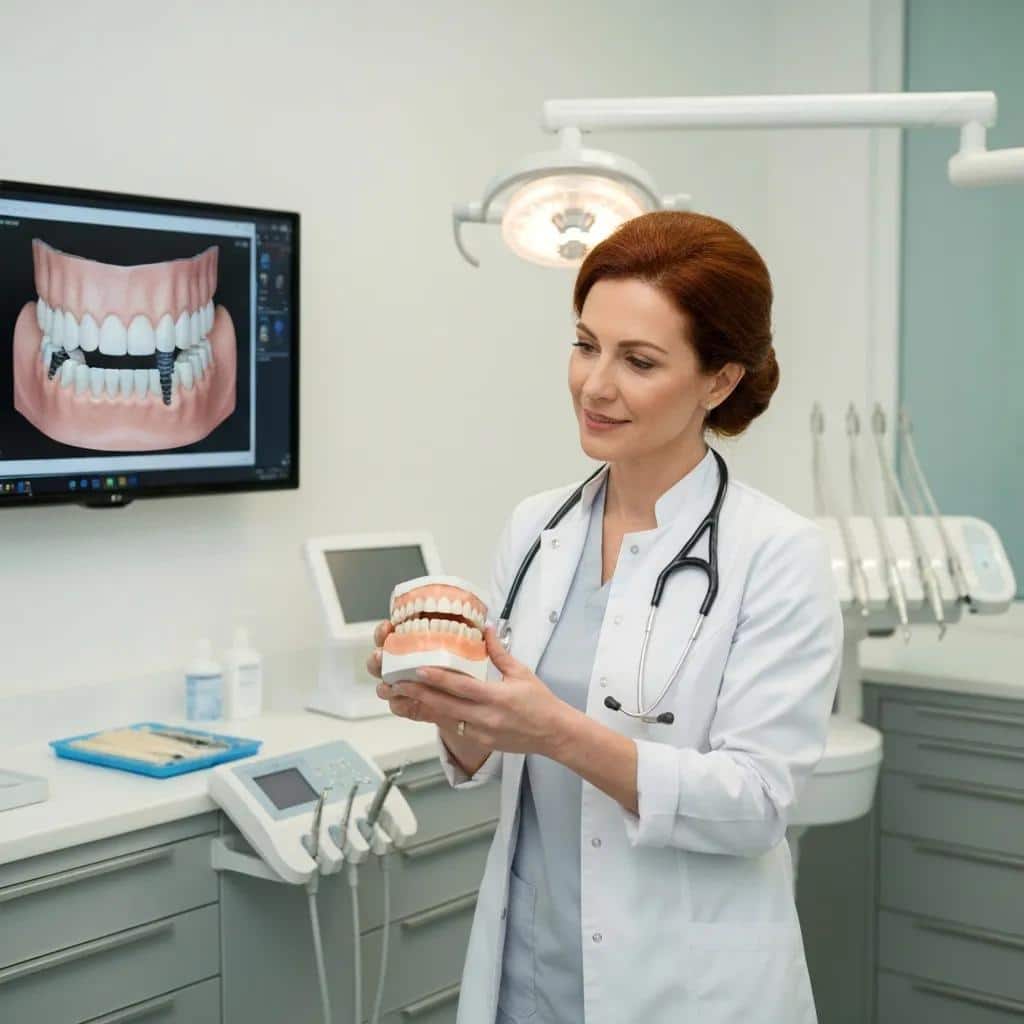
Are You a Good Candidate for Dental Implants? How to Find Out
Dental implants replace missing teeth by anchoring a titanium or zirconia post into the jawbone to support a crown, bridge, or denture. This guide walks you through how dentists determine who’s a candidate, what medical and oral conditions matter, and the clear signs that implants may be the right choice for you. Many people in their 40s–60s wonder whether age, chronic illness, or lifestyle habits rule them out; this article answers those common concerns and explains the clinical checks dentists use. You’ll learn straightforward ways to check bone and gum health, how grafting can change your readiness, which lifestyle changes improve outcomes, and what to expect during a free implant consultation. At the end, we explain how Affordable Dentist Near Me helps patients in Fort Worth with accessible consultations and affordability programs designed to make treatment easier to start.
What Do You Need to Get Dental Implants?
Successful implants depend on a mix of oral and overall health factors. The crown jewel is enough jawbone height and width to hold the implant securely. Healthy gums and controlled periodontal disease protect the site from infection. Overall health—controlled chronic conditions like diabetes, a review of medications, and a working immune system—also matters for healing. Finally, good home care and regular dental visits are essential to keep the implant healthy long term.
Knowing these basics helps you and your dentist decide whether implants can happen right away, whether you need preparatory care like grafting or periodontal therapy, or whether medical optimization is needed first. Here’s a short checklist dentists commonly use at the first visit.
Dental implant eligibility — quick checklist:
Sufficient jawbone height and width for the planned implant.
Healthy gums or completed periodontal treatment to control infection risk.
Stable overall health (for example, chronic conditions under control and a medication review).
Willingness to maintain good oral hygiene and attend follow-up care.
This list is for a quick self-check before your professional exam. Next, we explain how jawbone quality is measured and why it matters.
How Jawbone Density Affects Your Chance of Getting Implants
Bone density and volume set the stage for implants to integrate with the jaw—a process called osseointegration. Thick, dense ridges give immediate stability and reduce the chance of movement that can stop the implant from bonding. Thin or resorbed ridges may need augmentation before an implant can be placed predictably. Dentists use periapical x-rays, panoramic radiographs, and CBCT scans to measure ridge height, width, and bone quality—CBCT gives a 3D view that helps plan exact implant position. If imaging shows low volume, your dentist may recommend socket preservation, ridge augmentation, or a sinus lift depending on location. Knowing your bone status helps choose among single implants, implant-supported crowns, implant-retained dentures, or full-arch solutions like All-on-4 and sets realistic timelines for any extra procedures.
Before we dive into grafting options, let’s look at why healthy gums matter for implant success.
Why Healthy Gums and Periodontal Care Matter for Implants
Healthy gums form a seal around implants that helps keep bacteria out. If active periodontitis is present, that inflammation and biofilm can threaten both natural teeth and implant sites. Most dentists will stabilize periodontal disease—through deep cleaning, targeted antibiotics, or surgery—before placing implants. Adequate soft-tissue thickness and keratinized mucosa also help with esthetics and make cleaning around implants easier, improving comfort and long-term care. After placement, routine periodontal maintenance and strict home hygiene are vital to protect the implant, preserve bone, and keep the restoration functioning for years.
Below is a simple table clinicians use to categorize common eligibility factors and what each status usually means for treatment planning.
Intro to table: The table summarizes key eligibility factors and how clinicians typically interpret “good,” “borderline,” and “needs treatment.”
Factor
Good (Candidate)
Borderline / Needs Treatment
Jawbone density & volume
Enough height/width for the planned implant; solid cortical bone
Thin ridge or limited width — likely needs grafting first
Gum & periodontal health
Healthy gums, no active periodontitis, adequate keratinized tissue
Active periodontitis or gum recession — periodontal therapy required
Systemic health
Chronic conditions controlled (for example, stable diabetes); no problematic meds
Uncontrolled disease or medication concerns — medical clearance needed
Oral hygiene & follow-up
Regular brushing/flossing and routine dental visits
Poor hygiene or missed visits — behavior change and maintenance plan needed
This comparison shows how dentists decide whether implants can go ahead now or if preparatory care is necessary. Next, we cover the typical patient profiles who qualify and common borderline scenarios.
Who Typically Qualifies for Dental Implants?
Implant candidacy focuses on function, biological readiness, and the ability to follow perioperative care—not age alone. Many patients in their 40s–60s choose implants because they offer esthetic, functional restoration and help preserve bone. Older adults with stable medical conditions can also be good candidates after careful assessment. On the other hand, uncontrolled systemic disease, heavy active smoking, or certain medications (like some antiresorptives) may require medical coordination or delay. Dentists look at the whole picture—dental status, medical history, lifestyle, and restorative goals—to recommend a safe, personalized plan and to decide whether a general dentist, prosthodontist, or oral surgeon should lead treatment.
Adults missing one or more teeth who are generally healthy or have well-controlled chronic conditions and practice good oral hygiene.
Patients with loose or uncomfortable dentures who want better retention and chewing function with implant-retained prostheses.
People with fractured or severely decayed teeth that can’t be restored who prefer an implant-supported single-tooth solution instead of a bridge.
Borderline candidates—those with limited bone, a smoking history, or certain medications—who may become eligible after grafting, quitting smoking, or medical optimization.
This list helps you see where you might fit. Next, we explain how age affects candidacy.
Is Age a Major Factor for Dental Implants?
Age by itself rarely disqualifies someone. What matters is biological readiness—bone stability, overall health, and oral care. Adults in their 40s–60s often have stable bone and seek long-term results, but healthy older adults can succeed with implants when medical conditions are managed. Younger patients need evaluation for jaw growth; implants are usually delayed until skeletal maturity to avoid future problems. Ultimately, clinicians base decisions on imaging and health rather than a strict age cutoff and tailor recommendations to each patient.
How Do Medical Conditions Affect Implant Eligibility?
Conditions like diabetes, autoimmune disease, osteoporosis, and certain medications can affect healing—but many situations are manageable with coordination between your dentist and physician. Well-controlled diabetes, for example, is not an automatic disqualifier if glucose control and perioperative instructions are followed; uncontrolled diabetes, however, raises infection risk and often delays surgery. Drugs such as some antiresorptives or immunosuppressants may need specialist input or modified surgical plans because they affect bone remodeling. When systemic issues exist, dentists usually request medical clearance, adapt protocols, involve specialists when needed, and add extra monitoring to lower risk—often turning borderline cases into safe candidates.
With systemic issues covered, here are common signs that should prompt an implant consultation.
Signs That You Might Need Dental Implants
Look for functional and structural signs that point toward implants as a strong option: missing teeth that make chewing hard, neighboring teeth shifting into gaps, ongoing pain or repeated infection after treatments, or loose dentures that affect eating and speech. Visible bone loss, a collapsing bite, or esthetic problems that hit your confidence are also common reasons people choose implants. If you spot one or more of these issues, a professional evaluation—often a free or low-cost consult—can confirm candidacy and outline the most direct path to a stable restoration.
Missing teeth that make chewing difficult or cause you to avoid certain foods.
Loose, painful, or shifting dentures that undermine stability and comfort.
Severely decayed or fractured teeth that can’t be reliably restored and cause recurring infection.
Progressive bone loss or bite collapse impacting function and facial support.
Use this checklist to self-identify potential problems. The sections below explain how dentists recognize non-restorable teeth and when implants are the better option.
How Dentists Decide a Tooth Needs Replacement with an Implant
Teeth that are non-restorable often show structural failure—vertical root fractures, decay that reaches the bone, or repeated root canal problems with ongoing infection. When saving the tooth is unlikely to succeed, extraction and implant replacement usually give the best long-term result. Warning signs include persistent pain, swelling, trouble chewing on that side, or tooth mobility that affects daily life. Dentists assess remaining tooth structure, periodontal support, and x-rays; when not enough structure or bone remains, planning moves toward extraction, possible socket preservation, and implant placement. Calling a tooth non-restorable balances short-term costs with long-term durability and the benefit of preserving bone with an implant.
When Are Implants Better Than Bridges or Dentures?
Implants preserve bone by transferring functional load to the jaw, can last many years, and avoid altering healthy neighboring teeth—advantages that often make them the preferred choice over bridges or removable dentures for suitable patients. Bridges can be cheaper up front but require trimming adjacent healthy teeth and do nothing to stop bone loss at the missing tooth site. Removable dentures restore appearance quickly but may feel unstable and accelerate bone resorption. If chewing efficiency, long-term maintenance, and a natural feel are priorities, implants usually offer the best quality-of-life result despite higher initial costs. When systemic risk is high or immediate budget limits are the main concern, bridges or dentures can be reasonable short-term options while you plan for implants later.
How Bone Grafting Can Change Your Readiness for Implants
Bone grafting rebuilds deficient ridges so implants can be placed in a stable, well-vascularized site. If height or width is below what’s needed for the chosen implant size—often after long-term tooth loss, trauma, or infection—grafting restores volume and can turn an ineligible patient into a great candidate. Grafting ranges from socket preservation right after extraction to block grafts for large defects and sinus lifts for the upper back jaw. Each method has specific indications, materials, and healing times that influence when implants can be placed. Careful patient selection, imaging-driven planning, and staged healing make grafts predictable and clarify realistic timelines for completing implant treatment.
Intro to graft table: The table below outlines common graft types, when they’re used, and typical outcomes and timelines so you know what to expect.
Graft Type
Typical Indication
Expected Outcome / Timeline
Socket preservation
Placed at the time of extraction to limit bone loss
Helps keep the ridge shape; implant placement in about 3–6 months
Block graft (autograft or allograft)
Large horizontal or vertical ridge defects
Provides significant volume increase; usually 4–6 months before implant
Sinus lift / augmentation
When the upper back jaw lacks vertical height under the sinus
Restores height; implants typically placed after 4–9 months
Ridge augmentation
Long-span defects or esthetic ridge rebuilding
Restores contour for implants; timing depends on complexity
This table shows how grafting solves different anatomic problems and when implants can usually follow. The next sections explain indications and recovery timelines in plain language.
When Do Dentists Recommend Bone Grafting?
Grafting is recommended when clinical exam or imaging shows the ridge is too narrow or too short to safely place the planned implant—for example, when placing the implant would risk perforating a cortical plate. Triggers include ridge width below implant thresholds, collapsed sockets after long-term tooth loss, or sinus pneumatization in the upper back jaw. Small defects can often be handled with socket preservation, while larger horizontal or vertical defects may need block grafts or staged augmentation; sinus lifts are specific to posterior maxillary cases. Decisions are made with your restorative goals and esthetic needs in mind so the graft restores both form and function for reliable osseointegration.
What to Expect During Bone Grafting and Recovery
Bone grafting begins with exposing the deficient ridge and placing graft material—autograft, allograft, xenograft, or synthetic substitutes—often covered with a membrane to stabilize the site and encourage bone growth. Expect mild-to-moderate swelling, manageable pain controlled with prescribed or over-the-counter medications, and a soft-food diet for a few days. Follow-up visits check healing and may include imaging to confirm graft integration. Timelines vary: socket preservation often allows implant placement in ~3 months, while larger block grafts or sinus lifts can need 4–9 months of healing. Your dentist will confirm graft success clinically and radiographically before moving on to implant surgery to ensure long-term stability.
How Lifestyle Choices Affect Implant Eligibility
Your habits have a direct effect on both candidacy and long-term implant success because they influence healing, infection risk, and bone metabolism. Smoking reduces blood flow and harms cellular healing, increasing graft and implant failurerisk. Poor oral hygiene invites peri-implant inflammation that can damage implants. Excessive alcohol, poor nutrition, unmanaged stress, or inconsistent medical care also impair healing. Dentists give clear guidance on quitting tobacco, improving hygiene, and nutritional support so patients can actively boost their candidacy. The list below offers practical steps to strengthen your readiness.
Simple lifestyle steps your dentist will recommend:
Quit smoking well before surgery and remain tobacco-free while healing to lower infection and failurerisk.
Maintain excellent oral hygiene—brush twice daily and clean between teeth—to prevent peri-implant disease.
Eat a balanced diet and stay hydrated to support tissue repair and immune response around surgery.
Review medications with your dental and medical providers to avoid drugs that might interfere with bone healing.
These actions give you a clear plan to improve outcomes. The next sections address smoking and general pre-op preparation in more detail.
Why Smoking Matters for Implant Success
Smoking narrows blood vessels, reduces oxygen delivery, and encourages harmful bacteria—factors that raise the risk of graftfailure, delayed osseointegration, and peri-implantitis. Studies show higher complication rates in active smokers, so many dentists ask patients to stop weeks to months before surgery to allow healing capacity to improve. The exact timing depends on your case, but stopping before extraction, grafting, and implant placement meaningfully improves outcomes. If quitting is hard, your dental team can point you to counseling, resources, or smoking-cessation programs and may use closer monitoring if implants proceed in someone with a recent smoking history.
How to Prepare Your Mouth for a Successful Implant
Preparation includes completing any needed periodontal therapy, getting professional cleanings, optimizing overall health markers like blood sugar, and establishing a strong at-home hygiene routine to lower bacteria at the surgical site. Be ready to share a full list of medications and medical history so your dental team can coordinate with your physician and adjust perioperative plans if needed. Good sleep, nutrition, and stopping tobacco all support healing. Clear communication with your dentist sets realistic timelines and expectations and increases the chance of smooth osseointegration and shorter recovery.
What Happens at a Free Dental Implant Consultation?
A dental implant consultation is a focused visit where we review your medical and dental history, do a clinical exam, and take targeted imaging to determine preliminary candidacy and map out a personalized treatment plan. During the consult, clinicians check missing or damaged teeth, assess periodontal health and bite, and review existing restorations. Imaging—panoramic x-rays or CBCT—helps measure bone and anatomy precisely. The visit ends with a discussion of options, whether grafting or a specialist is likely, estimated timelines, and a transparent look at costs and financing so you can decide whether to move forward with diagnostic planning.
The table below summarizes what’s typically assessed at a free consult, which tools are used, and what immediate outcomes you can expect.
Assessment
Assessment Tool
Typical Immediate Outcome
Clinical exam & periodontal check
Visual exam, probing
Preliminary periodontal status and whether therapy is needed
Bone & anatomy evaluation
Panoramic x-ray, CBCT scan
Bone volume assessment and grafting recommendations
Medical/dental history review
Patient questionnaire
Identification of systemic risks or medication issues
Treatment discussion & next steps
Consultation conversation
Preliminary candidacy, recommended plan, and timeline
Questions to Bring to Your Implant Consultation
Coming prepared helps you get practical answers about outcomes, risks, and timing. Ask about the clinician’s experience with cases like yours, what imaging and planning tools will be used, whether grafting is likely and its recovery, typical timelines from extraction to final restoration, follow-up care expectations, and payment or financing options. Ask who will perform each step (your general dentist or a specialist) and about success and complication rates for similar cases. Below is a short list you can bring to the consult to make sure you get clear, useful information.
How many implants like mine have you (or your team) placed, and what were the outcomes?
What imaging will you use to plan my implant and assess bone and soft-tissue needs?
If grafting is likely, what type would you recommend and how long until implant placement?
What are the estimated costs, payment options, and what does the free consult include?
These questions prompt clear explanations of clinical reasoning and logistics. Next, we explain how dentists combine the consult findings to decide next steps.
How Dentists Decide If You’re a Good Candidate
Dentists combine your history, exam, and imaging to place you into one of three common outcomes: ready now for implant placement; candidate after preparatory care (periodontal therapy, grafting, or medical optimization); or better suited for alternative restorations because of high systemic risk. CBCT scans, intraoral scans, and study models help plan implant position relative to anatomy and opposing teeth, guiding choices about immediate, early, or delayed placement. Bite analysis and habits like bruxism affect implant size and prosthetic design so forces are handled properly. Coordination with medical providers helps optimize systemic conditions. The result is a personalized timeline, risk discussion, and cost estimate so you can choose the best path forward—many patients decide to schedule a no-obligation consult to get this tailored plan.
How Affordable Dentist Near Me Helps with Your Implant Journey in Fort Worth
At our Fort Worth location, Affordable Dentist Near Me takes a patient-first approach that focuses on access and affordability while offering implant evaluations and restorative care. We promote Everyday Low Fees and a Free Consultation to lower the barrier to getting started. The free consult usually includes a focused exam, history review, and a plan overview so you leave with clear next steps and no pressure. We talk through treatment sequencing—extraction, grafting, implant placement, and restoration—along with financing options that allow you to plan care in stages. With local clinicians ready to assess candidates, patients get a no-obligation chance to learn if implants are right for them and how to budget the treatment.
Everyday Low Fees to make treatment costs more predictable and reduce upfront sticker shock.
Free Consultation that includes an assessment and initial imaging review at no cost to help you get started.
Patient-first communication that focuses on clear explanations, staged planning, and coordination with specialists when needed.
What You Get from Everyday Low Fees and the Free Consultation
Our free consultation is a no-pressure evaluation where you receive a clinical review, any initial imaging that’s indicated, and a clear explanation of recommended next steps without a financial commitment. Everyday Low Fees help ease cost concerns by providing staged treatment options and discussing financing plans during the consult so you can prioritize urgent needs and plan restorative phases over time. Fort Worth patients may also see patient-friendly promotions—like free whitening pens or complimentary implant consults—meant to make the first visit welcoming and value-driven. You’ll leave with a practical plan that outlines whether immediate implant placement is possible, whether grafting or periodontal therapy comes first, and what to expect for timelines and follow-up.
Who Evaluates Your Implant Candidacy in Fort Worth?
Clinical evaluations at our Fort Worth office are conducted by our dental team, including clinicians named in our practice materials—such as Dr. Mike Tri Pham, DDS—who take part in implant assessment and treatment planning. We emphasize a patient-first approach: clinicians explain realistic options, outline any preparatory steps, and refer to surgical specialists for complex grafting or advanced procedures when needed. By combining local access with an affordability focus, our Fort Worth team aims to lower barriers for patients considering implant restorations and to provide clear, education-led guidance at the first visit. This support helps patients feel confident about staged treatment plans that improve implant outcomes.
Common Myths and Facts About Implant Eligibility
Many people avoid asking about implants because of myths around age, pain, or grafting. Clearing up those misconceptions helps you make decisions based on facts, not fear. Common false beliefs include thinking you’re too old for implants, that implants are unbearably painful, or that bone grafting is experimental. Modern evidence and clinical practice show these concerns are often misplaced when cases are selected and managed properly. Below, we contrast myths with practical facts so you can evaluate candidacy using real criteria.
Intro to myth vs fact list: The following items pair common misconceptions with concise, reality-based clarifications.
Myth: “I’m too old for dental implants.” Fact: Age alone doesn’t rule you out—your overall health and bone condition matter most.
Myth: “Implants are going to be extremely painful.” Fact: With modern anesthesia and aftercare, most patients report only manageable discomfort.
Myth: “Bone grafting is experimental or unsafe.” Fact: Grafting is a standard, predictable technique commonly used to enable implants.
These clarifications replace worry with realistic expectations. Next we expand on implants for older adults and typical pain and risk profiles.
Can Older Adults Get Dental Implants?
Yes. Older adults often qualify if their systemic health is stable and bone conditions are adequate or can be improved. Dentists check cardiovascular status, diabetes control, medications, and healing capacity instead of using age alone. Success rates are generally good for older patients when comorbid conditions are optimized and oral hygiene is maintained. Implants can restore chewing, facial support, and nutrition—benefits that often outweigh age-related concerns. Individualized assessment and coordinated care help older adults access implant solutions safely.
Are Implants Painful or Risky for Most People?
Implant surgery is done with local anesthesia and sedation options when appropriate, and most people experience mild-to-moderate discomfort that peaks in the first 48–72 hours and then eases with routine pain control. Dentists reduce risk through careful imaging-based planning, sterile technique, and appropriate patient selection—steps that lower infection and failure rates. While every surgery carries some risk, complication rates for implants are relatively low when cases are selected and managed properly. Preparatory measures—such as periodontal therapy, smoking cessation, and medical optimization—help further minimize risk and improve the chance of a successful long-term result.
This guide covered the medical, anatomical, lifestyle, and procedural factors that determine implant candidacy and explained how a free consultation translates findings into a personalized plan. If any of the signs or questions here describe your situation, scheduling a no-obligation consult is the practical next step to confirm candidacy and explore your options.
Frequently Asked Questions
1. What lifestyle changes can improve my candidacy for dental implants?
Specific changes make a big difference. Quitting smoking is one of the most important steps because it improves blood flow and healing. Keeping excellent oral hygiene—brushing and flossing daily—reduces infection risk. Eating a balanced diet and staying hydrated helps tissue repair. Managing stress and following medical advice for chronic conditions also support a smooth recovery and better implant integration.
2. How does bone grafting affect the timeline for getting dental implants?
Grafting is often needed when bone volume is low. The timeline depends on the graft type: socket preservation usually allows implants in about 3–6 months, while larger grafts may need 4–9 months of healing before implants can be placed. Knowing the expected timeline helps you plan treatment without surprises.
3. What are the potential risks associated with dental implants?
Implants are generally safe, but risks include infection, nerve irritation, and implant failure. Factors such as uncontrolled health conditions, poor oral hygiene, and smoking raise those risks. With careful case selection, thorough planning, and following pre- and post-op instructions, many of these risks can be reduced. Talk with your dentist about your specific health profile to understand your individual risks.
4. How can I prepare for my dental implant consultation?
Gather your medical and dental history, a list of medications, and any questions you have about the procedure, risks, and costs. Be ready to discuss your oral hygiene habits and past dental work. Bringing this information makes the consultation more efficient and lets your dentist give tailored recommendations.
5. Are there age restrictions for getting dental implants?
There are no strict age cutoffs. Candidacy depends on health and bone condition. Older adults with stable health and adequate bone can qualify, while younger patients may need to wait until their jaw finishes growing. Each case is reviewed individually with focus on biological readiness.
6. What should I expect during the dental implant procedure?
Expect local anesthesia to keep you comfortable. The dentist places the implant into the jawbone—this may involve some drilling—and then you’ll go through a healing period while the implant integrates with the bone (osseointegration). That process usually takes several months. Your dentist will give clear aftercare instructions to support healing and implant success.
7. How do I know if I need dental implants instead of other options?
Implants are often best when missing teeth affect chewing, speech, or confidence. They preserve bone and offer stability that bridges or dentures may not. If you struggle with loose dentures, recurrent infections, or significant bone loss, a dental evaluation will clarify whether implants are the right long-term solution for you.
Conclusion
Knowing whether you’re a candidate for dental implants starts with clear checks of bonehealth, gum condition, lifestyle factors, and overall medical status. With the right preparation and a short, no-obligation consultation, you can get a personalized plan and realistic timeline. If any of the signs mentioned here sound familiar, schedule a free consult to explore your options and take the first step toward a healthier, more confident smile.