Maintaining Your Smile: How to Choose Between Dental Implants, Bridges, and Dentures for the Best Tooth Replacement Options
Tooth loss affects appearance, chewing, speech, and long-term jawbone health, creating a problem that calls for thoughtful replacement choices. This article explains three primary tooth replacement categories—dental implants, dental bridges, and dentures—so you can weigh cost, invasiveness, longevity, and oral health impact when deciding. Readers will learn how each option works, the typical procedural steps, pros and cons, maintenance expectations, and how factors like bone density and lifestyle influence candidacy. The guide also covers how cost and financing shape choices in Longview, TX and what to expect when consulting a local practice. Finally, practical decision frameworks, side-by-side attribute tables, and clear answers to common patient questions will help readers narrow options and prepare for a clinical evaluation. Throughout, terms like dental implants in Longview, dental bridges Longview, and dentures Longview are used to focus the guidance for local patients seeking reliable tooth replacement information.
What Are Dental Implants and How Do They Restore Your Smile?
Dental implants are titanium fixtures placed in the jawbone that serve as artificial tooth roots to support crowns, bridges, or implant-retained dentures. They restore function by integrating with bone through osseointegration, which stabilizes chewing forces, helps preserve alveolar bone, and supports a natural-looking crown that replicates a tooth’s form and function. Implants typically involve distinct stages—assessment and imaging, surgical placement of the fixture, a healing period for integration, and final restoration with an abutment and crown—resulting in a fixed restoration that behaves like a natural tooth. Understanding this mechanism clarifies why implants are often recommended for long-term preservation of jaw structure and superior chewing performance compared with removable options. The next sections break down the procedure steps and balance the benefits and drawbacks to help you decide if implants match your clinical needs and lifestyle.
H3: What Is a Dental Implant and How Does the Procedure Work?
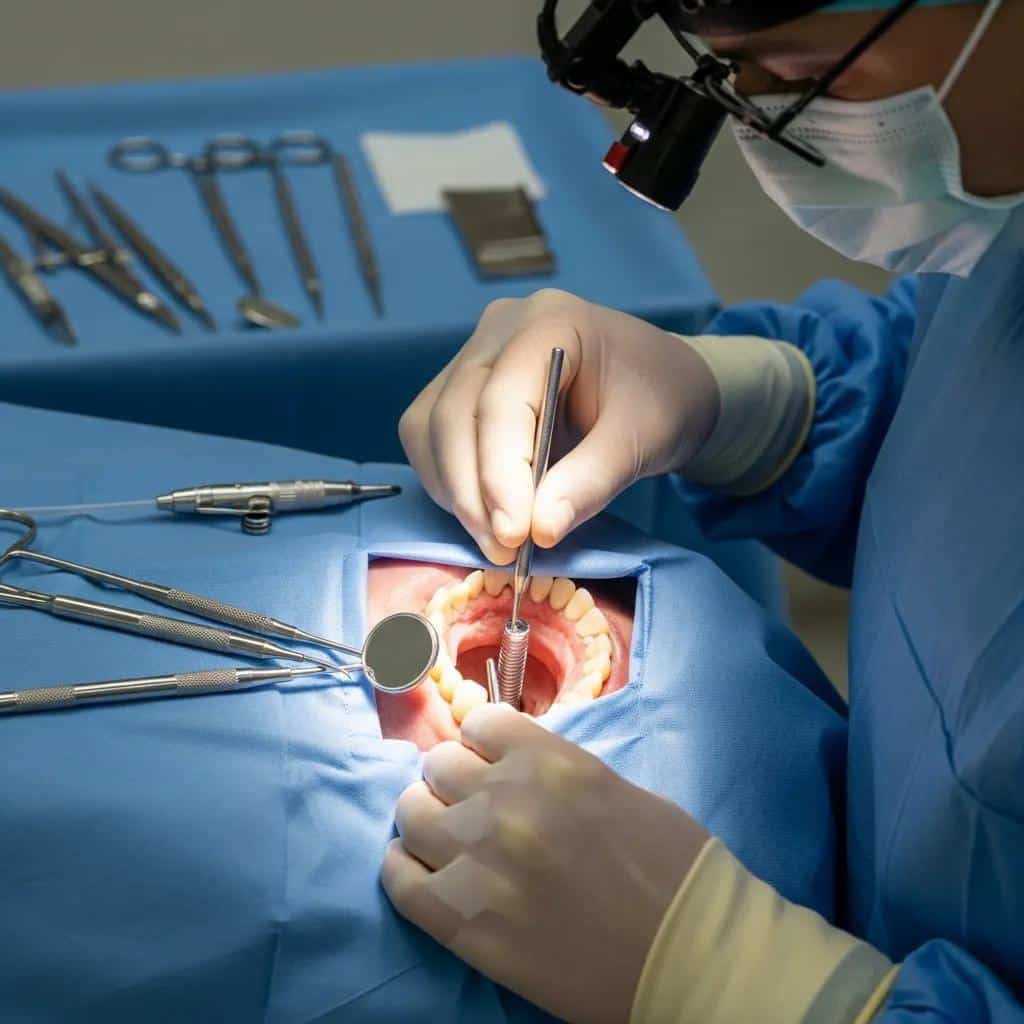
A dental implant procedure begins with a clinical assessment and imaging to evaluate bone volume and anatomical structures, frequently using 3D imaging like CBCT to map implant position accurately. After planning, the surgical phase places a titanium fixture into the jawbone under local anesthesia or sedation when appropriate, and the implant is left to heal while the bone integrates to the implant surface over weeks to months. During osseointegration the implant becomes a stable anchor; once securely integrated, an abutment and custom crown are attached to restore tooth form and occlusion, followed by follow-up to adjust bite and ensure soft tissue health. This staged approach allows implants to distribute chewing forces directly into bone, which preserves alveolar bone and supports facial structure. Proper pre-op assessment, including periodontal health and medical history review, is essential to confirm candidacy and plan any preparatory treatments such as grafting.
H3: What Are the Benefits and Drawbacks of Dental Implants?
Dental implants offer durable, natural-feeling restorations that support chewing efficiency and help preserve jawbone volume, making them a preferred long-term option for many patients. They also avoid the need to modify adjacent teeth in cases of single-tooth replacement and can support implant-supported bridges or overdentures when multiple teeth are missing, providing a versatile solution across several hyponyms like single-tooth implant and implant-supported bridge. However, implants require surgery, a healing period before final restoration, and higher upfront cost compared with bridges or dentures, and they carry surgical risks such as infection or implant failure in a minority of cases. Maintenance focuses on excellent oral hygiene and regular professional care to maximize longevity, with many implants lasting decades when well cared for. We will next compare how bridges function as an alternative fixed option that avoids surgery but has different trade-offs.
How Do Dental Bridges Compare as a Fixed Tooth Replacement Solution?
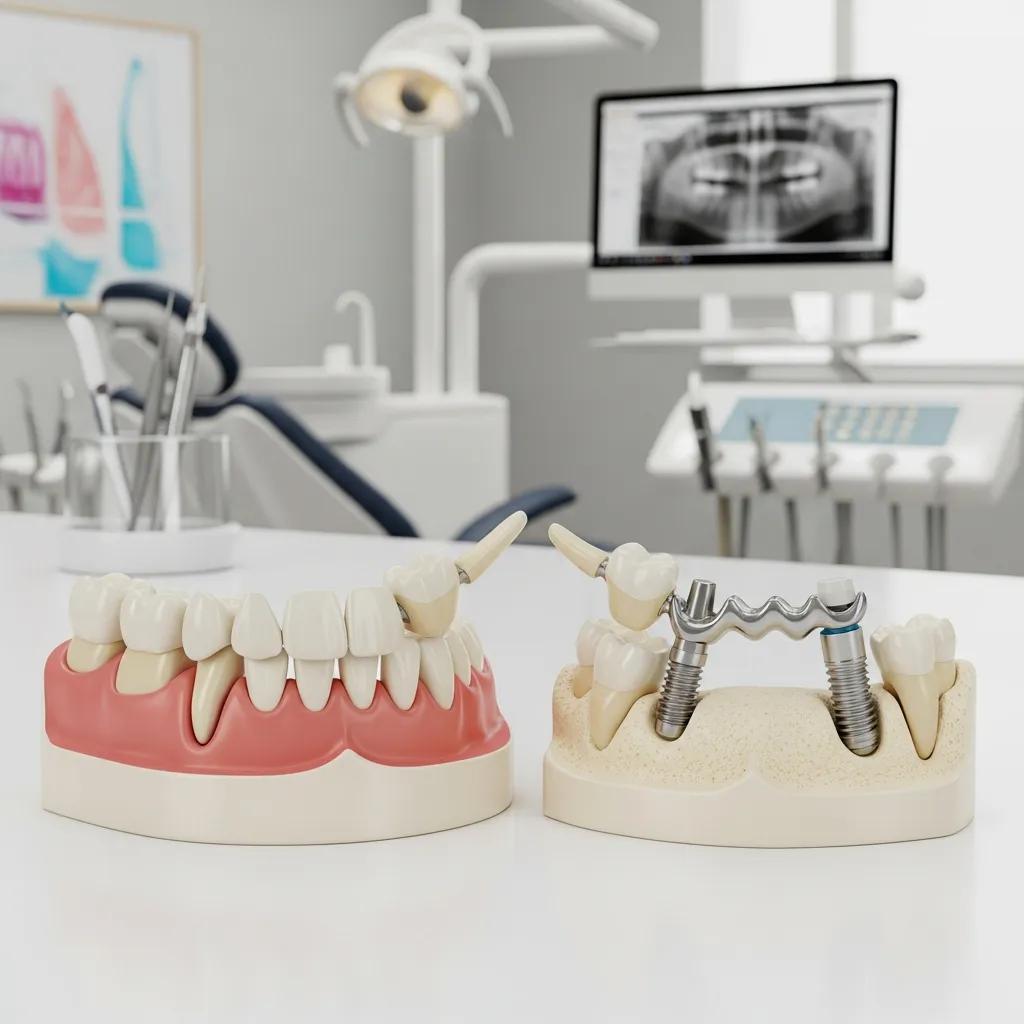
A dental bridge is a fixed prosthesis that spans a gap by anchoring to adjacent teeth or implants, restoring appearance and function without replacing the underlying root structure. Bridges work by attaching a pontic (the false tooth) to crowns on neighboring teeth or to implant abutments; they provide a fast, non-removable restoration that can be completed in fewer visits than a full implant route when natural abutment teeth are suitable. Because traditional bridges rely on adjacent tooth preparation, they can sacrifice healthy tooth structure and do not stimulate the jawbone beneath the missing tooth—making them a practical short- to medium-term solution where bone preservation is not the primary concern. Understanding bridge types and placement clarifies when a bridge is appropriate, and the following subsections review types, placement steps, and pros and cons so you can compare fixed solutions directly.
H3: What Types of Dental Bridges Are Available and How Are They Placed?
Dental bridges come in several types—traditional fixed bridges that use crowns on both adjacent teeth, cantilever bridges anchored on one side, Maryland (resin-bonded) bridges that use a metal or ceramic wing bonded to enamel, and implant-supported bridges that combine implants with bridge prosthetics for fixed, bone-supporting replacements. Placement typically involves preparing abutment teeth by removing enamel to accept crowns, taking impressions or digital scans for a lab-fabricated prosthesis, placing a temporary bridge while the final restoration is produced, then seating the permanent bridge and adjusting occlusion for comfort and function. Implant-supported bridges follow a surgical timeline similar to other implants but can replace multiple adjacent teeth without altering natural teeth, which is a key hybrid option between implants and traditional bridges. Indications vary by tooth position, occlusal forces, and the health of adjacent teeth, which must be assessed during the diagnostic phase.
H3: What Are the Pros and Cons of Dental Bridges?
Bridges provide a fixed, esthetic, and relatively quick restoration that restores chewing and smile continuity without the need for removable prostheses, making them attractive for patients prioritizing speed and stability. Benefits include the ability to replace one or more adjacent missing teeth with a single prosthesis, predictable esthetics, and no maintenance of a removable appliance, while lifespan expectations often range around 7–15 years depending on oral care and materials used. Drawbacks include the need to reduce healthy tooth structure on abutment teeth, lack of direct stimulation to the alveolar bone under the pontic (which can lead to bone resorption over time), and potential replacement costs when abutment teeth develop problems. Good oral hygiene and regular professional checkups extend bridge longevity, and implant-supported bridges mitigate some cons by preserving bone and avoiding modification of natural teeth.
What Should You Know About Dentures as Removable Tooth Replacement Options?
Dentures are removable prostheses that replace missing teeth and surrounding soft tissues, available in full (complete) and partial forms, and can be immediate or implant-retained depending on clinical needs. They restore appearance and basic function affordably and without surgery in many cases, but traditional removable dentures sit on the residual ridge and do not provide the same chewing efficiency or bone stimulation as implants. Modern denture workflows include impressions, try-ins, and relines to improve fit and comfort, and implant-supported dentures offer a middle ground by combining implant stability with removable convenience. The next subsections explain denture types and fitting processes, then list practical advantages and limitations so you can judge whether dentures match your priorities for cost, comfort, and long-term oral health.
H3: What Are the Different Types of Dentures and Their Fitting Process?
Dentures are classified as full (replacing all teeth in an arch), partial (replacing several teeth while clasping natural teeth), immediate (placed at the time of extraction), and implant-supported dentures that attach to implants for added stability and retention. The fitting process involves initial impressions to capture ridge contours, try-in appointments to verify esthetics and occlusion, and final delivery followed by scheduled adjustments or relines as the mouth adapts and the ridge remodels. Immediate dentures provide an interim aesthetic solution but generally require relining once healing and shrinkage occur, while implant-supported overdentures use anchors to dramatically reduce slippage and improve chewing efficiency. Follow-up is critical to address sore spots, alter occlusion, and maintain hygiene; patients often benefit from staged adjustments during the first months after delivery.
Introductory paragraph for a list of denture types and considerations.
Full dentures replace an entire arch and rely on suction and adaptation to soft tissues for retention.
Partial dentures replace several teeth and use clasps or precision attachments to secure to remaining teeth.
Implant-supported dentures attach to implants to improve retention and reduce movement.
Immediate dentures are placed at extraction but typically need relining after tissue healing.
A clear understanding of these types helps patients choose the most suitable removable option and prepares them for the fitting timeline and expected adjustments.
H3: What Are the Advantages and Limitations of Dentures?
Dentures offer cost-effective tooth replacement without major surgery, providing improved esthetics and speech for patients who have lost many or all teeth, and they can be fabricated relatively quickly compared with multi-stage implant therapy. Advantages include affordability, non-surgical candidacy for many patients, and straightforward hygiene routines for removable appliances, while limitations encompass potential slippage during function, reduced chewing efficiency compared with fixed restorations, and progressive bone resorption beneath the denture-bearing ridge. Implant-retained dentures reduce many traditional limitations by stabilizing the prosthesis and helping preserve bone, representing a hybrid path when budget and bone health allow. Consideration of these trade-offs and a free clinical evaluation can help determine whether a removable solution or an implant-based approach best meets functional and esthetic goals.
Brief practice note: Affordable Dentist Near Me of Longview provides denture services and offers a free consultation to evaluate candidacy and discuss implant-retained options, which can help patients choose among traditional and implant-supported prostheses. This local evaluation aids in aligning an affordable treatment plan with your oral health needs and long-term goals.
How Do Cost and Financing Affect Your Choice Between Implants, Bridges, and Dentures in Longview, TX?
Cost often shapes initial treatment choices: dental implants tend to have the highest upfront cost due to surgery and implant components, bridges generally fall in the mid-range depending on materials and number of units, and removable dentures are typically the most affordable initial option. Beyond sticker price, factors like number of missing teeth, need for bone grafting, CT imaging, custom abutments, and material choices can substantially change costs, so personalized estimates are essential. Financing and promotions can alter affordability and timing of care; understanding typical cost ranges and the financing tools available in Longview helps patients weigh immediate budget constraints against long-term value. The following subsections present typical cost ranges and then summarize the practice-level financing information that may make advanced options more attainable.
H3: What Are the Typical Costs for Dental Implants, Bridges, and Dentures?
Typical cost ranges depend on complexity and local market factors, and vary by the number of teeth and whether additional procedures are required; use these ranges as directional guidance rather than exact quotes. Single-tooth implants commonly fall in a higher cost band than a traditional single-unit bridge due to the surgical component and implant hardware, while full-arch removable dentures are generally at the lower end of the cost spectrum. Major cost drivers include implant components, abutment and crown materials, the need for bone grafting, the use of CBCT imaging and guided surgery, and laboratory or CAD/CAM fabrication fees. For a precise financial picture, schedule a consultation so a clinician can present an individualized treatment plan and a realistic estimate tailored to your oral health and prosthetic goals.
Introductory paragraph for the cost table explaining purpose and scope.
Restoration Type
Typical Cost Range (Longview)
Financing Options / Notes
Single-tooth implant
Higher range, reflecting surgery and components
Flexible financing often available; free consultation recommended
Fixed bridge (per span)
Moderate range, varies with materials and abutment work
May require less surgical cost; financing options vary
Full or partial denture
Lower range, most affordable initial option
Often the most budget-friendly; implant-retained dentures increase cost
H3: What Financing Options and Promotions Does Affordable Dentist Near Me of Longview Offer?
Affordable Dentist Near Me of Longview emphasizes affordability through everyday low fees, flexible financing, and specific promotional offers to reduce upfront barriers to care for implants and dentures. The practice explicitly advertises free consultations for implants and dentures, which lets patients obtain a no-cost assessment and estimate before committing to treatment, and flexible financing programs that can distribute cost over time to make advanced options more accessible. Patients in Longview should request a free consultation to review tailored treatment plans and financing arrangements that match their budget and clinical needs; the consultation typically covers assessment, imaging needs, and an overview of available payment options. This practice-level support helps align clinical recommendations with financial realities so patients can choose a solution that balances long-term oral health with their budget.
Which Factors Should Patients in Their 40s to 60s Consider When Choosing Tooth Replacement?
Patients in their 40s to 60s often balance longevity expectations, active lifestyles, and evolving oral health priorities; the main decision factors include bone health, the number and distribution of missing teeth, systemic health, esthetic goals, and tolerance for maintenance. Bone density and periodontal status influence implant candidacy and may necessitate preparatory treatments like grafting, while lifestyle factors such as diet, smoking, and oral hygiene affect longevity across all options. Long-term planning should weigh durability and maintenance: implants often represent a one-time surgical investment with decades-long potential, whereas bridges and dentures may require replacement or relines over time. The following subsections detail bone and hygiene considerations and lifespan/maintenance expectations to help mid-life patients choose an option aligned with their functional and esthetic aims.
H3: How Does Bone Health and Oral Hygiene Influence Treatment Candidacy?
Sufficient bone volume and density are critical for implant stability; inadequate bone may require grafting or sinus lift procedures to create a stable foundation for implants, while periodontal disease must be controlled prior to any definitive restoration. Imaging such as CBCT and clinical probing are standard tools to measure bone and periodontal conditions, guiding whether implants are immediately feasible or whether staged therapies are needed. Oral hygiene influences the risk of peri-implantitis and bridge failure; patients with consistent, effective home care and regular professional maintenance are better candidates for long-term implant success and for extending the lifespan of bridges. Addressing modifiable risk factors—smoking cessation, periodontal therapy, and improved hygiene—improves candidacy across replacement options and enables more predictable outcomes.
Under this H2 we present an EAV comparison table to summarize key attributes across the three primary options so readers can weigh factors at a glance.
Replacement Option
Key Attribute
Typical Value / Impact
Dental Implants
Longevity
20+ years to lifetime with good care; preserves bone
Dental Bridges
Invasiveness
Moderate; requires adjacent tooth preparation
Dentures
Cost
Most affordable initial option; may need relines/replacement
H3: What Are the Longevity and Maintenance Requirements for Each Option?
Implants can last for decades or potentially a lifetime when supported by excellent oral hygiene, periodic professional assessment, and management of systemic risk factors; maintenance focuses on daily plaque control around implant margins and regular checkups. Bridges commonly last 7–15 years depending on the health of abutment teeth and oral hygiene, and they may require replacement if underlying teeth decay or fail; maintenance centers on cleaning under pontics and ensuring margins remain seal-tight. Dentures typically need relines or replacement every 5–10 years as alveolar ridges remodel and wear affects fit and occlusion; maintenance includes daily cleaning, overnight soaking when appropriate, and timely relines to prevent sore spots and restore fit. Choosing a replacement option should incorporate these maintenance commitments and the patient’s ability and willingness to follow recommended care routines.
How Do Surgical and Non-Surgical Tooth Replacement Options Impact Your Smile and Jaw Health?
Surgical options like implants directly interact with bone to provide functional loading that stimulates bone maintenance, whereas non-surgical options—traditional bridges and removable dentures—do not replace root function and therefore do not prevent alveolar bone resorption at the extraction site. This biological difference affects long-term facial support, chewing efficiency, and the risk of future dimensional changes in the jaw that can alter denture fit or adjacent tooth stability. Comparing surgical and non-surgical approaches by surgicality, effect on adjacent teeth, and bone impact clarifies the trade-offs between immediate expediency and long-term oral health preservation. The following subsections explain procedural contrasts and then quantify effects on adjacent teeth and bone to support clinical decision-making.
H3: What Are the Differences Between Surgical Implants and Non-Surgical Bridges or Dentures?
Surgical implants require an operative phase with healing time for osseointegration, potential sedation, and clinical follow-up, while bridges and dentures can often be completed without surgery and in fewer clinical stages. Recovery from implant surgery may involve short-term discomfort, but successful integration provides a stable root-replacement that helps transfer occlusal load into bone, improving function and preservation of the ridge. Non-surgical bridges avoid oral surgery and provide immediate fixed restoration for many cases, but they transfer stress to abutment teeth and can accelerate wear or compromise tooth vitality over time. Dentures offer non-invasive, reversible solutions but typically deliver lower masticatory efficiency and require periodic adjustments, which can influence nutrition and quality of life for some patients.
Introductory paragraph for the surgical vs non-surgical EAV table that clarifies clinical effects.
Option
Surgical?
Effect on Adjacent Teeth
Effect on Bone
Implants
Yes
Minimal direct effect on adjacent teeth when placed correctly
Preserves bone through functional loading
Bridges
No (unless implant-supported)
Requires preparation of adjacent teeth, potential for increased decay or stress
Does not stimulate underlying bone under pontic
Dentures
No
Little direct impact on adjacent natural teeth but may stress remaining teeth with clasps
Allows progressive bone resorption without implant support
H3: How Do These Options Affect Adjacent Teeth and Bone Preservation?
Implants protect adjacent teeth because they replace the root structure and avoid the need to alter neighboring teeth, which helps preserve the integrity and vitality of surrounding dentition. Traditional bridges require preparation of abutment teeth—removing enamel and sometimes dentin—to anchor crowns, which can predispose those teeth to future restoration needs or endodontic treatment in some cases. Dentures place functional load on soft tissues and residual ridges, accelerating alveolar remodeling and decreasing vertical dimension over time if implants are not used to retain or support the prosthesis. For patients prioritizing long-term bone and adjacent-tooth preservation, implant solutions—when clinically feasible—offer clear biological advantages, and these effects should be discussed during treatment planning.
Why Choose Affordable Dentist Near Me of Longview for Your Dental Implants, Bridges, and Dentures?
Affordable Dentist Near Me of Longview presents a localized option for patients seeking tooth replacement solutions, emphasizing affordability and patient accessibility while offering modern technology and experienced professionals for care delivery. The practice highlights everyday low fees, free consultations for implants and dentures, and flexible financing to help patients assess and move forward with recommended treatments. Local patients can expect an initial evaluation that includes diagnostic imaging when indicated and a discussion of restorative pathways—implants, bridges, or dentures—tailored to clinical needs and budget considerations. The following subsections list the practice’s explicit value propositions and explain how to schedule the free consultation and what to expect during that visit.
H3: What Unique Value Propositions Does the Practice Offer for Tooth Replacement?
The practice communicates several explicit value propositions that may influence patient choice: everyday low fees to support affordability, free consultations for implants and dentures to lower the barrier to evaluation, flexible financing to spread costs over time, modern technology that supports precise diagnosis and restoration, patient comfort measures during treatment, and experienced professionals to execute care. Each UVP maps to a practical benefit—free consultations allow informed decision-making without upfront expense; flexible financing helps patients access higher-cost options like implants; and technology such as digital imaging improves treatment planning accuracy. These attributes aim to align clinical excellence with affordability so patients can pursue long-term oral health with predictable steps.
H3: How Can You Schedule a Free Consultation and What Should You Expect?
To schedule a free consultation at Affordable Dentist Near Me of Longview, contact the practice through their online scheduling or their public business listing to request an appointment for an implant or denture evaluation; the free consultation provides an opportunity to discuss options before committing to treatment. At the initial visit you can expect a focused assessment that typically includes a review of medical and dental history, an intraoral exam, and any recommended imaging to evaluate bone and tooth structure. The clinician will discuss viable replacement options—implants, bridges, or dentures—outline the procedural steps for each, and present an individualized cost estimate along with available financing or promotions to help plan care. This consultation is designed to give a clear clinical roadmap and a financial framework so patients can decide with confidence.
What Are Common Patient Questions About Dental Implants, Bridges, and Dentures?
Patients frequently ask which option best suits their needs, how long each solution lasts, and what to expect during treatment and recovery; concise answers to these questions reduce decision friction and prepare patients for clinical evaluation. Short, evidence-informed responses can serve as quick references: implants for longevity and bone preservation, bridges for quicker fixed restorations, and dentures for affordability and non-surgical replacement. The following subsections provide a decision framework to match scenarios to recommended options and summarize lifespan expectations and maintenance factors to help patients set realistic expectations.
H3: Which Tooth Replacement Option Is Best for My Needs?
Choosing the best option depends on the clinical scenario, patient goals, and resources: for a single missing tooth with healthy adjacent teeth and adequate bone, a single-tooth implant offers the best long-term preservation, while a traditional bridge may be suitable when surgery is contraindicated or budget constraints are primary. For multiple adjacent missing teeth, an implant-supported bridge or multiple implants provide bone support and avoid excessive modification of healthy teeth; for full-arch replacement, implant-retained overdentures or full-arch implant solutions deliver superior function but require surgical candidacy and financing considerations. Important caveat: these recommendations are general—final selection requires a clinical exam, imaging, and a discussion of lifestyle, maintenance willingness, and financial options.
Introductory paragraph for a short decision checklist list.
Single missing tooth: Consider a single-tooth implant if bone and health permit; consider a bridge if surgery is contraindicated.
Several adjacent missing teeth: Consider implant-supported bridge for bone preservation or a traditional bridge if implants aren’t feasible.
Full arch tooth loss: Consider implant-retained dentures for improved stability or conventional dentures when surgery is not an option.
A structured decision framework helps patients and clinicians prioritize clinical and lifestyle factors to arrive at the most appropriate restorative pathway.
H3: How Long Do Implants, Bridges, and Dentures Typically Last?
Typical lifespan estimates depend on clinical care and maintenance: implants often last multiple decades and can be lifelong with proper hygiene and professional monitoring, bridges commonly last 7–15 years depending on abutment tooth health and materials, and dentures usually require relines or replacement every 5–10 years as the ridge remodels. Longevity is influenced by systemic health, smoking status, oral hygiene practices, bruxism, and adherence to maintenance visits; proactive periodontal care and prompt attention to prosthetic issues extend service life across all options. Understanding these realistic timelines helps patients weigh initial cost against long-term value and determine which solution best aligns with their expectations and ability to maintain oral health.
Understanding the expected lifespan of dental prosthodontic treatments is crucial for patients to make informed decisions about their investment in oral health.
Understanding Longevity of Dental Prosthodontic Treatments
Patients reasonably expect a return for their investment and want to know how long their treatment will last. Clinicians have an obligation to inform their patients so that they can make reasoned decisions about treatment options. Longevity data are also informative for health agencies setting service schedules for publicly funded treatment, and for determining settlements by insurers such as ACC.
How long will it last? The expected longevity of prosthodontic and restorative treatment, DR Schwass, 2013
This article has covered the mechanisms, procedural stages, pros and cons, cost considerations, and maintenance expectations for dental implants, bridges, and dentures to help you make an informed tooth replacement decision. For patients in Longview seeking a local evaluation, Affordable Dentist Near Me of Longview offers free consultations for implants and dentures, everyday low fees, and flexible financing to assist with planning care at their practice location on Forest Square.