Dental Implants vs Bridges: A Clear, Practical Cost Comparison for Denton Patients
Dental implants and dental bridges both restore chewing, speech, and appearance, but they build value differently over time. This guide walks through the steps, cost pieces, and typical price ranges for each option, then shows simple lifetime scenarios so you can weigh upfront cost against longer-term value. Many Denton patients want practical, clinician-backed guidance that links clinical trade-offs—like bone preservation, work on adjacent teeth, and upkeep—to realistic financial outcomes. Below we define each treatment, break down component and procedure costs, compare lifetime and replacement expenses, list pros and cons, and explain insurance and financing considerations tailored to people in the Denton area. Finally, we explain how a personalized free consult turns general ranges into an accurate, insurance-adjusted estimate so you can choose with confidence.
What Are Dental Implants and How Are Their Costs Structured?
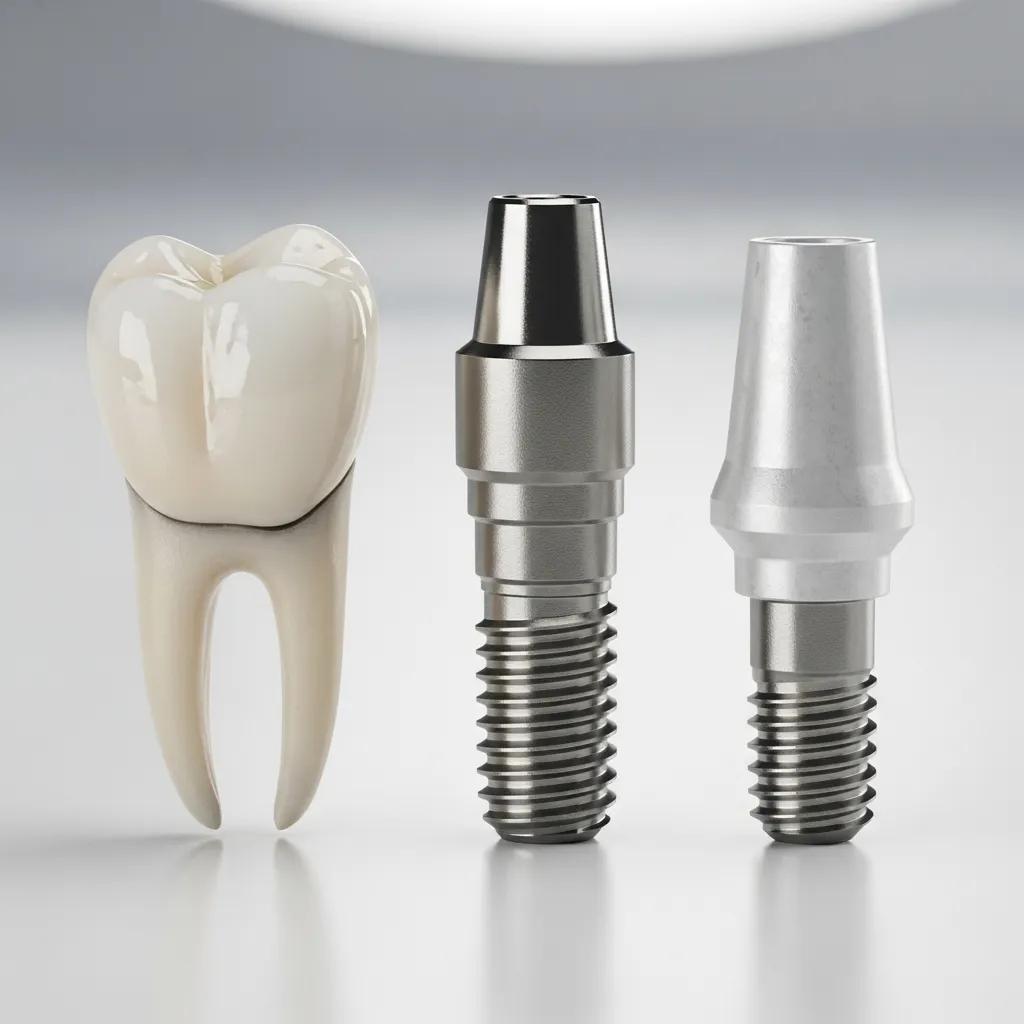
A dental implant is a titanium post placed in the jawbone that replaces the tooth root and supports a crown or prosthesis. The full implant process includes an exam and imaging, surgical placement of the implant post, a healing period for osseointegration, abutment placement, and the final crown or prosthetic. Each step adds to the total cost because it involves clinical time, surgical skill, lab work, and specialized materials. Breaking costs into these components explains why implants usually cost more up front but can require fewer replacements over time and help preserve jawbone—factors that affect long-term value. The sections below outline the clinical workflow and the main cost drivers you’ll want to discuss with your provider in Denton.
How a Dental Implant Works — Step by Step
An implant replaces a missing tooth by placing a titanium post in the jawbone, allowing bone to fuse to it (osseointegration), then attaching an abutment and a crown for a finished tooth. The process starts with a clinical exam and imaging to check bone volume and anatomy, proceeds to surgical placement (local anesthesia and optional sedation), and includes a healing window before the final restoration is attached. Materials (titanium posts, ceramic crowns) and diagnostic or surgical technology influence durability, aesthetics, precision, and cost. That multi-step timeline is why implant care includes both surgical and prosthetic fees—and why prices vary from patient to patient.
Which Factors Drive the Initial Cost of an Implant?
Initial implant costs depend on several clinical and logistical variables: how many implants you need, whether bone grafting or a sinus lift is required, if extractions are necessary, the type of abutment and crown, lab fees, sedation level, and clinician experience. Bone grafts and sinus lifts add surgical time and materials, raising cost and extending treatment. Multi-unit cases or implant-supported dentures add posts and more complex prosthetics. Provider choices—like CBCT imaging, guided surgery, and lab partnerships—also affect fees, though they can improve predictability and outcomes. Understanding these drivers helps you anticipate quote differences and have a focused discussion with your dentist. Below is a concise breakdown of common implant cost components.
Different implant parts fall into distinct cost categories and together determine the typical investment for a single-tooth restoration.
Component
Role / Procedure
Typical Cost Range
Implant post (titanium)
Surgical root replacement — foundation for the restoration
$1,000 to $3,000
Abutment
Connector between implant and crown; critical for fit
$300 to $500
Crown (ceramic/porcelain)
Final visible tooth — custom lab-fabricated restoration
$1,000 to $2,000
Bone grafting / sinus lift
Adds bone volume to support the implant — surgical add-on
$200 to $3,000+
Imaging & planning (CBCT, guides)
Diagnostic and surgical planning tools
$100 to $500
This table shows how surgical, prosthetic, and diagnostic pieces add up. The implant post and any grafting are often the largest contributors to initial cost. Below are the main clinical cost drivers to review during planning.
How many implants are needed and whether multiple teeth require individual posts.
Whether bone grafting, a sinus lift, or extractions are needed before placement.
Quality of restorative materials and laboratory fees for custom crowns.
Use of advanced imaging, guided surgery, or sedation services.
These factors shape clinical complexity and the financial investment, setting the stage to compare implants with bridges next.
What Are Dental Bridges and What Affects Their Cost?
A dental bridge replaces missing teeth by anchoring replacement teeth (pontics) to adjacent abutment teeth or to implants. Bridges are primarily prosthetic and don’t replace the tooth root. Fixed bridges require preparation of neighboring teeth; other types, like Maryland bridges, use adhesive techniques. Bridge cost reflects lab work, the number of units, and the complexity of tooth preparation. Because bridges use existing teeth as support, they’re often cheaper up front than implants but can lead to later costs if abutment teeth decay or fail. The following sections explain bridge mechanics and the main cost drivers so you can compare trade-offs directly with implants.
How Dental Bridges Work and Which Teeth Are Involved
Bridges use neighboring teeth (abutments) to anchor one or more pontics that fill a missing-tooth gap. Abutment teeth are typically reduced and fitted with crowns to retain the bridge. Fixed bridges transfer chewing forces to those adjacent teeth, so the long-term health of the abutments is important. When abutment teeth are healthy and strong, bridges can be efficient restorations. Implant-supported bridges replace roots with implants and then attach a multi-unit prosthesis—combining implant durability with bridge mechanics. Knowing which teeth will serve as abutments and the trade-offs of preparing them helps explain why bridges may cost less initially but could require restorative work later.
Which Variables Determine Bridge Pricing?
Bridge cost depends mainly on the number of units (for example, a 3-unit bridge replaces one tooth with two abutment crowns), the material chosen (porcelain, metal, or porcelain-fused-to-metal), the complexity of tooth preparation, and lab fabrication fees. More aesthetic materials and high-precision lab work cost more, while removable or adhesive options are less expensive but may not last as long. If abutment teeth need root canals, crowns, or other prep work, those procedures add to the total. The table below summarizes common bridge types and the cost factors to consider.
Bridge Type
Main Feature
Typical Cost Consideration
3-unit fixed bridge
Two abutments with a single pontic
$2,000 to $5,000 upfront restorative and lab fees
Implant-supported bridge
Supported by implants rather than natural teeth
$5,000 to $15,000 higher lab and surgical costs; greater longevity
Maryland/adhesive bridge
Minimal tooth reduction; resin-bonded
$1,500 to $2,500 lower upfront cost; variable durability
Bridge costs are strongly influenced by the condition of abutment teeth and the materials chosen—both affect initial price and future expenses. Practical elements to evaluate include:
Number of units and whether abutment teeth need extra treatment.
Material choice and laboratory quality, which affect strength and look.
Potential replacement cycles if abutment teeth decay or fail.
Whether an implant-supported bridge is used, which changes the cost profile.
With bridges explained, the next section compares upfront cost versus long-term value so you can decide which approach fits your priorities.
How Do Implants and Bridges Compare for Long-Term Cost and Value?
To compare implants and bridges, consider upfront cost, maintenance needs, replacement timelines, and value outcomes like jawbone preservation and lasting function. Implants usually require a larger initial investment for surgery, materials, and healing, but they often last decades and help preserve bone, which can reduce later restorative needs. Bridges generally cost less up front but may need replacement every 10–15 years and can increase wear or decay risk on abutment teeth, raising lifetime cost. To choose wisely, run simple scenarios that include replacement cycles, complication rates, and non-monetary benefits. The table below gives a simplified lifetime-cost framework per missing tooth to illustrate these dynamics.
Option
Typical Upfront Cost
Estimated 30‑Year Cost Outlook
Single-tooth implant
$3,000 to $6,000 higher upfront (surgery + crown)
Potentially lower over decades because of longevity
3-unit fixed bridge
$2,000 to $5,000 lower upfront (crowns + pontic)
Often higher if replaced multiple times due to abutment issues
Implant-supported multi-unit
$7,000 to $15,000 highest upfront
Lower long-term maintenance and better bone preservation
This comparison highlights how implant longevity and bone-preserving benefits can reduce total cost over time despite higher initial fees. The two subsections that follow walk through modeled calculations and maintenance factors so you can see how repair cycles and routine care affect the overall expense picture.
Upfront Cost Versus Lifetime Cost — A Practical View
A useful comparison assumes conservative replacement intervals: bridges replaced every 10–15 years, implants lasting 20–30+ years with a lower chance of replacement. Under these assumptions, a bridge that’s cheaper today but needs two replacements over 30 years can cost more in total than a single implant that remains stable for the same period. Non-monetary benefits—such as jawbone preservation with implants, which can avoid future grafts and prosthetic work—also change lifetime expense. Good modeling includes crown maintenance, potential abutment tooth treatments for bridges, and possible implant complication costs like peri-implantitis. These scenarios show the trade-off between short-term affordability and long-term value based on your oral health risks.
How Maintenance and Replacement Influence Long-Term Expenses
Implant maintenance generally means daily hygiene, regular checkups, and occasional crown repairs. Bridges need similar hygiene but also require monitoring of abutment teeth for decay or failure and may need re-cementation or replacement over time. Implant complications such as peri-implantitis, while not common, can add to lifetime costs; similarly, bridges may need laboratory work and restorative care if abutments deteriorate. Frequency matters: if a bridge is replaced twice in 30 years, the total lab and restorative fees can surpass a one-time implant plus minor upkeep. Understanding these patterns helps you include realistic long-term expenses in your decision.
Pros and Cons: Implants vs Bridges
Choosing between implants and bridges involves clinical, financial, and lifestyle trade-offs. Implants offer long-term durability, bone preservation, and often better function. Bridges provide a faster, less invasive path with lower up-front cost. A balanced decision weighs longevity and health benefits against initial price and the surgical experience. Below are the key comparative points, followed by focused lists of benefits and drawbacks for each option.
Key pros and cons that influence patient decisions:
Implants: long-term stability and jawbone preservation.
Bridges: lower initial cost and a shorter construction timeline.
Implant drawbacks: higher surgical cost and longer treatment time.
Bridge drawbacks: relies on adjacent teeth and may need future replacement.
These differences guide the clinician–patient conversation and lead into the detailed benefits and limitations for each approach.
Benefits and Considerations for Dental Implants
Dental implants restore long-term function, help protect jawbone by transmitting chewing forces to bone, and avoid altering neighboring natural teeth—preserving overall dental health. With proper selection and care, implants show high success rates (around 95% at 10 years) and feel stable for chewing and speaking. Drawbacks include oral surgery, possible need for bone grafts, higher up-front cost, and a longer multi-step timeline. Patients with medical conditions that impair healing or who smoke may face higher risks, so candidacy evaluation is an important planning step. When implants succeed, they often reduce future restorative needs.
Advantages and Limitations of Dental Bridges
Bridges restore appearance and function quickly with less or no surgery and usually lower initial cost—especially useful when adjacent teeth already need crowns. They’re an effective short-to-mid-term solution when implants aren’t an option or when budget constraints are primary. Downsides include reducing healthy adjacent teeth, increased risk of decay or failure of abutment teeth over time, and a limited lifespan that may require replacement. Bridges work very well when abutments are strong and well-maintained, but patients should weigh potential future restorative work against initial savings.
How Insurance and Financing Affect Costs in Denton, TX
Insurance and financing change how much you pay out of pocket and when you pay it. In Denton, many PPO plans cover restorative parts like crowns and bridges to varying degrees, while coverage for implant surgery components is often limited or excluded. Understanding plan specifics—annual maximums, whether a service is classified surgical versus restorative, and pre-authorization rules—is critical for accurate estimates. Financing options (third-party plans or in-house arrangements) can spread costs over months or years and make implants more affordable for patients focused on long-term value. A practical next step is to bring your insurance details to a Free Dental Implant Consult so staff can review benefits and monthly-payment scenarios and create a personalized plan.
What Insurance Typically Covers for Implants and Bridges
Dental insurance often separates restorative services (crowns, bridges) from surgical services (implant placement). Many PPO plans offer partial coverage for crowns and bridgework, while implant surgery may be treated as a major procedure with limited or no coverage depending on your carrier. Verifying benefits means reviewing plan documents, checking annual maximums, and requesting pre-authorization for proposed treatments. Bringing your insurance card and plan details to a consult lets staff run benefit checks quickly and clarifies what portion will be out of pocket so you can plan financing if needed.
Flexible Payment and Financing Options at Dentist in Denton
Dentist in Denton – Dentures & Dental Implants accepts PPO dental insurance and offers flexible financing to help reduce up-front cost barriers for implant and bridge care. We use an education-first consult to review insurance benefits, assist with pre-authorization, and present payment-plan options tailored to each case. Schedule a Free Dental Implant Consult so our team can show individualized payment scenarios and monthly illustrations that make cost predictable and manageable. Bringing your insurance details to the consult speeds verification and helps convert general price ranges into a clinic-specific estimate.
How to Choose Which Tooth Replacement Is Right for You
Choosing between an implant and a bridge means combining clinical candidacy, lifestyle priorities, and finances into a plan that supports your oral-health goals. Key clinical factors—bone density, gum health, medical conditions that affect healing, and the state of adjacent teeth—interact with personal choices like wanting a permanent solution, tolerating surgery and downtime, and budget limits. A short decision checklist helps organize these considerations. A personalized, no-pressure consultation then translates general recommendations into a treatment pathway that fits your priorities. Use the checklist below to prepare for your visit.
Check bone health and whether grafting may be necessary.
Review the condition of adjacent teeth and whether you want to preserve them.
Consider your tolerance for surgery and expected healing time.
Look at budget, insurance coverage, and willingness to invest in a long-term solution.
Answering these questions helps form an initial preference and leads naturally to a Free Dental Implant or Bridge Consultation for tailored clinical and financial guidance.
Health and Lifestyle Factors That Should Guide Your Decision
Important health factors include bone volume and density (which determine if grafting is needed), systemic conditions that affect healing (for example, uncontrolled diabetes), smoking status, and daily oral hygiene—each influences implant candidacy and bridge success. Lifestyle considerations—such as wanting a long-term, low-maintenance restoration, needing the quickest possible replacement, or being comfortable with surgical timelines—also shape the right choice. Age and future dental expectations matter: younger patients often benefit from solutions that preserve bone long-term, while older patients may prioritize less invasive, lower up-front cost options. These factors are why a personalized consult turns general advice into a plan that fits you.
How a Free Dental Implant or Bridge Consultation Personalizes Your Cost Estimate
A Free Dental Implant or Bridge Consultation includes a focused clinical exam, imaging as needed, an insurance-benefit review, and a personalized estimate that turns general ranges into a concrete plan for you. During the consult clinicians assess bone anatomy, the condition of adjacent teeth, and overall oral health to recommend implants, bridges, or alternatives and to identify any preparatory steps such as grafting or extractions. Our staff reviews PPO coverage details and outlines financing options so you can compare monthly payments alongside upfront costs. Bringing your insurance information to the consult yields a clear, locally relevant cost analysis with a practical treatment timeline and written price projection.
What Patients Say About Cost and Value: Implants vs Bridges
Patient feedback highlights distinct value patterns: many implant patients report better confidence, function, and fewer future restorations, while bridge patients often appreciate faster treatment and lower initial cost. Aggregated experiences show that when implants succeed they deliver high satisfaction by preserving jaw function and reducing repeated restorative cycles; bridges work well when abutment teeth are strong but can require follow-up care. Summaries of these experiences help future patients set realistic expectations about clinical outcomes and lifetime costs. The subsections below capture common patient themes for each option.
Patient Experiences with the Long-Term Value of Implants
Many patients describe implants as a long-lasting solution that restores chewing efficiency and comfort while preventing bone loss that could complicate future care. Over several years, patients often report lower cumulative repair and replacement costs compared with repeated bridge replacements, along with the practical benefit of stable prosthetics. While implants need surgical healing and occasional maintenance of crowns or abutments, their long lifespan and bone-health benefits make them a preferred financial and functional choice for patients who can manage the initial investment. These patient themes underscore why personalized lifetime-cost modeling is useful.
Patient Experiences with Bridges: Cost and Maintenance
Patients who choose bridges typically value the quicker restoration and lower initial cost—especially when neighboring teeth already need crowns. Over time, some report follow-up work on abutment teeth (additional restorations or bridge replacement) when oral hygiene or abutment health declines, which adds to lifetime cost. Bridges can be an excellent intermediary solution when implants aren’t possible or when immediate budget limits apply; however, patients should understand that cumulative expense may grow if replacements are needed multiple times. These patterns highlight the value of a consult that models replacement cycles for your situation.
Where to Schedule a Free Consult for Implants or Bridges in Denton, TX
If you want a personalized cost analysis, the simplest next step is to schedule a Free Dental Implant Consult with a Denton practice that offers implant, denture, and bridge services. At that consult you’ll get an education-focused, no-pressure review of clinical options, diagnostic imaging as needed, an insurance-benefit check, and a tailored estimate that includes financing scenarios so you can compare monthly payments. Dentist in Denton – Dentures & Dental Implants emphasizes patient education, a relaxed, spa-like setting, and flexible financing to help you evaluate options without committing immediately. Below we explain how to book and what to expect so you arrive prepared.
How to Book Your Free Dental Implant or Bridge Consultation with Dentist in Denton
Booking a Free Dental Implant Consult with Dentist in Denton is straightforward: call the office or use their online scheduler to request an appointment, and mention you want the free implant or denture consult. When scheduling, tell staff any specific concerns (for example, whether you’re leaning toward implants or bridges) and bring your dental insurance information; they’ll let you know if imaging can be done the same day and explain any paperwork. The consult is delivered by clinicians including Dr. Mike Pham and Dr. Vo in an educational, patient-first format that focuses on clarifying costs and options. Preparing documents and questions in advance helps the consult produce a clear, personalized cost breakdown.
What to Expect During Your Free Cost-Analysis Consultation
At the Free Cost Analysis Consultation you’ll receive a clinical exam, any indicated imaging to evaluate bone and adjacent teeth, a discussion of treatment alternatives, and a transparent review of insurance and financing. Clinicians will explain recommended steps—such as grafting or extractions if needed—and provide a personalized treatment timeline plus a written estimate that factors in your insurance and payment options. The consult is educational and no-pressure, designed to help you compare short-term affordability with long-term value so you can make an informed decision. After the visit you’ll have clear next steps: proceed with treatment, consider staged care, or take time to review the data-driven estimate.
Frequently Asked Questions
1. What is the average lifespan of dental implants compared to bridges?
Dental implants commonly last 20 to 30 years, and many patients keep them for life with proper care. Dental bridges typically last 10 to 15 years, depending on the health of supporting teeth and oral hygiene. Longevity for both options depends on overall health, daily care, and the materials used. So while implants usually require a higher initial investment, they often deliver better long-term value.
2. Are there any specific health conditions that affect candidacy for dental implants?
Yes. Conditions such as uncontrolled diabetes, certain autoimmune diseases, and advanced osteoporosis can interfere with healing and osseointegration and may make implants less likely to succeed. Smoking also raises the risk of implant failure by impairing blood flow. A thorough medical and dental evaluation is necessary to determine if implants are a suitable option for you.
3. How do maintenance requirements differ between implants and bridges?
Implants require the same daily hygiene as natural teeth—brushing, flossing, and regular dental checkups—and occasional crown maintenance. Bridges also need daily care, but they require attention to the supporting abutment teeth, which can be at higher risk for decay or failure. That difference in maintenance can affect long-term costs and your commitment to care.
4. Can dental insurance cover the costs of implants and bridges?
Coverage varies widely. Many PPO plans offer partial coverage for crowns and bridges, while implant surgery is often limited or excluded. Review your plan’s documents for annual maximums and distinctions between surgical and restorative coverage. Checking benefits in advance helps you estimate out-of-pocket costs and plan for financing.
5. What financing options are available for dental implants and bridges?
Many dental offices, including practices in Denton, offer flexible financing to help spread the cost of implants or bridges over time. Options include third-party financing plans and in-house payment arrangements. During a consult you can discuss your financial situation and explore plans that fit your budget so you can get the care you need without a surprise bill.
6. How do I choose between dental implants and bridges based on my lifestyle?
Your choice should reflect lifestyle, budget, and long-term dental goals. If you want a permanent solution and are comfortable with surgery, implants may be the better option. If you need a faster, less invasive solution and have healthy adjacent teeth, a bridge may be suitable. Reviewing your oral health, maintenance preferences, and finances with a dental professional will help you decide.
7. What are the potential risks associated with dental implants?
Dental implants are generally safe, but risks include infection at the implant site, nerve injury, and failure due to inadequate bone or placement. Peri-implantitis, an inflammatory condition around the implant, can also occur. Careful evaluation, planning, and follow-up by a qualified clinician reduce these risks and improve the chance of a successful outcome.
Conclusion
Choosing between dental implants and bridges comes down to balancing up-front cost, long-term value, and your personal health and lifestyle. Implants offer lasting durability and help preserve bone, while bridges provide a quicker, more affordable route to restoration. Schedule a Free Dental Implant Consult to get personalized clinical advice and a clear, insurance-adjusted cost estimate tailored to your needs. Take the next step toward a confident, comfortable smile—we’re here to help you evaluate your options.