Patient Happiness Unveiled: Comparing Dental Implants and Partial Dentures for Optimal Tooth Replacement and Satisfaction
Deciding between dental implants and partial dentures is fundamentally about restoring function, appearance, and confidence after tooth loss, and understanding how each option affects daily life. This article explains the anatomy, mechanisms, and patient-centered outcomes of dental implants and partial dentures so readers can compare comfort, chewing ability, aesthetics, maintenance, and long-term value. Patients seeking clear guidance will learn how implants preserve jawbone structure through osseointegration, why partial dentures remain an accessible non-surgical alternative, and which lifestyle or health factors typically influence candidacy. The piece maps the patient journey from definitions and mechanisms through side-by-side comfort and functionality comparisons, aesthetic considerations, longevity and upkeep, local cost and financing in Tyler, TX, and candidacy checklists to support decision-making. Throughout, we emphasize actionable insights for adults in their 40s–60s who face age-related bone and lifestyle considerations, and we point to low-friction next steps for obtaining a personalized plan. Readers will finish with practical comparisons, structured tables, and clear next steps to reduce uncertainty and move toward a happier outcome with tooth replacement.
What Are Dental Implants and How Do They Improve Patient Satisfaction?
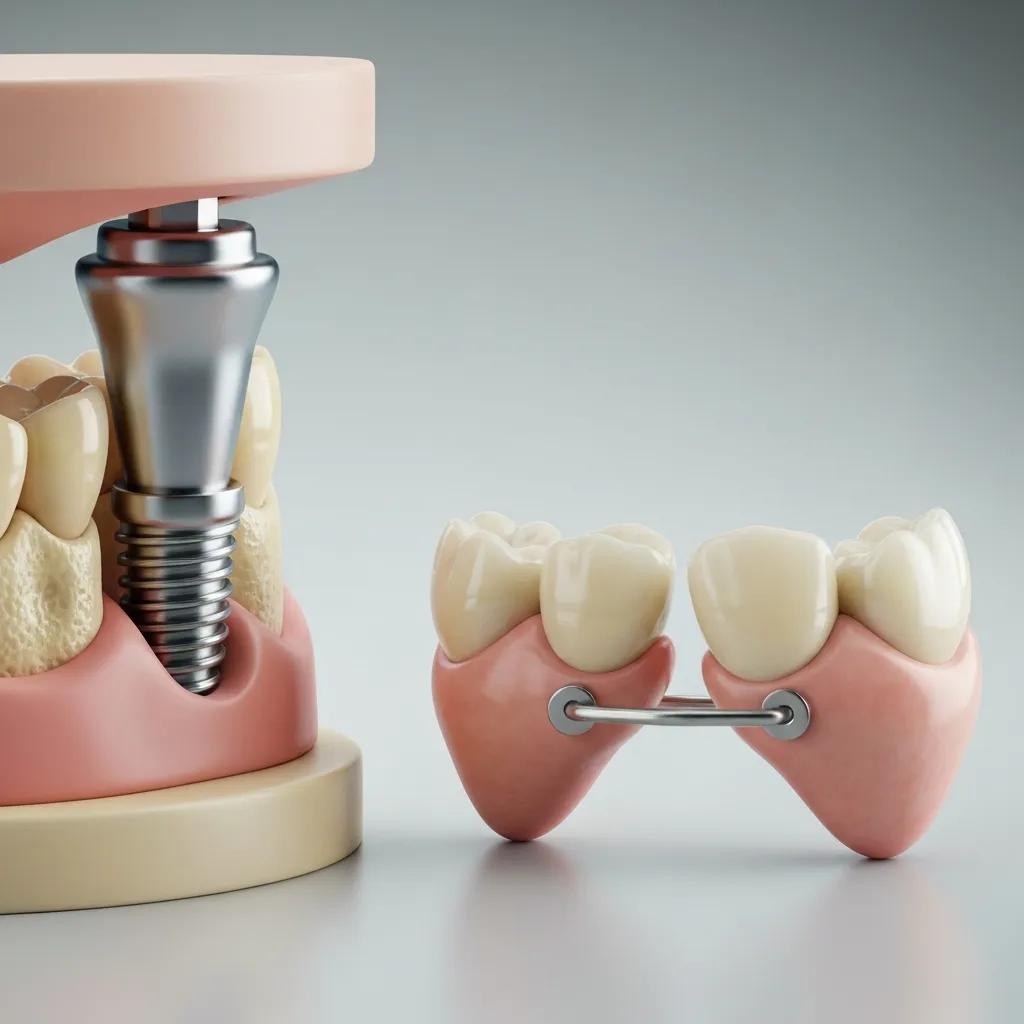
Dental implants are fixed tooth replacements that consist of a titanium fixture (implant post), an abutment, and a restoration such as a crown, and they work by integrating with the jawbone through a process called osseointegration. This biological integration transfers chewing forces into the bone, preserving jaw volume and creating a stable foundation that mimics a natural tooth both mechanically and visually. The stability and bone preservation translate into higher reported comfort, improved chewing efficiency, and greater confidence speaking or smiling, which together elevate patient satisfaction. Current research and clinical experience indicate that these mechanical and biological mechanisms directly drive durable functional outcomes for many patients seeking a permanent solution. Understanding the implant workflow and how it creates long-term value sets the stage for comparing implants to less invasive, removable options in the next section.
Patient Satisfaction with Dental Implants: A Comprehensive Survey
The aim of this study was to investigate patient satisfaction with various aspects of their implant treatment, including aesthetics, function, comfort, and speech. The results indicated a high level of overall patient satisfaction with dental implant treatment. Factors such as implant stability, bone support, and prosthetic design were found to be significant predictors of satisfaction. The study also highlighted the importance of patient education and realistic expectations in achieving optimal outcomes.
Patient satisfaction following dental implant treatment: A survey, 2023
What Is a Dental Implant and How Does It Work?
A dental implant is a three-part restorative system: the fixture anchored in bone, an abutment that connects the fixture to the visible restoration, and the crown or prosthesis that replaces the tooth. The standard clinical workflow begins with assessment and imaging, surgical placement of the implant post, a healing period during which osseointegration occurs, and final restoration with a custom crown or bridge; this sequence typically spans three to six months depending on patient healing and any adjunctive procedures. Osseointegration is the critical biological mechanism: living bone cells grow onto the implant surface to form a rigid, long-term bond that supports normal chewing forces. Patients usually experience predictable recovery phases—initial soreness and swelling followed by progressive functional gains—and modern implant materials and protocols have raised long-term reliability. Recognizing these stages helps patients set realistic expectations about timing, sensation, and the restorative milestones that lead to improved daily function.
How Do Dental Implants Enhance Comfort, Stability, and Jawbone Health?
Dental implants enhance comfort primarily through mechanical stability: unlike removable prostheses, an implant-supported crown behaves like a fixed tooth and resists shifting during chewing and speech. Mechanically, implants transmit occlusal loads into the jawbone, stimulating bone remodeling and helping preserve alveolar height and contour; this biological stimulation reduces the progressive bone loss that often follows tooth extraction. For patients, that means fewer compromises in diet, less fear of slippage in social settings, and reduced need for frequent prosthetic adjustments that can cause sore spots. Greater stability and maintained bone support also enable superior emergence profiles and soft-tissue contours around restorations, which contribute both to function and to aesthetic outcomes. These clinical benefits naturally lead to higher patient satisfaction scores when compared to removable alternatives, and the next section explores the non-surgical removable option often chosen for cost or medical reasons.
What Are Partial Dentures and What Patient Benefits Do They Offer?
Partial dentures are removable prostheses that replace one or more missing teeth in a dental arch and rely on a base, replacement teeth, and retention elements such as clasps or precision attachments. They are typically fabricated from acrylic, metal framework with acrylic, or flexible materials, and they restore appearance and function without surgical placement of fixtures. The primary patient benefits are affordability, faster treatment timelines, and the ability to provide an immediate esthetic result while avoiding surgery; these features make partial dentures a pragmatic choice for patients with budget constraints or medical contraindications to implants. Partial dentures also allow straightforward adjustments and repairs, and they can serve as interim solutions prior to implant therapy when desired. Understanding the types and trade-offs helps patients weigh immediate access and lower upfront cost against differences in stability, bone preservation, and long-term maintenance needs.
Patient Satisfaction with Removable Partial and Complete Acrylic Dentures
This study was conducted to evaluate and compare the clinical effects of constructed removable partial and complete acrylic dentures on patient satisfaction, focusing on aesthetics, retention, function, and comfort. The findings suggest that while both types of dentures can provide satisfactory outcomes, removable partial dentures generally offer better patient-reported outcomes in terms of comfort and function, particularly when well-fitted.
Clinical Evaluation of Patient Satisfaction with Aesthetics, Retention, Function, and Comfort of Removable Complete and Partial Acrylic Dentures, 2025
What Types of Partial Dentures Are Available and How Are They Used?
Partial dentures come in several common types: acrylic (often used as a temporary or economical option), metal-framework partials (for durability and slimmer profiles), and flexible partials (for improved comfort and aesthetics without visible metal clasps). Acrylic partials are quick and inexpensive to produce and are often used as transitional prostheses while planning definitive care. Metal-framework partials provide a thinner base, better longevity, and improved fit for long-term wear, with clasps or precision attachments that engage natural teeth for retention. Flexible partials use thermoplastic materials to blend with tissues and reduce bulky flanges, though they may be less repairable than acrylic or metal options. Clinicians choose a type based on the number and position of missing teeth, remaining tooth health, patient budget, and aesthetic priorities, and the next paragraph outlines how these choices translate into day-to-day benefits and trade-offs.
Partial Denture Satisfaction: Flexible vs. Acrylic
This study compared patient satisfaction with acrylic and flexible partial dentures. Results showed that patients reported higher satisfaction with flexible partial dentures in terms of aesthetics, speech, and comfort compared to acrylic partial dentures. The flexible dentures offered a more natural appearance and improved chewing efficiency, leading to greater overall satisfaction.
Comparison of patient satisfaction with acrylic and flexible partial dentures, TJ Ogunrinde, 2017
How Do Partial Dentures Provide Affordability and Ease of Treatment?
Partial dentures typically require fewer clinical visits and no surgery, which reduces both the logistical and financial barriers to tooth replacement for many patients. Fabrication involves impressions, try-ins, and adjustments but usually reaches a functional outcome much sooner than implant routes that need healing intervals for osseointegration. Upfront cost drivers include material choice, complexity of the prosthesis, and the need for any preparatory dental work, but even with ongoing maintenance, partial dentures commonly remain the lower immediate-cost option. Because they are removable, patients can manage hygiene externally, simplifying daily cleaning but also requiring consistent removal and soaking routines to avoid plaque build-up and soft-tissue irritation. These practical advantages make partial dentures an accessible, conservative option for patients prioritizing quick restoration and lower initial expense, leading into a focused comparison of comfort and function next.
How Do Dental Implants and Partial Dentures Compare in Comfort and Functionality?
When patients ask “Are implants better?” the short answer centers on stability: implants generally provide superior comfort and natural feel because they are fixed and transmit forces directly into bone, preventing movement that commonly causes sore spots and speech issues with removable partials. Functionally, implants restore a higher percentage of chewing efficiency and allow a less restricted diet, while partial dentures require adaptation and sometimes dietary modification to avoid dislodgement. Maintenance differs too: implants demand excellent oral hygiene and periodic professional checks, whereas partial dentures require daily cleaning and occasional relines or repairs. Patient priorities—comfort, diet, aesthetics, or upfront cost—determine which trade-offs are acceptable, and the following structured comparison clarifies core attributes to help patients decide.
Introductory comparison of core functional attributes:
Feature
Dental Implants
Partial Dentures
Comfort
Fixed, feels like natural tooth, low movement
Removable, may cause sore spots and movement
Stability
High due to osseointegration
Moderate, relies on clasps/attachments
Eating
Restores high chewing efficiency
Reduced efficiency; careful with hard or sticky foods
Speaking
Minimal long-term impact
Initial adaptation; potential clicking
Maintenance
Daily oral hygiene, periodic professional care
Daily removal + cleaning, periodic relining
Typical Lifespan
15–25+ years with care
5–10 years typical; relines/repairs needed
This mini-table clarifies that implants offer superior long-term function while partial dentures trade off some stability for lower upfront cost and non-surgical access. The next subsections break down subjective comfort and specific daily-life impacts to help readers imagine real scenarios.
Which Option Offers Better Comfort and Natural Feel?
Comfort and a “natural feel” are largely determined by whether a replacement is fixed or removable, and implants typically recreate the tactile stability and proprioceptive feedback of a natural tooth because the implant and crown become a continuous unit anchored in bone. Removable partials can feel bulky at first, and pressure points from clasps or flanges often lead to sore spots that require adjustment, which can diminish perceived comfort especially during the adaptation period. Patients commonly report greater peace of mind with fixed solutions because the risk of unexpected movement in social settings is lower, and the fixed restoration eliminates the need to remove and reinsert the prosthesis daily. That said, well-fitted partial dentures can be comfortable for many patients, particularly when designed with precision attachments and careful occlusal balancing. Understanding these tactile and psychological differences helps patients prioritize stability and confidence versus convenience and lower initial investment.
How Do Implants and Dentures Affect Eating, Speaking, and Daily Life?
Implants restore much of the chewing force and occlusal efficiency of natural teeth, enabling patients to enjoy a broader diet that includes firmer foods without fear of displacement, which directly supports nutrition and social confidence. Partial dentures often require dietary accommodations—avoiding particularly sticky or hard foods—and may necessitate slower chewing or strategic biting to prevent dislodgement, which can alter meal enjoyment and social dining choices. In terms of speech, implants usually have minimal long-term impact after restoration, whereas dentures can introduce an initial adaptation period during which patients learn to control tongue placement to avoid clicking or lisps. Daily life differences also include maintenance routines: implants integrate into a normal oral hygiene regimen, while partial dentures add removal, soaking, and cleaning steps that some patients find inconvenient. Considering these lifestyle impacts clarifies why many patients willing to invest in implants report higher satisfaction over time, while others accept partial dentures as a pragmatic compromise.
What Are the Aesthetic Differences Between Dental Implants and Partial Dentures?
Aesthetics depend on how well a replacement supports soft tissue contours, matches tooth shade, and integrates with the smile line; implants tend to provide superior tissue support and emergence profiles because the fixture preserves bone and allows a crown to mimic the natural tooth root-to-crown relationship. Partial dentures must recreate missing gingival contours with acrylic bases and sometimes expose clasps, which can be visible in high-smile lines and affect perceived naturalness. Modern denture materials and precision attachments have narrowed the aesthetic gap, but implants still lead when subtle soft-tissue shaping and long-term contour stability are priorities. The next subsections explore how crowns and base materials influence outcomes and when each approach achieves a natural-looking result.
How Do Dental Implants Provide a Natural-Looking Smile?
Implant restorations are designed with individualized crowns that are color-matched and shaped to adjacent teeth, and because implants maintain underlying bone, they support the gum tissue in a way that preserves natural emergence profiles over time. Lab workflows—using digital scans and custom shading—help technicians craft porcelain or zirconia crowns that optimize translucency, surface texture, and shade gradation for lifelike aesthetics. The biological advantage of preserving alveolar bone means less soft-tissue collapse and fewer mid-facial depressions adjacent to the restoration, so the smile maintains a stable contour for years. For patients concerned with high aesthetic demands, implants enable restorative techniques such as customized abutments and provisional shaping that guide tissue healing to the desired form. These technical and biological factors make implants particularly effective when the goal is a seamless, long-lasting natural appearance.
Can Partial Dentures Effectively Mimic Natural Teeth Appearance?
Partial dentures can achieve an excellent cosmetic match for many patients through modern denture teeth, careful shading, and base materials designed to resemble gingiva, especially when clasps are placed discreetly or precision attachments are used. Flexible and acrylic bases allow technicians to blend the prosthesis with the natural mucosa, and for posterior or low-smile-line replacements the visual difference can be minimal to casual observers. However, limitations remain: flanges and clasps can interfere with perfect mimicry of the gum-tooth transition, and ongoing changes in the mouth may require relines to maintain an optimal fit and appearance. For patients whose primary concern is immediate esthetics without surgery, high-quality partials provide a strong interim or long-term cosmetic solution. Understanding when precision attachments or implant-supported hybrid options are warranted helps patients choose the pathway that best balances aesthetics and function.
What Are the Longevity and Maintenance Requirements for Implants vs. Partial Dentures?
Longevity and maintenance influence both patient satisfaction and lifetime costs; implants are designed as a long-term solution with componentized maintenance (crown repair/replacement) while partial dentures involve an explicit cycle of relines, repairs, and eventual replacement. Implants require meticulous daily hygiene and periodic professional evaluations to detect peri-implant issues, and when properly cared for they frequently last many years to decades. Partial dentures, being removable and exposed to different wear patterns, generally have shorter lifespans but allow for relatively inexpensive repairs and adjustments. The following subsections detail typical care routines, expected replacement timelines, and risk factors that alter longevity for each approach.
How Long Do Dental Implants Last and What Care Do They Need?
Dental implants are engineered for long-term survival when placed in suitable candidates and maintained with consistent oral hygiene, and current clinical practice shows many implants remain functional for 15 to 25 years or more under good conditions. Daily care centers on brushing and flossing around the implant restoration and using interdental cleaners or water irrigation to disrupt plaque at the implant-abutment interface; professional maintenance includes periodic cleanings and radiographic surveillance to monitor bone levels. Risk factors that can shorten implant longevity include smoking, uncontrolled systemic conditions, poor oral hygiene, and bruxism, which clinicians address with pre-treatment optimization or adjunctive therapies. When restoration components wear or fracture, replacing a crown or abutment is often straightforward compared with reconstructing a failing implant. A proactive maintenance regimen significantly enhances implant survival and preserves the functional and aesthetic benefits that underpin patient satisfaction.
What Is the Replacement Cycle and Daily Care for Partial Dentures?
Partial dentures require a predictable program of daily removal, cleaning with denture-safe cleansers, and overnight soaking to reduce microbial load and preserve material integrity, and patients must reinsert and check fit each day as tissue shaping can change. Over time, the underlying ridge may resorb, prompting professional relines to reestablish fit and retention; relines and adjustments are routine maintenance that help avoid sore spots and instability. Typical replacement timelines vary, but many partial dentures are renewed or substantially relined every five to ten years depending on material wear and anatomical change. Patients should also inspect clasps and teeth on the prosthesis for wear or discoloration and seek repairs early to avoid function loss. Understanding and committing to these maintenance routines helps patients weigh the ongoing time and cost commitments associated with removable prostheses.
How Do Costs and Financing Options Compare for Dental Implants and Partial Dentures in Tyler, TX?
Cost comparisons should consider both upfront expenses and long-term value, and locally in Tyler, TX, dental implants carry higher initial investment due to surgical placement, laboratory work, and potential adjunctive procedures, while partial dentures generally have lower upfront fees and faster turnaround. Financing availability and insurance coverage vary widely, but clinics in the area commonly offer payment plans or third-party financing to make implants more accessible over time. For patients evaluating options, a low-cost diagnostic visit can clarify personalized pricing and financing pathways and reduce decision friction. To illustrate common cost attributes and help readers estimate lifetime investment differences, the following table compares upfront and long-term cost dimensions for implants versus partial dentures in a local context.
Option
Upfront Cost (Range)
Long-term Cost Considerations
Typical Financing Options
Dental Implant (single)
$3,000–$5,000+ reflecting surgery and lab work
Lower likelihood of replacement; potential crown replacement over years; possible grafting increases cost
Payment plans, third-party financing, in-clinic financing discussions during consult
Implant-Supported Bridge
$5,000–$10,000+ for multi-tooth replacement
Durable solution with fewer future prosthetic replacements
Financing spread over treatment phases
Partial Denture
$500–$2,500 depending on materials and complexity
Periodic relines/repairs and eventual replacement every several years
This comparison highlights that while implants require greater initial capital, their long-term replacement frequency can result in competitive lifetime value for patients who prioritize permanence. For precise pricing and to explore financing tailored to individual needs, patients are encouraged to schedule a consult; Affordable Dentist Near Me of Tyler promotes a $79 Free Dental Consultation for New Patients that reduces early decision friction and enables personalized cost planning.
What Are the Upfront and Long-Term Costs of Dental Implants?
Upfront implant costs reflect several components: surgical placement of the implant fixture, any necessary bone grafting or sinus lift procedures, healing abutments, laboratory fabrication of crowns or bridges, and clinical visits across treatment phases. Long-term, implants often require only occasional crown replacements or maintenance rather than wholesale prosthetic renewal, which can make them cost-effective over a multi-decade horizon for many patients. The need for adjunctive procedures—such as bone grafting—can raise initial estimates significantly, and those variables are best clarified during a clinical assessment. In Tyler, TX, individualized pricing is available through clinic consultations where financing terms can be discussed to spread cost across manageable payments. Scheduling a diagnostic visit helps convert these general ranges into a specific treatment plan and budget for each patient.
How Affordable Are Partial Dentures and What Financing Plans Are Available?
Partial dentures generally present a lower barrier to entry because they avoid surgery and custom implant components, allowing many patients to restore basic function and appearance quickly and at lower immediate cost. Maintenance and replacement cycles contribute to cumulative lifetime costs, but repairs and relines are often less expensive than major restorative procedures. Many dental practices offer flexible payment arrangements or phased treatment plans to accommodate denture fabrication and subsequent adjustments, and third-party financing can provide monthly payment options for more extensive prosthetic work. For Tyler patients seeking quick, affordable tooth replacement, the $79 Free Dental Consultation for New Patients is a practical first step to understand exact out-of-pocket expectations and financing choices specific to their case.
Who Is a Good Candidate for Dental Implants or Partial Dentures?
Candidacy hinges on a combination of local anatomy, systemic health, and lifestyle choices, and a structured assessment helps match the right tooth-replacement pathway to a patient’s goals. Implants require adequate bone volume and stable systemic health to maximize osseointegration success, while partial dentures are often preferable for patients with medical contraindications to surgery or those prioritizing lower upfront cost. Age alone does not determine eligibility, but adults in their 40s–60s should evaluate bone density trends and lifestyle factors such as smoking and oral hygiene, which influence outcomes for both options. The following table presents candidacy factors and typical clinical advice to clarify decision-making variables.
Candidate Factor
Requirement for Implants
Typical Outcome / Advice
Bone density / volume
Sufficient bone or grafting required
Imaging determines need for grafts; successful grafting increases eligibility
Medical conditions
Controlled systemic disease preferable
Consult with physician if uncontrolled; stabilization improves outcomes
Smoking status
Smoking raises implant failure risk
Smoking cessation improves success rates; dentures may be recommended if cessation not possible
Oral hygiene
High standard of hygiene needed
Poor hygiene increases complication risk; proactive care recommended
Budget / timing
Willingness to invest and wait for staged care
If limited budget or time, partial dentures are pragmatic interim or long-term option
This candidacy table helps patients see which clinical and lifestyle factors influence suitability for implants versus partial dentures and clarifies why a personalized clinical exam is essential. For many patients in Tyler, a targeted consultation provides imaging and an individualized candidacy assessment.
What Health and Lifestyle Factors Affect Dental Implant Eligibility?
Bone quantity and quality are the primary local factors for implant success because implants depend on osseointegration to achieve stability; when bone is insufficient, grafting or staged augmentation may be necessary to create an implant-ready site. Systemic health conditions—such as uncontrolled diabetes or immune suppression—can impair healing and raise complication risk, so clinicians typically require medical stabilization before elective implant surgery. Lifestyle influences, particularly smoking and poor oral hygiene, are modifiable risk factors that significantly affect implant survival and patient-reported outcomes, and cessation or improved hygiene protocols are commonly advised prior to placement. Age-related considerations, especially for adults in midlife, include evaluating bone density trends and planning for long-term maintenance of both biological and prosthetic components. Discussing these factors during a professional consult clarifies the individualized steps to optimize candidacy and improve the odds of a satisfying outcome.
When Are Partial Dentures the Preferred Tooth Replacement Option?
Partial dentures are often the preferred choice when patients face medical contraindications to surgical treatment, have immediate budgetary limits, or require a timely cosmetic solution to restore appearance and basic function. They are also practical as interim prostheses while patients plan for implant therapy, allowing clinicians to maintain esthetics and occlusion during a staged treatment timeline. In situations where multiple teeth are missing and remaining teeth can support a removable framework, partial dentures deliver predictable restoration without invasive procedures. For patients who prefer a reversible approach or who anticipate future changes in dentition, partial dentures offer flexibility that fixed implant solutions do not. Scheduling a consult helps clarify whether a partial denture is an appropriate long-term plan or a transitional step toward implants.
Why Choose Affordable Dentist Near Me of Tyler for Your Dental Implant or Partial Denture Needs?
Affordable Dentist Near Me of Tyler is a local dental office that provides dental implants and dentures and emphasizes patient education, friendly staff, and a relaxing spa-like environment to make treatment comfortable and understandable. The practice positions itself as a one-stop shop for dental care, offering assessments that help patients compare implant and denture pathways and make informed choices aligned with their lifestyle and budget. A notable low-friction entry point the practice promotes is a $79 Free Dental Consultation for New Patients, which is designed to offer a focused exam, treatment discussion, and financing overview to help reduce uncertainty. For patients in Tyler seeking personalized guidance, this consult serves as a practical next step to obtain imaging, candidacy assessment, and transparent pricing before committing to treatment. The clinic’s approach is to educate first and guide decisions rather than push a single solution, ensuring patients weigh both functional and aesthetic outcomes.
How Does Our $79 Free Consultation Help You Make an Informed Decision?
The $79 Free Dental Consultation for New Patients at Affordable Dentist Near Me of Tyler is structured to reduce uncertainty by offering a focused clinical assessment and an opportunity to discuss personalized options for dental implants or partial dentures. During the consult, clinicians typically evaluate oral health, review imaging needs, outline likely treatment sequences, and discuss realistic timelines and approximate costs to help patients make informed comparisons. Bringing these elements together in one low-cost visit helps patients understand whether implant therapy, a partial denture, or a staged approach fits their goals and budget. The consult also provides an entry point to explore available financing or payment plans and to prioritize next steps based on the patient’s health status and preferences. For many prospective patients, this consult clarifies candidacy and creates a manageable action plan to proceed with confidence.
What Do Tyler Patients Say About Their Implant and Denture Experiences?
Local patient feedback themes often emphasize comfort, improved chewing function, and appreciation for clear explanations and supportive staff when describing implant or denture journeys, and these aggregate impressions suggest that individualized care and communication strongly influence satisfaction. Patients who choose implants frequently mention restored confidence and stability as central benefits, while denture recipients commonly highlight affordability and the speed of obtaining a functional smile as key advantages. Rather than relying on individual anecdotes, clinicians use structured reviews and aggregate feedback to refine treatment workflows and set realistic expectations for new patients. Prospective patients in Tyler are encouraged to review local practice feedback and ask during the consult how common patient experiences match their own priorities, keeping the focus on measured outcomes and service quality.
Key local patient priorities include clear education, predictable timelines, and compassionate staff support.
Implant recipients typically prioritize function and permanence, while partial denture recipients often prioritize cost and speed.
Aggregate feedback helps inform decision-making because trends across many patients reveal consistent strengths and trade-offs.
These themes point to the importance of choosing a practice that aligns clinical skill with patient-centered communication, which leads naturally to scheduling a focused consult to compare options and obtain tailored recommendations.