The Real Price of Smiles: How Dental Implant Costs Compare to Affordable Tooth Replacement Alternatives in Fort Worth
Dental decisions about replacing missing teeth hinge on more than sticker price; they require weighing upfront cost, long-term value, oral health impacts, and everyday function in a local context. This article explains how dental implants differ from dentures and bridges in Fort Worth by defining each option, outlining typical local cost ranges, and translating clinical benefits like bone preservation into lifetime financial outcomes readers can understand. Many adults aged 40–60 face choices that affect nutrition, facial structure, and long-term dental spending, so this guide maps procedure steps, maintenance needs, and realistic scenarios that reveal when an implant makes financial sense versus a lower-cost alternative. You will find clear component breakdowns, head-to-head cost comparisons, financing pathways available in Fort Worth, and practical decision checklists that prioritize durability, comfort, and oral health. Toward converting cost-aware readers into next steps, the article also explains how a Free Dental Implant Consult offered by Affordable Dentist Near Me can reduce uncertainty and connect you with personalized pricing and planning. Read on for a systematic, locally focused comparison that helps you choose the tooth replacement that matches your health goals and budget.
What Are Dental Implants and Why Are They Considered a Permanent Solution?
Dental implants are surgically placed titanium or zirconia posts that replace missing tooth roots, integrate with jawbone through osseointegration, and support a prosthetic crown or denture for long-term function. This root-level replacement transmits chewing forces to bone, preserving alveolar bone height and offering stability and chewing efficiency that fixed restorations replicate more closely than removable options. Clinically, implants restore near-natural function and aesthetics while avoiding the tooth-preparation that bridges require, which makes them a preferred permanent solution for many patients prioritizing longevity and oral health. The following subsections break implants into their component parts, explain bone–health benefits, and outline the typical procedure patients in Fort Worth can expect.
What Components Make Up a Dental Implant?
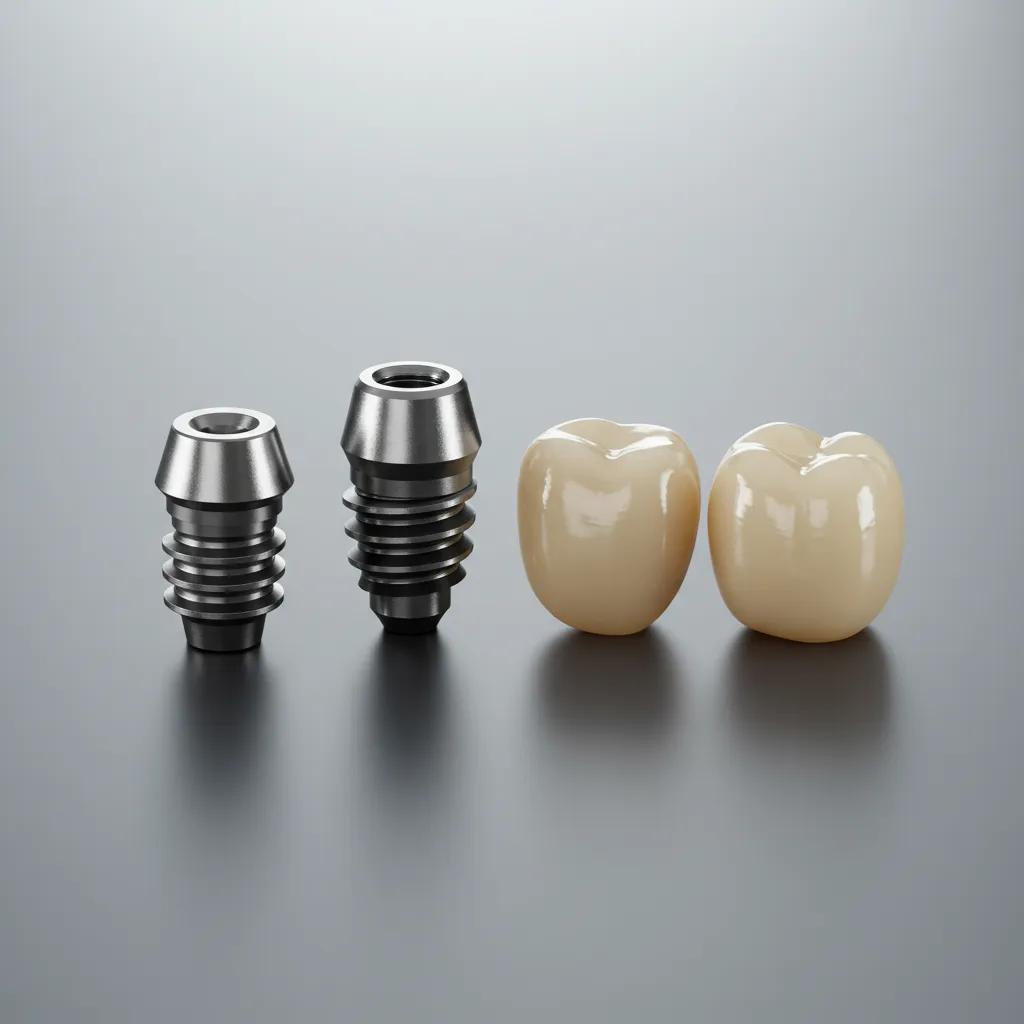
A dental implant restoration consists of three main components: the implant post that anchors into bone, an abutment that connects the post to the visible prosthetic, and the crown or prosthesis that restores chewing and appearance. The post—commonly titanium or zirconia—provides a durable osseointegrated foundation, while the abutment transmits load and positions the crown for proper occlusion; the crown itself is a replaceable wear surface subject to routine dental materials considerations. Understanding these parts helps patients anticipate cost drivers: implant materials and surgical complexity influence post costs, abutment design can add to restorative fees, and crown materials and lab work shape the visible restoration price. Knowing component roles also clarifies maintenance responsibilities, since crowns may require replacement over decades while posts remain in place if osseointegration is successful.
How Do Dental Implants Support BoneHealth and Longevity?
Dental implants support bonehealth by restoring functional load to the jaw, which stimulates bone remodeling and reduces the progressive resorption that follows tooth loss. When a toothroot is absent, the lack of load signaling leads to alveolar bone shrinkage over time; implants replicate root function and help maintain facial structure and ridge height that dentures alone cannot preserve. This preservation translates into longevity advantages: implants frequently last decades with proper care and periodic crown maintenance, whereas removable appliances typically require relines and replacement as bone and soft tissues change. Appreciating the bone-preservation mechanism clarifies why implants are often framed as a long-term investment rather than just a higher upfront cost.
What Is the Typical Dental Implant Procedure in Fort Worth?
The typical implant process begins with an evaluation—medical and dental history review, clinical exam, and imaging to assess bone and plan placement—followed by surgical placement of the implant, a healing phase for osseointegration, and a restorative phase where an abutment and crown are fitted. Local practices may use CBCT imaging for precise planning and may offer sedation dentistry options to increase comfort during surgery, making the experience more predictable for anxious patients. Healing and integration usually take several months depending on additional procedures like bonegrafting, and final restoration timing depends on clinical stability; this staged approach reduces long-term risk and supports durable outcomes. Knowing this stepwise timeline helps patients set expectations for visits, recovery, and interim prosthetic solutions while moving from planning to final restoration.
How Much Do Dental ImplantsCost in Fort Worth?
Dental implant costs in Fort Worth vary by procedure complexity, materials, and additional services such as bonegrafting or extractions, but typical local ranges can help set expectations before scheduling a consult. A single-tooth implant restoration commonly includes the implant post, abutment, and crown, and local average ranges reflect surgical, restorative, and lab fees. Full-arch solutions or All-on-Four approaches have higher initial costs due to multiple implants and prosthetic complexity, yet they can offer cost-efficiency compared with repeated denture replacements over time. Below is a clear, scannable table outlining common cost components and local range estimates to aid early financial planning.
This table summarizes typical initial cost ranges for key implant components and ancillary procedures in Fort Worth to provide a practical budgeting reference.
These component estimates highlight why single-tooth restorations often fall in the mid-range while full-arch solutions show wide variability; understanding componentized billing helps patients compare quotes more effectively. For readers encountering these ranges, the next section explains single-tooth versus full-arch costs in more detail and introduces a local opportunity to reduce decision uncertainty.
When you see local ranges like the ones above and want a personalized estimate, Affordable Dentist Near Me in Fort Worth offers a Free Dental Implant Consult that explains how these components apply to your case, identifies any necessary ancillary treatments, and outlines payment options. Scheduling a consult with the practice connects you to clinicians who can evaluate bone needs, propose a treatment timeline, and present an itemized estimate tailored to your health and goals. The free consult is intended to convert price-aware readers into informed patients by clarifying whether a single implant, multiple implants, or an implant-supported prosthesis best meets functional and financial priorities. If you prefer to start by speaking with the practice, call the office phone to arrange a complimentary evaluation and next steps.
What Is the Cost Range for a Single Dental Implant?
A single dental implant restoration typically ranges from the low thousands to several thousand dollars and covers the implant post, an abutment, and a lab-crafted crown, with the most common local total falling between $3,000 and $6,000. Price variation depends on implant brand and material, whether a contemporary zirconia option is chosen, the need for bonegrafting or tooth extraction, and the complexity of the restorative crown (materials and lab procedures). Insurance and discount plans sometimes reduce the restorative portion of the cost, but surgical and implant hardware fees may not be fully covered, so patients should plan for variable out-of-pocket amounts. Understanding the composition of a single-implant fee helps buyers compare estimates and anticipate additional costs like temporary prostheses during healing.
How Much Do Full-Arch and All-on-Four Implants Cost?
Full-arch solutions and All-on-Four approaches are priced higher due to multiple implants, custom prosthetic frameworks, and laboratory work required to restore an entire jaw; typical arch-level ranges can be broad because prosthesis design and material choices drive cost. While the initial investment is larger than single implants or conventional dentures, a full-arch implant-supported prosthesis can be cost-effective over many years by reducing repeated denture replacements, relines, and associated maintenance. Financing options and discount programs can make full-arch care accessible, and a careful cost-per-year comparison often reveals that implant-supported arches may approach or, over time, undercut the cumulative costs of long-term denture care. The next subsection quantifies how implant longevity can translate to financial benefits over a decade or more.
What Are the Long-Term Financial Benefits of Dental Implants?
When translated into a per-year framework, implants often offer cost advantages over 10–20 years because they typically require fewer wholesale replacements and preserve bone that can otherwise complicate future restorations. Implants reduce recurring denture relines, adhesive purchases, and the functional losses that can drive additional dental work; these avoided downstream costs represent part of the lifetime value calculus. A conservative break-even analysis compares initial implant expense against repeated denture cycles and potential bridge replacements, often showing implants becoming more economical over extended horizons for patients prioritizing durability and oral health. Recognizing this long-term framing helps patients decide whether paying more now aligns with goals for comfort, nutrition, and fewer interventions later.
Cost-Benefit Analysis of Dental Implants: Value vs. Expense
In most cases, dental implants will produce a better outcome than the best alternative technology, but this improvement will only come at greater cost. Cost–benefit evaluations of dental implants must therefore address the difficult task of assessing the value of the improvement in oral health.
What Are the Affordable Alternatives to Dental Implants?
Affordable alternatives like removable dentures and fixed dental bridges offer lower upfront costs and quicker treatment timelines, but they introduce tradeoffs in maintenance, oral health, and function that matter over the long term. Dentures vary from full to partial and offer immediate aesthetic tooth replacement, while bridges use adjacent teeth for support and avoid surgical placement. Choosing an alternative typically reduces initial financial outlay but may increase lifetime costs due to replacements, repairs, and potential impacts on remaining teeth and bone. The following subsections describe dentures and bridges in pragmatic terms so readers can compare affordability, maintenance burden, and functional outcomes.
How Do Dentures Compare in Cost and Maintenance?
Conventional dentures—full or partial—typically have lower initial fees than implant-supported solutions but require ongoing maintenance such as relines, adhesives, and eventual replacement as oral tissues change; this maintenance creates predictable recurring expenses. Upfront denture costs can be significantly less than implant solutions, making them attractive for patients with constrained budgets or who prefer a non-surgical route, but dentures may compromise chewing efficiency and comfort, leading to dietary limitations and adhesive dependency. Over multiple years, the cost of adhesives, repairs, and replacement prostheses adds up, and denture wearers often face progressive bone resorption that can necessitate new prosthetic designs and additional interventions. Considering these maintenance realities helps patients weigh immediate savings against long-term functionality and replacement cycles.
This short list highlights typical denture maintenance tasks and what they mean financially and practically.
Relines and adjustments: Restore fit as soft tissues and bone remodel, requiring periodic appointments.
Adhesives and cleansers: Ongoing consumable costs to maintain prosthesis retention and hygiene.
Periodic replacement: Full dentures typically need replacement every 5–10 years due to wear and tissue changes.
Taken together, these maintenance needs explain why dentures, while affordable initially, can produce cumulative costs and functional compromises over time.
Cost-Effectiveness of Dental Implants vs. Dentures
The cost of conventional dentures for implants, rising to 96% of implant wearers if payment by installment was an available option. The cost of conventional dentures for implants, rising to 96% of implant wearers if payment by installment was an available option.
What Are the Costs and Benefits of Dental Bridges?
Dental bridges replace missing teeth by anchoring a prosthetic tooth between prepared adjacent teeth or by using implant abutments for support, with costs that often fall between simple dentures and single implants depending on design and materials. Traditional fixed bridges require preparation of neighboring teeth, which reduces enamel and may compromise those teeth’s long-term integrity, potentially increasing future dental work. Bridges can offer excellent aesthetic and functional results in appropriately selected cases and generally require less surgical intervention than implants, but they carry a finite lifespan—often 5–15 years—after which replacement or further treatment may be needed. Evaluating bridge costs alongside their impact on adjacent teeth helps patients decide when a bridge makes sense versus investing in an implant that preserves neighboring tooth structure.
How Do Dentures and Bridges Affect BoneHealth and Oral Function?
Removable dentures typically do not transmit normal chewing loads to the alveolar bone, accelerating bone resorption that can alter facial features and reduce prosthesis stability, while bridges can preserve some ridge height by spanning a small gap but do not provide the same root-level stimulation as implants. These biological differences affect chewing efficiency, speech clarity, and nutritional choices, with implant-supported restorations generally offering the most natural function. Patients who prioritize long-term oral health should weigh how bone loss influences future options and costs because progressive resorption can complicate later implant placement or reduce denture stability. Understanding these functional and biological tradeoffs clarifies why implants are often recommended when bonehealth and lasting function are primary goals.
Comparing Dental Implant Costs to Conventional Tooth Replacement
The effectiveness of dental implants is widely studied, especially in terms of their clinical outcomes. However, from the policymaker’s point of view, variables other than safety and efficacy, such as the costs and effectiveness of dental implants as compared to other treatment alternatives, are vital in decision making. This paper compares the costs of different treatment strategies in a randomized clinical trial in patients with resorbed mandibles and persistent problems with their conventional dentures: treatment with a mandibular overdenture on permucosal dental implants, an overdenture on a transmandibular implant, new dentures after preprosthetic surgery, and new dentures only. Data were gathered on an individual patient level to gain insight into specific cost episodes. Direct costs were subdivided into labor, material, technique, and overhead. Data concerning these components were gathered during the consecutive treatment phases in the first year. Results sho
How Do Dental Implants Compare to Dentures and Bridges in Cost and Value?
Comparing implants, dentures, and bridges side-by-side requires assessing initial expenditures, routine maintenance, expected lifespans, and measurable impacts on oral health such as bone preservation and chewing efficiency. This section presents a structured comparison that frames initial cost against projected cumulative costs and patient-centered outcomes to reveal the value proposition of each option across time horizons. The comparison table below offers an at-a-glance view of initial ranges, typical lifespans, and average yearly costs over a 10-year period to help readers visualize tradeoffs.
Before the comparison table, these summary points explain the metrics used: initial cost estimates include common component fees; typical lifespan reflects clinical averages; and average yearly cost divides cumulative costs over a stated period to aid apples-to-apples comparisons.
Option
Initial Cost Range
Typical Lifespan
Average Yearly Cost Over 10 Years
Single dental implant (1 tooth)
$3,000–$6,000
10–30+ years (post and crown variable)
$300–$600/year (varies with crown replacement)
Fixed dental bridge (three-unit)
$1,500–$4,500
5–15 years
$150–$450/year (replacement assumptions)
Conventional full denture (per arch)
$600–$2,500
5–10 years
$60–$250/year (includes relines, adhesives)
Implant-supported denture (per arch)
$8,000–$25,000
10–20 years
$800–$2,500/year (depending on prosthesis longevity)
This comparative snapshot shows that while implants have higher upfront costs, their extended lifespan and lower frequency of major replacement can produce favorable year-by-year economics for patients seeking durable solutions. The next paragraphs expand on longevity, maintenance needs, comfort, and biological outcomes that influence perceived value.
What Are the Initial vs. Long-Term Costs of Each Option?
Initial costs are front-loaded for implants due to surgery and prosthetic fabrication, while bridges and dentures often require less immediate investment but accrue recurring expenses for maintenance and replacements. Over a 10–20 year horizon, total costs for bridges and dentures may approach or exceed implant pathways when accounting for relines, adhesive purchases, replacement prostheses, and potential restorative work on adjacent teeth. Assumptions that most influence long-term calculations include prosthesis lifespan, rate of denture relining, and whether adjacent teeth require future treatment after bridge preparation. Evaluating both upfront and cumulative costs clarifies which option aligns with a patient’s financial preferences and tolerance for future procedures.
How Do Longevity and Maintenance Requirements Differ?
Implants typically require routine home care and periodic professional checks, with crowns sometimes needing replacement after a decade; bridges require monitoring of adjacent teeth and eventual replacement, while dentures demand more frequent adjustments and relines as tissues change. Maintenance tasks differ in intensity: implant upkeep emphasizes standard oral hygiene and occasional prosthetic servicing, whereas dentures entail daily cleaning protocols and regular refitting. These maintenance patterns affect not only cost but also convenience and patient satisfaction, with many patients preferring less frequent major interventions even if initial costs are higher. Understanding these differences helps patients prioritize what matters most—minimizing clinic visits, preserving natural teeth, or managing short-term budgets.
Which Option Offers Better Comfort and Functionality?
Implants generally provide superior comfort and functionality because they anchor restorations to bone, restoring chewing forces and stability that mimic natural teeth, while bridges and dentures can leave some functional compromise or reliance on adhesives. Implant-supported prostheses reduce movement during chewing and speaking, improving dietary options and perceived confidence for many patients, whereas poorly fitting dentures can cause sore spots, slipping, and dietary restrictions. Patient-centered considerations such as speech, taste, and social comfort often weigh heavily in decision-making, and these qualitative outcomes frequently tip the value balance toward implants for those who can afford the initial investment. As a result, comfort and function are key elements when comparing cost against day-to-day quality of life.
How Does Each Option Affect Bone Preservation and Oral Health?
Implants prevent or slow bone resorption by transmitting occlusal forces to the underlying bone, maintaining ridge height and supporting facial structure, while dentures accelerate resorption and bridges leave the underlying edentulous ridge unsupported. Bone preservation has downstream consequences for future treatment options: maintained bone simplifies later restorative work, whereas bone loss can necessitate grafting before implant placement or complicate denture fit. Considering oral health as part of the economic assessment reframes implants from a high-cost purchase into a preventive investment that can reduce future interventions and preserve long-term oral function. This biological perspective often shifts the value analysis in favor of implants for patients focused on lasting outcomes.
What Financing and Insurance Options Are Available for Dental Implants in Fort Worth?
Financing and insurance options can substantially reduce out-of-pocket burdens for implant care in Fort Worth by spreading payments over time, applying restorative coverage where available, or leveraging discount programs to lower costs. Common pathways include partial dental insurance coverage for restorative portions, third-party payment plans, in-house financing, and dental discount programs that reduce standard fees. Understanding how these pathways work and what documentation is typically needed can make implant pathways accessible to more patients. The next subsections clarify typical insurance behavior, outline specific practice offerings, and explain how to schedule a Free Dental Implant Consultation to explore personalized financing.
How Does Dental Insurance Cover Implants and Alternatives?
Dental insurance often covers parts of restoration fees—such as crowns or bridges—more readily than surgical implant hardware, and coverage levels vary by plan, with preauthorization commonly required for surgical components. Patients should ask their insurer about breakdowns between surgical and prosthetic benefits, whether a provider-level or plan-level network affects reimbursement, and whether pre-treatment estimates or preauthorizations are necessary to determine out-of-pocket responsibilities. For alternative options like bridges or dentures, coverage patterns may be clearer, but limits and waiting periods can still apply; understanding a plan’s annual maximums and benefit percentages is essential to accurate budgeting. Being proactive with insurer communication and bringing coverage details to a consult improves financial transparency before procedures begin.
Obtain a preauthorization: Request a formal estimate from your dentist to submit to your insurer.
Clarify benefit splits: Confirm which portions (surgical vs restorative) the plan will consider.
Check annual maximums and waiting periods: Understand how limits impact multi-stage treatments.
These actions reduce surprises and prepare patients for realistic out-of-pocket calculations before committing to a treatment plan.
What Payment Plans and Discount Programs Does Affordable Dentist Near Me Offer?
Affordable Dentist Near Me in Fort Worth supports access to implant care through everyday low fees, a Dental Discount Plan, acceptance of various insurance plans, and payment plan options designed to spread costs over time; the practice also promotes a Free Dental Implant Consult to help patients evaluate financial and clinical fit. During the free consult, the team reviews insurance applicability, explains the Dental Discount Plan benefits, and outlines any available in-house payment plans to help patients make an informed choice. If financial flexibility matters to you, bringing insurance information to the complimentary consult helps the practice provide tailored cost scenarios.
How Can You Schedule a Free Dental Implant Consultation in Fort Worth?
Scheduling a Free Dental Implant Consult with Affordable Dentist Near Me is designed to give price-aware patients a no-cost opportunity to review clinical needs, discuss candidacy for implants, and obtain a personalized cost breakdown and financing discussion. To book the complimentary consult, call the practice phone number and request an implant evaluation with the Fort Worth team; during the appointment, expect imaging review, a treatment overview, and discussion of options like sedation dentistry if procedure comfort is a concern. Bringing your insurance information and any recent dental x-rays (if available) accelerates benefit verification and helps the team produce a precise estimate during the free visit. A free consult reduces uncertainty and is a practical next step before committing to any major restorative pathway.
Frequently Asked Questions
What Factors Should I Consider When Choosing Between Dental Implants and Alternatives?
When deciding between dental implants and alternatives like dentures or bridges, consider factors such as long-term costs, maintenance requirements, and oral health impacts. Implants typically offer better durability and bone preservation, while dentures may have lower initial costs but require ongoing maintenance and replacements. Evaluate your lifestyle, budget, and health goals to determine which option aligns best with your needs. Consulting with a dental professional can provide personalized insights based on your specific situation.
Are There Any Risks Associated with Dental ImplantSurgery?
Like any surgical procedure, dental implantsurgery carries some risks, including infection, nerve damage, and implant failure. However, these risks are relatively low when the procedure is performed by an experienced professional. Proper pre-surgical evaluation, including imaging and health assessments, can help mitigate potential complications. Discussing your medical history and any concerns with your dentist will ensure you are well-informed and prepared for the procedure.
How Long Does the Dental Implant Process Take?
The dental implant process typically spans several months, including initial evaluation, surgical placement, healing, and final restoration. After the implant is placed, a healing period of 3 to 6 months is usually required for osseointegration, where the implant fuses with the jawbone. Once healed, the abutment and crown can be fitted, which may take additional weeks. Each patient‘s timeline can vary based on individual healing rates and any additional procedures needed, such as bonegrafting.
What Maintenance Is Required for Dental Implants?
Maintaining dental implants involves regular oral hygiene practices similar to those for natural teeth, including brushing, flossing, and routine dental check-ups. While the implant itself is designed to last for many years, the crown may need replacement over time due to wear. Regular visits to your dentist will help monitor the health of the implant and surrounding tissues, ensuring long-term success and functionality. Good oral hygiene is crucial to prevent complications like peri-implantitis.
Can Dental Implants Be Placed Immediately After Tooth Extraction?
In some cases, dental implants can be placed immediately after tooth extraction, a procedure known as immediate implant placement. This approach can reduce the overall treatment timeline and preserve bone structure. However, not all patients are candidates for this method; factors such as the condition of the bone and the type of extraction performed will influence the decision. A thorough evaluation by your dentist will determine if immediate placement is appropriate for your situation.
What Should I Expect During the Recovery Period After Implant Surgery?
After dental implantsurgery, patients can expect some swelling, discomfort, and minor bleeding, which are normal parts of the healing process. Pain can usually be managed with over-the-counter medications. It’s essential to follow post-operative care instructions provided by your dentist, which may include dietary restrictions and oral hygiene guidelines. Most patients can return to normal activities within a few days, but full healing may take several months, depending on individual circumstances.
Conclusion
Choosing the right tooth replacement option in Fort Worth can significantly impact your long-term oral health and financial well-being. Dental implants offer a durable, aesthetically pleasing solution that preserves bonehealth and minimizes future dental expenses compared to alternatives like dentures and bridges. By understanding the costs and benefits outlined in this guide, you can make an informed decision that aligns with your health goals. Schedule your Free Dental Implant Consult today to explore personalized options and take the first step toward a confident smile.