How to Choose a Qualified Implant Dentist Made Easy: Expert Tips for Finding the Best Dental Implant Specialist
Choosing a qualified implant dentist means finding a clinician who combines formal training, demonstrable experience, and modern technology to deliver predictable implant outcomes while minimizing risk. This guide explains what “qualified” entails, why the right choice matters for osseointegration and long-term prosthetic success, and how to verify credentials, outcomes, and communication before you commit. Many patients face confusing options—general dentists with implant training, periodontists, oral and maxillofacial surgeons, and prosthodontists—and this article gives a practical checklist to match your case to the right specialist. You will learn which credentials matter, how to read success metrics and reviews, what advanced technology genuinely improves results, typical cost components and financing choices, and the exact questions to bring to a consultation. The sections that follow cover qualifications and accreditation, ways to assess experience and outcomes, technology that changes results, interpreting patient feedback and communication style, costs and payment options, how to choose the correct specialist, and a concise question checklist to use at your appointment. Throughout, I reference current research trends and clinical reasoning so you can make a confident, evidence-informed decision about implant dentistry.
What Qualifications and Training Should a Qualified Implant Dentist Have?
A qualified implant dentist has a foundational dental degree (DDS or DMD), additional implant-specific training or specialty residency when appropriate, and keeps current with continuing education in implant technologies and protocols. This combination matters because implant dentistry requires surgical skill, prosthetic planning, and knowledge of bone biology to promote osseointegration and long-term restoration stability. Verifying credentials reduces risk: check state licensure, specialty board listings, and professional directories. The next subsections break down specific degrees, the importance of continuing education, and what accreditation from the American Academy of Implant Dentistry signals about clinician competence.
Which Degrees and Certifications Prove Implant Dentist Expertise?
Degrees establish the baseline: a DDS or DMD indicates completion of dental school and basic competence in oral health; they are equivalent credentials indicating qualified dental training. Beyond that, specialty residencies—periodontology, oral and maxillofacial surgery, or prosthodontics—provide advanced surgical or restorative training relevant to complex implant cases. Implant fellowships, certificate programs, and documented case-based training demonstrate focused implant experience. To verify claims, ask to see certificates, confirm specialty board status, and consult official directories or state licensing boards for verification; this step reduces ambiguity about what training was actually completed and whether that training included hands-on implant placement.
Why Is Continuing Education Important for Implant Dentists?
Continuing education (CE) matters because implant dentistry evolves rapidly with new imaging, guided workflows, and materials science advances that affect success rates and complication management. CE courses in CBCT interpretation, computer-guided implant surgery, digital impressions, and bone grafting techniques translate into safer, more predictable outcomes. Patients should ask which recent CE topics the clinician has completed and whether the practice participates in peer-review or morbidity/mortality reviews that document complication management. Confirming up-to-date CE shows the dentist actively maintains competence as technologies and evidence change, which in turn supports better planning and fewer surprises.
Implant Dentistry Guidelines: Innovation, Education, and Certification
Guidelines for development of Implant Dentistry in the next 10 years regarding innovation, education, certification, and associations. New standards should be addressed for Implant Dentistry programs. Application for the certification of an existing implant that prove capable of fulfilling all the established requirements.
Guidelines for development of Implant Dentistry in the next 10 years regarding innovation, education, certification, and associations, H Francisco, 2018
How Does Accreditation from the American Academy of Implant Dentistry Impact Dentist Credibility?
AAID accreditation indicates a peer-reviewed evaluation process beyond simple membership; accreditation typically requires demonstration of case competence, written exams, and peer evaluation that focus on implant planning and outcomes. Membership alone indicates interest or affiliation, while accreditation implies a higher standard of demonstrated skill and peer oversight. To confirm AAID accreditation status, request documentation or consult authoritative professional directories that list accredited clinicians. Accreditation provides external validation that a clinician meets defined standards for implant treatment and ongoing practice quality.
Credential or Program
What It Signals
How to Verify
DDS / DMD
Completion of dental school; baseline dental competence
Advanced surgical or restorative training relevant to implants
Specialty board or residency program confirmation
AAID Accreditation
Peer-reviewed competence in implant dentistry
AAID accredited clinician directory or documentation
Implant Fellowship / Certificate Programs
Focused hands-on implant experience
Copies of certificates and course descriptions
Continuing Education in CBCT/Guided Surgery
Current skills in advanced imaging and workflows
CE transcripts or course certificates
This table clarifies the typical credentials that indicate implant expertise and practical ways to confirm them so you can trust the clinician’s claimed training.
How Can You Assess an Implant Dentist’s Experience and Success Rates?
Assessing experience and outcomes relies on objective metrics—years practicing in implant dentistry, annual implant volume, and documented success or survival rates—plus qualitative evidence like clinical case documentation and verified patient outcomes. Experience matters because consistent procedural volume usually correlates with procedural familiarity and complication management; however, volume should be interpreted in the context of case complexity. The subsections below explain how to interpret years and procedure counts, evaluate success metrics, and find trustworthy before-and-after evidence.
What Does Years of Practice and Number of Procedures Tell You About Expertise?
Years in practice and number of implants placed serve as rough proxies for skill: more procedures typically indicate exposure to a wider range of situations and complication handling, which improves pattern recognition and surgical judgment. However, a clinician who places many simple single implants is not the same as one experienced in complex grafting, sinus lifts, or full-arch reconstructions; case mix matters. Ask for specifics: how many implants of the same complexity as your case were placed last year, what proportion required grafting, and examples of similar cases. This combination helps you interpret raw numbers into meaningful evidence of relevant expertise.
How to Evaluate Dental Implant Success Rates and Patient Outcomes?
Success and survival are distinct: survival refers to implants remaining in place over time, while success includes functional performance, esthetics, absence of infection, and patient satisfaction. Research-based success ranges often cite high survival rates in ideal conditions, but real-world results vary with patient health, bone quality, and prosthetic design. When evaluating a clinician’s reported rates, ask how they define success, the follow-up period used, complication and revision rates, and whether results are verified by independent audits or documented case reports. Red flags include vague claims like “very high success” without definitions or data about complications and long-term follow-up.
Dental Implant Site Imaging Guidelines: A Radiology Perspective
In implant dentistry and the lack of comprehensive guidelines for appropriate imaging strategies, the American Academy of Oral and Maxillofacial Radiology has developed a position paper to inform the dental profession of the multiple imaging modalities available for the selection of dental implant site imaging.
Selection criteria for dental implant site imaging: a position paper of the American Academy of Oral and Maxillofacial radiology, 2000
Experience Metric
Why It Matters
Interpreting the Value
Years placing implants
Exposure to varied cases and techniques
Combine with annual volume to assess active practice
Number of implants placed annually
Current procedural currency
Higher numbers helpful if case complexity matches your needs
Reported success/survival rates
Outcome indicator over time
Verify definitions, follow-up length, and complication reporting
Documented case studies
Concrete evidence of technique and outcomes
Look for clinical detail, timelines, and patient consent
This table helps you weigh experience metrics objectively and ask targeted follow-ups to interpret what the numbers actually mean for your care.
Where to Find Before-and-After Photos and Patient Testimonials?
Reliable before-and-after documentation appears in clinician case galleries with dates, procedural details, and consent statements or in peer-reviewed case reports that present objective clinical data. Independent review platforms and patient-generated reviews add context but can be biased; prefer reviews that include procedural details, timelines, and post-op outcomes instead of generic praise. Look for consistency across multiple cases rather than single “perfect” images, and query the clinician during consultation about access to full-case records and contactable references when appropriate. Examining photos alongside clinical notes or study reports allows you to evaluate results realistically.
What Advanced Technology Should a Qualified Implant Dentist Use?
Advanced technology such as cone beam CT (CBCT) imaging, digital intraoral impressions, and computer-guided implant surgery materially improves diagnostic accuracy, prosthetic-driven planning, and surgical precision. These tools reduce intraoperative surprises, protect vital structures like nerves and sinuses, and support better prosthetic alignment that enhances long-term function and esthetics. The following subsections explain CBCT benefits, guided surgery advantages, and material choices that influence biocompatibility and longevity.
How Do 3D Imaging and Cone Beam CT Scans Improve Implant Planning?
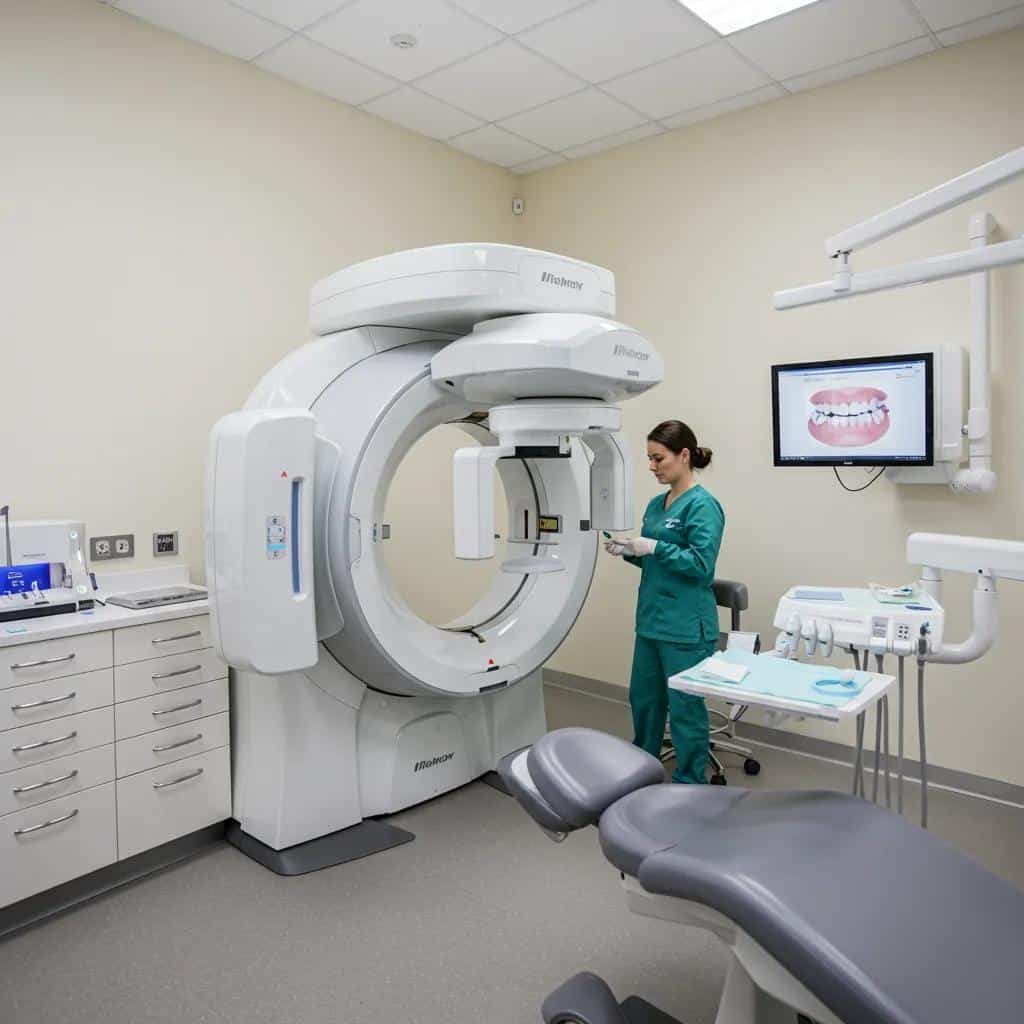
Cone beam CT provides 3D visualization of bone volume, bone density proxies, the location of nerves and sinuses, and spatial relationships that two-dimensional imaging misses, enabling prosthetically-driven implant positioning and safer surgical plans. CBCT data supports virtual planning, measurement of bone dimensions for implant selection, and identification of anatomic risks that reduce intraoperative surprises. Ask whether the dentist routinely uses CBCT when planning implants for cases with limited bone or proximity to vital structures, and how that imaging informs the surgical guide or staged grafting decisions. CBCT use links diagnosis directly to surgical and restorative strategy.
Key CBCT benefits:
Bone volume and density visualization: Enables accurate implant sizing and angulation.
Nerve and sinus mapping: Reduces risk of nerve injury and sinus perforation.
Prosthetic-driven planning: Aligns implant placement to planned crown or prosthesis.
Cone Beam CT for Dental Implant Preoperative Planning: A Comprehensive Review
As the use of endosseous implants has revolutionized oral rehabilitation, a specialized technique has become available for the preoperative planning of oral implant placement: cone beam computed tomography (CT). This imaging technology provides 3D and cross-sectional views of the jaws. It is obvious that this hardware is not in the same class as CT machines in cost, size, weight, complexity, and radiation dose. It is thus considered to be the examination of choice when making a risk–benefit assessment. The present review deals with imaging modalities available for preoperative planning purposes with a specific focus on the use of the cone beam CT and software for planning of oral implant surgery.
State-of-the-art on cone beam CT imaging for preoperative planning of implant placement, ME Guerrero, 2006
What Are the Benefits of Computer-Guided Implant Surgery?
Computer-guided implant surgery translates virtual plans into physical guides that increase placement accuracy and reproducibility, often reducing chair time and soft-tissue trauma while improving prosthetic outcomes. Guided workflows can be fully guided (drilling and implant placement through a guide) or partially guided, and they are particularly beneficial for multi-implant or full-arch cases where precise spacing and parallelism are critical. Benefits include tighter tolerances on angulation and depth, potentially fewer intraoperative adjustments, and better transfer of the restorative plan to the surgical field. For patients, this can mean shorter surgeries, less postoperative morbidity, and improved prosthetic fit.
Which Implant Materials Are Best for Longevity and Biocompatibility?
Titanium implants have a long track record of osseointegration and robust clinical evidence supporting longevity across a wide range of cases; they remain the standard choice for most indications. Zirconia implants offer a metal-free option with favorable esthetics and emerging evidence for biocompatibility, though long-term data are still evolving and indications can be narrower. Abutment and crown materials also affect soft-tissue response and wear: selecting compatible restorative materials reduces peri-implantitis risk and optimizes esthetic outcomes. Material choice should align with clinical priorities—durability, esthetics, allergy considerations—and the dentist should explain the evidence base and trade-offs for each option.
Technology / Material
Role in Implant Care
Practical Implication
CBCT Scanner
3D planning and risk mapping
Essential for complex anatomy and prosthetic planning
Guided Surgery Systems
Translating virtual plans to clinical placement
Improves accuracy and prosthetic outcomes
Titanium Implant Post
Osseointegration and structural support
Broad indications, long-term evidence base
Zirconia Implant Post
Metal-free esthetic option
Consider for select esthetic cases; evidence evolving
How to Interpret Patient Reviews and Understand the Implant Dentist’s Communication Style?
Interpreting reviews and assessing communication reveals how a practice manages expectations, handles complications, and supports patient comfort, all of which directly influence satisfaction and long-term maintenance. Reliable reviews include procedural specifics, follow-up experiences, and comments about pain control and aftercare; vague praise or repeated phrases may signal incentivized or fake reviews. The subsections below explain where to find credible reviews, how communication and sedation options reduce anxiety, and what comprehensive aftercare typically includes.
Where to Find Reliable Patient Reviews and What to Look For?
Seek reviews that mention specific procedural details—type of implant work, timeline, pain management, and follow-up responsiveness—because they provide actionable insight into the patient experience. Cross-check reviews with clinical galleries and, when possible, independent review platforms that validate reviewer identities; watch for repeated wording or a lack of procedural detail, which can indicate lower reliability. Also look for reviews that describe complication management and the practice’s responsiveness, since how a dentist handles problems often predicts future patient experience. These patterns guide what to expect and what to ask during an initial consult.
Checklist for evaluating reviews:
Specificity: Mentions of procedure type and timeline.
Follow-up details: Notes on aftercare and complication handling.
Consistency: Similar themes across multiple reviewers rather than one-off glowing statements.
How Does Effective Communication and Sedation Dentistry Reduce Patient Anxiety?
Clear preoperative communication that explains the surgical plan, expected sensations, recovery timeline, and contingency steps significantly reduces patient anxiety and improves adherence to aftercare, which supports better outcomes. Sedation options—nitrous oxide, oral sedation, or IV sedation—should be discussed relative to medical history, procedure complexity, and monitoring standards, and clinicians should outline safety protocols and recovery expectations. Patients benefit when a practice provides written instructions, a clear emergency contact plan, and empathy during informed consent; these processes demonstrate commitment to safety and comfort. Ask the dentist how they tailor communication and sedation to individual patient needs.
What Does Comprehensive Care and Aftercare Include?
Comprehensive implant care includes a preoperative assessment, staged treatment plan, clear post-op instructions for the first week, scheduled follow-up for suture removal and soft-tissue checks, and longer-term maintenance visits for hygiene and occlusal assessment. Typical timelines include immediate post-op checks in the first week, prosthetic progression around 2–4 months depending on osseointegration, and annual reviews thereafter; specific timing depends on grafting and loading protocols. Appropriate aftercare also covers written hygiene instructions, signs of complications to watch for, and a documented plan for managing revisions or prosthetic adjustments. Verify the practice’s policies on emergency access and long-term maintenance before committing to treatment.
Aftercare Element
Purpose
Typical Timing
Post-op check
Assess healing and manage pain
3–7 days post-surgery
Prosthetic progression
Transition from healing to final restoration
2–4 months or per protocol
Maintenance visits
Hygiene and occlusion checks to prevent complications
3–12 months ongoing
Emergency access policy
Rapid response for complications
Practice-defined contact protocol
What Are the Typical Costs and Financing Options for Dental Implants?
Dental implant cost comprises distinct components—consultation and imaging, surgical fee, implant hardware, any grafting or sinus-lift procedures, and the final prosthetic restoration—each of which contributes to the overall estimate. Transparent providers offer itemized quotes, explain contingencies like grafting, and outline financing choices such as third-party lenders or in-office plans. The subsections that follow explain transparency expectations and common insurance/payment approaches so you can plan realistically for both treatment and potential additional procedures.
How Transparent Should Implant Dentists Be About Costs?
Dentists should provide an itemized written estimate that separates diagnostic fees, surgical fees, implant components, grafting, and restorative laboratory costs, and should explain contingencies that affect price (for example, need for bone grafting or additional appointments). A clear estimate includes the validity period, payment schedule, and refund or revision policies if complications arise. When estimates are vague or only presented as a single bundled price without details, ask for a breakdown and the likely range of additional costs. Transparent cost communication reduces billing surprises and helps you compare offers meaningfully.
What to request in writing:
Itemized estimate: Separate line items for each phase of care.
Contingency scenarios: Estimated additional costs for grafting or revisions.
Payment terms: Deposit, balance schedule, and refund policies.
What Insurance and Payment Plans Are Available for Dental Implants?
Most dental insurance plans cover only limited restorative portions rather than full implant costs, so patients commonly rely on partial insurance benefits plus patient financing for the balance. Third-party medical/dental lenders and credit lines tailored to healthcare (such as specialty patient financing platforms) are common options; some practices offer in-house payment plans with defined terms. When evaluating financing, ask about interest rates, total repayment amounts, and any deferred-interest clauses; also confirm what portion, if any, your insurance will typically cover for restorative work. Comparing these options side-by-side helps you choose the most cost-effective path for your situation.
Which Type of Dental Implant Specialist Is Right for You?
Choosing the right specialist depends on case complexity, esthetic demands, medical comorbidities, and whether a multidisciplinary approach is required; the main provider types include general dentists with implant training, periodontists, oral and maxillofacial surgeons, and prosthodontists. Each brings distinct training: general dentists often manage straightforward single implants, periodontists focus on soft-tissue and bone management, oral surgeons handle complex surgical reconstructions and sedation, and prosthodontists specialize in prosthetic design for complex occlusal and full-arch work. The following subsections define each role, typical indications, and how to compare specialists for your specific case.
What Are the Roles of General Dentists with Implant Training?
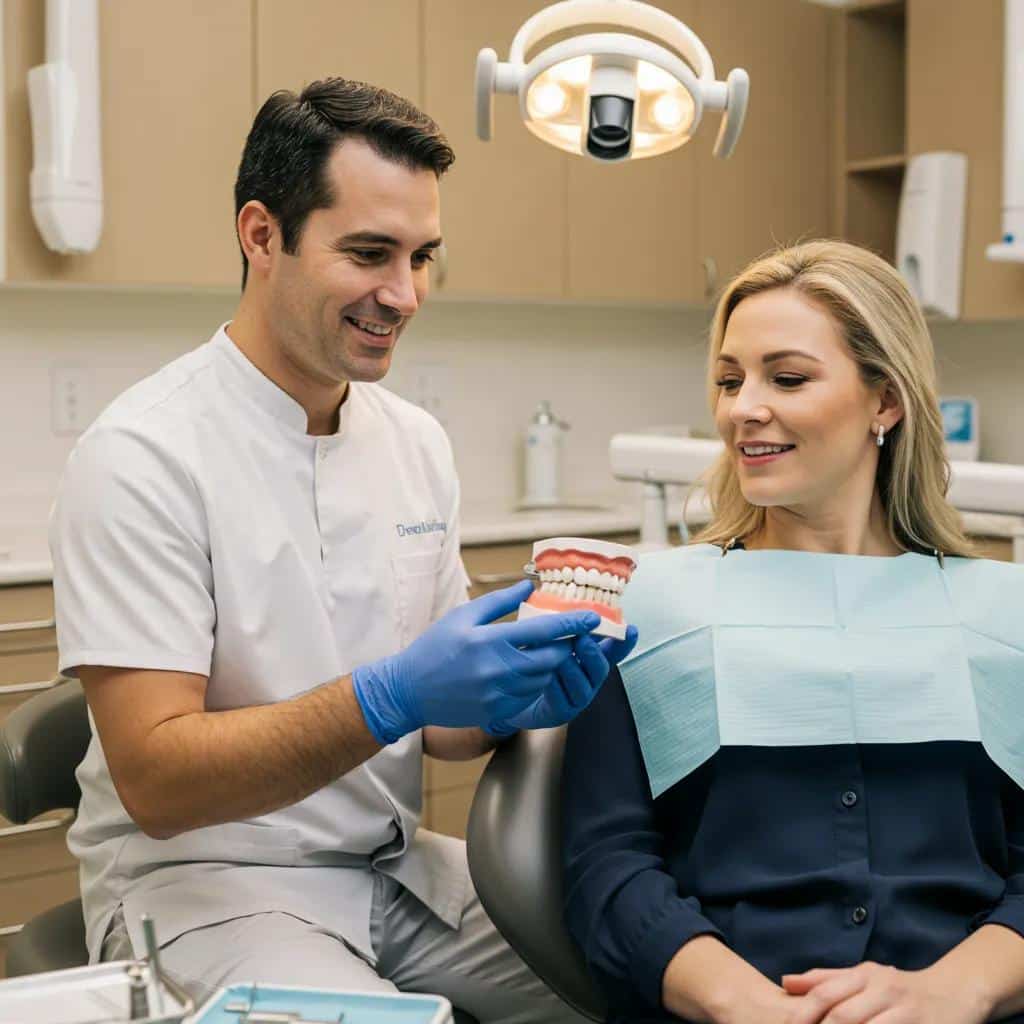
General dentists with implant training are often well-suited to straightforward single-tooth replacements and cases without significant grafting or complex prosthetic demands; they can provide convenience and continuity of care. When evaluating a general dentist, ask about specific implant-focused continuing education, the number of similar cases performed, and laboratory partnerships for restorations. If your case involves significant bone loss, complex esthetic demands, or medically complicated circumstances, the dentist should have clear referral pathways to specialists. General dentists often coordinate care for simpler cases but must recognize when specialist collaboration is safer.
How Do Periodontists Specialize in Dental Implants?
Periodontists are trained specifically in the biology and management of periodontal tissues and bone, making them ideal for cases requiring soft-tissue management, ridge preservation, and bone grafting to support implant placement. They excel when esthetic soft-tissue contours and long-term peri-implant tissue health are priorities, such as anterior restorations with high esthetic demand. Periodontists often perform connective tissue grafts, guided bone regeneration, and other techniques that optimize both function and esthetics. For patients focused on tissue-level outcomes and grafting complexity, a periodontist’s expertise can be decisive.
When Should You Choose an Oral and Maxillofacial Surgeon?
Oral and maxillofacial surgeons (OMS) bring hospital-based surgical training, extensive sedation and anesthesia capabilities, and expertise in complex reconstructive cases—making them appropriate for severe atrophy, impacted teeth extractions, multi-implant reconstructions, and medically complex patients. OMS providers are often the choice when advanced bone augmentation, sinus lifts, or IV sedation/general anesthesia are anticipated. They may also have hospital privileges when care in a controlled setting is preferable. If your case requires extensive surgical reconstruction or deep sedation, an OMS is frequently the preferred specialist.
What Does a Prosthodontist Offer for Implant Restorations?
Prosthodontists specialize in restorative design, occlusion, and full-arch rehabilitation, focusing on the functional and esthetic outcome of implant-supported crowns, bridges, and dentures. Their expertise is central when complex occlusion, full-arch prostheses, or esthetic integration is required; they coordinate restorative planning with surgical colleagues to ensure the implant positions will support the intended prosthesis. A prosthodontist’s involvement improves predictability of final form and function and is often recommended for multidisciplinary full-mouth rehabilitations. If your primary need is a sophisticated prosthetic outcome, include a prosthodontist in your care team.
How to Compare Specialists to Match Your Specific Case?
Select a provider based on a checklist that considers clinical complexity, esthetic priorities, systemic health, and budget while favoring clinicians with documented experience in cases similar to yours. Sample mappings: a single missing tooth in a healthy patient often suits a trained general dentist; bone grafting with esthetic demands favors a periodontist; severe atrophy or multiple extractions with IV sedation needs an OMS; full-arch restorations with complex occlusion benefit from prosthodontist-led planning. When multiple specialists are needed, seek coordinated treatment plans and clear responsibility for long-term maintenance.
Provider Type
Typical Training Focus
Best Case Matches
General Dentist with Implant Training
Broad dental practice + implant CE
Straightforward single implants, convenience cases
Periodontist
Soft-tissue and bone management
Grafting, tissue esthetics, anterior cases
Oral & Maxillofacial Surgeon
Complex surgery and sedation
Severe atrophy, IV sedation, hospital cases
Prosthodontist
Restorative and occlusion expertise
Full-arch, complex prosthetic planning
What Key Questions Should You Ask Your Potential Implant Dentist?
Bring a tight, practical checklist to consultations to reveal a clinician’s qualifications, case experience, technology use, communication style, and cost transparency. Asking direct, specific questions uncovers meaningful details: probe training and annual implant volume, ask about CBCT and guided-surgery workflows, request an itemized estimate and financing options, and clarify aftercare and emergency policies. Below are targeted question lists organized by topic so you can use them verbatim at your consultation.
Which Questions Reveal Dentist Qualifications and Experience?
Direct, measurable questions uncover real experience and make verification straightforward—ask about the number of implants placed per year, types of complex cases handled, complication rates, and request case examples or references. Suggested phrasing improves clarity: “How many implants like mine have you placed in the last 12 months?” and “Can you provide documented outcomes or case reports for similar cases?” Follow up by verifying credentials with state boards or specialty directories to confirm statements. These queries move beyond vague claims to verifiable evidence of competence.
How many implant procedures have you performed this year and how many are similar to my case?
Can you show documented case examples, including pre- and post-op radiographs and notes?
What is your reported complication and revision rate, and how are those managed?
What to Ask About Technology and Implant Materials?
Ask which imaging and planning tools they use, whether they employ CBCT and computer-guided workflows, and which implant brands and restorative materials they prefer, including why they select those systems. Sample questions: “Do you use CBCT routinely for my case type?” and “Which implant systems and abutment materials do you use and why?” Understanding the technology and material reasoning helps you evaluate whether the clinician’s approach aligns with current evidence and your priorities for longevity and esthetics.
Do you use CBCT imaging for treatment planning in cases like mine?
Will my case use computer-guided surgery or freehand placement, and why?
Which implant materials (titanium/zirconia) and brands do you recommend and for what reasons?
How to Inquire About Patient Care, Comfort, and Aftercare?
Ask about sedation options, monitoring protocols, recovery expectations, and the detailed follow-up schedule for sutures, prosthetic progression, and maintenance. Useful phrasing includes: “What sedation options do you offer and how are patients monitored?” and “What is your follow-up timeline from surgery to final restoration and ongoing maintenance?” Also verify emergency access and policies for managing complications. These questions reveal how the practice supports patient safety and comfort throughout the treatment arc.
What Financial Questions Ensure Cost Transparency and Payment Flexibility?
Request an itemized written estimate, ask which contingencies might add cost, and inquire about available financing options, interest terms, and refund or revision policies in the event of complications. Specific questions: “Can you provide a written, itemized quote with contingencies?” and “What financing or in-house payment plans do you offer, and what are the terms?” Clear answers indicate a practice committed to transparency and reduce the chance of unexpected expenses during care.
Please provide an itemized written estimate showing all phases of treatment.
What possible additional procedures could change the cost and how will I be informed?
What financing options or payment plans do you offer and what are the repayment terms?
This article has provided a systematic, evidence-oriented roadmap—definition, verification steps, practical checklists, and semantic clarity—so you can confidently select a qualified implant dentist based on credentials, experience, technology, communication, and transparent finances. Use the checklists and tables above at consultations to convert claims into verifiable facts and match your clinical needs to the appropriate specialist.