Why Real Patient Testimonials Matter in Your Dental Implant Journey: Dallas Patient Reviews and Success Stories
Patient testimonials are firsthand accounts from people who have undergone dental implant treatment, and they serve as a practical bridge between clinical claims and real-world outcomes. These narratives explain the consultation, procedure, recovery, and long-term results in terms patients understand, which reduces uncertainty and helps prospective patients evaluate options for dental implants in Dallas.
This article explains how testimonials build trust, what local success stories reveal about function and confidence, and how to verify review authenticity when researching dental implant options. Readers will learn how patient feedback addresses common concerns—pain, healing time, durability, and cost—while mapping emotional outcomes (confidence, social ease) to functional gains (chewing, speech). We’ll also show how to interpret before-and-after visuals, compare typical case types like single-tooth implants and implant-supported dentures, and use testimonials to schedule a no-risk evaluation at a Dallas clinic. Throughout, the emphasis is practical: use verified patient experiences to choose a predictable implant pathway and know what to expect at every step.
How Do Patient Testimonials Build Trust in Your Dental Implant Decision?
Patient testimonials build trust by combining social proof, procedural transparency, and outcome-based evidence that prospective patients can relate to. When multiple reviewers describe similar consult experiences, recovery timelines, and functional improvements, those consistent patterns reduce perceived risk and make clinical claims more credible. Testimonials that include specific details—what was discussed at the consult, how pain was managed, how long recovery took, and what foods returned to the diet—give readers concrete signals that a provider delivers predictable results.
These narratives also act as proxy demonstrations of process, showing consult → treatment → follow-up sequences that prospective patients can mentally rehearse before committing. By emphasizing relatable demographics, like peers in the 40–60 age range, testimonials create identification that increases confidence and reduces anxiety about the unknowns of implant care.
Patients rely on three core trust factors in implant decision-making:
Social proof in the form of review volume and aggregate ratings.
Specific outcome descriptions that cover aesthetics, chewing, and speech.
Process transparency about consults, imaging, and recovery timelines.
These trust factors help readers move from abstract benefits to concrete expectations, and understanding them leads naturally to evaluating the substance and authenticity of the reviews you read.
What Makes Shared Patient Experiences So Influential?
Shared patient experiences are influential because they combine relatability, narrative detail, and repeated confirmation across reviewers, which creates a persuasive pattern. Relatability arises when readers see people like themselves—age, lifestyle, or oral health baseline—describe an outcome, making the outcome feel attainable. Narrative detail matters: testimonials that include timelines, specific interventions (for example, single-tooth implant vs. implant-supported denture), and sensory descriptions about comfort and function are easier to evaluate than vague praise. Repeated confirmation—similar reports across different reviewers and platforms—serves as redundancy that increases credibility. These elements work together: narrative detail explains mechanism, relatability frames the benefit, and repetition demonstrates reliability.
Concrete details to look for include clear descriptions of pre-treatment limitations, the steps taken during planning and surgery, and measurable post-treatment changes. Those specifics not only persuade but also educate readers about what to expect, which encourages informed decision-making for dental implants in Dallas.
How Do Real Stories Overcome Common Dental Implant Fears?
Real stories reduce fear by offering precise accounts of pain management, recovery length, and emotional adaptation, which normalizes the experience for prospective patients. When reviewers explain that pain was manageable with standard medications, that sedation options were available, and that initial swelling peaked in the first 48–72 hours, readers gain actionable expectations rather than vague anxieties. Narratives that describe the consult in detail—what imaging was done, how the treatment plan was explained, and how follow-up visits were scheduled—also demystify the pathway and reduce fear of surprise costs or unknown steps. Emotional reassurance—patients reporting renewed confidence and social comfort after healing—addresses the psychological side of the decision, which often weighs as heavily as clinical considerations.
Practical signals to look for in testimonials include references to sedation or comfort measures, recovery timelines aligned with clinical norms, and descriptions of staff support during follow-up. Those elements combine to create a realistic, reassuring picture that helps prospective patients move from worry to action.
What Are the Most Impactful Dental Implant Success Stories from Dallas Patients?
Impactful success stories combine a clear baseline problem, a defined treatment path, and measurable functional and psychosocial outcomes reported over time. Typical high-impact cases describe issues like a single failing tooth that limited eating or a full-arch problem that affected facial support and social confidence, and then lay out the chosen implant solution—single tooth implant, All-on-4-style full-arch approach, or implant-supported dentures. These case narratives highlight both aesthetics (natural-looking restorations) and function (restored ability to chew certain foods, improved speech), helping readers imagine their own outcomes. Local stories that include procedural transparency—what happened at the free consult, what imaging and planning occurred, and the recovery timeline—function as roadmap examples for others considering implants in Dallas.
Below is a comparative table that presents common case types, procedure focus, and the typical outcomes patients and clinicians report. This table is framed as representative case types rather than individual testimonial quotations, so readers can quickly compare outcomes across implant categories.
Immediate function in many cases, facial support, high patient satisfaction
This comparison helps readers identify which case type most closely matches their needs and what outcomes they are likely to expect. Understanding these representative case types sets up realistic expectations for consult discussions and treatment planning.
How Have Dental Implants Restored Smiles and Confidence?
Dental implants often produce notable emotional and social benefits because they replace missing or failing teeth with restorations that look, feel, and function like natural teeth. Patients commonly report renewed willingness to smile, improved self-image at social events, and reduced self-consciousness in professional settings. The aesthetics of implant crowns and the stability of implant-supported restorations contribute directly to these psychosocial gains, as patients no longer worry about slippage, visible gaps, or speech changes. When testimonials describe the moment they first smiled without thinking about their teeth, they are documenting a psychological shift that can be as important as any functional improvement.
These emotional outcomes connect directly to daily behaviors—more public smiling, easier dining with friends, and less avoidance of photographs—which often replace prior patterns of self-limitation. Recognizing the psychosocial value of implants helps prospective patients weigh benefits beyond purely functional metrics during decision-making.
What Functional Improvements Do Patients Report After Implants?
Functional improvements reported in implant cases center on chewing efficiency, clearer speech, and the ability to enjoy a wider variety of foods without restriction. Implant fixtures integrate with bone to provide stability similar to natural roots, which translates into predictable bite force and reduced prosthesis movement compared with conventional dentures. Patients frequently note immediate practical changes: being able to eat tougher textures, experiencing fewer food restrictions, and enjoying meals without the anxiety of prosthesis dislodgement. Speech improvements are also common when implant restorations restore proper tooth positioning and support for the lips and tongue.
These functional gains are both measurable and experiential: clinicians can assess bite force and masticatory efficiency, while patients describe qualitative lifestyle improvements. That combination—objective enhancement and subjective satisfaction—makes functional testimonials particularly persuasive for readers considering dental implants in Dallas.
How Can You Identify Authentic and Trustworthy Dental Implant Reviews?
Identifying authentic reviews requires focusing on specificity, media evidence, and consistency across platforms, rather than single glowing statements. Genuine feedback typically includes detailed descriptions of the problem, the steps taken during planning and surgery, the timeline of recovery, and any minor issues encountered along the way. Reviews that include before-and-after photos or short videos add evidentiary weight, especially when images show multiple angles and appear consistent with the written narrative. Another strong authenticity signal is a provider response to reviews—engaged clinics that address concerns and explain next steps demonstrate transparency and accountability.
Checklist: What to look for in a reliable review:
Detailed timeline of events, including consult and follow-up visits.
Specific procedure terms (single-tooth implant, implant-supported denture, bone graft).
Visual proof such as photos or videos showing consistent angles and lighting.
Use this checklist to prioritize reviews that offer verifiable detail and triangulate claims across several sources for a fuller picture. Reviews that lack detail or are uniformly hyperbolic without substance should be treated with caution.
What Are the Signs of Genuine Patient Feedback?
Genuine patient feedback typically contains specific, verifiable elements: dates or relative timelines, named procedures or materials (for example, mentioning implant crowns or bone grafts in general terms), and concrete functional results like regained ability to eat certain foods. Balanced reviews that mention minor inconveniences—like temporary swelling or a longer-than-expected appointment—alongside major positives are more believable than uniformly perfect testimonials. Profiles with multiple reviews across different services also suggest authentic individuals rather than fabricated endorsements. Finally, cross-referencing a review’s claims with before-and-after visual evidence or clinic responses strengthens the credibility of the account.
These verification tips help readers focus on reviews that meaningfully inform expectations rather than simply persuading through tone alone. By emphasizing detail and corroboration, you reduce the risk of making a decision based solely on marketing-style praise.
Why Are Before and After Photos Essential in Dental Implant Decisions?
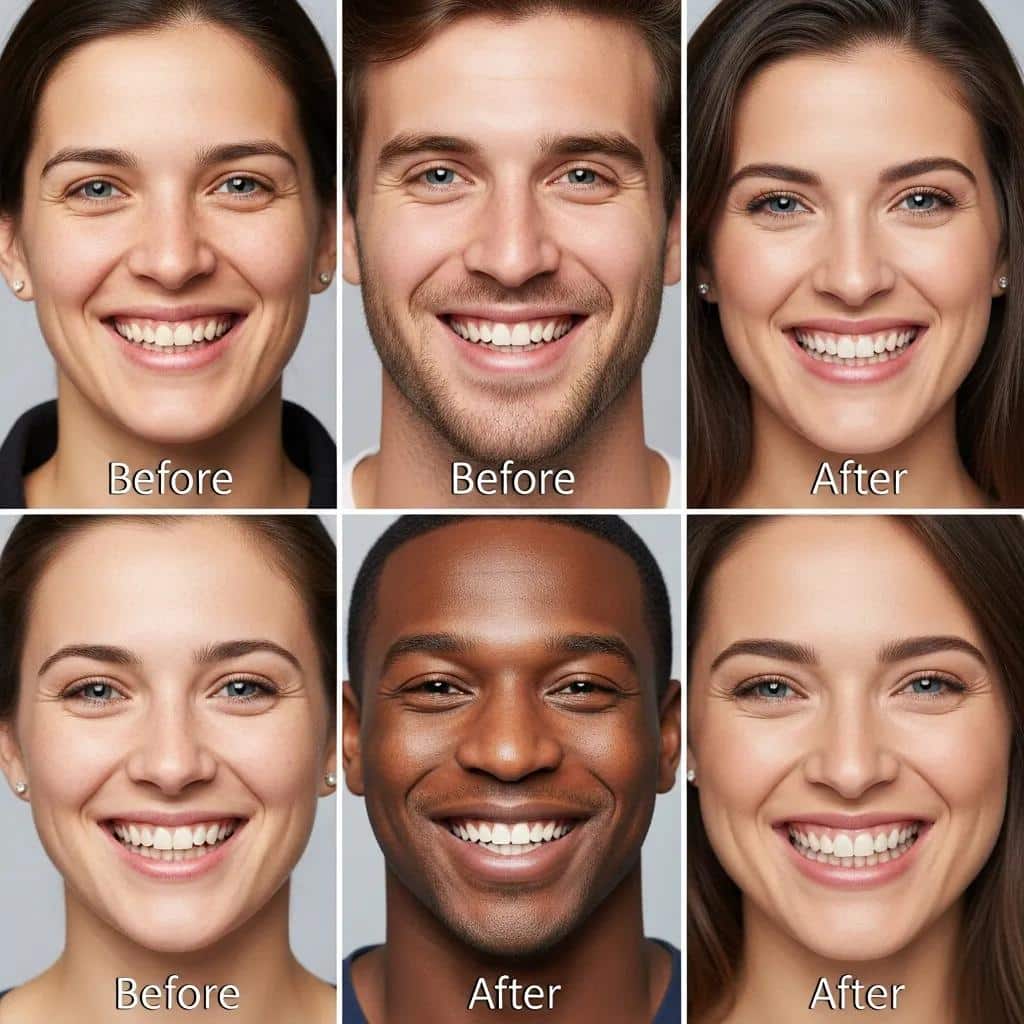
Before-and-after photos provide visual evidence of esthetic and functional change that written reviews cannot fully convey, making them essential for evaluating expected results. High-quality images show crown morphology, gingival contours, and prosthesis integration with surrounding teeth—details that determine whether a restoration will match a patient’s facial features and smile line. When assessing photos, look for consistent lighting and angles, visible smile context (not only isolated teeth), and captions that explain the timeline from pre-treatment to final restoration. Ethical photo use also involves patient consent and clear date markers to avoid misleading impressions.
Visual evidence complements the narrative of testimonials and helps translate technical promises into observable results. Asking a clinic to show additional relevant cases at the consult is a reasonable step when deciding whether an implant outcome aligns with your esthetic and functional goals.
Review Verification Element
Why It Matters
Verification Tip
Specific procedure details
Signals reviewer understood treatment steps
Look for mentions of implant type or grafting
Temporal markers
Shows sequence and recovery timeline
Prefer reviews that mention weeks/months elapsed
Media evidence
Visual corroboration of written claims
Check for multi-angle photos with dates
Balanced commentary
Authentic voices mention minor issues
Be wary of overly promotional language
Clinic response
Demonstrates transparency and communication
Note how clinics address concerns publicly
How Do Patient Testimonials Address Common Concerns About Dental Implants?
Testimonials often tackle the top patient concerns—pain, recovery, durability, and cost—by providing real-world context that clinical descriptions alone cannot. For pain and recovery, reviewers commonly describe a short acute phase of discomfort controlled with OTC analgesics, followed by progressive improvement over the first two weeks and soft-tissue comfort within a month. Durability concerns are addressed by multi-year follow-up comments that report sustained function and satisfaction, while cost-related worries are frequently mitigated by testimonials that mention transparent financial explanations during consults and available payment options. These practical narratives convert abstract risks into manageable expectations.
Below is an EAV-style table mapping common concerns to what patients generally report, summarizing representative feedback rather than direct quotes.
Concern
What Patients Report
Representative Outcome
Pain and short-term discomfort
Pain manageable with standard analgesics; swelling peaks 48–72 hours
Rapid return to routine within 1–2 weeks
Recovery timeline
Initial soft-tissue healing in 1–2 weeks; full osseointegration over months
Consults clarify fees and financing; patients appreciate itemized plans
Informed decisions reduce surprise expenses
What Do Patients Say About Pain, Recovery, and Comfort?
In aggregated testimonials, patients frequently describe the acute postoperative window as limited and manageable, often noting the effectiveness of prescribed or over-the-counter pain control and the availability of sedation options during the procedure. Most reports indicate swelling peaks within the first 48–72 hours and that soft-tissue comfort significantly improves within one to two weeks, although complete osseointegration continues over several months. Clinic practices that emphasize post-op instructions, scheduled follow-ups, and easy staff access for questions tend to receive higher comfort-related ratings. These practical details make the procedural timeline tangible and reassure prospective patients that discomfort is temporary and generally controllable.
Because testimonials offer lived-time snapshots, readers can compare their own pain tolerance and recovery expectations against summarized patient experiences, which helps in planning and mental preparedness for the implant journey.
How Do Reviews Reflect Long-Term Durability and Satisfaction?
Reviews that report multi-year follow-ups provide the strongest signals about implant durability and ongoing satisfaction, with many patients describing continued function, stable esthetics, and low complication rates over extended periods. When testimonials mention routine maintenance—regular hygiene visits and periodic prosthesis checks—readers get a sense of the long-term care needed to preserve outcomes. Industry success rates for implants are high when placed and maintained properly, and patient narratives that confirm years of trouble-free function reinforce those clinical statistics. Longitudinal accounts often tie satisfaction to good initial planning, appropriate prosthetic choices, and attentive follow-up care.
These durability-centered testimonials help prospective patients weigh the long-term value proposition of implants against alternative options and emphasize the importance of selecting a provider that supports ongoing maintenance.
Why Choose Affordable Dentist Near Me of Dallas for Your Dental Implant Journey?
Affordable Dentist Near Me of Dallas brings several practical patient-focused offerings that align with what testimonials emphasize: transparent consults, accessible pricing signals, and patient-centered care pathways. The Dallas location is recognized locally with an average Google rating of 4.7 based on approximately 440 reviews, and its UVPs include everyday low fees, free whitening pen offers, and a free implants consultation that many patients cite as helpful for decision-making. Provider credentials support clinical authority: Dr. Mike Pham holds a Doctor of Dental Surgery degree from Texas A&M University College of Dentistry, and the practice delivers a broad range of services including general, cosmetic, pediatric, emergency, and specialized dentistry such as prosthodontics and implant care. These trust signals—rating, service breadth, and formal training—combine with patient review patterns to make the clinic a practical option for people evaluating implant care in Dallas.
Practical expectations at Affordable Dentist Near Me of Dallas include a free implant consultation that typically covers exam, X-ray, and an initial treatment discussion, mirroring the type of consult experiences patients describe as clarifying and low-pressure. If you want to act on what you learn from testimonials and take a low-risk first step toward implants, scheduling that consult is the logical next move. Get Patient to schedule an appointment for a Free Dental Consult.
How Do Patient Reviews Reflect Our Commitment to Care and Expertise?
Patient reviews for the Dallas location commonly highlight professional communication, detailed explanations during consults, and staff responsiveness—factors that readers should weigh alongside clinical credentials. Review content often references thorough imaging and treatment planning, as well as follow-up accessibility, which are practical process indicators of quality care. The clinic’s local rating and review volume serve as aggregated evidence of consistent patient satisfaction, while specific mentions of bedside manner and perceived expertise help distinguish patient experience from technical skill. Linking these subjective impressions to objective elements—like imaging and treatment staging—creates a coherent picture of practice performance that prospective patients can trust when comparing options.
By combining aggregated review patterns with provider credentials and clear consult offerings, readers can better evaluate whether the clinic’s approach aligns with their own priorities for implant care.
How Can a Free Dental Implant Consultation Help You Take the First Step?
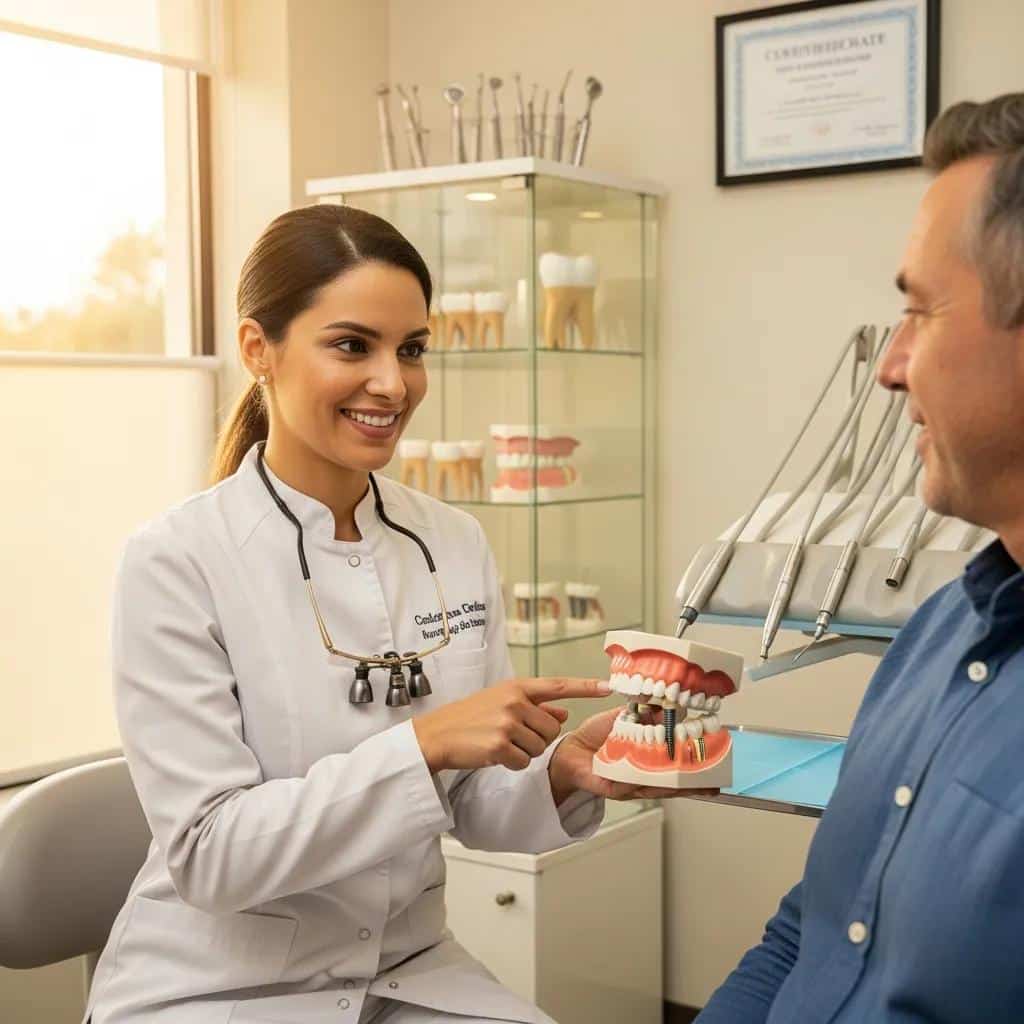
A free dental implant consultation lowers barriers by offering an educational, no-obligation evaluation that typically includes an oral exam, necessary X-rays, and a discussion of options tailored to the patient’s anatomy and goals. During the consult a clinician will outline likely procedural stages—implant placement, any required grafting, abutment and crown steps, or implant-supported denture planning—while addressing pain management, recovery timelines, and anticipated costs. Patients often find that the consult clarifies uncertainties, provides a realistic timeline, and presents financing or phased-treatment strategies where appropriate. The consult is the point where testimonial themes—process clarity, staff support, and expected outcomes—translate into a personalized plan.
For readers ready to move from research to action, the consultation functions as an informative decision node that reduces uncertainty and prepares you for a predictable implant pathway. Get Patient to schedule an appointment for a Free Dental Consult.
What Role Do Patient Testimonials Play in Choosing the Best Dental Implant Specialist in Dallas?
Patient testimonials help narrow a provider shortlist by revealing signals that clinical profiles alone do not capture: the frequency and recency of reviews, mentions of specific implant procedures, and evidence of long-term follow-up. Testimonials offer comparative insight into staff communication, pain management approaches, and the clarity of the consult process, which are crucial differentiators when multiple local providers advertise implants. Prospective patients should combine testimonial evidence with provider credentials and facility features to evaluate fit, using reviews as a functional lens into real patient experiences rather than as sole proof of quality. This combined approach leads to better-aligned expectations and, ultimately, higher satisfaction.
When using testimonials for selection, prioritize recent and detailed accounts that match your procedural needs and look for mentions of named clinicians or specific implant types, which increase confidence in the reviewer’s relevance.
How Do Dallas Patient Reviews Influence Dentist Selection?
Local reviews matter because they reflect the community context—ease of follow-up visits, familiarity with local referral networks, and practical logistics like scheduling responsiveness. Dallas patient reviews that discuss recency and specifics about implant types (single tooth vs. implant-supported denture) help prospective patients match clinic experience to their own needs. Cross-referencing Google ratings with the clinic’s site gallery or video testimonials provides multi-modal verification of claims. Geographic relevance and recent positive experiences weigh heavily in the decision-making process because they suggest current practice standards and operational efficiency.
Using regional review patterns alongside credential checks creates a localized, actionable shortlist of specialists whose documented patient outcomes align with what you want from an implant pathway.
What Are the Key Factors Patients Highlight in Their Implant Experiences?
Across many reviews, five recurring themes emerge as decisive for overall satisfaction: clear communication, effective pain management, aesthetic and functional outcomes, responsive follow-up care, and transparent cost discussions. Communication ensures patients understand choices and consent to plans; pain management and comfort measures affect immediate postoperative satisfaction; esthetic and functional results determine long-term contentment; follow-up care supports ongoing maintenance; and transparent pricing reduces financial stress. These factors are often interwoven in testimonials, shaping holistic impressions that go beyond isolated technical success.
Focusing on these five areas when reading reviews helps you compare providers on practical, patient-centered metrics rather than marketing claims alone, enabling a more confident selection of the right implant specialist in Dallas.
How Do Before and After Dental Implant Photos Enhance Patient Confidence?
Before-and-after photos enhance confidence by making outcomes visible: they show alignment, gingival contours, and overall smile integration that written descriptions cannot fully capture. Visual evidence demonstrates the clinic’s technical attention to detail—how crowns match shade and shape, how implants support facial soft tissue, and how full-arch restorations restore vertical dimension. When photos include consistent framing, lighting, and date labels, they become reliable tools for evaluating likely esthetic results. For readers, examining galleries tied to case types similar to their own provides a realistic preview of possible outcomes and helps set achievable expectations.
As you review image galleries, ask whether cases show full-face context, multiple angles, and a progression from pre-treatment to final prosthesis. That kind of visual continuity strengthens the credibility of the written reviews and aids decision-making for implant care.
What Transformations Can You Expect from Dental Implants?
Typical visible transformations include restored tooth structure that matches surrounding dentition in color and contour, improved lip support in cases of full-arch restoration, and elimination of visible gaps that previously affected smile harmony. Implant-supported prostheses often improve facial profile by restoring vertical dimension and preventing the sunken appearance associated with missing teeth. Single-tooth implants aim for nearly invisible restorations that blend with adjacent teeth, while full-arch solutions can dramatically influence the lower third of the face and overall smile aesthetics. These visual changes usually accompany functional gains such as stable bite and improved speech.
Understanding the range of transformations helps prospective patients set realistic cosmetic goals and frame questions to ask during the consult about what is achievable in their specific case.
How Do Visual Testimonials Complement Written Reviews?
Visual testimonials validate written narratives by showing the end result and the process of change, especially when photos are paired with captions that outline the timeline and procedures involved. A quote describing regained confidence gains depth when viewers can see the aesthetic improvement, and functional claims about chewing stability are more believable when photos show occlusion and prosthetic integrity. Videos add another layer by demonstrating speech and chewing in motion, providing dynamic evidence that still images cannot capture. Together, visual and written testimonials create a comprehensive evidence set that reduces skepticism and supports confident decision-making.
When both forms of testimony align—visual proof matching detailed narrative—prospective patients gain a clearer, richer picture of expected outcomes, which is crucial for a significant investment like dental implants.
How Can You Use Patient Testimonials to Schedule Your Free Dental Implant Consult in Dallas?
Patient testimonials are practical tools for reducing friction when scheduling a free consult because they highlight what to expect from that initial visit and affirm that the consult is an informative, low-pressure step. Testimonials that describe consult components—exam, X-ray, treatment options discussion—help prospective patients prepare questions and arrive with clear goals. Use reviews to identify clinics that provide gallery access, willingness to review case options, and staff who explain financing, all of which increase the consult’s value. A straightforward three-step pathway helps convert curiosity into appointments: review relevant testimonials, prepare targeted questions and request similar-case photos, then schedule the free consult to get personalized recommendations and a transparent plan.
Below is a concise step-by-step list to convert testimonial insight into action.
Three-step pathway to a productive free consult:
Review multiple recent testimonials that match your case type to set realistic outcome expectations.
Prepare specific questions and request example photos or case timelines like those described in reviews.
Schedule the free dental implant consult to receive a personalized plan, discuss pain management and recovery, and review cost options.
This sequence helps you use testimony-driven evidence to make the consult efficient and decision-ready.
What Do Patients Say About Their Free Consultation Experience?
Aggregated feedback indicates that free consultations are commonly described as informative and no-pressure, with clinicians providing clear explanations of options, necessary imaging, and preliminary timelines. Patients appreciate when clinics perform on-site X-rays or recommend specific imaging to refine treatment plans, and when staff offer a transparent breakdown of anticipated steps and costs. Testimonials frequently note that consults help demystify implant pathways and frame realistic expectations for recovery and follow-up care. Those elements transform the consult from a marketing touchpoint into an educational first step.
Using testimonial cues to prepare—bringing a list of questions and concerns and asking for similar-case photos—makes the consult more productive and often leads to quicker alignment on a personalized treatment plan.
How Does Scheduling a Free Consult Lead to a Successful Implant Journey?
Scheduling a free consult converts testimonial-based interest into a tailored clinical plan by enabling clinicians to assess anatomy, propose implant options, and set realistic timelines, which collectively increase the likelihood of predictable outcomes. The consult is where general promises become specific: clinician recommendations, identification of any need for bone grafting, and agreement on prosthesis design are all clarified. Testimonials that recount consult-led clarity typically show smoother treatment progression, fewer surprises, much higher long-term satisfaction. The consult also provides an opportunity to discuss maintenance, expected longevity, and follow-up scheduling—key elements that testimonials associate with durable success.
For readers ready to act, the consult is the essential step that aligns expectations with a clinical roadmap and initiates the sequence that testimonials consistently link to successful implant outcomes. Get Patient to schedule an appointment for a Free Dental Consult.
Case Comparison
Procedure Focus
Patient-Reported Benefit
Single-tooth cases
Focused implant and crown
Natural esthetics, targeted chewing restoration
Partial-arch reconstructions
Multiple implants with bridges
Balanced occlusion, improved mastication
Implant-supported overdentures
Implants supporting a removable prosthesis
Reduced movement, greater comfort
Full-arch fixed restorations
Fixed prosthesis on multiple implants
Immediate function, comprehensive facial support
This final table reiterates representative case comparisons and highlights the patient-centered benefits that testimonials most often emphasize, helping readers match their goals to likely procedural pathways.
Before you schedule a consult, compile testimonials and images of cases similar to your concern.
Bring specific questions about pain control, recovery timelines, and long-term maintenance to the consult.
Use the consult to confirm a personalized plan, clarify finances, and set follow-up expectations.
Get Patient to schedule an appointment for a Free Dental Consult.