Top Reviews of Dental Implant Surgeons Near You: Find the Best Rated Implant Specialists
Choosing a dental implant surgeon is one of the most consequential decisions you can make for long-term oral function and aesthetics, and this guide shows you how to evaluate reviews and ratings to find top-rated implant specialists near you. Readers will learn how to assess surgeon qualifications, compare procedures such as single tooth implants, All-on-4, full-arch restorations and mini implants, interpret patient experiences, estimate costs and financing, and locate local experts using verified profiles and registries. Dental implant surgeon reviews compile clinical outcomes, patient-reported results, and practice-level factors into actionable insights that save time and reduce risk. Many patients struggle with differing rating platforms and inconsistent case documentation; this article resolves that by presenting clear criteria, comparison tables, and checklists to standardize surgeon selection. Below you will find step-by-step selection criteria, a procedural comparison of common implant options, guidance for reading patient reviews, a transparent cost breakdown with financing options, tools for locating local specialists, the latest technology trends (CBCT, guided surgery, robotics), and concise FAQs addressing longevity, preparation, recovery and anxiety management. Throughout, keywords like “find dental implant surgeon near me,” “implant surgeon success rates,” and “patient experiences with dental implants” are integrated to help you act on local recommendations with confidence.
How Do You Choose the Best Dental Implant Surgeon Near You?
Choosing the best dental implant surgeon near you requires assessing verifiable credentials, case experience, technology used, and patient outcomes because these factors directly influence complication rates and long-term success. A systematic approach reduces reliance on isolated star ratings and emphasizes objective indicators such as specialty training, board affiliations, and published case reports. Start with a short checklist of must-check items at initial screening, then use deeper verification during consultations. The next subsections break down specific credentials, the impact of technology, how to read patient testimonials, and a compact comparison matrix you can use to rank local candidates.
What Credentials and Experience Should a Top Implant Surgeon Have?
Top implant surgeons typically hold an accredited dental degree (DDS/DMD) and additional postgraduate specialty training in oral and maxillofacial surgery, periodontics, or prosthodontics because specialty training focuses on surgical technique and restorative planning. Verify board certifications, membership in recognized professional organizations, and evidence of continuing education in implantology to confirm ongoing competence. Look for quantifiable experience indicators such as number of implant cases per year, documented full-arch reconstructions, and published clinical case reports or peer-reviewed presentations. Asking for before/after documentation and references during the consultation helps validate claimed experience and prepares you to compare surgeons based on concrete metrics rather than marketing language.
Surgeon Attribute
What to Check
How to Verify / Expected Range
Degree and Specialty
DDS/DMD plus specialty training
Confirm via clinic profile, licensing board lookup
Board Certification
Board in oral surgery/periodontics/prosthodontics
Check national/regional registries for certification status
Case Volume
Implant cases per year
Request case logs or documented case studies; look for consistent volume
Technology Use
CBCT, guided surgery, digital planning
Clinic profile should list equipment; ask during consult
Patient Outcomes
Aggregate rating and complication rates
Cross-check verified reviews, before/after photos, and follow-up reports
This verification checklist gives a side-by-side framework for comparing credentials that will feed directly into the decision checklist in the next section.
How Does Technology Impact the Quality of Dental Implant Surgery?
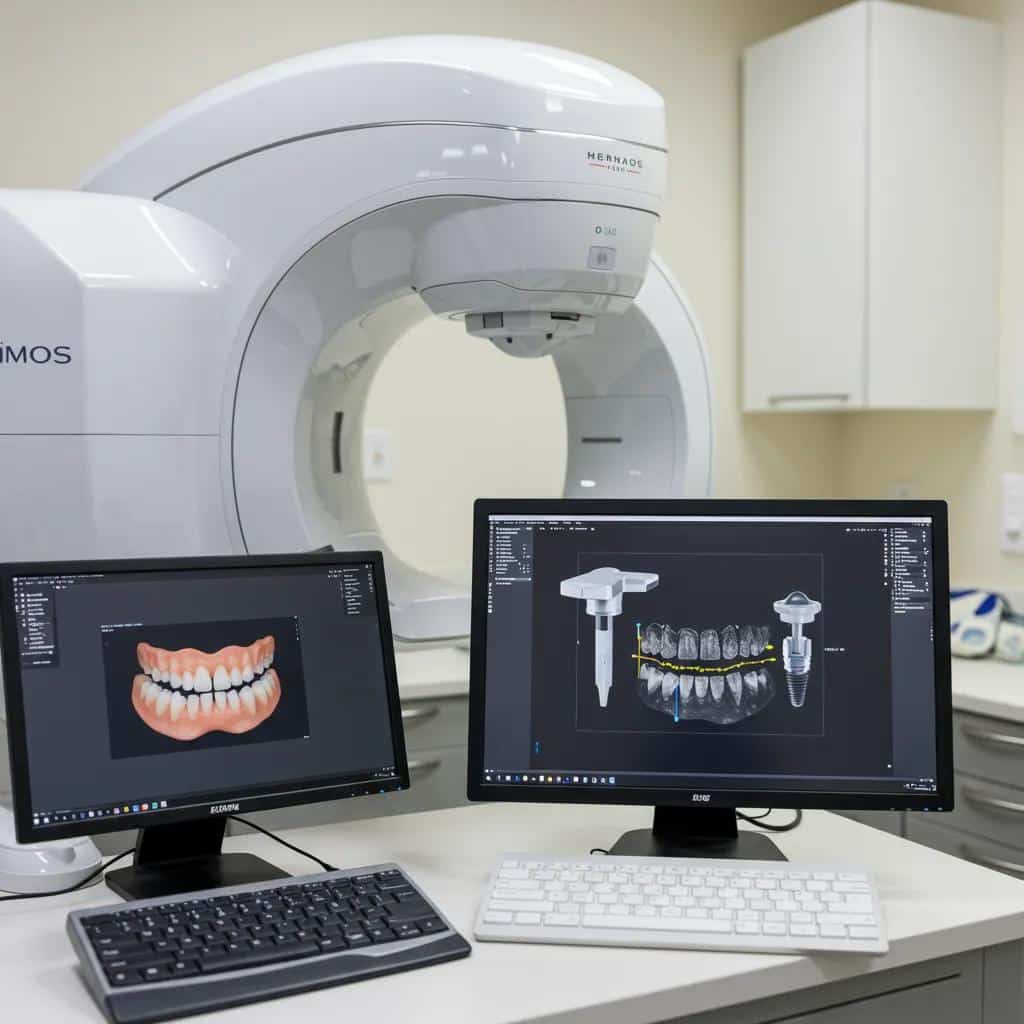
Technology such as 3D cone beam CT (CBCT), computer-guided surgical planning, and precise surgical guides improves placement accuracy and reduces the risk of nerve or sinus injury by visualizing anatomy in three dimensions. Guided implant surgery and digital prosthetic workflows align implant placement with final restorations, enhancing aesthetic and functional outcomes while shortening chair time. Robotic-assisted systems and intraoperative navigation further increase reproducibility in complex cases, though availability and cost vary. When a clinic lists these technologies on its profile, it suggests investment in modern protocols; verifying their routine use during consults helps determine whether technology materially benefits your specific case.
Common patient-focused benefit: improved implant positioning → better prosthetic fit and lower complication risk.
Clinical implication: technology reduces guesswork in planning bone grafts and avoids critical anatomic structures.
Next, we will examine why patient reviews are essential complements to clinical indicators when choosing a surgeon.
Why Are Patient Reviews and Testimonials Crucial for Choosing a Surgeon?
Patient reviews reveal real-world outcomes for pain management, recovery trajectory, communication quality, and long-term satisfaction, providing context that credential lists cannot capture. Authentic testimonials with photos, consistent timelines, and mention of specific procedures tend to be more reliable than brief star-only entries; patterns across platforms are particularly telling. Beware of overly polished reviews lacking clinical detail or many identical responses that may indicate manipulation. Use reviews to form targeted consultation questions about aftercare, complication handling, and how the practice documents outcomes, which informs a balanced judgment between technical skill and patient experience.
Look for specificity: Reviews that mention procedure type, recovery timeline, and before/after photos.
Check recency and volume: More recent and numerous reviews provide a clearer performance signal.
Cross-reference platforms: Consistent praise or complaints across listings is more credible.
These review signals help you prioritize which clinics to contact for consultation appointments, which is the next practical step in comparing local implant surgeons.
What Are the Key Factors in Comparing Local Implant Surgeons?
When comparing surgeons side-by-side, weight credentials, technology, documented outcomes, price transparency, and aftercare policies relative to your priorities because different factors matter more depending on whether you need single-tooth work or complex full-arch reconstruction. Create a simple comparison matrix that scores each clinic on measurable attributes and assign higher weight to outcome-related items like documented success rates and complication handling. Request a consultation to evaluate communication style, willingness to show case documentation, and clarity around warranties or follow-up protocols. Use the matrix to shortlist two or three candidates and plan second opinions for major treatments to ensure consistent recommendations before committing.
Attribute
What to Check
Weighting Advice
Credentials
Specialty training, certifications
High
Technology
CBCT, guided surgery, digital prosthetics
Medium-High
Outcomes
Before/after photos, complication rates
High
Price Transparency
Itemized estimates, inclusions
Medium
Aftercare
Follow-up schedule, warranty/guarantee
Medium
This table provides a structured way to normalize comparisons across clinics and prepare focused consultation questions that we will outline later.
Which Dental Implant Procedures Are Offered by Top-Rated Surgeons?
Top-rated implant surgeons offer a spectrum of procedures from single tooth implants to complex full-arch restorations because different clinical scenarios demand tailored surgical and prosthetic strategies. Understanding the clinical steps, typical recovery timelines, and expected success metrics helps you match procedure options to patient needs. The following subsections define common procedures, summarize their success rates, and highlight when each option is indicated, enabling evidence-informed selection.
What Are Single Tooth Implants and Their Success Rates?
A single tooth implant replaces a missing tooth by placing an implant fixture into the jawbone, allowing osseointegration followed by attachment of an abutment and crown, and its success depends on bone quality, surgical precision, and patient health. Contemporary literature consistently reports high success rates—often above 95% at five years—in healthy patients with adequate bone and proper restorative planning. The typical timeline includes implant placement, a healing/osseointegration period of 3–6 months (shorter in immediate-load cases), and final crown placement after adequate stability is confirmed. Single implants preserve adjacent natural teeth and generally offer superior chewing function and aesthetics compared with fixed bridges.
Indications: single missing tooth, adequate bone volume, healthy soft tissues.
Example outcome: predictable long-term function with appropriate maintenance.
How Do Full Mouth Dental Implants Work and What to Expect?
Full-mouth dental implant solutions restore an entire dental arch using multiple implants to support a fixed prosthesis, and approaches vary between staged protocols and immediate-load workflows depending on bone volume and patient needs. Staged protocols often involve grafting and healing phases before implant placement, while immediate-load approaches can provide provisional restorations on the day of surgery when primary implant stability is sufficient. Recovery includes short-term surgical healing followed by a longer osseointegration phase before definitive prosthetics; maintenance requires professional hygiene and long-term prosthetic care. Patients considering full-arch options should expect multiple visits, potential grafting, and a clear timeline that the surgeon should document during the consultation.
Staged Full-Arch: Bone graft → implant placement → provisional → final restoration.
Immediate-Load Full-Arch: Extraction/placement with provisional prosthesis same day when indicated.
Maintenance: Regular professional follow-up and hygiene to maximize prosthesis longevity.
These procedural differences influence cost and candidacy, which are detailed in the procedure comparison table below.
Extractions/grafting → implants → provisional → final prosthesis; success variable by case
$20,000–$45,000+ per arch; timeline several months to year
All-on-4
Strategic angulated implants → immediate provisional possible; high patient satisfaction
$15,000–$30,000 per arch; timeline days to months
Mini Dental Implants
Smaller diameter implants for denture stabilization; lower cost but limited indications
$500–$1,500 per implant equivalent; timeline weeks to months
What Is the All-on-4 Dental Implant Technique?
All-on-4 is a full-arch rehabilitation strategy that uses four strategically placed implants—often with posterior implants angled—to support a fixed prosthesis and can enable immediate function in appropriately selected patients. The angulation maximizes use of available bone and often avoids the need for extensive grafting, making All-on-4 a time- and cost-efficient option relative to more implant-intensive full-arch protocols. Success and satisfaction rates are generally high for denture patients seeking fixed solutions, but candidacy depends on residual bone quality, occlusal forces, and systemic health. Clinicians should provide documented case examples and discuss maintenance requirements for the prosthesis before proceeding.
Benefit: fewer implants, possible immediate provisionalization, reduced grafting.
Limitations: prosthetic maintenance tradeoffs and potential need for periodic retorquing or repairs.
The All-on-4 concept has been a significant development in full-arch restorations, offering a streamlined approach for patients.
All-on-4 Concept for Dental Implants: A Prosthodontic Perspective
The All-on-4®concept is one such treatment procedure which enlightens us for its use in the completely edentulous patients and which also leaves behind the routine treatment alternative of conventional dentures with successful outcome in the short term, long term and the retrospective studies that have been done in the past. The area of concern for any treatment alternative lies in the success of the prosthesis and its prosthodontic perspective involving the principles of occlusion. This article review
Prosthodontic perspective to all-on-4® concept for dental implants, 2014
Further analysis has explored the potential complications associated with this technique.
All-on-4 Concept: Biologic and Technical Complications Analysis
An up to 7-year retrospective analysis of biologic and technical complication with the All-on-4 concept
An up to 7-year retrospective analysis of biologic and technical complication with the All-on-4 concept, M Tallarico, 2016
What Are Mini Dental Implants and When Are They Recommended?
Mini dental implants are narrow-diameter implants primarily used to stabilize removable dentures or for patients with limited bone volume who are not candidates for conventional implants without grafting. They offer a less invasive option with lower surgical morbidity and often lower initial cost, but they have different load-bearing characteristics and may not be suitable for single-tooth definitive restorations in high-load areas. Long-term outcomes can be favorable for denture retention when used appropriately; however, clinicians should discuss comparative longevity and possible future conversion to conventional implants if clinical needs change. Mini implants are therefore best positioned as a pragmatic solution for denture stabilization or temporary support in select patients.
Typical use-case: denture stabilization, limited bone scenarios, patients seeking less invasive options.
Consideration: understand tradeoffs in load capacity and potential need for replacement.
What Do Patient Reviews Reveal About Local Dental Implant Experts?
Patient reviews synthesize experiential data about comfort, communication, complication resolution, and functional outcomes, and they are vital for assessing soft-skill domains that credentials do not capture. Quantitative metrics like aggregate ratings should be balanced with qualitative comments that mention pain control, recovery experience, and prosthetic function. Aggregated feedback also reveals practice-level strengths and weaknesses, such as scheduling efficiency, follow-up thoroughness, and transparency about costs. The subsections below show how to interpret ratings, typical success narratives, and how to normalize comparisons across local providers.
How to Interpret Ratings and Testimonials for Implant Surgeons?
Interpreting ratings requires looking beyond a single star score to volume, recency, and narrative content because a 5-star rating from two recent in-depth reviews is more informative than a 4.8 average from dozens of generic comments. Reliable indicators include before/after photos, explicit mention of procedure type and timeline, and consistency across platforms such as professional registries and independent review sites. Negative reviews should be evaluated for pattern and severity: isolated complaints about billing differ substantially from repeated reports of poor surgical outcomes. Cross-referencing verified testimonials with documented clinical results best predicts real-world performance.
Tip: prioritize reviews that include clinical detail, timelines, and photos.
Next: we summarize typical success stories patients report to understand common outcomes.
What Are Common Patient Success Stories and Experiences?
Common positive patient vignettes often describe restored chewing function, improved confidence with aesthetics, and surprisingly manageable recovery when appropriate sedation and pain control were used, illustrating how real-world outcomes map to clinical goals. For single-tooth recipients, patients frequently note immediate aesthetic improvement and restored function once crowns are placed. All-on-4 and full-arch patients commonly report rapid transition from removable dentures to fixed solutions with significant lifestyle benefits. These narratives typically highlight the importance of clear pre-op communication, realistic timelines, and attentive post-op support from the surgical team.
Single Implant Success: Restored chewing and confidence after staged implant and crown.
All-on-4 Transformation: Immediate provisionalization led to regained function and social comfort.
Full-Arch Journey: Staged grafting and implants culminating in stable long-term prosthesis.
These success stories point to the need for documented case examples during consultations, which we explore further when comparing clinics based on feedback.
How Do Local Implant Surgeons Compare Based on Patient Feedback?
Aggregated patient feedback often reveals consistent strengths—such as excellent communication or superior prosthetic aesthetics—across local high-performing clinics, while patterns of concern (e.g., billing disputes or long waits for follow-up) can flag operational issues that matter to patients. When comparing local providers, normalize ratings by accounting for case complexity and clinic volume since high-volume specialist centers often handle more complex reconstructions and may receive more mixed reviews despite strong clinical outcomes. Use feedback to shortlist surgeons who combine technical competence with the patient experience profile that matches your priorities, whether that is rapid recovery, aesthetic outcomes, or transparent pricing.
Comparison Factor
How to Interpret
Practical Takeaway
Aggregate Rating
Volume and recency matter
Prioritize clinics with recent high-volume positive reviews
Case Complexity
Look for documented complex cases
Favor clinics with demonstrated complex-case experience
Communication
Mentions of clear expectations and follow-up
Use as tiebreaker between similarly rated surgeons
This synthesis of patient feedback helps you create a prioritized shortlist for consultations and second opinions.
How Much Do Dental Implants Cost and What Financing Options Are Available?
Dental implant cost varies widely because of procedure complexity, required grafting, prosthetic design, technology used, and geographic factors; transparency around itemized estimates is essential to make apples-to-apples comparisons. Cost drivers include number of implants, need for bone grafts or sinus lifts, premium materials for prosthetics, and use of advanced technology like CBCT and guided surgery. Common financing options include in-office payment plans, third-party medical credit, and care-loan products that spread cost over months. The following subsections break down average ranges, strategies for finding affordable reputable care, and insurance/payment plan considerations to help patients plan financially for implant therapy.
What Is the Average Cost Range for Different Implant Procedures?
Typical cost ranges reflect procedural complexity: single-tooth implants usually cost less than multi-implant or full-arch reconstructions, while All-on-4 and full-mouth restorations represent higher total investment due to prosthetic labor and materials. Bone grafting, sedation, and premium lab-fabricated prostheses increase the estimate significantly. Ask clinics for itemized quotes showing implant fixture, abutment, crown/laboratory fees, grafting and sedation so you can compare total package pricing rather than per-item rates. Transparent clinics will provide written breakdowns and explain which options are included or optional.
Cost Factor
Impact on Price
Typical Range / Notes
Number of Implants
Linear increase with each implant
Single implant $1,500–$3,000; multiple scale up
Bone Grafting
Adds surgical time and materials
$300–$3,000 depending on graft type
Prosthetic Work
Lab fees and materials vary
Crowns, bars, or full-arch prostheses add substantial cost
Technology
CBCT/guided surgery increases planning costs
Adds predictability; may increase fees modestly
This cost-factor table clarifies why estimates vary and highlights which items to question during consultations.
How Can You Find Affordable Dental Implant Surgeons Near You?
Affordable reputable care can be found by comparing teaching hospitals, dental schools, and clinics that offer bundled pricing or staged payment structures because these sources balance cost with clinical oversight. Dental schools often provide supervised care at reduced rates for complex procedures, while community clinics may offer payment plans and referral networks. Request multiple quotes, ask for bundled pricing for full-arch treatments, and confirm exactly what is included—such as provisional prostheses, follow-ups, and adjustments—to avoid surprise expenses. Investigating financing options early allows you to plan for staged treatments without compromising quality.
Search strategies: dental schools, community health clinics, transparent-pricing practices.
Negotiation tip: ask for bundled pricing and written estimates of included services.
What Insurance and Payment Plans Support Dental Implant Treatments?
Most standard dental insurance plans limit coverage for implants, often categorizing them as elective restorative procedures, but some medical plans may cover aspects when implants relate to reconstructive needs; verify by asking both insurers and providers for benefit breakdowns. Popular third-party financing solutions include installment loan products, medical credit lines, and in-office payment plans that offer interest-free or low-interest periods. When evaluating financing, compare total payable amount, interest rates, deferred-interest clauses, and early-payoff penalties to select the most economical solution. Always request written financial agreements that delineate payment schedule, included services, and policies for complications or revisions.
Check insurance for benefits or exclusions upfront.
Request itemized quotes to submit to insurers for pre-authorization.
Compare third-party lender terms and in-office plans carefully.
These financial steps help you proceed with treatment without unexpected economic strain.
Where Can You Find Top-Rated Dental Implant Surgeons Near You?
Finding top-rated implant surgeons relies on structured use of local directories, professional registries, and clinic profile pages to validate credentials and documented outcomes rather than relying solely on star ratings. Use search filters for “dental implant specialist,” “oral surgeon,” “periodontist,” and “prosthodontist,” then cross-reference profiles for case photos, technology listings, and verified reviews. When shortlisting, schedule consultations to assess communication, view documented outcomes, and request treatment timelines and warranties. The subsections below provide practical steps to use maps and directories, considerations about regional centers of excellence, and a consultation checklist for booking and evaluation.
How to Use Local Directories and Maps to Find Implant Specialists?
Local directories and map tools let you filter providers by specialty, rating, and review volume, and you should prioritize profiles that include clear service listings, before/after galleries, and staff credentials because these elements signal transparency. Use search terms such as “dental implant surgeon,” “implant dentist,” and “oral surgery” and then sort by clinics that display procedural details and evidence of outcomes. Cross-reference any promising listings with professional registries and independent review platforms to verify claims. When you find several candidates, prepare to contact them with a concise set of clinical questions to determine fit.
Filters to use: specialty, verified reviews, service listings, before/after galleries.
Cross-check: professional licensing and national registries.
Which Cities and Regions Have the Best Rated Implant Surgeons?
Regions with dental specialty training centers and academic hospitals often concentrate experienced implant surgeons and advanced technology, which can improve access to complex-case expertise; however, excellent local providers exist in many cities, so geographic proximity should be balanced against travel for specialized care. Research whether local universities run implant programs or host continuing education events, which can indicate a higher density of specialized clinicians. If traveling to a center of excellence is feasible, weigh travel costs and follow-up logistics against perceived benefits in expertise or outcomes. Local availability and a surgeon’s demonstrated case mix should guide the decision more than a citywide ranking.
Consideration: access to specialist centers vs. convenience of local care.
Practical approach: shortlist local experts and consider a center of excellence for complex reconstructions.
How to Contact and Schedule Consultations with Local Implant Experts?
When contacting clinics, request an initial consultation that includes review of imaging (or scheduling of CBCT if needed), discussion of procedural options, an itemized estimate, and review of before/after documentation; this prepares you to compare recommendations objectively. Bring current dental records, a list of medications, and photos of your smile if available, and prepare targeted questions about osseointegration timelines, sedation choices, and aftercare. Ask whether virtual consults are possible for preliminary screening, and request a written summary of the proposed treatment plan. Evaluating the clarity and thoroughness of the consultation experience helps determine which surgeon will best manage both clinical and patient-experience aspects.
Documents to bring: prior x-rays, medical history, medication list, photos.
Questions to ask: success rates, expected timeline, alternative options, follow-up care.
Evaluation: responsiveness, documentation quality, and willingness to show case examples.
These steps ensure consultations become a decisive tool in selecting the right provider.
After you review local options and schedule consults, consider whether advanced imaging or second opinions are necessary for complex cases; the next section explains the latest technology trends that often inform those decisions.
What Are the Latest Advances in Dental Implant Technology and Care?
Recent advances in implant dentistry—such as 3D cone beam imaging, guided surgery, robotic assistance, minimally invasive techniques, and improved biomaterials—have enhanced accuracy, reduced complications, and shortened recovery times in many clinical scenarios. These technologies support more predictable planning and can improve prosthetic outcomes when integrated into a coordinated digital workflow. Clinical teams that combine digital planning with evidence-based surgical protocols offer measurable advantages in complex cases, but availability varies regionally and may affect cost. The following subsections describe how specific technologies contribute to safer, more precise implant care.
How Does 3D Cone Beam Imaging Improve Implant Accuracy?
3D cone beam CT (CBCT) provides volumetric imaging of the jaws that allows surgeons to visualize bone volume, nerve location, and sinus anatomy in three dimensions, which improves implant planning accuracy and reduces intraoperative surprises. CBCT data can be integrated into digital treatment planning software to design surgical guides and predict prosthetic outcomes, decreasing the risk of malposition and facilitating bone grafting assessments. Radiation doses are generally low compared with medical CT, and current research supports CBCT for complex planning, especially in cases involving limited bone or proximity to critical structures. When a clinic routinely uses CBCT in pre-op planning, it signals commitment to precision.
Use-case: complex anatomy, sinus lifts, proximity to nerves.
Clinical benefit: improved implant placement accuracy and safety.
What Role Does Robotic-Assisted Surgery Play in Implant Procedures?
Robotic-assisted systems and navigation platforms augment surgeon control by providing real-time guidance and enhanced reproducibility for implant osteotomies, improving placement precision in challenging cases. Current implementations are typically guidance-focused rather than autonomous, combining preoperative digital planning with intraoperative tracking to translate virtual plans into accurate placements. While early evidence indicates improvements in placement accuracy, constraints include higher cost, limited availability, and the need for specialized training. Patients should weigh the potential precision benefits against availability and added expense when evaluating clinics that advertise robotic-assisted workflows.
Advantage: greater reproducibility and accuracy.
Limitation: cost and limited clinical availability.
How Are Minimally Invasive Procedures Enhancing Patient Recovery?
Minimally invasive approaches—such as flapless surgery, small-diameter implant options when appropriate, and immediate-load protocols—reduce surgical trauma, lower postoperative pain, and often shorten recovery timelines, helping patients return to normal activities faster. When combined with careful case selection and precise imaging, these techniques can achieve excellent outcomes while minimizing morbidity. However, candidacy must be individualized since minimally invasive techniques can trade off access and visibility in complex scenarios; a surgeon should explain risks and benefits and provide alternative staged plans when necessary.
Benefit: less postoperative pain and faster initial recovery.
Tradeoff: not suitable for all anatomic or reconstructive situations.
The development of minimally invasive techniques has significantly improved the patient experience and recovery process for dental implant surgery.
Minimally Invasive Flapless Implant Surgery: A Prospective Study
Minimally invasive flapless implant surgery: a prospective multicenter study
Minimally invasive flapless implant surgery: a prospective multicenter study, 2005
What Are the Most Frequently Asked Questions About Dental Implant Surgeons?
Patients frequently ask about implant longevity, preparation, recovery, and pain/anxiety management, and concise authoritative answers help set expectations and reduce uncertainty. The following FAQ-style subsections provide direct one-line answers followed by brief elaboration to support decision-making and optimize preparation for surgery. These responses reflect current research and clinical practice standards as of 10/2025.
How Long Do Dental Implants Last and What Are the Risks?
Dental implants commonly last decades with proper oral hygiene and regular professional maintenance because osseointegration provides durable anchorage; tensile long-term survival rates often exceed 90% at ten years in healthy patients. Risks include peri-implantitis, mechanical complications, and failure in compromised bone or uncontrolled systemic conditions; mitigation strategies include meticulous surgical planning, patient hygiene, smoking cessation, and regular follow-ups. Surgeons should discuss individualized risk profiles and maintenance regimens during consultations.
How Do You Prepare for Dental Implant Surgery?
Prepare by compiling medical and dental histories, ceasing smoking if applicable, reviewing medications with your surgeon (including anticoagulants), and arranging for transportation if sedation is planned; these steps reduce surgical risk and optimize healing. Surgeons may request pre-op imaging such as CBCT and advise short-term antibiotics or mouth rinses based on clinical protocols. Clear pre-operative communication ensures safer surgery and sets realistic expectations for the recovery timeline.
What Is the Typical Recovery Time After Implant Surgery?
Initial postoperative recovery usually peaks in the first 72 hours with swelling and discomfort managed by prescribed analgesics, while soft-tissue healing occurs over 1–2 weeks and full osseointegration typically requires 3–6 months depending on bone quality and loading protocol. Immediate-load cases may permit earlier provisional function but still require careful protection during healing. Contact your surgeon for signs of infection, uncontrolled bleeding, or increasing pain beyond expected timelines.
First 72 hours: pain and swelling peak; rest and analgesia recommended.
1–2 weeks: soft tissue healing and suture removal if applicable.
3–6 months: osseointegration period before final prosthetic loading in conventional protocols.
How Can You Manage Pain and Anxiety During Implant Procedures?
Pain control options include local anesthesia combined with oral or IV sedation depending on patient anxiety and procedure complexity, and non-opioid analgesics commonly manage postoperative discomfort; discuss anesthesia options at the consultation to match your comfort needs. Non-pharmacologic strategies—such as clear pre-op briefings, relaxation techniques, and virtual consultations—also reduce anxiety. Surgeons should document sedation plans and postoperative analgesia protocols and tailor them to individual medical histories.
Sedation options: local anesthesia, oral sedatives, IV sedation where indicated.
Practical tip: discuss anesthesia and recovery expectations before scheduling surgery.
This completes the detailed, structured guidance for selecting and evaluating dental implant surgeons based on reviews, procedures, costs, local search tactics, technology trends, and patient-centered FAQs to help you find the best rated implant specialists near you.