Understanding the Impact of Oral Hygiene on Dental Implant Lifespan: Essential Care for Long-Lasting Implants
Dental implants are prosthetic tooth roots—typically a titanium post, an abutment, and a crown—that replace missing teeth and restore function and appearance. Contemporary research and clinical practice show that oral hygiene is one of the primary determinants of how long an implant will remain stable and functional, because bacteria-driven inflammation at the soft-tissue interface can compromise the bone that anchors the implant. This article explains implant anatomy and osseointegration, clarifies how plaque and biofilm threaten implant stability, and provides practical daily care steps, product guidance, lifestyle modifications, and professional maintenance recommendations to reduce risk of peri-implant disease. Readers will find step-by-step brushing and interdental routines, symptom checklists for early warning signs, and a realistic maintenance schedule tied to risk profiles so they can protect implants over decades. Finally, the piece outlines how Dentist In Mansfield- Dentures and Dental Implants supports patients seeking personalized implant longevity plans, and it concludes with a clear action step for those trying to schedule a free consult.
Recent studies consistently reinforce this fundamental connection, highlighting how individual oral hygiene habits and knowledge directly influence peri-implant health.
Oral Hygiene Habits & Knowledge: Key to Peri-Implant Health
Peri-implant disease and health are associated with microbial dental plaque. Therefore, oral hygiene plays a role in preventing and treating these diseases. This study aimed to determine the relationships among knowledge of peri-implant status, oral hygiene habits, and peri-implant disease and health.
The effect of individuals’ oral hygiene habits and knowledge levels on peri-implant health and disease: a questionnaire-based observational study, 2024
What Are Dental Implants and Why Is Oral Hygiene Crucial for Their Longevity?
Dental implants are engineered tooth replacements that restore chewing function and preserve jawbone volume by directly integrating with the bone through osseointegration. The mechanism of osseointegration—bone growing in close contact with the implant post—creates long-term stability, but this integration depends on a healthy soft-tissue seal and low bacterial load around the implant neck. Maintaining low plaque levels prevents the cascade from mucosal inflammation to peri-implantitis that can undermine bone and cause implant loss. Understanding implant components and tissue relationships clarifies why targeted hygiene matters and leads naturally into a closer look at each component and biologic mechanism. The next subsections break down implant anatomy, describe osseointegration, and explain the path from biofilm to bone loss.
How Do Dental Implants Work and What Are Their Key Components?
A dental implant restores missing teeth through three coordinated parts: the implant post (the portion placed into the jawbone), the abutment (which connects the post to the visible restoration), and the crown (the tooth-shaped prosthesis). The implant post functions as an artificial root that, when osseointegration occurs, becomes rigidly anchored by bone remodeling and deposition around its surface. The abutment provides a seal and mechanical link between bone-level support and the crown, while the crown restores occlusion, esthetics, and phonetics for daily function. In healthy conditions, implants can function for many years, but longevity depends on preserving peri-implant soft tissue health and preventing bacterial colonization at the implant-abutment interface. Recognizing these parts and their interdependence clarifies why localized hygiene and professional checks are essential to protect the entire implant system.
Why Does Proper Oral Hygiene Affect Dental Implant Success?
Peri-implant disease begins when oral biofilm—structured bacterial communities—forms around the implant and triggers soft-tissue inflammation known as peri-implant mucositis. If left untreated, mucositis progresses to peri-implantitis, an inflammatory condition accompanied by progressive bone loss that jeopardizes osseointegration and the implant’s stability. Pathogens in peri-implantitis overlap with periodontal bacteria; these microbes produce toxins and inflammatory mediators that stimulate osteoclastic bone resorption around the implant surface. Effective oral hygiene reduces biofilm accumulation and lowers inflammatory signaling, preserving both the soft-tissue seal and the underlying bone. Understanding this progression from plaque to inflammation to bone loss sets the stage for practical daily routines that prevent implant-related complications.
This perspective is further supported by recent research emphasizing the critical role of oral hygiene and prosthetic design in preventing the destructive bone loss associated with peri-implantitis.
Preventing Peri-Implantitis Bone Loss Through Oral Hygiene
Appropriate prosthetic constructions that do not impede oral hygiene are crucial to prevent and mitigate accelerated bone resorption in peri-implantitis lesions. Protecting the implant from advanced bone loss due to peri-implantitis is a primary goal.
A mapping review of the pathogenesis of peri-implantitis: the biofilm-mediated inflammation and bone dysregulation (BIND) hypothesis, E Ng, 2024
How Can Daily Oral Hygiene Practices Prevent Peri-Implantitis and Implant Failure?
Daily oral hygiene interrupts biofilm maturation at the implant surface and adjacent gum tissue, minimizing the inflammatory triggers that lead to peri-implant disease. Brushing, interdental cleaning, and antiseptic rinses each target different niches where bacteria accumulate; together they reduce plaque, control staining, and maintain the soft-tissue seal that protects osseointegration. Consistent daily care lowers the frequency and severity of mucositis episodes and reduces the need for invasive professional interventions. The following subsections explain specific brushing and interdental techniques and recommend implant-safe products to optimize home maintenance habits.
What Are the Best Brushing and Flossing Techniques for Dental Implants?
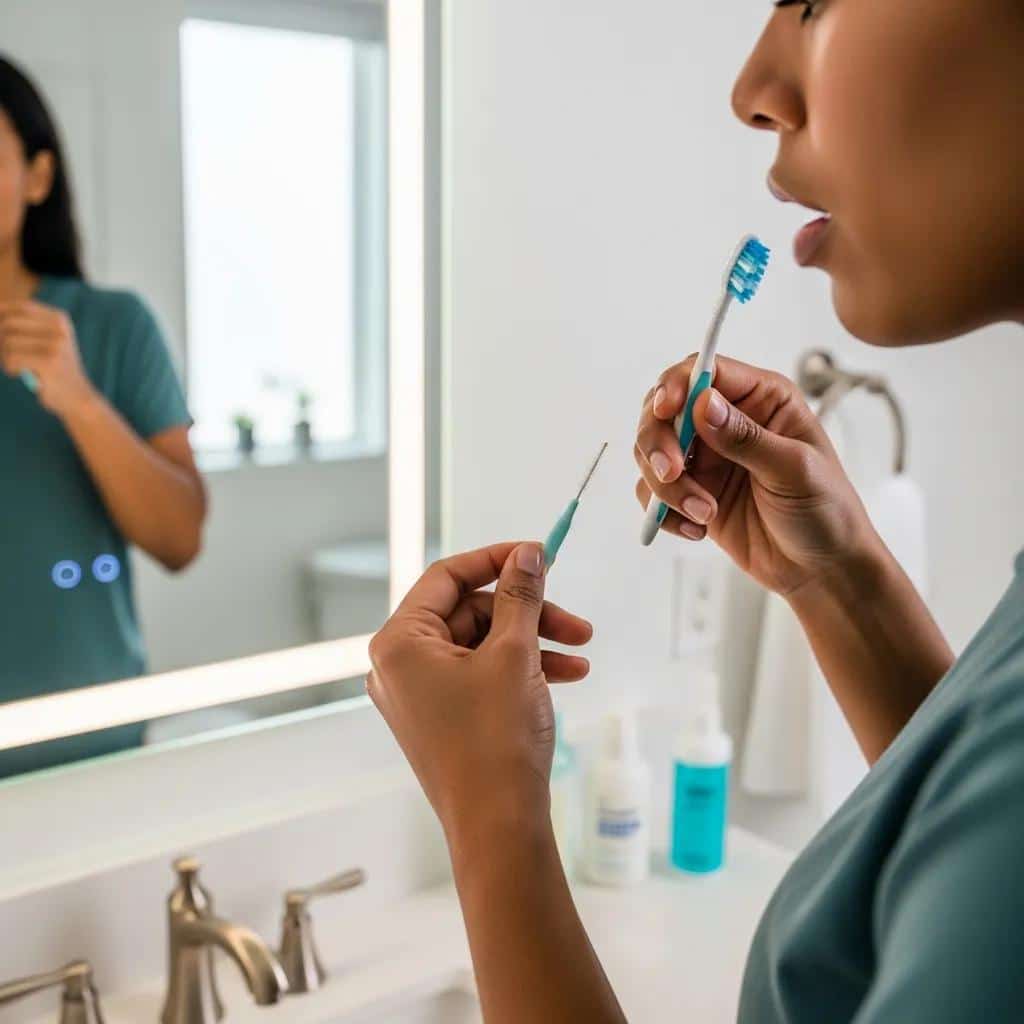
Effective brushing for implants emphasizes mechanical disruption of plaque with low-abrasive tools while protecting soft tissue. Use a soft-bristled manual brush or a quality sonic/electric toothbrush with gentle circular or sweeping motions along the gumline and implant crown surfaces for at least two minutes twice daily; avoid scrubbing that abrades tissue. Interdental cleaning should target the embrasure spaces and under-prosthesis margins using appropriately sized interdental brushes or super-floss for fixed bridges; when flossing, slide the floss along the side of the crown and under the contact, avoiding aggressive sawing motions. For patients with limited dexterity, a daily water flosser set to a low-to-moderate pressure provides effective subgingival cleaning and can complement flossing or interdental brushes. Regular technique refinement and consistency reduce biofilm load and directly support long-term implant stability.
Which Oral Care Products Are Recommended for Implant Maintenance?
Choosing implant-safe products focuses on mechanical plaque removal and adjunctive antimicrobial control without damaging restorative surfaces. A brief introduction explains product categories and why selection matters for implant longevity before the comparison table that follows.
Product Type
Key Attribute
Recommendation
Soft-bristled toothbrush
Low abrasivity; gentle on gums and crowns
Use twice daily; electric brushes with soft heads preferred for consistent technique
Interdental brush
Size-matched to embrasure; nylon-coated wires reduce abrasion
Use daily in spaces around implants; select smallest effective size
Water flosser
Pulsed irrigation; effective for low-dexterity users
Use daily as adjunct to flossing/brush; set to gentle pressure near implants
Antiseptic mouthwash
Antiseptic vs cosmetic; therapeutic reduces bacterial load
Use chlorhexidine short-term post-op or daily low-alcohol antiseptic per clinician guidance
This comparison clarifies how each product contributes to plaque control and why combining mechanical and adjunctive strategies provides the best protection. Selecting the correct sizes and using low-abrasive formulations minimizes wear to restorative materials and preserves peri-implant soft tissues, which prepares readers for the next section on recognizing warning signs of disease.
If you would like a personalized daily-care and product plan tailored to your clinical needs, Dentist In Mansfield- Dentures and Dental Implants offers a free dental implant consultation to review technique, product selection, and individualized recall schedules.
What Are the Signs and Risks of Peri-Implantitis and How Can It Be Prevented?
Peri-implantitis is a destructive inflammatory disease that affects the tissues around dental implants and can result in progressive bone loss if not addressed. Early recognition of symptoms and understanding risk factors—such as poor oral hygiene, a history of periodontal disease, smoking, and uncontrolled systemic conditions—enables timely interventions that preserve implant function. Prevention relies on a combination of consistent home care, risk modification, and regular professional monitoring to detect and treat mucositis before it progresses. The next subsections provide a focused symptom checklist and explain the biological pathways that connect inflammation to bone resorption.
Introductory table mapping condition to signs, causes, and immediate patient actions appears below to help patients triage symptoms and understand appropriate next steps.
Condition
Typical Signs
Immediate Action
Peri-implant mucositis
Redness, bleeding on gentle probing, mild swelling
Increase home care; schedule professional cleaning within weeks
Peri-implantitis
Persistent bleeding, suppuration, pocketing, radiographic bone loss
Urgent dental evaluation for debridement, possible adjunctive therapy
Implant mobility
Movement of the prosthesis or implant-thread exposure
Contact dental provider immediately for assessment and possible intervention
This mapping clarifies which findings require routine care versus urgent evaluation and helps patients prioritize contacting their provider when red-flag signs appear. Awareness of these stages enables prompt treatment that can often halt progression and preserve the implant.
What Symptoms Indicate Peri-Implantitis Around Dental Implants?
Peri-implantitis commonly presents as persistent gum redness and bleeding that does not resolve with improved hygiene, often accompanied by swelling, drainage, or a chronic bad taste. Patients may also notice discomfort when chewing, increasing pocket depths around the implant on clinical probing, or drainage that suggests active infection; radiographs can reveal bone loss in more advanced cases. Implant mobility is a critical alarm sign that usually requires urgent evaluation because it indicates compromised osseointegration and structural instability. If you observe increasing bleeding, new swelling, or any mobility, schedule an evaluation promptly so professional debridement and targeted therapy can begin before irreversible bone loss occurs. Early patient action improves the likelihood of nonsurgical reversal for mucositis and limits the need for more invasive procedures.
How Does Poor Oral Hygiene Lead to Bone Loss and Implant Complications?
Chronic biofilm accumulation triggers a sustained inflammatory response in the peri-implant mucosa, with immune cells releasing cytokines that activate osteoclasts and promote bone resorption. As bone volume diminishes, the structural support that underpins osseointegration weakens, leading to increased micromovement at the implant-bone interface and higher risk of implant failure. Microbial colonization at microgaps between the abutment and implant can serve as a persistent reservoir for pathogens, perpetuating inflammation despite surface cleaning. Regular monitoring with clinical probing and radiographs detects early bone changes so that non-surgical and surgical interventions can be planned to preserve or restore supporting bone. Understanding this pathophysiology highlights why consistent hygiene and timely professional care are essential to prevent irreversible implant complications.
How Do Lifestyle and Systemic Health Factors Influence Dental Implant Lifespan?
Lifestyle choices and systemic health directly affect healing, osseointegration, and long-term maintenance of implants; controlling these variables improves outcomes and reduces complication rates. Smoking reduces local blood flow and immune responsiveness, while poorly controlled diabetes impairs wound healing and increases infection risk—both are associated with higher rates of peri-implantitis and implant loss. Medications that affect bone metabolism and nutritional deficits in calcium or vitamin D can also influence bone health around implants. The subsections below summarize how smoking and diabetes alter biological healing and outline practical lifestyle changes that support implant longevity. A focused table presents common factors, their effects, and management approaches to guide patient conversations with medical providers.
Coordinate with medical provider to optimize glycemic control pre- and post-operatively
Alcohol excess
Impares immune function and bone remodeling
Moderate intake; avoid heavy consumption during healing phases
Nutrition deficits
Reduced bone remodeling capacity
Ensure adequate calcium and vitamin D intake and correct deficiencies when present
How Do Smoking and Diabetes Affect Implant Healing and Longevity?
Smoking introduces vasoconstrictive chemicals that limit blood flow, reduce oxygen delivery, and impair immune cell function in peri-implant tissues, which together raise the probability of infection and delayed integration. Clinical studies consistently show higher failure rates and more peri-implant bone loss among smokers compared with non-smokers, with dose-dependent effects based on the number of cigarettes. Poorly controlled diabetes elevates glycation end-products and systemic inflammation, both of which hinder wound healing and reduce the predictability of osseointegration. Working with primary care or endocrinology to optimize glycemic control before implant placement and during healing significantly improves outcomes. Patients who stop smoking and achieve metabolic control demonstrate markedly better implant survival rates, reinforcing the value of preoperative lifestyle optimization.
What Lifestyle Changes Support Long-Term Dental Implant Health?
Targeted lifestyle changes focus on cessation of tobacco use, optimization of metabolic health, balanced nutrition, and moderating alcohol consumption to support tissue healing and bone metabolism. Quitting smoking improves local blood flow and immune competence, while consistent glycemic control in diabetes reduces infection risk and promotes reliable osseointegration. A diet rich in calcium, vitamin D, and protein supports bone remodeling and soft tissue repair, and regular weight-bearing exercise contributes to overall bone health and immune resilience. Stress management and adequate sleep further support systemic healing capacity, indirectly benefiting implant maintenance. Implementing these changes before and after implant surgery reduces complication rates and enhances the longevity of restorative work.
Why Are Professional Dental Maintenance and Regular Checkups Vital for Implant Longevity?
Professional maintenance complements home care by removing calculus and biofilm in areas that patients often miss, monitoring peri-implant tissue health, and detecting early signs of disease that are not yet symptomatic. Specialized instrument sets and implant-safe debridement techniques are used to clean implant surfaces without damaging restorative materials, and radiographs help identify hidden bone loss. Regular recall intervals, tailored to individual risk profiles, allow clinicians to escalate care early if mucositis appears and to provide adjunctive therapies such as localized antimicrobials. The following subsections explain recommended cleaning frequencies and detail what a maintenance visit typically includes so patients understand the value of ongoing professional oversight.
How Often Should You Schedule Professional Cleanings for Dental Implants?
Scheduling depends on individual risk: low-risk patients without periodontal history may continue a 3–6 month recall, while patients with a prior history of periodontitis, smokers, or those with systemic conditions often benefit from three-month maintenance visits. Frequent professional cleanings reduce microbiological burden and allow clinicians to detect subtle changes in pocket depth or soft-tissue tone, enabling earlier, less invasive management. Risk-adjusted intervals balance resource use with preventive benefit and are adjusted based on clinical findings during each visit. Regular monitoring supports a proactive approach that frequently prevents progression from mucositis to peri-implantitis, which prepares patients for the next section describing the actual visit steps. Below is a short risk-tiered checklist to guide scheduling decisions.
Low risk: every 6 months for ongoing evaluation and standard hygiene.
Moderate risk: every 3–4 months if past periodontal disease or intermittent inflammation.
High risk: every 3 months or more frequently for smokers, poorly controlled diabetes, or recurrent inflammation.
These intervals provide a framework that clinicians refine through objective measurements and individualized assessments, ensuring that professional maintenance effectively supports long-term implant health.
What Happens During a Dental Implant Maintenance Visit?
A typical implant maintenance visit begins with a focused clinical exam that assesses soft-tissue health, pocket depths, and implant mobility, followed by any necessary radiographs to evaluate crestal bone levels. The clinician or hygienist uses implant-safe instruments to remove hardened deposits and biofilm, taking care not to scratch implant surfaces while thoroughly debriding subgingival areas. Adjunctive therapies—such as localized antiseptics, polishing of the prosthesis, or targeted antimicrobial rinses—may be applied depending on findings, and clinicians will document measurements for trend analysis over time. Patient education and reinforcement of home-care technique conclude the visit, with scheduling of a risk-appropriate recall interval. This structured approach combines detection, mechanical therapy, and patient coaching to maintain implant stability and prevent disease progression.
If you would like the practice to review your maintenance needs and develop a personalized recall plan, Dentist In Mansfield- Dentures and Dental Implants provides professional implant maintenance services and invites patients to schedule a free dental implant consultation to discuss individualized intervals and therapies.
How Does Dentist In Mansfield Support Patients in Maximizing Dental Implant Lifespan?
Dentist In Mansfield- Dentures and Dental Implants provides restorative dentistry services focused on dental implants and dentures, offering care designed to preserve implant longevity through personalized planning and modern clinical approaches. The clinic emphasizes patient comfort, modern technology, sedation dentistry where appropriate, and convenient scheduling to support successful surgical and maintenance outcomes. The next subsections list specific free consultation and personalized care services and explain how contemporary technology enhances diagnostics and treatment precision—information intended to help patients decide whether to pursue a consult to tailor their maintenance plan.
What Free Consultation and Personalized Care Services Are Offered?
Dentist In Mansfield- Dentures and Dental Implants offers a free dental implant consultation to evaluate individual implant needs, assess risk factors, and formulate a personalized maintenance and care plan. During the consultation, clinicians review medical and dental history, assess soft tissue and bone conditions, and recommend a risk-adjusted recall interval and home-care regimen tailored to the patient’s abilities and prosthesis type. The consult also provides an opportunity to discuss affordable payment plans and sedation options when applicable, ensuring treatment comfort and access for patients considering implants or ongoing maintenance. To arrange an in-person evaluation, patients can contact the practice directly at the provided phone number or visit the office at the listed address for scheduling; this consultation forms the basis for a customized, evidence-based care plan.
How Does Advanced Technology Enhance Implant Care in Mansfield?
Modern diagnostic and treatment technology enhances implant planning and long-term care by improving visualization, precision, and patient comfort without altering clinical fundamentals of hygiene and maintenance. Digital imaging and radiographic review support accurate assessment of bone levels and prosthetic fit, while modern instrument design enables safer, more effective professional debridement of implant surfaces. Technology also facilitates documentation of clinical changes over time, helping clinicians detect early bone loss and respond with conservative therapy when appropriate. Combined with personalized care planning, modern technology supports predictable outcomes and a more comfortable experience for patients seeking durable implant solutions.
When Should You Seek Help for Dental Implant Problems?
Prompt evaluation is essential when certain red-flag signs appear because early intervention can reverse inflammatory changes or limit bone loss and implant compromise. Urgent indicators include increasing mobility of the implant or prosthesis, severe or escalating pain, facial swelling, or systemic symptoms such as fever that suggest spreading infection. Less urgent, but still concerning signs include persistent bleeding, chronic bad taste or odor, and new or increasing pocket depths around the implant; these warrant timely appointments to prevent progression. The following subsections list common failure symptoms and explain how early interventions maximize the chance of saving the implant.
What Are Common Symptoms Indicating Implant Failure?
Common symptoms that may indicate implant failure include persistent or worsening pain around the implant site, visible swelling or abscess formation, bleeding on probing that does not respond to improved hygiene, and any mobility of the implant or attached prosthesis. Patients may also notice changes in bite, loosening of the crown, or a persistent bad taste or odor that signals chronic drainage; systemic signs such as fever suggest a spreading infection and require urgent care. Differentiating mild inflammation from true structural compromise is important—bleeding and redness often precede bone loss, while mobility is a late and urgent sign. Contacting your dental provider promptly when these symptoms appear increases the likelihood of effective, less invasive treatment.
How Can Early Intervention Prevent Implant Loss?
Early interventions may include professional debridement to remove biofilm and calculus, localized antiseptic application, and short courses of targeted antibiotics when indicated; these measures often reverse peri-implant mucositis and halt progression. When infection or bone loss is established, minor surgical interventions—such as open debridement and regenerative techniques—can be effective if initiated early, but outcomes decline as bone loss increases. Timely detection through regular professional monitoring and immediate patient reporting of warning signs substantially improves the odds of preserving osseointegration. Prompt evaluation allows clinicians to select conservative therapies first and escalate as needed, which is why urgent communication with your dental team is critical at early symptom onset.
What Are the Most Effective Strategies to Ensure Long-Term Dental Implant Success?
Long-term implant success depends on a systematic strategy that combines disciplined daily hygiene, mitigation of lifestyle and systemic risks, and regular, risk-adjusted professional maintenance. A coordinated plan integrates patient education, appropriate product selection, smoking cessation and medical optimization where relevant, and a documented maintenance schedule that includes clinical measurements and radiographic checks. The following subsections present a practical 30/60/90-day action plan patients can adapt and a final note about locating patient reviews when evaluating local outcomes.
How to Combine Daily Care, Lifestyle, and Professional Maintenance?
A practical phased plan helps translate recommendations into habits and monitoring that protect implants over time. In the first 30 days after implant placement or restoration, focus on meticulous daily brushing with a soft brush, gentle interdental cleaning, and adherence to any postoperative mouthwash or medication instructions; document any unusual symptoms. By 60 days, ensure a baseline professional check that includes clinical probing and radiographic review to confirm stable healing and to correct technique gaps in home care. By 90 days and ongoing, establish a routine recall based on your risk profile—every 3 months for high-risk patients or every 3–6 months for lower-risk individuals—while maintaining daily hygiene and lifestyle measures such as smoking cessation and medical coordination. Combining consistent home care, lifestyle modification, and scheduled professional oversight forms a resilient strategy that maximizes implant lifespan and minimizes the need for invasive treatments.
In the first 30 days after implant placement or restoration, focus on meticulous daily brushing with a soft brush, gentle interdental cleaning, and adherence to any postoperative mouthwash or medication instructions; document any unusual symptoms.
By 60 days, ensure a baseline professional check that includes clinical probing and radiographic review to confirm stable healing and to correct technique gaps in home care.
By 90 days and ongoing, establish a routine recall based on your risk profile—every 3 months for high-risk patients or every 3–6 months for lower-risk individuals—while maintaining daily hygiene and lifestyle measures such as smoking cessation and medical coordination.
To support informed decisions, patients are encouraged to review local practice ratings; for Dentist In Mansfield- Dentures and Dental Implants, patient reviews are available on the clinic’s Google Business Profile for those who wish to read verified experiences before scheduling a consult.
What Are Patient Testimonials and Success Stories from Mansfield?
Patient testimonials provide real-world perspectives on care and outcomes, but including them requires documented consent and source details, which are not provided here. Instead, prospective patients may consult the clinic’s Google Business Profile for verified reviews and summaries of patient experiences, which often highlight long-term implant function, comfortable treatment, and supportive maintenance programs. Reading multiple reviews can help prospective patients form realistic expectations about procedures, recovery, and follow-up care without relying on single anecdotal accounts. For personalized projections and to discuss expected outcomes based on your clinical situation, consider arranging the free dental implant consultation offered by the practice to review objective findings and a tailored care plan.
Trying to schedule a free consult is the recommended next step for anyone seeking a personalized assessment and maintenance plan tailored to their unique risk profile, restorative design, and lifestyle considerations. For a direct, in-person review, contact Dentist In Mansfield- Dentures and Dental Implants at (817) 567-2529 or visit the office at to begin the consultation process and develop a plan that supports long-lasting dental implants.