Planning for Dental Implants: Essential Extra Costs You Should Expect and How to Budget
Dental implants replace missing teeth by anchoring a titanium or zirconia post into the jawbone and restoring function and esthetics with an abutment and crown or prosthesis, yet many estimates omit the preparatory steps and follow-up expenses that drive the final price. This guide breaks down the common extras you should expect—from diagnostic imaging and bone grafting to anesthesia, lab fees, and long-term maintenance—so you can build a realistic budget and avoid surprise charges. You will learn which procedures are typically included in a standard implant quote, which items are commonly excluded, how materials and restoration choices influence durability and cost, and financing and insurance strategies to manage upfront expense. The article maps the process chronologically: initial investment and diagnostics, preparatory procedures that add cost, component and restoration material trade-offs, diagnostic/surgical/anesthesia fees, post-operative and lifetime maintenance, affordability options, local Longview cost drivers, and the most frequent hidden expenses to plan for. Throughout, the content uses clear cost ranges, comparison tables, practical checklists, and semantic explanations so you can compare options, ask the right questions at your consultation, and construct a contingency budget for implantation in Longview.
What Does the Initial Dental Implant Investment Typically Include?
The initial dental implant investment generally covers the surgical placement of the implant post (fixture), a healing period, and the final restorative component such as a crown, bridge, or denture, while diagnostic planning and basic follow-up are often included as part of a treatment package. This core bundle—implant post, abutment, and definitive restoration—represents the structural and functional essentials and explains why providers present a baseline price separate from preparatory or optional services. Understanding what a clinic bundles helps patients evaluate quotes and compare “apples to apples” across providers; many estimates exclude advanced imaging, grafting, anesthesia beyond local numbing, or laboratory-managed customization, so ask providers to itemize.
The next paragraphs define the implant components and typical diagnostic fees to clarify which line items belong to the core investment and which are additional.
What Are the Basic Components of a Dental Implant?
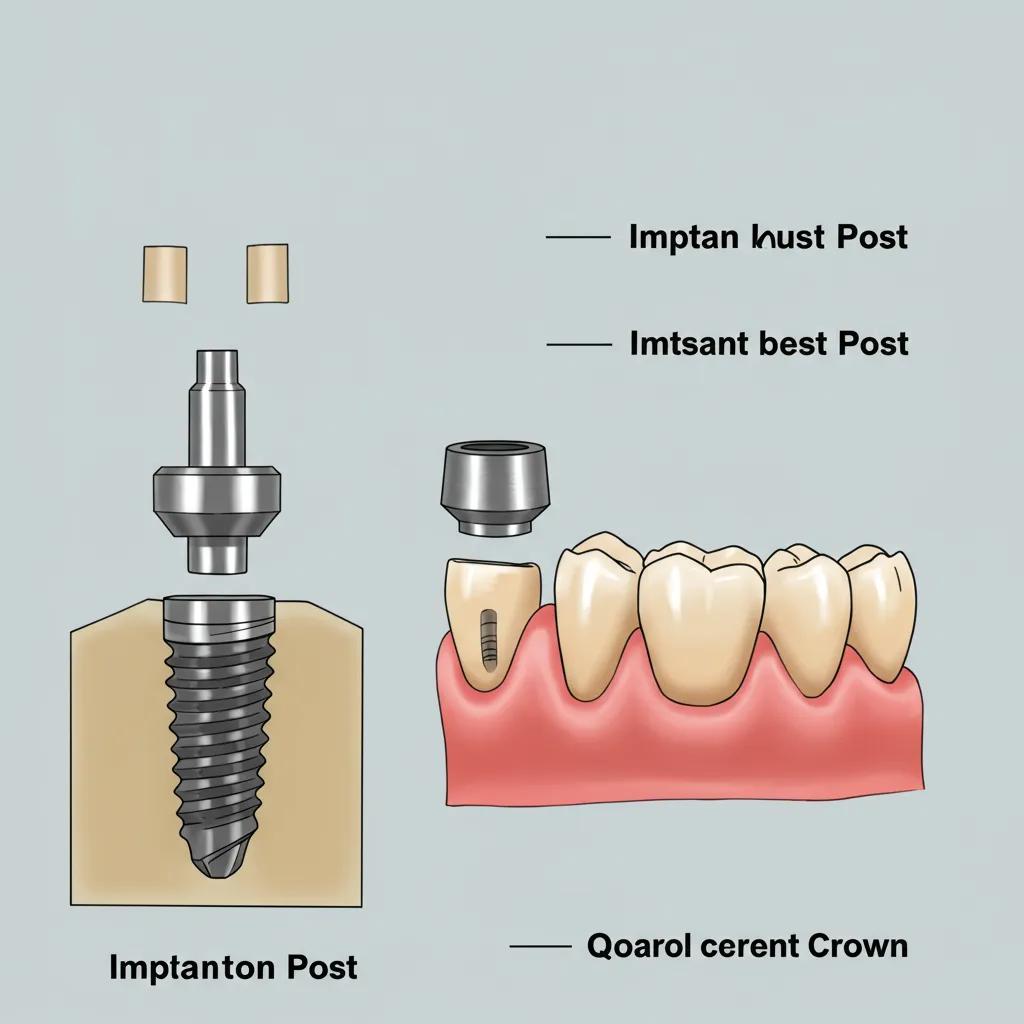
A dental implant system consists of three primary parts: the implant post (fixture) that integrates with bone, the abutment that connects the post to the restoration, and the crown, bridge, or denture that restores chewing and appearance. Implant posts are commonly made from titanium or titanium alloys and increasingly from zirconia; titanium is well-studied for osseointegration while zirconia offers a metal-free option for patients with specific preferences. Abutments can be stock (prefabricated) or custom-milled to optimize emergence profile and aesthetics; custom abutments often cost more but reduce long-term complications for complex cases. Crowns and prosthetic options vary by material—porcelain fused to metal, all-ceramic, or monolithic zirconia—with trade-offs in translucency, wear resistance, and price that affect both initial outlay and longevity. These component choices affect the implant’s lifespan and should be discussed as part of your treatment planning.
How Much Does the Initial Consultation and Diagnostic Imaging Cost?
Initial consultation fees range from complimentary to a modest charge depending on the practice and whether the visit includes advanced imaging; basic exams and panoramic X-rays are relatively inexpensive, while three-dimensional CBCT scans used for surgical planning add to cost but improve accuracy and reduce intraoperative surprises. A consultation that includes clinical exam, discussion of medical/dental history, and a treatment outline will identify whether CBCT imaging, impressions, or digital scans are required to produce a predictable surgical plan. Imaging is a diagnostic investment: CBCT imaging provides a volumetric map of bone volume and anatomical landmarks—this reduces the risk of complications like nerve or sinus injury and informs whether grafting or a sinus lift will be necessary. For patients, knowing that advanced imaging is not always optional helps set expectations about diagnostic fees and the value they bring in avoiding extra procedures later.
What Preparatory Procedures Can Add to Your Dental Implant Costs?
Preparatory procedures commonly raise the total price of implant treatment when the jaw lacks adequate bone volume or anatomic space to support an implant; bone grafts, sinus lifts, and extractions are the primary preparatory interventions that change the timeline and budget. These procedures correct deficiencies—bone volume, ridge shape, or extraction site healing—that would otherwise compromise implant stability or esthetics, and each has distinct healing timelines, material needs, and cost implications. The table below compares these preparatory procedures, clarifying when each is typically necessary and providing typical cost ranges so you can anticipate budget additions and treatment staging.
Preparatory procedures that restore or augment the supporting structures for an implant vary by complexity and material choice.
Procedure
When it’s needed
Typical cost range (USD)
Bone graft (socket preservation, ridge augmentation)
When bone width or height is insufficient to stabilize an implant
$300 – $3,000
Sinus lift (crestal or lateral window)
When upper posterior bone height is inadequate beneath the maxillary sinus
$1,200 – $4,000
Tooth extraction (simple or surgical)
When a failing tooth must be removed prior to implant placement
$100 – $700
Ridge preservation with grafting
Immediately after extraction to preserve alveolar bone for future implant
$300 – $1,500
This comparison shows that preparatory needs can add a substantial amount to the base implant cost; the next sections unpack typical scenarios and timelines so you can gauge the likely impact for your case.
What Is a Bone Graft and How Does It Affect Implant Cost?
A bone graft rebuilds lost jawbone to create a stable foundation for an implant by adding graft material—autograft, allograft, xenograft, or synthetic substitutes—to the deficient site and allowing biological integration over months. Bone grafting is recommended when CT or clinical assessment reveals insufficient bone height or width to support the mechanical demands of an implant; graft complexity ranges from socket preservation (relatively modest) to extensive ridge augmentation (more invasive and costly). Materials and technique drive price: socket preservation after extraction is commonly less expensive, whereas block grafting or staged vertical augmentation requires more operative time, specialized materials, and longer healing—raising costs. Healing intervals after grafting typically span 3–6 months before implant placement, extending treatment time and potentially adding interim prosthetic needs, so budget both the graft procedure and the temporal impact on your overall treatment plan.
Understanding the direct costs associated with bone grafting procedures, including materials and surgical time, is crucial for accurate budgeting.
Economic Impact of Bone Grafting in Surgical Procedures
For calculation of the direct costs operation time needed in addition to the main surgical intervention was measured and the material used recorded in a consecutive series of 50 interventions including bone grafting at the Department of Trauma Surgery at the University Hospital of Bonn Medical School. Surgical staff costs were calculated on the basis of a standard team consisting of one surgical attendant, surgical resident, surgical nurse, and nurse’s service. Cost of anaesthesia was calculated on a per minute base.
Mean additional operation time was 26.3 min (range 17–35 min). Surgical staff costs per operation minute were 2.70 Euro, costs for anaesthesiological service were 4.18 Euro/min. Material additional used consisted of sutures and sterilization costs. Material costs summed up to 32.01 Euro. The total direct costs of bone grafting were 212.95 Euro.
Economic impact of cancellous bone grafting in trauma surgery, 2007
When Is a Sinus Lift Needed and What Are Its Costs?
A sinus lift raises the floor of the maxillary sinus to gain vertical bone height for implants in the upper back jaw where sinus pneumatization or bone loss reduces implantable bone; it is essential when preoperative imaging shows insufficient crestal bone beneath the sinus. There are two principal approaches: crestal sinus access for modest lifts performed through the implant site and the lateral window technique for larger augmentations that require an external window into the sinus wall; choice depends on available bone and surgical goals. Costs for sinus elevation reflect approach complexity and graft material; lateral window procedures generally fall at the higher end of the range due to increased surgical time and postoperative care. Recovery from a sinus lift typically includes additional healing time before implant placement and sometimes sinus membrane repair materials, so sinus lifts should be considered a material addition to your implant budget and timeline.
How Much Does Tooth Extraction Before Implants Typically Cost?
Tooth extraction cost depends on simplicity and the presence of complications: a straightforward crown-level extraction will generally cost less than a surgical extraction that requires sectioning roots, managing infection, or removing impacted tissue. Extraction may be scheduled as an immediate precursor to implant placement (immediate implant) or performed earlier to allow site healing and ridge preservation; immediate placement can reduce some costs and treatment time but requires ideal conditions and clinician experience. Infection, root morphology, and patient medical history influence complexity and therefore price; extraction costs should be considered with possible socket preservation grafting, which adds incremental fees but may prevent the need for later augmentation. Planning extraction timing in coordination with implant placement optimizes healing and can minimize duplicated visits and fees when orchestrated in a single treatment plan.
How Do Implant Components and Restoration Materials Influence Total Costs?
Material selections for implant posts, abutments, and final restorations significantly affect both upfront cost and long-term durability, and making trade-offs between initial price and expected lifespan is a fundamental budgeting decision. Implant posts vary by material and design—titanium remains the standard for integration and cost-effectiveness while zirconia posts offer a metal-free option at a premium and with different biomechanical profiles. Abutments (stock vs custom) and restorative materials (porcelain fused to metal, layered ceramic, monolithic zirconia) influence appearance, wear characteristics, and the need for future repairs; choosing higher-quality materials increases initial cost but often reduces replacement frequency. The table below compares components, material options, and their typical cost impact and durability notes to help you weigh choices during treatment planning.
Choosing materials involves balancing appearance, strength, and long-term maintenance costs; the table below summarizes common options and their financial implications.
Component
Material options
Typical cost impact / durability notes
Implant post
Titanium (Ti) / Zirconia
Titanium: cost-effective, long track record; Zirconia: higher cost, esthetic preference for metal-free cases
Porcelain/all-ceramic: esthetic, moderate cost; Zirconia: durable, higher cost; Removable dentures: lower initial cost but more maintenance
What Are the Different Types and Costs of Implant Abutments?
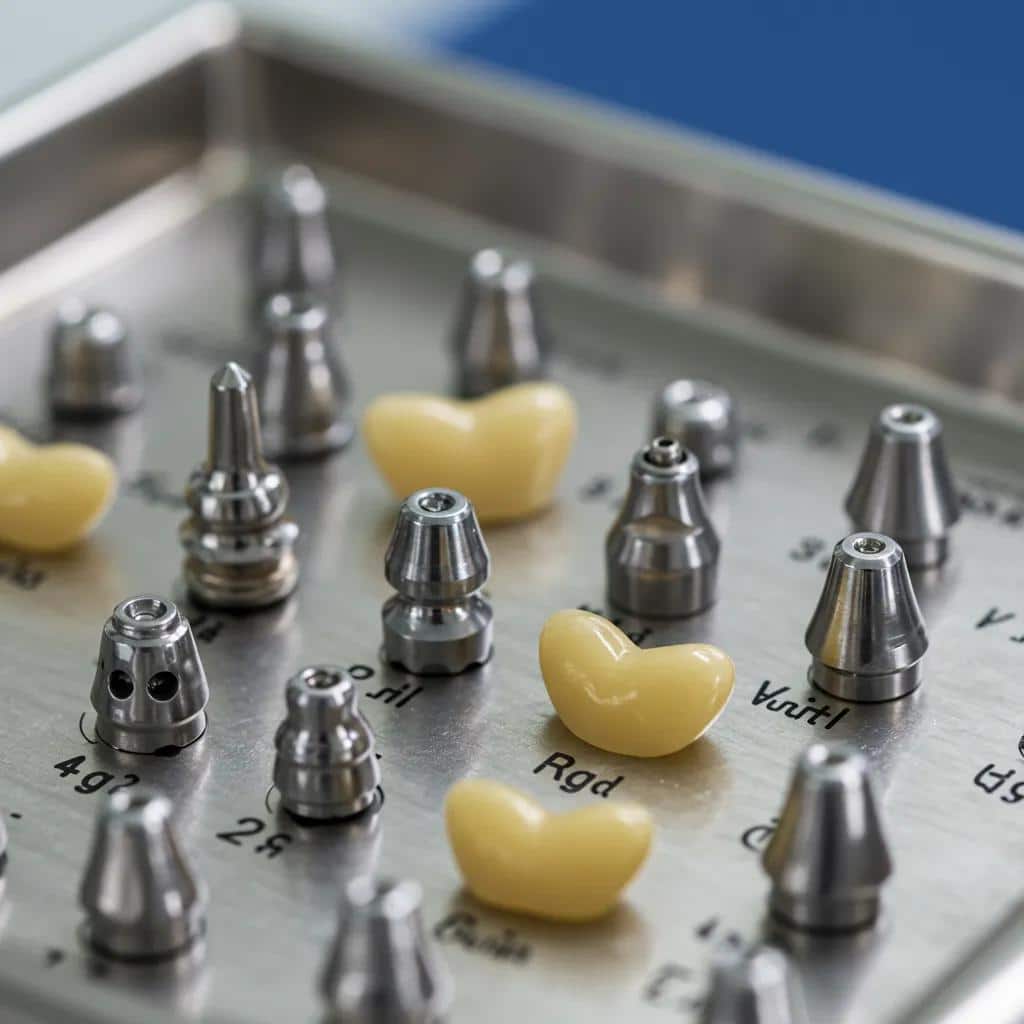
Abutments connect the implant post to the restoration and come as stock pieces from manufacturers or custom-designed abutments milled to precise contours; material choices usually include titanium and zirconia, each with distinct costs and aesthetic implications. Stock abutments are economical and suitable for many posterior restorations where function outweighs high-definition aesthetics, whereas custom abutments provide optimal soft-tissue support and emergence shape in the esthetic zone at an added price. Zirconia abutments increase cost relative to titanium but can improve gingival aesthetics for single front-tooth replacements; the decision depends on tissue thickness and smile visibility. Abutment selection affects both lab fees and chairside time because custom solutions often require additional laboratory work and trial appointments, so this line item should be included in preoperative estimates for esthetically complex cases.
How Do Dental Crowns, Bridges, and Dentures Affect Implant Pricing?
Restorative choices determine a substantial portion of the final bill: single implant crowns carry a per-unit cost, while multi-unit bridges or implant-supported full arches scale differently and often involve different laboratory processes and materials. Single crowns on implants typically incur higher costs per tooth than crowns on natural teeth because of specialized implant components and laboratory adaptation, while implant-supported bridges spread costs across multiple missing teeth but add complexity. Implant-supported denture options range from removable overdentures—more affordable initial solutions—to fixed full-arch prostheses that require more implants and higher lab fees but deliver improved function and satisfaction. Considerations like occlusal forces, parafunctional habits, and desired maintenance burden influence whether an initially lower-cost restoration becomes more expensive over time through maintenance and remakes.
What Are the Diagnostic, Surgical, and Anesthesia Fees Associated with Dental Implants?
Diagnostic, surgical, and anesthesia fees capture many discrete items that collectively shape the procedural invoice: imaging, surgical time, laboratory fabrication, graft materials, surgeon or specialist fees, and anesthesia or sedation services each contribute to the overall cost structure. Accurate preoperative diagnostics reduce intraoperative uncertainty and potential additional surgical time; surgical fees reflect clinician expertise and operating room resource use, while laboratory fees correspond to the precision and materials of the final restoration. The table below itemizes typical diagnostic and surgical charge categories with typical cost ranges and notes about necessity or scheduling impact so you can interpret quotes that separate these fees from the core implant and restoration prices.
Service
Typical cost range
Notes (necessity, impact on scheduling)
Initial consultation (with exam)
$0 – $150
Some practices offer free consults; full exam may be charged when complex planning is required
Panoramic X-ray
$50 – $200
Basic overview image; low cost and quick scheduling
CBCT (3D) scan
$200 – $700
Critical for surgical planning in many cases; reduces surprises
Surgical placement fee (surgeon)
$800 – $2,500 per implant
Varies with clinician experience and case complexity
Laboratory fees (custom crowns/abutments)
$500 – $2,000 per unit
Lab material and customization drive price
Anesthesia / sedation
$50 – $1,200
Depends on type: local, nitrous, oral sedation, IV sedation
How Much Do Sedation Dentistry and Anesthesia Add to Your Implant Procedure?
Sedation options range from minimal inhalation adjuncts to deep IV sedation and add variable costs depending on the technique, monitoring requirements, and personnel needed; they improve patient comfort but should be budgeted as an optional line item. Nitrous oxide (laughing gas) is commonly the least expensive adjunct and may be billed per visit, while oral conscious sedation requires medication management and often more oversight; IV sedation typically involves an anesthesiologist or certified provider and commands the highest cost due to monitoring and recovery needs. Providers recommend sedation based on patient anxiety, length and complexity of the surgical procedure, and medical history; the decision to use sedation should balance comfort benefits and safety with its impact on the total cost.
When receiving quotes, ask whether sedation is included for surgical stages or billed separately, and whether incremental visits for monitoring are required.
Why Are Diagnostic Imaging Costs Important and What Should You Expect?
Diagnostic imaging informs implant location, bone quality, and vital anatomic relationships and thereby reduces the likelihood of intraoperative complications and the need for corrective procedures, making it a key value proposition in the diagnostic budget. Standard panoramic imaging offers a two-dimensional overview at modest cost, but cone-beam computed tomography (CBCT) provides three-dimensional visualization of bone volume, sinus proximity, and nerve canals—critical for precise implant angulation and safely assessing the need for grafting. Paying for CBCT and careful virtual planning often saves money downstream by avoiding implant failure, additional surgeries, or poorly fitting prosthetics; most clinicians will recommend CBCT when bone availability or anatomic risk factors are uncertain. When reviewing treatment plans, confirm which imaging modalities were used and whether their fees are included in the quoted treatment package to anticipate total diagnostic expenditure.
What Post-Operative Care and Long-Term Maintenance Costs Should You Plan For?
Post-operative care and long-term maintenance represent recurring costs that influence the lifetime expense of implants and include follow-up visits, professional maintenance cleanings, potential component replacements, and occasional repairs or remakes of restorations. After implant placement, a typical follow-up schedule monitors healing, evaluates osseointegration, and addresses early complications; over the years, components like crowns or retention elements can wear or fracture, necessitating repair or replacement that should be budgeted. Warranty terms vary by provider and laboratory, and some practices include limited follow-up while others bill for each maintenance appointment; understanding these policies helps you estimate lifetime service costs. Below we outline a typical follow-up timeline and summarize likely maintenance actions along with pragmatic estimates of ongoing expenses.
What Follow-Up Visits and Cleaning Procedures Are Required After Implants?
Post-operative follow-ups typically occur within the first week to assess soft tissue healing, at one month to evaluate early integration, at three to six months for osseointegration confirmation, and then annually for ongoing monitoring and professional maintenance. Each visit can include clinical inspection, radiographic checks, hygiene appointments, and occlusal evaluation to ensure the restoration functions correctly and the peri-implant tissues remain healthy; professional cleanings for implant restorations sometimes require special instruments and training. Routine maintenance fees for implant checkups and cleanings are generally less than surgical costs but recur over the life of the prosthesis and should be included in lifetime budgeting; early detection of issues like peri-implant inflammation prevents more costly interventions later. Maintaining meticulous home hygiene and attending scheduled professional visits reduces the probability of expensive corrective surgeries or restorative failures.
(Brief local care note: Affordable Dentist Near Me of Longview offers follow-up care and maintenance at its Longview location, and the practice provides sedation dentistry options for patients who require comfortable postoperative visits; scheduling assistance is available through the clinic for ongoing appointments.)
How Do Adjustments and Repairs Impact Long-Term Implant Expenses?
Adjustments and repairs can range from minor occlusal polishing or screw tightening to crown replacement or abutment exchange, and their frequency depends on materials chosen, patient habits like bruxism, and the precision of the original restoration. Common repairs include replacing fractured ceramic crowns, remaking overdenture attachments, or addressing loosening screws; individual repair events are typically less costly than initial surgery but accumulate over decades and should be factored into a long-term budget. Preventive measures—night guards for patients who grind, strong material selection in high-load zones, and meticulous oral hygiene—lower repair risk and therefore reduce expected lifetime costs. When planning, ask your provider about expected warranty coverage for labor and materials and typical timelines for component replacement to build a realistic contingency fund.
How Can You Make Dental Implants Affordable with Financing and Insurance Options?
Dental implants are a significant investment, but several financing strategies and insurance realities can make them achievable: verify which portions of treatment your dental insurance may cover, consider in-house payment plans or third-party financing for spreading costs, and use free consultations to obtain itemized estimates that facilitate comparison and loan applications. Many clinics advertise flexible payment scheduling and low-interest third-party loans to lower upfront barriers, and some offer “Everyday Low Fees” or promotional pricing to improve accessibility; combining these options with staged treatment—addressing preparatory procedures separately from the restorative phase—can smooth cash flow. The following outlines common financing paths to consider and how each affects monthly payments, followed by a short example scenario illustrating approximate monthly obligations at different loan terms.
Financing options vary in structure and cost and can be combined to fit personal budgets.
In-house payment plans: Many dental offices allow patients to split the bill over several months with no third-party lender, reducing administrative steps.
Third-party medical/dental loans: Lenders provide fixed monthly payments, often with promotional low-interest periods that can lower costs when paid within terms.
CareCredit-style lines of credit: These healthcare credit lines offer extended repayment schedules tailored to dental procedures.
Staged treatment financing: Paying for preparatory procedures separately from the final prosthesis spreads cost over a longer timeline and may reduce peak out-of-pocket needs.
Does Dental Insurance Cover Any Part of Dental Implant Costs?
Dental insurance often treats implants as a major restorative benefit and may cover portions of related services—such as extractions, some crown work, or limited periodontal treatment—but many plans exclude implant posts specifically or cap lifetime orthodontic/restorative benefits, so coverage varies widely. Typical insurer behavior includes covering diagnostic imaging, extractions, or crowns under certain plan allowances while excluding the fixture cost; others offer partial reimbursements for implant crowns but not for placement surgery or graft materials. To determine your coverage, request a pre-treatment estimate from both your provider and insurer, verify annual maximums and lifetime caps, and identify reimbursement percentages for diagnostic work and restorative lab fees. Knowing which discrete items your plan covers allows you to shift uncovered components into financing options and reduces unexpected out-of-pocket exposure.
What Flexible Payment Plans and Financing Options Are Available in Longview?
Local providers often offer structured pathways to affordability, and the Longview practice referenced here emphasizes “Everyday Low Fees” alongside flexible dental financing options that include low-interest loans and payment schedules designed to fit household budgets. In practice, this means patients may access in-house installment plans for portions of care, combine a promotional clinic fee structure with third-party financing for larger balances, or stage treatment over multiple visits to spread costs. Typical monthly payment scenarios for budgeting might include spreading a $6,000 total over 12 months (~$500/month) with in-house plans, or financing over 24–60 months through a lender at modest interest rates to reduce monthly obligations—always confirm exact terms and total interest paid. The clinic’s free implants consultation is a practical first step to obtain a personalized, itemized estimate that shows realistic monthly payment examples and helps match financing options to your financial situation.
How Can Free Consultations Help You Understand and Manage Implant Costs?
A complimentary implant consultation gives you a no-risk opportunity to receive a personalized treatment plan, discover whether preparatory procedures will be required, and obtain an itemized cost estimate that separates included services from add-ons, enabling clear comparison across providers. During a free consult you can ask about material options, lab workflows, sedation needs, and the practice’s typical staging approach—information that directly informs financing choices and contingency sizing. Clinics that offer free implant consultations often pair them with diagnostic imaging options (sometimes at a modest fee) so you can get an accurate, locally relevant estimate instead of a generic range. Use the free consult to request written estimates, warranty terms, and sample monthly payment scenarios so you can evaluate affordability before committing to treatment.
(Practical note: Affordable Dentist Near Me of Longview advertises a free implants consultation and flexible payment scheduling as part of its accessibility approach, which can simplify obtaining a locally specific estimate and comparing financing pathways.)
A comprehensive cost analysis, considering both direct and indirect expenses, is essential for understanding the true financial commitment of dental implants.
Dental Implant Cost Analysis: Direct and Indirect Expenses
PurposeThe purpose of this study was to estimate the cost of dental implant using the bottom-up approach with the current data from dental clinics.Materials and methodsIn this study, direct and indirect costs required for each treatment were calculated using the bottom-up approach. In the bottom-up costing, the average monthly total cost of dental clinic includes labor and material costs, administrative expenses, medical malpractice costs, and opportunity costs of invested capital. For the dental implant cost components, those include direct costs (labor costs, laboratory costs, material costs, depreciation or other operating costs), indirect costs (administrative costs), and the opportunity costs of investment for dental clinic.ResultsDental implant costs of metal cr
Dental implant bottom-up cost analysis, 2014
What Factors Influence the Total Cost of Dental Implants in Longview?
Local market conditions, provider training and experience, clinic overhead, and case complexity all influence implant pricing in Longview as they do elsewhere; these factors combine to create regional price bands and should be weighed against value metrics like outcomes, technology, and included services. Geographic factors such as rent and operating costs influence fees, and clinics that invest in cutting-edge facilities and in-house digital workflows may charge more but can offset that with improved predictability and shorter treatment timelines. Provider experience and specialist training often justify higher surgical fees for complex cases, while general dentists may offer comparable outcomes for straightforward single-tooth replacements at lower rates. The following paragraphs consider the interplay of location, clinician experience, and case complexity to help you contextualize Longview quotes.
How Do Location and Dentist Experience Affect Pricing?
Location affects overhead, available lab partners, and clinician rates, and dentists or oral surgeons with advanced implant training or a high volume of implant cases generally charge premiums that reflect specialized skill and predictable outcomes. Clinics investing in advanced imaging, digital planning, and in-office milling have higher equipment and staffing costs that are sometimes reflected in procedure fees, yet those investments can reduce surgical time and remakes, potentially saving money long term. When evaluating providers, balance lower cost against experience, complication rates, and included services—sometimes paying a modest premium for a more experienced clinician reduces the likelihood of expensive corrective procedures. Look for transparent itemization and ask about a clinician’s implant volume, referral patterns, and the practice’s approach to complications and warranties when comparing pricing.
How Does Case Complexity Impact Your Dental Implant Expenses?
Case complexity increases costs because multiple missing teeth, deficient bone, shallow ridges, or proximity to anatomical structures require additional surgical time, specialized grafting, or staged procedures that multiply fees and extend treatment duration. Example scenarios illustrate scale: a single, straightforward implant in a well-preserved ridge is the least expensive; replacing multiple adjacent teeth with an implant-supported bridge requires more implants and lab work and thus higher costs; a full-arch fixed prosthesis requires multiple implants and advanced prosthetic design, producing the highest total expense. Staged treatment—performing grafts and healing before implant placement—can spread cost over time but may increase total fees due to additional surgeries; choose strategies that align with both budget and desired outcome.
What Are the Most Common Hidden and Unexpected Dental Implant Expenses?
Hidden costs often appear when treatment plans change midstream or complications arise; common unexpected items include lab remakes, additional surgical time, component upgrades for esthetics, emergency visits, and extended healing interventions that all add to the invoice. These surprise expenses typically stem from unanticipated anatomic findings on imaging, peri-operative infections, or patient-specific healing variability, underscoring the importance of thorough preoperative assessment and contingency planning.
Common unexpected fees arise from diagnostic discoveries, material changes, and biologic variability.
Laboratory remakes: Poor fit or esthetic remakes increase lab fees and chair time.
Additional grafting or membrane repair: Intraoperative findings may require more graft material.
Anesthesia upgrades: Converting from local to IV sedation increases provider and monitoring costs.
Emergency or urgent appointments: Post-operative complications can lead to unplanned visits and interventions.
Component changes: Upgrading abutments or shifting to higher-end restorations for esthetic reasons adds fees.
Extended healing or re-entry procedures: Failed integration or infection requires corrective surgery.
Taking these items into account lets you build a contingency and ask targeted questions at your consult.
What Hidden Costs Should You Watch for When Planning Implants?
Hidden costs typically stem from three sources: incomplete diagnostics that require corrective procedures, upgrades requested after initial fabrication for better esthetics, and biologic complications that require additional surgery or prolonged healing. To minimize surprises, ensure your treatment estimate lists whether imaging, graft materials, lab remakes, and sedation are included or billed separately, and ask about the frequency and cost of remakes in comparable cases. Clarify whether the quoted surgeon fee includes the entire procedure or whether assistants, lab charges, and postoperative adjustments are billed in addition; transparency on these fronts prevents misunderstanding. Finally, confirm warranty terms and whether emergency visits related to implant complications are covered or billed separately so you can anticipate potential out-of-pocket exposure.
How Can You Budget Effectively to Avoid Unexpected Implant Expenses?
Effective budgeting for implants means building a contingency fund—commonly 10–20% of the estimated total—verifying covered items with your insurer, and using a free consultation to obtain a detailed, itemized estimate that separates core fees from optional or conditional services. A practical template is to allocate roughly 60% to core implant placement and restoration, 25% to preparatory procedures and diagnostics, and 15% to contingency and incidental costs, adjusting percentages based on case complexity and material choices. Ask for written estimates for staged treatment phases, request example monthly payment scenarios for financing options, and verify whether any promotions like “Everyday Low Fees” apply to your planned procedure to reduce upfront burden. Having a clear, itemized plan and a financial buffer reduces the chance that unforeseen clinical events become financial emergencies.
Medical and dental history summary and a list of medications.
Photos of your smile and areas of concern.
Questions about what is included in the quote and what is optional.
Requests for sample monthly payment scenarios and warranty details.
Ask for an itemized written estimate to identify which categories are included and which are extras.
Request sample monthly payment plans and verify whether the practice’s flexible financing or “Everyday Low Fees” apply to your case.
Confirm warranty and remake policies to understand potential future costs.
Plan a contingency of 10–20% of the estimate to cover unexpected events or upgrades.
(Practical local reminder: Affordable Dentist Near Me of Longview emphasizes flexible dental financing, low-interest loan options, and transparent consultations to help Longview patients understand itemized costs and plan effective budgets.)