A Complete Guide to Tooth Replacement: Dental Implant Options, Dentures Types, and Affordable Solutions in Dallas
Tooth replacement restores chewing function, speech, and confidence after tooth loss, and this guide focuses on the full spectrum of restorative choices available to Dallas patients. Readers will learn how dental implants, dentures, and bridges work, which clinical and lifestyle factors influence candidacy, and practical cost and financing pathways specific to Dallas. The article situates implants as the most durable restorative option for many patients while acknowledging that dentures and bridges remain effective, often more affordable, alternatives for those with medical or budget constraints. After defining each approach and walking through procedural timelines, recovery expectations, and maintenance, the guide offers a decision framework for adults aged 40–60 and highlights lesser-known temporary options useful during transition phases. Practical resources include comparison tables, step-by-step timelines, financing checklists, and clear next steps for getting a personalized recommendation from a local provider. With focused sections on procedure mechanics, local cost ranges, and a patient-centered flow for choosing the right solution, readers will be prepared to evaluate options and pursue a tailored treatment plan in Dallas.
What Are the Best Tooth Replacement Options Available in Dallas?
Tooth replacement in Dallas commonly falls into three broad categories: dental implants, dentures, and bridges, each defined by its mechanism, typical longevity, and patient suitability. Dental implants use a surgically placed fixture that fuses to jawbone to provide a stable foundation for crowns or dentures, delivering high function and bone preservation. Dentures are removable prostheses that replace a full arch or partial set of teeth and offer an affordable, non-surgical path to restore basic function and aesthetics for many patients. Bridges span a gap by anchoring prosthetic teeth to adjacent natural teeth or implants, providing a fixed restoration with faster timelines but potential impact on neighboring teeth. Understanding these primary options helps patients narrow choices based on health, budget, and aesthetic goals, which leads naturally to deciding when a custom consult is the best next step.
Patients deciding among these approaches usually weigh longevity, invasiveness, cost, and lifestyle implications to find the best tradeoff for their situation. The next sections examine how implants provide a permanent solution and how dentures remain a conventional choice for many patients, setting the stage for deeper comparisons of types, costs, and recovery timelines.
How Do Dental Implants Provide Permanent Tooth Replacement?
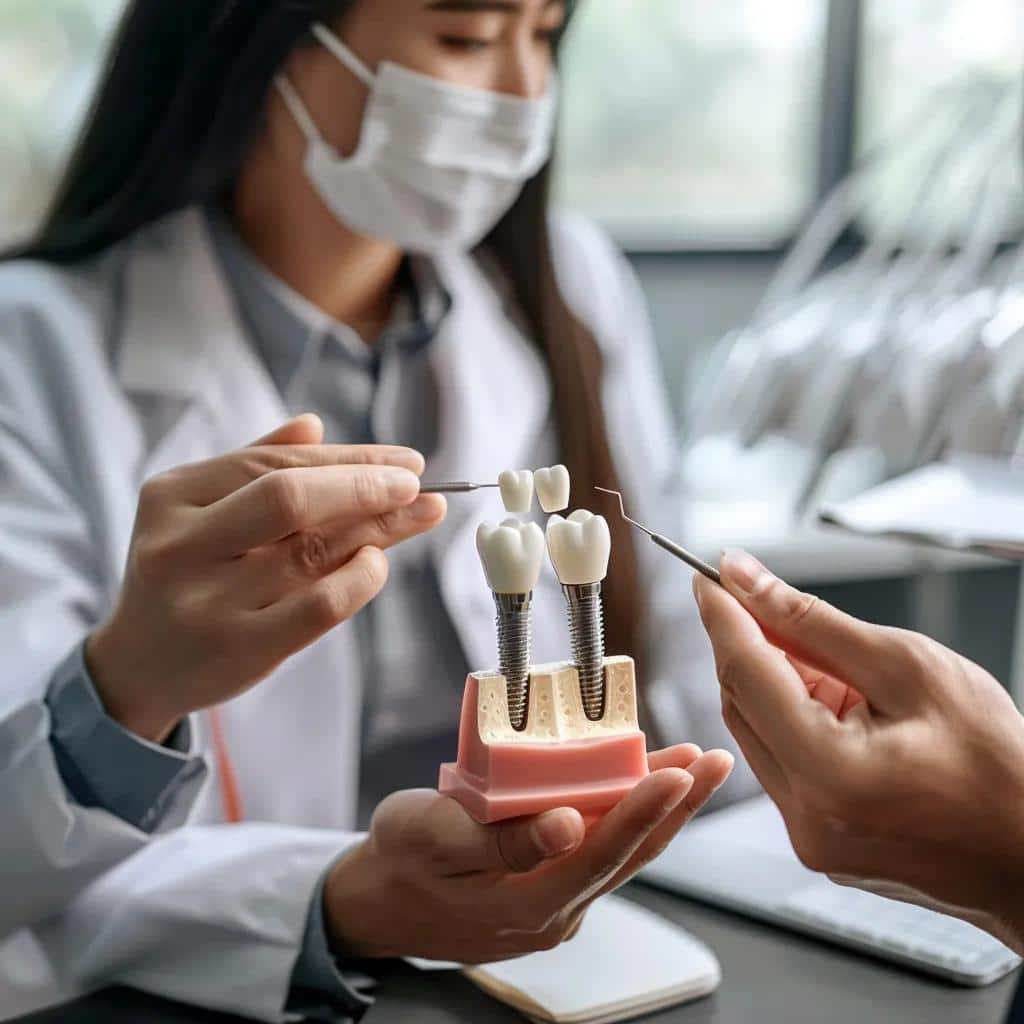
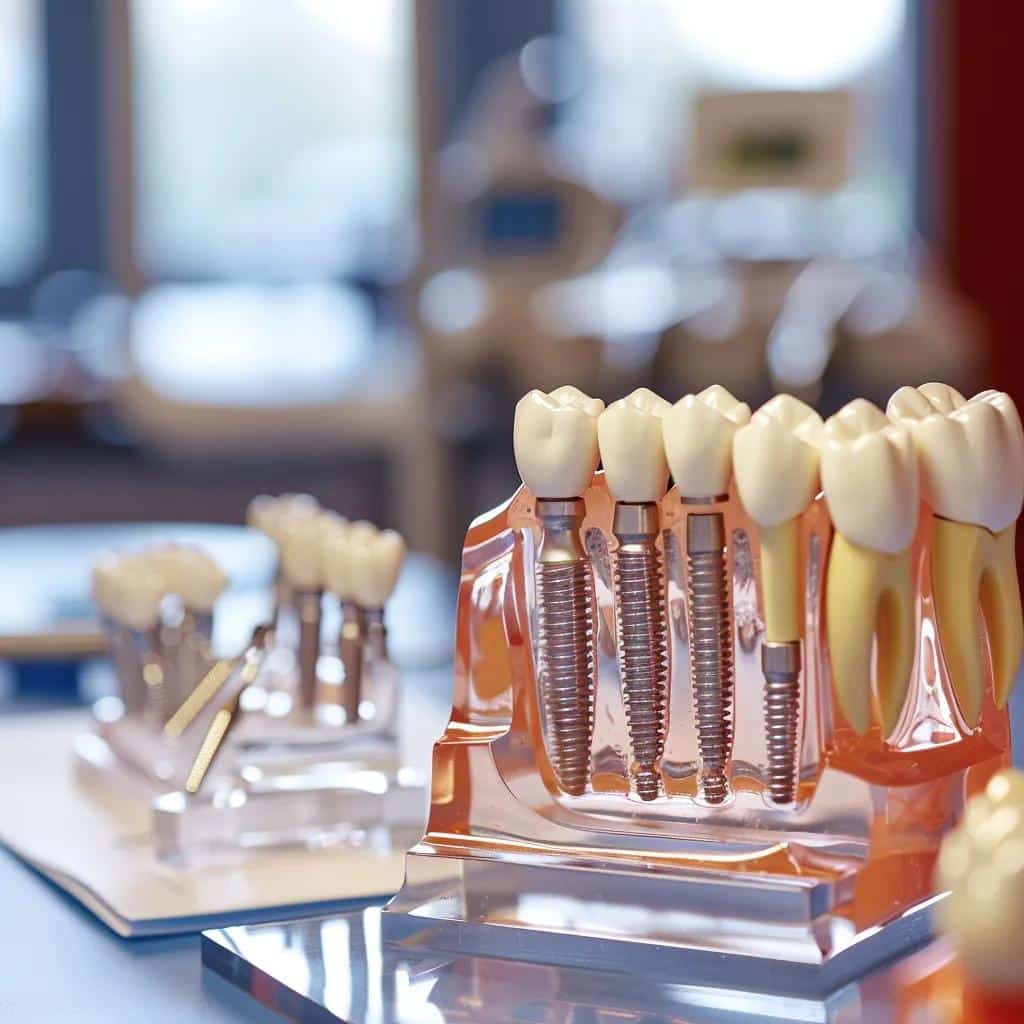
A dental implant is a multi-component system composed of an implant fixture (typically titanium or zirconia), an abutment, and a prosthetic crown or denture, and it functions by osseointegration — the biological fusion between bone and implant surface. Osseointegration preserves jawbone volume, restores near-natural chewing efficiency, and maintains facial support, which reduces long-term bone resorption compared with removable options. Implants can last decades when properly maintained, and they avoid altering adjacent teeth, making them an excellent choice when systemic health and bone volume permit surgical placement. Selection criteria include oral health, sufficient bone, and controlled medical conditions; when bone is deficient, adjunctive procedures such as bone grafting or sinus lifts can create a suitable foundation. Understanding these mechanics clarifies why implants are often called the most permanent tooth replacement, and it naturally leads into how dentures function as a traditional alternative for patients who cannot or prefer not to undergo surgery.
What Are Dentures and Their Role as a Traditional Tooth Replacement?
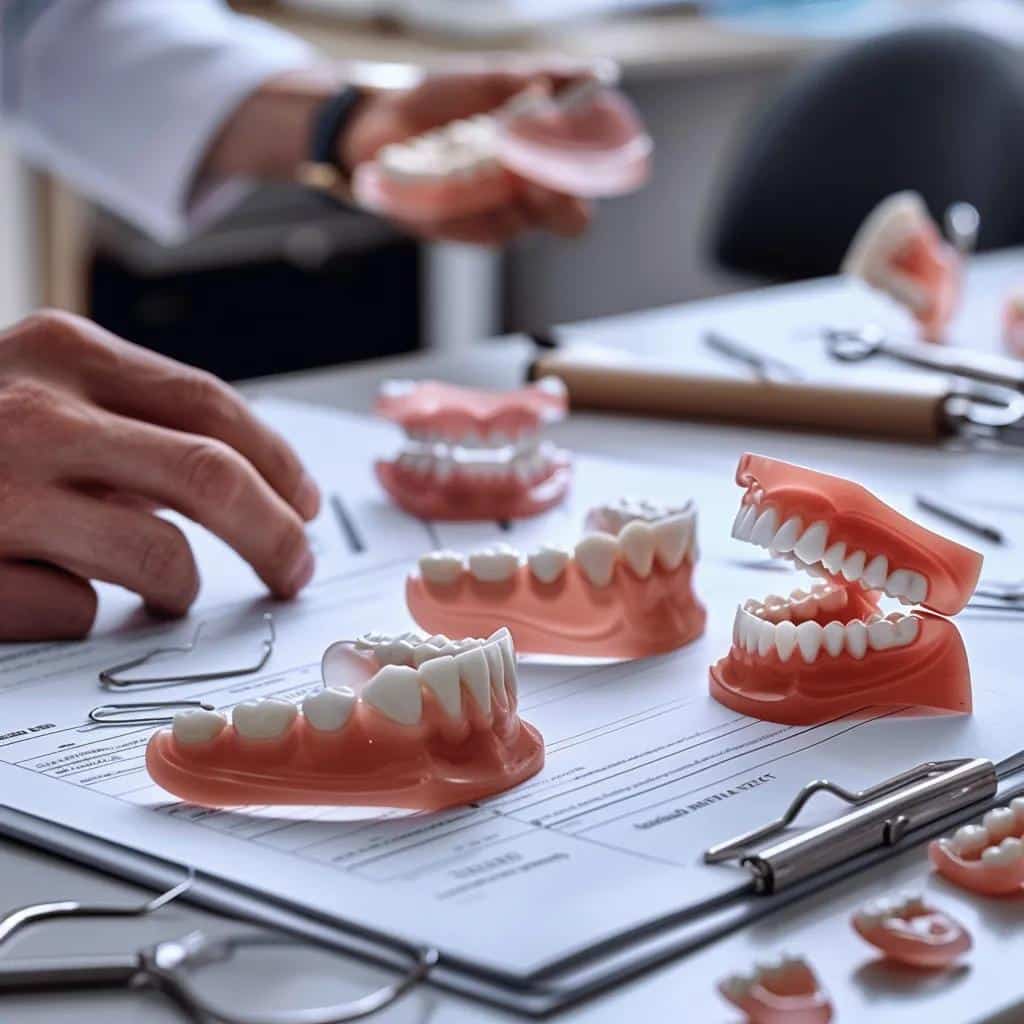
Dentures are custom-made removable prostheses with a base that simulates gums and teeth set into acrylic or composite materials, offering a non-surgical pathway to replace full or partial arches of missing teeth. Full dentures replace an entire arch and rely on suction, adhesives, or implant attachments for retention, while partial dentures fit around existing teeth and restore missing segments without altering an entire arch. Dentures restore facial aesthetics and basic chewing capability at a lower upfront cost than implants, and they are often recommended for patients with limited bone volume, medical contraindications to surgery, or constrained budgets. Limitations include potential instability, slower adaptation for chewing certain foods, increased maintenance (relines, adhesives), and continued bone remodeling that may change fit over time. After clarifying denture roles, the guide next explores specific implant types available in Dallas to help readers contrast permanent implant solutions with removable options.
What Types of Dental Implants Are Offered in Dallas?
Dental implant offerings in Dallas cover a range of configurations from single-tooth implants to full-arch solutions like All-on-4 and less invasive mini implants, each serving distinct clinical scenarios. Single implants replace one missing tooth with a fixture and crown, preserving adjacent teeth and offering excellent longevity; multiple implants reconstruct several adjacent teeth or support bridges, balancing cost and function. Full-arch protocols such as All-on-4 use strategically placed implants to support a fixed prosthesis in patients missing most or all teeth, reducing the number of fixtures while restoring function quickly. Mini implants serve as lower-cost, minimally invasive anchors for overdentures or temporary stabilization in medically complex patients, though they may have different longevity profiles compared with standard implants. These distinctions affect surgical complexity, treatment timeline, and cost, so understanding candidate profiles and expected outcomes helps patients choose the configuration that aligns with their priorities.
Before the detailed comparison table, consider candidacy factors that differentiate types: bone volume and density, medical history, desired permanence, and budget constraints. The table below summarizes core differences across common implant categories to clarify attributes relevant to Dallas patients.
Different implant configurations meet distinct functional and candidacy needs for tooth replacement in Dallas.
Type of Implant
Key Attribute
Typical Value / Clinical Note
Single Tooth Implant
Candidacy
Best for isolated tooth loss with adequate bone; preserves adjacent teeth
Multiple Implants
Procedure Complexity
Moderate complexity; staged treatment may be required for larger spans
All-on-4 (Full-Arch)
Timeline
Full-arch rehabilitation often completed in fewer surgical sites with fixed provisional prosthesis
Mini Implants
Cost and Invasiveness
Lower-cost, less invasive option for denture stabilization; may suit patients with limited bone or medical constraints
This comparison helps patients map clinical needs to implant types; next we explain specific use-cases for single, multiple, and full-arch configurations in greater detail.
What Are Single, Multiple, and All-on-4 Dental Implants?
Single, multiple, and All-on-4 implants represent a spectrum from focused restoration to comprehensive arch replacement, each with different surgical and restorative steps. A single tooth implant replaces one missing tooth with minimal impact on surrounding teeth and a straightforward restorative workflow involving a fixture, healing, abutment, and crown; healing and osseointegration typically span several months depending on bone quality. Multiple implants may be placed to support an implant bridge or several crowns, with treatment planning addressing spacing, occlusion, and load distribution to optimize longevity. All-on-4 and similar full-arch approaches place four or more implants at strategic angles to support a fixed prosthesis, often enabling immediate provisionalization that restores function quickly while final prosthetics are fabricated. Surgical complexity, time to final restoration, and cost scale with extent of reconstruction, which is why careful diagnostic imaging and treatment planning are essential before proceeding.
Understanding how implant-supported restorations compare with traditional dentures underscores the functional and quality-of-life differences patients can expect, so the next subsection clarifies how implant-supported dentures differ from conventional removable dentures.
How Do Implant-Supported Dentures Work Compared to Traditional Dentures?
Implant-supported dentures attach to two or more implants using locators, bars, or fixed frameworks, providing superior retention and chewing efficiency versus traditional removable dentures that rely on suction and adhesives. Attachment systems such as ball/locator anchors or bar-retained designs increase stability, reduce movement during eating and speaking, and improve patient confidence, particularly for lower-arch prostheses where traditional dentures struggle with retention. Candidacy for implant-supported dentures requires adequate bone at implant sites, and the cost is higher than conventional dentures due to surgery and implant components; however, many patients find the functional gains justify the investment over time. Maintenance includes periodic attachment replacement and routine hygiene similar to other implant restorations, and implant-supported prostheses also slow bone loss compared with fully removable solutions. Having described implant types and attachments, the guide proceeds to explain procedural steps and realistic recovery expectations to prepare patients for the treatment journey.
How Does the Dental Implant Procedure Work and What Is the Recovery Process?
The dental implant procedure is a multi-stage clinical pathway beginning with consultation and imaging, followed by surgical placement of the implant fixture, a healing period for osseointegration, and final restorative attachment of an abutment and crown or prosthesis. Pre-surgical assessment uses dental imaging to evaluate bone volume, adjacent anatomy, and the need for adjunctive procedures like bone grafting or sinus lifts; this diagnostic phase informs implant selection and surgical sequencing. After implant placement, osseointegration typically requires weeks to months depending on health and site, and provisional restorations may be used to maintain aesthetics and function during healing. The restorative phase involves attaching an abutment and prosthetic teeth tailored for occlusion and aesthetics, and long-term success depends on patient hygiene, scheduled maintenance, and periodic clinical reviews. With this overview, the next subsection offers a clear step-by-step timeline and what patients can expect at each stage.
The procedure’s predictable phases allow patients to plan recovery time and temporary accommodations, which reduces uncertainty and supports successful outcomes.
What Are the Step-by-Step Stages of Getting Dental Implants?
Consult and Diagnostics: Clinical exam and imaging determine candidacy and plan adjunctive procedures.
Surgical Placement: Implant fixture is placed; local anesthesia or sedation protocols are used for comfort.
Healing/Osseointegration: Bone fusion to the implant surface over weeks to months provides structural stability.
Restorative Connection: Abutment and final prosthesis are attached after integration, restoring chewing and aesthetics.
This numbered timeline simplifies patient expectations and sets the stage for understanding typical recovery symptoms and care.
What Should Patients Expect During Recovery and Aftercare?
Recovery after implant surgery commonly includes predictable and manageable symptoms such as localized swelling, mild to moderate discomfort, and temporary dietary modifications, and most patients return to normal activity within a few days while full integration occurs over weeks. Pain management typically relies on prescribed or over-the-counter analgesics and cold packs in the immediate 48–72 hours, with elevated soft-food diets recommended to minimize load on surgical sites. Oral hygiene protocols during healing emphasize gentle cleaning and antimicrobial rinses as directed by the clinician, and avoiding smoking and poorly controlled systemic conditions accelerates healing and reduces implant failure risk. Patients should attend scheduled follow-ups to monitor osseointegration, address any complications such as infection or poor integration early, and plan for abutment and prosthetic stages once stability is confirmed. Understanding recovery expectations helps patients prepare practically and psychologically for the treatment timeline and ensures long-term implant maintenance.
Common signs that require urgent attention include persistent severe pain, fever, or excessive bleeding; otherwise, routine follow-up and adherence to aftercare instructions support predictable outcomes and long-term implant survival.
What Are the Different Types of Dentures and Their Costs in Dallas?
Dentures in Dallas range from conventional full and partial prostheses to immediate and snap-in (implant-retained) options, and each type differs in fabrication timeline, retention, maintenance, and localized cost implications. Full dentures replace an entire arch and are typically most economical in the short term but may require future relines as jawbone resorbs. Partial dentures restore individual missing teeth while preserving remaining natural teeth and often serve as an interim or long-term solution depending on oral health. Immediate dentures are fabricated in advance and placed immediately after extractions to avoid a period without teeth, though they often need adjustments as tissues heal. Snap-in (implant-retained) dentures use two or more implants to dramatically improve retention and chewing efficiency compared with conventional removable dentures, combining implant benefits with removable convenience. After defining types, the table below outlines typical cost ranges in Dallas and core pros and cons to help readers compare options.
This denture cost table provides localized cost bands and maintenance notes to help Dallas patients weigh upfront expenses against long-term value.
Denture Type
Characteristic
Typical Cost Range (Dallas)
Full Dentures
Removable prosthesis for entire arch
Lower upfront cost; periodic relines expected
Partial Dentures
Replaces several missing teeth using clasps or precision attachments
Faster aesthetics; likely need adjustments and relines
Snap-in (Implant-Retained) Dentures
Attach to implants for improved retention
Higher upfront cost; greater stability and patient satisfaction
This table clarifies how denture types trade off cost, stability, and maintenance; the next subsection drills into functional differences and patient suitability for each denture type.
How Do Full, Partial, Immediate, and Snap-in Dentures Differ?
Full, partial, immediate, and snap-in dentures differ by how they are retained, fabricated, and maintained, and these differences influence patient selection based on oral health and lifestyle priorities. Full dentures restore an entire arch using a mucosal-bearing base and are typically the most cost-effective immediate solution for edentulous mouths, but they depend on suction and adhesives for retention and may lack chewing efficiency compared with implant-supported options. Partial dentures use metal or acrylic frameworks with clasps or precision attachments to secure replacement teeth around existing dentition, offering a conservative option when some natural teeth remain and serving as a reversible option when future implants are considered. Immediate dentures provide the advantage of avoiding a period without teeth after extractions but require frequent adjustments during healing due to tissue changes. Snap-in dentures attach to implants with locator or bar systems to deliver improved retention and proprioception, making them especially valuable for patients seeking better chewing performance while maintaining removable prosthesis convenience.
These functional distinctions guide patient selection and inform expectations for fabrication timelines and long-term maintenance needs.
What Are the Affordability and Financing Options for Dentures in Dallas?
Affording dentures in Dallas often involves a combination of payment strategies including in-office financing plans, third-party healthcare credit, and the use of flexible spending accounts (FSA) or health savings accounts (HSA) where applicable, each helping to spread costs over time. Some dental practices offer installment plans or partner with third-party lenders to reduce upfront burden, while FSAs and HSAs allow pre-tax funds to be allocated for prosthetic dentistry expenses. Insurance coverage for dentures varies by plan and may cover a portion of the prosthetic cost after deductibles and waiting periods, so verifying benefits before treatment reduces surprise expenses. For many patients, scheduling a consult that provides a personalized estimate and a discussion of financing options is the most practical first step to determine net out-of-pocket cost. After exploring financing mechanisms, the guide next compares bridges and implants so readers can weigh fixed prosthetics against implant-based solutions from both clinical and financial perspectives.
Practical tips for maximizing affordability include obtaining detailed written estimates, asking about phased treatment plans, and confirming what is included in prosthetic fees to compare total cost of ownership over time.
Common financing approaches for dentures include in-office payment plans, third-party lending, and use of FSA/HSA funds.
Patients should request an itemized estimate and verify insurance benefits before starting treatment.
Comparing total cost over five years helps determine whether a higher upfront investment in implant-retained solutions may be more economical in the long run.
These financing strategies help align treatment selection with budget constraints and long-term value considerations.
How Do Dental Bridges Compare to Implants for Tooth Replacement?
Dental bridges and implants both restore missing teeth but differ fundamentally in how they interact with adjacent structures, longevity profiles, invasiveness, and maintenance requirements. Bridges typically rely on adjacent teeth for support and require preparation of those teeth, which can compromise tooth structure and increase risk to those abutment teeth over time. Implants replace the missing tooth root and preserve adjacent natural teeth by avoiding their preparation, often offering superior longevity and bone preservation when osseointegration is successful. Cost comparisons vary depending on the number of teeth replaced, need for grafting, and materials, with bridges often lower in upfront cost but potentially higher lifetime maintenance if abutment teeth fail. Patient-centered decision factors include oral health of neighboring teeth, bone volume, and patient preference for fixed versus removable solutions, and a structured checklist can clarify which option aligns best with a patient’s clinical situation and goals.
To help visualize key trade-offs, the table below compares bridges and implants across essential attributes relevant to Dallas patients.
Restoration
Attribute
Impact / Typical Outcome
Dental Bridge
Effect on Adjacent Teeth
Requires preparation of abutment teeth; may increase risk to those teeth
Implant-Supported Crown
Durability
Replaces root and crown; better at preserving bone and adjacent tooth structure
Dental Bridge
Recovery Time
Faster restorative timeline; little to no surgery if no grafting needed
Implant Solution
Maintenance
Requires surgical placement and healing; long-term maintenance focuses on hygiene and periodic checks
This comparison frames the central clinical trade-offs; the following subsection outlines bridge types and their best-use scenarios in greater detail.
What Are the Types of Dental Bridges and Their Suitability?
Dental bridges come in several forms — traditional fixed bridges, Maryland (resin-bonded) bridges, cantilever bridges, and implant-supported bridges — each suited to specific clinical scenarios. Traditional fixed bridges use crowns on adjacent teeth to support pontics and are suitable when adjacent teeth already require crowns or have strong structure to bear load; however, preparation of these teeth is required. Maryland bridges use a metal or ceramic framework bonded to the backs of adjacent teeth and are conservatively indicated for single missing teeth in low-load areas, especially where minimal alteration of adjacent teeth is desired. Cantilever bridges anchor to a single adjacent tooth and are used in limited situations with space constraints, though they place asymmetric load on the abutment. Implant-supported bridges replace missing teeth with fixtures and pontics without modifying natural teeth, offering a preferred option when adjacent tooth preservation and long-term durability are priorities.
Understanding these bridge variations clarifies when a bridge is clinically appropriate and when an implant-based option may better serve long-term oral health.
What Are the Pros and Cons of Dental Bridges Versus Dental Implants?
Choosing between bridges and implants requires balancing pros and cons related to invasiveness, longevity, impact on surrounding teeth, and cost, and a short checklist helps patients evaluate which factors matter most. Bridges offer shorter timelines and avoid surgery when adjacent teeth are suitable abutments, but they sacrifice natural tooth structure and may require replacement sooner if abutment teeth fail. Implants preserve adjacent teeth, maintain bone, and can deliver longer-term stability, but they require surgical placement, possible adjunctive bone grafting, and higher upfront investment. Maintenance differs: bridges demand vigilance regarding abutment tooth decay and periodontal health, while implants require excellent hygiene to prevent peri-implant disease. Patients should weigh immediate needs, long-term value, medical considerations, and financial constraints when selecting between the two modalities.
Consider oral health: If adjacent teeth are healthy and unrestored, implants often preserve tooth structure better than bridges.
Weigh timelines: Bridges can be completed faster; implants require healing time but often offer greater longevity.
Factor cost and invasiveness: Short-term cost may favor bridges, while implants may provide better long-term value for many patients.
These decision points help readers move from clinical factors to a personalized choice, and the next section explores other, less common alternatives that may fit short-term or transitional needs.
What Are Other Tooth Replacement Alternatives Beyond Implants, Dentures, and Bridges?
Beyond the mainstream options, several temporary and niche solutions exist for short-term aesthetics, transitional stabilization, or patients with limited surgical candidacy, and these alternatives serve specific use-cases during treatment planning. Temporary flippers and resin-bonded provisional bridges are cost-effective short-term esthetic solutions while patients await definitive treatment such as implants or permanent bridges. Mini-implants can offer interim stabilization for dentures or temporary support during healing periods, providing enhanced retention with less invasive placement. Adhesive partials and removable partials offer flexible, non-invasive restorations but are intended as transitional or budget-limited solutions rather than long-term replacements in most cases. Understanding when to use these alternatives — for instance, during osseointegration or when medical conditions temporarily preclude major surgery — helps patients avoid hasty permanent decisions and maintain function and appearance throughout their treatment journey.
The next subsection provides clear descriptions for these temporary options and explains when they are clinically appropriate, guiding patients through transitional choices.
What Temporary and Less Common Tooth Replacement Solutions Exist?
Temporary and less common solutions include flippers (acrylic removable partials), temporary resin-bonded bridges, mini-implant retained dentures, and adhesive pontics, each intended for short- to medium-term use. Flippers are lightweight, inexpensive acrylic prostheses that restore appearance immediately after tooth loss but are fragile and not designed for heavy chewing. Resin-bonded or adhesive bridges provide a minimally invasive fixed option for single missing teeth in low-load regions and can serve while planning more durable restorations. Mini-implants are small-diameter fixtures useful for stabilizing dentures and offering improvement in retention with limited surgical demands; however, they may not substitute for standard implants in long-term load-bearing applications. These transitional devices enable patients to maintain function and aesthetics while definitive planning or healing occurs, and they are often a practical choice for patients aged 40–60 balancing timelines, cost, and medical considerations.
Knowing these alternatives helps patients plan staged treatment pathways that preserve options for future permanent restorations, which leads naturally to a checklist for choosing the best option based on personal priorities.
How to Choose the Best Tooth Replacement Option for Your Needs?
Choosing the right tooth replacement requires a structured decision framework that weighs medical candidacy, bone health, budget, aesthetic priorities, functional needs, and acceptable timelines, and following a checklist reduces confusion. First, evaluate medical status and oral health with imaging to confirm bone volume and the condition of adjacent teeth; this determines whether implants, bridges, or dentures are clinically feasible. Second, quantify budget constraints and financing options to understand upfront cost versus long-term value; sometimes a phased plan best aligns care with cash flow. Third, decide on desired outcomes for function and aesthetics — for example, whether fixed prosthetics are a priority over removable convenience. Finally, consider lifestyle factors such as diet, social needs, and tolerance for surgical procedures; a clear consult with a provider will translate these factors into a tailored plan. Scheduling a personalized evaluation is often the decisive next step to reconcile these variables into a recommended treatment.
Medical and bone assessment: Confirm candidacy for implants or need for grafting.
Financial planning: Compare upfront costs with maintenance and financing routes.
Lifestyle and aesthetic goals: Decide between removable versus fixed solutions based on daily needs.
Applying this checklist helps patients converge on a choice they can commit to confidently; for those ready to move forward in Dallas, the next section explains why a local clinic may be the best place to begin.
Why Choose Affordable Dentist Near Me of Dallas for Your Tooth Replacement?
Affordable Dentist Near Me in Dallas, TX, welcomes you with open arms at our Dallas TX Center, located at 6301 Abrams Rd Ste 125, Dallas, Texas 75231. Over here, we care for the well-being of our patients and provide them with all sorts of services related to oral health like Cosmetic Dentistry, Emergency Dentistry, Pediatric Dentistry, General Dentistry, Endodontics, Periodontics, Prosthodontics, Orthodontics, and Sedation Dentistry, TMJ, and dental implants along with free consultations.
Affordable Dentist Near Me in Dallas, TX, offers local patients focused restorative services including dental implants and dentures, emphasizing affordability, quality care, and patient comfort in its Dallas location. The clinic provides free dental consultations for implant and denture candidates as well as new patient consultations, which serve as a practical, low-friction first step to receive an individualized evaluation and cost estimate tailored to each patient’s needs. Dr. Mike Pham leads clinical care at the Dallas office, and the practice’s patient-first approach centers on evaluating candidacy, discussing realistic timelines, and outlining financing pathways when applicable. For readers seeking a local appointment to discuss options after reviewing this guide, the most direct next action aligns with the clinic’s offer: Get Patient to schedule an appointment for a free dental consult.
How Does Dr. Mike Pham’s Expertise Benefit Your Treatment?
Dr. Mike Pham is the contact clinician associated with Affordable Dentist Near Me of Dallas and participates in delivering restorative services such as dental implants and dentures to local patients, which provides continuity of care from consultation through prosthetic delivery. Having a named clinician helps patients anticipate a consistent point of clinical accountability and personalized treatment planning, and clinicians in restorative practices often coordinate interdisciplinary steps like imaging, grafting, and prosthetic design to optimize outcomes. The clinic emphasizes comfort and affordability in treatment planning and aims to align clinical recommendations with patient goals for function and aesthetics. Patients considering tooth replacement should use clinician input to clarify trade-offs and confirm candidacy for implants, bridges, or dentures based on individualized diagnostic data rather than generalized cost estimates.
Next, we summarize the clinic’s free consult offering and how patients typically use that consult to obtain a tailored treatment estimate.
What Free Dental Consultations Are Available for Tooth Replacement?
Affordable Dentist Near Me of Dallas advertises free dental consultations for dental implants, denture consultations, and new patient evaluations, which typically include a clinical exam, discussion of options, and a preliminary cost estimate or plan outline when appropriate. During a free consult, patients can expect a focused review of oral health, discussion of medical history and financial considerations, and guidance on imaging or additional diagnostics needed to confirm candidacy; the consult is intended to reduce barriers to starting the decision process. Patients often use the free consult to compare the clinical trade-offs between implants, dentures, and bridges in the context of their specific anatomy and budget, and to obtain a written estimate for financing discussions. For Dallas residents ready to explore personalized options, the clinic’s free consult serves as an accessible step to clarify next actions and timelines.
Get Patient to schedule an appointment for a free dental consult.
What Are the Typical Costs and Financing Options for Tooth Replacement in Dallas?
Costs for tooth replacement in Dallas vary widely depending on the chosen modality, number of teeth, need for grafting, and materials selected; providing realistic localized ranges helps patients plan financially and compare value across options. Dental implants involve both surgical and restorative fees and generally carry higher upfront costs but may deliver superior long-term value through durability and bone preservation. Dentures present a lower initial cost but may require ongoing relines and replacements that increase long-term expenses, while bridges typically fall between dentures and implants in cost and are influenced by the condition of abutment teeth. Financing and payment alternatives such as in-office plans, third-party lenders, and the use of flexible spending accounts (FSA/HSA) change net out-of-pocket impact and should be explored alongside clinical recommendations. Below we present a practical cost overview and financing checklist tailored for Dallas patients considering these options.
These cost notes and financing approaches help patients compare options not just by sticker price but by total cost of ownership and practical affordability.
How Much Do Dental Implants, Dentures, and Bridges Cost in Dallas?
Typical Dallas cost ranges depend on scope and complexity: single-tooth implants include fixture, abutment, and crown; full-arch implant reconstructions vary by number of implants and prosthetic type; dentures and bridges have broad bands based on materials and lab costs. Example localized ranges to frame expectations include lower-end denture solutions generally being the most affordable upfront, partial dentures and bridges occupying mid-range costs, and single implants or full-arch implant solutions representing the higher end of the spectrum due to surgical and lab fees. Major cost drivers include the number of teeth replaced, necessity for bone grafting or sinus lift, implant brand or material selection, and complexity of the final prosthetic. Because individual variables significantly affect pricing, an in-person consult is the most reliable way to generate an accurate, personalized estimate.
Patients should interpret these ranges as planning figures and rely on a clinical exam and imaging to produce a definitive quote that reflects their anatomy and desired outcome.
What Financing Plans and Insurance Options Can Help Afford Treatment?
Financing mechanisms that commonly reduce upfront burden include in-office payment plans, third-party dental financing, and the use of FSA/HSA funds, each providing different trade-offs between convenience, interest costs, and eligibility requirements. In-office plans may allow interest-free installments over a set term and often simplify payment without third-party credit checks, while third-party lenders can offer longer-term financing for larger reconstructions albeit with interest considerations. FSA and HSA accounts permit pre-tax dollars to be used for dental prosthetic care, effectively lowering net cost if the patient has access to these accounts. Insurance coverage for tooth replacement varies and frequently covers a portion of denture or bridge costs after deductibles; implants are sometimes partially covered depending on plan specifics and medical necessity. Patients should request itemized estimates and confirm insurance benefits prior to treatment to map out net liability and explore phased treatment plans to spread costs.
Verify insurance benefits and exclusions before booking procedures.
Ask the clinic for written financing options and compare interest rates and terms.
Consider phased treatment to match work with available funds and reduce initial out-of-pocket costs.
These financing tips help align procedural choices with realistic budget scenarios, and when ready, patients in Dallas can move from plan to appointment with a local consult.
Get Patient to schedule an appointment for a free dental consult.