By Affordable Dentist Near Me Editorial Team · Updated 2026-08-19
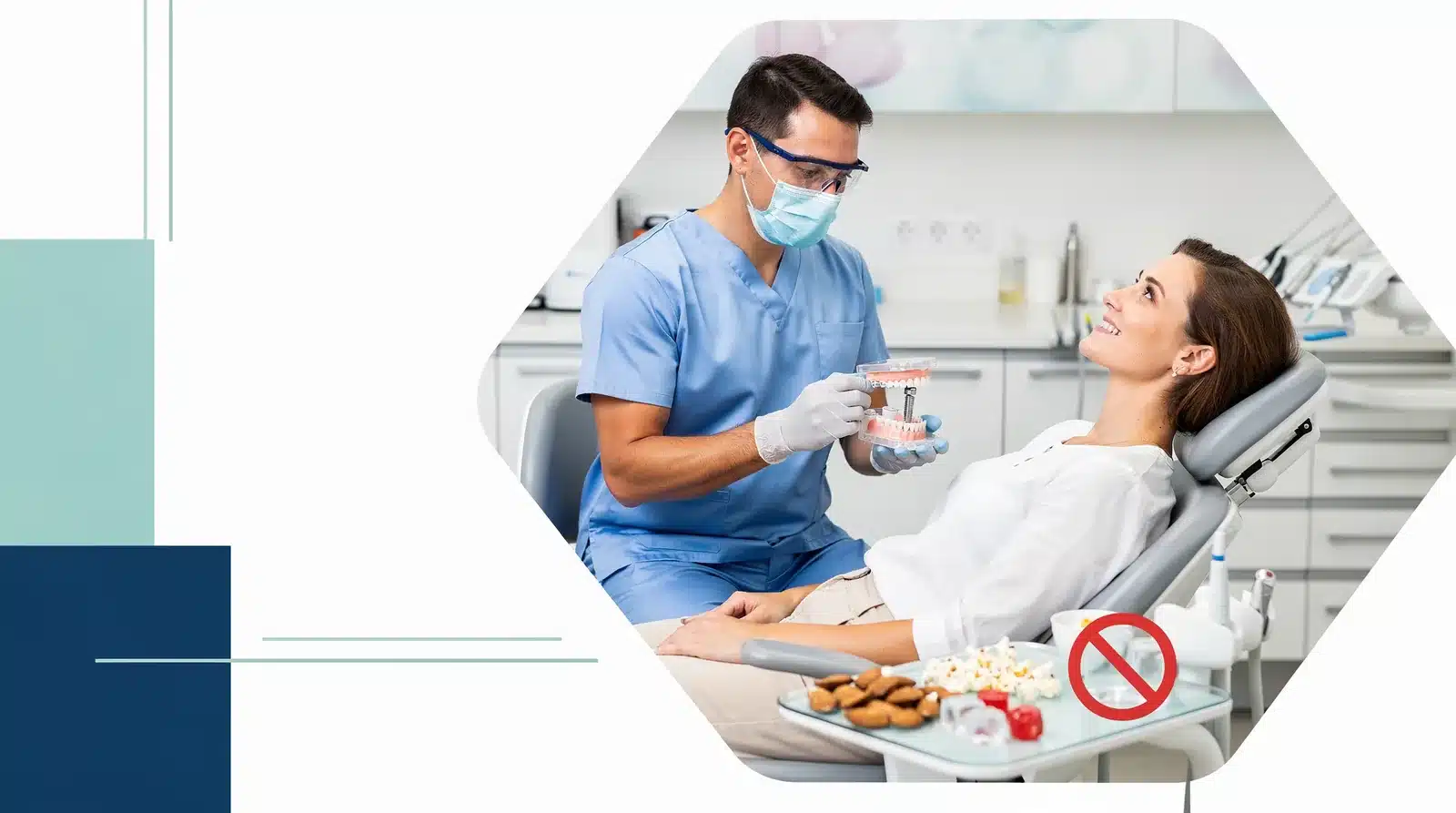
Hard, crunchy, sticky, and chewy foods pose risks after dental implant surgery, including nuts, popcorn, caramel, ice, and tough steak. These items strain healing gum tissue and implant sites. Affordable Dentist Near Me recommends soft alternatives like mashed potatoes, yogurt, and scrambled eggs during initial recovery weeks for safer, pain-free healing.
Key Takeaways
Avoid hard foods like nuts and candy for the first 7 days after implant surgery to prevent damage.
Skip sticky foods such as caramel and taffy that can dislodge the surgical site during healing.
Eliminate extremely hot foods and beverages immediately after surgery as they increase swelling and irritation.
Stay away from crunchy textures including chips and raw vegetables until full osseointegration completes in 3-6 months.
Why does diet matter after implant surgery?
The foods a patient chooses after dental implant surgery directly determine how quickly and comfortably the healing process unfolds. In the first few days, the surgical site is especially sensitive. Avoiding certain textures protects the area, minimizes irritation, and supports healthy tissue recovery. Gentle, easy-to-chew foods help control swelling and protect the blood clot and sutures so the area can heal undisturbed. The first week or two after the procedure is the period where chewing will be most limited. Where the risk of complications is highest.
What happens if a patient eats the wrong foods?
Hard, crunchy, or sticky foods can dislodge the protective blood clot that forms over the implant site. This exposes the underlying bone and nerves, causing pain and delaying healing. It also increases the risk of a painful condition called dry socket, which requires additional treatment.
How long do these dietary restrictions last?
The most restrictive period lasts roughly the first seven to fourteen days. During this window, patients should stick to soft foods after dental implants and follow [Essential Guide to Dental Implants Healing in Dallas](https://affordabledentistnearme.com/essential-guide-to-dental-implants-healing-in-dallas/) closely. After the initial healing phase, most patients can gradually reintroduce firmer foods, but dental implant recovery dietary tips recommend continuing to avoid anything that requires aggressive chewing for several more weeks.
What to avoid
Why it matters
Hard foods (nuts, chips, raw vegetables)
Can crack or dislodge the implant site
Sticky foods (caramel, gum, taffy)
Pulls on sutures and the healing tissue
Spicy or acidic foods
Irritates the surgical wound
Hot beverages
Increases swelling and discomfort
Following [Foods to Avoid After Dental Implants for Optimal Recovery](https://affordabledentistnearme.com/foods-to-avoid-after-dental-implants-for-optimal-recovery/) during the first two weeks protects the investment in the new smile. Patients who ignore foods to avoid after dental implants often experience longer recovery times and unnecessary pain.
What are the top foods to avoid after dental implants?
Hard foods pose the greatest risk to dental implants. Certain foods can damage dental implants, compromising their stability and the surrounding oral structures. The titanium post and crown are robust, but the surrounding gums and bones are still susceptible to damage. Knowing which foods to stay away from helps prevent needless problems and dental appointments.
Which hard foods cause the most damage?
Crunchy items like nuts, hard candies, and ice create excessive force on the implant crown. Biting into whole apples, raw carrots, or thick crusts can loosen the restoration or crack the porcelain. Patients should avoid popcorn kernels, which can lodge under the gumline and cause infection. Hard foods after dental implants require complete elimination during the healing phase.
What sticky foods should patients skip?
Sticky foods pull at the implant site and dislodge healing tissues. Caramel, taffy, gum, and chewy candies adhere to the crown and create pressure when removed. Dried fruits like raisins or dates present similar risks. These items rank high on the what not to eat after dental implant surgery list because they disturb the surgical site.
Are there temperature-sensitive foods to avoid?
Extreme temperatures irritate the surgical area. Very hot soups, coffee, or tea can inflame sensitive gums. Ice-cold drinks cause blood vessels to constrict, slowing healing. Following dental implant post op dietary guidelines means choosing lukewarm foods for the first week.
Food Category
Examples
Why to Avoid
Hard
Nuts, chips, raw vegetables
Cracks crown, damages post
Sticky
Caramel, gum, dried fruit
Pulls on implant, disturbs healing
Extreme temp
Hot coffee, ice water
Irritates gums, slows recovery
Patients who ignore these dental implant recovery dietary tips risk implant failure. [Discover the Impact of Before and After Dental Implants](https://affordabledentistnearme.com/discover-the-impact-of-before-and-after-dental-implants/) protect the investment and ensure long-term success.
What soft foods are safe after dental implant surgery?
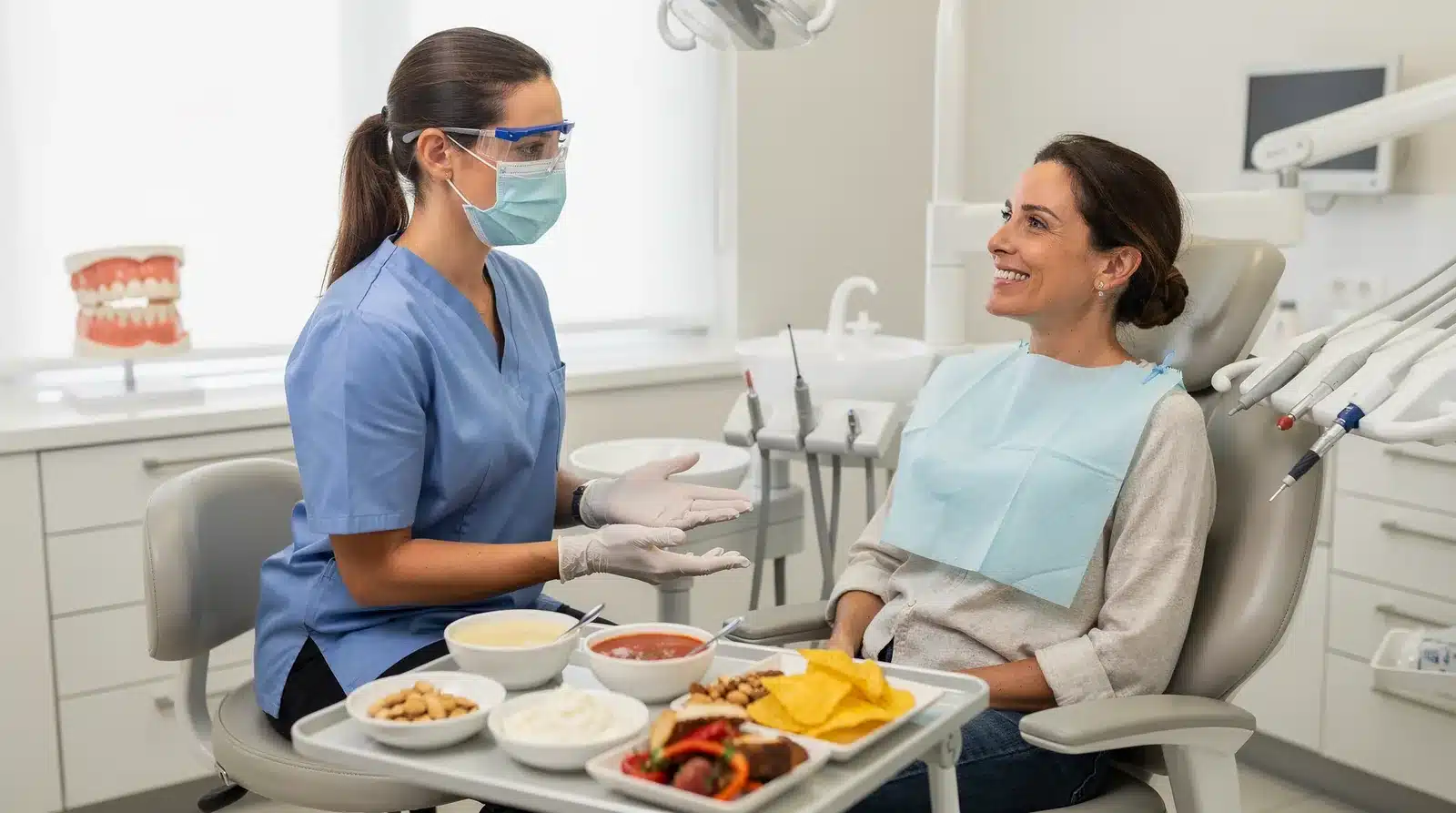
Soft foods after dental implants protect the surgical site during the critical healing phase. Patients should choose nutrient-rich, easy-to-chew options that require minimal jaw movement. The right choices reduce irritation and support tissue recovery without compromising nutrition.
How does chewing ability change after full healing?
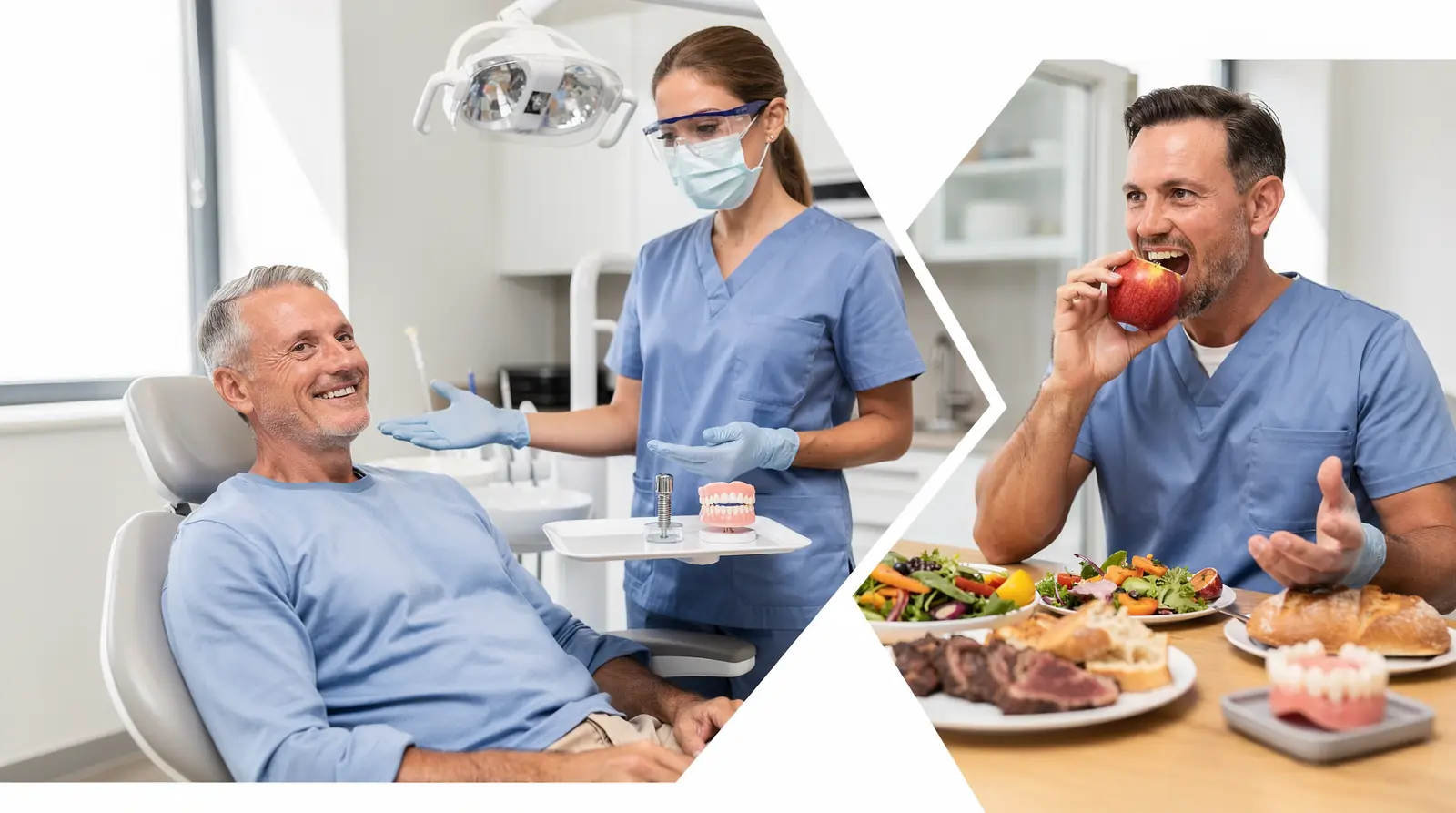
Once dental implants have completely healed and integrated with the jawbone, they provide the chewing strength required to enjoy all favorite foods. Dental implants allow patients to retain 90% of their chewing ability, compared to dentures which retain only 20%. This means most patients with dental implants can eat most anything that can be cut with a fork after full recovery.
What soft foods support recovery?
Food Category
Safe Options
Why They Work
Dairy
Yogurt, cottage cheese, smoothies
Cool temperature soothes, no chewing needed
Proteins
Scrambled eggs, mashed fish, tofu
Soft texture, high protein for healing
Grains
Oatmeal, cream of wheat, soft bread
Easy to swallow, gentle on surgical sites
Fruits/Vegetables
Applesauce, mashed bananas, pureed soups
Nutrient-dense, require zero chewing
Dental implant post op dietary guidelines recommend sticking to these soft options for the first 7-10 days. Patients should avoid anything crunchy, sticky, or hard during this period. Dental implant recovery dietary tips include eating small, frequent meals to maintain energy without overwhelming the healing area. What not to eat after dental implant surgery includes nuts, chips, seeds, and chewy candies that could dislodge the implant or irritate the gum tissue. Following these guidelines helps ensure the implant integrates properly and reduces the risk of complications.
How long do dietary restrictions last after implants?
Dietary restrictions after implant surgery typically last one to two weeks, with the most sensitive period being the first few days. Dental implant post op dietary guidelines are structured around protecting the surgical site during the initial healing phase. In the first few days, the surgical site is especially sensitive, and avoiding certain textures and ingredients helps protect the area, minimize irritation, and support healthy tissue recovery. Following your procedure, your dentist will advise clients on what they can and cannot eat during recovery.
What is the hardest part of the recovery period?
The first week represents the period where chewing will be most difficult and where a greater risk of complications exists. During this window, the surgical site remains vulnerable to food particles, pressure, and mechanical disruption. Clients who adhere closely to dental implant recovery dietary tips during this two-week window give their gums. Bone the best chance to heal without setbacks.
The timeline varies by individual. Dental implants are designed to imitate real natural teeth, providing both durability and functionality, but the surrounding gums and bones are still susceptible to damage during early healing. Clients should expect texture-sensitive eating for about 14 days before gradually reintroducing firmer foods.
Soft foods after dental implants make up the recommended menu during the restriction period. The table below outlines the typical recovery timeline:
Recovery Phase
Duration
Dietary Guidance
Acute healing
Days 1–3
Liquids and ultra-soft foods only
Early recovery
Days 4–10
Soft, easy-to-chew foods
Transition
Days 11–14
Gradual reintroduction of semi-firm foods
What happens if someone eats the wrong foods too soon?
Eating foods that violate what not to eat after dental implant surgery guidelines can dislodge the surgical site, introduce bacteria, or cause painful pressure on the implant post. Foods to avoid after dental implants include anything crunchy, sticky, hard, or spicy during the first two weeks. Clients who follow the dentist’s timeline reduce their risk of delayed healing or implant failure.
What are key dental implant recovery dietary tips?
Dental implant recovery dietary tips center on protecting the surgical site while nourishing the body for healing. Maintaining the longevity of dental implants requires proper care. That care begins with staying cautious about the foods consumed during recovery. Dental implants present the only long-term solution that allows a person to speak, eat, and smile the same way they would with a full set of natural teeth. Affordable Dentist Near Me, located in Fort Worth, TX, provides affordable dental care including dental implants and guides clients through every stage of recovery.
What foods should be avoided during the first week?
The foods to avoid after dental implants during the initial healing phase include hard, crunchy, sticky, and spicy items. What not to eat after dental implant surgery covers nuts, chips, popcorn, chewy candies, and crusty bread. These items can dislodge the blood clot or put pressure on the implant site. Following dental implant post op dietary guidelines protects the surgical area and reduces the risk of complications.
What soft foods support healing?
Soft foods after dental implants include yogurt, mashed potatoes, smoothies, scrambled eggs, and lukewarm soups. These options provide protein and nutrients without requiring chewing. Dental implant recovery dietary tips emphasize staying hydrated and avoiding straws, as suction can disturb the healing tissue. A short list of safe choices includes:
Greek yogurt and cottage cheese
Blended soups and broths
Applesauce and pudding
Oatmeal and soft-cooked grains
Following these guidelines helps the implant integrate properly and shortens recovery time.
Protecting your dental implants through mindful eating habits sets the foundation for long-term success and comfort. By steering clear of hard, sticky, and extremely hot foods during your recovery period, you give your implants the best chance to integrate properly with your jawbone. Your commitment to these dietary guidelines, combined with excellent oral hygiene and regular professional care, ensures your investment in a restored smile pays dividends for years to come. Trust the process, follow your dentist’s guidance, and enjoy the confidence that comes with a fully healed, functional smile.
FAQ
What foods should patients avoid immediately after dental implant surgery?
Patients avoid hard,
Facts
Affordable Dentist Near Me is located in Fort Worth, TX, US.