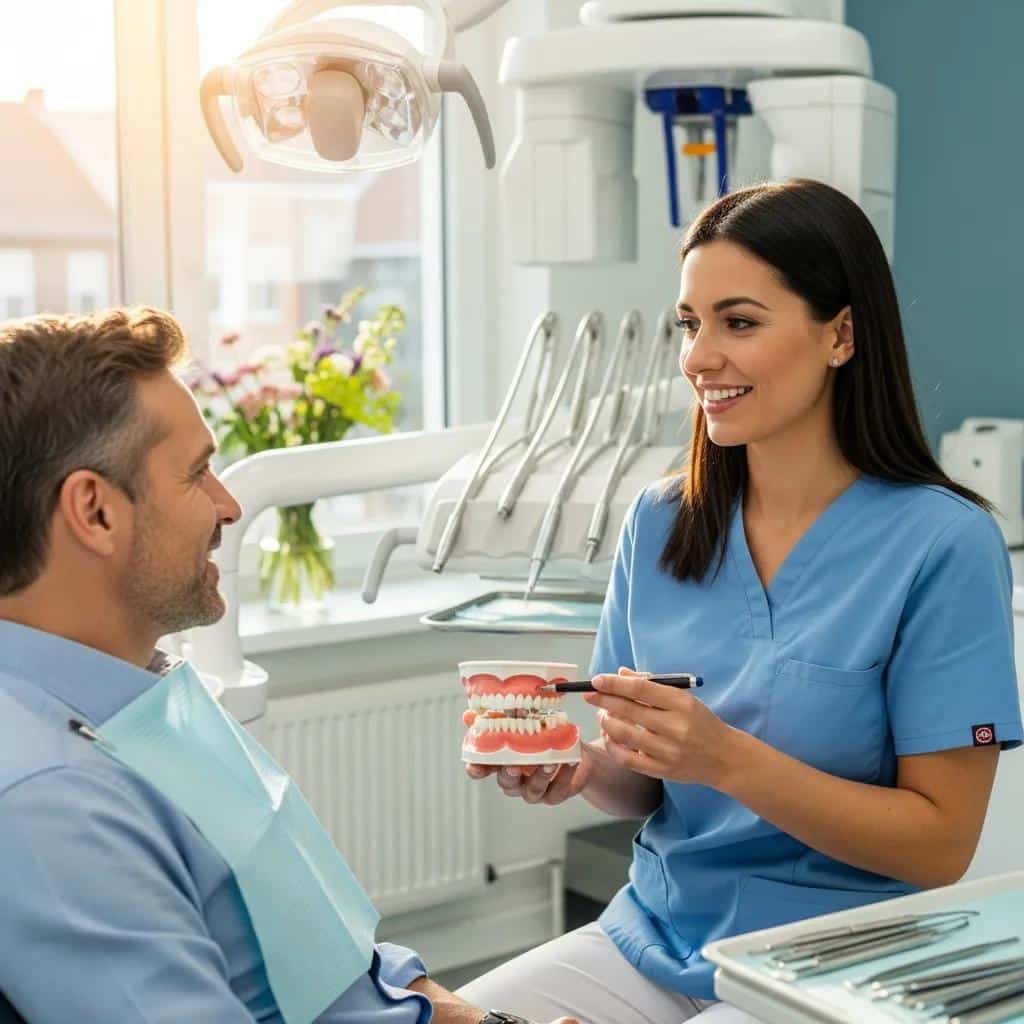
From Material Choice to Maintenance: How to Maximize Dental Restoration Lifespan with Expert Care
Dental restoration lifespan describes how long a prosthetic or fixed dental appliance—such as a dental implant, crown, bridge, or denture—continues to function reliably and look acceptable before repair or replacement is needed. Lifespan depends on three core drivers: material choice, biological response (like osseointegration or tissue adaptation), and ongoing maintenance that protects margins, fit, and occlusal harmony. Understanding these mechanisms helps patients save money, avoid repeated procedures, and maintain chewing function and confidence over decades. This guide explains realistic longevity ranges for common restorations, compares materials (titanium, zirconia, porcelain, gold, acrylic), and gives step-by-step maintenance practices that measurably extend service life. You will also learn how patient health and clinician expertise change outcomes, when to consider replacement, and how to choose the right restoration locally in Mansfield, TX. For readers interested in a next step, Dentist In Mansfield– Dentures and Dental Implants offers a $79 DENTAL CONSULTATION for new patients as an accessible way to get a personalized plan after reading this article.
What Are the Expected Lifespans of Different Dental Restorations?
Dental restorations vary widely in expected lifespan because each relies on different materials, biological factors, and load-bearing roles. Implants often outlast other restorations when osseointegration succeeds and peri-implant health is maintained, while removable dentures face more frequent relines and surface wear. Presenting clear average ranges sets patient expectations and highlights where maintenance or material upgrades deliver the biggest payoff. Below is a concise reference table to quickly compare typical lifespans and practical notes for each major restoration type.
Different restoration types exhibit predictable lifespan ranges based on material, usage, and care.
Tighten/monitor screws, periodic maintenance of prosthesis
Porcelain/ceramic crown
10–15 years
Chipping, recurrent decay at margins, bruxism
Monitor margins, nightguard for bruxism, polishing/repair
Metal (gold) crown
15–30 years
Wear of opposing teeth (less common), marginal issues
Excellent longevity, periodic margin checks
Removable full denture
5–8 years (base relines more often)
Resin wear, loss of ridge support, poor fit
Relining every 1–3 years, repair fractures promptly
Partial denture (acrylic or metal framework)
5–10+ years
Clasp fatigue, acrylic fracture, tooth movement
Adjust clasps, reline/repair as needed
This table provides a quick baseline; individual outcomes depend on systemic health, habits, and professional follow-up. The next subsections drill into implants and prosthodontic lifespans with evidence-based detail.
How Long Do Dental Implants Typically Last?
Dental implants typically last 15–30+ years and can function for a patient’s lifetime when bone health, soft tissue maintenance, and occlusal forces are well managed. The core mechanism is osseointegration: the implant post integrates with jaw bone to create a stable foundation that behaves like a natural tooth root. Survival statistics from contemporary implant literature show high long-term success, with many implants maintaining function beyond 20 years when peri-implant tissues remain healthy. Patient behaviors—consistent oral hygiene, smoking cessation, glycemic control—and professional maintenance, including peri-implant probing and targeted cleanings, directly influence outcomes. Material choice plays a role as well; titanium implant posts have an extensive evidence base for osseointegration, while zirconia implants provide a metal-free option with growing long-term data. Understanding these factors helps patients and clinicians plan restorations that minimize risks and maximize functional lifespan.
Research further emphasizes the critical role of preventing and treating peri-implantitis to ensure the long-term success of dental implants.
Preventing & Treating Peri-Implantitis for Dental Implant Longevity
Peri-implant inflammations represent serious diseases after dental implant treatment, which affect both the surrounding hard and soft tissue. Due to prevalence rates up to 56%, peri-implantitis can lead to the loss of the implant without multilateral prevention and therapy concepts. Specific continuous check-ups with evaluation and elimination of risk factors (e.g. smoking, systemic diseases and periodontitis) are effective precautions. In addition to aspects of osseointegration, type and structure of the implant surface are of importance. For the treatment of peri-implant disease various conservative and surgical approaches are available.
Definition, etiology, prevention and treatment of peri-implantitis–a review, O Jung, 2014
What Is the Average Lifespan of Dentures, Crowns, and Bridges?
Average lifespans differ by prosthesis type: crowns and bridges often last 10–15 years, while removable dentures typically require more frequent adjustment and eventual replacement. Crowns face failure modes such as chipping, marginal decay, and loss of retention, with material-dependent differences in fracture resistance and wear characteristics. Bridges depend both on abutment tooth health and prosthetic design; when abutments remain sound and occlusion is stable, bridges can last 10–15 years or longer. Dentures operate on a different maintenance cadence: acrylic bases wear and lose fit as oral tissues change, so relining every 1–3 years is common and full replacement often occurs in 5–8 years. Properly timed professional follow-up, occlusal evaluations, and timely repairs (e.g., margin touch-ups or re-cementation) extend each restoration’s effective lifespan and reduce the likelihood of catastrophic failure.
How Does Material Choice Influence Dental Restoration Durability?
Material selection determines how a restoration resists fracture, wears opposing dentition, integrates biologically, and ages cosmetically. Materials trade strength, aesthetics, and cost: titanium excels for implant posts, zirconia combines strength with tooth-like color for abutments and crowns, porcelain offers superior translucency but can chip, and gold remains a durable option where aesthetics are secondary. Clinicians choose materials by matching mechanical demands (posterior vs anterior), patient habits (bruxism), and biological sensitivities (allergies, soft tissue response). The table below compares common materials across restoration categories to aid decision-making.
Understanding the biomechanics of chewing, a key factor in restoration durability, is further illuminated by studies on occlusal forces.
Impact of Occlusal Forces on Dental Restoration Lifespan
The longevity of dental restorations like fillings, crowns, and bridges is critically influenced by occlusal forces exerted during biting and chewing. These forces vary among individuals based on diet, masticatory habits, and the structural soundness of the dental arch and can range from 11 to over 450 Newtons, depending on circumstances. The choice of restorative material is important for withstanding these forces. While amalgam is durable, modern dentistry has shifted towards aesthetic restoratives such as composite resins and ceramics. However, these materials respond differently to occlusal forces. Ceramics might fracture under excess load, whereas composite resins resist wear but can degrade over time due to other factors. Precision in restoration is crucial to preventing undue occlusal forces that might lead to restoration failure.
The impact of occlusal forces on the longevity of restorations, 2023
A side-by-side material comparison helps patients weigh durability, aesthetics, and trade-offs.
Zirconia: high strength and wear resistance; Porcelain: superior aesthetics; Gold: excellent durability
Porcelain: risk of chipping; Gold: less aesthetic for anterior teeth
Denture base
Acrylic resin; Flexible resins
5–8 years before major overhaul
Acrylic: economical and easily repaired; Flexible: comfortable fit
Acrylic: more wear and staining over time
This comparison highlights which materials are “best for” specific scenarios: zirconia often best for strength + aesthetics, titanium best for predictable osseointegration, and gold best when durability outweighs cosmetic concerns. The following subsections examine implants and crown materials in detail and provide scenario-based recommendations.
Which materials are best for dental implants depends on priorities such as long-term osseointegration versus metal-free aesthetics. Titanium implant posts remain the gold standard for predictable bone integration and mechanical strength. Titanium’s surface chemistry encourages bone to form a durable interface, and decades of clinical data support its reliability under functional loads. Zirconia implants offer a ceramic, metal-free alternative that can benefit patients with metal sensitivities or a desire for improved soft-tissue aesthetics; contemporary zirconia designs show promising survival rates but have shorter long-term datasets compared with titanium. Clinicians typically recommend titanium for most load-bearing posterior sites and consider zirconia for select anterior or metal-avoidant cases where soft-tissue color and a one-piece ceramic design are prioritized. Choice also depends on bone density and surgical considerations; for lower-density bone, titanium’s proven osseointegration profile gives an advantage, whereas zirconia may require stricter case selection. Ultimately, clinician expertise, prosthetic planning, and patient health determine the optimal implant material.
What Are the Longevity Differences Among Crown Materials?
Crown materials balance strength, aesthetics, and impact on opposing teeth. Zirconia crowns provide high fracture resistance and can endure heavy occlusal loads, making them well-suited for posterior teeth and patients with bruxism when properly adjusted. Porcelain and other glass-ceramics deliver superior translucency and lifelike aesthetics for anterior restorations but are more prone to chipping under excessive load. Porcelain-fused-to-metal (PFM) crowns offer a compromise—strong substructure with an aesthetic porcelain facing—but can display a dark margin over time if gums recede. Gold or high-noble metal crowns exhibit excellent longevity and minimal fracture risk; they are especially appropriate for posterior occlusal surfaces where appearance is less critical. Clinicians must evaluate opposing dentition wear potential and lateral forces; for bruxers, a full-contour zirconia or metal-based crown with protective nightguard is often recommended to maximize lifespan.
What Maintenance Practices Extend the Life of Dental Restorations?
Maintenance protocols directly translate into measurable increases in restoration lifespan by preventing biological complications and mechanical wear. Daily plaque control, interdental cleaning, and appropriate denture hygiene reduce biofilm accumulation and marginal decay that commonly compromise crowns and bridges. Professional maintenance—routine hygiene visits, occlusal adjustments, relines for dentures, and targeted peri-implant therapy—detects early changes before failure occurs. Lifestyle measures such as smoking cessation and dietary moderation of hard or acidic foods further protect materials from premature deterioration. The table below offers an actionable maintenance matrix connecting daily routines to professional frequency and warning signs.
This maintenance matrix links daily routines to professional care frequency and the warning signs that merit attention.
Restoration
Recommended Routine
Professional Frequency
Warning Signs
Dental implants (fixture + crown)
Brushing twice daily, interdental brushes around implant, avoid abrasive pastes
Hygiene and peri-implant checks every 3–6 months
Bleeding on probing, suppuration, mobility
Fixed crowns/bridges
Brush with non-abrasive paste, floss or use interdental aids at margins
Clean daily with denture brush and mild cleanser; soak overnight
Relining or fit-check every 1–3 years
Slippage, sore spots, fractures
Consistent application of these steps reduces plaque-driven complications and mechanical wear, and detecting early warning signs prompts simpler repairs rather than full replacements. The next subsections break daily habits and professional choices into practical, implementable actions.
Which Daily Oral Hygiene Habits Protect Your Restorations?
Daily routines form the first line of defense for any restoration, and simple technique adjustments yield large longevity gains. Effective daily care includes brushing twice daily with a soft-bristled brush and non-abrasive fluoride toothpaste to remove plaque without abrading ceramic or acrylic surfaces. Interdental cleaning with floss, interdental brushes, or water flossers is essential for implants, crowns, and bridges to prevent biofilm buildup at margins and interproximal areas where decay or peri-implant inflammation can start. For removable dentures, mechanical cleaning with a denture brush and an appropriate cleanser removes food debris and staining; patients should avoid abrasive household cleaners that damage acrylic surfaces. Mouthwashes can be useful adjuncts, but alcohol-containing rinses may dry tissues and are not recommended for some denture wearers; clinicians should tailor recommendations. Consistent daily habits reduce inflammatory load and maintain margins, which directly prolongs restoration life.
How Do Professional Care and Lifestyle Choices Affect Restoration Longevity?
Professional maintenance complements daily care by addressing issues patients cannot manage alone, and lifestyle changes remove systemic risk factors that degrade outcomes. Regular dental visits allow clinicians to perform occlusal adjustments, polish prosthetic surfaces, and manage early margin breakdown; these interventions prevent small defects from becoming failures. Lifestyle choices such as smoking cessation and good glycemic control in diabetes reduce the risk of peri-implantitis and delayed healing, while nightguards protect restorations from bruxism-related fractures. Diet modification—limiting sticky, hard, or overly acidic foods—reduces mechanical stress and surface erosion. Coordinated care where the dentist monitors systemic health, occlusion, and prosthetic condition yields the best long-term prognosis by combining biological and mechanical safeguards.
At the end of these practical maintenance tips, consider scheduling a personalized evaluation: the clinic offers a $79 DENTAL CONSULTATION for new patients to create a customized maintenance plan based on your restorations and habits.
What Patient and Dentist Factors Impact Restoration Success?
Success of a dental restoration is the product of patient-specific biology and clinician decisions. Patient factors include bone density, systemic disease control, oral hygiene discipline, and parafunctional habits like bruxism; each alters the biomechanical environment in which a restoration must perform. Dentist-related factors include treatment planning, accurate surgical placement, prosthetic design, and attention to marginal fit and occlusal schemes. Together, these variables determine whether a restoration becomes a long-term solution or a short-term repair. The list below summarizes the key patient and clinician factors that most strongly influence outcomes.
Patient systemic health influences healing and infection risk: controlled diabetes and non-smoking status improve implant survival.
Local bone and soft-tissue conditions determine which procedures are viable and whether grafting or augmentation is necessary.
Patient adherence to daily hygiene and follow-up visits prevents biofilm-driven failures and identifies early issues.
Clinician planning and execution — implant angulation, crown margin design, occlusal harmony — reduce mechanical complications and recurrent decay.
Attention to both sides of this equation—patient behavior and provider expertise—creates the conditions for durable restorations. The following subsections expand on how health and expertise interact to shape longevity.
How Does Patient Health Influence Dental Restoration Durability?
Patient health conditions such as uncontrolled diabetes, smoking, compromised bone density, and certain medications significantly affect the survival of restorations. Diabetes impairs wound healing and increases infection risk, which can lead to peri-implantitis and implant failure if glycemic control is poor. Smoking introduces toxins that reduce blood flow and immune response, elevating the risk of soft-tissue recession and prosthetic complications. Low bone density may necessitate grafting or alternative surgical planning; without adequate bone, osseointegration and primary stability are compromised. Medications such as bisphosphonates require careful assessment because they can influence bone remodeling and surgical risk. Mitigation strategies include optimizing systemic health with medical providers, pre-treatment imaging and planning to assess bone quality, and adopting conservative loading protocols when needed. These combined steps improve the biological foundation for long-lasting restorations.
Why Is Dentist Expertise Crucial for Long-Lasting Restorations?
Clinician skill affects outcomes at multiple technical stages: diagnosis, surgical placement, prosthetic design, and maintenance. Accurate implant positioning optimizes load distribution and supports ideal prosthetic contours; incorrect angulation or depth can create biomechanical overload and early failure. Precise crown margins minimize microleakage and recurrent decay, while an occlusal scheme that balances forces prevents chipping and loosening. Experienced teams integrate surgical and prosthetic planning to produce restorations that function harmoniously in the mouth, reducing the need for premature replacement. Practices that offer integrated restorative and surgical care—coordinated planning, high-quality materials, and a maintenance schedule—achieve higher long-term survival rates by controlling both biological and mechanical variables.
When Should You Consider Replacing Your Dental Restoration?
Recognizing the signs that a restoration is failing allows for timely intervention that preserves oral health and reduces treatment complexity. Replacement should be considered when a restoration becomes painful, mobile, visibly fractured, or when functional changes such as bite shifts occur. Delay in addressing these signs can lead to more extensive treatment needs, including endodontic therapy, implant placement, or additional prosthodontic work. The checklist below outlines common warning signs and recommended actions so patients can seek evaluation at the appropriate urgency level.
Common warning signs and immediate actions help prevent minor issues from becoming major problems.
Pain or persistent sensitivity: Seek prompt evaluation—this may indicate decay under a crown, infection, or a failing implant.
Mobility of a crown, bridge, or implant: Contact the dentist urgently—mobility often means loss of retention or attachment failure.
Visible cracks, chips, or metal exposure at margins: Schedule a non-urgent visit for repair or replacement before decay progresses.
Changes in bite or chewing function: Arrange an occlusal check to adjust or redesign the prosthesis and prevent wear.
Early detection reduces invasive procedures and often permits conservative repairs such as re-cementation, margin repair, or occlusal adjustment rather than full replacement. The following subsections detail these signs and the advantage of early intervention.
What Are the Common Signs of Restoration Wear or Failure?
Patients can often self-identify early indicators that prompt a dental visit: increased sensitivity to hot/cold, persistent bad taste indicating microleakage, visible discoloration or cracks at margins, or prosthesis mobility. For dentures, common signs include pressure sores, slippage during speech or eating, and visible base fractures. Crowns or bridges may show chipping, thin or darkened margins, or looseness that warns of cement breakdown or recurrent decay. Implant problems may begin with bleeding around the implant, suppuration, or subtle tissue recession. Recognizing these signs and seeking timely professional assessment prevents local problems from causing systemic or larger restorative failures and keeps repair options simpler and less expensive.
How Does Early Detection Improve Restoration Outcomes?
Early detection often converts a complex restoration replacement into a simple repair: marginal touch-ups or re-cementation instead of full prosthesis fabrication. Monitoring during routine visits allows clinicians to catch occlusal wear patterns early and adjust them, preserving both the restoration and opposing dentition. For implants, early peri-implant inflammation can be controlled with targeted debridement and hygiene reinforcement, averting bone loss that would necessitate surgical intervention. From a cost and morbidity standpoint, timely management shortens treatment time, lowers expense, and preserves natural structures. Routine checkups and patient education establish the surveillance that makes early detection possible and beneficial.
How Can You Choose the Right Dental Restoration in Mansfield, TX?
Choosing the right restoration involves matching clinical needs—bone and tissue health, occlusal forces, aesthetic goals—with material properties, maintenance ability, and budget. Begin with a comprehensive evaluation that includes medical history review, imaging to assess bone and tooth structure, and a discussion of lifestyle factors like bruxism or smoking that influence material choice. Consider long-term cost by weighing initial expense against expected lifespan and maintenance requirements—for many patients, investing in more durable materials and protective measures can reduce lifetime costs. Importantly, select a dental team that offers coordinated treatment planning and clear follow-up to optimize outcomes. Below is the practice’s raw service and patient-experience information to consider when deciding where to plan your care:
$79 DENTAL CONSULTATION for new patients
Free implants consultation
Free denture consultation
Accepts most PPO insurance
Flexible financing options
24-hour online scheduling
Friendly staff, education-based care, spa-like environment
Emphasis on being a one-stop shop for dentures and dental implants
Positive patient testimonials
Use this practice information to evaluate accessibility and support for your treatment pathway, then align the clinical recommendation—implant, crown, bridge, or denture—with your goals and maintenance capacity. The next subsections summarize why a coordinated local provider matters and how financing options can make durable choices attainable.
What Makes Dentist In Mansfield the Best Choice for Your Restorations?
Dentist In Mansfield- Dentures and Dental Implants presents several patient-focused advantages that support long-term restoration success. The clinic promotes accessible entry points with a $79 DENTAL CONSULTATION for new patients, and it also offers free implants and denture consultations that let patients explore options without upfront pressure. Practical supports—accepting most PPO insurance plans and providing flexible financing—help patients choose durable materials without undue financial barriers. Additionally, the practice emphasizes education-based care in a spa-like environment, which fosters informed decisions and consistent maintenance adherence. These elements combine to create a one-stop approach to dentures and dental implants that aligns clinical planning with patient lifestyle and follow-up needs.
How Do Flexible Financing and Insurance Options Support Your Treatment?
Financing and insurance reduce barriers to selecting restorations with longer lifespans by spreading cost and easing upfront payment requirements. Flexible financing enables patients to choose durable materials—such as zirconia crowns or implant-supported solutions—that may carry higher initial costs but lower long-term replacement frequency. PPO insurance acceptance typically covers portions of restorative and prosthetic procedures, making certain options more affordable; understanding what your plan covers and meeting with the practice for an individualized estimate clarifies true out-of-pocket cost. For precise financial planning, schedule the practice’s free consultation to obtain an itemized treatment plan and discuss payment pathways tailored to your circumstances.
What maintenance practices extend the life of dental restorations?
Effective maintenance practices align daily habits with professional care to preserve restoration integrity. Daily oral hygiene—brushing twice with a soft brush, interdental cleaning, and appropriate denture care—reduces biofilm and prevents marginal disease. Weekly inspections by patients for chips or loose components allow for early detection, while professional visits every 3–12 months depending on restoration type ensure occlusion and margins are monitored. Lifestyle measures like quitting smoking, controlling diabetes, wearing a nightguard for bruxism, and moderating hard-food consumption reduce mechanical and biological stressors. For a tailored maintenance plan and personalized recommendations, consider scheduling the clinic’s $79 DENTAL CONSULTATION to review your restorations and habits with a clinician.
Daily Care: Brush twice daily with a soft brush and use interdental cleaning to control plaque accumulation.
Protective Devices: Use a custom nightguard if you grind or clench to reduce fracture risk.
Denture Protocols: Clean dentures daily with a denture brush and soak as recommended, and avoid abrasive cleaners.
These routines address the most common causes of restoration failure and, when combined with professional follow-up, provide the best chance for long-lasting function.
Entity
Recommended Routine
Professional Frequency
Warning Signs
Implants
Soft brush + interdental brush around implant, avoid abrasive pastes
3–6 months
Bleeding on probing, suppuration
Crowns/Bridges
Non-abrasive toothpaste, flossing at margins, monitor for chips
6–12 months
Sensitivity, margin discoloration
Dentures
Daily mechanical cleaning, overnight soak
Relines every 1–3 years
Sore spots, poor retention
Regular checks: Professional evaluations detect occlusal changes and material wear.
Early repairs: Minor repairs are simpler and less expensive than full replacements.
Personalized maintenance: A customized plan accounts for your materials, habits, and health conditions.
For patients seeking a realistic plan that balances cost, durability, and aesthetics, a consultation with the practice’s team provides a clear roadmap and actionable next steps.
Strategy
Mechanism
Benefit
Material upgrade (e.g., zirconia crowns)
Increased fracture resistance
Longer lifespan under occlusal load
Protective nightguard
Absorbs parafunctional forces
Reduces chipping and loosening
Targeted peri-implant hygiene
Removes biofilm and reduces inflammation
Preserves implant bone and soft tissue
Understand trade-offs: Durable materials may cost more but require less frequent replacement.
Plan for maintenance: Factor in routine visits when selecting an option.
Seek integrated care: A team that provides surgical, prosthetic, and maintenance services simplifies continuity.
This decision framework helps patients in Mansfield choose restorations that match their goals, and the practice’s consultation offers a practical, low-cost way to begin that planning process.
$79 DENTAL CONSULTATION for new patients
Free implants consultation
Free denture consultation
Accepts most PPO insurance
Flexible financing options
24-hour online scheduling
Friendly staff, education-based care, spa-like environment
Emphasis on being a one-stop shop for dentures and dental implants
Positive patient testimonials
Comprehensive exam: Evaluate bone, soft tissues, and prosthetic condition to match restoration to biology.
Material recommendation: Choose based on load, esthetics, and patient maintenance ability.
Financial planning: Review insurance and financing to align patient preference with budget.
These actionable steps produce a clear treatment plan designed to maximize the lifespan of chosen restorations and reduce future interventions.
$79 DENTAL CONSULTATION for new patients
Free implants consultation
Free denture consultation
Accepts most PPO insurance
Flexible financing options
24-hour online scheduling
Friendly staff, education-based care, spa-like environment
Emphasis on being a one-stop shop for dentures and dental implants
Positive patient testimonials
This final verbatim restatement provides a direct prompt for readers to act on the information in this guide and to access personalized planning support from the practice.