Healing After Tooth Loss: An In-Depth Comparison of Dental Implants, Dentures, and Bridges for Recovery and Patient Care
Losing a tooth sets off a cascade of physical changes and healing needs that affect chewing, speech, facial support, and long-term oral health. This article explains what healing after tooth loss entails, compares the recovery pathways for dental implants, dentures, and bridges, and gives practical guidance so you can make an informed choice about replacement and aftercare. Readers will learn the biological stages of socket and soft-tissue healing, the distinct mechanism of osseointegration for implants, the adaptation and relining cycle for dentures, and the short-term sensitivity and maintenance demands of bridges. We also map clear timelines, common pain expectations, and everyday recovery tips so you know what to expect week by week. Finally, the article outlines how age, bone density, systemic health and oral hygiene influence healing outcomes and offers local next steps for patients in Crowley who want a personalized plan.
What Is the Healing Process After Tooth Loss and Why Does It Matter?
Healing after tooth loss is the sequence of biological events that restore soft tissue coverage, remodel bone, and create the foundation for any future prosthetic replacement. This process matters because the quality and timing of healing determine which replacement options are feasible, how soon restorations can be placed, and the long-term stability of the prosthetic. Proper healing preserves bone volume, maintains adjacent tooth position, and reduces infection risk—factors that directly affect chewing function and facial support. Understanding the stages of healing helps patients and clinicians schedule implant placement, denture delivery, or bridge preparation at optimal times to minimize complications and improve outcomes.
How Does Tooth Loss Affect Oral Health and Function?
Tooth loss initiates bone resorption in the extraction socket and can lead to migration of adjacent teeth, altered bite relationships, and changes in chewing efficiency. Bone remodeling begins within days and accelerates over months, potentially reducing ridge height and width needed for implants or stable dentures. Functionally, missing teeth can lower chewing capacity and alter diet choices, which may affect nutrition. Socially and psychologically, gaps can reduce confidence when speaking or smiling. Recognizing these impacts early prompts clinicians to recommend socket preservation, timely replacement, or protective prosthetic strategies to limit long-term deterioration and restore function.
What Are the Key Stages of Healing After Tooth Extraction?
After extraction, healing follows predictable stages: immediate clot formation, soft-tissue coverage, early bone fill, and longer-term remodeling. In the first 24–72 hours a stable blood clot forms, initiating inflammation and provisional matrix formation; this period determines early bleeding control and infection prevention. Over the first one to two weeks soft tissue closes and pain/swelling declines, allowing routine oral hygiene with precautions. From weeks to several months, woven bone fills the socket and remodels into lamellar bone—this bone remodeling phase is critical if implants or fixed bridges are planned. Patients should monitor healing signs and seek care for persistent bleeding, severe pain, or signs of infection so clinicians can intervene and preserve replacement options.
How Do Dental Implants Heal? Understanding the Implant Healing Process and Timeline
Dental implant healing combines routine surgical soft-tissue recovery with a distinct long-term biological process called osseointegration, where bone bonds to the implant surface to create a stable anchor. Typical timelines separate initial recovery (1–2 weeks) from osseointegration (commonly 3–6 months), though individual factors and grafting can extend this window. Proper post-operative care—controlled diet, oral hygiene modifications, and avoidance of smoking—reduces infection risk and supports integration. Clinicians stage implant therapy to match bone quality and restorative goals, balancing immediate or delayed loading protocols with patient-specific healing capacity.
Before the table below, this short summary explains the implant healing stages and patient restrictions that most affect timelines and daily life.
Implant Stage
Attribute
Typical Duration
Soft-tissue recovery
Pain, swelling, initial closure of mucosa; diet modifications
1–2 weeks
Osseointegration
Bone deposition on implant surface creating rigid fixation
3–6 months (varies by bone quality)
Abutment/prosthetic phase
Soft-tissue shaping and final crown or prosthesis delivery
Weeks to months after osseointegration
This table clarifies why implant therapy requires patience: initial comfort returns quickly, but the structural bond that makes implants function like natural roots develops over months.
What Happens During Osseointegration and How Long Does It Take?
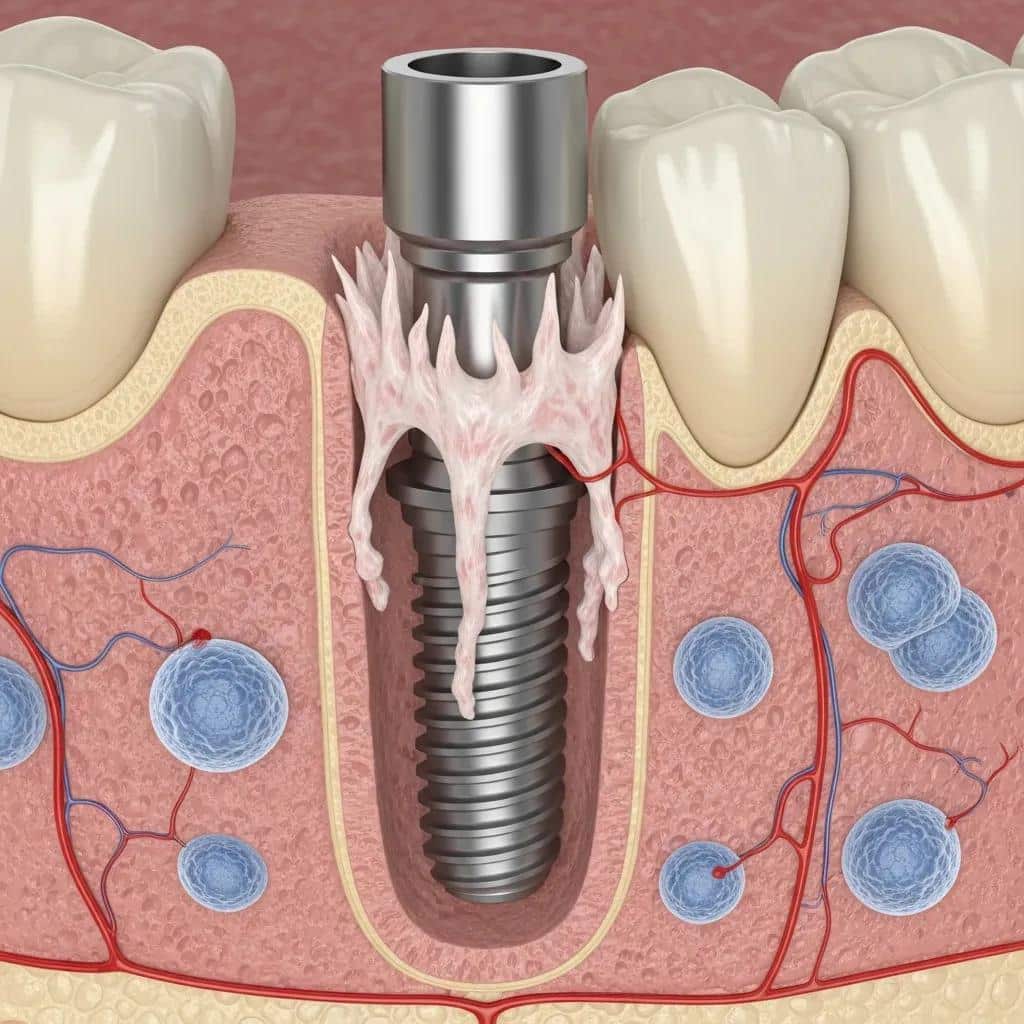
Osseointegration is the biological process where living bone grows onto the implant surface, forming a direct structural and functional connection without intervening fibrous tissue. Mechanistically, an initial inflammatory response progresses to osteoid formation and mineralization, converting immature woven bone to stronger lamellar bone around the implant. Typical clinical windows are three to six months for standard cases; higher bone density and careful surgical technique can shorten this, while bone grafting, smoking, or systemic conditions can lengthen it. Immediate-load implants can succeed when primary stability is high, but many clinicians prefer a healing interval to maximize predictability, especially when bone quality is borderline.
Understanding the complex biological process of osseointegration is crucial for successful dental implant outcomes.
Factors Affecting Osseointegration for Dental Implant Success
The purpose of this literature review is to collect the published data concerning factors affecting osseointegration. Popularity and large demand of dental implant makes this study essential because success of dental implant is directly related to the principle of osseointegration, a process of implant-bone interaction that finally leads to bone-implant anchorage.To identify relevant literature an electronic search was performed using term osseointegration and dental implant on PubMed central. Titles and abstracts were screened and articles that fulfilled the inclusion criteria were selected for full text reading. Review of selected articles enabled us to enlist various factors which have significant effects on osseointegration either by enhancing or inhibiting it. Based on the review literature, it is concluded that there are factors which when considered may increase osseointegration which in turn will increase success of dental implant and some factors play an inhibiting role
Factors affecting osseointegration: a literature review, M Goutam, 2013
What Are the Post-Operative Care Tips for Faster Dental Implant Recovery?
Post-operative care after implant placement focuses on infection prevention, minimizing micromotion, and supporting bone healing through safe behaviors and precise hygiene. Patients should follow analgesic and antibiotic protocols as directed, use gentle rinses rather than vigorous swishing initially, and avoid chewing directly on the surgical site until cleared. Nutritional adjustments—soft, protein-rich foods—support tissue repair while tobacco cessation dramatically improves osseointegration success. If unusual symptoms appear, such as persistent fever, increasing swelling, or exposed implant threads, contact the treating clinic promptly to address complications and protect the long-term outcome.
How Does Healing Differ with Dentures? Adjustment, Gum Remodeling, and Recovery Time
Denture healing is less about bone fusion and more about soft-tissue remodeling and patient adaptation: the mouth needs to accept a removable prosthesis while oral mucosa and alveolar ridges settle into a new functional shape. Immediate dentures offer faster aesthetic restoration but commonly require relines as the ridge remodels, whereas conventional dentures delivered after healing can fit more stably at first. The key challenges are managing sore spots, learning speech and chewing with a new base, and scheduling relines and adjustments to maintain comfort. Understanding this adaptation cycle helps patients set expectations for weeks to months of iterative care.
Below is a comparison table to highlight differences between denture approaches and what patients can expect during the adjustment phase.
Denture Type
Attribute
Typical Outcome
Immediate denture
Placed at extraction visit; supports aesthetics
Fast restoration; high likelihood of relines within months
Conventional denture
Delivered after initial healing and remodeling
More stable initial fit; fewer early relines
Implant-supported overdenture
Removable prosthesis anchored to implants
Improved retention and reduced bone loss over time
This table shows why clinicians often weigh immediate convenience against the need for follow-up relines and why implant support alters the adaptation pathway.
What Is the Difference Between Immediate and Conventional Denture Healing?
Immediate dentures are inserted at the time of extraction to maintain appearance and function immediately, but they sit on a socket that will shrink and change shape, so relining and refitting are frequent in the first year. Conventional dentures are delayed until soft tissues and bone have remodeled, improving initial fit and reducing early sore spots, but they leave the patient edentulous during the healing period unless a temporary solution is used. Immediate dentures provide psychological and cosmetic benefits but require close follow-up to adjust the base and occlusion as tissues heal. Choosing between the two depends on patient priorities, tolerance for multiple adjustments, and whether implant options are being considered later.
How Long Is the Denture Adjustment Period and What Should Patients Expect?
Most patients experience the most pronounced denture adjustment during the first weeks after delivery, with ongoing refinements over months as bone and soft tissue settle. Initial soreness, increased salivation, and altered speech typically ease within two to six weeks, while relines are commonly needed within the first six to twelve months. Adhesives, targeted soft-food diets, and progressive practice with speech and chewing techniques speed adaptation and reduce frustration. If persistent sore spots or functional issues remain after relining, clinicians can evaluate for base modification, rebasing, or transition to implant-supported solutions to improve long-term comfort and function.
What Is the Healing Timeline and Care for Dental Bridges After Tooth Loss?
Healing for dental bridges centers on the local response to crown preparation of abutment teeth and the short-term management of sensitivity and soft tissue, rather than bone regeneration. Bridge workflows typically involve tooth preparation, temporization, and final cementation; soft-tissue soreness and transient sensitivity are common after prep but resolve as the tissue adapts and the final prosthesis restores occlusion. Bridges return chewing function quickly compared with implants but require vigilant hygiene to prevent decay or periodontal breakdown on abutments. When planning bridges, clinicians assess opposing dentition and abutment health to ensure the selected timeline minimizes complications and secures long-term serviceability.
How Does Healing Occur After Crown Preparation for Bridges?
After crown preparation, localized inflammation and sensitivity occur as enamel and dentin are reduced and margins are placed near gum tissue. The soft tissue typically responds with mild swelling or soreness that settles within days to a couple of weeks, provided margins are well adapted and oral hygiene is maintained. Temporary crowns protect prepared teeth and help shape gingival tissues; patients should avoid sticky foods and follow gentle cleaning around temporaries. If sensitivity or persistent bleeding arises, clinicians evaluate for marginal fit problems, exposed dentin, or pulpitis; timely attention prevents progression and readies the site for final bridge cementation.
The process of preparing teeth for a bridge involves managing the immediate post-operative response of the surrounding soft tissues.
Bone Remodeling and Implant Placement After Extraction
Considerable difficulties in positioning dental implants in fresh extraction sockets could be associated with gradual loss of height of the alveolar walls or damage of the buccal bone plate, especially in the anterior maxilla region where the maintenance of sufficient bone volume allowed for achieving the best results in terms of biological and aesthetic outcomes [1,2,3,4]. It is therefore not surprising that several surgical procedures, such as guided bone regeneration [5,6], or grafting augmentation procedures with or without autologous bone which could be substituted with any
Bone remodeling around implants placed after socket preservation: a 10-year retrospective radiological study, C Giovanni, 2021
What Are the Adjustment and Maintenance Considerations for New Dental Bridges?
Bridges demand consistent hygiene—especially flossing under pontics and around abutments—to prevent decay and periodontal disease that can compromise longevity. Interdental brushes, floss threaders, or water irrigation are commonly recommended to clean subpontic areas and preserve supporting tissues. Clinicians instruct patients on occlusal checks because premature contacts or changes in opposing dentition can create stress on abutments and lead to failure. Regular professional assessments allow early detection of decay at margins or gum changes, and timely repairs or recementation extend functional lifespan. With diligent care, bridges provide a fast route to restored chewing and aesthetics, but maintenance remains essential.
How Do Dental Implants, Dentures, and Bridges Compare in Healing Time and Patient Experience?
Comparing healing and patient experience across implants, dentures, and bridges highlights trade-offs between short-term convenience, long-term function, and biological preservation. Implants require longer structural healing but offer the closest functional equivalence to natural teeth and help preserve bone. Dentures provide rapid replacement but involve a sustained adaptation period and ongoing base maintenance, with risks of accelerated ridge resorption. Bridges offer quick restoration with minimal disruption to bone but place long-term responsibility on abutment teeth and require meticulous hygiene. Patients weigh pain levels, recovery duration, restrictions, maintenance needs, and candidacy when selecting the most appropriate option.
Before the comparison table, note that rows quantify pain, duration, bone preservation, maintenance needs, and typical candidacy considerations.
Replacement Option
Pain & Initial Recovery
Typical Total Healing Duration
Bone Preservation
Dental implant
Moderate surgical pain, short-term swelling
1–2 weeks initial; 3–6+ months osseointegration
High — supports bone
Denture
Low surgical pain if extractions only; ongoing soft-tissue adaptation
Weeks for soft tissue; months for ridge remodeling
Low — bone resorption continues
Fixed bridge
Mild-to-moderate sensitivity after prep
Days–weeks for soft tissue; immediate function
Neutral — depends on abutment health
What Are the Key Healing Metrics: Pain, Duration, and Restrictions?
Typical pain expectations vary: implants produce surgical pain that peaks early and declines over a few days, dentures may cause chronic pressure-related discomfort during adaptation, and bridges generally cause short-lived sensitivity after preparation. Duration-wise, implants need months for full structural integration, dentures require weeks to months of functional adaptation and periodic relines, and bridges enable a quick return to chewing once temporaries are replaced by final prostheses. Restrictions differ: implants often require temporary avoidance of heavy chewing during integration, dentures require behavioral adaptation with certain foods and adhesives, and bridges demand careful cleaning but fewer dietary limits. Recognizing these metrics helps patients align treatment choice with lifestyle and recovery tolerance.
What Do Patients Say About Their Healing Experiences with Each Option?
Patient-reported experiences commonly cluster around immediate comfort versus long-term satisfaction: many implant recipients report longer upfront recovery but high satisfaction with function and confidence over years. Denture wearers often describe initial frustration with fit and speech that typically improves after relines and practice, while those who choose bridges frequently appreciate the rapid restoration of appearance and chewing with the caveat of ongoing vigilance over abutment health. Aggregated narratives show that successful outcomes depend on realistic expectations, adherence to aftercare, and timely follow-up—factors that clinicians can manage through clear communication and structured adjustment appointments.
What Factors Influence Healing After Tooth Replacement? Age, Health, Bone Density, and Oral Hygiene
Healing after tooth replacement depends on a matrix of systemic and local factors that modulate tissue repair, osseointegration, and adaptation to prosthetics. Systemic health issues such as uncontrolled diabetes, certain medications, and smoking negatively affect blood supply and immune function, slowing healing. Locally, bone density and ridge anatomy determine implant stability and the need for grafting, while oral hygiene influences infection risk and prosthetic longevity. Age and lifestyle intersect with these factors, shaping candidacy and timelines; pre-operative optimization and individualized care plans increase the odds of successful recovery.
How Does Bone Health Affect Implant Success and Healing?
Bone quality and quantity are primary determinants of initial implant stability and subsequent osseointegration success. Dense cortical bone provides strong primary stability, allowing earlier loading, while low-density cancellous bone may require longer healing or adjunctive grafting to reach the necessary support. Bone grafts and sinus lifts augment deficient sites but add healing phases—grafts typically integrate over four to six months before final implant placement in staged protocols. Imaging with CBCT or radiographs helps clinicians assess volume and plan whether immediate implants, staged placement, or alternative prosthetic options are the safest path to predictable healing and functional outcomes.
What Role Does Patient Health and Oral Care Play in Recovery?
Patient health and daily oral care critically shape the recovery trajectory: good glycemic control, smoking cessation, and medication review reduce complication rates and accelerate tissue repair. Pre-operative measures such as antibacterial rinses and optimization of periodontal health lower infection risk, while consistent plaque control after surgery protects exposed tissues and implants. Simple daily routines—gentle brushing, targeted rinses, and avoiding irritants—minimize inflammation and support healing. Lifestyle improvements made before and after surgery correlate with higher success rates and fewer post-operative interventions.
Why Choose Affordable Dentist Near Me – Crowley for Your Tooth Replacement and Healing Journey?
Affordable Dentist Near Me – Crowley provides a local option for patients seeking implant and denture services with an emphasis on comfort, accessible pricing, and sedation dentistry to support anxious patients. The Crowley location lists Dental Implants and Dental Dentures under its surgical and restorative services and emphasizes a clean, warm atmosphere that many patients find comforting during surgical recovery. Offers highlighted at the location include EVERYDAY LOW FEES and Free Consultation opportunities designed to lower barriers to care and help patients evaluate personalized pathways to replacement and healing. If you are considering tooth replacement and want a local evaluation, Get Dental Patients to schedule a free consult at Affordable Dentist Near Me – Crowley to review candidacy and timing.
How Does Our Expertise in Implants and Dentures Support Your Healing?
The Crowley clinic’s workflow integrates extraction, surgical planning, and restorative steps so patients move smoothly from diagnosis to final prosthesis, reducing gaps in care that can compromise healing. Sedation dentistry options are available to make procedures more comfortable, particularly for complex extractions and implant placements that require patient stillness and cooperation. Follow-up protocols at the location emphasize early adjustment visits for dentures and staged checks during implant integration to detect issues promptly. This integrated approach supports better soft-tissue healing, predictable osseointegration, and timely relines or abutment adjustments that keep recovery on track.
What Affordable Options and Sedation Services Are Available for Comfortable Recovery?
Affordable Dentist Near Me – Crowley highlights affordability and patient comfort while offering services relevant to post-tooth-loss care: Dental Implants, Dental Dentures, and sedation dentistry to manage anxiety during procedures. The practice’s local offers include Free Consultation opportunities to discuss treatment sequencing, financing options, and sedation preferences without financial commitment. Get Dental Patients to schedule a free consult if you want an in-person assessment of implant candidacy, denture fit strategies, or a plan that balances comfort and cost at the Crowley location, 200 E Main St, Crowley, TX 76036.
What Are the Most Common Questions About Healing After Tooth Loss?
This section answers the most frequent patient questions in concise, snippet-friendly lines followed by expanded context to help you understand timelines and when to seek care. These direct answers are optimized for quick reference and longer explanation for patients planning replacement and recovery.
How Long Does It Take for a Dental Implant to Heal Completely?
Short answer: Initial soft-tissue recovery takes about 1–2 weeks, while osseointegration usually requires 3–6 months before final restoration. In expanded context, healing time varies with bone quality, whether grafting was performed, and patient factors such as smoking or systemic disease. Immediate-load protocols can shorten the time to function when primary stability is excellent, but most cases follow the slower integration timeline to maximize predictability. Clinicians typically place provisional prostheses carefully and confirm integration radiographically before final crowns are delivered to ensure long-term success.
Is Healing from Dentures Painful and How Can It Be Managed?
Short answer: Initial soreness is common with new dentures but usually managed with adjustments, adhesives, and short-term analgesics. Expanded explanation: pressure points and rubbing create mucosal irritation that can be relieved by prompt relining or minor base adjustments; adhesives and progressive soft-food diets ease functional transition. Over weeks to months tissue remodeling reduces raw areas, though some patients need periodic relines within the first year as the ridge resorbs. If persistent or severe pain occurs, clinicians assess for ulceration, ill-fitting margins, or the option of implant support to improve retention and comfort.
Common immediate concerns after tooth loss include bleeding control, swelling, and pain—managed through local measures and prescribed medications.
Short-term nutritional adjustments support healing and reduce force on surgical sites.
Follow-up visits enable relines, abutment checks, and stepwise restoration once healing milestones are met.
These brief lists summarize practical steps patients should expect and the clinician actions that support smooth recovery.
Key actions patients can take after extraction or implant surgery:Follow medication and wound-care instructions precisely.Maintain gentle oral hygiene while avoiding direct trauma to the site.Attend scheduled follow-up visits for assessment and adjustments.
Signs that require prompt clinical attention:Excessive bleeding beyond the first 24 hours.Increasing pain, fever, or swelling after initial improvement.Unusual discharge or exposed implant components.
Follow-up schedule overview for common pathways:Initial 1-week post-op visit for wound checks.Additional adjustments at 2–6 weeks for dentures or temporaries.Periodic implant assessments during the osseointegration window.
These lists clarify what practical steps and warning signs patients should track during healing.
Comparison Metric
Implant
Denture
Bridge
Typical follow-up intensity
Multiple staged visits during integration
Frequent early adjustment visits; relines
Few visits after cementation for checks
Long-term maintenance needs
Low if oral hygiene maintained
Regular relines; base maintenance
Vigilant hygiene around abutments
Candidacy constraints
Requires adequate bone or grafting
Broad candidacy, fewer surgical requirements
Requires healthy abutment teeth
Three primary takeaways for patients choosing a replacement: Match your tolerance for recovery time to the option you choose.Prioritize bone preservation when long-term function is important.Use early consultations to evaluate personalized risks and benefits.
Get Dental Patients to schedule a free consult if you want a personalized assessment tailored to your medical history and functional goals.