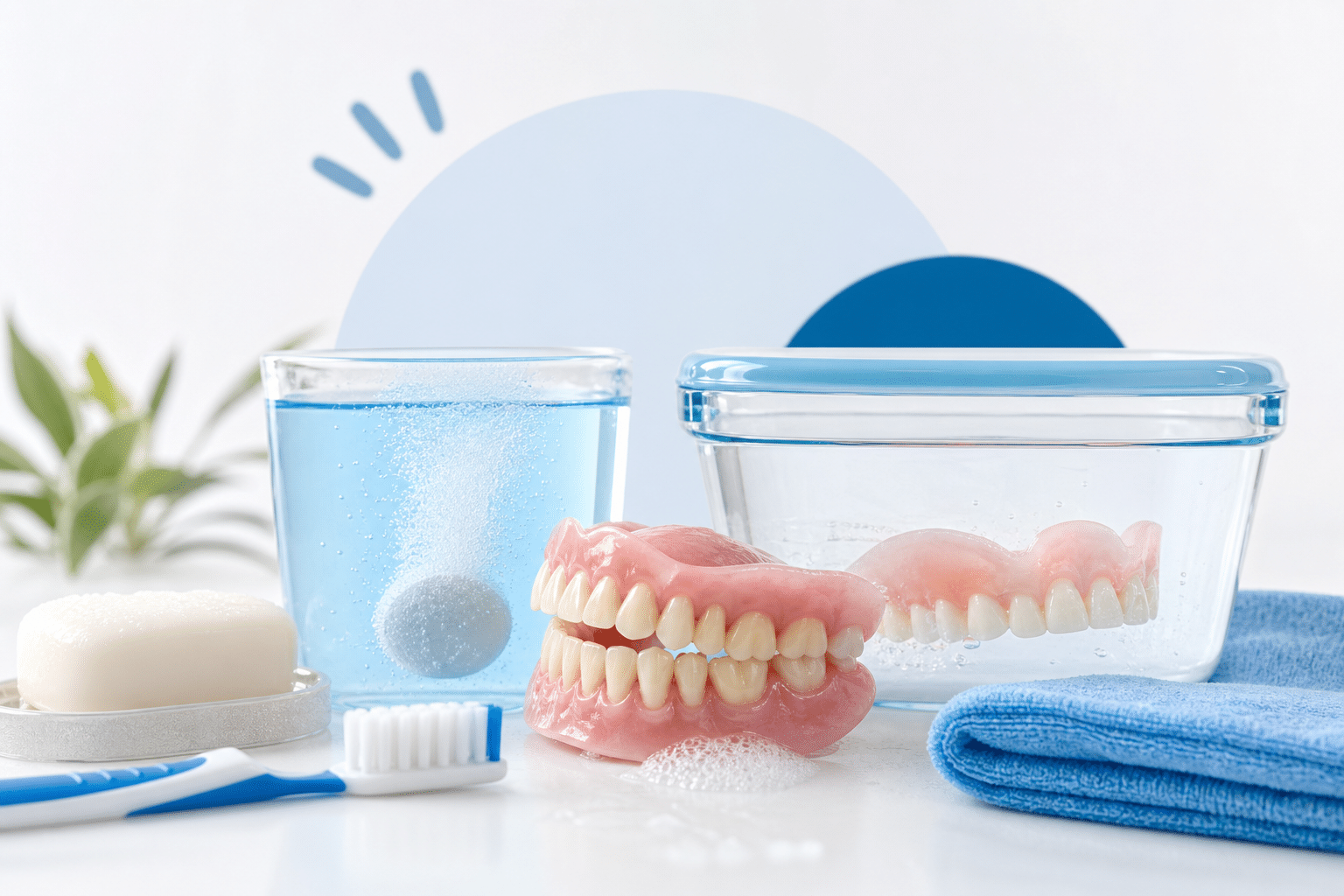
Knowing how to clean dentures properly sounds straightforward — until you realize how many people are quietly doing it wrong. Water alone, a quick rinse, the same toothpaste they use on natural teeth. These habits are common, and over time they shorten the life of your dentures while creating real health risks you may not see coming.
This guide walks through a daily cleaning routine that actually works, explains why each step matters, and covers the mistakes most denture wearers make without realizing it.
Why Denture Hygiene Matters More Than You Think
Dentures sit against soft tissue all day. When bacteria, food particles, and fungi build up on the surface, your gum tissue takes the hit. Poor hygiene is the leading cause of denture stomatitis — a fungal infection that causes redness and soreness under the denture base. Left untreated, it becomes persistent and uncomfortable.
The risks extend beyond your mouth. A 2019 report from Dental Update found that wearing dentures while sleeping is linked to a two to three times higher risk of developing pneumonia in elderly patients. That is not a minor footnote. It is a compelling reason to take every step of your daily routine seriously.
Start the Morning Right: Remove and Rinse First
Before anything else, take your dentures out and rinse them under cool or lukewarm running water. This clears loose food debris and gives you a clean surface to work with.
Skip the hot water. High temperatures warp acrylic denture bases, and even a slight warp changes how the denture sits against your gums. A poor fit leads to sore spots, difficulty chewing, and long-term bone resorption.
Mechanical Cleaning: Brush Every Surface
Rinsing alone is not enough. You need to physically brush every surface — the fitting surface that rests against your gums, the polished outer surface, and the spaces around any clasps on partial dentures.
Use a soft-bristle denture brush or a soft-bristle toothbrush. The key word is soft. Regular toothpaste is too abrasive for denture acrylic. It creates microscopic scratches that harbor bacteria and dull the surface over time. Instead, use a small amount of mild dish soap, hand soap, or a denture-specific paste.
Partial dentures with metal frameworks need a bit of extra attention. The clasps that grip your remaining natural teeth are prime spots for plaque buildup. A small interdental brush or pipe cleaner works well for getting around the metal components — just be gentle. Bending a clasp even slightly affects the fit and puts stress on the teeth it attaches to.
Avoid soaking metal-framework partials in bleach solutions. Chlorine bleach corrodes metal alloys and weakens the framework over time. Purpose-made effervescent tablets or plain water are the right choice for metal-containing dentures. Always check the product label to confirm compatibility.
Chemical Soaking: Reaching What Brushing Misses
Brushing removes visible debris, but it does not reach every surface or eliminate all microbial load. That is where soaking earns its place in the routine.
Research published in PLOS One in its 2016 report found that storing dentures overnight in a solution of water and a cleansing tablet produces a statistically significant reduction in total bacterial counts. Effervescent tablets work by releasing oxygen that breaks down biofilm in areas a brush simply cannot reach.
Drop your dentures into a clean container, add cool water, and dissolve one cleansing tablet. Let them soak for the time recommended on the packaging — typically 15 to 30 minutes for a daytime soak, or overnight for deeper disinfection.
If you are soaking overnight, confirm the solution is appropriate for your denture type. As noted above, bleach-based solutions are not suitable for metal frameworks.
While Your Dentures Soak, Clean Your Mouth
With your dentures out, take a moment to clean your gums. Use a soft toothbrush or a damp washcloth to gently massage the gum ridges, the roof of your mouth, and your tongue. This removes bacteria that accumulate on oral tissue and helps stimulate circulation in the gum tissue.
If you have remaining natural teeth, brush and floss them as usual. For partial denture wearers especially, keeping anchor teeth healthy is critical — those teeth carry the mechanical load of the partial every time you chew.
Overnight Storage: A Common Habit Done Wrong
A 2024 report from Clinical and Experimental Dental Research found that 61.3% of denture wearers stored their prostheses in dry locations rather than water-filled containers when not in use. Dry storage allows acrylic to dehydrate and warp, changing the fit and making the material more brittle over time.
Keep your dentures submerged whenever they are out of your mouth. A clean container with plain water or a mild soaking solution is all it takes. Change the water daily to prevent bacterial growth in the container itself.
The same 2024 report found that 24.4% of participants used only water to clean their dentures, skipping mechanical brushing entirely. A water rinse is a useful first step — it is not a substitute for brushing.
Should You Sleep in Your Dentures?
No. Removing dentures at night gives your gum tissue time to recover from the pressure of wearing them all day and significantly reduces the bacterial and fungal load in your mouth overnight.
A 2026 survey published in the Journal of International College of Dentists found that among 384 partial denture wearers, 149 admitted to wearing their dentures overnight. That is a significant share of wearers taking on an avoidable risk — particularly the pneumonia risk documented in elderly patients.
If removing your dentures at night feels uncomfortable or self-conscious, bring it up with your dentist. There may be fit or aesthetic concerns worth addressing, and a well-fitting denture is much easier to take out with confidence.
How Often Should You Clean Dentures?
Every day, no exceptions. The routine looks like this:
- Morning: Remove, rinse under cool water, brush all surfaces with a soft brush and mild soap or denture paste
- After meals: Rinse under running water when possible to clear food debris
- Evening: Brush again, soak in a cleansing solution, clean your gums and any remaining teeth
- Overnight: Store submerged in clean water or a soaking solution
The full process takes about five minutes morning and evening. The payoff is a denture that fits well, stays clean, and does not become a source of infection.
When to See Your Dentist
Even with a solid daily routine, dentures need professional attention. Your dentist can check the fit, polish surfaces that have become dull or scratched, and screen for early signs of stomatitis or other soft tissue changes.
Fit shifts over time as your jawbone naturally remodels. A denture that felt comfortable two years ago may be sitting differently today. Regular checkups catch those changes before they cause sore spots or affect how you eat and speak.
If you are in the Fort Worth, Crowley, Grand Prairie, or Waco area, Affordable Dentist Near Me sees both new and existing patients, with extended hours and financing options that make it easier to stay consistent with professional care.
FAQs
Can I use regular toothpaste to clean my dentures?
No. Standard toothpaste contains abrasives designed for tooth enamel, which is far harder than denture acrylic. Using it on dentures creates tiny scratches where bacteria accumulate and the surface dulls. Use a mild soap or a product specifically formulated for dentures instead.
How long should I soak my dentures each day?
Most effervescent tablet products recommend 15 to 30 minutes for a daytime soak. For overnight soaking, follow the product instructions — some solutions are not meant for extended contact. Always rinse your dentures thoroughly before putting them back in your mouth.
Is it safe to use bleach to clean dentures?
Diluted bleach can be used on full acrylic dentures in specific concentrations, but it must never be used on dentures with metal components, as it corrodes metal alloys. It can also damage softer lining materials. Effervescent denture tablets are a safer, more practical option for most wearers.
What happens if I store my dentures dry overnight?
Acrylic needs to stay hydrated to hold its shape. Dry storage causes the material to dehydrate and warp, which changes the fit. A poorly fitting denture puts uneven pressure on gum tissue and can accelerate bone loss in the jaw over time.
How do I clean the clasps on a partial denture?
Use a small interdental brush or pipe cleaner to work around metal clasps gently, and avoid bending them. Do not use bleach-based soaking solutions on metal-framework partials. A purpose-made effervescent tablet or plain water soak is the right approach.
How often should I get my dentures professionally checked?
Most dentists recommend at least once a year, even when your dentures feel comfortable. Fit changes gradually and is easy to miss until it causes a problem. Your dentist can also catch early signs of soft tissue irritation or infection before they become serious.
Can poor denture hygiene affect my overall health?
Yes. Bacterial and fungal buildup on dentures contributes to oral infections like denture stomatitis. In older adults, research has linked sleeping in dentures to a significantly higher risk of pneumonia — making nightly removal and proper cleaning a genuine health precaution, not just a cosmetic one.
Build the Habit and Your Dentures Will Last
A consistent daily routine is the single most important thing you can do to extend the life of your dentures and protect the tissue underneath them. Brush, soak, store properly, remove them at night. None of these steps are complicated, but skipping them compounds over time.
If your dentures are not fitting well, feel uncomfortable, or you have not had a professional checkup in over a year, it is worth addressing sooner rather than later. Affordable Dentist Near Me serves patients across Texas with a full range of denture care and general dental services — and booking an appointment is simple whether you call or go online.