Dental Implant Maintenance vs. Bridges and Dentures: Comprehensive Care Routines Explained
Dental implants, dental bridges, and dentures are the three most common tooth-replacement options used to restore chewing, speech, and smile aesthetics, and each requires a specific maintenance approach to remain healthy and long-lasting. Proper maintenance reduces the risk of complications such as peri-implantitis, secondary caries on abutment teeth, and denture stomatitis, and it directly extends the lifespan of the restoration. This article explains what implants, bridges, and dentures are, the daily and professional care routines that protect them, and how routine choices affect durability and comfort. Readers will learn step-by-step daily cleaning techniques, the best products for each restoration type, common warning signs that require prompt attention, and a direct comparison that clarifies which option tends to demand more ongoing care. Sections include a focused implant care checklist, a how-to for cleaning under a pontic, a practical denture cleaning and storage routine, EAV comparison tables for quick reference, and troubleshooting guidance that helps avoid emergency visits. Throughout the guide we incorporate targeted terms like dental implants, implant maintenance, dental bridge cleaning, denture cleaning routine, and implant vs denture care to support clear, actionable recommendations.
What Are Dental Implants and How Should They Be Maintained?
A dental implant is a surgically placed fixture that acts as an artificial tooth root supporting an abutment and a crown, and its maintenance focuses on preserving peri-implant tissue health and mechanical integrity. The implant fixture integrates with bone to restore function and preserve alveolar bone volume, which benefits chewing efficiency and facial support; maintaining soft tissue health around the abutment is central to preventing inflammation and bone loss. Daily home care centers on plaque control at the implant–gingiva interface using nonabrasive brushes and adjuncts, while professional maintenance includes instrumented debridement with implant-safe tools and periodic radiographic monitoring to ensure stable osseointegration. Preventive strategies reduce the risk of peri-implantitis, and early detection of bleeding or mobility allows timely intervention before irreversible bone loss occurs. The following subsections define implant components and provide a concise, numbered daily routine that targets featured-snippet style answers for “how to clean dental implants” and practical escalation cues for when to contact a clinician.
What Is a Dental Implant and Its Key Components?
A dental implant consists of three primary parts: the fixture (the portion placed in bone), the abutment (the connector), and the crown (the visible tooth replacement), each contributing to function and maintenance needs. The fixture is commonly made of titanium or zirconia and provides the structural interface with bone; titanium has a long clinical track record while zirconia offers metal-free aesthetics and distinct surface characteristics that can influence plaque adherence. The abutment links the fixture to the crown and forms the soft-tissue seal that requires gentle cleaning to prevent bacterial ingress and inflammation. The crown material—porcelain fused to metal, monolithic ceramic, or composite—affects what cleaners and polishing agents are safe to use and informs professional polishing choices during maintenance visits. Recognizing these parts helps patients understand why targeted tools like interdental brushes and implant-specific floss are recommended, and it prepares patients for the daily steps outlined next.
What Is the Daily Care Routine for Dental Implants?
A focused daily routine for implants emphasizes mechanical plaque removal, interdental cleaning, and soft-tissue health monitoring to prevent peri-implant disease and maintain function.
Brush gently twice daily with a soft-bristled or implant-specific brush to remove biofilm from the crown and abutment margin.
Clean interdental spaces with an interdental brush or implant-safe floss once daily, choosing brush diameter to match the embrasure.
Use a water flosser on a low to medium setting to flush subgingival areas and reduce anaerobic bacterial load around the implant.
Rinse with an antimicrobial mouthwash when indicated for short-term control of gingival inflammation, avoiding abrasive pastes.
Monitor daily for bleeding, persistent discomfort, or changes in mobility, and contact a dentist if these signs appear.
Each step targets plaque and bacteria at the implant–tissue interface, and the routine pairs mechanical removal with periodic antiseptic support rather than abrasive polishing, which can damage implant surfaces. Adhering to these steps reduces risk of peri-implantitis and preserves both esthetic and functional outcomes over time.
Research consistently highlights the critical role of daily oral hygiene habits and knowledge in maintaining peri-implant health and preventing disease.
Oral Hygiene Habits & Knowledge: Key to Peri-Implant Health
Peri-implant disease and health are associated with microbial dental plaque. Therefore, oral hygiene plays a role in preventing and treating these diseases. This study aimed to determine the relationships among knowledge of peri-implant status, oral hygiene habits, and peri-implant disease and health.
The effect of individuals’ oral hygiene habits and knowledge levels on peri-implant health and disease: a questionnaire-based observational study, 2024
How Do You Properly Clean and Care for Dental Bridges?
A dental bridge replaces missing teeth by joining a pontic to abutment teeth or implants, and effective bridge care focuses on cleaning beneath the pontic and protecting abutment teeth from caries and periodontal disease. The pontic rests over soft tissue and can trap food and biofilm beneath it, so daily interdental cleaning and specialized tools are essential to prevent localized inflammation and decay of supporting teeth. Material choices for bridges—porcelain, metal-ceramic, or resin-bonded frameworks—influence which cleaning agents and polishing methods are safe during professional maintenance. Professional checks evaluate cement integrity, marginal fit, and abutment tooth health; early detection of recurrent decay or cement failure allows conservative repair rather than full replacement. The following subsections provide definitions of bridge types and a stepwise cleaning routine for the high-risk area under the pontic to answer “how to clean under a bridge” in practical detail.
What Are Dental Bridges and Their Types?
A dental bridge is a fixed prosthesis that replaces missing teeth by anchoring a pontic to adjacent abutment teeth or implants, and common types include traditional fixed bridges, cantilever bridges, and resin-bonded (Maryland) bridges. A traditional fixed bridge uses crowns on both sides of the missing tooth to support a pontic and is suitable when two strong abutments exist, while a cantilever bridge attaches a pontic to a single abutment and concentrates occlusal forces on one tooth, requiring careful occlusal monitoring. Resin-bonded bridges conserve tooth structure by bonding a pontic to metal or ceramic wings on adjacent teeth, but the bond can delaminate over time, making regular checks important. Material choices—porcelain for esthetics or metal-ceramic for strength—affect wear patterns and the abrasiveness of cleaning recommended, which influences both home care and professional polishing strategies. Understanding the type of bridge helps tailor interdental brush sizes and flossing approaches to minimize risk to abutment teeth.
What Are Effective Daily Cleaning Techniques for Bridges?
Cleaning a bridge daily requires tools that remove debris under the pontic and protect abutment margins to prevent secondary caries and periodontal problems.
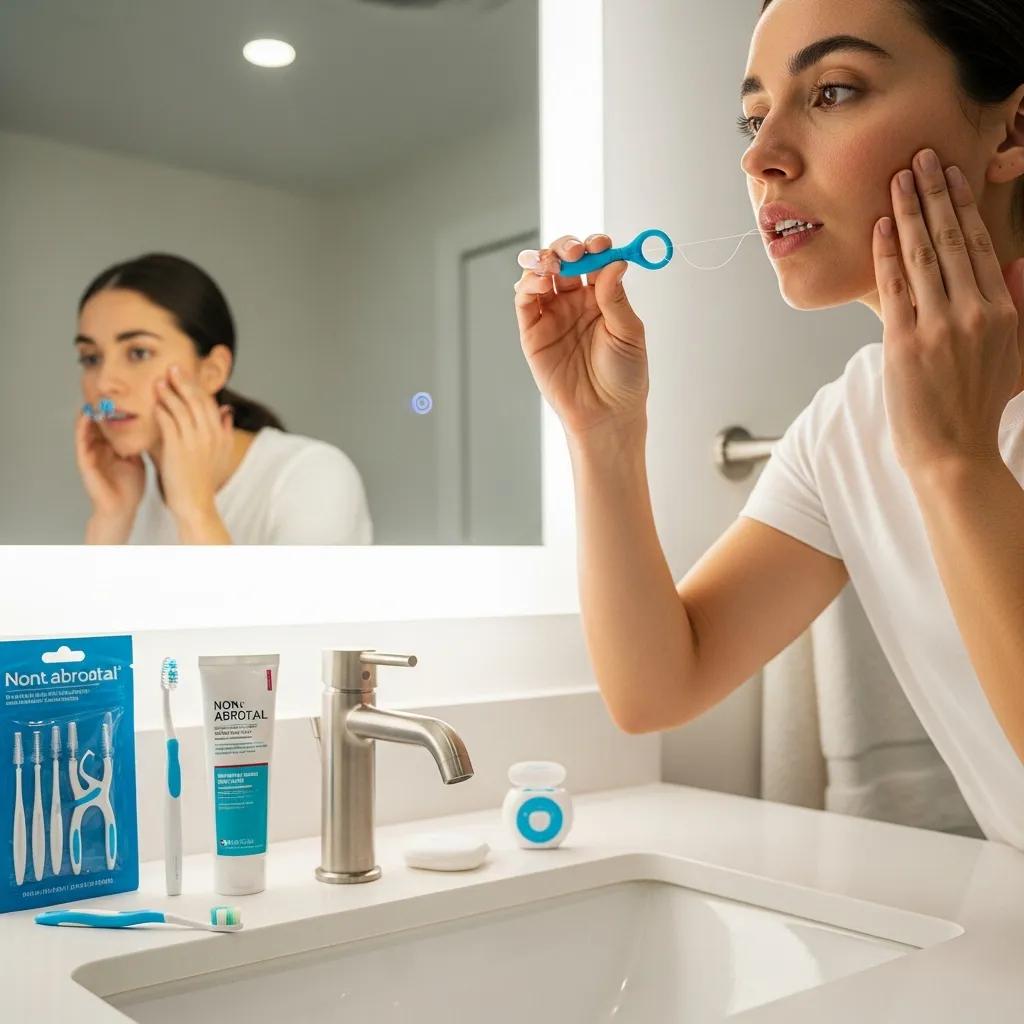
Use a floss threader or superfloss daily to pass dental floss beneath the pontic and along abutment margins, removing trapped food and plaque.
Employ an interdental brush of appropriate diameter to sweep under the pontic and along embrasures, selecting nylon-coated wires for delicate contacts.
Consider a water flosser to dislodge debris beneath the pontic and flush bacterial reservoirs; use steady, targeted pulses rather than high-pressure blasts.
Brush with a soft brush and nonabrasive toothpaste twice daily, focusing on the crown margins and adjacent gingiva to limit plaque accumulation.
Watch for food traps, persistent bad taste, or increasing sensitivity in abutment teeth and schedule a professional check if these signs occur.
These steps remove biofilm and reduce acid exposure to abutment teeth, and consistent use of threaders and interdental brushes prevents the common problem of decay beneath the crown margins that can compromise bridge longevity. Regular professional assessments then verify the integrity of cemented margins and check for wear.
Effective bridge design, particularly for adhesive bridges, plays a crucial role in facilitating cleansing and preventing secondary caries on abutment teeth.
Adhesive Bridge Design for Enhanced Cleansing & Caries Prevention
Adhesive bridges allow mi-nimal tooth preparation with design modifications to increase retention and a good cleansing effect to avoid secon-dary caries. The purpose of this article is to provide an overview of the modified adhesive bridge design on missing mandibular molars to enhance retention and good cleansing effect.
Modification of adhesive bridge design to improve retention and good cleansing effect on loss of mandibular molars Kennedy Class III, S Bonifacius, 2023
What Is the Best Routine for Denture Cleaning and Maintenance?
Dentures—full or partial—require a distinct daily routine combining mechanical cleaning, chemical soaking, and correct storage to control biofilm, prevent stomatitis, and maintain fit and comfort. Unlike fixed restorations, dentures are removable and therefore accumulate biofilm on both tissue-contacting surfaces and acrylic bases; proper care minimizes odor, mucosal irritation, and tissue injury. Daily steps include immediate rinsing after eating, gentle brushing with a denture brush or soft brush using nonabrasive denture cleanser, and an overnight soak in a tested denture soak solution to remove calculus and microbial deposits. Adhesive use should follow manufacturer instructions and hygienic cleaning, and professional relines or adjustments are necessary when dentures loosen or cause sore spots because tissue changes over time. The subsections below describe how care differs by denture type and present a step-by-step daily cleaning and storage routine with dos and don’ts.
Denture stomatitis is a prevalent issue among denture wearers, underscoring the importance of diligent cleaning and maintenance routines.
Understanding & Managing Denture Stomatitis: Causes, Features, and Care
Denture stomatitis is the most occurring problem of denture wearers and presents in more than two-thirds of the patients wearing removable dentures with the prevalence rate increasing with age. The objective of this review was to present a succinct discussion on the prevalence, aetiology, classification, clinical features, and management of denture stomatitis based on conventional and recently published works of literature.
Denture stomatitis, B Iba, 2021
What Types of Dentures Require Different Care?
Denture care varies by whether the prosthesis is a full denture, partial denture, or immediate denture, because each type interfaces with tissues differently and presents unique hygiene priorities. Full dentures replace all teeth in an arch and require careful soaking to prevent warping and acrylic damage, while partial dentures combine metal frameworks or clasps with acrylic teeth and need meticulous cleaning at clasp sites to prevent plaque accumulation on abutment teeth. Immediate dentures are inserted right after extractions during healing and require extra monitoring because tissue changes can quickly alter fit; frequent relines are common during the healing phase. Material sensitivities also matter: acrylic bases can scratch, so abrasive pastes and stiff brushes are avoided, whereas metal components on partials require attention to avoid corrosion from unsuitable cleansers. Matching care to denture type prevents common complications and preserves both oral tissues and prosthesis integrity.
How Should You Clean and Store Dentures Daily?
A reliable daily denture routine combines rinsing, brushing, soaking, and careful storage to maintain cleanliness and dimensional stability without damaging materials.
Rinse the denture thoroughly after eating to flush loose debris and minimize acid exposure to oral tissues.
Brush the denture with a soft denture brush and nonabrasive denture cleanser at least once daily, focusing on the tissue side and acrylic base.
Soak the denture overnight in a manufacturer-recommended soak solution to dissolve biofilm and reduce bacterial load; follow soak-time guidelines.
Store dentures in a cool, water-filled container when not worn to prevent warping, avoiding boiling water or prolonged sun exposure.
Remove dentures overnight if recommended for tissue rest, and seek a professional reline or adjustment when fit changes or sore spots persist.
Avoid regular toothpaste on acrylic, bleach solutions on metal components, and overnight drying, as these practices can cause material degradation and reduced fit. Proper daily handling preserves comfort and reduces the need for frequent professional repairs.
How Do Maintenance Routines Compare: Dental Implants vs. Bridges vs. Dentures?
Comparing implants, bridges, and dentures highlights differences in daily care complexity, required tools, and professional maintenance intervals, and understanding these contrasts helps patients choose a restoration that matches their lifestyle and hygiene ability. Implants require focused interdental cleaning around the abutment and peri-implant tissue monitoring to prevent peri-implantitis, bridges emphasize cleaning beneath pontics and protection of abutment teeth from caries, and dentures demand mechanical cleaning of prosthesis surfaces plus soaking and storage procedures. Professional maintenance also differs: implants often need implant-safe debridement and periodic radiographs, bridges require evaluation of cement margins and occlusion, and dentures require relining or adjustments to preserve fit as tissues remodel. Below is an EAV-style comparison table that summarizes daily care, professional maintenance, common problems, and typical lifespan expectations for quick reference and patient decision-making.
Implant vs Bridge vs Denture: maintenance overview and practical differences.
Restoration Type
Daily Care
Professional Maintenance
Common Problems
Typical Lifespan
Dental Implant
Soft brushing, interdental brush, water flosser, antimicrobial rinse as indicated
Implant-safe scaling, peri-implant probing, radiographs every 6-12 months
Peri-implantitis, bleeding, screw loosening
10–15+ years with good care
Dental Bridge
Brush crowns, floss under pontic via threader, interdental brushes
Check cement margins, repair/replace pontic or crowns as needed
Secondary caries on abutments, cement failure
7–15 years depending on abutment health
Denture (Full/Partial)
Rinse after meals, brush with denture cleanser, nightly soaking
Relines, repairs, occlusal adjustments
Sore spots, stomatitis, fractures
5–8 years with relines and repairs
What Are the Differences in Daily Care and Professional Maintenance?
Daily care varies most at the microscopic interface: implants need plaque control at the abutment–tissue junction to prevent biofilm-driven inflammation, bridges require flossing under pontics and protection of abutment margins, and dentures need thorough cleaning of the prosthesis and tissue rest. Professional maintenance similarly diverges: implant patients often benefit from specialized instrumentation and radiographic surveillance to catch early bone changes; bridge patients require evaluation of crown margins, occlusion, and possible endodontic health of abutment teeth; denture wearers need relines or repairs as jaw ridges remodel. Risk factors such as a history of periodontal disease, smoking, or diabetes increase professional visit frequency across all restoration types, and clinicians tailor recall intervals to those risks to preserve long-term outcomes. Understanding these differences helps patients adopt the correct tools and schedules that support restoration longevity.
Which Restoration Is Easier to Maintain and Why?
When comparing ease of maintenance, removable dentures are easiest to clean because they can be taken out for thorough cleansing, but they typically require more frequent adjustments and relines for fit, which increases clinical visits. Fixed bridges and implants are maintained in the mouth and therefore require more precise interdental cleaning skills; however, implants often deliver the best long-term stability and bone preservation when hygiene is excellent, making them less maintenance-intensive in the long run for compliant patients. Patient factors such as manual dexterity, daily routines, and oral health history determine which restoration is “easier” for a given person: someone with limited dexterity may prefer a removable prosthesis, while a motivated patient comfortable with interdental brushes may find an implant the more durable, lower-intervention option. Ultimately, maintenance ease is a balance of daily skill requirements and projected clinical interventions over time.
What Common Problems Arise from Poor Maintenance of Dental Restorations?
Poor maintenance of restorations leads to distinct complications: peri-implantitis for implants, secondary caries and periodontal disease around bridge abutments, and denture stomatitis or fractures for dentures, and early recognition of symptoms allows conservative measures that prevent escalation. Biofilm accumulation is the common upstream cause across restorations; when plaque persists, inflammation, tissue breakdown, and mechanical loosening follow. Immediate self-care responses such as improved hygiene, salt rinses for minor mucosal irritation, and temporary adhesives for loose dentures can provide short-term relief, but professional assessment is essential when mobility, persistent pain, or purulent discharge appears. Preventive strategies—including patient education on correct tools, technique refinement, and adherence to recall schedules—reduce complication rates and improve restoration durability. The following subsections list red flags and a concise troubleshooting and prevention checklist to guide patient action.
What Are Signs of Issues in Implants, Bridges, and Dentures?
Early warning signs differ by restoration type but share common indicators such as bleeding, discomfort, and altered fit, and recognizing them prompts timely clinical intervention. For implants, signs include bleeding on probing, persistent swelling, increased pocket depths, or any mobility of the suprastructure; these suggest early peri-implant disease and require prompt professional evaluation. For bridges, look for food impaction, bad taste, sensitivity in abutment teeth, or visible cement washout, as these indicate possible secondary caries or cement failure. Denture red flags include sore spots, new areas of tissue irritation, persistent bad odor despite cleaning, or a sudden change in fit; these symptoms often signal tissue changes, hygiene issues, or prosthesis damage. Early detection and escalation to a clinician reduce the likelihood of extensive repair or irreversible tissue damage.
How Can You Troubleshoot and Prevent These Maintenance Challenges?
Troubleshooting and prevention combine improved home care, short-term symptomatic measures, and timely professional intervention to address common problems and avoid permanent damage. Start with an intensified hygiene protocol: increase frequency of interdental cleaning around implants and bridges, perform nightly denture soaking, and use antimicrobial rinses briefly when inflammation is present. For minor denture looseness, a temporary adhesive can restore function until a reline is scheduled, while persistent mobility in an implant or bridge requires urgent dental assessment rather than prolonged conservative measures. Preventive actions include using the correct interdental brush sizes, replacing worn denture liners, and keeping scheduled professional cleanings and radiographs; these steps catch material wear and tissue changes early. Adopting consistent routines and following professional guidance are the most effective ways to prevent small issues from becoming major failures.
Which Oral Hygiene Products Are Recommended for Dental Implants, Bridges, and Dentures?
Selecting the right tools and products is essential for targeted plaque control across restoration types, and product choice should reflect the restoration’s materials and the oral anatomy around it. For implants, soft brushes, implant-specific floss, interdental brushes with appropriate diameters, and water flossers are primary tools that remove biofilm without damaging implant surfaces. Bridge maintenance benefits from floss threaders or superfloss, nylon-coated interdental brushes to protect metal or ceramic margins, and gentle toothpaste. Denture care relies on denture brushes, nonabrasive denture cleansers and overnight soak solutions, plus adhesives used sparingly and per instructions. Below is a product EAV table that maps tools to restoration types, explains how to use each, and lists precautions so patients can select safe, effective items.
Product/Tool
Best For (Implant/Bridge/Denture)
How to Use
Notes/Precautions
Soft-bristled brush
Implant, Bridge
Brush twice daily at crown margins
Avoid abrasive pastes on implant surfaces
Interdental brush
Implant, Bridge
Choose correct diameter and sweep gently
Use nylon-coated wires for delicate contacts
Floss threader / superfloss
Bridge
Thread floss under pontic daily
Be gentle to avoid damaging margins
Water flosser
Implant, Bridge
Use low-medium pressure to flush pockets
Helpful for patients with dexterity limits
Denture brush + nonabrasive cleanser
Denture
Brush and rinse prosthesis daily
Do not use regular toothpaste on acrylic
Overnight soak solution
Denture
Soak per manufacturer instructions
Avoid bleach on metal partial components
What Tools and Products Support Effective Implant Care?
Effective implant care focuses on tools that remove biofilm at the abutment margin while preserving surface integrity and soft-tissue health, and a small set of items covers most needs. A soft-bristled or implant-specific brush removes supragingival plaque gently, while interdental brushes sized to fit embrasures clean lateral surfaces adjacent to the implant; choosing nylon-coated wires reduces abrasion risk. Implant-safe floss or floss designed for prosthetics removes interdental biofilm without shredding, and a water flosser provides additional subgingival irrigation that can reduce anaerobic bacterial load when used properly. Short-term use of antimicrobial rinses can help control inflammation after professional treatment but should not replace mechanical cleaning. Selecting these products and using them daily reduces peri-implant inflammation and supports long-term osseointegration, which is critical to implant success.
What Specialized Products Aid Bridge and Denture Cleaning?
Bridge and denture cleaning benefit from tools designed to reach under prostheses and clean delicate interfaces without causing damage, and product selection should match the restoration material. For bridges, floss threaders and superfloss enable effective cleaning beneath pontics and along crown margins, and small-diameter interdental brushes work well for embrasure cleaning; use coatings and brush sizes that fit snugly without forcing. For dentures, a dedicated denture brush paired with a nonabrasive denture cleanser removes biofilm from acrylic bases and teeth, and nightly soak solutions dissolve deposits and reduce odor; adhesives can help retention for many patients but require daily removal and cleaning of both denture and tissue surfaces. Avoid household bleach on partials with metal frameworks and refrain from abrasive pastes that scratch acrylic, because scratched surfaces retain more biofilm and reduce denture longevity.
Why Are Regular Dental Visits Essential for Maintaining Implants, Bridges, and Dentures?
Regular dental visits provide professional cleaning, adjustments, and monitoring that detect early changes invisible to patients and that directly prevent long-term restoration failure. Clinicians use implant-safe instruments to debride submarginal deposits, evaluate cement margins on bridges, perform relines and occlusal adjustments on dentures, and obtain radiographs to track bone levels around implants and check for recurrent decay on abutment teeth. Recall intervals vary by risk: high-risk implant patients (history of periodontitis, smoking, uncontrolled diabetes) often need shorter intervals, while low-risk patients may be seen less frequently, but tailored schedules based on clinical risk assessment offer the best protection. Affordable Dentist Near Me of Longview performs professional cleanings, assessments, and adjustment services at its Longview location, and patients can schedule appointments there for routine maintenance or urgent concerns at the practice’s Longview office address. Regular professional care complements daily hygiene and preserves restoration function over the long term.
How Often Should Professional Cleanings and Check-Ups Occur?
Professional recall intervals should be individualized but generally fall into recommended ranges that reflect risk and restoration type to optimize prevention and early detection of problems. For implants, many clinicians recommend evaluations every 3–6 months for high-risk individuals and 6–12 months for stable cases, emphasizing that radiographs and peri-implant probing help detect early bone loss. Bridge patients commonly benefit from 6–12 month examinations to assess crown margins, occlusion, and abutment tooth health, with more frequent visits if sensitivity or cement issues appear. Denture wearers often need annual checks at minimum, with relining or adjustment visits as tissue changes dictate, and more frequent visits may be necessary during the healing phase for immediate dentures. Adjusting intervals based on smoking status, diabetic control, and periodontal history ensures the maintenance schedule matches each patient’s vulnerability to complications.
What Role Do Dentists Play in Long-Term Restoration Health?
Dentists provide the clinical interventions and monitoring that sustain restoration health, including professional debridement, radiographic surveillance, repairs and relines, and patient-specific education to optimize home care and reduce failure risk. During visits, clinicians evaluate tissue response around implants for signs of peri-implantitis, verify the integrity and marginal fit of bridges, and assess denture fit and occlusion, performing repairs or relines as needed to restore function and comfort. Dentists also guide patients in selecting the right oral hygiene products and demonstrate techniques such as proper interdental brush angles and floss-threader use to increase daily effectiveness. By combining technical interventions with behavior-focused education and follow-up, dental professionals translate daily hygiene into durable outcomes and reduce the need for more extensive treatments later.
How Can Personalized Care Improve the Longevity of Dental Restorations?
Personalized maintenance plans tailor daily routines and professional recall schedules to each patient’s restoration type, oral health status, manual dexterity, and lifestyle, and such plans consistently extend prosthesis lifespan by addressing specific risk factors. Customization may include recommending particular interdental brush diameters for tight embrasures, scheduling more frequent professional debridements for patients with a history of periodontal disease, or advising temporary adhesive strategies during transitional periods for denture wearers. Short anonymized success illustrations show how targeted changes yield measurable benefits: a patient with early peri-implant mucositis who adopted daily water-flosser use and a refined interdental brush regimen achieved inflammation resolution and avoided surgical intervention, while another denture wearer regained comfort after a professionally timed reline combined with improved nightly soaking practices. The next subsection explains those success stories briefly, and the following business-focused note shows how a local practice supports tailored maintenance without overstepping the informational focus.
What Are Patient Success Stories Demonstrating Effective Maintenance?
Concise, anonymized examples illustrate how proper maintenance reverses early problems and prolongs restoration service life, helping patients appreciate practical outcomes of adherence. One vignette describes a patient who noticed mild bleeding around a recently placed implant; after intensifying mechanical cleaning with an interdental brush and using a water flosser as instructed, peri-implant inflammation subsided and radiographic bone levels stabilized, avoiding surgery. Another brief example involves a partial denture wearer whose frequent sore spots resolved after a professional reline and adoption of nightly soaking combined with gentler cleaning, restoring comfort and extending prosthesis lifespan. These examples demonstrate that timely adjustments to hygiene technique and targeted clinical interventions produce measurable improvements, and they underscore the value of individualized maintenance strategies discussed in the previous section.
How Does Affordable Dentist Near Me of Longview Support Restoration Care?
Affordable Dentist Near Me of Longview provides dental services relevant to implant, bridge, and denture maintenance at its Longview location, offering professional cleanings, adjustments, relines, and assessments that complement patient home care. The practice serves the Longview, TX community from its listed office and provides restorative treatments including dental implants, dental dentures, and dental bridges while performing routine maintenance procedures that help identify and address early issues. Local patients seeking tailored maintenance plans can schedule evaluations at the Longview office to review home-care techniques, receive implant-safe debridement, or arrange relines and repairs for dentures, and the practice’s reported local reputation reflects substantial patient feedback. These clinical services are intended to support, not replace, consistent daily care routines—combining professional oversight with patient diligence yields the most durable outcomes for restorations.
Daily adherence: Follow the specified cleaning regimen for your restoration type every day.
Use the right tools: Select interdental brushes, floss threaders, or denture cleansers appropriate to your prosthesis.
Schedule timely check-ups: Maintain professional recall intervals adjusted for your risk profile.