Genuine Experiences: Real Dental Implant Patient Reviews and Testimonials in Dallas
Patient testimonials for dental implants are first-hand accounts that capture outcomes, recovery, and the day-to-day impact of tooth replacement, and this article gathers those genuine experiences to help Dallas patients make confident choices. Reading detailed implant testimonials gives prospective patients realistic expectations about pain, timing, and functional results while reducing uncertainty about elective restorative dentistry. This guide explains why authentic patient stories matter, walks through the dental implant journey from consultation to restoration, and highlights how success stories and before-and-after evidence change decisions for local readers. It also analyzes affordability and financing as reported by patients, shows where to find verifiable visual proof in Dallas, and explains how to schedule a Free Dental Implant Consultation with local providers. Throughout, the focus is on dental implants, patient-reported outcomes, and practical steps you can take—culminating in a clear call to action for readers ready to book a free consult and get personalized guidance on implant options.
Why Are Real Patient Testimonials Crucial for Dental Implant Decisions?
Real patient testimonials provide the social proof and procedural detail that help prospective implant patients assess risk, expected outcomes, and the day-to-day effects of treatment. When testimonials include specifics—timelines, photos, and descriptions of recovery—they translate clinical steps into lived experience, which reduces fear and clarifies value for elective restorative dentistry. For dental implants, testimonials reveal information that clinical descriptions rarely convey: how chewing changes, whether speech is affected, and how long soreness lasts. Evaluating testimonial recency and verifiability adds confidence: recent, dated reviews with before-and-after images are stronger signals than brief, undated praise. These evidence-based narratives are especially valuable for people weighing options like single-tooth implants, implant-supported dentures, or All-on-4 style restorations because they report functional outcomes that matter most in daily life.
Genuine stories often contain the trust signals that matter most to patients deciding on implants. Details such as procedure timelines, clinician names, and clear outcome photos help readers connect a procedure to a predictable result. The next subsection describes how those specific story elements build credibility and reduce perceived treatment risk.
How Do Genuine Stories Build Trust in Dental Implant Choices?
Genuine patient stories build trust by combining relatable detail, verifiable outcomes, and context about the treatment process. When a testimonial explains the initial concern, the specific procedure (for example, a single-tooth implant or implant-supported denture), the timeline for healing, and the final result with photos, it forms a complete narrative that readers can map onto their own situations. Trust is further strengthened when reviews cite measurable improvements—chewing harder foods again, reduced discomfort, or renewed confidence—because these outcomes are concrete and repeatable. Another key signal is recency: a steady stream of recent, positive reviews indicates consistent performance rather than a one-time success. Together, these elements let readers move from abstract claims about success rates to tangible expectations about recovery and daily life changes, making the decision to pursue implants more informed and less risky.
Detailed testimonials also prime readers to ask better questions during consultations, which improves shared decision-making. The next subsection synthesizes what Dallas patients actually report about implant care and outcomes.
What Do Dallas Patients Say About Their Dental Implant Experiences?
Dallas patients who share implant experiences commonly praise clear communication, comfortable treatment environments, and the perceived value of the outcome relative to cost. Many accounts focus on staff compassion during appointments, step-by-step explanations of the procedure, and the relief of returning to normal eating and smiling. Affordability frequently appears in local reviews as well, with mentions of promotional offers and transparent cost discussions helping patients follow through on treatment. Review recency is often highlighted by patients who note prompt scheduling, up-to-date clinical facilities, and consistent follow-up care. These recurring themes—comfort, clear explanations, and value—help other Dallas residents assess both the clinical and practical implications of choosing implants.
Readers who find these themes persuasive often seek an immediate next step; the practice-level conversion option described below outlines how to get started with a free consult that matches the testimonial-driven decision path.
What Is the Dental Implant Journey from a Patient’s Perspective?
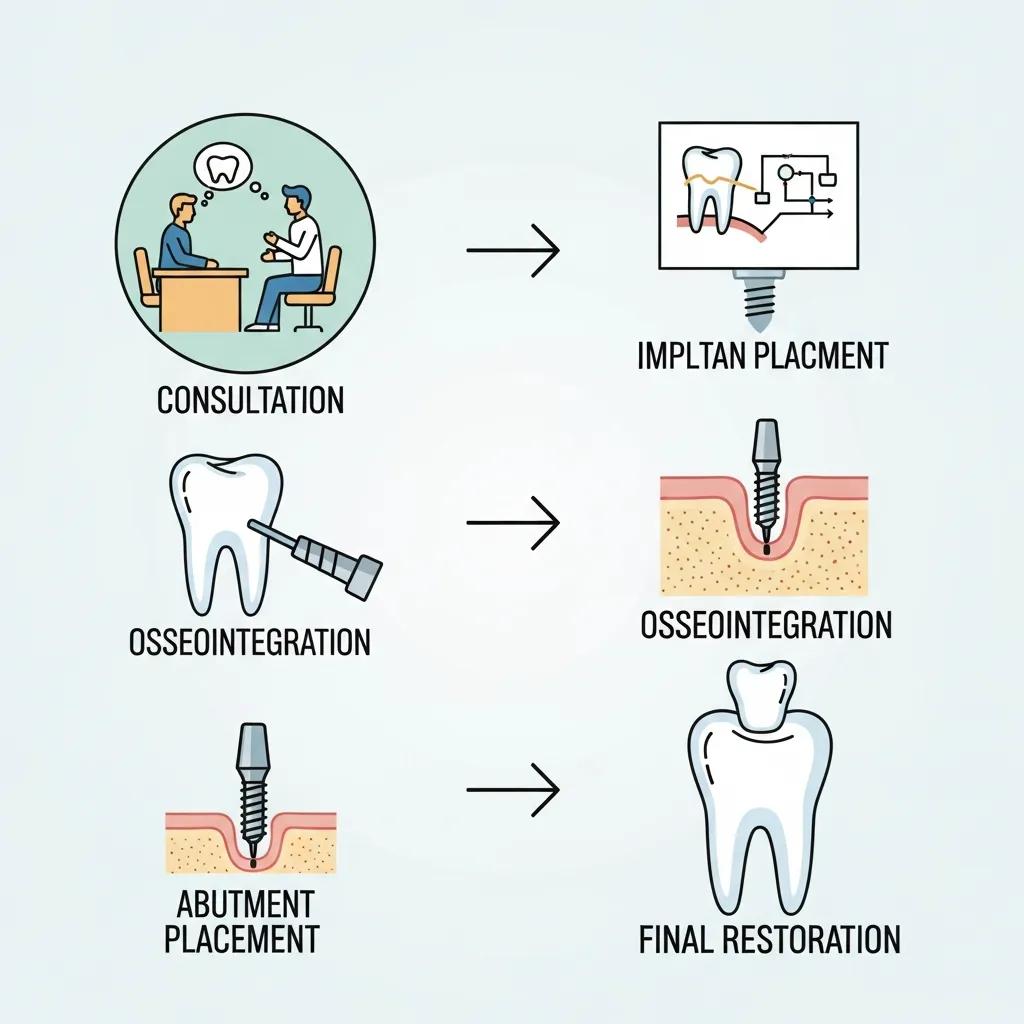
The dental implant journey from a patient’s vantage point moves through distinct phases: initial consultation and planning, implant placement surgery, the healing and osseointegration period, and final restoration and maintenance. Each phase carries specific expectations: initial imaging and treatment planning clarify eligibility, surgery addresses implant placement and immediate recovery, osseointegration requires time for the implant to fuse with bone, and restoration returns function and esthetics with an abutment and crown or prosthesis. Understanding these phases helps patients anticipate timelines, temporary limitations, and the likely progression of discomfort and functional improvement. Below is a step-by-step breakdown and an EAV-style table that compares what patients typically experience at each stage.
What Are the Step-by-Step Phases of Getting Dental Implants?
Patients typically describe five core phases during an implant treatment pathway: consultation and imaging, surgical placement, initial recovery, osseointegration, and final restoration. During consultation, clinicians evaluate medical history, take 3D imaging or X-rays, and discuss options such as single-tooth implants or implant-supported dentures, clarifying whether bone grafting is needed. The surgical placement phase usually involves local anesthesia and brief post-operative soreness; patients commonly report manageable discomfort controlled with analgesics and short rest periods. Osseointegration follows and typically lasts several months while the implant integrates with jawbone; patients often notice gradual improvements in stability and function during this time. The final restoration phase attaches the abutment and crown or prosthesis, at which point patients frequently report restored chewing ability and improved aesthetics.
Practical expectations during each phase help patients schedule recovery time and plan follow-up visits, which leads naturally into common patient concerns that arise across these phases.
Phase
Typical Steps
Patient Experience
Consultation
Medical history, imaging, treatment planning
Clarifies eligibility, discusses options and financing
Surgical Placement
Implant post placed, sutures, immediate aftercare
Short-term soreness, limited chewing, pain managed with medications
Osseointegration
Healing period (weeks to months), occasional follow-ups
Long-term success depends on oral care and follow-up
Which Common Concerns Do Patients Share About Implants?
Patients routinely raise a handful of predictable concerns when describing their implant journey: pain levels during and after surgery, overall cost and financing, eligibility in cases of bone loss, and the time commitment required for healing. Pain is often described as manageable with modern anesthesia and short-term medications; many patients emphasize that discomfort is less than anticipated. Cost concerns are addressed by patients who report value in long-term function despite upfront expense, especially when transparent pricing or offers reduce the initial barrier. Eligibility questions—particularly regarding bone loss—are commonly resolved through diagnostic imaging and, when necessary, grafting procedures that expand candidacy. Time commitment is framed by patients as weeks to months of staged care, with the final result justifying the temporary inconvenience.
Clear answers to these concerns in testimonials and consultation sessions help prospective patients weigh benefits against possible downsides and prepare for the next practical step: planning finances and timelines.
How Do Dental Implant Success Stories Influence Patient Decisions in Dallas?
Success stories influence decisions by converting abstract clinical benefits into relatable life improvements such as restored nutrition, renewed confidence, and smoother social interactions. When local patients share narratives about returning to favorite foods, speaking comfortably, or smiling without self-consciousness, those stories demonstrate the procedure’s practical value. Emotional content—how implants changed daily life—often sways readers more strongly than technical descriptions, because it connects to personal goals like eating with ease or feeling confident at work and socially. For Dallas readers, seeing successful local cases increases perceived relevance: proximity to similar outcomes reduces psychological distance and increases the likelihood of scheduling a consultation. The following case summaries and synthesis show the typical arc of life-changing implant outcomes and why those narratives matter.
What Are Some Life-Changing Dental Implant Success Stories?
Short anonymized case summaries highlight common patterns: a patient with a failing front tooth regains a natural smile and confidence after a single-tooth implant; a denture wearer transitions to an implant-supported denture and reports vastly improved chewing and speech; a patient with multiple missing teeth regains the ability to enjoy a broader diet and experiences increased social comfort. Each case follows a pattern—concern, treatment pathway (including any preparatory grafting), and a documented outcome focusing on function and appearance. Patients commonly describe not only technical success but also psychosocial benefits such as being less self-conscious and more willing to engage socially. These narratives illustrate tangible return-on-investment that helps new patients translate clinical promises into everyday expectations.
These life-change summaries also underscore the importance of before-and-after visual evidence and dated testimonials, topics discussed in the next section that help verify such claims.
How Do Implants Improve Quality of Life According to Patients?
Patients frequently report several consistent quality-of-life improvements after implants: better nutrition due to restored chewing, clearer speech without denture slippage, and enhanced self-esteem from a more natural-looking smile. Many note a psychological shift—less anxiety about social situations and increased willingness to smile openly—that complements measurable functional gains such as biting force and stability. Durability and reduced maintenance relative to removable options also appear in narratives, with patients emphasizing fewer adjustments and better long-term comfort. These combined functional and psychosocial gains form the core value proposition that influences other patients’ decisions to pursue implants.
Recognizing these improvements helps readers prioritize what matters most to them—appearance, function, or long-term predictability—before they evaluate visual proof of results in the local market.
Where Can You Find Real Dental Implant Before and After Results in Dallas?
Verified before-and-after results are typically available on clinic galleries, Google Business Profiles, and patient testimonial hubs; these sources give readers access to dated photos, clinical notes, and sometimes video testimonials. When assessing credibility, look for consistent lighting and camera angles across images, captions describing the procedure and date, and linkage to the treating clinician or clinic. Video testimonials and time-stamped social posts also strengthen authenticity by showing motion, voice, and patient demeanor. For Dallas patients, combining clinic-hosted galleries with third-party reviews provides cross-validation: a gallery shows the visual outcome while reviews explain the patient journey and satisfaction. The following EAV table catalogs sample case-types and visual outcome summaries to illustrate how to read before-and-after evidence responsibly.
How Do Before and After Photos Reflect Genuine Patient Outcomes?
Before-and-after photos indicate genuine outcomes when they include clear context: a short caption explaining the procedure type, dates to show progression, and a note about whether the image reflects a single-tooth implant, implant crown, or implant-supported denture. Authentic sequences show consistent camera framing and lighting and often include clinical notes about materials used or adjunctive procedures like grafting. Patients can verify credibility by asking during a free consultation for additional imaging, timelines, and whether the patient consented to publication. Evaluating images alongside written testimonials gives a fuller picture: photos show the smile; narratives explain function, recovery, and day-to-day experience.
A credibility checklist helps readers evaluate visual proof before using it to decide on a provider or treatment plan, which leads into specific local sources where these materials appear.
Case ID
Procedure Type
Visual Outcome Summary
Case A
Single-tooth implant with crown
Natural color match, seamless emergence profile, improved smile symmetry
What Do Dallas Patients Reveal About Their Smile Transformations?
Dallas patients commonly describe their smile transformations in terms of naturalness, comfort, and restored confidence, noting that implant restorations blend seamlessly with adjacent teeth. Visual evidence paired with patient comments often highlights how color matching and crown shape contributed to a natural appearance. Functionally, patients report being able to eat previously avoided foods and feeling secure during social interactions—outcomes visible in before-and-after sequences as improved tooth alignment and fuller facial support. These combined visual and narrative indicators reassure prospective patients that the aesthetic benefits are matched by functional improvements, which is why seeing both photos and read detailed accounts is essential during decision-making.
How Affordable Are Dental Implants in Dallas According to Patient Reviews?
Patient reviews in Dallas often frame affordability in terms of perceived long-term value rather than just upfront price, with many noting that clear pricing, financing options, and promotional offers made treatment attainable. Common themes in reviews include appreciation for transparent cost discussions during consultation, flexible payment plans that spread the investment over months, and special offers that reduce initial out-of-pocket expense. Patients who reference value typically point to measurable benefits—improved diet, fewer future prosthetic costs, and increased confidence—that justify the investment. To help readers compare options, the table below summarizes financing types and typical patient-reported value outcomes, followed by a short analysis of how local offers can change affordability perceptions.
What Do Patients Say About the Value and Cost of Dental Implants?
Across patient narratives, value is most often associated with long-term function and reduced maintenance compared with removable prosthetics. Reviews that emphasize value typically mention regained ability to eat a varied diet, less frequent repairs, and the psychological benefit of a secure smile. Transparent cost discussions during the free consultation are repeatedly credited with helping patients make informed decisions. Patients also report that bundling necessary preparatory work (such as grafting) into a clear plan reduces surprise expenses and improves perceived value. Those who felt the procedure was worthwhile frequently cited both functional outcomes and the predictability of maintenance as contributing factors.
Financing Option
Typical Monthly Estimate (Reported by Patients)
Patient-Reported Value/Outcome
In-house payment plans
$100–$300/month depending on scope
Enables spreading cost, improves acceptance
Third-party financing
Varies by lender, fixed monthly payments
Faster access to treatment with predictable installments
Promotional offers
Reduced upfront fees or bundled discounts
Lowers initial barrier and encourages treatment completion
Which Financing Plans and Special Offers Help Dallas Patients?
Patients commonly reference three types of affordability supports: in-house payment plans that break the total into monthly payments, third-party dental financing that provides multi-month repayment options, and limited-time promotional offers that lower initial fees or bundle services. Special offers cited in local listings—such as everyday low fees or introductory promotions—help reduce the initial financial barrier and can make the difference between delaying or pursuing treatment. When assessing financing, patients recommend asking about interest rates, the total cost over time, and whether preparatory procedures are included in quoted plans. For a precise, personalized financing estimate, scheduling a Free Dental Implant Consultation provides the most reliable path to understanding actual out-of-pocket costs and available promotions.
Practical affordability discussions prepare readers to schedule a free consult; the next section explains how to do that in Dallas and what to expect from the appointment.
How Can You Schedule a Free Dental Implant Consultation in Dallas?
Scheduling a Free Dental Implant Consultation in Dallas begins with choosing a local clinic that offers a no-cost initial assessment, confirming what the consult includes, and preparing the documents and questions that maximize the visit’s value. A typical free consult includes a review of medical and dental history, imaging or referral for imaging if needed, a discussion of implant options and phases of treatment, and a preliminary cost and financing overview. To schedule, prospective patients can use the clinic’s online booking tools or request an appointment via the Dallas location page on the practice’s website, specifying a Free Dental Implant Consultation to ensure accurate preparation. Preparing for the consult by gathering prior dental records, a list of medications, and a short list of questions makes the in-person time more productive and helps the clinician produce a tailored plan.
What Should You Expect During Your Free Implant Consultation?
During a Free Dental Implant Consultation you can expect a structured process: a medical and dental history review, an oral exam, imaging or a plan for imaging, a discussion of treatment options and timelines, and an initial cost/financing conversation. The clinician will assess bone volume and soft tissue health, explain whether grafting or sinus lift procedures are required, and map out the likely number of visits and recovery expectations. Patients commonly report that consultations are educational and that clinicians walk through before-and-after examples and testimonial cases to illustrate realistic outcomes. The consultation concludes with next steps—either scheduling imaging, planning surgery, or arranging financing—so patients leave with clarity about timelines, costs, and what daily life will look like during recovery.
This practical roadmap helps readers prepare documentation and questions to maximize their scheduled consult.
Who Are the Expert Dentists Behind Dallas Dental Implant Care?
Expert implant teams in Dallas typically include general dentists with restorative experience, prosthodontists, and oral surgeons; local practice profiles often highlight named clinicians and patient-focused care approaches. One clinician associated with the Dallas practice referenced in local listings is Dr. Mike Pham, who is presented as a lead clinician involved in patient care and implant treatment planning. Practice descriptions emphasize a team approach that balances clinical expertise with patient comfort and affordability, and patient reviews repeatedly mention staff kindness and clear explanations as differentiators. Prospective patients benefit from asking about the specific clinician who will manage their implant case, their role in the surgical and restorative phases, and whether they will see the same clinician for follow-up care to ensure continuity.
What Are the Most Frequently Asked Questions About Dental Implant Experiences?
This section answers common patient questions drawn from review themes and PAA trends, focusing on pain, eligibility with bone loss, longevity of implants, and financing basics. Each question is answered concisely and followed by a short elaboration to provide practical guidance for patients evaluating dental implants. These Q&A entries are intended to mirror the succinct answers patients seek online and to prepare readers for a more detailed discussion during their free consultation.
How Painful Is the Dental Implant Procedure According to Patients?
Most patients report that the dental implant procedure involves manageable pain levels, with local anesthesia and appropriate analgesics controlling discomfort during and after surgery. Immediately after surgery, soreness and swelling are common but typically subside within a few days to a week, with many patients comparing the discomfort to a tooth extraction rather than prolonged intense pain. Sedation options are available for anxious patients and are discussed during the consultation to improve comfort. Patient narratives emphasize that clear preoperative instructions and post-operative care—antibiotics if indicated, cold packs, and soft-food diets—significantly reduce perceived pain and accelerate return to normal activities.
This concise overview addresses the principal pain concern and points readers to personalized pain-management strategies discussed at their consultation.
Can Patients with Bone Loss Still Get Dental Implants?
Yes—patients with moderate bone loss are often eligible for implants after appropriate evaluation and adjunctive procedures such as bone grafting or sinus lifts are considered; candidacy is determined through imaging and clinical assessment. Bone augmentation techniques rebuild sufficient bone volume and shape to support implant placement and are commonly performed either prior to or simultaneously with implant surgery depending on case complexity. Patient reports indicate that grafting can add healing time but often enables successful implant outcomes where implants would otherwise be contraindicated. During a free consultation, clinicians assess bone density and explain whether grafting, staged approaches, or alternative prosthetic options best match a patient’s anatomical and medical profile.
Having covered typical clinical eligibility and pain expectations, readers often return to the question of how peer reviews inform provider choice, discussed next.
How Do Real Patient Reviews Impact Choosing the Best Dental Implant Dentist in Dallas?
Real patient reviews impact provider selection by highlighting consistent performance in outcomes, communication, and comfort; they serve as a practical checklist for evaluating implant clinicians. Key review signals include repeated mentions of clear explanations, comfortable procedures, transparent pricing, and documented before-and-after evidence. Cross-checking these signals with clinician credentials, case galleries, and recent reviews helps prospective patients separate one-off praise from consistent, replicable quality. Reviews that specifically reference implant outcomes—such as sustained chewing ability or a natural look after restoration—are particularly informative because they map directly to the treatment goals most patients prioritize. The following checklist helps readers translate review patterns into an evaluation framework they can use when comparing local providers.
What Qualities Do Patients Appreciate in Dallas Dental Implant Providers?
Patients prioritize several provider attributes when reporting satisfaction: compassionate communication that explains options clearly, technical skill evidenced by stable and natural restorations, attentive post-operative follow-up, and transparent discussion of costs and financing. Supportive staff and comfortable facilities are frequently mentioned as amplifiers of clinical care, reducing anxiety during surgical phases. Patients often cite an integrated team approach—where surgery, restoration, and follow-up are coordinated—as an attribute that streamlines care and enhances outcomes. These qualities together form a prioritized checklist that prospective patients can use when reading reviews and meeting clinicians during consultations.
How Does Affordable Dentist Near Me of Dallas Stand Out in Patient Satisfaction?
Based on validated local practice information, Affordable Dentist Near Me of Dallas highlights a Free Dental Implant Consultation as a clear patient-access point, emphasizes affordability through everyday low fees and promotional offers, and shows high recent review averages that indicate consistent patient satisfaction. Patient-facing details reference a broad service mix—including dental implants and dentures—an emphasis on comfort and value, and promotional incentives such as free whitening-related offers that appear in local listings. Reviews on public profiles have shown strong average ratings in recent counts, suggesting frequent positive feedback about staff kindness and outcome satisfaction. For Dallas readers, these features—free consults, affordability messaging, and high review averages—can make the process of exploring implants less daunting and more accessible.
After reviewing these practice-level signals, readers who are ready to act can schedule a Free Dental Implant Consultation to get a personalized plan and cost estimate.
Prepare records and questions: Gather prior dental records, lists of medications, and specific questions about bone status and timeline.
Request the Free Dental Implant Consultation: Specify the no-cost implant consult when booking to ensure imaging and time allocation.
Bring visual references: Bring photos or examples of desired outcomes to align expectations with possible restorations.
Financing Plan
Patient-Reported Monthly Cost
Reported Benefit
In-house plan
$100–$300
Spreads cost, increases access
Third-party lender
Varies
Predictable monthly payments
Promotional bundling
Lower upfront fee
Reduces initial barrier to treatment
This table summarizes financing experience themes and underscores why scheduling the free consult is the logical next step for interested patients.
Check recent reviews for implant-specific mentions: Prioritize providers with multiple, recent implant success stories.
Ask to see case galleries during the consult: Visual evidence paired with patient narratives is the strongest indicator of consistent results.
Confirm follow-up and maintenance plans: Long-term success depends on accessible post-restorative care.
Understand payment options before the procedure: Early financial planning prevents delays.
Ask about bundled pricing for preparatory work: Inclusion of grafting or extractions reduces surprise costs.
Request written estimates: Clear, itemized estimates support informed decisions.
Phase
Typical Steps
What to Ask at Your Free Consult
Consultation
Imaging and planning
Ask about projected timelines and whether grafting is expected
Surgery
Implant placement
Confirm anesthesia and post-op pain control plan
Restoration
Final crown/prosthesis
Verify materials, warranty, and maintenance schedule
Bring prior imaging if available: Saves time and may speed treatment planning.
Be ready to discuss medical history: Certain health conditions affect candidacy and require discussion.
List long-term goals: Whether you prioritize appearance, function, or speed of treatment will shape your plan.
These practical tips help patients make the most of their free consultation and move from reading testimonials to receiving personalized care.
This article has provided a detailed, evidence-oriented path from reading testimonials to booking a Free Dental Implant Consultation, combining patient narratives, procedural clarity, affordability analysis, and practical scheduling guidance to empower Dallas residents considering implants.