The True Cost of Dental Implants: Understanding Hidden and Additional Charges for Transparent Pricing
Dental implant cost can feel opaque because published “starting at” prices rarely reflect the full sequence of components, diagnostics, preparatory procedures, and follow-up care that most patients will need. This article explains the core components that make up an implant case, the common hidden costs dental implants patients overlook, and the variables that move a quote toward the low or high end of a realistic range. Readers will learn component-level pricing (implant post cost, abutment cost, dental crown cost), typical ancillary procedure costs like bone grafting cost and sinus lift cost, and regional context for average cost dental implants USA versus localized pricing in Longview, TX. After outlining what to expect, we compare practical financing choices—including medical credit cards such as CareCredit, FSA/HSA options, in-house dental implant financing, and personal loans—so you can map treatment to your budget. The piece closes with clear guidance on preparing for a free implant consultation and what transparent pricing practices to request from clinics so you can avoid surprises during billing and scheduling.
What Are the Core Components of Dental Implant Costs?
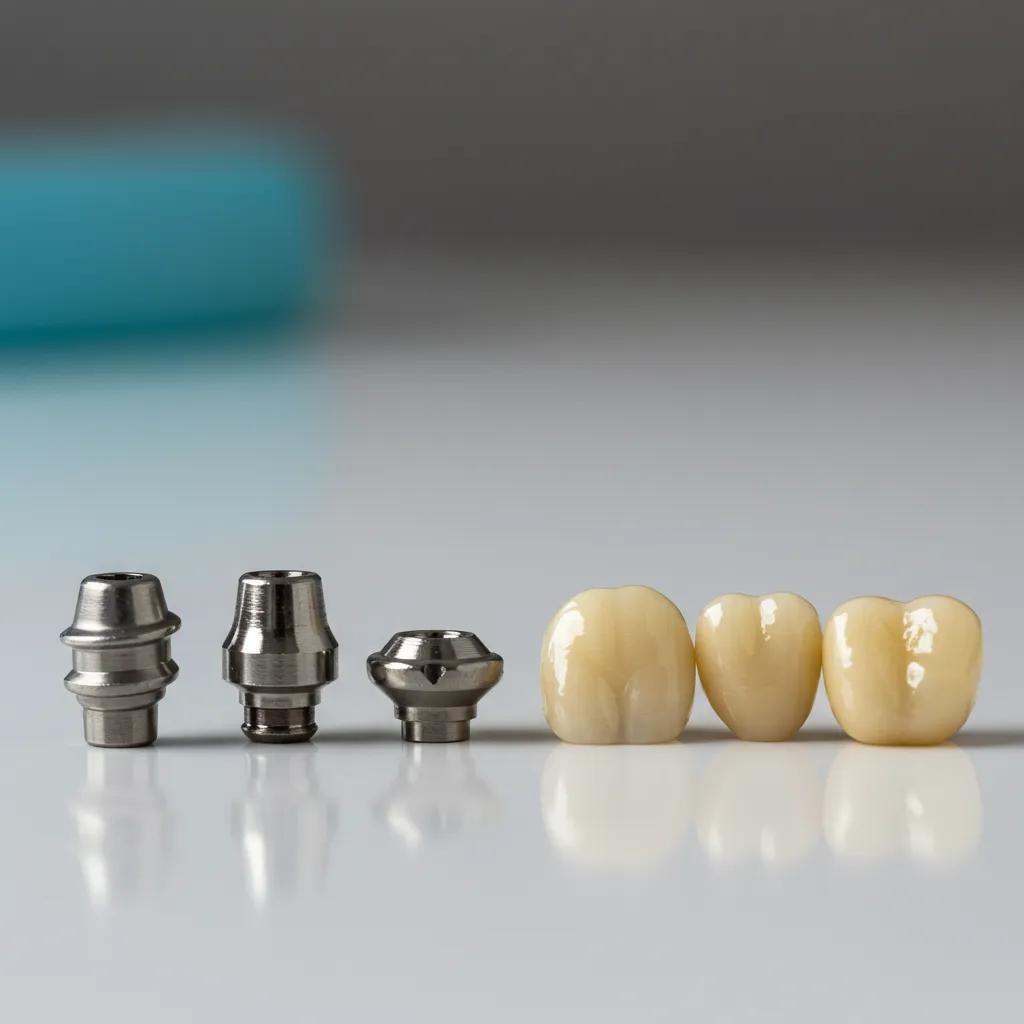
The core components of dental implant costs include the implant post (the fixture), the abutment (the connector), and the dental crown (the visible prosthetic), and each plays a distinct role in function and price. The implant post cost covers the surgical fixture that becomes integrated with bone through osseointegration; this is followed by an abutment that shapes soft tissue and transmits forces, and finally a crown that delivers aesthetics and chewing function. Understanding these parts clarifies why single dental implant cost quotes that appear low often exclude one or more components or necessary lab and surgical fees. Below is a compact table that summarizes typical U.S. ranges for each component, useful when comparing quotes and asking for itemized estimates. After the table we’ll unpack each component with typical cost drivers so you know which choices affect price and when higher-cost options are justified.
This table compares the main implant components, expected cost ranges, and variability notes.
Component
Typical Cost Range (U.S.)
Notes on Variability
Implant post (fixture)
$500–$2,500
Varies by brand, diameter, surgical complexity, and whether specialty implants are required
Abutment (connector)
$200–$1,200
Stock vs custom, titanium vs zirconia, and aesthetic zone requirements affect price
Crown (final restoration)
$800–$3,000
Material (PFM, zirconia, porcelain), lab fees, and warranty terms determine cost
This component-level view makes it easier to spot omissions in quotes: many practices bundle implant post and crown differently, so an itemized breakdown clarifies what you’re paying for and why certain options cost more than others.
What Is the Implant Post and Its Typical Cost Range?
The implant post is the titanium or ceramic fixture surgically placed into the jawbone where it functions as an artificial tooth root and enables osseointegration, the biological bonding that stabilizes the prosthesis. Implant post cost reflects factors such as implant system brand, diameter and length, the surgical time required, and whether bone augmentation is necessary at the same visit. Clinically, patients with adequate bone and simple anatomy will see lower fixture costs, while those needing angled or specialty implants, guided surgery, or staged placement can expect the higher end of the range. Understanding this component explains why some quotes list an “implant” whereas others separate post, surgery, and restorative fees, so requesting the implant post cost explicitly helps set realistic expectations for the full procedure.
Choosing a specific implant system can change both the immediate cost and long-term maintenance considerations, which leads naturally to the next cost component: the abutment that connects the implant post to the crown.
How Does the Abutment Affect the Overall Price?
The abutment serves as the connector between the implant post and the crown and can be prefabricated (stock) or custom-milled, with material choices like titanium or zirconia influencing abutment cost. Stock abutments are less expensive and work well in many posterior cases, while custom zirconia abutments are chosen for high-aesthetic anterior teeth and carry higher fees due to laboratory design and milling. Abutment cost also reflects whether the restoration will be screw-retained or cemented, as screw-retained systems may reduce some laboratory steps but can require precise components that increase price. When comparing quotes, verify whether the abutment is included with the implant or billed separately, because separating it often explains big gaps between “implant” estimates and comprehensive restorative pricing.
Material and connection choices for the abutment also influence tissue response and aesthetics, which naturally ties into crown selection and its impact on overall pricing.
What Is the Cost of the Dental Crown and Its Variations?
The dental crown completes the visible portion of an implant restoration and is available in materials ranging from porcelain-fused-to-metal (PFM) to full-contour zirconia and layered porcelain, each with trade-offs in aesthetics, wear resistance, and cost. Dental crown cost reflects the material selected, laboratory craftsmanship, and warranty or maintenance included; for example, a basic PFM crown will fall toward the lower end of the range, while a custom-shaded zirconia crown designed for an anterior tooth will be toward the higher end. Longevity and aesthetic needs should guide crown selection: higher-cost crowns often provide superior translucency and color-matching that matter in smile-zone cases, while posterior crowns prioritize strength. When assessing a quote, ask for the dental crown cost broken out and for details on lab warranties and expected lifespan so you can compare total life-cycle value rather than the upfront price alone.
Understanding how crown material choices affect function and appearance leads into the many hidden costs that can substantially change an implant case’s total price.
What Hidden and Additional Charges Should Patients Expect?
Beyond the implant post, abutment, and crown, patients frequently encounter hidden costs dental implants quotes omit—diagnostic imaging, pre-implant procedures like bone grafting and sinus lifts, anesthesia or sedation, and post-operative care or prosthesis maintenance. These ancillary items are sometimes essential depending on oral health and anatomy, and they materially affect final price; listing them explicitly helps patients assess an accurate single dental implant cost or full mouth dental implants cost. The following table outlines common ancillary procedures and their typical additional cost ranges so you can identify likely add-ons when reviewing estimates. After the table, each common hidden charge is described with clinical indicators that make it more likely so you can know when to budget for these services.
Below is a table listing common ancillary procedures and their typical additional costs.
Ancillary Procedure
Typical Additional Cost
When It Is Likely Needed
CBCT / 3D imaging
$150–$600
Complex anatomy, implant planning, or proximity to nerves/sinuses
Bone grafting
$200–$3,000
Insufficient ridge width/height or socket preservation required
Sinus lift
$800–$4,000
Upper posterior implants with low sinus floor height
Sedation / anesthesia
$150–$1,200
Patient anxiety, multiple implants, or lengthier surgery
Extractions
$75–$500 per tooth
Non-restorable teeth needing removal before implant placement
Temporary prosthesis
$100–$1,000
Immediate temporization or aesthetic demands during healing
Follow-up lab fees / repairs
$100–$1,000+
Complication management or prosthesis remake/repair
Itemizing these likely additional charges ensures you can compare clinics on apples-to-apples terms instead of being misled by a low “implant” sticker price that omits essential elements.
How Do Diagnostic Imaging Costs Impact the Total Price?
Diagnostic imaging—ranging from periapical X-rays and panoramic imaging to cone-beam computed tomography (CBCT)—provides the anatomical roadmap for safe implant placement and is often required to assess bone volume, nerve positions, and sinus anatomy. Imaging costs vary with modality: a panoramic X-ray is less expensive but gives limited detail, while a CBCT provides 3D bone mapping that can reduce surgical risk and improve implant positioning; these benefits often justify the higher CBCT fee in complex cases. Clinically, dentists request CBCT when planning multi-implant cases, when proximity to the mandibular canal is a concern, or when guided surgical stents will be used—situations that improve outcomes and can prevent costly complications. When reviewing estimates, confirm which imaging is included; paying for higher-quality imaging upfront often reduces the chance of unexpected revisions later, which can save money over the long term.
Accurate imaging reduces intraoperative surprises, which in turn affects the need for augmentative procedures like grafts and sinus lifts, topics we will explore next.
What Are the Expenses for Pre-Implant Procedures Like Bone Grafting and Sinus Lifts?
Bone grafting and sinus lifts address inadequate bone volume by augmenting the alveolar ridge or lifting the sinus floor to create sufficient height for implant placement, and these procedures can range widely in cost depending on material choice and complexity. Bone grafting cost depends on whether an autograft, allograft, xenograft, or synthetic substitute is used, and whether grafting is localized around a single implant or involves a larger ridge reconstruction; more extensive grafts and block grafts command higher fees. Sinus lift cost reflects whether an internal (crestal) or lateral window approach is used, and whether the sinus membrane requires repair—complex sinus work leads to a higher price and longer healing time before implant placement. Because these preparatory surgeries lengthen timelines and increase overall expense, patients should ask for separate line items for grafting and sinus work and understand how those costs affect single dental implant cost versus full-arch planning.
Grafting and sinus procedures also change sequencing and anesthesia needs, which ties directly into sedation options and their associated fees discussed next.
How Do Anesthesia and Sedation Options Add to the Cost?
Anesthesia and sedation options range from local anesthesia included in surgical fees to conscious sedation and general anesthesia, each carrying different costs tied to personnel, monitoring, and facility fees. Local anesthesia is commonly part of the surgical fee, but conscious sedation—oral sedatives or IV sedation—adds costs for the sedative agents, monitoring equipment, and sometimes an anesthesia provider, while general anesthesia in an operating room setting carries the highest fees and is reserved for extensive reconstruction or patients with special medical needs. Choosing a sedation level depends on patient anxiety, the number of implants placed at once, and medical considerations; patients should discuss sedation options during consultation to understand both clinical benefits and added fees. When comparing clinics, request clear descriptions of what sedation options are included versus billed separately so you can compare total treatment costs rather than only the surgical baseline.
Sedation choice affects post-operative monitoring and follow-up needs, which in turn influences expected maintenance and potential follow-up charges addressed below.
What Are the Post-Operative Care and Follow-Up Charges?
Post-operative care typically includes scheduled follow-up visits to assess healing, suture removal, and final prosthesis delivery, but additional charges may arise for complications, lab remakes, or maintenance of restorations such as screw loosening or crown fractures. Standard follow-up schedules usually cover the first post-op check and the implant exposure/abutment phase in staged treatments, but patients should confirm which follow-ups are bundled and which require extra fees—unexpected complications like infection or prosthetic failure will add costs. Maintenance costs for implant-supported prostheses over time (such as occlusal adjustments, replacement of worn components, or repairs after trauma) are another factor that can impact life-cycle cost; asking about expected maintenance plans and their likely fees provides a clearer long-term financial picture. Knowing typical post-op coverage reduces surprises and helps patients prioritize warranties or maintenance plans when selecting materials and providers.
Understanding these hidden and additional charges frames the next important area: the broad set of factors that influence how final dental implant cost is determined.
Which Factors Influence the Final Dental Implant Cost?
Multiple variables influence final pricing: material choices like titanium vs. zirconia, the number of implants and economies of scale for multi-unit or full-arch solutions, the experience and specialty of the provider, regional market differences such as Longview, TX versus metropolitan centers, and the patient’s baseline oral health. Material properties and laboratory work affect prosthetic durability and aesthetics, while provider expertise and surgical complexity influence both immediate fees and long-term outcomes. Below is a bulleted list summarizing the most influential factors so you can prioritize what to discuss during your consultation, followed by a brief comparative table that contrasts common material and provider scenarios to guide decision-making.
Key factors that commonly change final implant pricing include:
Material selection and prosthesis type, which affect laboratory and component costs.
Treatment scope (single implant vs multiple implants vs full-arch), which alters per-unit economics.
Provider specialization and experience, which often carry a premium for complex cases.
Patient oral health and preparatory needs, which add procedures like grafts or extractions.
These variables interact—choosing high-end materials with a specialist in an area with higher overhead will place a case near the upper end of expected ranges—so a transparent, itemized proposal from your clinician is crucial for comparison.
Factor
Typical Cost Impact
Decision Guidance
Material (Titanium vs Zirconia)
Moderate to High
Pick titanium for cost-effectiveness and track record; zirconia may be chosen for metal-free aesthetics in the anterior zone
Number of implants
Per-unit decreases with volume
Multiple implants or full-arch treatments often include package pricing that reduces per-tooth cost
Provider experience/specialty
Moderate to High
Specialists may charge more but reduce complication risk in complex cases
Regional market (Longview, TX vs metro)
Variable
Urban centers often have higher overhead; local clinics may offer more competitive everyday low fees
How Do Material Choices Like Titanium vs. Zirconia Affect Pricing?
Titanium implants are widely used and generally present a cost-effective option with an extensive clinical track record, while zirconia implants and zirconia abutments are newer, more aesthetic, and often more expensive due to material and manufacturing costs. Price differences reflect raw material expense, laboratory milling complexity, and the clinical indications for metal-free restorations; zirconia may be recommended in patients with metal sensitivities or when maximum translucency is required. Choosing materials should balance aesthetics, functional needs (chewing load), and cost: posterior regions under heavy load may favor titanium systems for strength, while anterior zones may justify higher-cost zirconia abutments and crowns for superior aesthetics. Discussing these material trade-offs with your provider helps align expectations for both the implant’s visual outcome and the financial investment.
Material choice also informs maintenance expectations and potential future costs, which is tied to the number of implants needed and prosthesis design addressed next.
How Does the Number of Implants Change Costs?
The number of implants changes both total cost and per-unit economics: a single dental implant cost is typically higher per tooth than the per-tooth cost when several implants are placed in the same surgical session or as part of a full-arch solution. Economies of scale arise because surgical setup, imaging, and laboratory fees can be spread across multiple implants, and package pricing for full-arch approaches (for example, implant-supported bridges) can lower per-tooth costs compared with individually replacing every tooth. However, more implants increase the complexity of surgery and may require additional preparatory work, so the net savings depend on the case plan and prosthesis type. Requesting both per-unit and package pricing clarifies whether multi-unit placement represents a cost advantage and how prosthesis decisions influence final cost.
How provider selection and local market pricing shape final quotes is the next topic, as experience level and location correlate with fee structures.
How Does Dentist Experience and Location in Longview, TX Impact Prices?
Provider experience and local market dynamics affect pricing: specialists such as oral surgeons or prosthodontists often command higher fees for complex cases due to additional training, while general dentists with implant training may offer competitive pricing with comparable outcomes for straightforward cases. Geographic location also matters—local clinics in Longview, TX typically reflect regional overhead, labor costs, and market competition that influence everyday pricing; smaller markets sometimes offer more competitive rates than major metropolitan areas, but availability of specialists and advanced labs can vary. When evaluating cost, consider both credentials and local context: a clinic that balances experienced clinicians with competitive regional pricing can provide strong value, and asking about itemized fees and expected outcomes helps you weigh experience premiums against potential savings.
Provider choice and location also interact with patient-specific oral health factors that directly increase or decrease costs, which we will examine next.
How Does Oral Health Condition Affect Implant Expenses?
Baseline oral health—gum disease, bone density, presence of non-restorable teeth, and occlusal (bite) considerations—directly affects the need for preparatory procedures such as scaling and root planing, extractions, grafts, or staged implant placement, all of which increase total cost. Patients with untreated periodontal disease will need stabilization before implant placement to reduce failure risk, and low bone density may require augmentation that adds to both cost and healing time. Evaluating and treating pre-existing conditions improves long-term implant success but increases the short-term financial outlay; asking for a clear treatment timeline and itemized costs for each preparatory step helps you budget realistically. By accounting for oral health-driven procedures early, patients can avoid unexpected expenses and understand how condition-driven interventions influence their final implant budget.
With cost drivers and variations clarified, the next section provides national and localized numeric ranges so you can orient expectations for single and full-arch treatments.
What Are the Average Costs of Dental Implants in the U.S. and Longview, TX?
Average cost dental implants USA typically fall into broad ranges because patient needs and market conditions vary; a commonly cited national range for a single dental implant is $3,000–$7,000 when the implant post, abutment, and crown are all included, while full mouth dental implants cost can vary widely—commonly between $20,000–$60,000+ per arch depending on approach and materials. Regional pricing differences mean a practice in Longview, TX may present more competitive pricing than larger urban centers due to local overhead and market dynamics, but local needs such as availability of specialist surgeons or lab costs also play a role. The table below contrasts national single versus full-arch ranges and notes typical inclusions and exclusions so you can reconcile advertised “starting at” prices with realistic totals. After the table, we’ll break down the single-implant and full-mouth scenarios with examples of what drives costs upward.
This short table contrasts national average ranges and common inclusions to make comparisons easier.
Treatment Type
Typical U.S. Range
Common Inclusions / Exclusions
Single implant (complete)
$3,000–$7,000
May include fixture, abutment, crown; often excludes grafts, advanced imaging, sedation
Full-arch (per arch)
$20,000–$60,000+
Range depends on All-on-4 vs full-arch implants, materials, and whether provisional prosthesis included
Ancillary procedures
Variable ($200–$4,000+)
Bone grafts, sinus lifts, extractions, and anesthesia frequently excluded from base quotes
As this table shows, verify which line items a quoted range includes so you can compare offers on equivalent terms rather than being misled by low-entry pricing that omits necessary procedures.
What Is the Typical Price Range for a Single Dental Implant?
A typical single dental implant cost when reported comprehensively—fixture, abutment, and crown—lands in the $3,000–$7,000 range in the.S., but that number moves up or down based on material choices, surgical complexity, and the need for any ancillary procedures. Low-end cases involve straightforward placement in a healed site with standard titanium fixtures and a basic crown, while higher-end cases include premium implant systems, custom abutments and high-aesthetic crowns, or additional procedures like bone grafting and CGT (connective tissue grafts) that increase cost. Patients should request a line-item estimate showing implant post cost, abutment cost, dental crown cost, and any expected ancillary fees to reconcile advertised ranges with their specific needs. Understanding what your individual case requires is the best way to map a single-implant budget to realistic expectations.
Because full-mouth replacements aggregate multiple implants and prosthetic complexity, the cost picture evolves significantly when moving from single to full-arch planning.
How Much Do Full Mouth Dental Implants Usually Cost?
Full mouth dental implants cost varies by approach—options range from multiple individual implants supporting individual crowns to full-arch immediate load solutions like All-on-4 or similar protocols—and typical per-arch ranges commonly span $20,000–$60,000 or more depending on materials, the number of implants, and whether provisional and final prostheses are included. Full-arch strategies can offer per-tooth cost efficiencies compared with individually replacing every tooth, but they often require more extensive diagnostics, possible grafting, and higher lab fees for large prostheses, which drives up the aggregate price. When budgeting for full-mouth work, compare not only total price but also what is included: immediate temporization, final prosthesis materials, and any staged surgeries. Evaluating those components side-by-side provides a clearer picture of long-term investment and maintenance needs.
Regional cost drivers and ancillary procedure variability further influence totals, and understanding how those differ locally is important when getting estimates.
How Do Ancillary Procedure Costs Vary Regionally?
Ancillary procedure costs vary with local market conditions including lab fees, clinician availability, and regional overhead; urban centers tend to have higher fees for the same procedure than smaller cities, while local supply chain and lab partnerships can make certain regions more cost-efficient for complex prosthetics. In Longview, TX, regional pricing dynamics may produce more competitive everyday pricing compared with larger metropolitan areas, but availability of specialists for advanced grafting or sinus surgery can affect scheduling and cost. To control for regional variance, request itemized estimates, ask which laboratories and implant systems will be used, and compare those details across local clinics; understanding local practice patterns helps you reconcile a national average with realistic localized quotes. When in doubt, a free implant consultation can provide an on-the-ground estimate tailored to your anatomy and local market.
Having established realistic price ranges, the next section explains practical financing pathways so patients can plan payments and access treatment responsibly.
How Can Patients Finance Dental Implants? Exploring Payment and Insurance Options
Dental implant financing encompasses a range of solutions: dental insurance often limits coverage and treats implants as elective, in-house financing can split the cost across months, CareCredit and similar medical credit cards offer promotional interest-free periods, FSAs/HSAs provide tax-advantaged resources for eligible expenses, and personal loans or credit cards remain alternatives for some patients. Comparing these options involves evaluating interest rates, repayment terms, monthly payment amounts, and eligibility requirements—all factors that influence the real monthly cost of treatment. Below is a table comparing common financing routes with typical terms and pros/cons to help patients decide which path best aligns with their financial situation. After the table, we’ll explore typical insurance realities, in-house plan features, CareCredit mechanics, and how FSAs/HSAs and personal loans fit into a financing strategy.
This table compares typical financing options for dental implants, with a focus on terms and applicability.
Financing Option
Typical Terms
Pros / Cons
CareCredit (medical card)
6–24 months promotional interest-free or longer-term plans
Pros: simpler approval, may be interest-free; Cons: varies by clinic, may require down payment
FSA / HSA
Use pre-tax funds
Pros: reduces out-of-pocket tax burden; Cons: annual contribution limits, funds must be available
Personal loan / credit card
Fixed or variable rates
Pros: predictable payments, can cover large sums; Cons: interest may exceed medical financing options
Understanding these options enables practical planning for dental implant financing and guides what to ask during your free implant consultation.
After reviewing general financing mechanisms above, consider that some local clinics make financing easier with specific consumer-facing options. For example, Affordable Dentist Near Me of Longview lists Dental Financing and a FREE IMPLANTS CONSULTATION among its consumer value propositions and emphasizes EVERYDAY LOW FEES for routine pricing transparency. Patients considering treatment there can discuss in-house financing terms and schedule a free implant consultation at the Longview location to get an itemized estimate and a tailored payment plan; verify what in-house plans cover and whether promotional third-party options like medical credit cards are accepted during that consult. This practice-specific information supplements the general financing comparisons and helps patients move from planning to scheduling without losing sight of price transparency.
What Dental Insurance Coverage Is Available for Implants?
Dental insurance policies commonly treat dental implants as elective restorative procedures and may limit coverage to components like crowns or preparatory work rather than funding implant fixtures themselves, so benefit verification is essential before committing to treatment. Typical insurance scenarios include partial coverage for related procedures—such as extractions, some surgical fees, or prosthetic crowns—while the implant post and some prosthetic components may be excluded or limited by annual maximums and waiting periods. To verify coverage, patients should request benefit summaries, ask how implants are coded, and obtain pre-treatment estimates from both insurer and clinic to identify gaps. Preparing these documents before your consultation lets the dental team structure a payment plan that complements your insurance benefits and reduces surprise out-of-pocket obligations.
Insurance realities interact with financing choices—if insurance covers parts of the work, financing can focus on the remaining balance rather than the full implant cost.
What Flexible Payment Plans and In-House Financing Are Offered?
In-house financing allows clinics to offer monthly payment arrangements that may be interest-free for a promotional period or carry modest interest, with terms varying by practice and often requiring a down payment or credit check. Typical in-house plan features include tiered monthly terms aligned with treatment milestones, bundled pricing for multi-unit restorations, and the ability to combine in-house plans with external financing or FSA/HSA funds. Evaluating in-house plans requires asking about required down payments, whether the plan covers all components (implant post cost, abutment cost, crown, ancillary procedures), and what happens if additional work is needed after treatment begins. When comparing, weigh convenience and potential lower administrative costs of in-house plans against third-party promotional financing that may offer longer interest-free terms for approved applicants.
A practical strategy is to request a written financing summary during your consultation and compare monthly payment estimates across in-house and third-party options.
How Do Medical Credit Cards Like CareCredit Work for Dental Implants?
Medical credit cards such as CareCredit provide deferred interest or promotional interest-free periods that many patients use to spread implant payments over 6–24 months or longer, but their value depends on timely repayment and the plan’s specific terms. CareCredit typically offers short-term 0% APR promotions and longer-term plans with fixed interest; its advantages include rapid approval and a network of participating providers, while disadvantages include potential retroactive interest if promotional payments are not completed per terms. Patients should calculate the total interest cost beyond the promotional period and compare monthly payments to determine affordability. When used responsibly, CareCredit can reduce immediate out-of-pocket strain and permit patients to proceed with treatment sooner, but always confirm acceptance at the clinic and request written estimates showing payment scenarios with and without promotional financing.
Comparing CareCredit with in-house and FSA/HSA strategies helps patients pick the lowest-cost route that meets their cash-flow needs.
How Can FSAs, HSAs, and Personal Loans Help Manage Costs?
FSAs and HSAs allow patients to use pre-tax dollars for eligible dental expenses, lowering effective cost, while personal loans and traditional credit cards offer immediate funds with varying interest rates and repayment terms. FSAs and HSAs typically cover dental implants when prescribed by a dental professional as necessary for dental health, and these accounts are beneficial when funds are already available, but contribution limits and plan rules apply. Personal loans can finance large procedures with fixed monthly payments, which may be preferable if promotional medical financing is unavailable or if you prefer a single lender relationship; however, interest rates vary with creditworthiness. Choosing among these options depends on account balances, tax status, urgency of treatment, and whether you can meet promotional repayment schedules for medical financing; discussing combined strategies—part FSA/HSA for eligible portions plus financing for the remainder—often yields the best overall cost outcome.
With financing options and clinic-level offerings described, the next section explains why implants are often a worthwhile long-term investment despite higher upfront costs.
Why Are Dental Implants a Worthwhile Long-Term Investment?
Dental implants offer long-term value through durability, preservation of jawbone, improved function compared with removable dentures, and psychosocial benefits such as restored confidence and improved diet, all of which can offset higher initial dental implant cost over time. Implants integrate with bone through osseointegration and typically require less replacement frequency than bridges or dentures, reducing long-term maintenance costs measured over years or decades. In functional terms, implants restore chewing efficiency, which supports nutritional health and reduces the risk of secondary dental problems; in social terms, aesthetic stability fosters confidence and quality-of-life improvements that many patients consider priceless. The discussion below quantifies longevity considerations, explains bone-preservation mechanics, and illustrates quality-of-life improvements to help patients assess implants as an investment rather than a single purchase.
Understanding lifetime cost per year and clinical benefits clarifies the investment thesis and invites a closer look at durability and biological advantages next.
How Does Durability and Longevity Justify the Initial Cost?
Implants generally outlast alternative restorations such as conventional bridges or removable dentures, which often need replacement or relining over time, making implants cost-effective when amortized across expected lifespan and maintenance. While crowns attached to implants may need replacement over the decades, the implant fixture itself often remains stable for many years with proper care, reducing the need for repeated invasive procedures that denture wearers or bridge patients may face. Considering durability as cost-per-year clarifies why a higher upfront investment can be economically sensible: fewer replacements, lower cumulative lab fees, and reduced adjacent-tooth preparation costs compared with conventional bridges. Selecting high-quality materials and adhering to recommended maintenance practices further extend service life, enhancing the implant’s long-term value proposition.
This longevity interacts directly with implants’ biological role in preserving jawbone, which reduces downstream restorative needs addressed next.
How Do Implants Prevent Bone Loss and Maintain Oral Health?
Implants preserve alveolar bone by transferring occlusal forces into the jawbone, stimulating remodeling and preventing the resorption that follows tooth loss, and this preservation reduces future reconstructive needs and maintains facial support. The osseointegration process—bone-forming a stable interface with the implant—mimics natural tooth root function and prevents the progressive bone loss commonly seen with removable dentures, which can accelerate ridge resorption and complicate future prosthetic options. Clinically, earlier implant placement after extraction or socket preservation minimizes bone loss and the need for extensive grafting later, saving both biological resources and financial expense. By maintaining bone volume and arch form, implants can reduce long-term costs associated with denture refitting, additional grafts, or more complex reconstructions.
Preserving bone and oral function also delivers tangible lifestyle benefits that improve daily living and social engagement.
How Do Dental Implants Improve Quality of Life and Confidence?
Dental implants restore near-natural chewing function, speech stability, and smile aesthetics, enabling patients to eat a wider variety of foods, speak without prosthetic slippage, and feel more confident in social and professional interactions. These psychosocial benefits translate into measurable improvements in dietary choices, nutritional status, and emotional well-being for many patients, making implants not just a functional investment but a quality-of-life decision. Case examples often note that patients resume favorite foods or social activities they had avoided, and while individual experiences vary, the consistent theme is improved self-esteem and day-to-day comfort. When weighing dental implant cost, including these non-monetary benefits in your decision-making context helps you evaluate the full return on investment over the treatment’s lifetime.
After understanding value and longevity, many patients have pragmatic questions; the next section addresses common patient questions about dental implant costs to prepare you for an informed consultation.
What Are Common Patient Questions About Dental Implant Costs?
Patients frequently ask which hidden costs they might overlook, how to verify insurance coverage, and what to expect during a free implant consultation; addressing these questions directly prepares patients to get a clear, itemized estimate and to compare clinics effectively. Below are concise answers optimized for quick reference, followed by actionable checklists and a brief outline of what a free implant consultation typically delivers so you know what documents and questions to bring. These PAA-style answers are engineered to appear in search and to serve as a practical pre-consultation checklist.
Many patients begin by asking about the most frequent hidden costs and how to avoid billing surprises, which we cover first.
What Are the Most Frequent Hidden Costs Patients Overlook?
The most frequent hidden costs patients overlook include advanced diagnostic imaging (CBCT), bone grafting or sinus lift fees, sedation/anesthesia charges, temporary prostheses, and follow-up or lab fees for prosthetic remakes—each of which can add hundreds to thousands of dollars to an initial quote. Patients should request an itemized estimate that lists each anticipated procedure, identify which items are included in the base price, and ask about likely contingencies that would trigger additional fees. A practical tip is to ask clinics for case examples similar to yours and how those final bills compared with initial estimates to sense typical variance. Requesting a written timeline of staged procedures and their associated costs minimizes surprises and supports financial planning before treatment begins.
Knowing the common hidden charges helps patients verify insurance coverage effectively, which is the next critical step.
How Can Patients Verify Their Dental Insurance Coverage?
To verify dental insurance coverage for implants, gather your plan documents and ask your insurer specific questions: whether implant fixtures are covered, which components (abutment, crown) qualify for benefits, annual maximums, waiting periods, and preauthorization requirements; request a pre-treatment estimate from both insurer and clinic. Bring policy identification, recent explanations of benefits, and a detailed written treatment plan to your consultation so the clinic can submit accurate preauthorization requests and provide an estimate of patient responsibility. Keep a written record of insurer responses and reference codes so you can reconcile billed items later. Being proactive about documentation helps you avoid denials and ensures the clinic can coordinate benefits effectively.
Clarity on insurance sets the stage for what to expect in a free implant consultation, described next to ensure efficient use of that visit.
What Should Patients Expect During a Free Implant Consultation?
During a free implant consultation you can expect a clinical exam, a discussion of treatment options, and an initial cost conversation; depending on the practice, the consult may also include review of prior imaging and a preliminary financing discussion, though advanced imaging or definitive estimates may require additional fees. A typical consult provides an assessment of oral health, identifies likely need for grafting or extractions, outlines restoration choices (single implant, multiple implants, full-arch), and offers a preliminary itemized estimate or a plan for obtaining one. To make the most of the consult, bring any prior dental records, insurance information, and a list of questions about materials, warranties, and financing; ask for a written summary outlining next steps and what will be included in any formal estimate. A free consultation is designed to inform decision-making and clarify whether further diagnostics are necessary before a complete quote can be produced.
With these FAQs addressed, the article concludes with a focused clinic-level section explaining how one local provider approaches transparency and scheduling for patients in Longview.
How Does Affordable Dentist Near Me of Longview Provide Transparent Dental Implant Pricing?
Affordable Dentist Near Me of Longview is a dental office that provides dental implants and dentures and advertises consumer-friendly value propositions such as EVERYDAY LOW FEES, a FREE IMPLANTS CONSULTATION, and Dental Financing to help patients access treatment with clearer cost expectations. The Longview location offers a free implant consultation where patients can receive an initial exam, discuss treatment options, and review financing possibilities in a no-obligation setting; the consult is intended to provide a high-level cost overview and identify whether advanced diagnostics like CBCT will be necessary. As with any clinic, patients should request an itemized written estimate during that consultation to confirm which components and ancillary procedures are included and which will be billed separately. Transparent practices present these line items up front, explain when additional work is likely, and help patients compare in-house financing against external options so that price transparency is meaningful.
The clinic’s consumer-facing propositions aim to make implant care approachable for local patients, and the following subsections provide detail on what the free consult includes, how competitive pricing and financing are described, and how to schedule an appointment at the Longview site.
What Does the Free Implant Consultation Include?
The free implant consultation offered by Affordable Dentist Near Me of Longview typically includes a clinical examination, a high-level discussion of implant options and sequencing, and an overview of financing options available through the clinic—patients should expect guidance on next diagnostic steps rather than a complete definitive quote if advanced imaging is required. During this consult, the clinician will review oral health status, identify whether grafting or extractions are necessary, and outline restorative choices so you understand the likely pathway for treatment. Financially, the consultation provides an opportunity to learn about payment plan options and whether in-house financing or third-party medical credit is accepted, enabling patients to compare monthly cost scenarios. To maximize the consult’s value, bring insurance information and ask for a written summary covering recommended diagnostics and whether those diagnostics are included in the free consult or billed separately.
As with any free consultation, the goal is information and next steps—confirming which elements are complimentary and which items will require additional fees helps avoid surprises.
How Does Longview Location Offer Competitive Pricing and Financing?
The Longview practice highlights EVERYDAY LOW FEES and Dental Financing as core competitive propositions intended to provide clear, budget-friendly options for patients considering implants or dentures, and these UVPs suggest a focus on value and accessible payment plans in the local market. Patients should interpret these claims as cues to request itemized estimates and detailed financing terms during the free consultation so they can evaluate both up-front fees and monthly payment scenarios. Competitive pricing often reflects streamlined workflows, negotiated lab fees, or in-house payment options that reduce barriers to care, but confirming exactly which components are covered under any advertised price ensures apples-to-apples comparison with other providers. Asking how in-house plans interact with external promotional financing or with FSA/HSA payments clarifies whether combined strategies can lower out-of-pocket burden.
Transparent clinics pair these consumer-focused offers with written estimates and financing summaries so patients can compare value and affordability directly.
How Can Patients Schedule an Appointment for Dental Implants?
Patients interested in a free implant consultation or in learning more about financing at the Longview site can schedule an appointment by contacting the Longview location directly through the clinic’s public location listing or their online presence; bring insurance documents and any prior dental records to your visit for a faster, more accurate assessment. During scheduling, ask what diagnostic steps are included in the complimentary consult and which require separate appointments or fees so you can plan time and budget accordingly. While this practice provides a free implant consultation and highlights Dental Financing and EVERYDAY LOW FEES among its services, verifying those offerings in writing during the consult ensures clarity on what is included and helps set expectations for follow-up diagnostics or staged treatment. Confirm the clinic’s address if you plan to visit in person and request any paperwork needed to streamline your consultation experience.