Transform Your Smile: Discover Dental Implants in Mansfield
Unveiling the Long-Term Impact of Dental Implants on Patient Well-Being
Dental implants are prosthetic tooth roots—typically titanium or zirconia fixtures—that integrate with jawbone to restore function, appearance, and long-term oral health. This article explains how dental implants produce lasting benefits for chewing, speech, bone preservation, and psychosocial well-being, with a focus on what long-term success looks like for patients in and around Mansfield, TX. Readers will learn evidence-based success rates, the biology of osseointegration, practical maintenance routines, and how implants compare to dentures and bridges over years and decades. We also map clear, actionable steps patients can take to preserve implant longevity and identify when alternative tooth-replacement options may be preferable. Finally, the piece outlines local resources and conversion steps for Mansfield residents interested in a Free Implants Consultation, so you can move from understanding to scheduling with confidence.
What Are the Long-Term Success Rates and Longevity of Dental Implants?
Dental implants demonstrate high long-term success because they rely on osseointegration, a biological bond between bone and implant that provides stable support for prosthetic crowns and bridges. Recent clinical syntheses and multi-center cohort studies through 10 years report success rates commonly exceeding 90–95% when patients maintain good oral hygiene and appropriate medical care. Lifespan is influenced by both the implant fixture’s material properties and the ongoing maintenance of peri-implant tissues, so “lifespan” reflects prosthetic performance over time rather than an absolute expiration date. Understanding factors that affect survival—such as implant type, surgical environment, systemic health, and prosthetic design—helps patients and clinicians set realistic expectations. The table below summarizes typical longevity ranges and evidence-backed success metrics for common implant scenarios to make comparisons clearer for patients considering long-term outcomes.
How different implant types and situations translate into multi-year outcomes:
Implant Type or Scenario
Typical Longevity Estimate
Evidence/Notes
Single-tooth titanium implant with good bone
15–25+ years
High success in healthy patients with routine maintenance
Implant-supported denture (overdenture)
10–20+ years
Dependent on prosthesis maintenance and attachment wear
All-on-4 full-arch approach
10–20+ years
Good functional outcomes; prosthetic maintenance common
Compromised bone requiring grafting
Variable, often 10–20 years
Success improves when grafts integrate and hygiene maintained
This table shows that many implant scenarios achieve decade-plus durability; proper surgical technique and patient adherence to follow-up care are primary determinants of these estimates. The next subsection explains the core biological process—osseointegration—that underpins these success rates and why it matters for long-term stability.
How Does Osseointegration Ensure Dental Implant Stability Over Time?
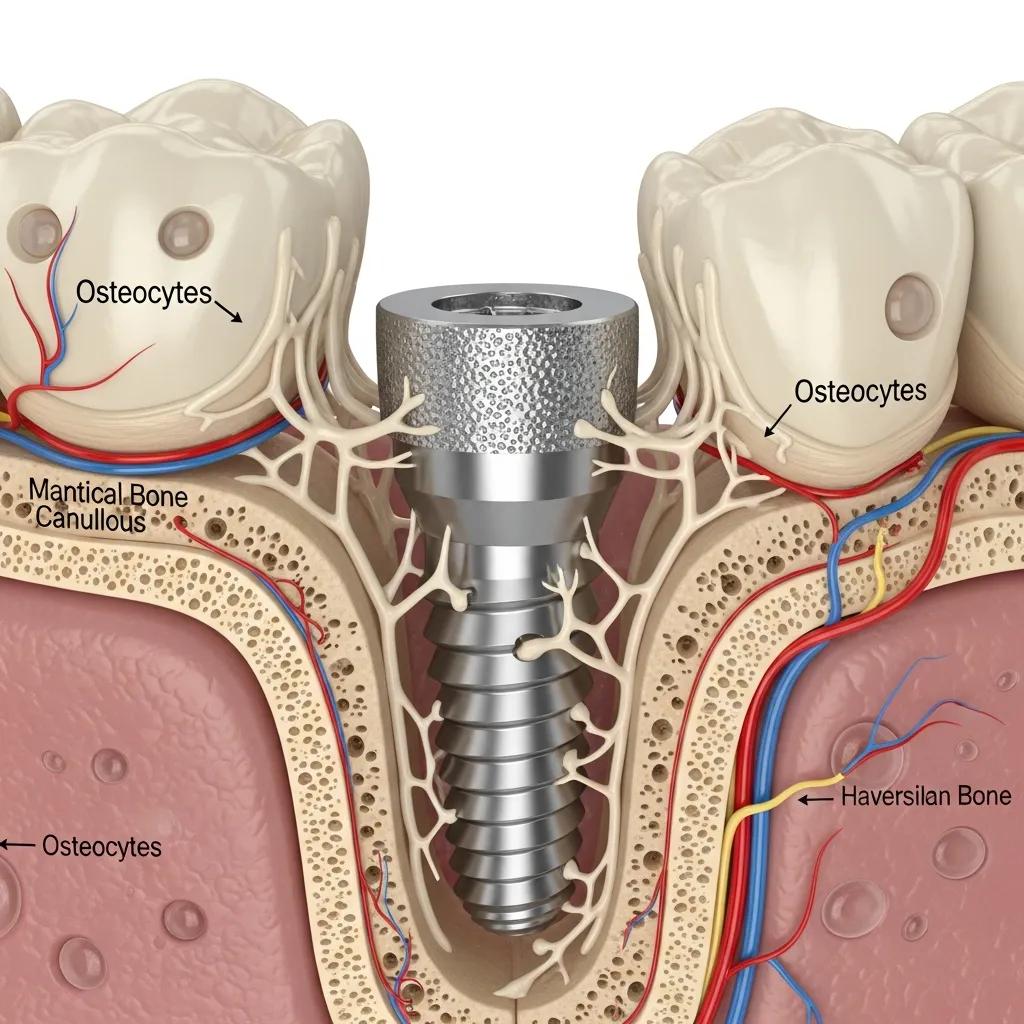
Osseointegration is the process by which living bone grows into intimate contact with the implant surface, forming a mechanical and biological union that stabilizes the prosthesis. Early healing phases involve clot formation, inflammatory response, and woven bone deposition, followed by remodeling into mature lamellar bone that transmits functional loads; this load transfer helps maintain bone volume in the long term. Implant surface characteristics, surgical atrauma, and the patient’s bone quality all influence how efficiently osseointegration occurs, and systemic factors such as smoking or uncontrolled diabetes can impede the process. Clinically, stable osseointegration reduces micro-movement and mechanical failure, translating into higher survival rates reported in longitudinal studies. A clear understanding of osseointegration helps patients appreciate why preoperative planning and postoperative care are essential to long-term implant success.
What Factors Influence the Lifespan of Dental Implants?
Multiple biological, technical, and behavioral variables interact to determine an implant’s functional lifespan, making personalized assessment critical before treatment. Biologically, jawbone density and systemic health (for example glycemic control) affect how well bone remodels around the implant; technically, implant design, surgical positioning, and prosthetic fit influence load distribution and wear. Behaviorally, daily oral hygiene, smoking status, and attendance at professional maintenance visits are among the most powerful modifiable predictors of longevity. Mitigation strategies—such as selecting appropriate implant materials, using guided-surgery protocols, and designing prostheses that minimize occlusal overload—reduce risk and improve outcomes. Patients who engage in recommended maintenance protocols and address systemic health factors tend to realize the higher end of published lifespan ranges noted earlier.
Dental Implant Design and Long-Term Success
This article reviews and discusses design elements of dental implants as they affect the quality of osseointegration and their relationship to long-term success.
Dental implant design and its relationship to long-term implant success, 2003
How Do Dental Implants Improve Quality of Life for Patients?
Dental implants improve quality of life by restoring chewing efficiency, stabilizing speech patterns, and delivering aesthetic outcomes that support social confidence and mental well-being. Functionally, implants recreate stable occlusion that allows patients to eat a wider range of textures and nutrients, which in turn supports better nutrition and overall health. Aesthetically, implant crowns and full-arch prostheses can closely match natural teeth, reducing self-consciousness and enabling more spontaneous social interaction. Psychologically, regaining a stable, attractive smile often correlates with measurable improvements in self-esteem and social participation, as reported in patient-reported outcome measures. These combined effects extend beyond oral comfort to daily life activities, making implants a long-term investment in both physical and psychosocial health.
Dental implants support several core quality-of-life improvements:
Improved speech clarity: fixed prostheses reduce slippage and articulation problems common with removable dentures.
Enhanced self-confidence: stable, natural-looking restorations decrease social anxiety linked to tooth loss.
These three benefits interact: improved chewing supports nutrition, better speech enhances communication, and greater confidence fosters social engagement. The following subsections examine functional mechanisms and the psychosocial pathways by which implants translate into measurable quality-of-life gains.
In What Ways Do Dental Implants Restore Chewing and Speech Functions?
Implants restore chewing by providing a fixed, anchored foundation that distributes bite forces into the jawbone similarly to natural tooth roots, enabling efficient breakdown of tougher foods. This mechanical restoration improves masticatory performance measures—such as bite force and particle reduction—allowing patients to consume a wider range of nutrient-dense foods that may have been avoided with unstable dentures. For speech, a stable prosthesis eliminates the micro-movement and bulkiness of removable appliances that cause consonant distortion and rely on muscular adjustments, so articulation becomes clearer and less effortful. Rehabilitation often includes occlusal adjustments and prosthetic contouring to optimize phonetics, and patients typically notice progressive improvements as they adapt. The result is restored function that supports both nutritional quality and everyday communication.
How Do Dental Implants Enhance Self-Confidence and Social Well-Being?
Beyond mechanical function, implants affect emotional and social domains by restoring a smile that aligns with patients’ identity and social expectations; this change often reduces embarrassment and withdrawal from activities that involve close contact or public speaking. Patient-reported outcome measures consistently show gains in self-esteem scales and social function after implant rehabilitation, with many patients attributing renewed willingness to smile and engage socially to their prosthetic stability. Clinicians can amplify these psychosocial gains by setting realistic aesthetic goals, discussing expectations, and providing supportive aftercare that ensures comfort. As social engagement and confidence increase, so do opportunities for better mental health and quality of life, creating a virtuous cycle that reinforces long-term satisfaction.
What Are the Long-Term Oral Health Benefits of Dental Implants?
Dental implants confer distinct physiologic benefits by maintaining bone volume through functional loading, sparing adjacent natural teeth from preparation, and creating peri-prosthetic environments that, when well-maintained, support gum health. The mechanical transmission of occlusal forces into bone stimulates remodeling consistent with Wolff’s law, which helps prevent the progressive resorption seen after tooth loss. Because implants replace the missing root rather than relying on neighboring teeth for support, they avoid the need to grind down healthy teeth as is required for conventional bridges. Proper implant hygiene and periodic professional assessment reduce the risk of peri-implant disease, which is a distinct clinical entity requiring targeted prevention. These oral health benefits translate into fewer downstream restorative cycles and preservation of the oral environment that supports long-term function.
How implants contribute to jawbone preservation and periodontal stability is shown in the following focused explanations and comparative discussion. First, osseointegration’s mechanical stimulation slows alveolar bone loss; second, implants remove the need to alter adjacent teeth; third, peri-implant tissue management is central to preventing long-term complications. The next subsections break these mechanisms down and explore when bone grafting or other adjunctive steps are necessary.
How Do Dental Implants Help Preserve Jawbone and Prevent Bone Loss?
Implants preserve jawbone by replacing the missing root structure and transmitting chewing forces into bone, which stimulates cellular remodeling and maintenance of bone volume. This mechanical stimulation mitigates the disuse-mediated bone resorption that typically accelerates after tooth extraction, particularly in the posterior mandible and maxilla. When patients present with insufficient bone, bone grafting techniques can rebuild volume to allow implant placement; the long-term outcome in grafted sites depends on graft integration and ongoing mechanical loading. Preservation of bone has downstream benefits for facial support, prosthesis stability, and the feasibility of future restorative work. Understanding these principles helps patients appreciate why implants are a durable solution for maintaining oral architecture over decades.
How Do Implants Protect Adjacent Teeth and Improve Gum Health?
Implants protect adjacent teeth by functioning independently of neighboring tooth structure, eliminating the need for crown preparation and thus preserving enamel and dentin on adjacent units. This conservative approach reduces cumulative restorative cycles that can weaken surrounding teeth over time. From a soft-tissue perspective, a well-contoured implant crown and appropriate emergence profile support healthy gingival architecture and facilitate patient access for oral hygiene. However, peri-implant soft tissues require targeted maintenance because the mucosal attachment differs from periodontal attachment, so hygiene protocols and professional monitoring are critical to prevent peri-implantitis. When maintained properly, implants help stabilize the entire local dentition and reduce the risk of adjacent tooth loss.
What Do Mansfield Patients Say About Their Dental Implant Experiences?
Local context matters: Mansfield-area patients frequently emphasize restored function, smoother daily routines, and increased confidence after implant treatment, reflecting the broader patterns seen in the literature. Aggregated, anonymized feedback from community practices highlights that many patients value the dietary freedom, reduced denture maintenance, and improved self-image that lasting implants provide. Visual documentation over time—radiographs and intraoral photos—often demonstrates bone stability and soft tissue health that correspond to patients’ reported improvements in chewing and social activities. While individual outcomes vary, these local reports align with long-term research showing durable functional and psychosocial gains following implant rehabilitation.
A brief Mansfield-focused summary of typical patient-reported outcomes follows, with a transition into how visual documentation helps validate these experiences and build realistic expectations for prospective patients interested in long-term results.
Which Real Patient Stories Highlight Long-Term Well-Being Improvements?
Rather than quoting individual testimonials, aggregated clinical observations from Mansfield-based implant care show recurring themes: regained dietary variety, more comfortable oral function, and increased participation in social activities. Case profiles tracked over several years commonly illustrate a trajectory from preoperative limitations—such as avoidance of certain foods or self-consciousness—to improved everyday functioning and satisfaction months to years after restoration. These longitudinal outcomes are useful for setting realistic timelines: functional gains often appear within months as healing completes, whereas psychosocial benefits can continue to accumulate over years. Presenting these anonymized patterns helps prospective patients understand the likely progression and the importance of maintenance for sustaining benefits.
How Do Before-and-After Visuals Demonstrate Implant Benefits?
Before-and-after imagery serves as objective corroboration of functional and structural changes following implant therapy when captions specify timing and clinical notes, such as years since loading and any grafting performed. Visuals that include radiographic comparisons illustrate bone preservation and implant integration, while intraoral photos can show soft tissue maturation and prosthetic aesthetics. Ethical presentation requires anonymization, informed consent, and clear captions noting clinical context and follow-up duration to avoid misleading impressions. For patients, these images are educational: they communicate not just immediate cosmetic outcomes but the stability of results across time, reinforcing the value of long-term maintenance.
After outlining local outcome patterns and how visuals support claims about implant durability, we now turn to practical maintenance guidance that preserves these benefits for years.
How Should Patients Maintain Dental Implants for Long-Term Success?
Long-term implant success depends on a regimented maintenance plan that combines daily oral hygiene, targeted interdental cleaning, lifestyle management, and scheduled professional reviews to detect and treat early signs of peri-implant disease. Daily routines should emphasize plaque control around implant crowns and abutments with flossing, interdental brushes, and low-abrasion toothpaste, while avoiding habits that concentrate destructive forces or compromise healing. Professional maintenance visits typically include soft-tissue assessment, peri-implant probing or radiographic checks as clinically indicated, and mechanical debridement with instruments safe for implant surfaces. Patient education about early warning signs—bleeding, persistent swelling, or prosthetic looseness—enables timely intervention and preserves long-term outcomes. The checklist and reference table below present a concise maintenance protocol patients can follow to support implant longevity.
Daily and periodic maintenance steps to follow:
Daily brushing and interdental cleaning: remove biofilm at least twice daily and use interdental aids around implant sites.
Weekly self-inspect: check for mobility, swelling, or bleeding and note any changes to report.
Professional maintenance: follow clinician recommendations for 3–12 month review intervals based on individual risk.
These steps combine to form a preventive framework that minimizes common failure pathways such as peri-implantitis and mechanical wear. The table below provides a quick-reference EAV-style maintenance matrix for practical use.
Maintenance Area
Action
Frequency / Tip
Daily Hygiene
Toothbrushing with soft brush + floss or interdental brush
Twice daily; interdental brushes sized to contact area
Weekly Check
Self-inspect for swelling, bleeding, mobility
Weekly; report concerns promptly
Professional Care
Clinical exam, hygiene, prosthesis check
Every 3–12 months depending on risk profile
This table gives a clear, actionable snapshot of day-to-day and professional tasks that sustain implant health. Next, the subsections break down daily hygiene techniques and the role of professional follow-up in more detail.
What Daily Oral Hygiene Practices Support Implant Longevity?
A consistent daily hygiene routine prevents biofilm accumulation around implant components, which is the principal modifiable risk factor for peri-implant disease and long-term failure. Start with a soft-bristled toothbrush and low-abrasion toothpaste to clean implant crowns gently, then use interdental brushes or floss specifically designed for implants to remove plaque from proximal surfaces and under the prosthetic contours. Avoid hard or abrasive brushes and abrasive dentifrices that can roughen implant surfaces and increase plaque retention, and cease smoking to reduce inflammatory susceptibility. Lifestyle measures—such as glycemic control for diabetic patients—also support tissue health. Adopting these habits reduces microbial burden, preserves soft-tissue integrity, and supports the mechanical stability of the restoration over time.
To bring these steps into a practical routine, clinicians recommend combining mechanical cleaning with scheduled self-checks and avoiding behaviors that increase occlusal overload; the following subsection explains why regular professional visits are integral to maintaining these gains.
Why Are Regular Dental Check-Ups Essential for Implant Health?
Professional follow-up is essential because clinicians can detect early biological or mechanical complications that patients may not notice, such as subtle bone loss on radiographs or emerging prosthetic wear. At maintenance visits, the dental team evaluates peri-implant soft tissue health, measures probing depths where indicated, assesses occlusion and prosthetic fit, and performs non-abrasive debridement tailored to implant materials. Frequency of visits is individualized based on risk factors—patients with a history of periodontal disease or systemic conditions often require more frequent reviews. Early detection of peri-implant mucositis allows for conservative management before progression, preserving long-term outcomes and avoiding complex interventions. Regular check-ups thus act as a safety net that extends implant lifespan and safeguards overall oral health.
How Do Dental Implants Compare to Other Tooth Replacement Options Long Term?
When evaluated over a multi-decade horizon, dental implants often offer superior functional performance and bone preservation compared with removable dentures and tooth-supported bridges, though individual circumstances—medical conditions, cost constraints, and anatomic limitations—may favor alternatives. Implants excel at restoring bite force and chewing efficiency, preserving adjacent teeth, and maintaining jawbone volume, which together support better nutrition and fewer secondary procedures over time. Dentures provide a lower up-front cost solution but carry higher ongoing maintenance, reduced dietary capability, and progressive bone loss that may necessitate relining or replacement. Bridges avoid surgery but require altering healthy teeth and may lead to future decay or fracture on abutment teeth. The EAV comparison table below presents long-term pros, cons, and maintenance burdens to help patients weigh options.
Option
Long-Term Pros
Cons / Maintenance Burden
Dental Implants
High stability, bone preservation, better QoL
Higher upfront cost, requires surgery and ongoing hygiene
Removable Dentures
Lower initial cost, non-surgical
Bone resorption, frequent relines, reduced chewing efficiency
Dental Bridges
No surgery, quicker treatment
Requires adjacent tooth alteration, potential for abutment failure
This comparison shows that implants frequently deliver better long-term value in terms of function and preservation of oral structures, but patient-specific factors and finances will influence the optimal choice. The following subsections discuss specific advantages and potential long-term disadvantages of implants so readers can make informed decisions.
What Are the Advantages of Implants Over Dentures and Bridges?
Key long-term advantages of implants include sustained chewing efficiency that improves diet quality, preservation of alveolar bone through functional loading, and independence from adjacent teeth for support, which preserves healthy tooth structure. These benefits translate into fewer restorative cycles over time, less risk of adjacent tooth loss, and stronger prosthetic stability for speech and function. Aesthetic outcomes can also be superior because implant crowns allow for optimal emergence profiles and soft-tissue support. For many patients, these advantages converge into measurable quality-of-life improvements and lower cumulative treatment needs across years compared with repeated denture adjustments or bridge failures.
What Are the Potential Long-Term Disadvantages or Risks of Dental Implants?
Despite strong overall outcomes, implants carry risks that can affect long-term performance, including peri-implantitis (an inflammatory bone loss condition), mechanical complications such as screw loosening or prosthesis wear, and higher upfront cost than removable options. Certain patient factors—poor glycemic control, heavy smoking, or inadequate bone volume—elevate the risk profile and may necessitate adjunctive procedures like bone grafting that affect timelines and costs. However, many risks are manageable through careful case selection, surgical precision, prosthetic design, and lifelong maintenance. Understanding these potential drawbacks allows clinicians and patients to plan mitigation strategies and decide when alternative treatments might better meet individual needs.
(Practical note: If you are "Trying to schedule a free consult", a local evaluation in Mansfield can determine which option best balances long-term benefits and costs for your situation.)
How Can You Schedule a Free Dental Implant Consultation in Mansfield?
Scheduling a free implant consultation in Mansfield is the practical next step for patients who want a personalized assessment of implant suitability, expected timelines, and financing options. A Free Implants Consultation typically includes a focused oral exam, review of prior dental imaging or recommendations for current imaging if needed, discussion of restorative goals, and an overview of possible treatment pathways and payment options. For Mansfield residents, the local practice offers patient-centered evaluations in a spa-like environment that emphasizes education-based treatment planning and clear next steps. To initiate scheduling, prospective patients often call the office phone to arrange a convenient appointment or request the free consult via the practice’s appointment channels; when contacting the practice, you can state you are "Trying to schedule a free consult" to prioritize implant-focused scheduling.
What Should You Expect During a Free Implants Consultation?
During a Free Implants Consultation you should expect a structured agenda designed to reduce uncertainty: a medical and dental history review, a targeted intraoral exam, discussion of imaging needs, and a consultative conversation about restorative options that align with your goals. The clinician will explain potential implant pathways, outline likely timelines for surgery and prosthetic phases, and identify any preparatory steps—such as bone grafting—that might be necessary. The visit is also an opportunity to ask about maintenance expectations, lifestyle considerations, and to receive a transparent overview of next steps without obligation. Patients are encouraged to bring prior dental records and a list of questions to make the most of this no-cost appointment.
How Do Affordable Payment Plans and Insurance Options Support Patients?
Financing often plays a central role in long-term treatment planning, and the Mansfield practice accepts most PPO insurance plans and offers affordable payment plans to help distribute costs over time. During the Free Implants Consultation the team discusses insurance eligibility, anticipated coverage, and financing alternatives so you can evaluate options without pressure. Discussing finances early allows clinicians to present phased treatment plans that align with both clinical priorities and budget realities, and it helps patients understand long-term cost vs. value trade-offs of implants compared with alternatives. If you are "Trying to schedule a free consult", mention that phrase when you call to ensure the financial planning conversation is part of your appointment.
Dentist In Mansfield- Dentures and Dental Implants 708 Hunters Row Ct # 102, Mansfield, TX 76063 Phone: 817-567-2529 Contact: Dr. Elvis Le
Free Implants Consultation: A no-cost, focused exam and planning visit to evaluate candidacy and next steps.
Insurance & Payment Support: Acceptance of most PPO plans and affordable payment plans discussed during the consult.
Patient-Centered Experience: Spa-like environment and education-based treatment approach to support informed decisions.
These points summarize how local logistical and financial support is provided while maintaining the article’s primary focus on patient education and long-term outcomes.