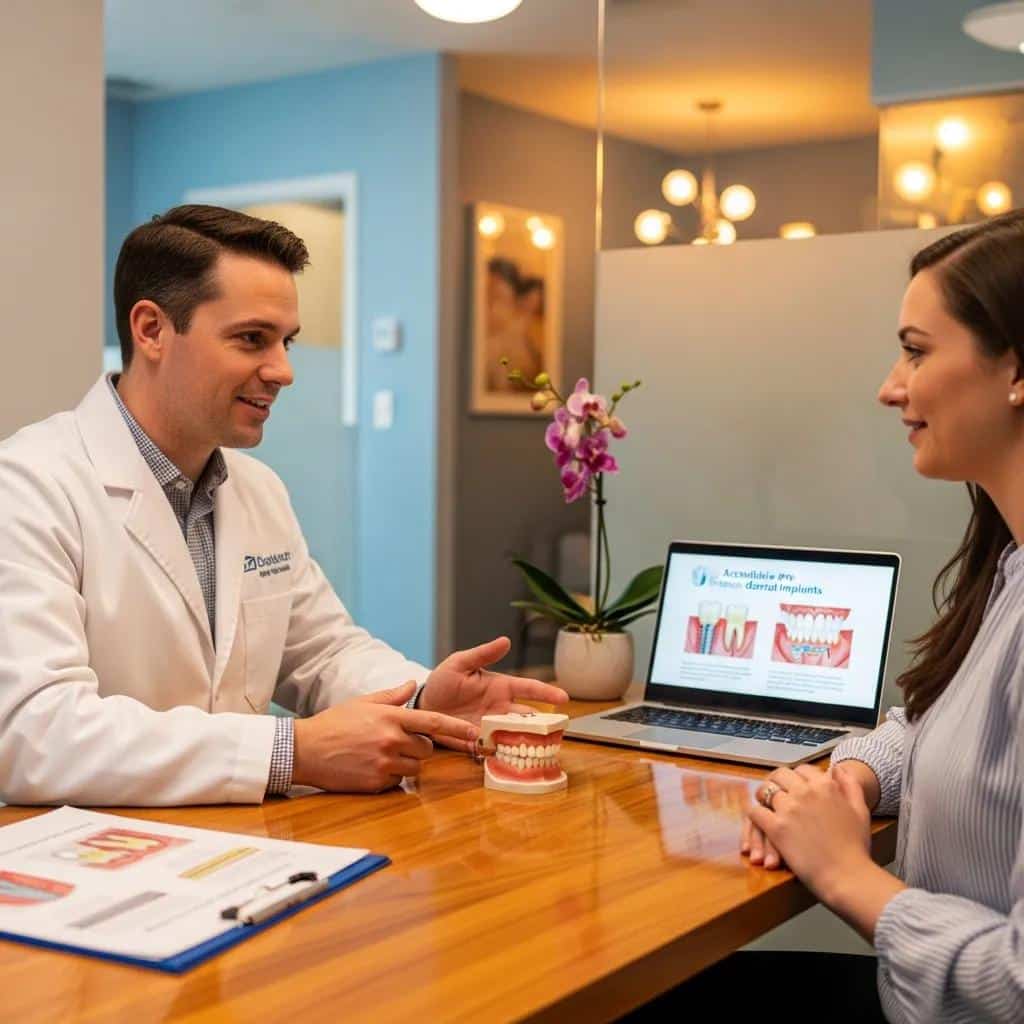
Dental Implant Cost in Waco: A Transparent Look at Total Expenses and Affordable Financing Options
Dental implants replace missing teeth with a durable artificial root and crown, restoring chewing, speech, and appearance while preserving jawbone health. This article promises a full, itemized view of dental implant costs in Waco, practical strategies to manage out-of-pocket expense, and local options for affordable care including free consultations. Many patients find implant pricing opaque: fees can vary widely based on materials, surgical complexity, and prosthetic choices—this guide demystifies each component and the reasons costs differ. You will read a component-level cost breakdown, the factors that push prices up or down, direct comparisons to dentures and bridges over time, and a clear patient journey timeline so you know when and where costs occur. Finally, we’ll explain how Affordable Dentist Near Me of Waco supports patients with transparent pricing, everyday low fees, and a Free Implants Consultation to help you get a personalized quote. Read on to learn what to expect financially and practically when considering dental implants in Waco.
What Are Dental Implants and Why Are They a Valuable Investment?
Dental implants are artificial tooth roots—usually titanium or zirconia—that anchor a replacement tooth or prosthesis to the jaw. They replace the entire tooth structure from root to crown, restoring function and preventing the bone loss that follows tooth extraction. Implants deliver long-term stability for chewing and speaking, generally outperforming removable options in comfort and patient satisfaction. Their value is best measured across years: implants reduce the need for repeated replacements and protect surrounding teeth, turning an upfront cost into a long-term investment in oral health and quality of life.
Dental implants are composed of discrete parts that each contribute to cost and performance, and understanding those parts helps explain price variability and expected outcomes. The next section breaks down the implant components and the clinical benefits that justify their use, leading naturally into an itemized cost analysis that follows.
What Components Make Up a Dental Implant?
A dental implant restoration typically includes three main components: the implant post (the root substitute), the abutment (the connector), and the dental crown (the visible tooth). The implant post is surgically placed into bone and acts as an osseointegrated anchor; posts are most commonly titanium or increasingly zirconia, and material choice influences cost and esthetics. The abutment connects the post to the crown and can be stock or custom-machined; custom abutments improve fit and emergence profile but increase lab fees. The crown—made from porcelain-fused-to-metal, full-ceramic, or zirconia—provides the visible anatomy and wear characteristics, and crown material influences both durability and price. Understanding these components clarifies why an implant quote is itemized across hardware and laboratory work, which we’ll detail in the cost breakdown section.
These component roles also shape clinical decisions: material selection and abutment design affect soft-tissue response and long-term maintenance, which in turn impact lifecycle cost and patient satisfaction. That connection leads directly into how implants support oral health.
How Do Dental Implants Improve Oral Health and Quality of Life?
Dental implants preserve the jawbone by transmitting chewing forces into bone, which maintains bone volume and prevents the resorption that follows tooth loss. This biomechanical benefit preserves the facial structure and reduces future restorative needs, protecting adjacent teeth that might otherwise be overloaded by a bridge. Functionally, implants restore near-natural chewing efficiency and stabilize speech patterns, which improves nutrition and social confidence. Psychologically, fixed restorations eliminate removable-prosthesis stigma for many patients, boosting self-esteem and daily comfort.
Preserving bone and minimizing future dental work creates an economic ripple: fewer replacements and less compensatory treatment lower lifetime cost even if the initial investment is higher. That principle underpins the cost-versus-value discussion that follows in the detailed breakdown.
What Is the Detailed Cost Breakdown of Dental Implants in Waco?
A transparent implant estimate separates hardware, laboratory, surgical, diagnostic, and follow-up fees so patients understand where dollars go. Below is an itemized summary of common cost components, typical ranges seen in the Waco market, and brief notes on variability drivers such as material choice and case complexity. This section provides exact line items so you can compare quotes side-by-side and prepare for potential additional procedures.
Component
What It Is
Typical Waco Cost Range
Implant Post (Titanium)
Root-form implant placed in bone
$1,500 – $2,500
Implant Post (Zirconia)
Metal-free implant alternative
$1,800 – $3,200
Abutment (stock)
Standard connector between post and crown
$250 – $500
Abutment (custom)
Custom CAD/CAM abutment for esthetics/fit
$500 – $1,200
Crown (porcelain/ceramic)
Final tooth restoration
$800 – $2,000
Bone Graft
Adds volume for implant placement
$300 – $1,200
Sinus Lift
Creates bone in upper posterior jaw
$800 – $2,500
Tooth Extraction
Non-surgical or surgical removal
$100 – $400
CBCT Scan / Imaging
3D imaging for planning
$200 – $500
Surgical Placement Fee
Surgeon/procedure fee, anesthesia options
$800 – $2,500
Lab Fees
Custom prosthetic fabrication
$200 – $1,200
Post-op Visits & Maintenance
Follow-ups, hygiene, possible adjustments
$50 – $300 per visit
This table shows typical ranges but individual quotes can shift based on implant brand, clinician choice, and whether procedures are staged. Below we break down each line item and why prices vary so you can interpret estimates effectively.
How Much Does the Implant Post Cost and What Materials Are Used?
The implant post is the foundational cost driver because it’s a medical device requiring specific manufacturing and surface treatments to promote osseointegration. Titanium posts are the most common and often have the widest range of options—standard vs. premium surface treatments or tapered vs. parallel designs—which explains price variability. Zirconia posts, chosen for metal-free restorations or specific esthetic needs, sit at the higher end of the range due to material cost and manufacturing complexity. Brand reputation, warranty offerings, and proprietary surface technologies can further increase the price, but many clinicians select posts based on long-term success data rather than cost alone.
Choosing the right post involves balancing clinical indications with budget: for visible anterior teeth some patients prefer zirconia for its color, while posterior teeth often use titanium for proven strength. These material decisions will influence subsequent abutment and crown choices discussed next.
What Are the Prices for Abutments and Dental Crowns?
Abutments translate the implant’s position to the prosthetic tooth and come in stock or custom designs. Stock abutments reduce lab labor but may require compromise in emergence profile or esthetics; custom CAD/CAM abutments add overhead but improve soft-tissue outcomes and long-term prosthetic fit. Crown material affects both appearance and wear resistance—porcelain-fused-to-metal crowns can be less expensive initially, while full-ceramic or zirconia crowns demand higher lab and material costs for superior esthetics and longevity. In-office milling systems can sometimes reduce lab turnaround but may not replace specialized lab work for high-end restorations.
Lab time, technician expertise, and material science explain a sizeable portion of the crown and abutment fees; discussing these trade-offs with your clinician helps align expectations and cost.
What Additional Procedures Affect Total Cost?
Additional procedures commonly required before or during implant therapy include tooth extraction, bone grafts, and sinus lifts. Extractions are routine but can be more expensive when surgical access or infection management is needed. Bone grafting restores deficient bone volume and may be priced by graft material type (autograft, allograft, xenograft, or synthetic) and grafting complexity. Sinus lifts, necessary when the upper posterior jaw lacks adequate height, are one of the costlier adjunctive surgeries due to complexity and healing time. Staged approaches—grafting followed by months of healing—raise total expense and time, while simultaneous graft-and-implant placement can lower cumulative cost in selected cases.
Deciding whether to graft or stage procedures depends heavily on imaging and the clinician’s assessment, which is why diagnostic fees and a clear treatment plan matter for budgeting.
What Are the Surgical and Diagnostic Fees Involved?
Diagnostic fees typically include consultation, standard X-rays, and often a CBCT scan for 3D planning; CBCT imaging gives cross-sectional views crucial for avoiding anatomic risks and optimizing implant position. Surgical fees cover the clinician’s time, use of the facility and instruments, and anesthesia choices (local, IV sedation, or general anesthesia), each of which affects the price. Guided-surgery planning with surgical guides improves accuracy but adds planning and fabrication fees. Lab fees for temporary restorations during healing also appear in the surgical phase of billing.
While higher-tech planning raises upfront fees, it can reduce complications and prosthetic rework—an investment many patients find worthwhile.
What Are Typical Post-Operative Care Costs?
Post-operative costs include scheduled follow-up visits to check healing, suture removal, temporary restoration adjustments, and prescription medications. Routine follow-up visits are usually modest, but managing complications like infection or prosthetic issues can incur additional fees for extra visits, antibiotics, or minor surgical correction. Long-term maintenance of implant-supported prostheses involves periodic hygiene appointments and occasional screw or crown repairs. Budgeting for routine maintenance visits reduces the surprise of intermittent minor costs and supports long-term implant success.
Understanding maintenance needs helps frame implants as a long-term value proposition rather than a single upfront cost.
Which Factors Influence the Total Cost of Dental Implants in Waco?
Several patient and provider variables create wide price ranges for implants; recognizing these drivers helps patients interpret quotes and choose value over lowest price. Primary influencers include the number of implants, the materials chosen, anatomic complexity, and the clinician’s training and technology investment. Each factor interacts with the others—for example, complex anatomy may necessitate advanced imaging and a specialist, both of which push fees higher—so evaluating all elements together yields the clearest cost picture.
Below are the most common cost drivers and how they affect the final estimate, with examples to show scale and decision points that patients can discuss during planning.
Number of implants required and whether a full-arch solution is considered.
Material choices for posts, abutments, and crowns (titanium vs. zirconia; ceramic crown types).
Case complexity such as bone volume, sinus proximity, and previous infections.
Provider expertise and whether a specialist (oral surgeon, periodontist, prosthodontist) is involved.
Use of advanced technology like CBCT imaging and guided-surgery planning.
Each factor compounds with others; understanding these interactions helps patients prioritize treatments that deliver the greatest long-term value and avoid unnecessary extras. The next subsections unpack these drivers in practical terms.
How Does the Number of Implants Impact Overall Expenses?
Costs scale with the number of implants, but per-tooth costs can decrease with multi-tooth or full-arch solutions due to shared prosthetic frameworks and fewer individual crowns. A single-tooth implant’s per-tooth price reflects the individual post, abutment, and crown. In contrast, implant-supported bridges or full-arch restorations spread laboratory and prosthetic costs across multiple units, yielding economies of scale. For full-arch treatment, options like fixed bridges on four to six implants or implant-retained overdentures change the cost dynamic significantly.
Choosing between single implants and multi-tooth solutions involves weighing upfront cost, maintenance expectations, and long-term durability; discussing sample models with your clinician helps find the most cost-effective route for your situation.
How Do Material Choices Affect Implant Pricing?
Material decisions—from the implant post material to crown ceramics—drive both immediate expense and likely maintenance requirements. Titanium posts are generally cost-effective with a long track record, while zirconia can command a premium for patients prioritizing metal-free restorations. On the prosthetic side, porcelain-fused-to-metal crowns often cost less initially, whereas full-contour zirconia or layered ceramics cost more but provide superior esthetics and fracture resistance in many cases. Abutment material and whether it’s custom-machined also alter lab fees and fit.
Balancing aesthetics, function, and budget requires clinical guidance; material choices should align with bite forces, smile zone visibility, and long-term maintenance plans.
How Does Case Complexity Influence Cost?
Complexity such as severe bone loss, proximity to sinuses or nerves, or scarring from prior infections requires additional surgical steps, specialist involvement, and longer treatment timelines. Bone grafting, sinus lifts, or staged surgery protocols increase both the number of appointments and total fees. Anatomical challenges can also convert a straightforward in-office placement into a hospital-based or specialist-performed procedure with distinct billing. The need for referrals or multidisciplinary care—periodontics, oral surgery, prosthodontics—adds professional fees but improves outcomes for complicated cases.
A thorough diagnostic workup early on reduces surprises and allows patients to plan financially for any complexity-driven procedures.
What Role Does Dentist Expertise and Technology Play in Pricing?
Clinician experience, specialist training, and investment in technology such as CBCT, guided-surgery workflows, and in-office milling affect pricing by raising overhead but can reduce risk and improve accuracy. Specialists often command higher surgical fees, reflecting advanced training and procedural volume, while general dentists with implant training may offer competitive pricing for straightforward cases. Technology-driven planning adds predictability—guided templates reduce placement error—but planning and fabrication costs appear on the invoice. Higher upfront fees may produce lower downstream costs through fewer complications and better prosthetic fit.
Value-minded patients weigh immediate cost against expected long-term outcomes; sometimes paying more for precision reduces lifetime expense.
How Can You Make Dental Implants Affordable at Affordable Dentist Near Me of Waco?
Affordable Dentist Near Me of Waco supports patients with transparent pricing practices and offers a Free Implants Consultation to create individualized plans. The clinic emphasizes “EVERYDAY LOW FEES” and provides itemized estimates so patients understand every component of their quote before committing. During the free consultation a team member reviews your imaging and treatment options, explains likely costs, and outlines financing pathways and insurance assistance. This early transparency helps patients compare options and plan financially without surprises.
The clinic’s free consult is the best starting point for personalized pricing; after the exam and imaging you’ll receive a written, itemized estimate that reflects your specific anatomy and treatment choices. Below, we cover the details of each affordability pathway and how to apply them to a personal plan.
What Free Consultations and Specials Are Available?
The Free Implants Consultation includes a clinical exam, review of any existing X-rays or a recommendation for CBCT imaging if needed, and a discussion of restorative options tailored to your goals and budget. During the consult the clinician or treatment coordinator outlines expected procedures, timing, and provides a written, itemized estimate that separates device, surgical, and lab fees. This no-cost meeting is designed to arm patients with realistic numbers and financing choices before any chargeable work begins.
Scheduling a free consultation is the recommended first step to move from generalized price ranges to an accurate, patient-specific plan that prevents unexpected costs later.
How Does Dental Insurance Typically Cover Implant Costs?
Most dental insurance plans consider implants elective restorative care and may offer partial coverage for components such as crowns, extractions, or grafting when medically necessary, but full implant coverage is uncommon. Affordable Dentist Near Me of Waco assists patients by verifying benefit details, submitting preauthorization requests when applicable, and providing the documentation insurers require to maximize reimbursements. Knowing what your plan covers ahead of time—diagnostics, surgical fees, or prosthetic components—helps shape a financial plan and determine out-of-pocket responsibility.
The clinic’s billing support aims to streamline benefit checks and reduce administrative barriers that often delay treatment.
What Financing Options Are Offered in Waco?
Financing in Waco usually includes third-party medical or dental credit programs and in-office payment arrangements; these options extend payments over months to reduce immediate out-of-pocket burden. Common third-party plans offer terms from short promotional interest periods to extended repayment windows; in-house plans allow flexible monthly payments tailored to the patient’s situation. Affordable Dentist Near Me of Waco works with patients to outline available financing pathways during the free consultation and to include financing steps in the written estimate so patients can compare monthly commitments.
Choosing a financing option depends on personal budget, desire to start treatment promptly, and preference for promotional interest terms versus predictable in-house payments.
Are There Any Current Promotions or Payment Plans?
Promotions vary by practice and season, but the clinic emphasizes everyday low fees rather than limited-time discounts; this philosophy seeks to reduce pressure and create consistent affordability. Payment plans are structured to accommodate diverse budgets and are presented transparently in the post-consult estimate. Enrollment processes typically require basic financial information for third-party applications or a simple agreement for in-house arrangements, and the treatment coordinator reviews qualification criteria during the free consult.
If promotional specials are available they will be described during the consultation; otherwise, the predictable, itemized pricing model helps patients plan without relying on ephemeral discounts.
How Do Dental Implants Compare to Dentures and Bridges in Long-Term Value?
Dental implants often have higher upfront costs than dentures or bridges but generally provide superior long-term value through longevity, maintenance profiles, and preservation of jawbone. While dentures and bridges may be less expensive initially, they often require periodic replacement or adjustment and can accelerate bone resorption or compromise adjacent teeth. Implants tend to reduce downstream restorative needs, and when evaluated over a multi-decade horizon, implants frequently outperform removable and fixed conventional alternatives on total cost per functional year.
Restoration Type
Typical Lifespan
Maintenance Requirements
Replacement Frequency
Dental Implants
15–30+ years (with care)
Regular hygiene, occasional crown repair
Low; crowns may need replacement after 10–15 years
Fixed Bridges
7–15 years
Hygiene, potential decay under abutment teeth
Moderate; bridge replacement every 7–15 years
Removable Dentures
5–8 years
Relining, adhesives, daily cleaning
High; relines and replacements more frequent
This lifecycle view illustrates how implants, while costlier up front, frequently become more economical when factoring fewer replacements and improved oral health outcomes. The next subsections explain these differences in more depth.
What Are the Long-Term Costs and Durability Differences?
Implants integrate with bone and thus avoid many of the mechanical failures common to dentures and bridges. Bridges rely on adjacent teeth for support and can transfer load that leads to failure in those teeth over time, while dentures require relining and may lose fit as bone resorbs. Though implants may require occasional crown replacement or screw maintenance, their overall failure rate is relatively low when maintained properly. Over 15–20 years, implants often show lower cumulative replacement costs than removable prostheses.
This durability advantage translates into both financial and quality-of-life benefits that many patients find worthwhile.
How Do Implants Benefit Bone Preservation and Oral Health?
Implants transmit functional forces into the jawbone, stimulating bone remodeling and preserving alveolar height. This biomechanical interaction slows resorption that otherwise alters facial contours and complicates future restorative options. By maintaining bone, implants also make later treatments more predictable and less invasive, reducing potential future grafting costs. In this way, implants protect not only the site in question but the overall oral environment, simplifying long-term care.
Preserving bone has practical cost implications: it reduces the likelihood of complex reconstructive procedures later, which can be expensive and time-consuming.
What Is the Return on Investment of Dental Implants?
Return on investment (ROI) for implants includes both monetary and non-monetary returns. Monetarily, when calculating cumulative replacement and maintenance costs over 15–20 years, implants often approach or beat alternatives. Non-monetary returns include improved chewing efficiency, social confidence, and reduced time spent managing prosthetic issues—benefits that impact everyday quality of life. A simple break-even example: if dentures require replacement every 5–8 years plus ongoing relines, and implants require minimal prosthetic replacement over 15–20 years, the implant’s higher initial cost can be offset by fewer purchases and fewer dental visits over time.
Considering both financial and personal returns helps patients make choices aligned with their priorities; the clinic’s free consult can help model these estimates for your case.
What Can You Expect During the Dental Implant Patient Journey in Waco?
The implant journey typically follows a predictable sequence: consultation and diagnostics, surgical placement, healing and monitoring, prosthetic restoration, and ongoing maintenance. Each phase has distinct cost and time implications, and understanding those steps helps patients schedule treatment around life events and finances. The patient pathway also highlights decision points—whether to graft, select specific materials, or choose guided surgery—where choices materially alter both cost and outcome.
Below we outline each visit and milestone so you can anticipate timing and expense.
What Happens in a Dental Implant Consultation?
During the consultation you receive a clinical exam, review of dental and medical history, and an assessment of imaging needs; many practices recommend a CBCT scan for three-dimensional planning when implant placement is likely. The clinician discusses restorative goals, reviews the pros and cons of materials and timelines, and outlines potential adjunctive procedures such as grafting. Importantly, the consult yields a written, itemized treatment plan and estimate so you understand which components are included in the quoted price and which are optional. Financing and insurance options are also reviewed so you can choose a payment pathway that fits your budget.
This consult sets expectations and reduces surprises, which is why a free consult at Affordable Dentist Near Me of Waco is an effective first step for many patients.
What Are the Steps and Costs of the Dental Implant Procedure?
Surgical placement begins with anesthesia and precise implant insertion into prepared bone, often followed by a healing period of several months while osseointegration occurs. Temporary restorations can be provided when aesthetics matter during healing. After sufficient integration, the abutment is placed and the final crown or prosthesis is fabricated and attached. Costs accrue at each stage: surgical fees at placement, lab fees for temporaries and final restorations, and diagnostic fees for pre- and post-op imaging. Mapping each stage to its associated cost ensures financial predictability.
Understanding this timeline allows patients to stagger procedures or consolidate them when clinically appropriate and financially preferable.
How Does Post-Procedure Care Support Successful Outcomes?
Post-operative care includes scheduled follow-up visits to monitor healing, suture removal, and oral hygiene instructions that protect the integration process. Routine professional hygiene every three to six months helps maintain peri-implant health, and patients should be alert for signs of complications such as persistent pain or mobility. Proper maintenance limits the likelihood of costly corrective procedures, and small expenditures on hygiene often prevent larger future fees. Clear communication with your dental team about symptoms and care schedules ensures early intervention when issues arise.
Strong maintenance habits optimize the implant’s lifetime value, reinforcing the investment rationale discussed earlier.
Why Choose Affordable Dentist Near Me of Waco for Your Dental Implants?
Affordable Dentist Near Me of Waco positions itself around transparent, everyday low fees and patient-centered care, offering a Free New Patient Consultation as part of its access strategy. The practice provides itemized estimates after diagnostic imaging so patients see exactly what they are paying for, and treatment coordinators explain financing options and insurance navigation. Dr. Mike Pham leads the clinical team, and the office emphasizes patient comfort and convenient scheduling to reduce barriers to care. These local trust signals help patients compare value across Waco providers.
What Makes Our Pricing Everyday Low and Transparent?
The clinic’s pricing philosophy prioritizes clarity: written, itemized estimates separate implant hardware, surgical fees, lab work, and adjunctive procedures so patients can review each line. By avoiding bundled surprises and presenting options (e.g., stock vs. custom abutments, titanium vs. zirconia posts), the practice helps patients tailor treatment to both clinical needs and budget. This transparency reduces decision anxiety and enables straightforward comparison-shopping among providers, making the cost conversation constructive rather than intimidating.
Providing clear, itemized quotes also supports informed financing decisions and prevents last-minute surprises during treatment.
How Does Our Experienced Team Ensure Quality Care?
An experienced team coordinates surgical and restorative phases, manages referrals when specialist input is appropriate, and prioritizes predictable prosthetic outcomes through collaborative planning. Treatment coordinators support benefit checks and financing enrollment so clinical appointments focus on care rather than paperwork. Referring to provider bios and team descriptions available through the clinic helps patients understand who will perform each step and who manages post-op care, creating trust in the process without overstating credentials.
This team-based approach streamlines the experience and reduces the likelihood of costly miscommunication or rework.
What Advanced Technology Enhances Your Implant Experience?
Imaging tools like CBCT and digital planning software support precise three-dimensional implant placement that respects anatomic boundaries and optimizes prosthetic position. Guided-surgery workflows and high-quality lab partnerships improve restoration fit and reduce chairside adjustments, which can reduce long-term maintenance costs. While advanced technologies add planning fees, their role in predictability and reduced complication risk often delivers better long-term value for patients seeking durable results.
Investing in technology reflects a practice commitment to consistent outcomes and patient safety.
How Do We Prioritize Patient Comfort and Convenience?
The practice emphasizes patient comfort through attentive communication, appropriate anesthesia options, and scheduling flexibility to accommodate work and life commitments. Treatment coordinators explain each visit’s purpose and expected costs ahead of time, and follow-up is arranged to monitor healing and catch issues early. These logistical supports reduce stress and improve adherence to post-operative recommendations, which in turn supports the longevity of the treatment.
Comfort and convenience matter not only for the patient experience but for preserving the functional outcomes that protect your investment.
Frequently Asked Questions About Dental Implant Costs and Financing in Waco
This FAQ answers common local and financial questions directly and succinctly so you can extract quick answers and next steps. If you need a personalized estimate, scheduling a Free Implants Consultation at Affordable Dentist Near Me of Waco provides a tailored, itemized quote.
How Much Do Dental Implants Cost in Waco, TX?
Implant pricing in Waco commonly ranges from approximately $2,500 to $6,000 per tooth when combining implant post, abutment, and crown, though single-unit cases at the low end and complex cases at the high end occur. Additional procedures such as bone grafts or sinus lifts add to the total. The precise quote depends on diagnostic findings and material choices; a Free Implants Consultation yields a written, patient-specific estimate that clarifies what your plan will include.
Schedule a free consult to get an exact, itemized quote based on your anatomy and restorative goals.
Does Insurance Cover Dental Implants?
Insurance behavior varies: some plans offer partial coverage for related services like extractions or crowns, while full implant coverage is less common. Affordable Dentist Near Me of Waco assists by verifying your benefits and submitting preauthorizations to maximize what your insurer will contribute. Verifying coverage before treatment begins reduces the risk of unexpected out-of-pocket expenses and supports informed financing decisions.
The clinic’s billing support helps translate plan details into practical expectations for out-of-pocket cost.
What Factors Affect Dental Implant Cost?
The main cost drivers include the number of implants, implant and crown materials, need for grafting or sinus lifts, clinician expertise, and use of advanced planning technology. Additional considerations are whether temporary restorations are required and whether specialist referrals are needed. These factors combine to determine both timeline and total expense.
Understanding these drivers helps you ask focused questions during your consultation and plan your budget effectively.
Are Dental Implants Worth the Cost?
For many patients, implants are worth the investment because they deliver durable function, preserve bone, reduce the need for future restorative cycles, and markedly improve comfort and confidence. When evaluated over a decade or more, implants often outperform alternatives in total cost per functional year. The decision depends on individual priorities—immediate expense tolerance, desired longevity, and aesthetic goals—but the long-term benefits frequently justify the initial cost.
A free consult can help quantify ROI for your unique situation using your dental health and lifestyle goals.
How Can I Get Affordable Dental Implants in Waco?
Practical steps to lower out-of-pocket costs include scheduling a Free Implants Consultation to obtain an itemized estimate, asking about financing options and in-house payment plans, verifying insurance benefits with a billing specialist, and discussing material alternatives that meet your needs at a lower price point. Affordable Dentist Near Me of Waco explicitly supports these steps through everyday low fees, free consultations, and coordinated financing support—start by requesting the free consult to get your patient-specific plan.
Taking these steps early reduces uncertainty and enables you to compare options with confidence.
Patient Experiences with Implant-Supported Dentures: Costs and Expectations
The participants held high expectations regarding the function, durability, and – in cases involving visible tooth gaps – aesthetic outcomes of their implants. Key concerns influencing treatment decisions included the need for bone augmentation and transplantation, age-related factors, and procedural risks. Notwithstanding the lengthy, stepwise nature of the treatment process, the considerable symptom burden, and the high financial cost, most patients considered the implant treatment worthwhile and felt well informed. With one exception the majority of participants (96.3%) reported that their implant-supported dentures functioned and appeared similar to their natural teeth. However, while satisfied with their implant-supported denture, two participants (7.4%) experienced persistent suffering due to temporomandibular disord
Patients’ trajectory from tooth loss to dental rehabilitation and living with implant-supported dentures–a qualitative interview study, PC Pott, 2025