How Bone Quality Affects the Lifespan of Dental Implants Compared to Dentures: Your Comprehensive Guide to Lasting Tooth Replacement in Tyler
Bone quality plays a crucial role in the success and longevity of dental implants, significantly influencing their lifespan compared to traditional dentures. Understanding how bone density and health impact dental restoration options can empower patients to make informed decisions about their oral health. This comprehensive guide will explore the relationship between bone quality and the durability of dental implants versus dentures, addressing common concerns and providing insights into the factors that contribute to successful outcomes.
Many individuals face challenges with tooth loss and the subsequent choices for replacement. Dental implants offer a long-term solution, but their success is heavily reliant on the quality of the underlying bone. This article will delve into the importance of bone quality, how dental implants preserve jawbone health, the average lifespan of both options, and the role of bone grafting in enhancing implant success. Additionally, we will discuss factors beyond bone quality that affect the longevity of dental implants and compare the cost-effectiveness of implants versus dentures.
What Is Bone Quality and Why Is It Crucial for Dental Implant Success?
Bone quality refers to the structural integrity and density of the bone, which is essential for the stability and success of dental implants. High-quality bone provides a solid foundation for implants, facilitating a process known as osseointegration, where the implant fuses with the bone. This integration is critical for the long-term success of dental implants, as it directly impacts their stability and functionality.
How Does Bone Density Influence Osseointegration and Implant Stability?
Bone density significantly influences osseointegration and the overall stability of dental implants. Higher bone density allows for better integration of the implant, reducing the risk of failure. Studies have shown that patients with denser bone experience higher success rates with implants, as the implant can withstand the forces of chewing and other stresses. Conversely, lower bone density can lead to complications, including implant mobility and failure.
What Are the Ideal Bone Density Types for Dental Implants?
Bone density is classified into four types, ranging from D1 (the densest) to D4 (the least dense). Ideal conditions for dental implants typically require at least D2 or D3 bone density. Assessment methods for bone quality include imaging techniques such as cone beam CT scans and X-rays, which help determine the suitability of the bone for implant placement. Understanding these classifications is vital for both patients and dental professionals when planning for successful implant procedures.
How Do Dental Implants Preserve Jawbone Health Compared to Dentures?
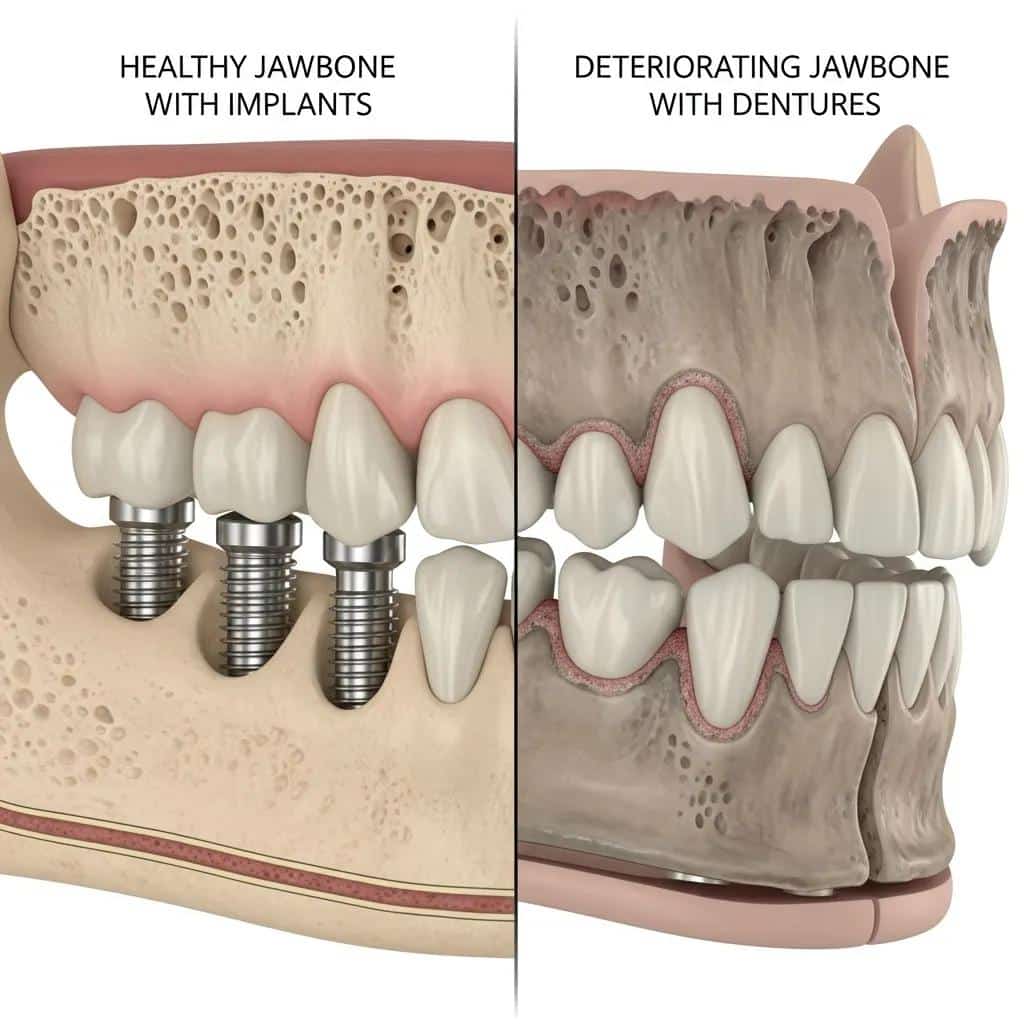
Dental implants are designed to mimic the natural tooth root, providing stimulation to the jawbone that helps maintain its density and health. This stimulation is crucial in preventing bone resorption, a common issue associated with tooth loss.
In What Ways Do Dental Implants Stimulate Bone and Prevent Resorption?
Dental implants stimulate the jawbone through the forces exerted during chewing, which encourages bone remodeling and growth. This biological process helps maintain the bone structure, preventing the deterioration that often occurs with missing teeth. In contrast, traditional dentures do not provide this stimulation, leading to gradual bone loss over time.
How Do Traditional Dentures Contribute to Jawbone Deterioration Over Time?
Traditional dentures can contribute to jawbone deterioration due to the lack of stimulation they provide. As the bone resorbs, the fit of the dentures can become compromised, leading to discomfort and the need for frequent adjustments. Studies indicate that patients with dentures may experience significant bone loss within the first few years of use, highlighting the importance of considering dental implants as a more sustainable option for tooth replacement.
What Is the Average Lifespan of Dental Implants Versus Dentures?
The lifespan of dental implants typically exceeds that of traditional dentures, making them a more durable option for tooth replacement. Understanding the longevity of each option can help patients make informed decisions about their dental health.
How Long Do Titanium and Zirconia Implants Typically Last?
Titanium implants are known for their durability and can last 15 to 25 years or longer with proper care. Zirconia implants, while newer, also show promising longevity, often lasting over a decade. Factors such as oral hygiene, bone quality, and lifestyle choices can influence the lifespan of these implants, making regular dental check-ups essential for maintaining their integrity.
What Is the Replacement Frequency and Longevity of Traditional Dentures?
Traditional dentures typically require replacement every 5 to 8 years due to wear and changes in the jawbone. Patients may find that their dentures become less comfortable over time, necessitating adjustments or replacements. This frequent need for replacement can make dentures a less cost-effective option in the long run compared to dental implants.
How Does Bone Grafting Improve Implant Success When Bone Quality Is Insufficient?
Bone grafting is a procedure used to enhance the quality and quantity of bone available for implant placement. This technique is particularly beneficial for patients with insufficient bone density, ensuring a stable foundation for dental implants.
What Are the Types and Success Rates of Bone Grafting Procedures?
There are several types of bone grafting procedures, including autografts (using the patient’s own bone), allografts (using donor bone), xenografts (from animal sources), and synthetic grafts. Success rates for these procedures are generally high, with studies indicating that over 90% of grafts successfully integrate with the existing bone. This integration is crucial for the long-term success of dental implants, as it provides the necessary support for the implant.
When Is Bone Grafting Necessary for Dental Implant Placement?
Bone grafting is often necessary when patients have experienced significant bone loss due to periodontal disease, trauma, or prolonged tooth loss. Clinical guidelines suggest evaluating bone quality through imaging before implant placement, and if deficiencies are identified, bone grafting may be recommended to enhance the chances of successful osseointegration.
Which Factors Beyond Bone Quality Affect the Longevity of Dental Implants?
While bone quality is a critical factor in the success of dental implants, several other elements can influence their longevity. Understanding these factors can help patients optimize their oral health and implant outcomes.
How Do Oral Hygiene and Peri-implantitis Impact Implant Lifespan?
Oral hygiene plays a vital role in the longevity of dental implants. Poor oral hygiene can lead to peri-implantitis, an inflammatory condition that affects the tissues surrounding the implant. This condition can result in bone loss and implant failure if not addressed promptly. Regular dental cleanings and proper home care are essential for maintaining implant health.
What Role Do Lifestyle and Systemic Health Conditions Play in Implant Success?
Lifestyle factors such as smoking, diet, and overall health can significantly impact the success of dental implants. Conditions like uncontrolled diabetes and osteoporosis can hinder healing and increase the risk of complications. Patients are encouraged to discuss their health history with their dental provider to ensure a comprehensive approach to implant placement and care.
How Do Dental Implants and Dentures Compare in Cost-Effectiveness and Long-Term Value?
When considering tooth replacement options, cost-effectiveness and long-term value are essential factors. Understanding the financial implications of dental implants versus dentures can guide patients in making informed decisions.
What Are the Initial and Maintenance Costs of Implants Versus Dentures?
The initial cost of dental implants is generally higher than that of traditional dentures. However, implants often require less maintenance and fewer replacements over time, making them a more cost-effective option in the long run. Patients should consider both the upfront costs and the potential long-term expenses associated with each option.
How Does Bone Preservation Influence Overall Treatment Value?
Investing in dental implants can lead to significant savings in the long run due to their ability to preserve bone health and prevent the complications associated with dentures. By maintaining jawbone integrity, implants can reduce the need for additional dental procedures, enhancing their overall value as a tooth replacement option.
What Are Common Patient Concerns About Bone Quality and Implant Candidacy?
Patients often have concerns regarding their bone quality and whether they are suitable candidates for dental implants. Addressing these concerns is crucial for ensuring a positive treatment experience.
Can Patients with Osteoporosis Successfully Receive Dental Implants?
Patients with osteoporosis can still receive dental implants, but careful evaluation is necessary. Studies indicate that with proper treatment planning and bone grafting, individuals with osteoporosis can achieve successful implant outcomes. It is essential for patients to discuss their condition with their dental provider to determine the best approach.
How Does Age-Related Bone Loss Affect Treatment Options?
Age-related bone loss can impact the suitability for dental implants, but it does not automatically disqualify patients. Many older adults successfully receive implants with the help of bone grafting and other supportive treatments. Understanding the options available can empower patients to pursue effective tooth replacement solutions.
How Can You Schedule a Free Dental Implant Consultation in Tyler?
Scheduling a consultation is a crucial step for anyone considering dental implants. It allows patients to discuss their specific needs and receive personalized recommendations.
What to Expect During Your Free Implant or Denture Consultation?
During your consultation, the dental team will conduct a thorough examination, including imaging to assess bone quality. Patients can expect to discuss their treatment options, potential costs, and the timeline for the procedure. This initial meeting is an opportunity to address any questions or concerns.
How Does Affordable Dentist Near Me of Tyler Support Your Bone Health and Implant Journey?
Affordable Dentist Near Me of Tyler is dedicated to providing comprehensive dental care, including support for patients considering dental implants. The team emphasizes patient-centered care, ensuring that each individual receives the attention and resources needed to make informed decisions about their oral health. With a focus on bone health and successful implant outcomes, patients can trust that they are in capable hands throughout their treatment journey.