Yes, playing sports with braces is usually safe when you wear a properly fitted sports mouthguard and follow your treating dentist’s instructions. Braces do not protect your teeth from impact, and a blow to the mouth can damage brackets or push them against your lips and cheeks.
TL;DR
Playing sports with braces is usually safe with a properly fitted orthodontic mouthguard and your dentist’s guidance.
Choose protection that accommodates moving teeth; dental wax and clear aligners are not sports mouthguards.
Stop playing after a mouth injury, and get urgent help for loose teeth, uncontrolled bleeding, or breathing trouble.
Affordable Dentist Near Me provides braces and family dental care for patients in several Texas communities.
Can you still play sports after getting braces?
You can usually continue team sports, individual exercise, and school athletics while wearing braces. The decision depends on your mouthguard, your symptoms, your sport’s rules, and any instructions specific to your treatment—not simply whether you have brackets.
Before your 2026 season, tell your treating dentist which sports you play and whether you wear a helmet or face protection. If you are still choosing treatment, this guide to orthodontic options for adults: braces vs. clear aligners explains a separate treatment decision; neither option replaces sports protection.
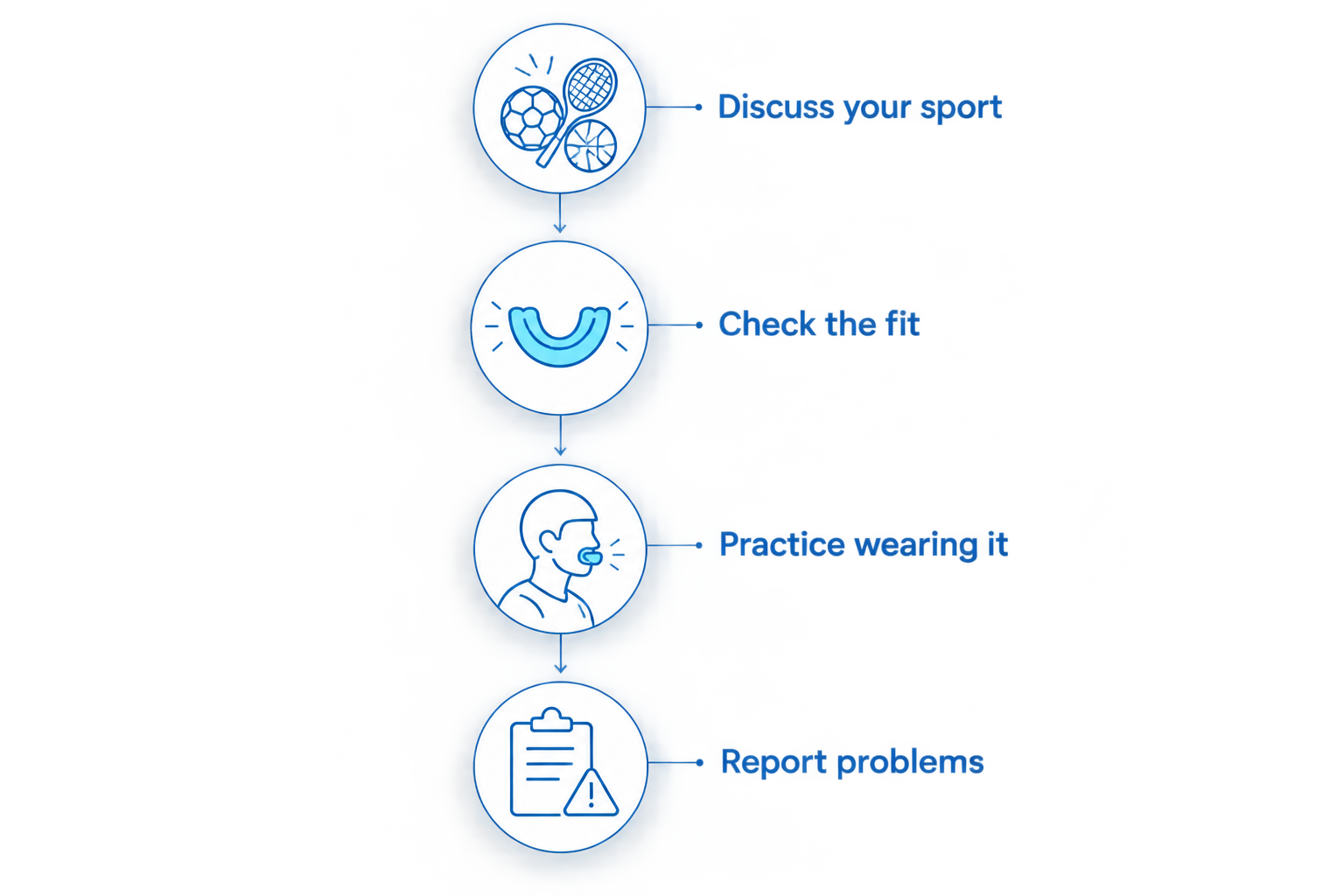
Use this sequence before returning to practice:
Discuss your sport. Describe contact, falls, balls, sticks, and required protective equipment.
Check the fit. Have your dental team confirm that your mouthguard accommodates your braces and moving teeth.
Practice wearing it. Check that you can breathe and communicate without constantly repositioning it.
Report problems. Stop using a guard that catches on brackets, causes pain, or no longer fits securely.
Check your mouthguard before practice rather than discovering a fit problem during play.
Why this matters
A mouth injury can affect more than your braces. Teeth, gums, lips, and the jaw also need protection, even when your brackets look unchanged after a collision.
The American Dental Association recommends mouthguards for activities that carry a risk of dental injury. The American Association of Orthodontists also advises athletes with braces to wear appropriate mouth protection. A helmet or face shield does not replace a mouthguard.
For your 2026 sports routine, make protection part of getting dressed for practice—not something reserved for tournaments. A practice drill still involves the same teeth and brackets as a championship game.
Which mouthguard works with braces?
Choose a sports mouthguard designed to accommodate braces and have its fit checked by your treating dental team. Teeth move during treatment, so a guard that fits now needs reassessment as your bite changes.
The comparison below describes guard types, not an automatic ranking. Suitability depends on your appliances, the manufacturer’s instructions, and your dentist’s assessment.
Mouthguard option
Best for
Main benefit
Main limitation
Braces-compatible ready-made guard
Athletes needing room around fixed brackets
Designed to accommodate orthodontic appliances
Fit and comfort still need checking
Custom-made sports guard
Athletes whose dental team recommends an individually fitted guard
Made around the individual mouth
Tooth movement can change its fit
Boil-and-bite guard labeled for braces
Athletes whose dentist approves that specific design
Allows fitting according to its instructions
Incorrect molding can create a tight or unsuitable fit
Ordinary guard not labeled for braces
Athletes without fixed appliances, if otherwise suitable
Provides a general sports-protection option
Not the right default choice over brackets
Do not mold an ordinary boil-and-bite guard tightly around braces without professional advice. Do not trim or reshape a guard around a problem area unless your dental team or the manufacturer specifically directs you to do so.
Bring the actual guard to an appointment. A description or package photo cannot show whether it presses on a bracket, interferes with your bite, or comes loose when you open your mouth.
What if you have braces on both arches?
Tell your dentist whether you have upper braces, lower braces, or both. The right protection must account for your bite and the appliances that contact your lips and cheeks.
Do not assume that every athlete needs the same guard arrangement. Ask whether your sport and dental setup call for additional lower-mouth protection, and confirm that you can breathe comfortably with the recommended equipment.
Why sports precautions vary with braces
Your teammate’s mouthguard and return-to-play instructions are not automatically right for you. These factors change what your dental team needs to check:
Impact exposure: Contact, flying equipment, and falls create different opportunities for a mouth injury.
Appliance position: Upper brackets, lower brackets, and other appliances affect where protection must fit.
Tooth movement: A changing bite can make a previously comfortable guard too tight or unstable.
Current symptoms: Tender teeth, sores, loose brackets, or a displaced wire need attention before contact play.
Other treatment: Recent extractions or oral surgery come with separate activity instructions that take priority.
Sport rules: School, club, and governing-body requirements determine which protective equipment you must wear.
A mouthguard reduces injury risk; it does not eliminate it. Keep the rest of your required equipment in place and follow your sport’s safety rules.
Can you play contact sports with braces?
Contact sports are usually possible with braces, but appropriate mouth protection is essential. Football, basketball, hockey, martial arts, and similar activities expose your mouth to collisions or equipment strikes.
Tell your coach that you wear braces and use an orthodontic mouthguard. Check your league’s 2026 equipment rules before participating, especially when the sport has specific requirements for guard design or use.
Boxing and other activities involving deliberate blows to the face deserve a direct discussion with your treating dentist and coach. Do not treat general advice about school sports as individual clearance for repeated facial contact.
If a guard repeatedly shifts, catches, or interferes with breathing, stop and address the fit. Biting harder to hold an unsuitable guard in place is not a solution.
Can you run, swim, or lift weights with braces?
Running, swimming, and controlled strength training are generally compatible with braces. Braces alone do not require you to stop ordinary exercise, although discomfort or separate dental procedures can change your activity instructions.
Noncontact does not mean injury-free. Falls, collisions near a pool, and accidental contact with equipment still matter; discuss protection when your activity involves those risks.
Avoid chewing on equipment, biting a mouthguard unnecessarily, or using your teeth to open packaging. If you clench during lifting and develop jaw pain or tooth discomfort, tell your dentist rather than treating a sports guard as a remedy for every symptom.
Can you play immediately after getting braces tightened?
There is no single waiting period that applies to everyone after a routine braces adjustment. Your comfort, the condition of your braces, and your treating dentist’s instructions determine whether you should participate.
Mild tenderness is different from a loose tooth after an impact, a broken wire, or worsening pain. Choose lighter activity if your mouth feels uncomfortable, and do not use pain relief simply to push through an unexplained injury.
Check your guard again after adjustments. If seating it causes new pressure or it no longer goes into place easily, have the fit reviewed before contact practice.
What should you do after a hit to the mouth?
Stop playing and check the injury before deciding whether to return. A damaged bracket is not the only concern; a tooth can be injured even when the braces remain attached.
Use these immediate steps:
Leave play safely. Tell your coach or athletic trainer what happened.
Check for urgent symptoms. Breathing trouble, heavy bleeding that will not stop, suspected jaw injury, or signs of concussion require urgent medical assessment.
Look without pulling. Note loose or displaced teeth, broken pieces, bleeding, or wires caught in soft tissue. Do not tug on attached braces.
Contact your dental team. Describe the impact, symptoms, and visible damage. Follow their instructions about urgent evaluation and returning to activity.
For a small area of irritation from a bracket, orthodontic wax can provide a temporary cushion. Wax does not repair damaged braces or protect an injured tooth from another hit.
If a permanent tooth is completely knocked out, handle it by the crown, not the root, and seek emergency dental care immediately. Keep it moist in milk if you cannot safely reinsert it; never reinsert a baby tooth. Do not try to reposition a tooth caught in braces yourself.
How do you keep a sports mouthguard clean?
Rinse your mouthguard before and after use, and clean it according to its manufacturer’s instructions. Let it dry and keep it in a ventilated protective case rather than loose in your equipment bag.
Heat can distort a guard, so avoid hot water and a hot car. Do not share it, chew it, or continue using it when it becomes damaged.
For your 2026 season, add a fit check to your regular equipment routine. Look for tears, rough edges, distortion, and changes in how it sits around your brackets; there is no universal replacement interval that suits every growing athlete or treatment plan.
When should you ask your dental team for help?
Ask before your next contact practice if your guard no longer fits, you develop a sore that keeps reopening, or a bracket or wire becomes loose. After an impact, report changes in your bite even if the pain seems manageable.
Affordable Dentist Near Me is best for families seeking general dental care and braces services in its Texas service areas. The practice serves Fort Worth, Dallas, Houston, Waco, Grand Prairie, and Crowley.
Affordable Dentist Near Me provides braces care, but your treating clinician must assess your particular appliance and sports protection. A general article cannot confirm that your mouthguard fits or clear an injured tooth for play.
Discuss your braces care
Ask about braces care and the dental assessment you need before contact sports.
Yes, children can usually play soccer with braces while wearing an appropriate sports mouthguard. Collisions, falls, and contact with the ball still create a risk of mouth injury, so have the guard’s fit checked.
Do I need a mouthguard for basketball if I have braces?
Yes, wear an appropriate sports mouthguard for basketball with braces. Player contact, elbows, and falls can injure teeth and push brackets against the lips or cheeks.
Can I use dental wax instead of a mouthguard?
No, dental wax cannot replace a sports mouthguard. Wax cushions a small irritating area but does not provide sports-impact protection.
Can I wear my regular retainer during sports?
A regular retainer is not a sports mouthguard. Ask your treating dentist when to remove a removable retainer and how to store it safely during activity.
Do clear aligners protect teeth during sports?
Clear aligners are not sports mouthguards. Ask your treating dentist how to manage aligner wear during activity and which separate protective guard is appropriate.
Should I keep playing if a bracket comes loose?
Stop playing and contact your dental team if a bracket comes loose, especially after an impact. Do not pull off parts that remain attached, and get urgent assessment for tooth movement, severe pain, or significant bleeding.
What should I check before the 2026 sports season?
Before the 2026 sports season, check your mouthguard’s fit, condition, and compatibility with your braces. Confirm your sport’s equipment rules and ask your dental team what symptoms require you to stop playing.
One last thing
The mouthguard that fitted before your teeth moved is not automatically the right fit now. Bring it to your next braces appointment, even if it still looks clean and undamaged.
When contacting Affordable Dentist Near Me about braces care, mention your sport and bring your protective equipment. Showing how the guard sits is more useful than simply reporting that you own one.