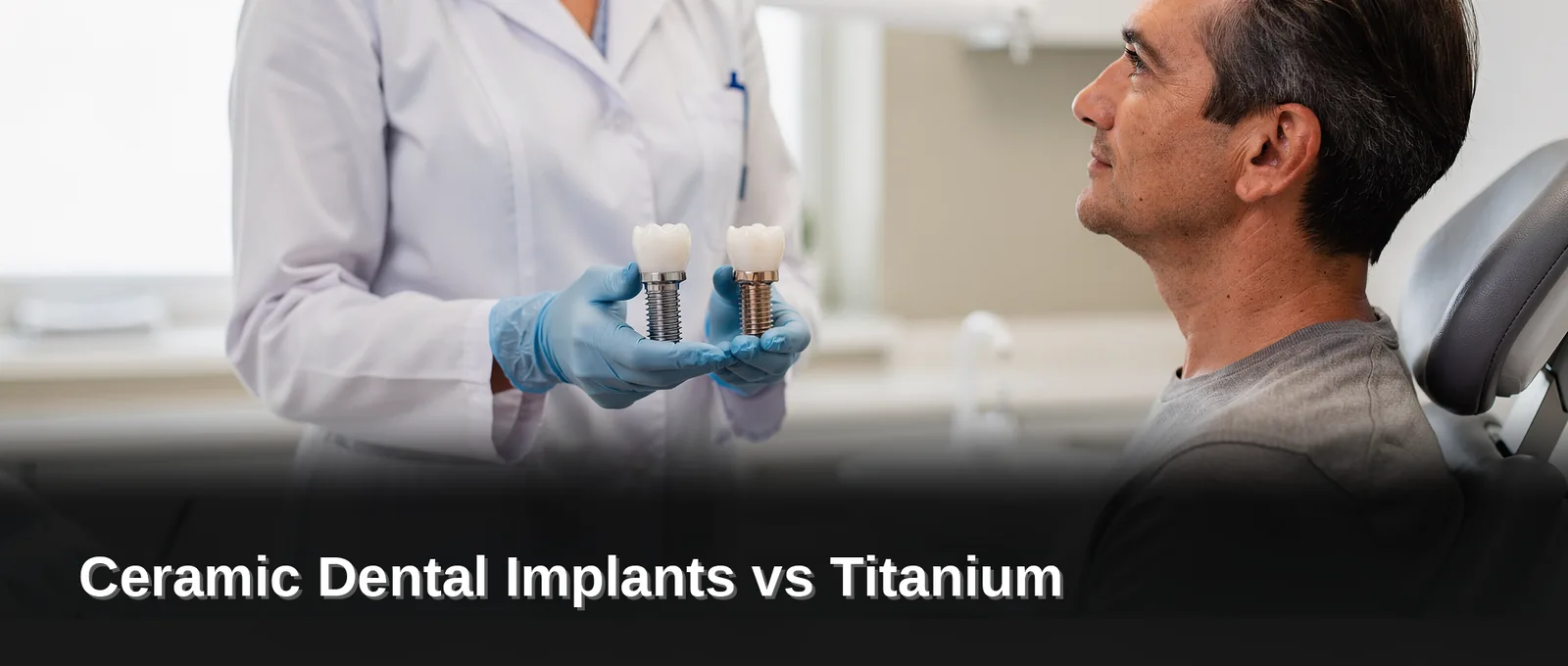
Ceramic implants offer metal-free, tooth-colored restoration for patients who want to avoid titanium, while titanium implants remain the foundation of dental implantology, established by Prof P-I Brånemark. Titanium provides decades of scientific evidence; ceramic suits esthetic or metal-sensitivity priorities. A consultation determines which material fits each patient’s mouth.
Key Takeaways
Titanium implants rest on more than 65 years of scientific evidence beginning with the discovery of osseointegration.
Ceramic implants offer a metal-free, tooth-colored option for patients concerned about metal exposure or sensitivity.
Titanium holds a longer clinical track record, while ceramic implants show promising short- and medium-term results.
A consultation determines which material fits each patient’s mouth based on individual health and esthetic priorities.
What Are Ceramic and Titanium Dental Implants?
Dental implants are artificial tooth roots placed in the jaw to support a crown, bridge, or denture. Both ceramic and titanium implants restore chewing function and help preserve bone. The two materials differ in their scientific history, their composition, and how each one integrates with living bone.
Titanium implant dentistry rests on more than 65 years of scientific evidence. That record began with the discovery of osseointegration, the natural attachment of bone to titanium, which laid the foundation for modern implantology. All-ceramic implants, particularly zirconia, entered the field later as a potential metal-free alternative to traditional titanium-based systems. Ceramic options answer patient demand for esthetic, metal-free treatment.
How Do the Two Implant Materials Compare?
The table below sets out the core differences in plain terms.
Feature
Titanium Implants
Ceramic (Zirconia) Implants
Track record
More than 65 years of evidence
Introduced as a newer alternative
Core mechanism
Osseointegration with bone
Metal-free esthetic treatment
Best fit
Proven, long-established standard
Patients seeking no metal
Where Does Affordable Dentist Near Me Fit In?
Affordable Dentist Near Me of Fort Worth handles dental implants from a single tooth to a full-arch fixed implant bridge. The practice puts the price in writing before treatment starts, so patients know the cost before committing. That written estimate removes the guesswork from weighing Ceramic Dental Implants vs Titanium for a given case.
How Do Titanium and Ceramic Implants Compare?
Titanium and ceramic implants both replace missing teeth reliably. The two materials differ sharply in appearance, performance history, and ideal use cases. A patient who chooses without weighing these differences risks an implant that fails to match long-term health priorities or esthetic expectations.
Ceramic dental implants vs titanium is a decision rooted in decades of clinical evidence versus a growing demand for metal-free materials. Titanium implants benefit from a vast body of scientific evidence and decades of clinical cases that underpin a solid basis of knowledge. Ceramic implants appeal to patients who want to understand how dental materials affect overall health and who wish to avoid any reaction to implant materials. The right choice depends on the individual mouth, not on a universal ranking.
Criterion
Titanium Implants
Ceramic Implants
Clinical track record
Decades of documented success and wide application
Newer option with a shorter published history
Appearance
Metal post; may show a gray line at the gum
Tooth-colored; blends naturally with soft tissue
Material sensitivity risk
Low, but metal allergy is possible
Metal-free; suited for patients avoiding metals
Structural design
Available in two-piece systems for angled placement
Historically one-piece; two-piece options now emerging
Which Implant Material Has a Longer Track Record?
Titanium holds the longer track record by a wide margin. A vast body of scientific evidence and decades of clinical cases support its use across a wide range of applications and positive user outcomes. Ceramic implants lack this multi-decade depth of data, though short- and medium-term results are promising.
Are Ceramic Implants Better for Patients with Metal Sensitivities?
Ceramic implants offer a clear advantage for patients concerned about metal exposure. Many individuals want to understand how dental materials affect their overall health, not just their smile. A ceramic option eliminates the risk of reaction to titanium or trace alloys, making it the preferred path for metal-free treatment.
At the Fort Worth office, the same team handles cleanings, fillings, crowns, extractions, dentures, and dental implants in one place. This integrated approach lets patients discuss both titanium and ceramic pathways with a single provider who understands the full clinical picture.
Which Material Wins on Strength and Longevity?
Titanium holds the stronger long-term record, while ceramic offers a newer, studied alternative. Decades of clinical use give titanium a depth of evidence that zirconia has not yet matched.
Titanium’s advantage rests on osseointegration, the natural bone attachment to the metal that Prof P-I Brånemark first observed over 65 years ago. That discovery launched modern dental implantology and built a solid clinical knowledge base. Wide ranges of applications and positive user experiences have created high levels of trust in titanium implant performance, according to Nobel Biocare. Peer-reviewed research has examined all-ceramic implants as a potential metal-free alternative to traditional titanium systems, which confirms zirconia is studied but newer.
Criterion
Titanium implants
Ceramic (zirconia) implants
Clinical track record
Over 65 years of documented use
Newer, still under long-term study
Evidence base
Extensive, with high trust levels
Growing, peer-reviewed comparisons exist
Best fit
Patients prioritizing proven durability
Patients prioritizing metal-free treatment
How Long Have Titanium Implants Been Studied?
Titanium implants trace their clinical history back more than 65 years to the osseointegration discovery. That timeline explains why titanium carries the broadest body of documented cases. Ceramic implants entered the conversation later as demand for esthetic, metal-free treatment grew.
Does a Newer Material Mean a Weaker Option?
A shorter track record does not make ceramic implants unproven. Published research directly compares the long-term success of all-ceramic implants with titanium. Patients weighing Ceramic Dental Implants vs Titanium should treat longevity as a question of evidence depth, not material quality alone.
Affordable Dentist Near Me quotes every implant treatment in writing after the exam. Patients know the plan and the price before treatment starts, whichever material they choose.
What About Aesthetics and Metal-Free Concerns?
Aesthetics and material sensitivity drive the Ceramic Dental Implants vs Titanium decision for many patients. Ceramic implants were developed specifically to satisfy demands for esthetic, metal-free treatment. This matters most in visible front-tooth areas where a metal margin could show through thin gum tissue.
Why do some patients prefer metal-free dental implants?
Some patients want to avoid any reaction to the materials used in an implant. A growing number of individuals seek to understand how dental materials affect overall health, not just how the smile looks. Ceramic implants eliminate metal exposure entirely, which addresses both appearance and biocompatibility concerns in a single restoration.
How do ceramic implants look compared to titanium?
Ceramic implants offer a tooth-colored option that blends naturally with surrounding teeth. Titanium implants perform reliably but can create a grayish hue at the gumline when tissue is thin. For front teeth, the esthetic advantage of ceramic becomes a practical consideration rather than a cosmetic luxury.
Feature
Ceramic Implants
Titanium Implants
Color
White, tooth-like
Metallic gray
Gumline visibility
Low risk of show-through
Potential gray tint with thin tissue
Material sensitivity
Metal-free, hypoallergenic
Rare but possible metal sensitivity
Best use case
Front teeth, esthetic zones
All areas, especially posterior
Patients at the Fort Worth office can take advantage of a free initial consultation to discuss treatment options. This allows material questions to be answered with a full diagnostic picture before any commitment. The consultation provides clarity on whether ceramic or titanium best fits the individual’s health priorities and esthetic goals.
Which Implant Is Right for You?
Selecting between ceramic dental implants vs titanium starts with a clear look at appearance, performance, and personal health priorities. Both materials deliver reliable tooth replacement. The right choice hinges on how each option fits a patient’s specific clinical situation and aesthetic goals.
How do ceramic and titanium implants compare for front teeth?
Ceramic implants offer a tooth-colored, metal-free appearance that blends naturally with visible areas. Titanium implants provide decades of clinical data and exceptional strength. For front teeth where aesthetics dominate, ceramic often holds the edge. For posterior teeth under heavy bite forces, titanium’s track record remains unmatched.
What factors determine the best implant material?
An in-person exam is the deciding factor. The dentist evaluates bone density, gum tissue thickness, and the tooth’s position before recommending a material. Patients with thin gum tissue or metal sensitivities frequently benefit from ceramic’s soft-tissue compatibility. Those needing angled or multi-unit restorations often find titanium’s two-piece design more adaptable.
Criteria
Ceramic Implants
Titanium Implants
Aesthetics
White, tooth-colored; no gray show-through
Metallic; may show through thin gums
Strength
High, but less flexible under extreme load
Proven osseointegration and long-term durability
Biocompatibility
Metal-free; suitable for metal-sensitive patients
Rare allergy risk; well-documented safety profile
Clinical history
Growing evidence base
65+ years of documented success
Affordable Dentist Near Me in Fort Worth publishes its prices and quotes each treatment in writing. Patients compare ceramic and titanium options on real numbers before committing. The Fort Worth team handles everything from a single implant to a full-arch fixed implant bridge, so the material decision stays grounded in transparent cost and clinical need.
FAQ
Which material has the longer clinical track record?
Titanium implants rest on more than 65 years of scientific evidence beginning with the discovery of osseointegration, while ceramic implants are a newer option with promising short- and medium-term results.
Who suits ceramic implants best?
Ceramic implants offer a metal-free, tooth-colored option for patients concerned about metal exposure or sensitivity, and they appeal to those who want to avoid any reaction to implant materials.
How does Affordable Dentist Near Me help patients decide?
The Fort Worth practice handles dental implants from a single tooth to a full-arch fixed implant bridge and puts the price in writing before treatment starts, removing guesswork from the decision.
Conclusion
Choosing between ceramic and titanium implants comes down to your aesthetic priorities and health concerns, with ceramic offering a metal-free, tooth-colored solution for front teeth and titanium providing over six decades of proven strength for posterior restorations. Your dentist evaluates bone density, gum thickness, and tooth position during an exam to recommend the material that fits your specific clinical needs, ensuring the decision rests on evidence and your individual situation rather than general assumptions.