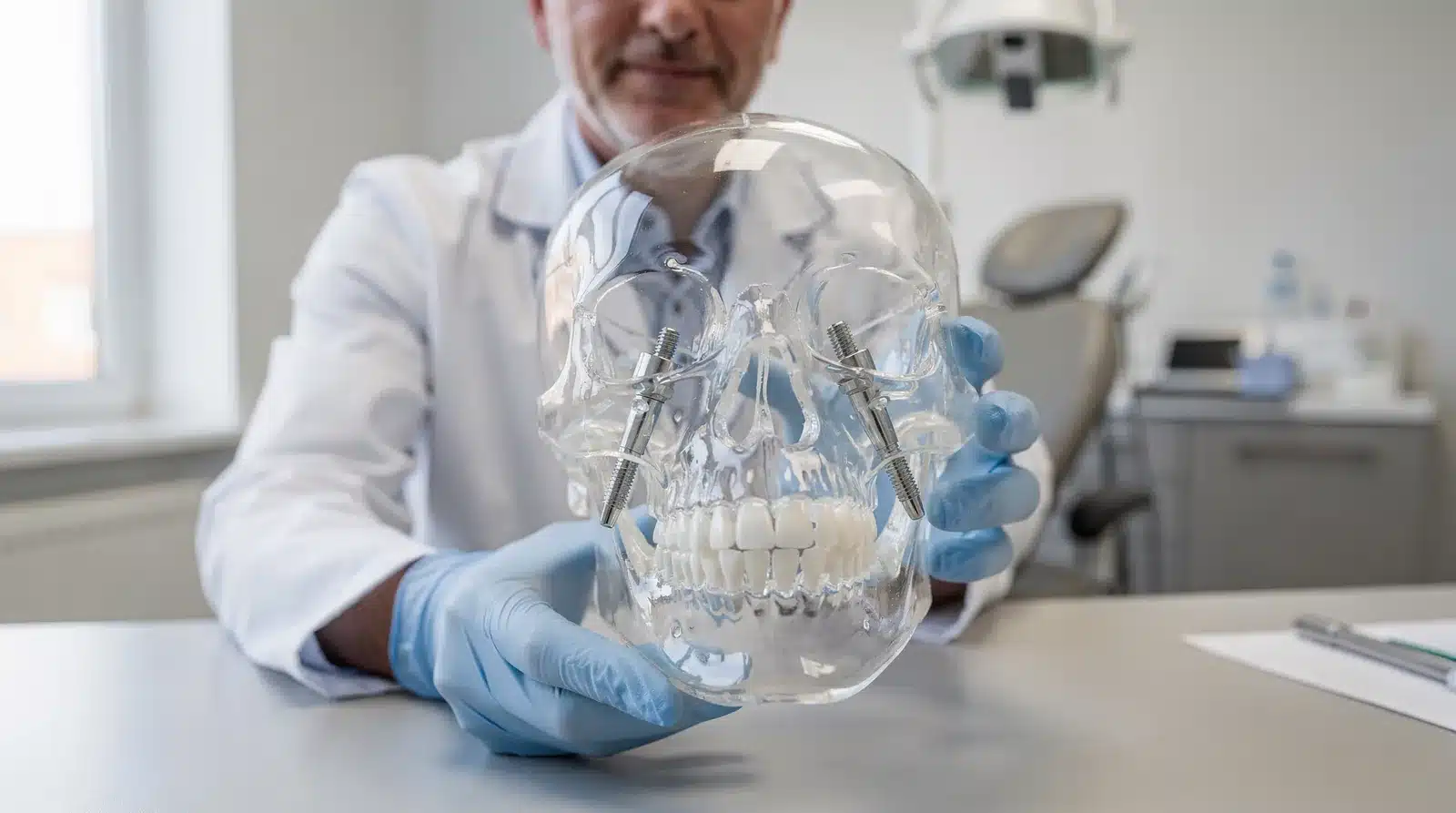
Zygomatic dental implants anchor into the dense cheekbone (zygoma) rather than the jawbone, providing exceptional stability for people with severe upper jaw bone loss. Zygomatic Dental Implants Advantages include a longer, tilted implant design that removes the need for Bone Grafting vs Dental Implants: Which Is Right?, letting patients told they are not traditional implant candidates regain a secure smile.
Key Takeaways
Zygomatic implants anchor into the dense cheekbone, providing exceptional stability for patients with severe upper jaw bone loss.
The tilted, longer implant design eliminates bone grafting, removing months of healing time before placement begins.
Angled placement maximizes existing bone structure, so the restoration does not depend on the resorbed jaw ridge.
Patients rejected as traditional implant candidates gain reconsideration because zygomatic implants bypass the failing jawbone entirely.
What are zygomatic dental implants?
Zygomatic dental implants are longer than traditional implants and anchor into the cheekbone rather than the jawbone. The cheekbone, or zygoma, ranks among the strongest and densest bones in the face, providing exceptional stability for the restoration.
These implants serve patients with severe upper jaw bone loss who cannot support conventional implants. Traditional implants require adequate jawbone volume. When that volume disappears, standard placement fails. Zygomatic implants bypass this limitation entirely by using the zygomatic bone as their foundation.
How do zygomatic implants differ from traditional implants?
The key difference lies in length and placement. A zygomatic implant measures significantly longer than a standard dental implant. While traditional implants sit vertically in the jawbone, zygomatic implants are tilted and inserted into the zygoma. This dense bone offers excellent support, as noted by dental implant specialists.
Why is bone grafting unnecessary with zygomatic implants?
The technique eliminates bone grafting because it anchors directly into the zygomatic bone. Patients with extensive bone resorption typically face grafting procedures before traditional implant placement. Those procedures add months of healing time. Zygomatic implants remove that requirement. The surgeon places the implant into existing dense cheekbone, creating immediate structural support without rebuilding lost jawbone first.
How do zygomatic implants work?
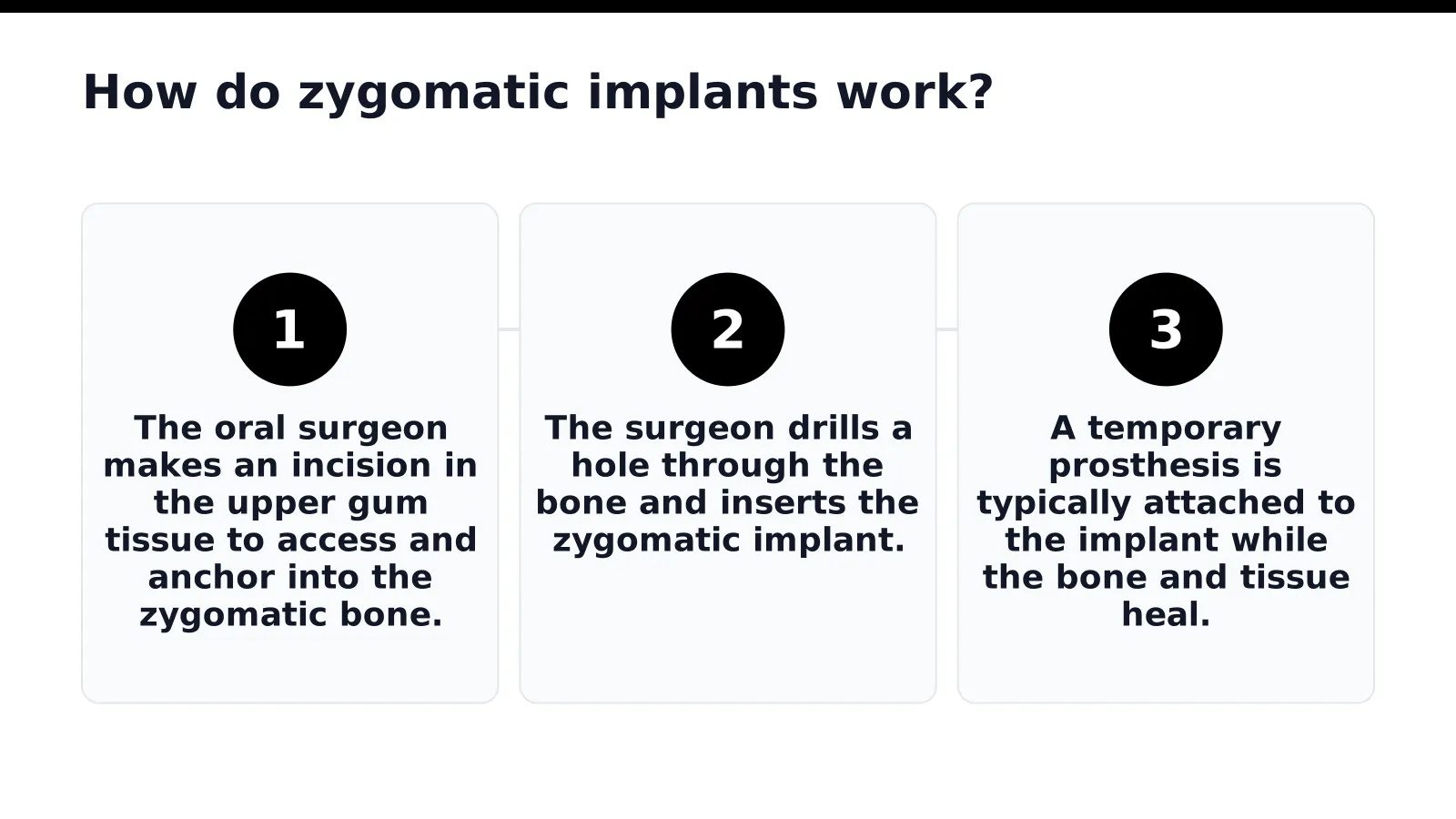
Zygomatic implants work by anchoring directly into the zygomatic bone, the dense cheekbone that sits above the upper jaw. This placement bypasses the jawbone entirely, which is why the approach suits patients with severe upper jaw bone loss. The procedure follows a defined surgical sequence.
The surgical sequence
The oral surgeon makes an incision in the upper gum tissue to access and anchor into the zygomatic bone.
The surgeon drills a hole through the bone and inserts the zygomatic implant.
A temporary prosthesis is typically attached to the implant while the bone and tissue heal.
The design of zygomatic dental implants allows them to be positioned at an angle. This angled placement maximizes the bone structure the patient still has, rather than requiring new bone to be grown first. These Zygomatic Dental Implants Advantages matter most to patients who have been told traditional implants will not hold without grafting.
Where does the implant actually sit?
The implant sits in the cheekbone, not the jaw. The zygoma is one of the strongest bones in the face, so it provides exceptional stability and support for the new teeth. Because the anchor point is remote from the resorbed jaw, the restoration does not depend on the failing ridge.
Why does the angled position matter?
Angling lets the surgeon use existing bone instead of rebuilding it. The implant tilts to reach the denser zygomatic structure while the prosthetic connection still emerges where teeth belong. This graftless design removes the need for bone grafting procedures, which shortens the path from surgery to a functioning set of teeth.
What are the main advantages of zygomatic implants?
Zygomatic implants offer a graftless path to a fixed smile for people with severe upper jaw bone loss. The Zygomatic Dental Implants Advantages center on one core benefit: restoring teeth without the bone grafting that traditional implants require.
A solution for severe jawbone resorption
Extensive jawbone resorption rules out conventional implant placement for many patients. Zygomatic implants provide a groundbreaking solution for individuals facing that exact problem. The implant anchors in the cheekbone rather than the jaw, so a resorbed upper jaw no longer blocks treatment.
No bone grafting required
One of the significant benefits of zygomatic implants is the elimination of bone grafting procedures. That matters because grafting adds a separate surgery and a healing period before implant placement even begins. Skipping the graft shortens the overall treatment timeline and removes a major barrier for patients whose bone quality is poor.
An option for patients turned away elsewhere
Zygomatic dental implants are a substitute implant design made for people who do not qualify for bone grafting or who have significant bone loss from missing teeth. Advances in dentistry now allow patients who were told they were not candidates for dental implants to be considered for this approach. The table below summarizes how the two paths differ.
Consideration
Traditional implants
Zygomatic implants
Anchor site
Jawbone
Cheekbone (zygoma)
Bone grafting
Often required
Eliminated
Severe bone loss
May disqualify
Designed for it
Prior rejection as candidate
Common
Reconsidered
Who benefits most from this approach?
Patients with advanced upper jaw bone loss gain the most from zygomatic implants. The same holds for people who cannot undergo grafting or who have already been told traditional implants will not work. Each case still requires an individual assessment, since candidacy depends on the specific anatomy and health history of the patient.
Are there any disadvantages to consider?
Zygomatic dental implants carry distinct disadvantages that demand careful evaluation. The Zygomatic Dental Implants Advantages are significant, yet the procedure’s complexity and limited provider access create real barriers for patients with severe jawbone loss.
What makes the surgical procedure more complex?
The implant’s design drives the complexity. Zygomatic implants are longer than conventional ones, reaching further into the cheekbone for reinforcement. This length requires a specialized surgical approach. The oral surgeon makes an incision in the upper gum tissue to access and anchor into the zygomatic bone, securing the implant in dense bone that traditional implants never touch. That extra reach transforms a routine placement into an advanced procedure.
How hard is it to find a qualified surgeon?
Finding a qualified provider presents a genuine obstacle. A small list of full arch surgeons worldwide possesses the skills to place zygomatic implants, and even fewer practice in the United States. Patients in rural areas or smaller cities often face significant travel to reach a surgeon with the necessary training. This geographic limitation delays treatment and adds logistical costs that traditional implant patients never encounter.
The combination of surgical complexity and scarce provider availability means weighing the pros and cons becomes essential before committing. Patients who skip this evaluation risk choosing a path their local dental network cannot support.
Are zygomatic implants right for you?
Zygomatic implants suit a specific group of patients: those with severe upper jaw bone loss who cannot receive traditional dental implants. The Zygomatic Dental Implants Advantages begin with candidacy itself, because this option restores teeth for people who otherwise have no path to a fixed solution.
Not every patient qualifies for conventional implant treatment. Bone loss is the main obstacle, and bone grafting may not be appropriate in every case. Bone volume also shrinks the longer teeth stay missing, so a traditional implant placement stops being viable over time. Zygomatic implants address this problem directly by anchoring into the cheekbone instead of the jaw.
Who typically qualifies for zygomatic implants?
Candidates share a common profile: significant upper jaw bone loss, failing or uncomfortable dentures, or a prior recommendation against traditional implants. Zygomatic implants offer a possible solution for patients who cannot receive traditional dental implants. A clinical evaluation confirms whether the cheekbone can support the implant.
What should a patient confirm before deciding?
Three checks matter most before committing to treatment:
Bone assessment: imaging confirms how much jawbone remains and whether grafting is realistic.
Grafting suitability: some patients face bone loss where bone grafting does not work well.
Provider experience: zygomatic placement is a specialized procedure, so surgical background deserves scrutiny.
Affordable Dentist Near Me is located in Fort Worth, TX, US, and provides affordable dental care that includes implants. Patients weighing this option can request an evaluation to confirm candidacy.
FAQ
Why are zygomatic implants better than bone grafting for severe bone loss?
Zygomatic implants anchor directly into the dense cheekbone, eliminating bone grafting and removing months of healing time before placement begins.
How do zygomatic implants stay stable in patients with no jawbone?
The longer, tilted implant design anchors into the zygomatic bone, one of the strongest bones in the face, bypassing the resorbed jaw ridge entirely.
Where exactly does a zygomatic dental implant sit in the face?
The implant sits in the cheekbone, not the jaw, using the dense zygoma as its foundation for exceptional stability.
Conclusion
Zygomatic implants offer a graftless path to a fixed smile for patients with severe upper jaw bone loss, yet the procedure’s complexity and limited provider access demand careful evaluation. Weigh the benefits against those barriers, confirm candidacy through imaging and a bone assessment, and scrutinize surgical experience before committing. For patients turned away from traditional implants, this approach restores teeth when no other fixed option exists. Request an evaluation to determine whether zygomatic implants fit your anatomy and health history.