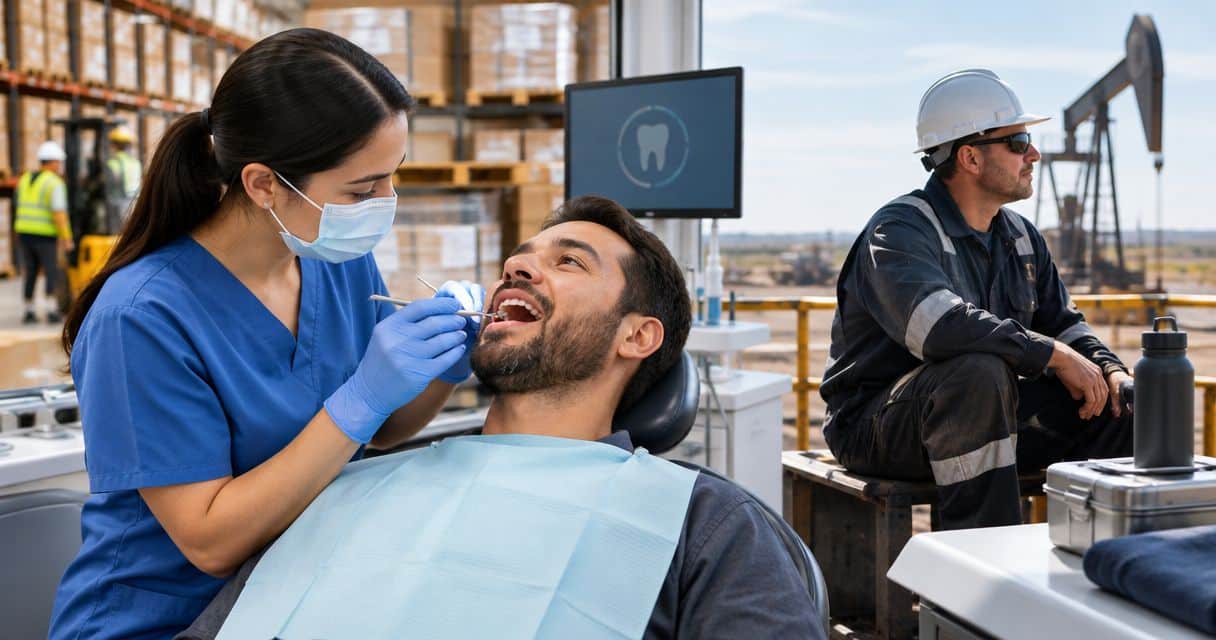
Warehouse and oilfield workers’ dental care is prevention, treatment, and injury planning aimed at keeping teeth healthy without disrupting safe work. Dental care for warehouse and oilfield workers in 2026 should fit around shift changes, remote assignments, meal breaks, and recovery needs—not assume a standard weekday schedule.
TL;DR
Dental care for warehouse and oilfield workers starts with fluoride toothpaste, daily cleaning between teeth, and planned appointments.
Affordable Dentist Near Me serves Texas families needing general and restorative dental care; confirm work-compatible appointments directly.
Verify employer dental benefits before treatment, especially after job changes or transfers.
Ask about lifting, driving, and equipment restrictions before returning to warehouse or oilfield duties.
Why dental care matters for warehouse and oilfield workers
Your dental plan needs to match both your work schedule and your actual job duties. A desk-based recovery plan does not answer whether you can climb, lift, drive a forklift, or work around moving equipment after treatment. Tell the dentist what your shift involves before choosing a procedure date.
Warehouse workers balancing rotating schedules need repeatable home-care habits. Oilfield workers leaving town for assignments also need a plan for unfinished treatment and urgent symptoms away from home. Neither situation changes the basics of healthy teeth, but both change how you arrange care.
For your 2026 appointments, use the planning principles in this dental care guide for shift workers, then add your travel dates and physical duties. Build your plan around the time you actually sleep, not the hours printed on a conventional calendar.
Affordable Dentist Near Me provides general, cosmetic, and restorative dental care for families in Fort Worth, Dallas, Houston, Waco, Grand Prairie, and Crowley. The practical question is which location and treatment plan fit your needs; appointment hours, insurance participation, and workplace clearance require direct confirmation.
Build a dental plan around your work
1. Anchor brushing to waking and sleeping
Start with a toothbrush, fluoride toothpaste, and a reliable routine. The American Dental Association’s home-care guidance recommends brushing for 2 minutes, 2 times daily, and cleaning between teeth 1 time daily. These recommendations apply whether your main sleep starts at night or after sunrise.
Use waking and bedtime as reminders rather than relying on morning and evening labels. Keep a separate work kit if you travel between home, a warehouse, and a temporary assignment. A rinse with water after eating is useful when brushing is impractical, but it does not replace brushing or cleaning between teeth.
Keep supplies clean and away from worksite contamination. Wash your hands before handling floss, a toothbrush, or anything that goes into your mouth.
Brush before your main sleep and after waking.
Use fluoride toothpaste and a soft-bristled toothbrush.
Clean between teeth with floss or a suitable interdental cleaner.
Store your toothbrush where it can air-dry between uses.
Pack replacement supplies before leaving for a remote assignment.
2. Review what you drink and chew during shifts
Track your own habits before buying extra oral-care products. Repeated exposure to sugary drinks feeds the bacteria involved in tooth decay, while acidic drinks contribute to enamel wear. Finishing a drink with a meal differs from sipping it throughout a shift.
Dry mouth also deserves attention. Tell your dentist about persistent dryness, medications, tobacco use, and changes in your mouth rather than assuming thirst is the only cause. Do not stop prescribed medication without speaking to the clinician who prescribed it.
Follow your employer’s hydration and heat-safety instructions. Dental advice does not replace a worksite heat plan, and water access should be part of your broader safety discussion.
Choose plain water regularly during permitted breaks.
Reduce repeated sipping of sugary or acidic drinks.
Avoid chewing ice or using teeth to open packaging.
Report persistent dry mouth, mouth sores, or bleeding gums.
Ask for help stopping tobacco use rather than treating it only as a stain problem.
3. Arrange an examination before a remote assignment
Write down symptoms and travel dates before calling an office. Include pain when biting, temperature sensitivity, a loose filling, bleeding gums, or trouble chewing. An examination establishes what needs attention; a self-diagnosis does not.
Affordable Dentist Near Me is a local dental care option for Texas families seeking general and restorative treatment. Its dental services include care such as crowns and implants, but an examination determines whether those treatments fit your situation. A local practice is useful for continuity; it does not replace emergency care when you are away.
For a 2026 assignment, explain how long you expect to be away and whether you can return for follow-up. Ask the dentist to distinguish urgent treatment from care that can safely wait. Do not assume an initial visit completes every stage of treatment.
Share your departure date and expected return.
Bring your medication list and relevant health history.
Identify current symptoms before discussing cosmetic goals.
Ask which treatment requires follow-up before travel.
Request a written treatment sequence and home-care instructions.
4. Verify benefits before agreeing to treatment
Begin with your employer’s benefits documents and your insurer’s member information. Confirm that coverage is active, then check the specific dentist, location, and proposed procedure. An office accepting insurance does not automatically mean every treatment is covered under your plan.
For your 2026 benefits, review deductibles, annual maximums, exclusions, and any waiting periods. Ask whether a proposed treatment needs advance review and what documentation the insurer requires. A benefits estimate helps you plan, but it is not a guarantee of payment.
If you are uninsured or between jobs, request a written treatment plan before deciding how to pay. Compare the same treatment across payment arrangements rather than assuming the smallest installment means the smallest total obligation.
Verify your coverage start and end dates.
Confirm the treating dentist’s network status.
Ask about procedure-specific limits and exclusions.
Request an estimate separating insurer and patient responsibility.
Review payment terms without assuming financing approval.
5. Match treatment recovery to your actual duties
Describe your job in plain terms: lifting loads, bending repeatedly, working at height, operating equipment, or driving between sites. Ask the treating dentist for restrictions tied to the procedure and your health. There is no single return-to-work schedule for every extraction, crown, or implant procedure.
Sedation adds a separate safety issue. Follow the treating team’s instructions about transport, supervision, driving, and machinery, even if you feel alert. Do not schedule safety-sensitive work based only on how long the appointment takes.
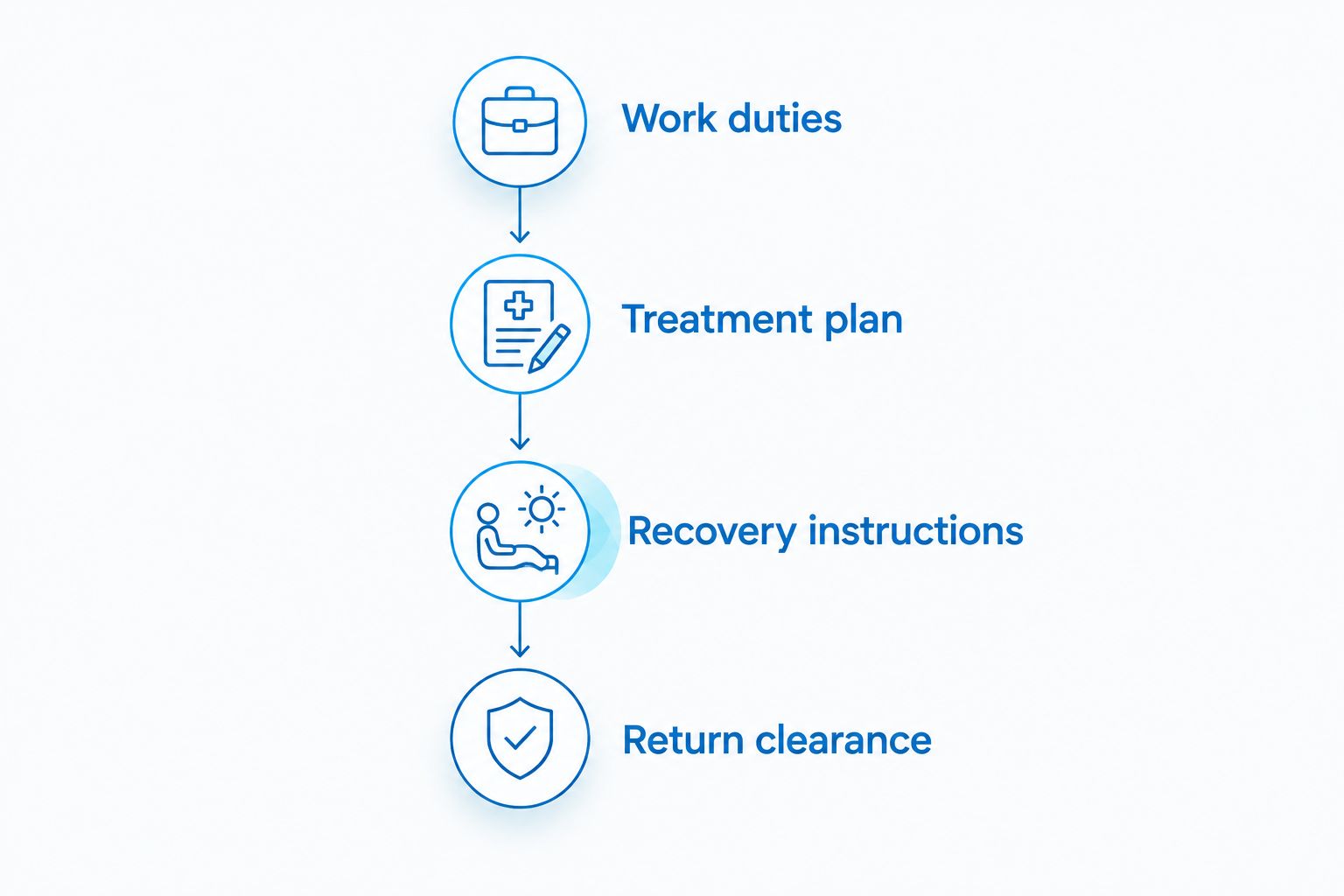
Use this sequence when planning treatment: Work duties, Treatment plan, Recovery instructions, Return clearance. Get answers before the procedure rather than trying to reach the office when your next shift starts.
Explain your work duties before deciding when to return after treatment.
A plan that separates the appointment from recovery makes scheduling clearer. Your supervisor needs the restrictions relevant to safe duties, not your entire dental history.
Describe lifting, driving, climbing, and equipment responsibilities.
Ask whether you need a ride or another adult’s help.
Request written restrictions and instructions for resuming duties.
Arrange food and fluids consistent with the dentist’s instructions.
Ask how to obtain advice if recovery changes while away.
6. Prepare for a dental injury before it happens
Start with your employer’s hazard assessment and injury-reporting process. Ask the safety lead whether your tasks require mouth protection and which protection fits the rest of your equipment. A mouthguard does not replace a required face shield, helmet, or other protective equipment.
If a permanent tooth is knocked out, handle it by the crown—the visible chewing part—not the root. Do not scrub it. Seek dental help immediately; if you cannot safely place it back, keep it moist in milk while getting care. Do not reinsert a baby tooth.
Call 911 for trouble breathing, trouble swallowing with swelling, uncontrolled heavy bleeding, or a serious facial injury. A workplace incident report is important, but it must not delay emergency medical attention.
Know how to reach emergency help from your work area.
Ask about task-appropriate mouth protection.
Save a local dental contact before remote travel.
Report workplace injuries through the required process.
Keep knocked-out permanent teeth moist while seeking immediate care.
7. Set follow-up dates before you leave the office
Use a calendar or paper planner first. Enter the next appointment alongside your rotation, travel, and main sleep period. Ask the dentist how often you need examinations and cleanings based on your mouth, not a coworker’s schedule.
Before closing out your 2026 treatment plan, ask whether temporary work remains in place or another visit is needed. A temporary repair and a completed restoration are not interchangeable. Tell the office promptly if travel changes prevent you from returning as planned.
Keep a brief record you can share if you need care elsewhere. Include the treating office, recent procedures, medications, allergies, and any current instructions.
Record follow-up dates before leaving.
Identify any temporary fillings or crowns.
Ask which symptoms require an earlier call.
Keep treatment instructions accessible during travel.
Update the office when your assignment schedule changes.
Compare dental care options for your work situation
Choose the setting by the problem, not just by the calendar opening. An ongoing practice supports preventive care and treatment follow-up. An urgent dental visit addresses a new problem, while a hospital emergency department handles serious medical emergencies rather than routine dental restoration.
These options serve different purposes. Ask each provider what the visit includes and what follow-up you will need; do not assume an urgent assessment completes treatment.
Option
Best for
Main advantage
Key limitation
Ongoing general dental practice
Workers needing prevention and planned repairs
Keeps examinations, treatment planning, and follow-up connected
Appointments must fit your rotation; complex treatment can require additional visits
Affordable Dentist Near Me
Families near its listed Texas locations seeking general and restorative care
Offers general, cosmetic, and restorative services within one practice organization
Confirm the specific office’s schedule, insurance participation, and treatment suitability
Urgent dental assessment
New tooth pain, a broken tooth, or dental injury
Focuses on identifying the immediate dental problem
Definitive treatment depends on examination findings and the care required
Hospital emergency department
Breathing difficulty, serious facial trauma, or other medical danger signs
Addresses medical emergencies and stabilization
Does not replace ongoing dental treatment
Common mistakes warehouse and oilfield workers make
These are planning mistakes to avoid, not claims about how often workers make them. Each leaves a gap between getting an appointment and completing care safely.
Booking immediately before a hitch without discussing follow-up. Tell the dentist when you leave and whether you can return. Do not assume a temporary repair will remain suitable for the whole assignment.
Treating pain relief as proof the problem is fixed. Reduced pain does not establish that decay, infection, or a crack has resolved. Follow the treatment plan and report changing symptoms.
Returning to machinery because the appointment is over. Recovery instructions and medication effects—not the appointment’s end time—determine restrictions. Obtain guidance before your next safety-sensitive shift.
Assuming employer coverage continues unchanged after a transfer. Verify the effective dates, network, and treatment rules whenever benefits change. Keep the confirmation with your treatment estimate.
FAQ
What’s the best dental routine if I work overnight?
Brush with fluoride toothpaste after waking and before your main sleep, and clean between teeth daily. The American Dental Association recommends brushing for 2 minutes, 2 times daily; attach those habits to your sleep schedule rather than daylight hours.
Should I see a dentist before leaving for an oilfield assignment?
Arrange an examination before departure if you have symptoms, unfinished treatment, or concerns about being away from care. Share your travel dates so the dentist can plan treatment and follow-up around the assignment.
Can I operate a forklift after dental treatment?
Operate a forklift only when your treating clinician’s instructions and your condition allow safe work. Sedation, medication effects, and procedure-specific restrictions require separate consideration; feeling awake is not clearance.
Does employer dental insurance cover every repair?
No, employer dental insurance covers treatment according to the specific plan’s terms. Verify coverage dates, network status, exclusions, and procedure limits before treatment, and remember that an estimate is not guaranteed payment.
What should I do if a permanent tooth gets knocked out at work?
Seek dental care immediately, handle the tooth by its crown, and do not scrub the root. If you cannot safely put it back, keep it moist in milk while getting help; serious facial injuries or breathing problems require emergency medical attention.
Can Affordable Dentist Near Me help warehouse and oilfield workers?
Affordable Dentist Near Me provides general, cosmetic, and restorative dental care for families in its listed Texas communities. Contact the relevant office to confirm appointments, insurance participation, and care that fits your work duties.
How often should a shift worker get a dental cleaning?
Your dentist should set your cleaning schedule based on your oral health and treatment needs. Working shifts changes appointment planning, not the need for an individualized assessment of cavities and gum health.
One last thing
Ask for work instructions, not just an appointment confirmation. Before treatment, make sure you know whether you can lift, drive, climb, or operate equipment afterward—and who to call if symptoms change during an assignment. That short conversation connects dental care to the work you actually do.