Choosing the Right Material for Dental Implants: Key Factors for Optimal Results and Material Comparison
Dental implant material selection shapes long-term function, appearance, and biological response, so choosing the right option requires clear clinical reasoning and realistic expectations. This guide explains what “implant material” means, compares the two dominant materials—titanium and zirconia—and walks through key factors patients and clinicians weigh, including biocompatibility, osseointegration, aesthetics, cost, and durability. Many patients face uncertainty about which material fits their medical history, smile-line demands, or budget; this article offers evidence-focused comparisons, practical decision aids, and actionable questions to bring to a consult. You will find side-by-side EAV comparison tables, cost ranges with local context for Dental Implants in Waco, and printable decision checklists to prepare for treatment planning. The structure follows a logical clinician-to-patient pathway: first define materials and properties, then compare clinical outcomes and costs, review risks and longevity, show how dentists make recommendations, and close with innovations shaping future choices. Read on to gain a clear, patient-centered framework for selecting the implant material that best balances biology, biomechanics, and aesthetics.
What Are the Most Common Materials Used for Dental Implants?
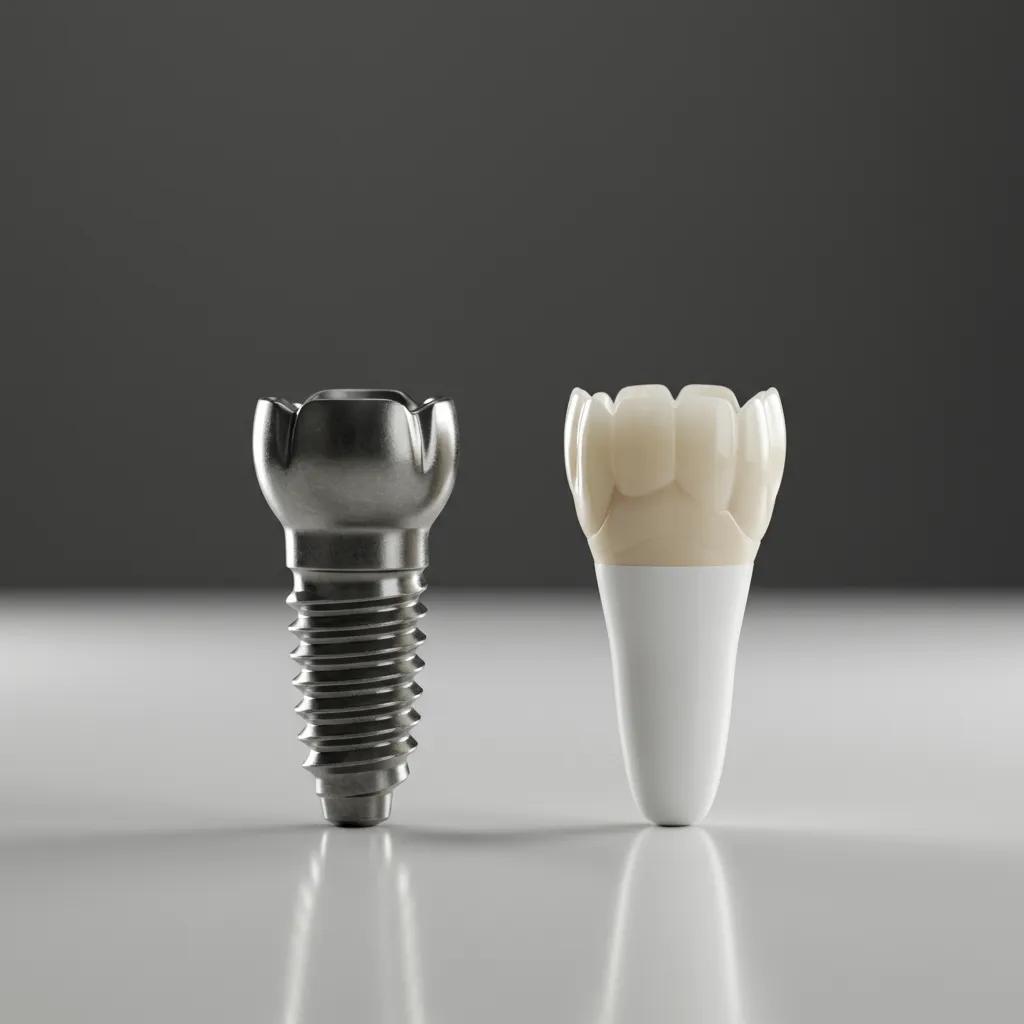
Dental implant materials are the structural substances used for the implant fixture and often influence osseointegration, strength, and the visible result in the mouth; the two primary categories are metallic (primarily titanium alloys) and ceramic (primarily zirconia). Titanium achieves osseointegration through a favorable surface chemistry and proven mechanical properties, creating a stable bone-to-implant interface for a wide range of restorations. Zirconia implants are tooth-colored ceramics that reduce metal visibility under thin tissues and avoid corrosion, appealing to patients with aesthetic priorities or metal sensitivities. Emerging hybrid or surface-coated options aim to combine strengths of both classes but currently vary in evidence and availability. The table below summarizes the core attributes—biocompatibility, aesthetics, and strength—to help readers quickly compare these materials before deeper clinical discussion in the next section.
Different implant materials offer characteristic trade-offs that determine their common clinical roles.
Material
Key Attributes
Typical Clinical Value/Notes
Titanium (commercially pure & alloys)
Excellent osseointegration, high tensile strength, well-studied surface treatments
Standard of care for single-tooth, posterior, and full-arch cases; robust evidence base
Zirconia (yttria-stabilized tetragonal zirconia)
Tooth-colored, low corrosion, good biocompatibility, higher stiffness
Preferred in esthetic anterior zones or for patients avoiding metals; newer long-term evidence
Surface-engineered to enhance osseointegration or antibacterial properties
Emerging options aim to accelerate healing or reduce peri-implantitis risk; clinical adoption varies
This high-level comparison sets the stage to examine titanium and zirconia in direct contrast and to understand where each material typically performs best.
What Are the Characteristics of Titanium Dental Implants?
Titanium implants are metallic fixtures that bond to bone through osseointegration, a process where bone forms a direct structural and functional connection with the implant surface. Clinically, titanium’s fatigue resistance and ductility allow it to withstand high occlusal forces, making it the preferred choice for posterior teeth, multi-unit bridges, and full-arch restorations. Manufacturers use different grades and surface modifications—such as micro-roughening or bioactive coatings—to increase surface area and accelerate bone contact; these treatments improve initial stability and long-term success. Titanium is subject to rare metal hypersensitivity reactions and can produce esthetic challenges when thin soft tissue permits a grayish hue to show through; careful soft tissue management and the use of ceramic abutments help address such concerns. Understanding titanium’s balance of mechanical resilience and long-term data helps clinicians decide when it’s the most predictable option for durable implant restorations.
This practical profile of titanium leads into the complementary characteristics and trade-offs associated with zirconia implants.
What Are the Features of Zirconia Dental Implants?
Zirconia implants are high-strength ceramic fixtures whose white color and corrosion resistance make them attractive for patients prioritizing aesthetics or concerned about metal exposure. As a ceramic, zirconia offers excellent soft-tissue response and low plaque affinity in many clinical reports, and a one-piece design historically reduced the risk of microgaps between implant and abutment, which can influence bacterial ingress. However, ceramics are inherently stiffer and can be more brittle than metals; modern zirconia implant designs and controlled manufacturing have improved fracture resistance, but clinicians consider occlusal load patterns and implant diameter carefully to reduce mechanical risk. Long-term longitudinal data for zirconia remain less extensive than for titanium, so placement decisions often weigh immediate aesthetic benefit against the relative maturity of outcome evidence. Given these trade-offs, zirconia is frequently recommended for single-tooth anterior replacements or narrow-diameter implants where esthetics dominate.
The contrast between titanium’s mechanical track record and zirconia’s aesthetic strengths naturally transitions into a direct comparative analysis.
How Do Titanium and Zirconia Dental Implants Compare?
Comparing titanium and zirconia requires assessing osseointegration, strength, aesthetics, and the quality of long-term evidence; titanium has the deepest clinical track record while zirconia offers superior color and corrosion resistance. Titanium demonstrates consistently high success rates over decades, supported by extensive implant systems, surface options, and prosthetic components, which increases clinician flexibility for complex cases. Zirconia’s advantages center on soft-tissue aesthetics and reduced corrosion or ion release, making it attractive for patients with allergies or thin gingival biotypes, though prosthetic components and two-piece system options are expanding. Decision factors include biomechanical demands (posterior occlusion vs anterior esthetics), soft-tissue thickness, patient preferences about metal exposure, and the clinician’s familiarity with each system. Below are concise pros/cons lists that summarize clinical strengths and limitations for quick comparison.
The following lists distill the principal advantages and disadvantages of each material class to guide clinical reasoning.
Titanium advantages and disadvantages:
High long-term success: Extensive evidence supports predictable osseointegration and durability.
Mechanical resilience: Superior fatigue resistance suits posterior and multi-unit restorations.
Aesthetic limitations: Gray coloration can show through thin soft tissue, affecting esthetic outcomes.
This overview of titanium’s major points prepares us to contrast them directly with zirconia’s profile.
Zirconia advantages and disadvantages:
Superior aesthetic outcome: Tooth-colored material reduces gray show-through in the esthetic zone.
Low corrosion and metal-free option: Beneficial for patients with metal sensitivity or corrosion concerns.
Data and prosthetic limitations: Less long-term evidence and historically fewer prosthetic component options than titanium.
After weighing pros and cons, clinicians balance these attributes against patient-specific factors to reach a recommendation, which we explore in the next section.
What Are the Advantages and Disadvantages of Titanium Implants?
Titanium implants offer unmatched clinical history, predictable osseointegration, and a wide selection of prosthetic connections, which together support high long-term success rates across case types. The material’s ductility and fatigue strength make titanium especially reliable under repeated occlusal loading, reducing the risk of mechanical failure in full-arch restorations or posterior units. Disadvantages center around esthetics in thin gingival biotypes—visible gray tones may necessitate soft tissue augmentation or ceramic abutments—and rare instances of metal sensitivity or corrosion-related responses, which require clinical assessment and possible alternative selection. Clinicians mitigate risks through careful planning, appropriate surface selection, and maintenance protocols that limit peri-implant inflammation. Recognizing these trade-offs helps clinicians recommend titanium when biomechanical demands and evidence-based predictability are the primary concerns.
These considerations set the context for the alternative trade-offs inherent to zirconia implants.
What Are the Pros and Cons of Zirconia Dental Implants?
Zirconia implants excel in soft-tissue aesthetics and chemical stability, offering a metal-free option that often produces favorable peri-implant mucosal coloration and patient satisfaction in visible areas. Pros include low plaque accumulation in many reports, strong soft-tissue biocompatibility, and elimination of metal ion release concerns, making zirconia attractive for select patients. Cons include mechanical brittleness risks under high occlusal forces—particularly for narrow-diameter or posterior applications—and a smaller body of long-term evidence compared with titanium, which can influence clinician confidence for complex reconstructions. Additionally, two-piece zirconia systems and restorative components are less ubiquitous than titanium, although technology is evolving to expand prosthetic flexibility. Clinicians therefore tend to recommend zirconia when esthetics and metal-avoidance are prioritized, and when occlusal forces and prosthetic demands are appropriate for ceramic mechanics.
With material comparisons clarified, the next critical question becomes how to match materials to individual patient needs.
Which Material Is Best for Dental Implants Based on Patient Needs?
Choosing the best implant material for an individual patient hinges on anatomy, aesthetic goals, medical history, and functional demands; a structured decision approach helps match material attributes to patient priorities. Key patient variables include tissue biotype (thin vs thick), smile line and esthetic expectations, history of metal hypersensitivity, parafunctional habits like bruxism, systemic health conditions affecting healing, and budget constraints. Patients with high aesthetic demands, thin soft tissue, or metal sensitivity often favor zirconia for its tooth-colored appearance and low corrosion profile, while those requiring strong posterior support or complex multi-unit restorations may be better served by titanium’s extensive prosthetic ecosystem and mechanical track record. A practical checklist and flow of example scenarios below can help patients self-assess prior to a consult and ensure they bring targeted questions to their clinician.
Use the following decision checklist to quickly evaluate which factors most strongly influence material choice.
Anatomy and Tissue Biotype: Thin gingival biotypes often favor tooth-colored materials to prevent gray show-through.
Esthetic Priority: High smile-line cases or single anterior tooth replacements prioritize color-matching and translucency.
Medical/Allergy Concerns: Documented metal sensitivity or patient preference for metal-free options supports considering zirconia.
Functional Load: High occlusal forces, bruxism, or multi-unit posterior reconstructions generally favor titanium for strength.
Long-term Evidence & Complexity: Complex cases or full-arch reconstructions often rely on titanium’s broader evidence base and prosthetic options.
These checklist items guide initial material preference and lead naturally to diagnostic steps clinicians use—covered next—to finalize recommendations.
How Does Biocompatibility Affect Dental Implant Material Choice?
Biocompatibility describes how tissue responds to an implanted material, encompassing cellular compatibility, inflammatory response, and risk of hypersensitivity; this property directly informs material selection when patient reaction risk is a concern. Titanium’s biocompatibility is well-documented, with osseointegration mediated by favorable surface chemistry and bone remodeling around the implant; rare metal hypersensitivity exists but is uncommon. Zirconia exhibits low ion release and often elicits favorable soft tissue response, making it a reasonable alternative for patients with documented sensitivity or concerns about metal exposure. For suspected metal hypersensitivity, clinicians may recommend allergy testing, review systemic history, or choose a metal-free option after weighing evidence and patient preferences. Evaluating biocompatibility in the context of systemic conditions and local tissue environment helps clinicians reduce adverse reactions and optimize soft-tissue outcomes.
Understanding biocompatibility leads directly into aesthetic factors that can override material preferences in the anterior zone.
How Do Aesthetic Considerations Influence Material Selection?
Aesthetic decisions depend on the smile line, tissue thickness, and prosthetic design; material color, translucency, and how the abutment interfaces with soft tissue determine final appearance. Zirconia’s inherent whiteness reduces gray show-through and can produce superior cervical emergence profiles in thin biotypes, while titanium often requires ceramic abutments or soft-tissue grafting to mask metallic tones. Prosthetic strategies—such as angled abutments, custom zirconia abutments, and careful provisionalization—can optimize outcomes regardless of fixture material, but they add cost and planning complexity. Patients seeking the most natural-looking anterior tooth replacement should discuss mock-ups and visual case examples with their clinician so the restorative plan aligns with material properties and tissue management strategies. These aesthetic planning steps are best finalized after diagnostic imaging and a clinical exam.
For patients in Waco who want personalized guidance, schedule a free consult at our dental office that provides dental implants and dentures so the team can evaluate your individual needs and material options in the context of clinical imaging and restorative goals.
What Are the Cost Differences Between Dental Implant Materials?
Cost differences between titanium and zirconia implants reflect material expense, manufacturing complexity, restorative components, and ancillary procedures like bone grafts or guided surgery; typical ranges help set expectations but individual quotes vary with case complexity. Titanium fixtures are generally available across a wide price spectrum due to market prevalence and manufacturing efficiencies, while zirconia implants and custom ceramic abutments can carry higher laboratory and manufacturing costs because of milling precision and material waste. Additional drivers include clinician experience, need for bone augmentation, the number of visits, digital planning or guided surgery, and the type of final prosthesis (single crown, bridge, or full-arch restoration). Presenting realistic local cost brackets and an EAV-style cost table below gives patients a framework to compare expected financial investment, while emphasizing that definitive pricing requires an individualized treatment plan and imaging.
The table below summarizes typical cost ranges and the main cost drivers for each material to provide transparent comparison.
Material cost, custom zirconia abutment, milling/lab fees
Full-arch/complex reconstructions
$15,000–$50,000+
Number of implants, grafts, prosthesis type, guided surgery
This cost comparison clarifies that while zirconia can be slightly higher for single-tooth restorations, the primary cost determinants are procedural complexity and restorative choices rather than fixture material alone.
How Much Do Titanium Dental Implants Typically Cost?
Titanium single-tooth implant costs typically fall within a local bracket that reflects fixture price, abutment selection, and crown material; a reasonable single-tooth range is often $2,000–$4,500 when including implant placement and final restoration. Cost increases when bone grafting, sinus lifts, or guided surgical planning are required, and clinician experience or specialist referral can also affect fees. Multi-unit bridges and full-arch reconstructions using titanium fixtures scale with the number of implants and prosthetic complexity, sometimes entering five-figure territory for comprehensive reconstructions. Transparent treatment planning that itemizes fixture, abutment, crown, imaging, and ancillary procedure fees gives patients a clear basis for financial decisions and insurance discussions.
These cost factors highlight why a personalized consult and imaging are essential to produce an accurate, itemized estimate for titanium-based treatment.
What Is the Price Range for Zirconia Dental Implants?
Zirconia implants often command a modest premium over titanium single-tooth solutions because of material costs, precision milling for ceramic abutments, and specialized laboratory workflows; a typical single-tooth zirconia solution may range from $2,500–$5,500 when including the implant and final crown. Complexity such as custom abutments, esthetic layering of crowns, or additional site development can increase the price, and fewer standardized component options can drive laboratory costs higher. For complex prostheses, the cost differential narrows as major drivers become the number of implants and prosthetic approach rather than the fixture alone. Patients are encouraged to request itemized quotes during treatment planning so they can compare fixture costs, restorative fees, and any necessary adjunct procedures.
An itemized approach to pricing helps patients compare like-for-like options and supports financial planning for implant therapy.
For a precise, itemized quote tailored to your situation, patients in Waco can schedule a free consult at our dental office that provides dental implants and dentures to review imaging and receive a customized cost estimate.
How Does Durability and Longevity Vary Among Dental Implant Materials?
Durability and longevity depend on material properties, patient behaviors, prosthetic design, and maintenance; titanium benefits from decades of longitudinal data supporting its long-term survival, while zirconia shows promising medium-term results with growing but shorter-term follow-up. Success metrics include survival rate, maintenance needs, prosthetic complications, and biologic complications like peri-implantitis; titanium demonstrates high survival rates in the literature across diverse indications, which bolsters clinician confidence for demanding reconstructions. Zirconia’s longevity estimates are improving as designs and surface treatments evolve, but clinicians remain cautious for high-load posterior applications pending larger long-term datasets. Behavior and maintenance—smoking cessation, oral hygiene, and management of parafunction—are critical modifiers of longevity for any material, so clinician guidance and patient adherence are central to durable outcomes.
The table below summarizes expected lifespan and clinical considerations affecting longevity for titanium and zirconia implants to aid side-by-side evaluation.
Material
Expected Lifespan
Clinical Considerations Affecting Longevity
Titanium
15–30+ years in many studies with high success rates
Bone quality, peri-implant maintenance, smoking, prosthetic overload
Zirconia
10–20+ years (growing evidence; variable by design)
Implant diameter, fracture risk under high occlusal load, limited long-term RCTs
Hybrid/coated options
Pending long-term data; promising early outcomes
Coating stability, biological response over time
This overview shows that while titanium provides the most robust long-term evidence, zirconia’s longevity is improving and dependent on case selection and prosthetic strategy.
What Is the Expected Lifespan of Titanium Implants?
Titanium implants have demonstrated long-term survival in clinical studies, often showing high cumulative survival rates over 10–20 years for well-selected patients and properly maintained restorations. Common failure modes include peri-implantitis leading to bone loss and, less commonly, mechanical complications such as abutment screw loosening or fracture in prosthetic components; proper maintenance, early intervention, and careful occlusal design reduce these risks substantially. Patient factors—poor oral hygiene, smoking, uncontrolled systemic disease, and bruxism—significantly influence outcomes and may shorten expected lifespan without mitigation. Regular professional follow-up, hygiene reinforcement, and management of contributing factors remain essential to achieving the long-term durability titanium is known for.
Understanding titanium’s predictable longevity frames the comparative perspective on zirconia’s evolving lifespan data.
How Long Do Zirconia Implants Last Compared to Titanium?
Zirconia implant longevity data are increasingly favorable but generally include shorter follow-up periods than titanium studies, with many reports showing good medium-term survival in carefully selected cases. Mechanical fracture risk has been a principal concern historically, especially with one-piece designs under high loads, but advances in material processing and implant geometry have reduced failure rates in more recent series. Clinical decision-making for zirconia therefore emphasizes case selection—favoring anterior single-tooth replacements or situations with lower occlusal demand—and vigilant prosthetic design to distribute forces appropriately. Given the current evidence landscape, zirconia can offer durable outcomes when used judiciously, but clinicians often reserve it for indications where its aesthetic benefits outweigh residual uncertainties in very long-term data.
These longevity comparisons lead naturally into an exploration of risks and complication profiles for each material class.
What Are the Potential Risks and Complications Associated with Different Implant Materials?
All implant materials carry potential complications—biologic and mechanical—that patients should understand before consenting to treatment; material-specific risks include rare metal sensitivity and esthetic issues with titanium and fracture risk or restorative limitations with zirconia. General implant complications include infection, peri-implant mucositis progressing to peri-implantitis, implant failure due to lack of osseointegration, and prosthetic issues such as crown failure or screw loosening. Early detection through routine exams and radiographs, patient adherence to oral hygiene, and management of systemic risk factors reduce complication risk and improve salvage options. Below are concise summaries of common issues associated with each material and practical management approaches.
The next subsections describe typical titanium-specific and zirconia-specific complications and their clinical management strategies.
What Are Common Issues with Titanium Implants?
Titanium implants most commonly face biologic complications such as peri-implant mucositis and peri-implantitis, which present as inflammation, bleeding on probing, and bone loss if not managed early; treatment ranges from mechanical debridement to regenerative procedures depending on severity. Esthetic issues—particularly gray show-through in thin gingival biotypes—are another notable concern and can be addressed through soft-tissue grafting, ceramic abutments, or prosthetic design changes. Rarely, patients report metal hypersensitivity or local corrosion-related symptoms, which necessitate clinical assessment and, in exceptional cases, consideration of alternative materials. Preventive strategies—meticulous hygiene, professional maintenance, and thoughtful restorative design—remain the most effective ways to mitigate these complications.
Recognizing these management pathways helps patients and clinicians reduce risk and preserve implant function over time.
What Are Possible Problems with Zirconia Implants?
Zirconia implants present potential mechanical concerns such as ceramic fracture, especially under high occlusal forces or when narrow-diameter implants are used; fracture mechanisms often relate to stress concentration and material brittleness. Prosthetic limitations historically included fewer compatible abutment systems and restorative components, which could complicate complex multi-unit rehabilitations, although this is changing as manufacturers expand product lines. Biological complications such as peri-implantitis can still occur around zirconia and require the same vigilance in hygiene and monitoring as with titanium. Clinicians mitigate these risks by selecting appropriate implant diameters, controlling occlusal loads, and planning restorations that distribute forces to minimize stress peaks.
Understanding these material-specific risks informs surgeon choice and prosthetic planning to reduce complications and optimize long-term results.
How Do Dental Professionals Recommend Choosing the Right Implant Material?
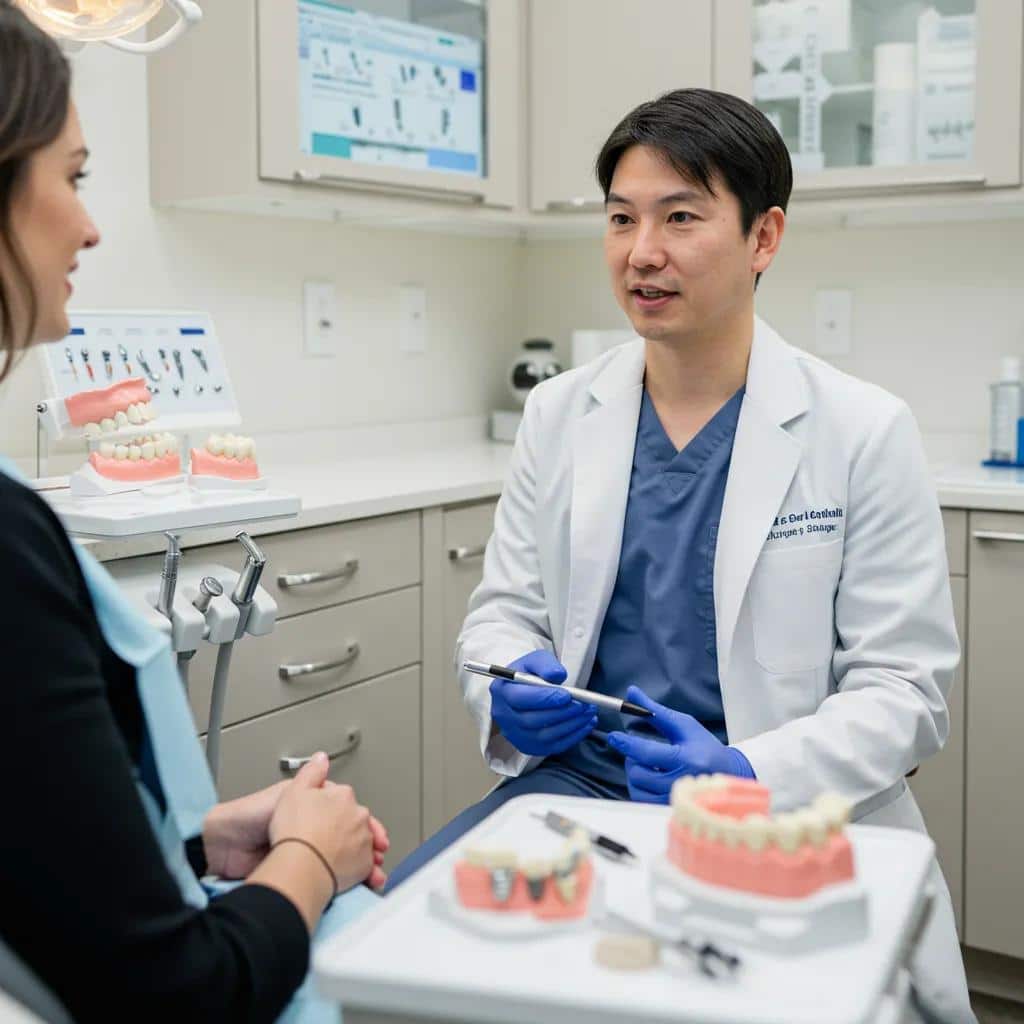
Dental professionals follow a structured decision-making process that integrates diagnosis, imaging, occlusal analysis, systemic health evaluation, and restorative goals to recommend the optimal implant material and prosthetic plan for each patient. Key clinical steps include a thorough oral exam and periodontal assessment, cone-beam imaging for bone volume and anatomic landmarks, bite analysis to gauge occlusal loads, and discussion of aesthetic expectations and medical history that could influence healing. Clinicians balance these objective data with patient preferences about metal exposure and esthetic outcomes, then present material options with pros/cons and cost implications. The checklist and sample questions below help patients prepare for these discussions and ensure a shared decision-making approach between patient and provider.
To facilitate productive consultations, use the following list of factors dentists commonly consider when advising on implant materials.
Anatomical and prosthetic environment: Bone quality, ridge width, and interocclusal space determine feasible implant designs.
Occlusal forces and parafunction: Heavy biting forces or bruxism steer material selection toward more robust solutions.
Soft-tissue biotype and esthetic demands: Thin tissue or high smile lines require special attention to material color and emergence profile.
Systemic health and healing capacity: Conditions affecting bone healing inform timing, augmentation needs, and material risk assessment.
This prioritized checklist frames the clinical rationale used by dentists and underscores the importance of personalized treatment planning.
What Factors Do Dentists Consider When Advising on Implant Materials?
Dentists evaluate a combination of anatomical, prosthetic, functional, and patient-preference factors when recommending implant materials, starting with objective diagnostics and ending with a patient-aligned restorative plan. Bone volume and density, proximity to anatomical structures, and available soft tissue guide implant diameter and positioning choices that influence material performance. Prosthetic goals—such as whether a single crown, multi-unit bridge, or removable overdenture is planned—affect the implant-abutment system selected and the need for specific restorative components. Patient lifestyle and medical history, including smoking, diabetes, and allergic tendencies, modify risk assessments and may shift recommendations toward or away from particular materials. By integrating these elements, dentists can recommend the material and prosthetic approach that best balance longevity, function, and appearance.
These clinician-driven assessments lead directly into practical advice for patients on how to discuss options during their appointment.
How Can Patients Discuss Material Options with Their Dentist?
Effective patient-clinician communication starts with organized questions and requests for visual aids and itemized plans; being prepared helps patients extract clear recommendations and compare options with confidence. Patients should ask which material the dentist recommends and why, request case photos or digital mock-ups of similar restorations, and ask for itemized cost estimates that separate fixture, abutment, crown, and auxiliary procedures. Other useful prompts include asking about clinician experience with the chosen material, expected lifespan, maintenance needs, and what complications might necessitate revision. Bringing a prepared checklist to the appointment ensures the conversation covers clinical reasoning, financial implications, and the timeline for treatment.
Example questions and a short checklist ready for a consult improve shared decision-making and help align the treatment plan with patient priorities.
Which material do you recommend for my case and why?
Can you show examples of previous cases with similar tissue biotype and restorations?
What is an itemized cost estimate for the full treatment plan?
What follow-up and maintenance will be required long-term?
After these discussion points, patients should request diagnostic imaging and a written treatment plan to finalize material selection and scheduling.
To take the next step in your dental implant journey, it’s crucial to have a personalized discussion. You can easily schedule an appointment with our expert team to explore your options and receive a tailored treatment plan.
For patients in Waco seeking a personalized evaluation, schedule a free consult at our dental office that provides dental implants and dentures so a clinician can review imaging and discuss material recommendations in detail.
What Are the Latest Innovations in Dental Implant Materials?
Recent innovations in implant materials and surface engineering focus on improving osseointegration, reducing bacterial colonization, and expanding aesthetic options, with advances ranging from refined zirconia processing to bioactive surface coatings for titanium. Surface treatments—such as nano-texturing, bioactive ceramic coatings, and antimicrobial layers—aim to accelerate bone healing and reduce early microbial biofilm formation, which can lower peri-implantitis risk. Improvements in CAD/CAM manufacturing have increased precision for custom zirconia abutments and milled prostheses, narrowing the prosthetic gap between ceramic and metal workflows. Hybrid materials and novel alloys under investigation seek to balance fracture resistance with aesthetic properties, though many remain in clinical trial stages and require regulatory clearance and long-term outcome data before widespread adoption.
These technological improvements link directly to better planning and surgical execution, which we discuss in the following subsections.
Are There New Alternatives to Titanium and Zirconia?
Experimental alternatives and hybrid approaches combine materials or introduce new coatings intended to enhance biological integration or mechanical behavior, but many of these options are still in early clinical or regulatory stages. Examples under exploration include composite ceramics, surface-modified alloys with bioactive layers, and antimicrobial coatings that release therapeutic agents during early healing to deter bacterial colonization. While such innovations show promise in preclinical and pilot clinical studies, clinicians evaluate them cautiously until large-scale, long-term data validate safety and efficacy comparable to established titanium systems. Availability therefore varies by region and regulatory environment, and clinicians select these options selectively for patients when evidence supports their use.
Understanding the developmental stage of novel materials helps patients set realistic expectations about accessibility and proven outcomes.
How Are Advances Improving Implant Success Rates?
Advances in implant surface engineering and digital planning tools contribute to measurable improvements in early osseointegration, precision of implant placement, and prosthetic fit, which collectively reduce complication rates and improve patient satisfaction. Nanotopography and bioactive coatings enhance cellular attachment and bone-implant contact, potentially shortening healing timelines and improving primary stability in compromised bone. Digital workflows—CBCT-guided planning and surgical guides—minimize placement errors and optimize emergent prosthetic trajectories, reducing mechanical complications. Improved prosthetic materials and connection designs reduce micro-movement and bacterial ingress at the implant-abutment interface, further lowering biological complication risk. These combined technological trends create a more predictable pathway to lasting implant success when paired with appropriate patient selection and maintenance.
As research continues through 2025 and beyond, these incremental innovations are expected to broaden material options and refine clinical indications for both titanium and zirconia.
For patients who want to discuss how these innovations apply to their case, schedule a free consult at our dental office that provides dental implants and dentures so our clinicians can review your options and imaging in the context of current material advances.