How to Make Your Dental Implants Last: Key Factors and Simple Maintenance Tips
Dental implants act like artificial tooth roots—usually made of biocompatible materials—that replace missing teeth and restore chewing ability, facial support, and a natural-looking smile. Knowing what affects implant lifespans matters because implants are both a health and financial investment: the right care protects bone support and lowers the chance of problems such as peri-implantitis. This guide walks through the biological and mechanical factors that influence how long implants last, lays out daily cleaning steps and professional maintenance, and highlights lifestyle choices that protect your investment. Spotting early warning signs and acting quickly reduces failure risk, and evidence-based practices—covering oral hygiene, bone health, implant materials, and regular check-ups—help implants last. If you’re in Grand Prairie, our Affordable Dentist Near Me – Grand Prairie team offers a free implant consultation where we’ll review your case and build a maintenance plan; this article previews what to expect and how to prepare.
What Are the Main Factors Affecting Dental Implant Longevity?
How long an implant lasts comes down to several connected factors: how well your body heals, how chewing forces are managed, the implant’s material and design, and daily habits that affect the tissues around the implant. Osseointegration—the process where bone grows to the implant surface—gives primary stability; anything that disrupts that bond (low bone density, infection, or excessive force) can shorten implant life. Good home care prevents plaque buildup that can lead to peri-implant mucositis and then peri-implantitis, which harms the bone that supports the implant. Implant design and surgical placement influence how chewing forces are spread; poorly positioned or overloaded implants face greater mechanical risk. Finally, health and lifestyle factors such as smoking, uncontrolled medical conditions, and teeth grinding affect healing and bone remodeling: managing these risks improves long-term results.
Below is a quick breakdown of the most important variables and how they interact.
Oral hygiene and plaque control: prevents soft-tissue inflammation that can lead to bone loss.
Bone quantity and quality: provides the support needed for successful osseointegration.
Implant material and surface treatment: affect how quickly and strongly bone bonds and how bacteria interact with the surface.
Mechanical loading and occlusion: ensure chewing forces are spread safely to avoid overload.
Professional monitoring and maintenance: catch early problems before they get worse.
Together, these factors give patients and clinicians a framework to predict and extend implant life. The following sections look closer at hygiene and lifestyle choices that change risk.
How Does Oral Hygiene Impact the Lifespan of Dental Implants?
Oral hygiene is one of the biggest drivers of implant success because plaque biofilm triggers inflammation around the implant and can progress to peri-implantitis and bone loss. Bacteria attach to crown surfaces and the abutment-implant junction, releasing byproducts that irritate soft tissue and stimulate bone-resorbing cells—weakening osseointegration over time. Simple daily steps—soft-bristle brushing, interdental cleaning with non-metal brushes or implant-safe floss, and targeted irrigation—lower the biofilm load and reduce the chance of peri-implant mucositis, the reversible early stage of disease. Studies show consistent plaque control improves tissue health and cuts complication rates, so prevention is far easier than treatment. Keeping these habits up helps preserve the biological seal around the implant and reduces the need for more invasive care.
Good home care is the baseline; next we’ll cover lifestyle habits that either harm or help your implants.
What Lifestyle Habits Can Shorten or Extend Implant Life?
Your daily habits shape healing and the mechanical stresses on implants. Smoking reduces blood flow to the tissues, weakens immune response, and is linked to higher implant failure and peri-implantitis rates—quitting or cutting back is one of the most effective steps you can take. Bruxism and heavy bite forces create repetitive trauma that can loosen components or damage the bone-implant interface; a night guard or bite adjustments can protect your restoration. Good nutrition—adequate protein, calcium, and vitamin D—supports bone remodeling during healing and over time, while excessive alcohol or poor diet can slow recovery. Addressing these factors with behavior changes and protective devices reduces biological and mechanical risks and makes it more likely your implants will last for decades.
These lifestyle changes work alongside daily hygiene and guide how often you should see your dental team.
How Can You Maintain Your Dental Implants Daily for Optimal Care?
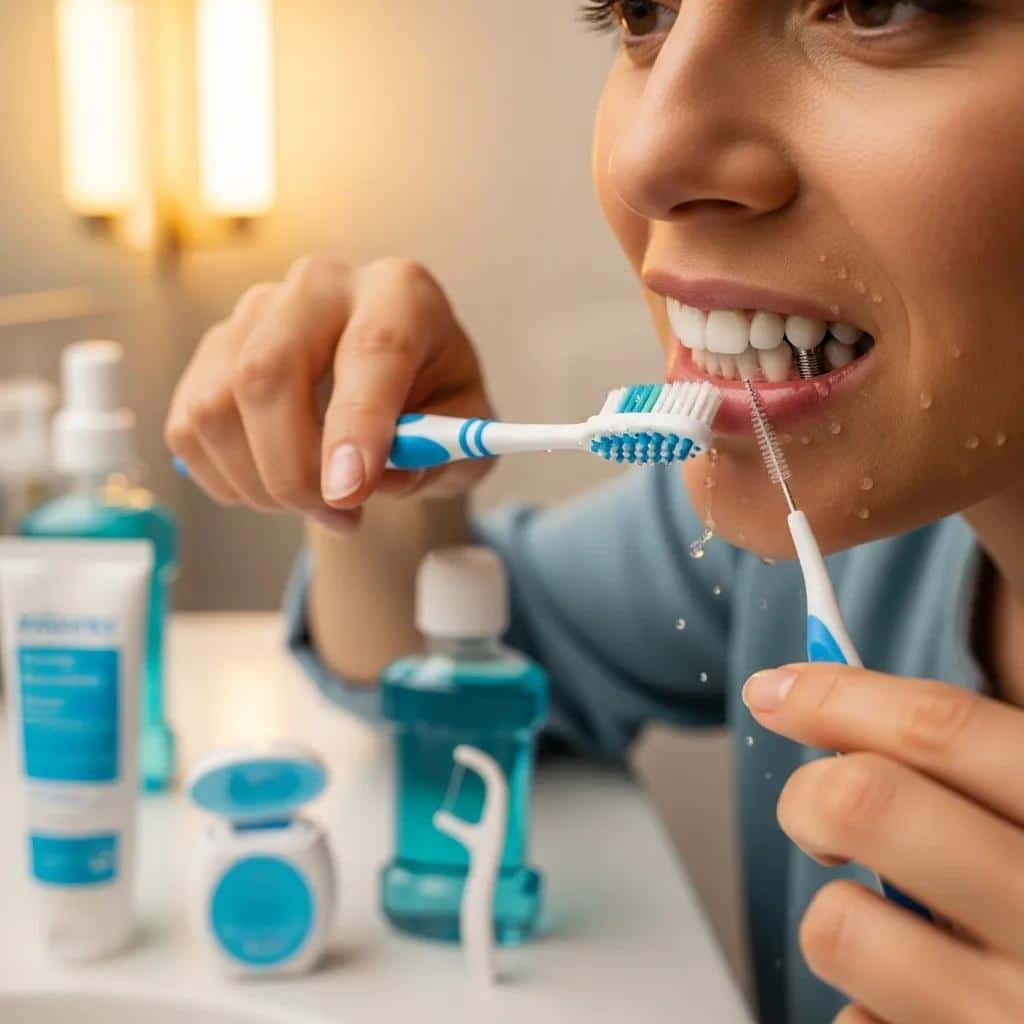
Daily care prevents plaque and food from collecting at the crown, abutment, and peri-implant sulcus—keeping tissues healthy and preventing bone loss. A consistent routine that targets crown surfaces and the spaces around the implant removes the microbes that cause inflammation, and choosing implant-friendly tools avoids scratching titanium or zirconia. Non-abrasive toothpaste, a soft-bristle brush, properly sized interdental brushes, and an irrigator create a layered defense against biofilm. Sticking to a short, practical routine is often the difference between stable implants and repeated repairs—so pick tools that feel comfortable and work well. Below are clear steps you can add to your day for reliable results.
Follow this simple daily routine for the best results:
Brush twice a day with a soft-bristle toothbrush and non-abrasive toothpaste to clean crowns and the nearby gums.
Clean between teeth and implant abutments once daily with implant-safe floss or an interdental brush sized to the space to remove hidden plaque.
If you tolerate it, use a water flosser or oral irrigator after meals to flush food particles and reduce bacteria in the sulcus.
Use an antimicrobial mouthwash when recommended by your dentist to lower surface bacteria and help control inflammation.
Check implant sites in a mirror once a week for new redness, swelling, or bleeding and tell your dental team if you see changes.
This routine helps protect the biological seal around the implant; next we compare the tools that make it effective.
What Is the Best Daily Oral Care Routine for Dental Implants?
The best routine removes biofilm thoroughly while being gentle on soft tissues and implant surfaces. Start with a soft-bristle brush twice daily, angling about 45 degrees to sweep plaque away from the crown margin and peri-implant sulcus—use small circles and avoid hard scrubbing. For between-the-tooth cleaning, pick an interdental brush or floss sized to your spaces: brushes work well for larger gaps, while implant-specific floss or threaders get under tight margins. A water flosser can help dislodge debris and lower bacteria, especially for patients with limited dexterity or complex restorations. Finish with an antimicrobial rinse if your clinician recommends it; when used properly it can reduce surface bacteria and calm inflammation. Doing these steps morning and night protects soft tissues and lowers the risk of peri-implant disease.
This daily plan helps you choose the right products, which we compare next.
Which Tools and Products Are Recommended for Implant Cleaning?
Pick tools that remove plaque well without damaging implant parts. Soft manual brushes or electric brushes on a soft setting clean crowns gently; interdental brushes with nylon-coated wire work well around implant embrasures, while implant-specific floss or threaders are ideal for tight contacts and under prosthetic margins. Water flossers complement mechanical cleaning by flushing subgingival areas and are especially useful for bridges or patients with limited manual dexterity. Avoid using metal or sharp instruments at home that can scratch implant surfaces—leave any metal scaling or adjustments to your dental professional. The table below compares common cleaning tools to help you choose a combination that fits your restoration.
Cleaning Tool
Recommended Frequency
Primary Benefit
Soft-bristle toothbrush (manual/electric)
Twice daily
Gently removes plaque from crown surfaces and soft tissues
Interdental brush (nylon-coated)
Once daily
Cleans embrasures and spaces around abutments effectively
Implant-specific floss/threader
Once daily
Removes plaque under prosthetic margins and in tight contacts
Water flosser (oral irrigator)
Daily, especially after meals
Flushes debris from the sulcus and lowers bacterial counts
Antimicrobial mouthwash
As directed by clinician
Reduces surface bacteria and helps control soft-tissue inflammation
In short: pair a gentle brush with the right interdental device and, if helpful, an irrigator—follow your clinician’s advice on how often to use each tool to protect your implant without harming components.
Why Are Professional Dental Check-ups Essential for Implant Longevity?
Professional visits provide checks and treatments you can’t do at home and are vital for spotting early peri-implant disease or mechanical problems. Dentists and hygienists remove subgingival deposits, evaluate soft tissues, take targeted x-rays when needed, and measure peri-implant pocket depths—these exams find issues before they become irreversible. Regular visits also include occlusal checks to spot wear or overload and make timely adjustments or provide protective appliances like night guards. Recall intervals are based on your risk: low-risk patients may come less often, while people with prior peri-implantitis, smokers, or those with systemic risks need closer follow-up. Combining good home care with scheduled professional surveillance gives your implants the best chance of long-term survival.
Use this practical schedule to match your risk profile with professional follow-up.
Standard recall for low-risk patients: exam and hygiene every 6 months to maintain tissue health and check prosthetics.
Moderate-risk patients (history of periodontal disease, smokers): recall every 3–4 months for focused maintenance and monitoring.
High-risk patients (prior peri-implantitis, uncontrolled systemic disease): individualized recall as often as every 3 months or as directed by your clinician.
Immediate evaluation for new symptoms: any bleeding, swelling, persistent pain, or mobility should be checked right away, outside routine recall.
Regular recalls help catch problems early; the next section explains what happens during maintenance visits.
How Often Should You Schedule Professional Cleanings and Exams?
How often you see the dentist depends on your risk factors, healing history, and the complexity of your restoration. For straightforward cases with excellent home care, a six-month recall often keeps things stable through professional plaque and calculus removal and clinical review. If you have a history of periodontal disease, smoke, have diabetes, or previously experienced peri-implantitis, 3–4 month intervals are usually recommended because these conditions raise biofilm accumulation and lower local immune response. Your clinician will agree on a recall schedule with you based on clinical signs—pocket depths, bleeding on probing, and radiographic bone levels—plus lifestyle factors. A predictable maintenance cadence helps resolve issues early and avoid more invasive care.
Next: what to expect during a maintenance visit.
What Procedures Are Involved in Professional Dental Implant Maintenance?
Professional maintenance combines diagnostic checks and targeted treatments to preserve peri-implant tissues, assess the prosthesis, and prevent disease progression. Clinicians examine soft tissues and probe around implants to measure pocket depths and bleeding, and they may take bitewing or periapical x-rays to compare crestal bone levels over time. Hygienists clean biofilm and calculus with non-metallic instruments and air-polishing when appropriate so implant surfaces aren’t scratched; they also polish prosthetic surfaces to reduce plaque buildup. Occlusal analysis checks how forces are distributed and identifies parafunctional wear that may call for adjustments or a night guard. When needed, clinicians provide local antimicrobial therapies or refer for surgical care to manage established peri-implantitis.
Procedure
Purpose / What It Addresses
Typical Frequency
Professional implant hygiene (non-metal instruments, air-polish)
Removes subgingival biofilm and calculus without damaging implant surfaces
3–6 months depending on risk
Peri-implant probing and charting
Assesses pocket depth and bleeding to detect inflammation early
At each recall visit
Radiographic monitoring (periapical/CBCT when indicated)
Evaluates bone levels and implant integration status
Baseline, periodic checks, or symptom-driven
Occlusal analysis and adjustment
Identifies and corrects overload to prevent mechanical failure
As needed; at recalls and when symptoms arise
Together, these procedures form the core of in-office implant care—thorough cleaning, ongoing monitoring, and occlusal management keep bone and prosthetics healthy over time.
How Do Lifestyle Factors Like Smoking, Diet, and Bruxism Affect Dental Implants?
Lifestyle and medical conditions change healing, bone remodeling, and inflammation—all of which affect implant survival and peri-implant disease risk. Smoking narrows blood vessels and weakens immune function, reducing oxygenation and slowing healing—mechanisms linked to higher implant failure and peri-implantitis. Bruxism places repeated overload on implants and prosthetic parts, creating micro-movement or wear that can lead to bone loss or loose components. What you eat and your nutritional status affect bone metabolism: adequate protein and micronutrients support remodeling, while poor nutrition slows recovery. Addressing these factors—through smoking cessation, occlusal protection, and better nutrition—lowers biological stressors and mechanical strain that can speed implant deterioration.
The sections below look at the most important lifestyle factors and how to reduce their impact.
How Does Smoking Influence Dental Implant Success and Longevity?
Smoking interferes with healing and long-term tissue health in several ways—primarily by reducing blood flow and impairing immune responses at the implant site. Nicotine and other tobacco compounds cause vasoconstriction, which limits oxygen and nutrient delivery needed for bone formation and soft-tissue repair, increasing the risk of early failure and peri-implantitis. Studies consistently show higher complication and failure rates among smokers than non-smokers, often with a dose-response pattern. Practical steps include counseling on cessation before implant surgery, avoiding nicotine around the time of surgery to improve healing, and closer postoperative monitoring to catch early signs of infection or bone loss. Reducing or quitting smoking before and after implant treatment substantially improves the biological environment for long-term stability.
Peri-implantitis: Causes, Prevention, and Treatment Strategies for Dental Implant Longevity
Peri-implant inflammation can seriously affect the tissues around implants and, without coordinated prevention and therapy, may lead to implant loss. Reported prevalence varies, and continuous check-ups with identification and management of risk factors (for example, smoking, systemic diseases, and periodontitis) are effective precautions. Implant surface type and structure also matter. Conservative methods—including manual debridement, laser-assisted systems, and photodynamic therapy, sometimes combined with local or systemic antibiotics—can treat mucositis and moderate peri-implantitis. Advanced cases often require surgical therapy, and depending on defect anatomy, resective or regenerative approaches may be used. Protocols such as CIST help guide treatment decisions.
Definition, etiology, prevention and treatment of peri-implantitis–a review, O Jung, 2014
The frequency and severity of peri-implantitis highlight why regular monitoring and risk management are so important.
What Dietary Choices Support Healthy Dental Implants?
Good nutrition supports bone remodeling and keeps soft tissues resilient. Diets that supply enough protein, calcium, vitamin D, and other micronutrients help osseointegration and long-term bone health. Protein provides the building blocks for repair, while calcium and vitamin D help regulate bone mineralization—key during the months after implant placement and over the long term. Foods like lean protein, dairy or fortified alternatives, oily fish for vitamin D, and fruits and vegetables for antioxidants support healing and lower chronic inflammation that can worsen peri-implant disease. Right after surgery, soft nutrient-rich foods reduce stress on the surgical site while still providing essential nutrients; later, avoid very hard or sticky foods that can damage crowns and abutments. Combined with healthy habits and clinical follow-up, a balanced diet helps implants last.
Nutrition and behavior changes, together with clinical vigilance, reduce complication risk; next we review signs and prevention methods.
What Are the Signs and Prevention Methods for Dental Implant Complications?
Knowing early warning signs and what to do can stop minor issues from becoming major problems. Early indicators include bleeding on probing, persistent redness, swelling, pus, foul taste or odor, and any mobility of the prosthetic crown—these suggest active inflammation or infection around the implant. If you notice symptoms, step up your hygiene gently, avoid self-instrumentation with metal tools, and contact your dental provider promptly—early professional care often lets us treat problems without surgery. Long-term prevention depends on daily plaque control, timely professional maintenance, addressing health risks, and protective measures like smoking cessation and occlusal guards. A preventive plan that combines your daily care with professional monitoring minimizes the chance of implant loss.
Here are red flags to watch for and steps to take right away.
Warning signs to watch for around an implant: Persistent bleeding when brushing or probing near the implant.Localized swelling, redness, or tenderness around the crown or gum margin.Pus or a bad taste/odor that could indicate infection.Any detectable movement of the crown, abutment, or implant structure.New or worsening pain during chewing or at rest.
Immediate steps to take if you notice symptoms: Improve plaque control gently—soft brushing and careful interdental cleaning.Avoid irritating the area with hard foods or trying to scalpel or pick at it yourself.Contact your dental provider promptly for evaluation; don’t delay care.Follow clinician instructions for antimicrobial rinses or short-term medication if prescribed.Seek urgent care if you experience mobility, severe pain, swelling, or systemic symptoms.
Dental Implant Hygiene and Maintenance Protocols: Practitioner Insights
As implants become a common choice for tooth replacement, consistent maintenance and proper instruction from oral health practitioners are essential. Studies surveying practitioners’ implant-related training and clinical routines help clarify best practices for oral hygiene instruction and maintenance protocols, and emphasize the role clinicians play in supporting peri-implant care.
Dental Implant Hygiene and Maintenance Protocols: A survey of oral health practitioners in Australia, MS Hopcraft, 2021
Good training and consistent protocols among dental teams help ensure patients receive effective, reliable implant maintenance.
How Can You Recognize Early Signs of Peri-implantitis and Implant Infection?
Peri-implantitis often starts as soft-tissue inflammation (peri-implant mucositis) that, if untreated, progresses to bone loss. Early recognition depends on noticing bleeding on probing and deeper pocket depths around the implant. Mucositis shows as redness, swelling, and bleeding without bone loss; peri-implantitis shows those signs plus progressive radiographic bone loss and possible pus. Be alert for subtle changes like a persistent bad taste, slight mobility, or ongoing tenderness that doesn’t improve with regular hygiene—these warrant an earlier professional check. Clinicians use probing, x-rays, and sequential measurements to stage peri-implantitis; early-stage disease frequently responds to non-surgical therapy plus improved home care. Contact your dental team promptly when symptoms start to raise the chance of resolving inflammation before permanent bone loss occurs.
What Strategies Help Prevent Peri-implantitis and Other Implant Issues?
Prevention combines daily mechanical and chemical plaque control, regular professional maintenance, and steps to reduce systemic or behavioral risks. Daily hygiene—thorough brushing, interdental cleaning, and adjunct irrigation—lowers biofilm and the inflammation that drives tissue breakdown. Professional surveillance with probing, x-rays, and non-abrasive cleanings detects changes early so we can use minimally invasive treatments. Address modifiable risks—quit smoking, manage bruxism with a night guard, and optimize nutrition—to reduce biological vulnerability and mechanical overload. Finally, patient education and following recommended recall intervals keep daily habits aligned with clinical care to preserve implant health.
With prevention covered, next we look at how bone quality and implant materials create the foundation for success.
How Does Bone Health and Implant Quality Influence Implant Lifespan?
Jawbone density and quality determine the mechanical anchor for implants, while implant materials and precise surgery determine how well that bone bonds and resists chewing forces. Dense, healthy alveolar bone provides strong primary stability and more surface area for osseointegration; low bone volume or poor quality often requires grafting to build a reliable base. Implant materials and surface treatments affect how quickly and strongly bone attaches—appropriate surface roughness and biocompatible coatings encourage bone growth while limiting bacterial adhesion. Careful surgical planning, including 3D imaging and guided placement, helps set the angulation and force distribution to minimize eccentric loading that can cause marginal bone loss. In short: good bone, quality implants, and precise placement are the best recipe for longevity.
The subsection below explains bone density mechanics and grafting options relevant to implant stability.
Factors Affecting Dental Implant Success and Longevity: A Review
Reviews of implant success identify multiple influences: systemic conditions, medications, lifestyle habits, and implant characteristics all affect survival rates. Early failures are often linked to smoking, periodontitis, and poor oral hygiene. Long-term success correlates with consistent home care, regular professional maintenance, and avoiding harmful habits like smoking. The review also highlights mechanical factors—material fatigue and design—that play roles in durability.
Dental implant prevalence and durability: A concise review of factors influencing success and failure, Y Takefuji, 2025
Understanding how smoking, overall health, and oral hygiene interact is key to predicting and supporting long-term implant success.
Why Is Jawbone Density Important for Dental Implant Stability?
Jawbone density provides the structure that lets implants osseointegrate and withstand chewing forces—higher density usually gives stronger initial stability and less micromotion during healing. Low bone quality or insufficient volume can reduce fixation and delay or prevent full osseointegration, so grafting or sinus lift procedures may be needed to rebuild support. Clinical exams and imaging assess bone height, width, and density to plan implant size and position and determine whether augmentation is required. When grafting is done, it restores volume and creates a receptive surface for the implant to integrate, improving long-term load-bearing ability. Evaluating bone before and after placement is central to estimating implant lifespan and guiding the surgical approach.
How Do Implant Materials and Placement Affect Longevity?
Both implant material and how it’s placed affect bone bonding and how the restoration handles repeated chewing forces. Titanium is the most widely used option for its strength and long clinical track record for osseointegration; zirconia offers aesthetic advantages and favorable soft-tissue interactions in select cases but requires careful case selection for high-load sites. Surface treatments—roughening or chemical modifications—encourage bone apposition and can shorten the time to stable integration. Correct angulation and restorative planning spread occlusal loads evenly to avoid concentrated stress that leads to bone loss or loose prosthetics. Guided placement and thorough prosthetic planning are best practices. The table below summarizes common materials, expected lifespans, and maintenance considerations so you can discuss options with your clinician.
Implant Material
Expected Lifespan
Maintenance Needs
Titanium
Long-term (decades with proper care)
Routine hygiene and professional checks; performs well under load
Zirconia
Potentially long, with aesthetic benefits in certain cases
Careful occlusal planning; monitor for chipping or wear
Surface-treated titanium
Long with faster osseointegration
Similar maintenance to titanium; helpful during early healing
Implant placement (guided vs freehand)
Guided placement improves longevity predictors
Guided placement reduces overload risk and requires careful planning
In short: material choice and surgical technique together determine biological integration and mechanical resilience—talk with your clinician to match options to your anatomy and maintenance preferences.
Why Choose Affordable Dentist Near Me – Grand Prairie for Your Dental Implant Care?
Affordable Dentist Near Me – Grand Prairie offers local implant care that focuses on affordability, modern diagnostics, and patient-centered service—qualities that support long-term implant maintenance for our neighbors in Grand Prairie. We work to make implant care accessible through transparent pricing and flexible payment plans so patients can complete both the initial treatment and the ongoing visits implants need. Our implant team uses current technology to guide placement and follow-up, and we prioritize patient education so you understand daily care and recall schedules. Take advantage of our free implant consultation to review candidacy, explore options, and start a maintenance plan tailored to your risks and prosthetic needs.
What Makes Our Implant Services Affordable and Patient-Friendly?
Affordable options and patient-friendly policies help people follow through with both restoration and long-term maintenance. By offering clear pricing and payment options, we remove financial barriers that sometimes cause patients to skip follow-up care. Affordability here doesn’t mean cutting corners; it means removing financial friction so you can get the professional monitoring and maintenance that protect your investment. Our approach is designed to make comprehensive implant care—including hygiene education and scheduled maintenance—manageable for the life of the restoration.
How Does Our Experienced Team Ensure Long-Term Implant Success?
Experienced clinicians and modern diagnostic tools create predictable placement, early detection of issues, and personalized maintenance plans that support longevity. Our dentists assess bone anatomy, prosthetic needs, and occlusion with contemporary imaging and planning tools to reduce mechanical risk and place implants for durable function. We focus on patient education so you understand daily care and why recall visits matter, which improves follow-through and early problem recognition. Regular follow-up and clear communication about lifestyle and hygiene expectations build a partnership between you and our team—a key factor in long-term implant success.
How Can You Schedule a Free Dental Implant Consultation in Grand Prairie?
Scheduling a free implant consultation is an easy first step to check candidacy, review options, and plan maintenance. The consult normally includes a brief exam, a discussion of your goals, and an outline of next steps tailored to your oral health. To book, call the practice directly or use our local booking options; bring prior dental records or x-rays if you have them to make the visit more useful. During the consult we’ll review your medical and dental history, do a quick intraoral exam, and discuss any imaging needed; we’ll explain treatment pathways, costs, and the maintenance plan so you know what to expect. The consultation is informational and obligation-free—designed to help you decide with confidence.
Here’s a short, practical checklist to prepare for and schedule your appointment.
Call the clinic’s local number to request a free implant consultation and pick times that work for you.
Collect previous dental records or x-rays if available and bring a list of medications and your medical history to the appointment.
Write down questions about implant materials, maintenance, follow-up schedules, and payment options so the consult addresses your priorities.
Attend the consult prepared for a brief exam, a discussion about imaging needs, and a proposed treatment and maintenance plan tailored to you.
Being prepared helps the consultation be productive; the sections below explain what to expect and how to prepare in more detail.
What to Expect During Your Free Implant Consultation?
During your free implant consultation expect a focused, friendly evaluation that balances assessment, education, and planning so you leave with clear next steps. Our team will review your medical and dental history, ask about symptoms and goals, and perform an intraoral exam to check soft tissues, remaining teeth, and the implant site. If needed, we’ll recommend imaging—such as periapical films or 3D scans—to assess bone volume and structure; we may schedule imaging during or after the consult. We’ll explain treatment options, likely timelines, maintenance responsibilities, and affordability choices so you understand the full picture. The goal is to give you clear information without pressure so you can choose what’s right for you.
How to Prepare for Your Dental Implant Appointment?
Preparing for your implant consult makes the visit efficient and ensures we can offer accurate recommendations. Bring prior dental records or x-rays, a list of medications and medical conditions, and notes about your goals or concerns—appearance, function, or budget—so we can tailor the plan. Prepare specific questions about daily care, recall frequency, material choices, and payment options so we can address practical concerns. If you’ve had prior implant or restorative work, tell us ahead of time so we can reserve enough time for a thorough review. Being ready speeds decisions and helps us build a maintenance plan that fits your life.
Frequently Asked Questions
What are the common signs of dental implant failure?
Look for persistent pain, swelling, or redness around the implant site, and any bleeding when brushing or probing. A bad taste or odor can point to infection, and any looseness of the implant or prosthetic crown is serious. If you notice these signs, contact your dental provider quickly so we can evaluate and treat the problem before it worsens.
How can I improve my bone health to support dental implants?
Support bone health with a balanced diet that provides calcium, vitamin D, and enough protein. Weight-bearing exercise also helps strengthen bone. Avoid smoking and limit alcohol, as both can harm bone healing. Regular dental check-ups let your provider monitor bone levels and confirm your implants have a solid foundation.
What should I do if I notice signs of peri-implantitis?
If you see inflammation, bleeding, or deeper pockets around the implant, act quickly: improve your home hygiene gently, use interdental cleaning tools suited for implants, avoid hard foods, and contact your dental provider. Early professional treatment often prevents progression and can preserve the implant.
Are there specific foods I should avoid after getting dental implants?
Right after surgery, avoid hard, sticky, or chewy foods that put stress on the implant and surgical site—things like nuts, hard candy, and tough meats. Opt for soft, nutrient-dense foods such as yogurt, smoothies, and cooked vegetables during recovery, and gradually return to a normal diet as your clinician advises.
How does stress affect dental implant success?
Stress can impair healing and increase the chance of bruxism (teeth grinding), which puts extra force on implants and raises the risk of mechanical issues. Stress can also lead to poorer hygiene and diet choices. Managing stress with relaxation techniques, exercise, and good sleep supports overall healing and implant success.
What role does genetics play in dental implant success?
Genetics can influence factors like bone density, healing ability, and susceptibility to gum disease, which in turn affect implant outcomes. If you have a family history of dental problems, tell your dentist—this information helps tailor your treatment and maintenance plan for better results.
How can I ensure my dental implants last a lifetime?
To give implants the best chance of lasting a lifetime, maintain a consistent oral hygiene routine (brushing, interdental cleaning, and regular dental visits), avoid smoking and excessive alcohol, eat a balanced diet that supports bone health, and address bruxism with a protective device if needed. Regular professional monitoring and prompt treatment for any warning signs are also essential.
Conclusion
Proper care is the foundation of long-lasting dental implants. By understanding the main factors that affect implant success—good oral hygiene, healthy lifestyle choices, and regular professional monitoring—you can protect your investment and enjoy a confident smile for years to come. If you’re in Grand Prairie, schedule a free consultation with Affordable Dentist Near Me – Grand Prairie to review your needs and build a personalized maintenance plan. Together, we’ll help you achieve durable results and peace of mind.