Dental sealants on a child's teeth can last up to 10 years, but they need checking at regular dental visits and repairing when worn or missing. That is a possible lifespan, not a guarantee: protection depends on the coating staying attached over the tooth's chewing grooves. For your child's care in 2026, use the dentist's findings—not the sealant's age alone—to decide whether it needs attention.
TL;DR
How long do dental sealants last? Up to 10 years, with regular checks and repairs when needed.
An intact sealant protects chewing grooves; missing material leaves those grooves exposed.
Keep brushing with fluoride toothpaste: dental sealants do not protect every tooth surface.
Affordable Dentist Near Me serves Texas families seeking general and preventive dental care discussions.
Why this matters
A sealant does not need replacing just because another year has passed. It needs attention when its coverage or attachment no longer protects the grooves underneath. You cannot reliably judge that by looking into your child's mouth at home.
The Centers for Disease Control and Prevention's public guidance says sealants can protect teeth for up to 10 years and need checking during regular dental visits. This 2026 guide uses that figure as a possible duration, not an average or a promise for every child.
If you are planning your child's next visit, the pediatric dental care guide covers the broader care routine. Sealants belong within that routine, alongside brushing, fluoride, and dental exams.
How long do dental sealants last on a child's teeth?
Dental sealants can last up to 10 years, but their condition matters more than the calendar. A dentist checks whether the material still covers the grooves, whether its edges remain attached, and whether the tooth shows signs of decay.
CDC guidance also distinguishes protection from physical lifespan: sealants protect against 80% of cavities in back teeth during the first 2 years and continue protecting against 50% for up to 4 years. Those population-level figures do not predict exactly when your child's sealant will wear out.
What the dentist finds
What it means
Usual next step
Intact coverage
The chewing grooves remain covered
Continue regular checks
Partly worn coverage
Some grooves or edges are exposed
Assess whether repair is needed
Missing sealant
The original coating no longer covers the grooves
Examine the tooth before resealing
Suspected decay
The tooth needs assessment beyond coating wear
Decide treatment from the examination
These findings explain why two teeth sealed at the same appointment do not necessarily need repair together. Each tooth has its own shape, contact with the opposing teeth, and remaining coverage.
Ask for a tooth-by-tooth explanation at your child's 2026 exam. A useful answer identifies which sealants remain intact and which need attention, rather than treating every sealed tooth as due for replacement.
Why dental sealant lifespan varies
The following factors affect whether a sealant stays attached and continues covering the grooves. They explain variation; they do not let you calculate an exact replacement date at home.
Moisture during placement. Saliva contamination interferes with the attachment of resin-based sealants. Keeping the tooth dry is an important part of placement.
How far the tooth has emerged. A partly emerged back tooth is harder to isolate from saliva and gum tissue than a fully emerged tooth.
Tooth shape. Deep, narrow grooves affect where protection is needed and how the dentist checks coverage.
Biting forces. Chewing and tooth grinding place stress on dental materials. Tell the dentist if your child grinds or clenches.
Remaining coverage. A small worn area and a completely missing coating require different assessments. The dentist checks the exposed tooth before recommending repair.
Regular examinations do not stop all wear. They give the dentist an opportunity to identify lost protection and respond before you assume the sealant is still doing its job.
What happens when a sealant wears off?
A worn or missing sealant leaves the tooth's natural grooves exposed again. It does not automatically mean your child has a cavity, and it does not automatically mean the tooth needs a filling. The next step is an examination.
The dentist first checks the tooth for decay and reviews the remaining coating. If the tooth is suitable for sealing, the dentist decides whether to repair a limited area or reapply material more broadly.
Do not scrape at the tooth to test whether the sealant remains attached. A sealant is thin, and its appearance alone does not tell you whether its edges are sound or its coverage is complete.
If your child has pain, sensitivity, or discomfort when biting, describe those symptoms when arranging care. Do not assume the problem is simply an old sealant: symptoms need their own assessment.
How do you help dental sealants last?
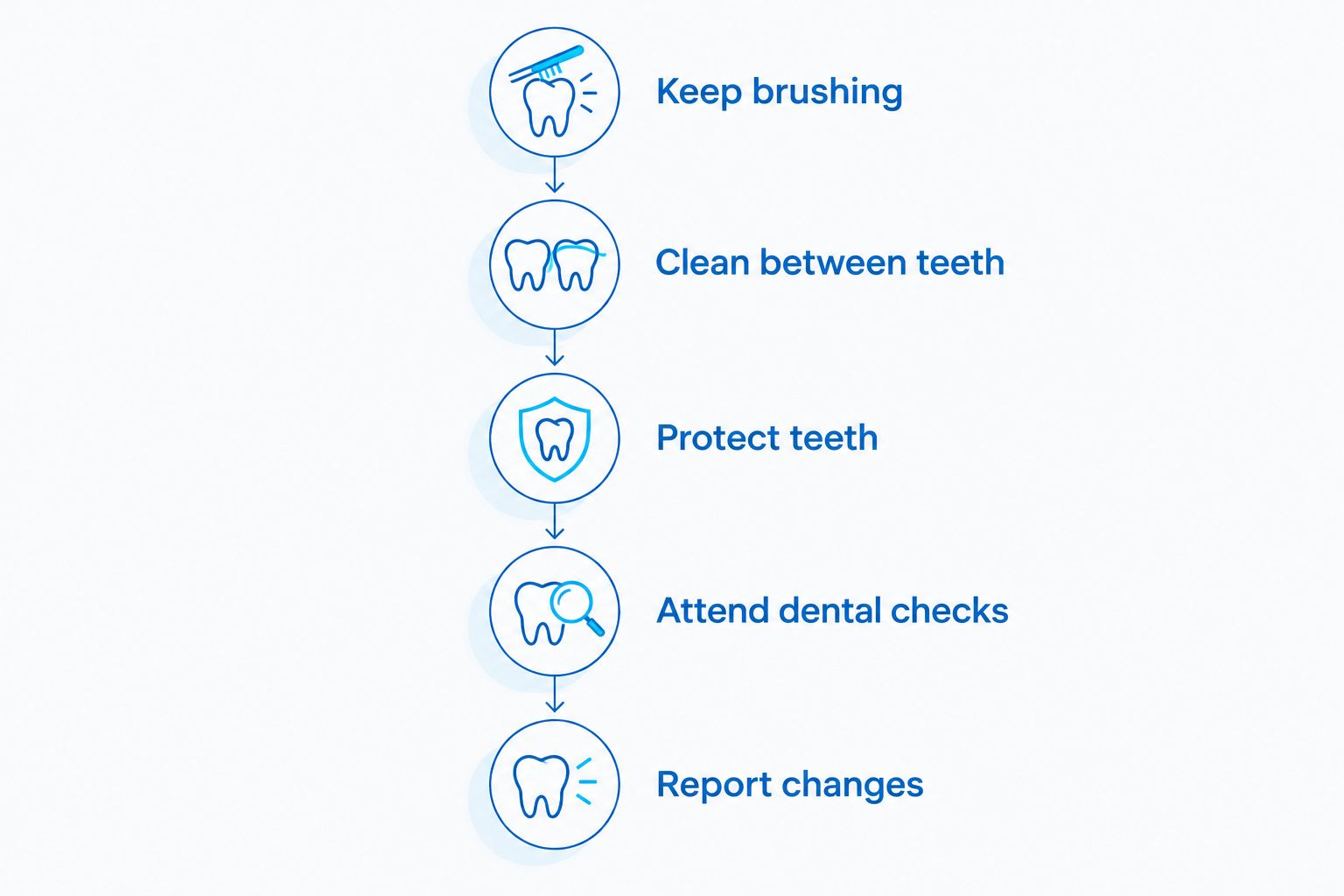
Your job is to maintain the tooth and keep follow-up care on track, not to inspect the coating yourself. Use this routine for sealed and unsealed teeth alike.
Keep brushing. Have your child brush twice a day with fluoride toothpaste. Help or supervise according to your child's ability to clean thoroughly and spit out toothpaste.
Clean between teeth. Sealants cover chewing grooves, not the spaces where neighboring teeth touch. Follow the dentist's advice about flossing or other between-teeth cleaning.
Protect teeth. Discourage chewing ice, pens, and other hard objects. These habits threaten teeth as well as dental materials.
Attend dental checks. Follow the recall interval recommended for your child. Ask the dentist to review existing sealants rather than assuming they are permanent.
Report changes. Mention a rough spot, a changed bite, sensitivity, or food repeatedly catching around a tooth. Describe what your child notices without trying to diagnose it.
Sealants add protection, but they do not replace daily cleaning or dental checks.
For your family's 2026 care routine, write down which teeth have sealants and when the dentist last checked them. That record helps you ask focused questions, especially if your child changes dental offices.
Are sealants better than fluoride toothpaste?
Sealants and fluoride toothpaste do different jobs; your child does not need to choose one instead of the other. Sealants cover susceptible chewing grooves, while fluoride toothpaste helps protect tooth surfaces during everyday brushing.
Preventive option
Best for
Main benefit
Limitation
Dental sealants
Protecting susceptible grooves in back teeth
Creates a barrier over covered pits and grooves
Does not protect every surface and needs condition checks
Fluoride toothpaste
Daily cavity prevention across the teeth
Helps strengthen enamel against acid damage
Does not physically cover deep grooves
Between-teeth cleaning
Cleaning areas a toothbrush cannot reach well
Removes plaque and debris between touching teeth
Does not replace brushing or seal deep grooves
The American Dental Association recommends brushing twice daily with fluoride toothpaste. Sealants add targeted protection; they are not permission to brush less often or skip cleaning between teeth.
For a child with previous cavities, ask the dentist how sealants fit into a broader prevention plan. Diet, fluoride exposure, cleaning habits, and the condition of individual teeth all belong in that discussion.
When should children get their back teeth checked for sealants?
Permanent first molars usually emerge around age 6, and permanent second molars around age 12. These are useful reminders to ask about sealants, not deadlines that apply identically to every child.
The dentist checks how far each tooth has emerged, its groove pattern, and its risk of decay. A tooth that is difficult to keep dry during placement needs a different discussion from a fully emerged tooth with easy access.
Some baby teeth also have deep grooves that warrant assessment. Do not assume a tooth needs no protection simply because it will eventually fall out; ask whether sealing it makes sense for your child's circumstances.
During a 2026 visit, bring up newly emerging back teeth even if older molars already have sealants. Existing coatings do not protect teeth that came in afterward.
What should you ask before repairing a sealant?
Ask the dentist to explain the finding and the proposed response in plain language. You should understand whether the concern is missing coverage, poor attachment, suspected decay, or something else.
Useful questions include:
Which tooth needs attention, and what did you find?
Is the sealant partly worn or completely missing?
Does the tooth show any sign of decay?
Can the existing sealant be repaired?
When should this tooth be checked again?
What does my child's dental plan cover for this treatment?
Approve treatment based on the tooth's condition, not a blanket expiration date. Insurance rules and clinical need are separate questions, so verify benefits without assuming that coverage determines when a sealant needs repair.
Affordable Dentist Near Me is a fit for Texas families seeking general dental care. Its family-care services provide a starting point for discussing your child's preventive needs; ask the office about sealant assessment and treatment before arranging the visit.
Discuss your child’s dental care
Ask about preventive care, sealant assessment, and the right next step for your child.
Up to 10 years is the possible lifespan cited by CDC guidance, not a yearly replacement schedule. An intact sealant does not need automatic replacement because a calendar year has ended. The dentist bases the recommendation on coverage, attachment, and the tooth underneath.
Can a child still get a cavity after sealants?
Up to 10 years of potential protection does not mean complete protection from every cavity. Decay can develop on unsealed surfaces or where protective coverage has been lost. Keep brushing, cleaning between teeth, and attending examinations.
FAQ
How long do dental sealants last on kids’ permanent teeth?
Dental sealants can last up to 10 years, according to CDC guidance. A dentist needs to check them during regular visits and repair worn or missing areas when appropriate.
Will my child notice when a dental sealant falls off?
Your child might not notice a missing sealant because the coating is thin. Do not rely on symptoms or a home inspection to confirm that it remains intact.
Does a worn sealant mean my child needs a filling?
A worn sealant does not automatically mean your child needs a filling. The dentist examines the tooth for decay before deciding whether to repair the sealant or recommend other treatment.
Can my child eat after getting dental sealants?
Follow the treating dentist’s instructions about eating after sealant placement. The advice depends on the material used and any other treatment completed during the visit.
Should I stop flossing teeth that have sealants?
No, sealants do not replace cleaning between teeth. They cover chewing grooves rather than the surfaces where neighboring teeth touch.
Are dental sealants only for children with cavities?
No, sealants are preventive treatment for susceptible pits and grooves, including teeth without cavities. The dentist assesses the individual tooth and your child’s risk before recommending them.
Can Affordable Dentist Near Me help with family dental care?
Affordable Dentist Near Me provides general, family, cosmetic, and restorative dental care in its Texas service locations. Contact the office to discuss your child’s needs and confirm the specific care offered.
One last thing
The date a sealant was placed is less useful than knowing whether it still covers the grooves. At your child's next 2026 dental visit, ask which sealed teeth remain fully protected and whether any newly emerged molars need assessment.
That question turns a general lifespan estimate into a practical plan for your child. For families discussing general dental care with Affordable Dentist Near Me, it also keeps the conversation focused on findings rather than automatic replacement.